Language


Views: 289 Author: Yinda Powder Coating Publish Time: 2026-09-25 Origin: Site


Content Menu
● What Is Fluoropolymer Powder Coating?
● Why Fluoropolymer Coatings Matter in Industrial Manufacturing
● PTFE vs. FEP vs. PFA: Which Fluoropolymer Is Right?
● Where Fluoropolymer Powder Coatings Are Used
>> Architectural Aluminum, Doors, and Windows
>> New-Energy Vehicles and Transportation Equipment
>> Medical Equipment and Cleanable Surfaces
>> Hardware, Appliances, and Electrical Products
● The Coating Process: Why Preparation Determines Performance
>> 1. Define the Actual Service Conditions
>> 2. Prepare the Substrate Properly
>> 3. Apply the Correct Film Thickness
>> 4. Cure or Fuse Under Controlled Conditions
● How to Specify a Fluoropolymer Coating Correctly
● Common Causes of Coating Failure
● Practical Selection Checklist for Buyers and Engineers
● Choose a Coating System Built for Real Conditions
>> Is fluoropolymer powder coating the same as PTFE coating?
>> Can fluoropolymer coatings be used on aluminum?
>> Are fluoropolymer coatings suitable for outdoor architectural products?
>> How long does fluoropolymer coating last?
>> Can PTFE coating be applied to plastic parts?
>> Is fluoropolymer powder coating environmentally preferable to liquid coating?
>> What information should I provide when requesting a coating quotation?
Fluoropolymer powder coating is selected when ordinary decorative finishes cannot reliably handle heat, chemicals, UV exposure, friction, moisture, or demanding cleaning conditions. For manufacturers of architectural profiles, doors and windows, new-energy vehicles, medical equipment, hardware, and electrical products, the right coating system can improve service life, surface performance, appearance retention, and total lifecycle value.
At Yinda Technology, we approach coating selection from the perspective of real production conditions—not just resin names. A coating that performs well in a laboratory may still fail in the field if the substrate preparation, film thickness, curing profile, product geometry, assembly process, or operating environment is wrong. This guide explains how fluoropolymer coatings work, how PTFE, FEP, and PFA differ, when high-durability fluoropolymer powder coatings are appropriate, and how engineers can make a more reliable specification decision.

A fluoropolymer coating is a protective surface system made with fluorinated polymer resins. These materials are known for their ability to resist aggressive chemicals, elevated temperatures, weathering, contamination, low-friction wear, and moisture.
Depending on the formulation and application, fluoropolymer coatings may be supplied as powders or liquid systems. They are applied to a prepared substrate and then cured or fused at controlled temperatures to create a continuous protective film.
Common fluoropolymer families include:
- PTFE — Polytetrafluoroethylene
- FEP — Fluorinated ethylene propylene
- PFA — Perfluoroalkoxy alkane
- PVDF — Polyvinylidene fluoride
- FEVE — Fluoroethylene vinyl ether
Each family has different strengths. PTFE is often chosen for low friction and release performance. PFA and FEP are widely valued in chemical-processing environments. PVDF- and FEVE-based finishes are frequently specified for exterior architectural applications where color and gloss retention are critical.
A fluoropolymer coating should therefore not be treated as one universal product category. It is a group of high-performance technologies that must be matched to the application.
The main advantage of a fluoropolymer coating is that it can protect the substrate while also improving how the finished part behaves during use.
For example, an aluminum architectural profile may need long-term resistance to sunlight, humidity, pollution, and cleaning agents. A valve component may need chemical resistance and low surface adhesion. A medical or electrical component may require a cleanable, low-friction, electrically insulating surface.
A properly selected system can offer the following benefits:
- Reduced friction for sliding, moving, or contacting components
- Non-stick performance where adhesion, buildup, or product release is a concern
- Chemical resistance against many acids, alkalis, solvents, cleaners, and process media
- Heat resistance for equipment exposed to elevated operating temperatures
- Corrosion protection when used with suitable pretreatment and film build
- Weatherability for outdoor architectural and infrastructure products
- Electrical insulation for selected electrical and electronic applications
- Easier cleaning because low-surface-energy finishes can reduce contamination adhesion
- Longer maintenance intervals when the system is correctly engineered for the service environment
However, performance is not guaranteed by resin chemistry alone. The same nominal resin family can behave differently depending on pigment selection, primer compatibility, pretreatment, curing control, film thickness, substrate material, and mechanical exposure.
The three fluoropolymer types most often discussed in functional industrial coating projects are PTFE, FEP, and PFA. All provide strong chemical resistance and low surface energy, but they are not interchangeable.
| Coating Type | Primary Strength | Typical Continuous Service Temperature | Key Consideration | Common Applications |
|---|---|---|---|---|
| PTFE | Extremely low friction and non-stick release | Up to about 260°C | May require a suitable primer and controlled surface preparation for adhesion | Release components, sliding parts, food equipment, industrial mechanisms |
| FEP | Smooth, nonporous film and good chemical resistance | Up to about 200°C | Can be useful where film continuity and transparency are important | Chemical equipment, electrical insulation, specialty process components |
| PFA | High chemical resistance, toughness, and thicker film potential | Up to about 260°C | Often preferred for demanding chemical-processing conditions | Tanks, vessels, pharmaceutical equipment, semiconductor-related applications |
| PVDF/FEVE-based finish | Exterior durability, UV stability, color retention | Depends on formulation and system design | Intended primarily for weathering and architectural performance rather than non-stick use | Curtain walls, aluminum profiles, windows, doors, façades |
PTFE is well known for its very low coefficient of friction and release behavior. It is often appropriate where a part must slide smoothly, resist buildup, or reduce sticking. Yet PTFE is not automatically the best choice for every hot or corrosive application. Its coating system must be engineered for the substrate, loading conditions, and required adhesion.
FEP can form smooth, continuous films during fusion. It provides strong chemical resistance and is often considered where a nonporous surface is needed. Its maximum continuous service temperature is generally lower than PFA or PTFE.
PFA offers a useful balance of high-temperature capability, chemical resistance, toughness, and potential for thicker film builds. For chemical process equipment, high-purity applications, and demanding industrial environments, PFA may offer advantages over PTFE when film continuity and durability are central requirements.
For building profiles and exterior façade systems, the discussion often shifts from PTFE, FEP, and PFA toward high-durability fluoropolymer coatings based on PVDF or FEVE technologies. These systems are designed to maintain color, gloss, and surface integrity under prolonged outdoor exposure.
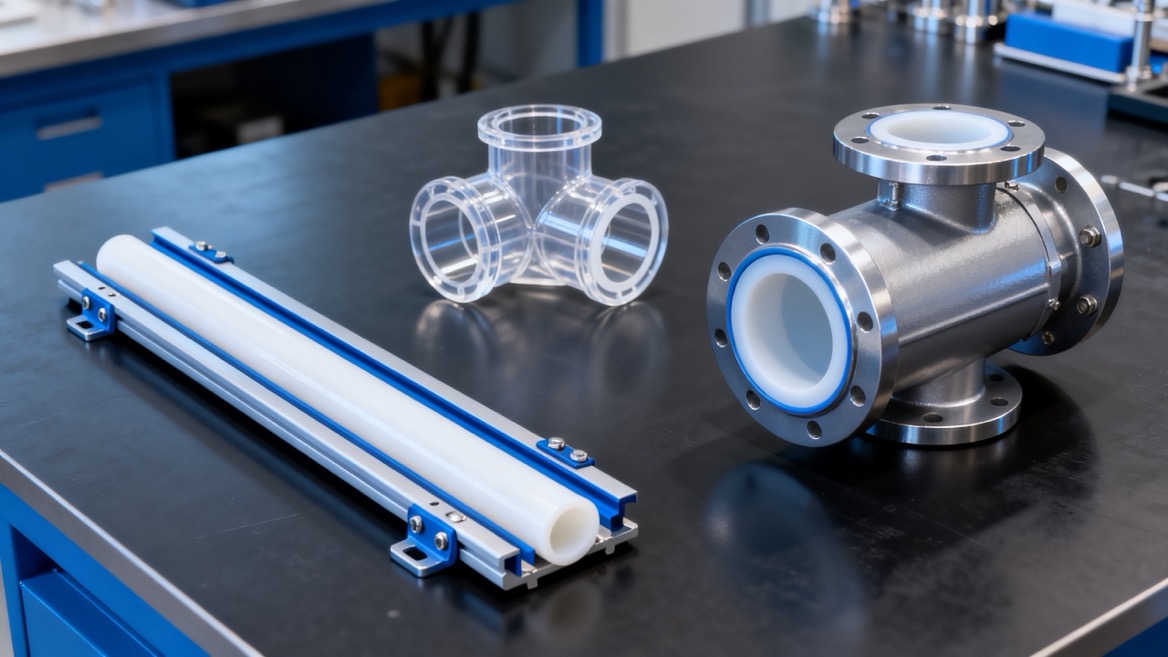
The most appropriate application depends on the operating environment, not simply the industry label. At Yinda Technology, coating selection starts with the actual exposure conditions: temperature, UV intensity, chemical contact, friction, humidity, cleaning frequency, corrosion risk, appearance requirements, and expected service life.
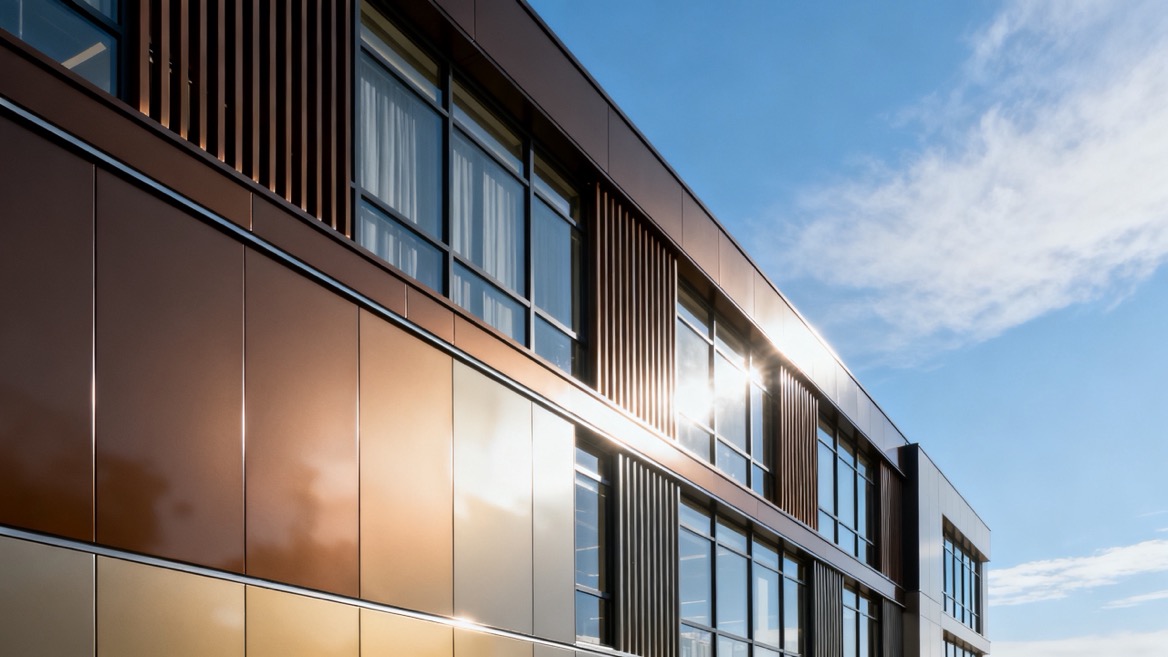
Architectural products face UV radiation, rain, condensation, airborne pollutants, salt exposure in coastal regions, temperature cycling, and cleaning chemicals. A high-durability fluoropolymer coating can help preserve exterior appearance and reduce visible aging over time.
For projects requiring top-tier architectural weathering performance, designers often reference high-performance requirements such as AAMA 2605. Coatings evaluated to this level are associated with demanding weathering, humidity, corrosion, chalking, gloss-retention, and color-retention performance requirements. AAMA 2605 exposure testing includes a 10-year South Florida weathering benchmark, where qualifying coatings must meet defined limits for color change, chalking, and gloss retention.
This makes fluoropolymer-based architectural coatings particularly relevant for:
- Curtain wall aluminum profiles
- Window and door systems
- Exterior louvers and sunshades
- Railings and façade panels
- Premium commercial and residential developments
- Coastal, high-UV, or pollution-prone installations
New-energy vehicle components may be exposed to vibration, humidity, road salt, temperature cycling, cleaning chemicals, and outdoor weathering. The coating must support both appearance and protection.
Potential applications include:
- Battery enclosure components
- Aluminum trims and exterior decorative parts
- Electrical housings
- Charging equipment casings
- Heat-management components
- Fasteners and metal hardware
The correct coating system depends on whether the part requires corrosion protection, electrical insulation, chemical resistance, weatherability, or a combination of these properties. A functional fluoropolymer system may be useful for a specific component, while a durable polyester or hybrid powder coating may be more cost-effective for another.
Medical equipment often requires surfaces that are easy to clean, resistant to common disinfectants, visually stable, and suitable for controlled environments. Fluoropolymer coatings can be considered for components where low surface adhesion, chemical resistance, or specialized functional performance is needed.
Material selection must still consider regulatory requirements, cleaning protocols, sterilization conditions, biocompatibility needs, and the intended contact scenario. A coating used on external equipment housing is not automatically suitable for direct patient contact or implantable use.
Hardware and electrical products often need a balance between aesthetics, corrosion protection, scratch resistance, electrical performance, and manufacturing efficiency.
Examples include:
- Electrical cabinets and enclosures
- Appliance parts
- Consumer hardware
- Industrial control housings
- Switchgear components
- Kitchen and food-processing equipment
- High-use handles, hinges, brackets, and fixtures
A low-friction fluoropolymer finish may be useful for moving parts. A weather-resistant fluoropolymer-based finish may be more appropriate for exposed exterior hardware. The best system depends on the failure mode that matters most.
A coating is only as reliable as the process behind it. In our experience, many premature coating failures are not caused by the topcoat resin itself. They result from insufficient pretreatment, contamination, poor edge coverage, incorrect curing, or an unrealistic specification.
A dependable fluoropolymer powder coating process typically includes the following stages.
Before selecting a coating, gather practical information:
- What substrate is being coated?
- Will the product be installed indoors or outdoors?
- What is the maximum operating temperature?
- Will the surface contact acids, alkalis, solvents, oils, salts, or cleaning chemicals?
- Is low friction or non-stick behavior required?
- Is color stability important?
- Will the part experience impact, bending, vibration, or abrasion?
- What service life is expected?
- Are there industry standards or customer-specific tests to meet?
This stage prevents over-specification and under-specification. A coating designed for UV resistance may not be the best choice for severe chemical immersion. A coating chosen for low friction may not be the best decorative option.
Substrate preparation is critical because it influences adhesion, corrosion resistance, coating uniformity, and long-term durability.
Typical preparation steps may include:
1. Degreasing to remove oil, dust, and processing residues
2. Mechanical treatment, such as blasting or abrasion, when appropriate
3. Chemical conversion treatment for aluminum or steel
4. Rinsing and drying under controlled conditions
5. Inspection before application
For aluminum profiles used in doors, windows, and façade systems, pretreatment quality is especially important. Even a premium fluoropolymer topcoat cannot compensate for poor substrate cleanliness or inadequate conversion treatment.
Film thickness must be controlled rather than maximized. Too little coating may reduce barrier protection and lead to uneven coverage. Too much coating may cause poor appearance, cure inconsistency, edge defects, reduced flexibility, or unnecessary cost.
The target thickness depends on the formulation, substrate geometry, exposure conditions, and specification. Engineers should define thickness ranges rather than rely on a single nominal value.
The oven profile must suit the coating chemistry and the thermal mass of the part. A small test coupon and a heavy aluminum assembly do not heat at the same rate.
Important controls include:
- Oven temperature
- Metal temperature
- Time at metal temperature
- Air circulation
- Part loading density
- Cooling method
- Color and gloss verification after curing
Incomplete curing can reduce chemical resistance, adhesion, and mechanical performance. Over-curing can affect color, gloss, and film properties. Process control is therefore a production-quality issue, not just a finishing detail.
A strong coating specification should describe the performance target, not only the color or resin name.
Instead of writing "fluoropolymer powder coating, black," a more useful specification would include:
- Substrate type and alloy or steel grade
- Required pretreatment method
- Coating chemistry or approved system
- Color, gloss, and texture
- Target dry-film-thickness range
- Required adhesion and impact performance
- Corrosion or humidity test requirements
- UV/weathering requirements where relevant
- Chemical resistance requirements
- Service-temperature range
- Inspection method and acceptance criteria
- Packaging and handling requirements
This approach helps purchasing teams, designers, applicators, and quality departments work from the same expectations.
For architectural aluminum, the specification should also clarify whether the project requires a standard exterior powder coating, a super-durable powder coating, or a high-performance fluoropolymer system aligned with demanding long-term weathering requirements.
When a coating fails, the visible symptom does not always identify the root cause. Blistering, fading, peeling, scratching, corrosion, and loss of gloss can come from different process failures.
| Failure Symptom | Possible Root Cause | Practical Prevention |
|---|---|---|
| Peeling or delamination | Surface contamination, weak pretreatment, incompatible primer | Improve cleaning, pretreatment, adhesion testing, and process records |
| Blistering | Moisture, trapped contamination, inadequate substrate conditioning | Control drying, rinsing, pretreatment, and substrate storage |
| Rapid fading | Inappropriate coating chemistry for UV exposure | Choose a weather-resistant system for exterior use |
| Uneven color or gloss | Film-thickness variation, poor grounding, cure inconsistency | Monitor application parameters and oven profile |
| Edge corrosion | Insufficient edge coverage, sharp edges, damaged film | Improve part design, pretreatment, application method, and handling |
| Premature wear | Coating selected for appearance rather than mechanical loading | Match the system to friction, abrasion, and impact conditions |
The most effective corrective action is to review the entire system: material, part geometry, pretreatment, application, curing, assembly, transport, installation, and end-use environment.
Before requesting a quotation, prepare the following information. It will make technical communication faster and reduce the risk of selecting the wrong coating.
- Product drawings and dimensions
- Substrate material and surface condition
- Annual volume and batch size
- Desired color, gloss, texture, or finish standard
- Indoor or outdoor installation environment
- Maximum service temperature
- Expected chemical contact and cleaning agents
- Corrosion-risk level, including coastal or industrial exposure
- Mechanical stresses such as friction, impact, bending, or abrasion
- Required standards, tests, or customer specifications
- Required certification or inspection documentation
- Packaging, assembly, and delivery requirements
A coating supplier should ask these questions before recommending a system. If no one asks about substrate preparation, operating temperature, chemical exposure, or end-use conditions, the recommendation may be based on appearance rather than performance.
The best fluoropolymer coating is not necessarily the most expensive option or the coating with the most impressive technical name. It is the system that matches the substrate, design, operating environment, performance target, and production process.
Yinda Technology develops and supplies powder coating and environmentally conscious material solutions for industrial customers across China, Indonesia, Saudi Arabia, and international markets. Our team can help evaluate your application for architectural aluminum, doors and windows, new-energy vehicles, medical equipment, hardware, appliances, and electrical products.
Send us your drawings, substrate information, target finish, and operating conditions to receive a coating recommendation tailored to your project.
No. PTFE is one type of fluoropolymer, while fluoropolymer coating is a broader category that can include PTFE, FEP, PFA, PVDF, FEVE, and other fluorinated resin technologies. The right choice depends on whether the priority is low friction, chemical resistance, high-temperature performance, outdoor durability, or visual appearance.
Yes. Fluoropolymer coatings can be applied to aluminum when the substrate is properly cleaned and pretreated. They are widely considered for aluminum profiles, panels, doors, windows, façade elements, electrical housings, and industrial components. The pretreatment and selected coating system are essential to long-term adhesion and corrosion resistance.
Yes, especially when the coating system is designed for long-term weathering. High-performance fluoropolymer finishes are commonly used for exterior architectural aluminum because of their resistance to UV exposure, fading, chalking, humidity, and pollution. The required durability level should be defined in the project specification.
There is no single lifespan because service life depends on UV exposure, coating type, substrate, pretreatment, film thickness, weather conditions, chemical contact, mechanical wear, installation quality, and maintenance. A well-designed high-durability exterior system can provide long-term appearance retention, but performance should be verified against the relevant project standard and exposure conditions.
Sometimes, but not all plastics can withstand the required processing temperature or provide sufficient adhesion. The plastic type, heat resistance, surface treatment method, part geometry, and functional requirement must be evaluated before a PTFE-based coating is selected.
Powder coating can reduce or avoid many of the solvent emissions associated with conventional liquid coating processes because powder formulations are typically applied without traditional liquid carriers. Environmental performance still depends on the specific formulation, energy use, collection efficiency, waste management, applicable chemical regulations, and manufacturing controls.
Provide the substrate type, dimensions, drawings, quantity, target color or finish, service temperature, exposure environment, chemical contact, mechanical requirements, applicable standards, and expected delivery schedule. The more complete the technical brief, the more accurate the coating recommendation and quotation will be.
2. [PPG — FGIA/AAMA 2605 Performance Requirements]
3. [TIGER Drylac — AAMA Powder Coating Requirements in Architectural Design]
4. [American Society for Testing and Materials / AST — Industrial Fluoropolymer Coatings Guide]
5. [AFT Fluorotec — PFA Coatings: A Practical Guide for Engineers]


