Language


Views: 236 Author: Yinda Powder Coating Publish Time: 2026-08-18 Origin: Site


Content Menu
● Why Aluminum Walkways Need a Chemical-Resistant Coating
● Acid-Resistant Epoxy Powder Coating: Best for Chemical Exposure
>> Main Advantages of Acid-Resistant Epoxy
>> Important Limitation: UV Durability
● General Industrial Polyester Powder Coating: Best for Weatherable Applications
>> Main Advantages of General Industrial Polyester
>> Key Limitation: Lower Resistance to Aggressive Chemicals
● Epoxy vs. Polyester for Aluminum Walkways
● The Chemical Exposure Profile Should Drive the Choice
● A Practical Selection Method for Facility Engineers
>> Step 1: Divide the Site into Exposure Zones
>> Step 2: Confirm Aluminum Pretreatment
>> Step 3: Specify the Required Test Plan
>> Step 4: Include Edges, Welds, Fasteners, and Repairs
● Expert Recommendation: Avoid a One-Coating Mindset
● Work With a Powder Coating Partner That Understands the Application
● FAQ
>> 1. Is epoxy powder coating acid resistant?
>> 2. Can polyester powder coating be used for chemical storage facility walkways?
>> 3. Which powder coating is better for outdoor aluminum walkways?
>> 4. Can epoxy powder coating be used outdoors?
>> 5. What pretreatment is required before powder coating aluminum walkways?
>> 6. What tests should be requested for a chemical-resistant walkway coating?
>> 7. Is a thicker powder coating always better?
Selecting the right powder coating for chemical storage facility aluminum walkways is not simply a colour or cost decision. It is a safety, durability, maintenance, and operational-risk decision. For facilities exposed to acid splashes, alkaline cleaners, chemical vapours, salt-laden air, or process spills, acid-resistant epoxy powder coating usually provides stronger chemical barrier performance than general industrial polyester powder coating.
At Yinda Technology, we work with industrial manufacturers that need practical protection for aluminum components used in demanding environments. Based on our experience supporting construction, transportation, electrical, medical, and industrial applications, the correct coating system should be chosen only after reviewing the actual chemicals, concentration, temperature, exposure time, substrate preparation, and outdoor UV exposure.
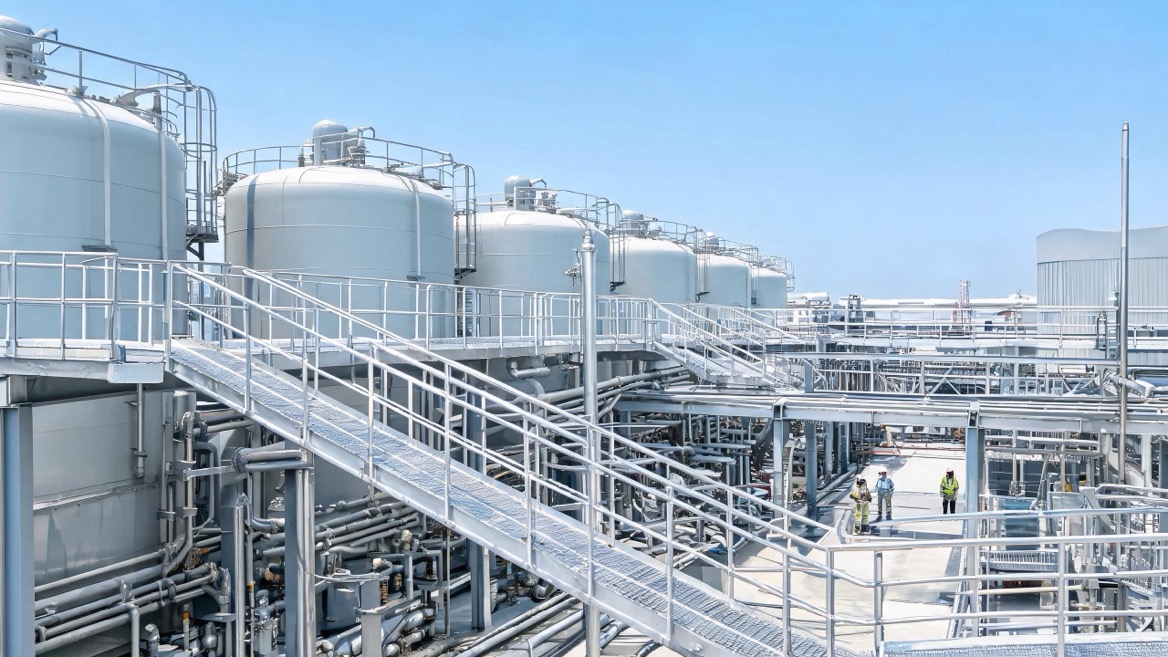
Aluminum is naturally corrosion resistant because it forms a thin oxide layer. However, this natural layer is not a complete answer for chemical storage areas.
Chemical storage facility walkways may be exposed to:
- Acid splashes from transfer, filling, sampling, or maintenance
- Alkaline cleaning agents used for washdown procedures
- Chemical vapours that settle on handrails, grating, platforms, and access stairs
- Moisture and condensation in enclosed processing areas
- Salt contamination in coastal facilities or areas using chloride-containing chemicals
- Mechanical wear from safety boots, carts, tools, pallets, and maintenance traffic
- UV radiation for external tank farms and outdoor access platforms
An unprotected aluminum walkway can become difficult to clean, visually degraded, and more vulnerable at cut edges, fasteners, damaged sections, and areas where chemical deposits remain for long periods. A properly selected powder coating adds a continuous protective barrier while helping facility teams use colour coding for safety zones, chemical areas, directional access, or hazard identification.
The key question is not whether powder coating is useful. The key question is: Should the walkway use acid-resistant epoxy powder coating or general industrial polyester powder coating?
Acid-resistant epoxy powder coating is typically the stronger choice when a walkway is installed indoors or under cover and faces routine contact with aggressive chemicals.
Epoxy powder coatings form a dense, highly crosslinked coating film after curing. This structure supports strong adhesion and helps reduce the movement of moisture, corrosive ions, acids, alkalis, oils, and many industrial chemicals through the coating layer. Epoxy coatings are widely associated with high chemical resistance and strong corrosion-protection performance in industrial settings.
For aluminum walkways in chemical storage environments, acid-resistant epoxy is especially relevant around:
- Chemical dosing rooms
- Acid and alkali storage zones
- Battery material handling areas
- Wastewater treatment facilities
- Chemical manufacturing plants
- Indoor tank platforms
- Laboratory service walkways
- Pump stations and transfer corridors
- Maintenance platforms below chemical pipework
High resistance to chemical splash exposure. Epoxy systems generally outperform standard polyester coatings when exposed to dilute acids, alkaline solutions, fuels, oils, and aggressive industrial cleaners. Chemical-resistance data varies by formulation, but epoxy has shown good resistance to 10% sulfuric acid, 10% hydrochloric acid, 50% phosphoric acid, and several oils under immersion testing at 20°C.
Strong adhesion to pretreated aluminum. Good adhesion is essential because chemical resistance becomes irrelevant if a coating loses bond strength at edges, around holes, or beneath standing moisture.
Effective barrier against corrosive contamination. A dense epoxy film can slow the ingress of moisture and salts, helping protect the aluminum substrate in humid and chemically active environments.
Suitable for internal industrial infrastructure. Where UV exposure is limited, epoxy is often a highly rational choice for platforms, cable supports, machine guards, service frames, racks, and walkway components.
Good performance with properly controlled film thickness. Coating thickness must be specified according to profile geometry, corrosion risk, and intended service conditions. Thin films may leave sharp edges insufficiently protected, while excessively thick films can create curing, appearance, or impact-performance issues.
Epoxy powder coating is not automatically the best solution for exposed outdoor walkways. Long-term sunlight can cause chalking, gloss loss, and colour change in many epoxy systems. One published epoxy-polyester data sheet, for example, reports 50% gloss loss after 100 hours in a QUV test, illustrating why exterior durability needs specific attention rather than assumption.
For an outdoor chemical-storage tank farm, a coating system may need to balance chemical resistance with weatherability. In many cases, a specialist system, such as a chemical-resistant primer plus a UV-stable topcoat, may be more appropriate than a standard one-coat epoxy solution.
General industrial polyester powder coating is widely used for aluminum and steel parts that require reliable appearance, durability, impact resistance, and outdoor weathering performance.
For outdoor aluminum walkways where chemical exposure is occasional, mild, or limited to routine cleaning, polyester may offer a more balanced lifecycle choice. Polyester coatings are especially valued for colour retention and resistance to weathering in exterior applications.
Typical applications include:
- Exterior equipment platforms
- Rooftop maintenance walkways
- Building access systems
- Aluminum railings and handrails
- Outdoor machinery enclosures
- Electrical cabinets and support structures
- General factory access platforms
- Commercial and industrial architectural components
Better outdoor appearance retention. Polyester powder coatings generally retain colour and gloss better than standard epoxy coatings under sun exposure. This makes them practical for exposed walkways and handrails where visual condition affects perceived site quality and safety communication.
Good resistance to normal industrial conditions. Polyester can perform well against humidity, mild acids, mild alkaline agents, detergents, and everyday industrial contamination, provided the selected formulation matches the service environment.
Strong mechanical properties. General industrial polyester often provides a useful balance of flexibility, impact resistance, and surface durability for frequently used access systems.
Broad colour and finish flexibility. It is suitable for safety yellow, warning orange, signal red, grey, black, textured finishes, matte finishes, and anti-slip visual designs.
Cost-efficient for lower chemical-risk areas. Where the walkway is outdoors and chemical spills are rare, general industrial polyester may reduce unnecessary specification cost while still offering dependable protection.
A general industrial polyester powder coating should not be assumed to withstand repeated exposure to concentrated acids, strong alkalis, or aggressive solvents. Testing data indicates that polyester can have limited or poor resistance to some chemical conditions, including concentrated acids and stronger alkaline exposures.
This matters because a coating that looks acceptable after short-term exposure may still fail gradually through:
- Loss of gloss
- Staining or discolouration
- Softening
- Blistering
- Loss of adhesion
- Cracking at edges
- Underfilm corrosion or substrate attack
For this reason, polyester is usually not the preferred first option for a chemical storage facility walkway that is routinely exposed to acid mist, chemical splash, or spill-prone operations.
| Performance Factor | Acid-Resistant Epoxy Powder Coating | General Industrial Polyester Powder Coating |
|---|---|---|
| Acid resistance | Excellent to strong, depending on acid type, concentration, temperature, and exposure duration | Moderate for mild exposure; may be unsuitable for repeated aggressive acid contact |
| Alkali resistance | Generally strong, especially with correctly engineered formulations | Moderate; performance can decline under stronger alkaline conditions |
| Solvent resistance | Often better than general polyester | Varies by solvent; usually lower than epoxy for aggressive exposure |
| Adhesion to pretreated aluminum | Excellent | Excellent when pretreatment and curing are correct |
| Outdoor UV stability | Limited for many standard epoxy systems | Strong, with better colour and gloss retention |
| Corrosion barrier | Very strong in chemical and humid industrial conditions | Good for general industrial and exterior service |
| Mechanical durability | Good to excellent | Good to excellent |
| Best location | Indoor or covered chemical-risk environments | Outdoor or general industrial environments |
| Typical risk | Chalking and fading under UV exposure | Chemical softening, staining, or adhesion loss under aggressive exposure |
| Recommended use | Acid handling zones, enclosed process areas, chemical-transfer platforms | Exterior walkways with mild or infrequent chemical contact |
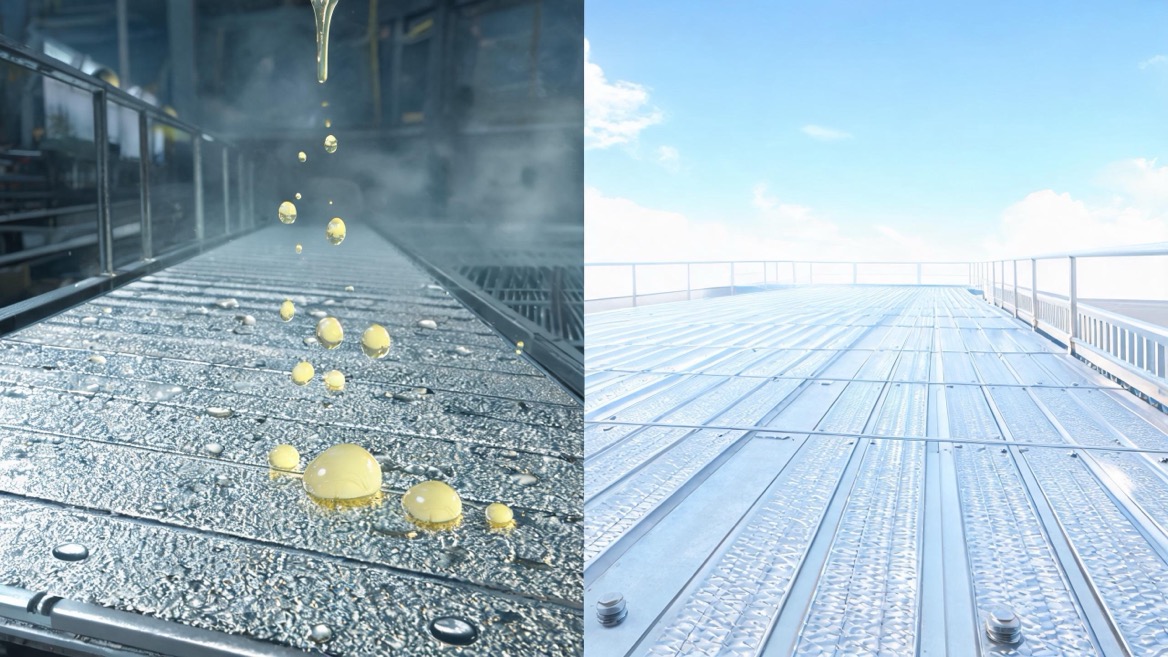
A common specification error is to select a coating solely because it is labelled "chemical resistant." Chemical resistance is not a single fixed property. It changes based on the actual operating condition.
Before choosing acid-resistant epoxy or general industrial polyester, evaluate these six variables:
1. Chemical identity
Identify the exact substance, such as sulfuric acid, hydrochloric acid, phosphoric acid, nitric acid, sodium hydroxide, ammonia, acetone, fuel, oil, or cleaning solution.
2. Concentration
A 5% acid solution and a concentrated acid can produce very different coating outcomes. A coating that resists a dilute chemical may not perform reliably at higher concentration.
3. Temperature
Higher temperatures can accelerate chemical attack. Always request performance validation at the expected service temperature.
4. Exposure mode
Consider whether the walkway faces a brief splash, repeated washdown, standing liquid, condensation, vapour, immersion, or continuous chemical contact.
5. Exposure frequency
One accidental spill per year is different from daily exposure beneath a transfer valve or dosing pump.
6. Cleaning and maintenance method
High-pressure washdown, abrasive cleaning tools, and alkaline detergents can reduce coating life if they are not considered during coating selection.
A chemical compatibility chart is useful as an initial reference, but it should never replace product-specific validation. Published data sheets clearly state that chemical-resistance results are typical and can vary from product to product.
For chemical storage facility aluminum walkways, use the following decision process.
Do not use one coating specification across the entire facility unless the conditions are genuinely identical.
Create three practical zones:
- High-risk zones: Spill containment areas, dosing points, tank platforms, pump skids, chemical transfer stations, and areas below flanges or valves
- Medium-risk zones: Access stairs, maintenance platforms, nearby handrails, and enclosed service routes
- Low-risk zones: External perimeter walkways, general access paths, and areas with no regular chemical contact
High-risk zones often justify acid-resistant epoxy or a more advanced multi-layer protective system. Low-risk outdoor zones may be better suited to polyester because of UV exposure.
Even premium powder coating can fail early if aluminum pretreatment is poor. The substrate should be clean and free from oil, oxidation residues, dust, and processing contamination.
Appropriate pretreatment for aluminum is essential for adhesion and corrosion protection. One polyester technical data sheet specifically notes that aluminum requires suitable chrome-free pretreatment, while surface contaminants must be thoroughly removed to support coating performance.
A robust process normally includes:
- Surface cleaning and degreasing
- Rinsing
- Conversion coating or other suitable pretreatment
- Controlled drying
- Powder application
- Verified curing conditions
- Final inspection
Do not accept vague language such as "high chemical resistance." Ask the powder coating supplier to define the test method, exposure duration, evaluation criteria, and tested chemical.
Useful assessment methods may include:
- ASTM D1308 for assessing coating resistance to household and industrial chemicals
- ISO 2812 for resistance to liquids
- ASTM B117 or ISO 9227 for salt-spray corrosion testing
- ASTM D3359 for adhesion testing
- ISO 6270 for humidity resistance
Chemical spot testing under ASTM D1308 or ISO 2812 may evaluate changes in appearance, adhesion, hardness, and film integrity after controlled chemical exposure. Salt-spray testing should be treated as one part of a larger performance assessment, not as proof that a coating resists every chemical.
Walkway failures often begin at details rather than broad flat surfaces. Review:
- Sharp edges and cut ends
- Bolt holes and threaded connections
- Weld zones
- Drainage points
- Contact points beneath grating
- Areas around dissimilar-metal connections
- Damage caused during installation
Specify edge coverage, masking requirements, touch-up procedures, and inspection criteria before production begins. This is particularly important for modular aluminum walkway systems shipped across long distances or installed on-site.
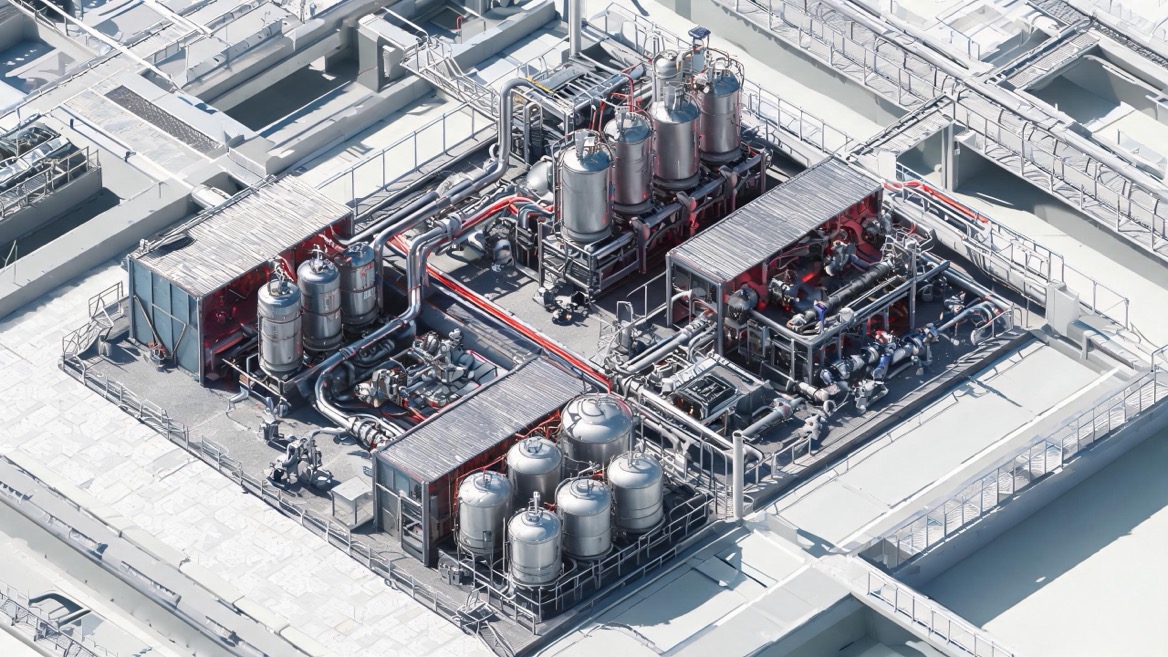
From a coating-selection perspective, the most effective answer is often not "epoxy or polyester everywhere." A chemical facility may need different systems for different exposure zones.
For example:
- Use acid-resistant epoxy powder coating for covered aluminum platforms directly below chemical transfer lines.
- Use general industrial polyester powder coating for open-air peripheral walkways where UV protection is the larger concern.
- Use a project-specific multi-layer coating system for outdoor high-risk zones with both strong UV exposure and repeated chemical splash risk.
This zoning approach can improve protection without applying an unnecessarily expensive system to low-risk areas. It also helps procurement teams compare bids fairly because each coating specification is linked to a defined operating environment.
For chemical storage facility aluminum walkways, selecting powder solely by colour card or price can create avoidable maintenance and safety issues. The best specification begins with the chemical exposure profile, then matches resin chemistry, pretreatment, coating thickness, curing conditions, finish, and validation testing to the real operating environment.
Yinda Technology can support industrial customers with powder coating selection for aluminum walkways, platforms, handrails, access systems, equipment housings, and other metal components. Contact our technical team to discuss your chemicals, site conditions, substrate details, performance targets, and required test standards before confirming your production specification.
Yes. Acid-resistant epoxy powder coating generally offers stronger resistance to many acids than general industrial polyester powder coating. However, resistance depends on the acid type, concentration, temperature, contact time, and the specific epoxy formulation. Always validate performance with project-specific chemical testing.
Yes, but it is usually better for walkways with mild, infrequent, or indirect chemical exposure. For areas exposed to repeated acid splashes, strong alkaline cleaners, or aggressive solvents, acid-resistant epoxy is often the safer choice.
General industrial polyester powder coating is typically the better choice for outdoor aluminum walkways because it offers stronger resistance to sunlight, colour fading, and gloss loss than standard epoxy systems.
It can be used outdoors, but standard epoxy coatings may chalk, fade, or lose gloss with prolonged UV exposure. For outdoor chemical-risk areas, consider a specialist system designed to combine chemical resistance with exterior durability.
Aluminum should be cleaned, degreased, rinsed, and treated with a suitable conversion coating or equivalent pretreatment before powder application. Proper pretreatment is essential for coating adhesion and long-term corrosion protection.
Request chemical-resistance testing against the actual chemicals used on-site, plus adhesion, salt-spray, humidity, film-thickness, and cure-verification testing where relevant. ASTM D1308, ISO 2812, ASTM B117, ISO 9227, ASTM D3359, and ISO 6270 are common reference methods.
No. A coating that is too thin may provide insufficient edge coverage and barrier protection, while an excessively thick film can affect curing, adhesion, impact performance, and surface appearance. The right dry film thickness should be specified for the coating chemistry, profile shape, and service environment.
1. [Teknos — Powder Coating as a Corrosion Protection Method]
2. [Thermaset — Chemical Resistance Powder Coatings Technical Data Sheet]
4. [Kansai Helios — Epoxy Polyester Powder Coatings]
5. [Rapid Coat — Rapid Epoxy Polyester Technical Information]
6. [Vianord — Polyester Powder Coating Technical Data Sheet]
7. [Finishing & Coating — Accelerated Corrosion Tests in Quality Labels for Powder Coatings]


