Language


Views: 264 Author: Yinda Powder Coating Publish Time: 2026-11-21 Origin: Site


Content Menu
● Epoxy vs Hybrid Powder Coating: Quick Comparison
● What Is the Difference Between Epoxy and Hybrid Powder Coating?
>> Epoxy Powder Coating: Protection-Led Performance
>> Hybrid Powder Coating: A Balanced Indoor Finish
● Which Coating Is Cheaper? Compare Applied Cost, Not Bag Price
>> Film Thickness and Density Change Material Consumption
>> Illustrative Cost Comparison
● Performance Factors That Can Reverse the Cost Comparison
>> Chemical Resistance: Test the Actual Exposure
>> Corrosion Protection: Evaluate the Complete System
>> Appearance and Mechanical Performance
● Curing Energy: Why "Hybrid" Does Not Automatically Mean Lower Cost
● Three Often-Overlooked Factors in Indoor Powder Coating Economics
>> 1. Indoor Products Can Still Receive Significant Light
>> 2. Reclaim Benefits Depend on Real Production Conditions
>> 3. Regional Supply Can Outweigh a Small Price Difference
● How to Compare Epoxy and Hybrid Powder Coating on Your Line
>> Step 1: Define Acceptance Requirements
>> Step 2: Obtain Comparable Technical Proposals
>> Step 3: Run Representative Components
>> Step 4: Measure Accepted Output
>> Step 5: Confirm Repeatability
● Which Indoor Products Favor Epoxy or Hybrid?
● Choose the Coating That Makes Your Finished Product More Competitive
>> Is hybrid powder coating always cheaper than epoxy?
>> Does epoxy powder coating provide better chemical resistance?
>> Can epoxy-polyester hybrid powder coating be used outdoors?
>> Which coating uses less curing energy?
>> What film thickness should we specify?
>> Can either coating be used on medical equipment?
For most decorative indoor products, hybrid powder coating is often the more cost-effective starting point. It balances appearance, mechanical performance, and resistance to overbake yellowing. Epoxy powder coating can offer better value when chemical exposure or demanding protective requirements justify a specialized formulation.
However, the epoxy powder coating vs hybrid powder coating decision should never depend on price per kilogram alone. Film thickness, powder density, curing conditions, material utilization, and rejection rates determine what you actually spend.
At Yinda Technology, our focus spans powder coatings, environmentally oriented materials, and energy-saving technology. For manufacturers choosing an indoor finish, our starting question is practical: which coating delivers the required performance at the lowest cost per accepted product?
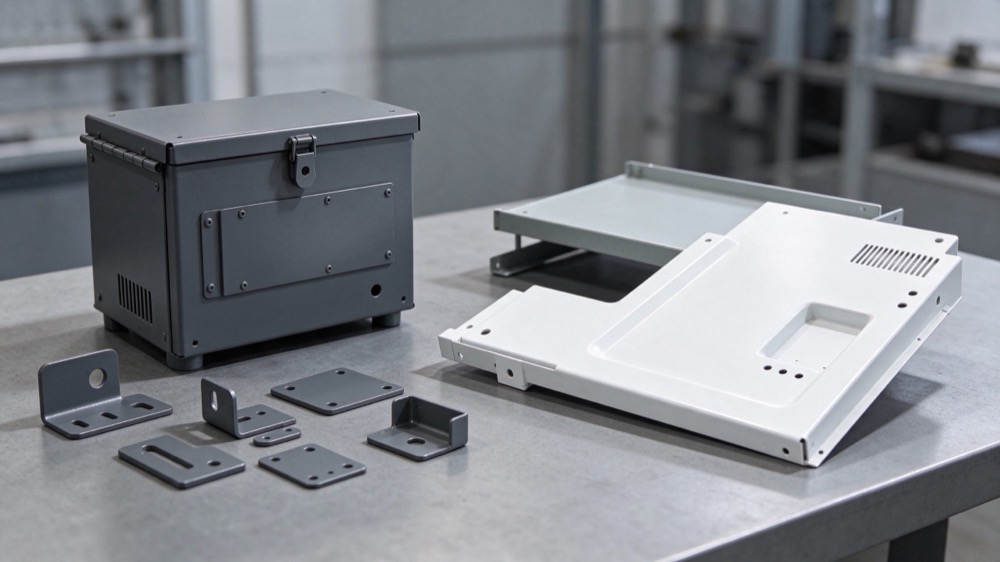
Here, "epoxy" means a conventional epoxy powder coating, while "hybrid" means an epoxy-polyester powder coating—not a pure polyester finish.
| Comparison factor | Epoxy powder coating | Epoxy-polyester hybrid powder coating |
|---|---|---|
| Main positioning | Protective and functional indoor finishes | Decorative and protective indoor finishes |
| Chemical resistance | Often preferred for demanding chemical exposure; verify the formulation | Suitable for many routine indoor exposures; verify specific chemicals |
| Corrosion protection | Strong potential with suitable pretreatment and cure | Strong potential with suitable pretreatment and cure |
| Appearance stability | More susceptible to yellowing from overbake or ultraviolet exposure | Generally better color and overbake stability than conventional epoxy |
| Mechanical performance | Good adhesion, hardness, and mechanical properties | Good flexibility and mechanical properties |
| Long-term exterior exposure | Generally unsuitable as an exposed finish | Generally unsuitable as an exposed finish |
| Purchase price | Depends on formulation and commercial terms | Depends on formulation and commercial terms |
| Likely economic advantage | Where protective performance prevents expensive failures | Where decorative consistency and production efficiency dominate |
These are selection tendencies, not guaranteed specifications. Resin chemistry narrows the shortlist; the technical data sheet and production trial determine suitability.
Epoxy powder coatings use an epoxy-based thermosetting system. Heating causes the applied powder to flow and crosslink into a protective film.
Their appeal lies in adhesion, mechanical properties, corrosion protection, and chemical resistance. Typical candidates include indoor industrial components and equipment exposed to substances that could damage a less suitable finish.
The limitation is appearance stability. Conventional epoxies have poor weathering characteristics and can yellow or chalk under ultraviolet exposure. Excessive baking can also affect color.
For a concealed component, modest discoloration may be acceptable. For a white appliance panel, it may create a rejection.
Epoxy-polyester hybrid powder coatings combine epoxy and polyester resins.
This chemistry provides a useful balance of decorative appearance, mechanical performance, and protection for indoor products. Applications include office furniture, shelving, domestic appliances, lighting, and electrical enclosures.
Compared with conventional epoxy coatings, hybrids generally offer improved resistance to overbake yellowing and better color stability.
That does not make them exterior-grade coatings. Improved ultraviolet stability relative to epoxy is different from proven long-term outdoor durability.
A lower powder price does not automatically produce a lower finishing cost.
A useful purchasing metric is cost per accepted part:
Cost per accepted part=Total batch finishing cost/Number of accepted parts
Include:
- Powder actually consumed.
- Pretreatment and application costs.
- Oven energy and production time.
- Labor and handling.
- Scrap, stripping, and recoating.
- Relevant inspection and warranty costs.
Keep the comparison boundary consistent. Comparing one supplier's powder-only estimate with another supplier's fully processed cost produces a misleading result.
At the same coated area, a thicker film requires more material. A denser powder also requires more mass to produce the same film volume.
For a practical metric estimate:
Powder required, kg/m²=(Thickness in µm×Density in g/cm³)/(1000×Material utilization)
Use utilization as a decimal. For example, 90% becomes 0.90.
Material utilization means the proportion of purchased powder ultimately deposited on products within the measured production boundary. It is not necessarily the same as first-pass transfer efficiency when overspray is reclaimed.
The following figures are hypothetical—not market prices, Yinda quotations, or customer results.
Assume both coatings pass the same product requirements and achieve 90% material utilization.
| Input or result | Epoxy example | Hybrid example |
|---|---|---|
| Powder price | $3.00/kg | $3.20/kg |
| Powder density | 1.50 g/cm³ | 1.40 g/cm³ |
| Validated film thickness | 80 µm | 70 µm |
| Powder consumption | 0.133 kg/m² | 0.109 kg/m² |
| Material cost | $0.40/m² | Approximately $0.35/m² |
The higher-priced hybrid costs approximately 13% less in powder per square meter in this example.
The result comes from the assumed density and validated thickness—not from an inherent rule that hybrids always cover better. Never reduce film thickness below the level needed for coverage, protection, and specification compliance.
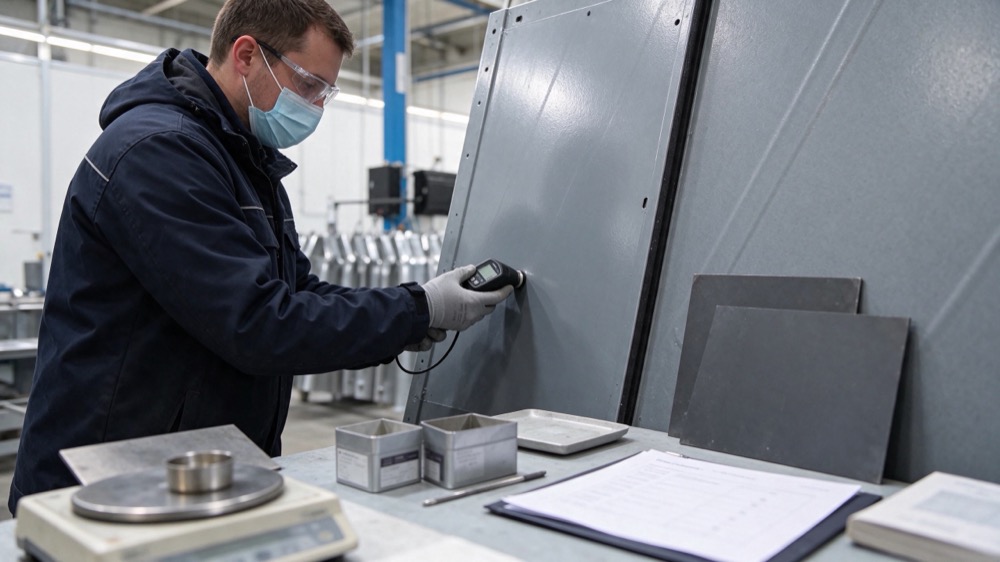
Epoxy is often a strong candidate for demanding chemical service. However, "chemical resistant" is not a universal property.
Resistance depends on:
- Chemical identity and concentration.
- Contact duration.
- Exposure temperature.
- Cleaning frequency.
- Whether the coating is fully cured.
For medical equipment housings, test the actual disinfectant and cleaning procedure. For industrial cabinets, evaluate the relevant lubricants, cleaners, or process chemicals.
Neither chemistry automatically establishes antimicrobial performance, medical suitability, or resistance to every solvent.
Do not rank corrosion protection by resin name alone.
Substrate condition, pretreatment, edges, welds, film continuity, and curing all influence performance. A well-prepared hybrid-coated panel can be more useful than an epoxy-coated component with poor cleaning or incomplete coverage.
Require comparative testing on the actual substrate and pretreatment system. Results from unrelated laboratory panels are not interchangeable.
For visible indoor products, color consistency can carry more commercial weight than an unused chemical-resistance advantage.
Hybrid coatings are attractive where customers expect consistent white, pastel, gloss, or textured finishes. Their improved overbake stability can be valuable when part thickness varies across a load.
Both chemistries can provide good mechanical properties. Compare the actual grades for impact, bending, adhesion, scratch behavior, and assembly damage rather than assuming a universal winner.
Low-temperature formulations exist in both epoxy and epoxy-polyester families. Therefore, chemistry alone does not establish which product consumes less energy.
The relevant questions are:
1. What time-temperature combinations does the supplier approve?
2. How quickly does the actual component reach the required temperature?
3. Does the revised process reduce measured energy consumption?
4. Can throughput increase without compromising cure?
Cure schedules normally refer to the part's metal temperature—not simply the oven-air setting.
A heavy bracket and a thin panel can enter the same oven yet experience different thermal histories. Profile representative parts before changing the line.
Lower-temperature curing may reduce energy demand, while faster curing may improve capacity. Neither benefit should be converted into a savings percentage without production measurements.
"Indoor" does not always mean protected from sunlight.
Furniture near glazing, display fixtures beside windows, and entrance-area equipment may experience enough exposure to make color retention important.
If persistent sunlight is expected, evaluate a suitably specified polyester finish alongside epoxy and hybrid options. Do not force an indoor-only chemistry into an exposure it was not designed to tolerate.
This distinction is particularly important when a product range includes both interior and exterior doors, windows, or architectural components.
Overspray recovery can improve overall utilization, but the practical result depends on color changes, contamination control, reclaim management, and finish requirements.
A long production run in one color may have a different material balance from frequent short runs in many colors.
For a fair comparison, record:
- Fresh powder issued.
- Reusable powder remaining.
- Powder discarded during cleaning.
- Powder deposited on accepted and rejected parts.
This avoids mistaking high first-pass transfer efficiency for low total material consumption.
For manufacturers operating across markets, purchase price is only one part of procurement economics.
With subsidiaries in China, Indonesia, and Saudi Arabia, Yinda Technology's commercial context makes regional requirements especially relevant. Compare delivery schedules, minimum order quantities, batch consistency, storage instructions, and technical communication.
Do not assume that every subsidiary stocks every formulation. Confirm the supply arrangement for the exact grade and destination.
A modest powder-price saving can disappear if stock shortages interrupt production.
A controlled trial is more useful than a generic claim that one chemistry is "better."
Document the substrate, pretreatment, color, gloss, texture, film-thickness range, chemical exposures, and mechanical requirements.
Separate essential performance from desirable features. Otherwise, you risk paying for protection the product does not need.
Request the technical data sheet, safety data sheet, density, cure schedule, storage conditions, and supporting performance results.
Use the same color and finish where practical. Pigments, textures, and special effects can alter both cost and application behavior.
Test normal production geometry, including recesses, edges, welds, and different metal thicknesses.
Maintain controlled pretreatment and record application settings. Confirm that each coating is processed within its own approved cure window.
Record powder consumption, energy use, line speed, labor, film thickness, and rejection causes.
Assess cost per accepted part only after both candidates meet the agreed requirements.
Before a large conversion, verify the result across repeat runs. A successful sample proves feasibility; repeatable production establishes purchasing confidence.
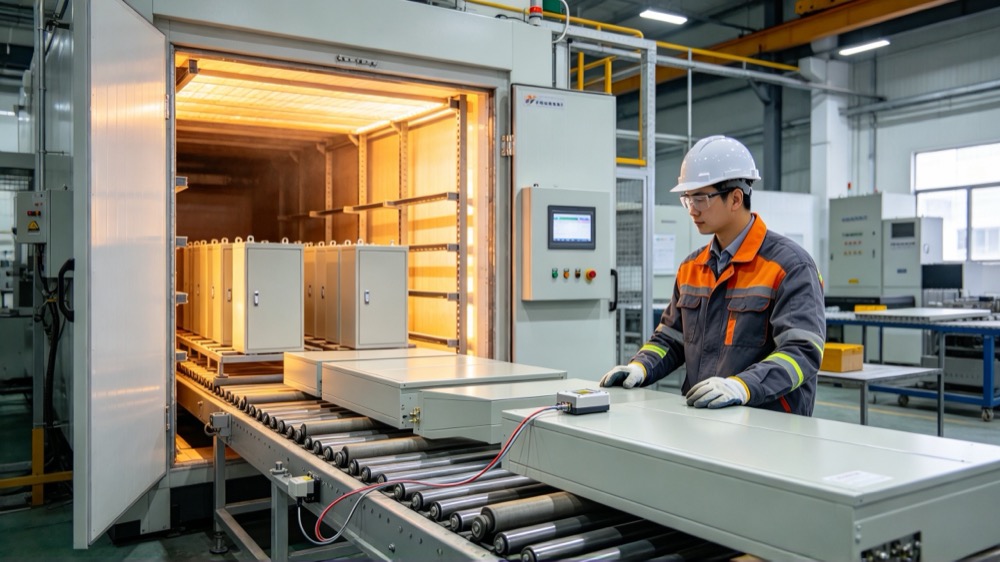
| Product or operating condition | Practical starting point |
|---|---|
| Office furniture, shelving, and decorative hardware | Hybrid for a balanced decorative indoor finish |
| Appliance housings with demanding color consistency | Hybrid, subject to appearance and process trials |
| Indoor industrial parts with aggressive chemical exposure | Epoxy candidate, validated against actual chemicals |
| Medical equipment housings | Compare both against cleaning and device requirements |
| Indoor electrical cabinets | Hybrid is a useful starting point; confirm exposure and specifications |
| Sunlit or exterior-facing doors and windows | Evaluate an appropriate weather-resistant system |
These are starting points, not automatic approvals. Broad labels such as "medical equipment" or "new-energy vehicle component" do not define a coating specification.
For routine decorative indoor applications, hybrid powder coating is often the strongest starting point for balancing appearance, protection, and production cost.
Epoxy deserves closer consideration when demanding chemical or functional requirements create value that a general-purpose hybrid cannot demonstrate.
Contact Yinda Technology with your substrate, product drawings, finish requirements, exposure conditions, annual volume, and current curing profile. Request an epoxy-versus-hybrid proposal and a production-trial plan focused on cost per accepted part—not simply price per kilogram.
No. Powder price depends on formulation, color, finish, quantity, and supply terms. Applied cost also depends on density, thickness, utilization, curing, and rejects.
It is often a strong candidate for demanding exposure. However, confirm resistance to the actual chemical, concentration, temperature, and contact duration.
Conventional hybrids are primarily intended for interiors. Better light stability than epoxy does not establish suitability for long-term exterior exposure.
There is no universal winner. Compare the approved cure schedules and measured energy consumption of specific formulations on representative parts.
Use the selected product's technical guidance and the application requirements. Validate coverage, appearance, and protection before approving a lower thickness.
Potentially, for suitable components. Neither chemistry alone establishes regulatory compliance, biocompatibility, antimicrobial performance, or disinfectant resistance.
- [AkzoNobel Interpon — Hybrid Technology]. Manufacturer guidance on epoxy-polyester chemistry, indoor applications, mechanical properties, and improved color and heat stability relative to epoxy. [interpon]
- [AkzoNobel Interpon — Epoxy]. Manufacturer overview of epoxy coating properties and limitations under weathering exposure. [shop.interpon]
- [AkzoNobel Interpon — Epoxy-Polyester Hybrid]. Manufacturer guidance on indoor applications, mechanical properties, overbake resistance, and exterior-use limitations. [shop.interpon]
- [AkzoNobel Interpon — Interpon 700]. Product-specific evidence for hybrid applications and a lower-temperature-curing option; not a universal specification for all hybrids. [interpon]
- [Products Finishing — Selecting the Best Powder Coating Product for the Price]. Applied-cost comparison using film thickness, specific gravity, and material utilization. The metric example above is an illustrative calculation based on these principles. [pfonline]
- [Products Finishing — Curing Temps and Times]. Explanation of time at metal temperature and the distinction between part heating time and curing time. [pfonline]
- [Products Finishing — Low-Temperature-Cure Powder Coatings Offer Unique Opportunities]. Discussion of low-temperature epoxy and epoxy-polyester formulations and process considerations. [pfonline]


