Language


Views: 222 Author: Yinda Powder Coating Publish Time: 2026-06-07 Origin: Site


Content Menu
● What Are Powder Coatings and Liquid Paint in Automotive?
● Comparison: Powder Coatings vs Liquid Paint
● Durability, Corrosion Resistance and Long-Term Performance
● Environmental and Regulatory Advantages
● Process Efficiency, Throughput and Energy Use
● Design Flexibility, Aesthetics and Functional Effects
● How EV and Lightweighting Are Changing the Powder vs Liquid Equation
● Practical Selection Framework for Automotive Engineers
● Yinda Technology's Position in the Global Powder Coating Landscape
● When Powder Coatings Clearly Win – And When Liquid Still Makes Sense
● Clear Call to Action for Automotive Decision‑Makers
● Frequently Asked Questions (FAQ)
As an automotive coatings strategist working with Yinda Technology, I've seen first-hand how powder coatings are changing the economics, sustainability, and durability standards of vehicle finishing when compared with traditional liquid paint. For OEMs and tier‑1 suppliers in China, Indonesia, Saudi Arabia and beyond, the choice between powder and liquid is no longer just about color and gloss—it is about lifecycle cost, regulatory risk, and brand reputation in a low‑VOC future. [tiger-coatings]
Powder coatings are solvent‑free, finely ground thermoset or thermoplastic particles applied via electrostatic spray and cured under heat to form a continuous, high‑performance film. Liquid paint, by contrast, suspends pigments and binders in a solvent or waterborne medium and cures by solvent evaporation and chemical crosslinking. [finishingsystems]
In automotive applications, powder coatings increasingly serve wheels, underbody parts, structural components, aluminum profiles, EV battery components, and accessories, while liquid paint remains dominant on exterior body panels and complex plastic parts. For a manufacturer like Yinda—active in architectural profiles, doors and windows, new energy vehicles, medical devices, hardware and electricals—this dual reality is crucial when advising customers on coating system design. [martinsc]
| Factor | Powder coatings for automotive applications | Liquid paint for automotive applications |
|---|---|---|
| Durability | High impact, scratch and abrasion resistance; excellent corrosion protection for metal parts. (tiger-coatings) | Good cosmetic performance but more prone to chipping, scratching and fading over time in harsh conditions. (martinsc) |
| Environmental impact | Near‑zero VOC, minimal hazardous waste, overspray reclaimable up to ~95% in optimized lines. (finishingsystems) | Often contains VOCs and hazardous air pollutants; higher impact on air emissions and worker exposure. (european-coatings) |
| Film thickness | Uniform high‑build coats in a single pass; ideal for edges and complex metal geometries. (finishingsystems) | Lower film build per coat; edges and recesses may require multiple passes or careful process control. (crestcoating) |
| Aesthetic variety | Broad range of smooth, textured, metallic, matte and glossy finishes with evolving special effects. (tiger-coatings) | Extremely wide color and effect library; historically stronger for ultra‑smooth, Class‑A body finishes. (tiger-coatings) |
| Application efficiency | High transfer efficiency and automated recovery; less rework and scrap when process is stable. (finishingsystems) | More overspray loss; difficult to reclaim; sensitive to application skill and booth conditions. (finishingsystems) |
| Substrate flexibility | Historically focused on metals, but new low‑temperature and UV‑curable powders expand to plastics, wood and composites. (solutions.covestro) | Very flexible on metals, plastics and composites; widely used on exterior body and interior trim. (tiger-coatings) |

From a lifecycle cost perspective, powder coatings consistently deliver a tougher, more resilient film than most conventional liquid systems used on metal parts. Once cured, the powder layer shows strong resistance to stone chipping, scratches, and UV‑driven fading, which is critical for wheels, chassis components, battery housings and structural aluminum profiles. [crestcoating]
By comparison, liquid paint films—especially thinner, solventborne or economy formulations—are more likely to chip at edges, peel under mechanical stress and require earlier refinishing. From a total cost of ownership view, that means more warranty claims, more touch‑up work and higher repaint volumes over the life of the vehicle fleet. [pcimag]
For Yinda's automotive and construction customers operating in high‑UV, coastal or desert climates such as Indonesia and Saudi Arabia, powder coatings are often specified precisely to mitigate aggressive corrosion and sand‑blast style abrasion. [made-in-china]
The coatings industry is moving decisively toward low‑VOC, low‑emission technologies, driven by the European Green Deal, the UN sustainability goals and national clean‑air regulations in major markets. Powder coatings align perfectly with this regulatory trajectory because they are essentially solvent‑free, generating negligible VOCs and very little hazardous waste when overspray recovery systems are in place. [european-coatings]
Liquid paints, even when waterborne, still rely on co‑solvents and can contribute to VOC emissions that trigger stricter permitting and worker‑safety requirements in large paint shops. As an OEM or tier‑1 supplier, that translates into more complex environmental reporting, potential carbon‑tax exposure and higher operational risk if legislation tightens. [european-coatings]
Industry market reports confirm a strong growth trend for sustainable coatings, highlighting powder, waterborne and UV‑curable systems as key technologies capturing share from traditional solventborne products. This is why Yinda continues to invest in environmental new materials and energy‑saving technologies as part of its R&D roadmap. [chinapowdercoating]
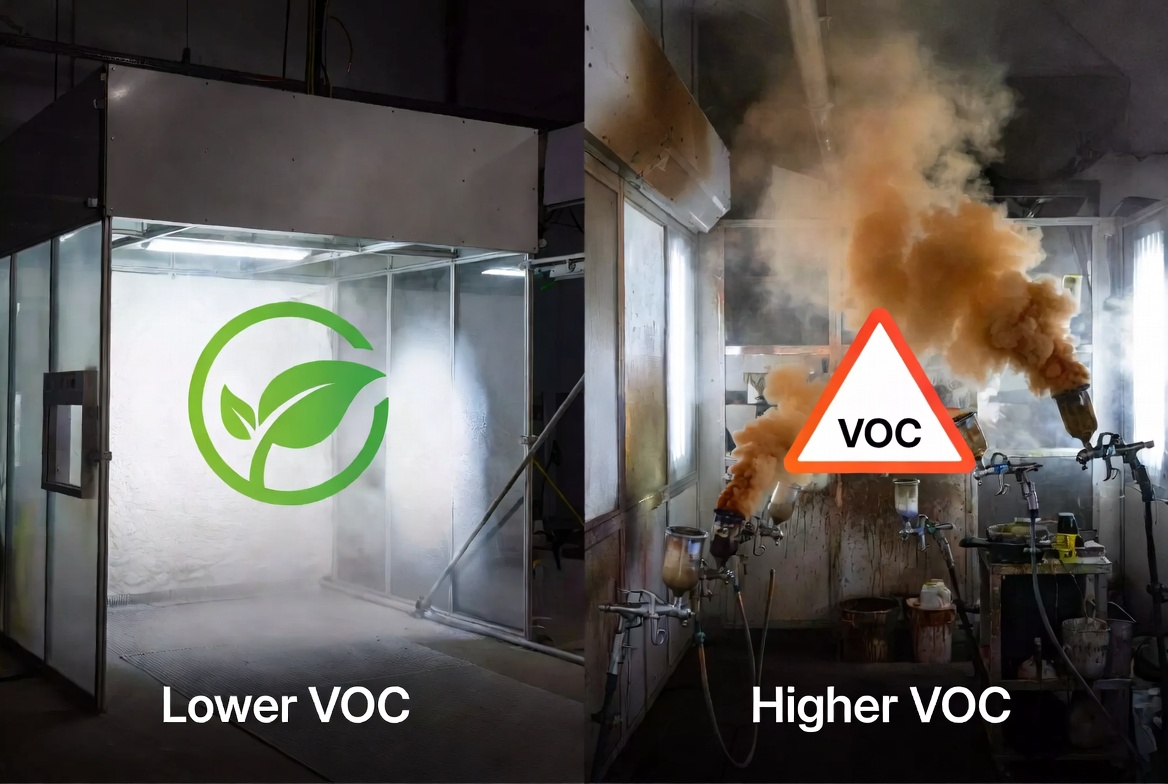
From a process engineering standpoint, powder coatings offer several operational efficiencies for automotive lines:
- High transfer efficiency and overspray reclaim reduce material waste and stabilize cost per part. [finishingsystems]
- Single‑coat high film build simplifies application on complex metal parts and sharp edges. [martinsc]
- Automated booths and reciprocators enable consistent quality, supported by inline QC and digital monitoring. [chinapowdercoating]
Historically, the main limitation of powder in automotive has been curing temperature, with conventional powders requiring 150–200°C and therefore being restricted to metal substrates. Emerging low‑temperature and UV/IR‑curable powder technologies are rapidly changing this picture, enabling faster curing, lower energy consumption and compatibility with heat‑sensitive plastics and composites. [solutions.covestro]
Liquid paint booths remain attractive where:
- You need ultra‑smooth Class‑A finishes for exterior body panels.
- The existing CAPEX is heavily invested in wet spray infrastructure.
- Complex multi‑layer effect systems (primer–basecoat–clearcoat) are already validated and certified.
But when an automotive plant evaluates line modernization or greenfield investment, powder coating now often offers a more compelling case on energy, waste and labor per coated part. [ralsonics]
Modern powder coatings are far removed from the limited color cards of two decades ago; they now cover glossy, matte, metallic, smooth, textured and special‑effect finishes designed for both automotive and architectural markets. New functional powders integrate nanoparticle additives for self‑cleaning, antimicrobial, anti‑static and high‑scratch‑resistance performance—critical in EV interiors, medical devices and high‑touch surfaces. [tiger-coatings]
Liquid paint still leads in ultra‑high DOI (distinctness of image) finishes for outer body panels and in some complex tri‑coat or candy effects where legacy suppliers have huge installed color libraries. However, for wheels, trims, underbody and structural parts, buyers increasingly accept or even prefer the robust, slightly more "industrial premium" look provided by powder systems. [pcimag]
As a manufacturer with architectural, EV, medical, hardware and appliance customers, Yinda leverages this design flexibility to offer unified color families and textures across different components and regions—helping brands maintain consistent visual identity from building façade to car park and medical facility equipment. [indoent]
Beyond traditional body‑in‑white coatings, electrification and lightweighting are reshaping the way engineers think about powder coatings vs liquid paint. EV platforms use more aluminum extrusions, battery enclosures, structural castings and composite parts, many of which are perfect candidates for advanced powder systems. [chinapowdercoating]
Three trends stand out for automotive decision‑makers:
1. Battery and high‑voltage safety
- Powder coatings can provide thick, pinhole‑free insulation and corrosion protection on battery housings and busbars, reducing the risk of short circuits and chemical attack. [chinapowdercoating]
- Anti‑static and electrically functional powders are emerging to manage charge dissipation and EMI shielding in EV electronics. [european-coatings]
2. Lightweight aluminum and mixed materials
- As more aluminum profiles replace steel, especially in body structures and chassis, powder systems with excellent edge and crevice coverage offer strong protection in aggressive road environments. [solutions.covestro]
- Low‑temperature powder technologies open the door for mixed materials—where some components are metallic and others are composite—on the same or parallel finishing lines. [chinapowdercoating]
3. Smart and adaptive surfaces
- Thermochromic and photochromic powders are being explored for signal indicators, temperature sensors and aesthetic effects on both interior and exterior EV components. [pcimag]
- Self‑healing and self‑cleaning surfaces can significantly reduce maintenance requirements for shared mobility fleets and commercial vehicles. [european-coatings]
For a company like Yinda, with R&D centers and senior technical teams averaging more than 20 years' experience, these shifts create opportunities to co‑develop specialized EV powder solutions with global OEMs and tier‑1 suppliers. [made-in-china]
When I work with plant engineers and procurement teams comparing powder coatings vs liquid paint for automotive applications, we typically follow a simple decision framework:
1. Define the component role and exposure
- Structural or safety‑critical metal under severe corrosion or stone‑chip exposure → strongly consider powder.
- Class‑A exterior panels where ultra‑smooth appearance is the top priority → liquid remains a strong option.
2. Assess environmental and regulatory obligations
- Sites under pressure to reduce VOCs or achieve green‑building or low‑carbon certifications gain clear advantages from powder. [ralsonics]
3. Calculate total cost of ownership
- Compare not only material price per kg, but also transfer efficiency, overspray reclaim, rework rate, energy use and expected field failure rate. [finishingsystems]
4. Evaluate available line and CAPEX
- Existing liquid lines may favor incremental optimization, but greenfield or major retrofits are ideal moments to switch high‑volume parts to powder.
5. Leverage supplier partnerships
- Engage with a coating supplier who can support process design, testing, and regional service—for example, Yinda's teams in China, Indonesia and Saudi Arabia deliver on‑site audits and tailored formulations built around local climate and regulatory conditions. [indoent]
This structured approach usually reveals that powder coatings are superior for many metal components, while liquid paint remains relevant for certain high‑appearance or legacy systems where requalification costs are high. [crestcoating]
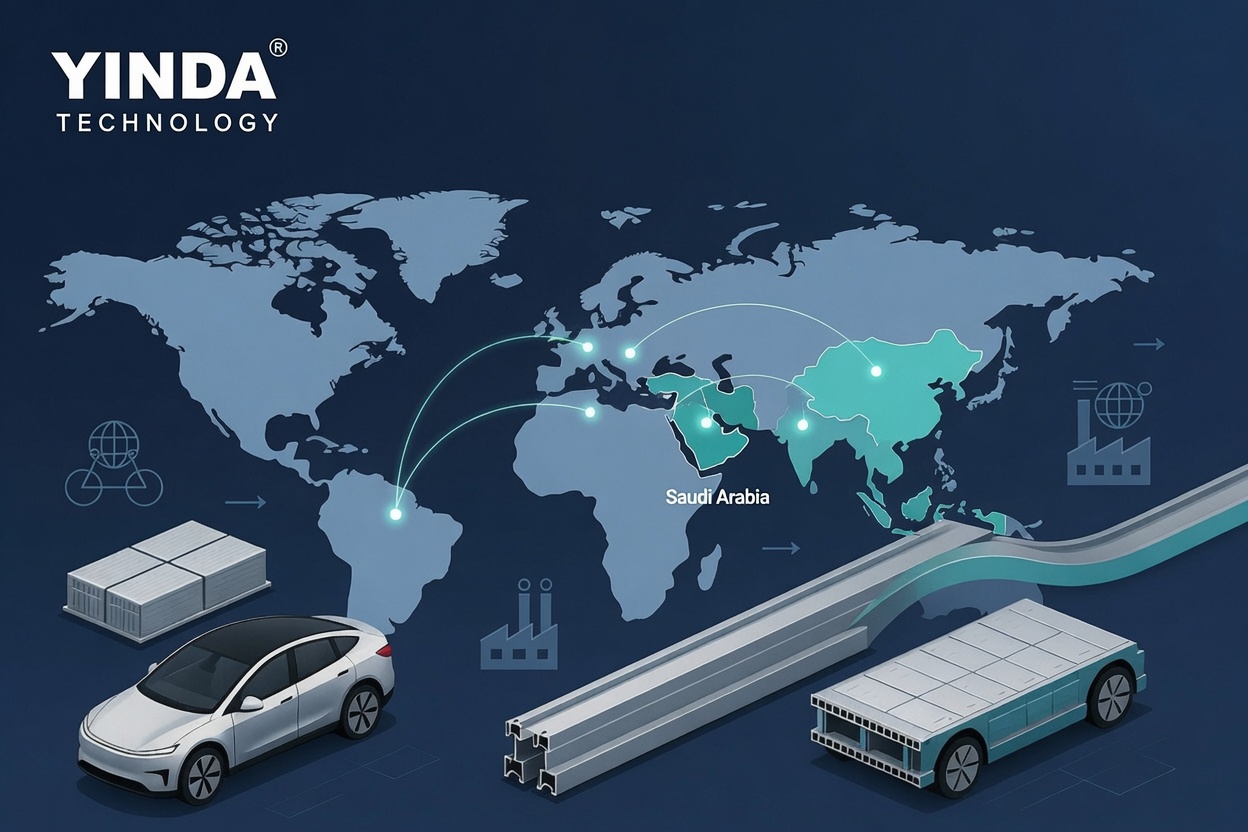
Market analyses show that China is now the world's largest powder coatings market, accounting for roughly half of global production and driving innovation in eco‑friendly, high‑performance formulations. Yinda Technology, founded in Foshan and expanded through subsidiaries in Guangzhou, Indonesia and beyond, is part of this innovation wave, combining independent R&D centers, advanced testing instruments and modern production lines. [made-in-china]
The company integrates powder coatings, environmental new materials and energy‑saving technology promotion into a single modern enterprise, which is exactly the profile regulators and OEMs look for when selecting long‑term strategic partners. With a senior R&D team of more than 20 years' experience and an 8,000‑square‑meter production base in Indonesia alone, Yinda is positioned to serve both domestic Chinese aluminum processors and international automotive and industrial customers seeking reliable regional supply. [indoent]
For automotive buyers, this means access to localized technical support, fast color‑matching and stable lead times—critical differentiators when optimizing multi‑plant, multi‑country supply chains.
Choose powder coatings for automotive applications when:
- You need maximum durability and corrosion resistance on metal parts such as wheels, underbody components, battery housings, roof rails and structural profiles. [tiger-coatings]
- Your sustainability strategy prioritizes low‑VOC, low‑waste processes and improved worker safety. [pcimag]
- You are modernizing or expanding finishing capacity and can justify investment in powder booths and curing ovens. [ralsonics]
- You want to future‑proof components for EV, charging infrastructure, medical devices and architectural environments with smart or functional coatings. [european-coatings]
Stick with or complement with liquid paint when:
- You require ultra‑high‑gloss, mirror‑like finishes on visible exterior body panels.
- Your line is deeply optimized and certified for specific liquid systems and the cost of requalification is prohibitive. [tiger-coatings]
- You are dealing with complex substrates and geometries that remain challenging for current powder technology.
In practice, many high‑performing automotive plants operate hybrid strategies, using powder for robustness and sustainability on many components, while maintaining liquid for specific high‑appearance zones.
If you are currently evaluating powder coatings vs liquid paint for automotive applications, especially in regions such as China, Southeast Asia or the Middle East, your next competitive advantage will likely come from re‑engineering your coating mix, not just negotiating price per kilogram.
Yinda Technology can partner with your engineering and procurement teams to:
- Audit existing liquid or powder lines and identify quick‑win conversion opportunities.
- Develop customized powder formulations for EV components, aluminum profiles, medical devices or hardware exposed to harsh climates.
- Support pre‑production trials, performance testing and certification to your OEM standards.
To move from theory to practical results, engage our technical team for a component‑level assessment and pilot run, and benchmark the real‑world performance of powder versus your current liquid system.
1. Are powder coatings always more durable than liquid paint in automotive applications?
In most metal component scenarios, powder coatings provide better resistance to impact, scratching, abrasion and corrosion than typical liquid paints, especially in outdoor or high‑wear environments. However, final performance still depends on formulation quality, surface preparation and curing conditions. [martinsc]
2. Can powder coatings replace liquid paint on all car body parts?
Not yet. Powder is excellent for wheels, underbody parts, structural components and accessories, but liquid paint still dominates on Class‑A exterior body panels where ultra‑high gloss and established multi‑coat systems are difficult to replace. [martinsc]
3. Are powder coatings really more environmentally friendly?
Yes. Powder coatings are essentially solvent‑free and can achieve near‑zero VOC emissions when combined with overspray recovery and efficient curing, while many liquid systems still release VOCs and may contain hazardous pollutants. [finishingsystems]
4. How do curing temperatures limit powder coating applications?
Conventional powders require curing at 150–200°C, which historically restricted them to metal substrates. New low‑temperature and UV‑curable powders reduce this constraint and are expanding use to plastics, composites and MDF parts in automotive and other industries. [solutions.covestro]
5. What makes Yinda Technology a strong partner for automotive coatings?
Yinda combines independent R&D, advanced testing, and modern production facilities in China and Indonesia with expertise in powder coatings, environmental new materials and energy‑saving technology promotion. This enables tailored solutions, regional service and consistent quality for automotive, architectural, EV, medical and hardware customers. [made-in-china]
1. Finishings Systems – "Powder Coating vs. Paint" – overview of process efficiency and waste reduction for powder coatings. [Link] [finishingsystems]
2. TIGER Coatings – "Powder Coatings vs Liquid Paint For Automotive Applications" – industry insight into durability and performance for automotive parts. [Link] [tiger-coatings]
3. Martin Specialty Coatings – "The Benefits of Powder Coating vs. Other Coatings" – discussion of durability, finish quality and cost-effectiveness. [Link] [martinsc]
4. Crest Coating – "Powder Coating vs. Liquid Painting: A Comprehensive Comparison" – detailed comparison of liquid and powder performance in industrial use. [Link] [crestcoating]
5. Guangzhou Yinda Powder Coatings Co., Ltd. / Yinda Technology – corporate overview and capabilities in powder coatings and environmental materials. [Link] [made-in-china]
6. Indoent – "Yinda Technology Powder Coating Enterprise Invests in Indonesia Plant" – details on Indonesian base and strategic expansion. [Link] [indoent]
7. European Coatings – "Sustainable change in the coatings industry: the rise of environmentally friendly additives" – trends in sustainable additives and regulations. [Link] [european-coatings]
8. Covestro – "Powder Coatings" – technical overview of powder coating resins and sustainability advantages. [Link] [solutions.covestro]
9. Chinapowdercoating.com – "Emerging Technologies Shaping the Future of Powder Coatings" – UV/IR curing, low-temperature powders and smart coatings. [Link] [chinapowdercoating]
10. PCI Magazine – "Market Report Highlights Eco-Friendly Shift in U.S. Paints and Coatings" – macro trends in sustainable paint and coatings demand. [Link] [pcimag]
11. Ralsonics – "New Trends in Eco-Friendly Surface Coating Chemistries" – summary of waterborne, powder, UV‑curable and bio‑based innovations. [Link] [ralsonics]


