Language


Views: 220 Author: Yinda Powder Coating Publish Time: 2026-08-20 Origin: Site


Content Menu
● What Is Thermal Spray Aluminum?
>> Where TSA Is Typically Used
● What Is Multi-Layer Industrial Powder Coating?
>> Common Powder-Coating Configurations
● TSA vs. Multi-Layer Powder Coating at a Glance
● How the Protection Mechanisms Differ
>> TSA Uses an Active Metallic Layer
>> Powder Coating Creates a Controlled Barrier
● Environmental Suitability for Pipeline Valves
>> Offshore and Splash-Zone Valves
>> Buried and Underground Valve Service
● The Most Important Decision Variables
>> 4. Inspection and Quality Control
● A Practical Selection Framework
● Why Multi-Layer Powder Coating Is Often the Smarter Factory Option
● FAQ
>> 1. Is TSA better than powder coating for offshore pipeline valves?
>> 2. Can multi-layer powder coating be used on oil and gas valve bodies?
>> 3. What is the main advantage of Thermal Spray Aluminum?
>> 4. Does TSA require a sealer?
>> 5. What causes premature valve-coating failure?
>> 6. Can powder coating withstand high temperatures in oil and gas service?
>> 7. How should coating quality be checked on pipeline valves?
For oil and gas pipeline valves, the right external protection system is not simply a coating choice—it is an asset-integrity decision. Thermal Spray Aluminum (TSA) and multi-layer industrial powder coating can both deliver high corrosion resistance, but they work through fundamentally different mechanisms and suit different operating realities.
For valve manufacturers, EPC contractors, and pipeline operators, the practical question is: Which system provides the right balance of corrosion protection, operating temperature capability, mechanical durability, repairability, and project economics? The answer depends on the valve's location, corrosion exposure, installation method, operating temperature, inspection access, and required service life.
At Yinda Technology, we approach powder coating selection as a full-system engineering exercise. A coating must be compatible not only with the steel substrate, but also with valve geometry, surface preparation, curing capability, handling conditions, and the final operating environment.

Thermal Spray Aluminum (TSA) is a metallic corrosion-protection process. Aluminum wire is melted by an electric arc or combustion flame and atomized onto abrasive-blasted steel. The molten particles impact the prepared substrate and build a rough, porous aluminum layer.
For offshore and highly corrosive environments, TSA is commonly applied with a sealer. The aluminum layer offers a combination of barrier protection and sacrificial protection. When moisture reaches exposed steel through localized damage, the aluminum can preferentially corrode and help reduce corrosion activity at the steel interface.
A typical offshore specification may call for approximately 200 μm of thermally sprayed aluminum, followed by a pore-filling sealer. In one widely used offshore system guide, the sealer is required to fill the metallic coating pores without creating a measurable film above the TSA layer.
TSA is often considered for:
- Offshore valve assemblies
- Splash-zone equipment
- Subsea-adjacent structures
- Marine atmospheres with persistent salt exposure
- High-temperature external valve surfaces
- Assets where long maintenance intervals are critical
Its suitability for elevated-temperature service is a major differentiator. Certain TSA sealing systems are stated for service temperatures up to 600°C, depending on the complete approved system and application conditions.
Multi-layer industrial powder coating is a factory-applied polymeric protection system. It typically begins with a fusion-bonded epoxy (FBE) corrosion-protection layer, then adds one or more functional layers to improve mechanical durability, moisture resistance, chemical resistance, UV stability, or handling performance.
For oil and gas pipeline valves, a multi-layer system may include:
1. Epoxy primer or FBE base layer for adhesion and corrosion resistance
2. Functional intermediate layer for moisture, chemical, or impact resistance
3. Protective topcoat for abrasion, weathering, color retention, or handling durability
The powder is electrostatically applied to properly prepared and preheated steel, then cured into a continuous film. Unlike TSA, a powder coating system is designed mainly as a high-integrity dielectric barrier between steel and the surrounding environment.
A multi-layer valve coating system may include:
- Single-layer FBE for corrosion protection
- Dual-layer FBE with abrasion-resistant overcoat
- Dual-layer FBE with moisture-resistant overcoat
- Epoxy primer plus polyester or polyurethane powder topcoat
- High-build epoxy powder systems for demanding atmospheric or buried applications
Commercial FBE systems for pipeline and valve applications are available in single, dual, and multi-layer designs. Dual-layer systems can add abrasion resistance, impact resistance, reduced water permeability, and improved chemical resistance.
| Performance Factor | Thermal Spray Aluminum (TSA) | Multi-Layer Industrial Powder Coating |
|---|---|---|
| Primary protection mechanism | Metallic barrier plus sacrificial action | High-build polymer barrier protection |
| Typical coating structure | Aluminum spray layer plus sealer | Epoxy/FBE base layer plus functional layers |
| Surface profile requirement | Very critical; aggressive blast profile is usually required | Very critical; clean, controlled blast profile is essential |
| High-temperature capability | Strong option for elevated-temperature external service | Depends on resin chemistry and cure system |
| Marine and offshore exposure | Excellent potential when correctly specified and sealed | Effective when system is qualified for the exposure |
| Mechanical impact resistance | Can be vulnerable to localized deformation or rough handling | Can be engineered with abrasion- and impact-resistant layers |
| Complex valve geometry | Requires skilled spray access and line-of-sight control | Well suited to factory coating of many complex geometries |
| Film continuity | Naturally porous before sealing | Continuous film when correctly applied and cured |
| Cosmetic finish | Industrial metallic appearance | Wide color, gloss, and identification options |
| Repair approach | Requires compatible metal-spray or approved repair procedure | Can often be repaired with compatible powder or liquid repair systems |
| Production efficiency | Specialized equipment and trained operators required | Efficient for controlled, repeatable factory production |
| Best-fit environment | Offshore, marine, high-temperature, long-life exposure | Factory-coated valves for atmospheric, buried, handling-intensive, and many pipeline applications |
The critical distinction is not the coating thickness alone. It is how the system responds after damage.
TSA is not a conventional paint film. Aluminum is deposited as a metallic layer, and its corrosion behavior can help protect the underlying steel where local discontinuities occur. However, TSA performance depends heavily on:
- Surface cleanliness
- Blast profile
- Aluminum wire quality
- Spray parameters
- Target thickness
- Sealer penetration
- Edge and geometry management
The thermal-spray application specification published by AMPP addresses surface preparation, coating application, defect repair, thickness measurement, adhesion testing, and the use of sealers or topcoats.
Expert perspective: TSA should never be treated as "spray aluminum and forget it." On valves, ports, flanges, bolting interfaces, sharp edges, body-to-bonnet transitions, and inaccessible recesses require detailed application planning. Poor access or inadequate sealing can compromise the value of an otherwise high-performing metallic system.
A multi-layer industrial powder coating is designed to isolate the steel from water, salts, oxygen, and chemicals. The system relies on adhesion, cured-film integrity, thickness consistency, and resistance to impact or abrasion.
A high-performance powder system can be tailored for the actual risks facing a valve:
- FBE base coat: adhesion and corrosion resistance
- Moisture-resistant overcoat: reduced water uptake
- Abrasion-resistant overcoat: protection during transport, installation, and directional drilling
- UV-resistant topcoat: better durability during outdoor storage
- Chemical-resistant topcoat: improved resistance to industrial exposure
For example, dual-layer FBE systems can use an abrasion-resistant overcoat to protect the corrosion-control layer from installation damage. Other dual-layer systems are designed for high-temperature wet conditions and improved chemical resistance.
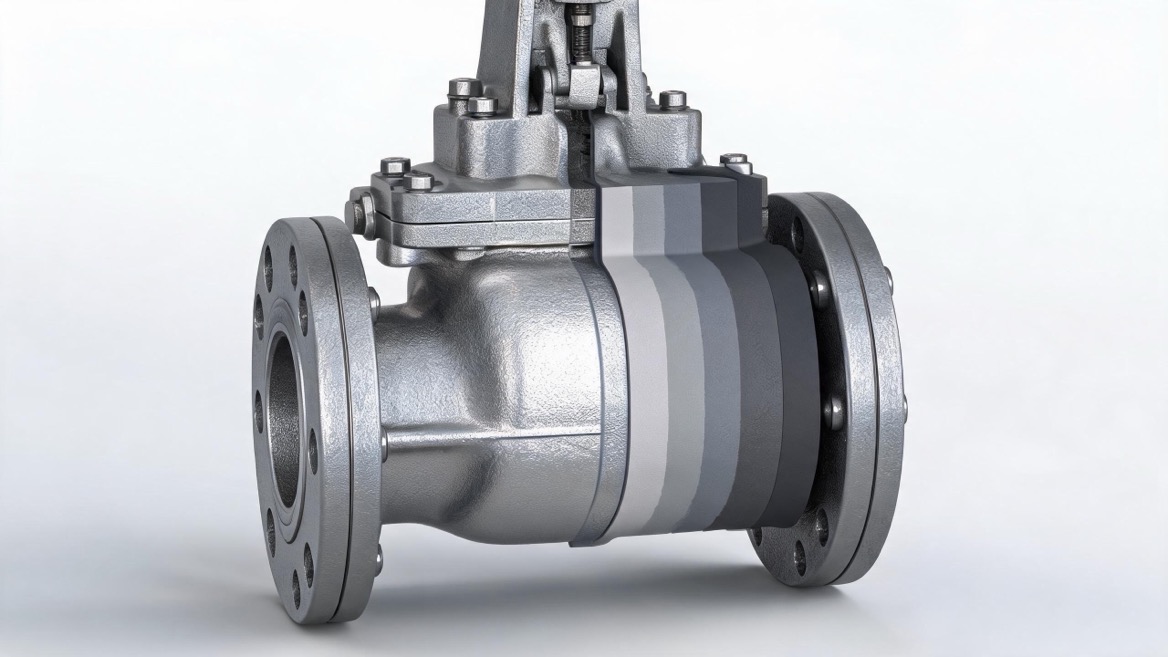
For offshore valves exposed to salt spray, cyclic wetting, humidity, and difficult maintenance access, TSA is often a strong candidate. Its metallic protection mechanism and high-temperature capability can support demanding external service conditions.
However, TSA is not automatically the best answer for every offshore valve. Large numbers of small valves, intricate cast geometries, high-volume repeat orders, and color-coded identification needs may make a qualified multi-layer powder system more practical.
Choose TSA when:
- The valve will experience severe marine exposure.
- Operating temperature is beyond the capability of polymeric systems.
- Long maintenance intervals are a primary asset requirement.
- The project specification explicitly requires TSA.
- Specialized application and inspection resources are available.
For refineries, gas plants, compressor stations, and industrial valve packages, multi-layer powder coating often provides the better manufacturing solution. It offers repeatable thickness control, efficient batch production, cleaner application, and flexible appearance.
A properly engineered powder system can protect valve bodies against humidity, industrial pollutants, rain, UV exposure, handling damage, and moderate chemical contact.
Choose multi-layer powder coating when:
- The valves are factory coated in volume.
- A smooth, consistent, color-coded finish is required.
- Handling and impact resistance are important.
- The application environment is atmospheric, buried, or moderately corrosive.
- Fast and controlled production is needed.
Buried valves face a different risk profile: soil stress, water exposure, cathodic protection interaction, installation damage, and repair accessibility. In this context, multi-layer FBE systems are often highly relevant because they can combine corrosion protection with abrasion or moisture resistance.
Pipeline coating research has repeatedly emphasized that coating performance depends on the full service environment—including handling, storage, installation, soil conditions, temperature, and defect behavior—not only the nominal coating material.
For buried valve bodies, the design team should evaluate:
- Soil resistivity and moisture
- Cathodic protection design
- Installation method
- Expected impact and abrasion
- Operating temperature
- Weld-joint and flange transition protection
- Holiday detection acceptance criteria
- Field repair procedure
A good coating specification begins with the service conditions, not a preferred material name.
Temperature can immediately narrow the choice.
TSA is often selected where steel temperatures are high or where thermal cycling makes conventional polymeric systems less suitable. Multi-layer powder coatings can also perform at elevated temperatures, but the limit depends on the resin chemistry, cure schedule, thickness, and exposure medium.
For example, certain dual-layer FBE configurations are designed for continuous operating temperatures up to 180°C when used as a specified system.
Practical rule: Do not select a coating based solely on its maximum advertised temperature. Confirm continuous operating temperature, excursion temperature, thermal cycling, insulation condition, and chemical exposure.
Valves are not straight pipes. They have cast surfaces, flanges, stem areas, body joints, cavities, bolts, lifting lugs, and sharp transitions.
Powder coating is usually advantageous for complex factory-produced valve bodies because electrostatic application can provide relatively uniform coverage across many surfaces. TSA requires line-of-sight spray access and experienced operator control, particularly around recessed zones.
If valves will be transported long distances, stored outdoors, handled by forklifts, or installed in abrasive soil, mechanical durability becomes central.
A multi-layer powder system with an abrasion-resistant overcoat can protect the base corrosion layer from damage. This is especially relevant where coating damage may occur before the valve is commissioned.
TSA offers excellent corrosion resistance, but its surface can be rough and may require careful protection during handling. The sealer itself must also remain intact.
Both technologies demand disciplined quality control.
For TSA, key inspection points include:
- Surface cleanliness and profile
- Aluminum wire certification
- Coating thickness
- Adhesion
- Surface continuity
- Sealer penetration
- Edge coverage
- Repair quality
For multi-layer powder coating, key controls include:
- Substrate cleanliness
- Preheat temperature
- Powder storage and handling
- Film thickness by layer
- Gel time and cure confirmation
- Adhesion
- Holiday testing where specified
- Impact and flexibility tests
- Visual inspection of recesses and edges
Industry research has found that in-service coating failures frequently begin at flaws. This makes application discipline and inspection as important as the nominal chemistry of the selected coating.
Use this five-step process before writing a valve coating specification.
1. Define the exposure zone. Identify whether the valve is offshore, coastal, industrial atmospheric, buried, immersed, insulated, or exposed to process leakage.
2. Map the service temperature. Include continuous temperature, cyclic conditions, upset conditions, and the risk of heat transfer through insulation.
3. Assess mechanical hazards. Consider lifting, storage, transport, field installation, soil movement, abrasion, and potential impact.
4. Confirm coating-access constraints. Review valve geometry, masking requirements, critical sealing faces, stem areas, threaded interfaces, and areas that cannot accept coating build-up.
5. Specify verification tests. Define surface preparation, dry-film thickness, adhesion, holiday detection, cure confirmation, repair procedures, and acceptance criteria before production begins.
For many oil and gas valve manufacturers, multi-layer industrial powder coating offers the most controllable combination of corrosion resistance, production efficiency, and finish quality.
Its key advantages include:
- Solvent-free application
- High material utilization
- Repeatable factory process control
- Fast curing after preheating
- Flexible colors for valve identification
- Strong adhesion on correctly prepared steel
- Options for high-build, abrasion-resistant, and moisture-resistant designs
- Compatibility with automated or semi-automated production lines
Yinda Technology develops powder coating solutions for industrial components where corrosion resistance, consistent appearance, environmental performance, and manufacturing efficiency must work together. With operations in China, Indonesia, and Saudi Arabia, we can support customers serving regional and international industrial markets.
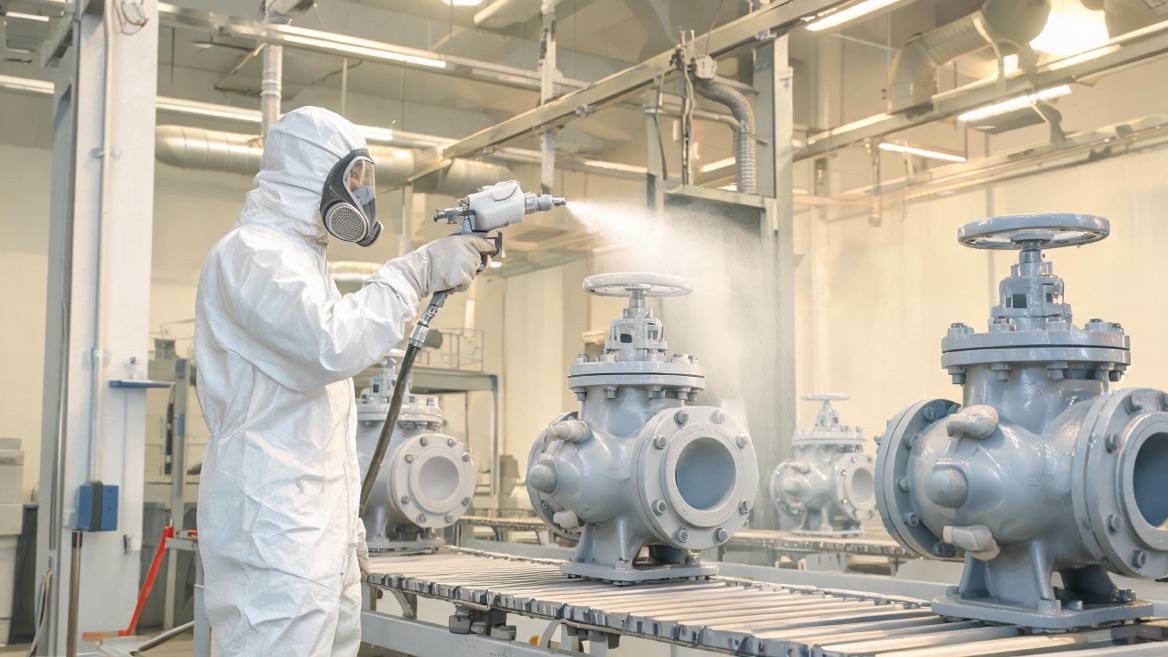
Choose Thermal Spray Aluminum (TSA) when the valve will operate in severe offshore or marine conditions, requires strong high-temperature performance, and justifies the specialist application and inspection requirements of a metallic coating system.
Choose multi-layer industrial powder coating when you need a scalable, factory-controlled solution with excellent barrier protection, strong handling durability, efficient application, and flexibility for valve appearance and functional layer design.
The strongest specification is not the thickest coating or the most expensive process. It is the system that matches the valve's real exposure, geometry, installation risk, operating temperature, maintenance strategy, and project acceptance criteria.
Need a coating system matched to your oil and gas valve application? Contact Yinda Technology to discuss substrate condition, valve design, target film build, operating environment, and a tailored multi-layer powder coating solution.
Not always. TSA is often preferred for severe marine exposure and high-temperature service, but a qualified multi-layer powder coating can be more practical for factory production, complex valve geometry, and applications requiring strong mechanical durability and color identification.
Yes. Fusion-bonded epoxy and multi-layer powder systems are widely used for pipeline, valve, and fitting protection. The system should be selected according to temperature, corrosion exposure, mechanical damage risk, and project specifications.
Its key advantage is its metallic protection mechanism. TSA can provide corrosion protection in severe environments and is especially valuable where high-temperature resistance and long maintenance intervals are required.
In many TSA systems, yes. The sprayed aluminum layer is porous, and the sealer is used to fill pores and improve environmental resistance. Sealer selection and application are critical to overall performance.
Common causes include inadequate surface preparation, incorrect film thickness, poor curing, incomplete edge coverage, mechanical damage, contamination, unsuitable material selection, and insufficient inspection. Coating failures often initiate at defects rather than across intact coating surfaces.
Some industrial powder coating systems can perform at elevated temperatures, but suitability depends on the exact chemistry and complete system design. Certain dual-layer FBE systems are specified for continuous service up to 180°C.
A quality plan should include surface-profile checks, cleanliness verification, thickness measurement, adhesion testing, visual inspection, cure verification for powder systems, and holiday testing where required by the project specification.
2. [Sherwin-Williams — NORSOK M-501 Systems Guide]
3. [Axalta — Nap-Gard Fusion Bonded Epoxy Powder Coatings]


