Language


Views: 267 Author: Yinda Powder Coating Publish Time: 2026-08-09 Origin: Site


Content Menu
● 1. Aluminium Windows, Doors, and Architectural Profiles
● 2. Metal Fencing, Railings, and Gates
● 3. Home Appliances and Kitchen Equipment
● 4. Metal Furniture and Storage Systems
● 5. Outdoor Furniture, Bicycles, and Garden Equipment
● 6. Automotive and New Energy Vehicle Components
● 7. Electrical Enclosures and Hardware Products
● 8. Medical Equipment and Healthcare Furniture
● 9. Lighting, Displays, and Retail Fixtures
● 10. Industrial Machinery and Equipment
● How to Choose a Powder Coating System
>> Step 1: Define the End-Use Environment
>> Step 2: Confirm the Substrate and Pretreatment
>> Step 3: Select the Appropriate Resin Technology
>> Step 4: Validate the Finish on Real Parts
>> Step 5: Control Production Consistency
● Why Powder Coating Decisions Matter
● FAQs
>> 1. What everyday products are commonly powder coated?
>> 2. Is powder coating better than liquid paint?
>> 3. Which powder coating is best for outdoor metal?
>> 4. Can aluminium be powder coated?
>> 5. How long does powder coating last outdoors?
>> 6. Can powder coating resist scratches and corrosion?
>> 7. What information should I provide when requesting a powder coating quotation?
Powder coating is one of the most practical finishes behind the products people touch every day. From aluminium window frames and refrigerator panels to electric vehicle components, medical equipment, shelving, railings, and outdoor furniture, powder-coated surfaces combine protection, appearance, and production efficiency in one engineered layer.
For manufacturers, architects, distributors, and product designers, the key question is not simply whether a part can be powder coated. It is whether the selected powder coating system matches the substrate, environment, performance target, curing window, and expected service life. A coating that performs well on indoor steel furniture may not be suitable for a coastal aluminium façade or a component exposed to chemicals, heat, or repeated cleaning.
At Yinda Technology, we work with industrial customers across architectural profiles, doors and windows, new energy vehicles, medical equipment, hardware, and electrical appliances. Our experience is straightforward: the best coating decision begins with the end-use condition—not with colour alone.

Powder coating is a dry finishing process. A finely ground coating powder is electrostatically applied to a prepared surface, typically metal, then heated to melt, flow, and cure into a continuous protective film.
Unlike conventional liquid paint, powder coating generally does not rely on an added solvent carrier. This makes it an attractive option for manufacturers seeking durable finishes, efficient material use, and lower solvent-related process concerns.
A complete powder coating system usually includes:
- Substrate preparation, such as cleaning, conversion treatment, or blasting
- Powder selection, based on resin chemistry and end-use requirements
- Electrostatic application, for controlled film build and coverage
- Curing, using a validated time-and-temperature profile
- Quality inspection, including appearance, adhesion, thickness, and corrosion-related testing where required
The powder itself matters, but it is only one part of the outcome. Poor surface preparation, unsuitable film thickness, incorrect curing, or inadequate edge coverage can reduce the performance of even a high-grade formulation.
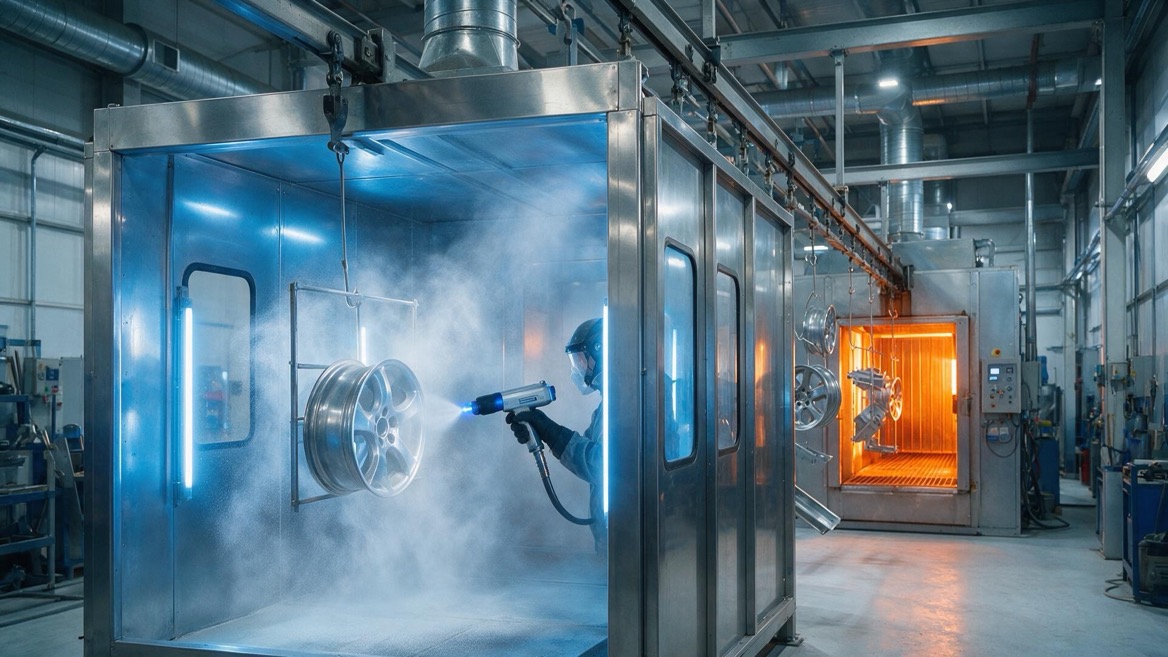
Powder-coated aluminium is widely used in window frames, curtain walls, doors, balcony systems, louvers, and façade components. These products must maintain colour and surface integrity while facing sunlight, moisture, temperature changes, airborne pollutants, and daily handling.
For exterior architectural work, weatherability is often the first technical requirement. Polyester-based and super-durable powder coating systems are commonly selected for outdoor exposure because they can provide strong colour and gloss retention when the formulation and application process are matched to the project environment.
When specifying an architectural powder coating, define:
- The project location and climate
- UV exposure and façade orientation
- Coastal, industrial, or urban pollution exposure
- Substrate alloy and pretreatment process
- Required colour, gloss, texture, and metallic effect
- Performance standard required by the project specification
A dark matte finish may look premium, but it can also reveal scratches, fingerprints, or installation damage more easily than a textured or medium-gloss alternative. Product design and maintenance expectations should be considered before final colour approval.
Fences, railings, gates, bollards, and guardrails are constantly exposed to impact, moisture, dirt, and cleaning. Powder coating gives fabricated steel or aluminium a decorative finish while helping protect the substrate from corrosion.
However, a coating cannot compensate for weak fabrication details. Sharp edges, weld spatter, open joints, poor drainage, and untreated corrosion traps can become early failure points.
For outdoor metalwork, the project team should check:
1. Whether welds are smooth and fully cleaned
2. Whether corners and edges can achieve adequate film coverage
3. Whether the part design avoids water retention
4. Whether pretreatment is suitable for the metal substrate
5. Whether the coating system matches the exposure severity
For projects near the sea or in highly humid industrial zones, choosing a system solely by colour card is a costly mistake. The coating supplier should understand the installation environment before recommending a finish.
Many refrigerators, washing machines, ovens, range hoods, microwave housings, shelving units, and small appliance components use powder coating. These products require a finish that looks clean in a retail setting and remains functional through handling, cleaning, heat, and occasional chemical contact.
Appliance producers often balance several priorities:
| Requirement | Why It Matters |
|---|---|
| Appearance consistency | Panels and components must match across production batches |
| Scratch resistance | Surfaces face transport, assembly, installation, and daily use |
| Chemical resistance | Household cleaners can affect unsuitable finishes |
| Film uniformity | Thin or uneven areas can reduce visual quality and protection |
| Production efficiency | Stable application supports consistent output |
For indoor appliances, epoxy-polyester hybrid coatings can be a practical choice where appearance and general durability are important. For components with higher heat exposure or more demanding chemical conditions, the formulation should be reviewed against the actual operating environment.
Office desks, bed frames, school furniture, filing cabinets, lockers, retail displays, warehouse shelving, and gym equipment are frequently powder coated. These items experience repeated contact, abrasion, knocks, and cleaning, making coating toughness especially important.
The right finish is not always a smooth gloss. Textured powder coatings can help disguise small surface imperfections and everyday wear. Fine-texture finishes are often chosen for shelving, cabinets, and metal furniture because they provide a more forgiving visual surface while maintaining a professional appearance.
For furniture manufacturers, consistent colour matching is critical. A buyer may order the same product months later, so the powder supplier should support controlled batch production, sample approval, and a clear colour-management process.
Outdoor products need more than an attractive colour. Patio chairs, bicycle frames, lawn equipment, barbecue frames, planters, playground components, and garden tools may face sunlight, rain, dust, abrasion, and seasonal temperature swings.
The coating system should be selected based on real exposure rather than product category. A bicycle stored indoors has different needs from one used daily in a humid coastal city. Likewise, a garden tool that is stored dry after use faces a different risk profile from fixed outdoor equipment.
Outdoor durability depends on the full system: surface preparation, powder chemistry, film thickness, curing, design details, and maintenance all contribute to field performance.
Powder coating is used across automotive and new energy vehicle supply chains for wheels, chassis-related parts, brackets, battery housings, seat frames, suspension-related components, and selected under-hood metal parts.
This is a demanding application area. Components can encounter stone impact, road salt, humidity, fluids, thermal cycling, vibration, and strict visual requirements. Automotive customers therefore need a coating partner that can discuss the part's function—not only offer a standard colour.
A practical assessment should include:
- Base metal and part geometry
- Corrosion target and test method
- Mechanical damage risk
- Exposure to oil, coolant, cleaners, or road chemicals
- Electrical insulation or conductivity needs
- Cure limitations caused by assembly design
- Required appearance after assembly
The automotive segment is expected to be among the faster-growing powder coating application areas, reflecting demand for durable finishes in vehicles and related components.
Electrical cabinets, switchgear housings, server racks, lighting fixtures, toolboxes, brackets, hinges, handles, and hardware fittings often use powder coating for protective and decorative finishing.
For these products, appearance is only one consideration. The finish may need to support electrical insulation requirements, corrosion resistance, heat tolerance, or compatibility with assembly processes. Threaded areas, grounding points, sealing surfaces, and tight tolerances also require attention before coating begins.
Masking plans should be agreed early. Applying powder coating over a critical contact point can create assembly delays, poor grounding, or costly rework. A coating supplier with process experience can help identify these issues before mass production.
Powder coating is used on hospital beds, diagnostic equipment housings, carts, cabinets, mobility aids, laboratory furniture, and other metal healthcare products. These surfaces can be cleaned frequently and may be exposed to disinfectants, humidity, and high-touch use.
The coating specification should be based on the cleaning regime used in the target market. "Medical" is not a single performance category. A bedside cabinet, a laboratory rack, and a diagnostic device enclosure may have very different chemical-resistance, appearance, and cleanliness requirements.
For healthcare equipment, ask the coating supplier for guidance on:
- Compatibility with intended cleaning agents
- Resistance to repeated wipe-down cycles
- Appropriate gloss and texture for visual cleanliness
- Colour consistency for brand or facility standards
- Formulation documentation required by the project
Any antimicrobial or hygiene-related claim should be supported by applicable testing and used with carefully defined wording. A protective finish does not replace cleaning, infection-control practices, or equipment maintenance.
Outdoor light poles, LED housings, retail display frames, signage structures, exhibition stands, and point-of-sale fixtures benefit from powder coating because these products often need both visual impact and physical durability.
For lighting products, heat management and outdoor exposure are important considerations. For retail fixtures, fast colour matching and a refined surface may matter more. Metallic, matte, textured, and special-effect finishes can differentiate a product line, but every effect should be evaluated on the actual part geometry and production line.
A flat sample panel is useful, but it is not the same as a finished product. Review coating samples on the final substrate, with actual welds, corners, bends, and assembly details.
Powder coating is also widely used for machinery guards, control panels, agricultural equipment, construction equipment, racks, cabinets, pumps, frames, and fabricated industrial components.
These products are often exposed to rough handling, oil, chemicals, vibration, outdoor storage, and long service cycles. The right coating solution starts by defining the most severe expected condition, not the average condition.
For example, a machine intended for a dry indoor workshop may need a very different system from equipment installed outdoors in a chemical-processing facility. This is why coating selection should involve engineering, purchasing, production, and quality teams from the beginning.
A reliable selection process reduces trial-and-error, protects brand reputation, and helps prevent avoidable rework.
Identify whether the product will be used indoors, outdoors, in coastal conditions, in high humidity, near chemicals, or under elevated temperatures. Describe the real environment in writing.
Steel, galvanised steel, aluminium, and cast metal require different preparation approaches. Pretreatment quality strongly affects coating adhesion and long-term corrosion resistance.
Epoxy systems are often valued for adhesion and corrosion-related performance in indoor or protected environments. Polyester systems are widely used for exterior durability. Hybrid, polyurethane, acrylic, and specialty systems may be selected when a project has specific visual, chemical, mechanical, or curing requirements.
Test panels are useful, but production parts reveal the true application challenge. Confirm film thickness, edge coverage, appearance, adhesion, cure, and any required performance tests before release.
Document the approved powder grade, colour, gloss, application parameters, curing window, and inspection method. Consistency is what turns a good sample into a dependable production finish.
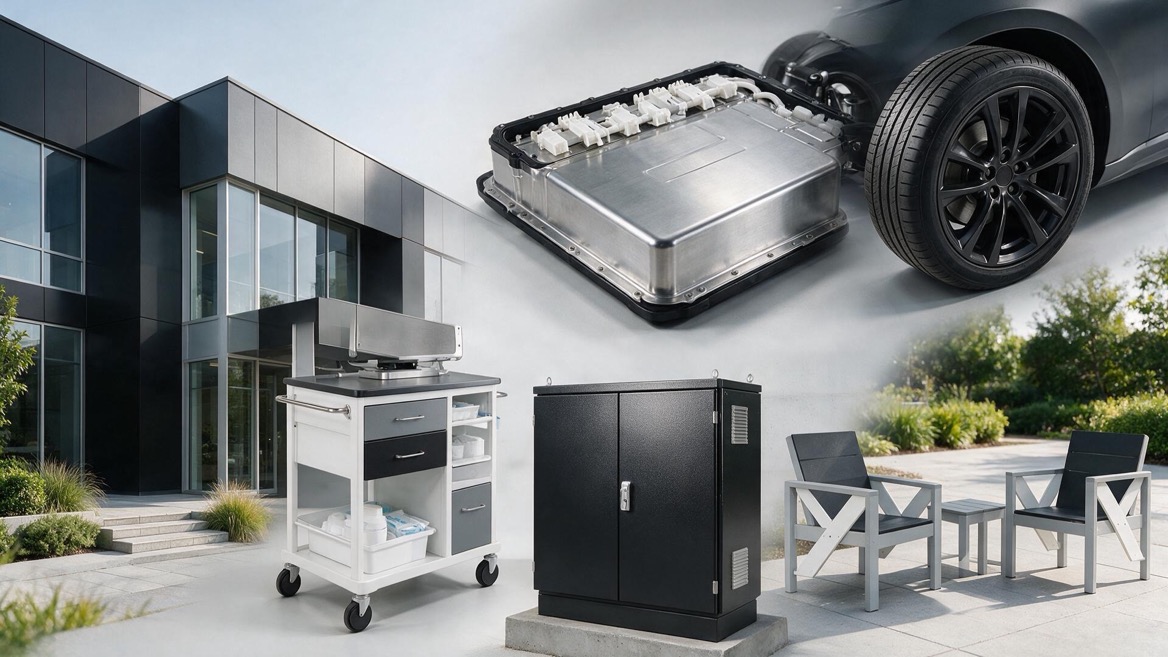
Powder coating has become essential across construction, consumer goods, transport, electrical products, medical equipment, and general industry because it can combine appearance with reliable surface protection. The global market was estimated at USD 11.5 billion in 2025 and is projected to continue expanding as manufacturers seek durable, lower-solvent finishing technologies.
But powder coating should never be treated as a simple commodity purchase. The lowest initial price may create higher downstream costs if colour variation, poor coverage, rework, corrosion failure, or inconsistent curing disrupts production.
At Yinda Technology, we develop and manufacture powder coatings and environmentally focused material solutions for customers who need more than a standard finish. With operations and service capabilities connected to China, Indonesia, and the Middle East, we support manufacturers serving architectural, automotive, medical, hardware, and electrical markets.
Need a powder coating matched to your product, climate, and production process? Contact Yinda Technology to discuss your substrate, performance target, colour requirement, and application line. Our technical team can help you move from an initial sample to a more dependable coating specification.
Common powder-coated products include window frames, doors, railings, refrigerators, washing machines, metal furniture, shelving, bicycles, garden tools, electrical cabinets, lighting fixtures, automotive components, and medical equipment.
Neither option is universally better. Powder coating can offer strong durability, material efficiency, and low-solvent processing advantages, while liquid coatings may be more suitable for certain substrates, complex assemblies, field repairs, or very thin-film applications. The correct choice depends on the product and process.
Exterior polyester or super-durable polyester systems are commonly considered for outdoor metal products. The appropriate grade depends on UV exposure, humidity, coastal conditions, pollution level, substrate, pretreatment, and project performance requirements.
Yes. Aluminium is commonly powder coated for architectural profiles, doors, windows, furniture, transportation parts, and electrical products. Proper cleaning and pretreatment are essential for adhesion and corrosion-related performance.
Service life varies significantly by coating formulation, pretreatment, film thickness, climate, product design, installation quality, and maintenance. A supplier should assess the project environment before providing a meaningful performance recommendation.
Powder coating can provide good resistance to scratching, impact, and corrosion when the coating system is correctly selected and applied. Performance is not determined by powder alone; substrate preparation and curing are equally important.
Provide the substrate type, product use, operating environment, required colour or reference, gloss level, texture preference, production method, curing capability, expected order volume, and any testing or specification requirements.
1. [Yinda Technology — Company Profile and Global Operations]
2. [Grand View Research — Powder Coatings Market Size, Share and Trends]
3. [American Coatings Association — Powder Coatings Leaders See Beyond Today's Challenges]
4. [Kroma Coatings — 10 Common Products You Didn't Know Were Powder Coated]
5. [Yinda Technology — Powder Coating Manufacturer Overview]


