Language


Views: 282 Author: Yinda Powder Coating Publish Time: 2026-08-22 Origin: Site


Content Menu
● Why Mining Metal Chutes Need More Than a Standard Powder Coating
● TGIC Polyester Powder Coating for Mining Chutes
>> Key Strengths of TGIC Polyester Coatings
>> Limits of TGIC Polyester on High-Wear Zones
● Polyurethane Powder Coating for Mining Chutes
>> Key Strengths of Polyurethane Powder Coating
>> Limits of Polyurethane Powder Coating
● TGIC Polyester vs. Polyurethane: Performance Comparison
● The Most Important Decision: Identify the Wear Mechanism
>> Ask These Questions Before Selecting a Coating
● Practical Specification Strategy for Mining Equipment
>> Recommended Coating Development Process
● Coating Alone Is Not a Wear Liner
● Which Powder Coating Should You Choose?
● FAQ
>> Is TGIC polyester powder coating suitable for outdoor mining equipment?
>> Is polyurethane powder coating more abrasion-resistant than TGIC polyester?
>> Can powder coating replace rubber or ceramic liners inside a mining chute?
>> What film thickness is suitable for a mining equipment chute?
>> Does polyurethane powder coating require a higher curing temperature?
>> How can I improve the lifespan of a coated mining chute?
Mining equipment metal chutes operate in one of the most punishing coating environments: constant ore flow, impact from coarse particles, dust accumulation, humidity, wash-down chemicals, and outdoor exposure. For these components, selecting abrasion-resistant TGIC polyester powder coating or polyurethane powder coating should not be reduced to a simple hardness comparison.
At Yinda Technology, we view coating selection as a system decision. The coating must match the chute's ore type, particle size, transfer speed, substrate preparation, film thickness, curing capability, corrosion exposure, and maintenance strategy. Both TGIC polyester and polyurethane powders can protect mining equipment metal chutes, but they deliver value in different operating conditions.
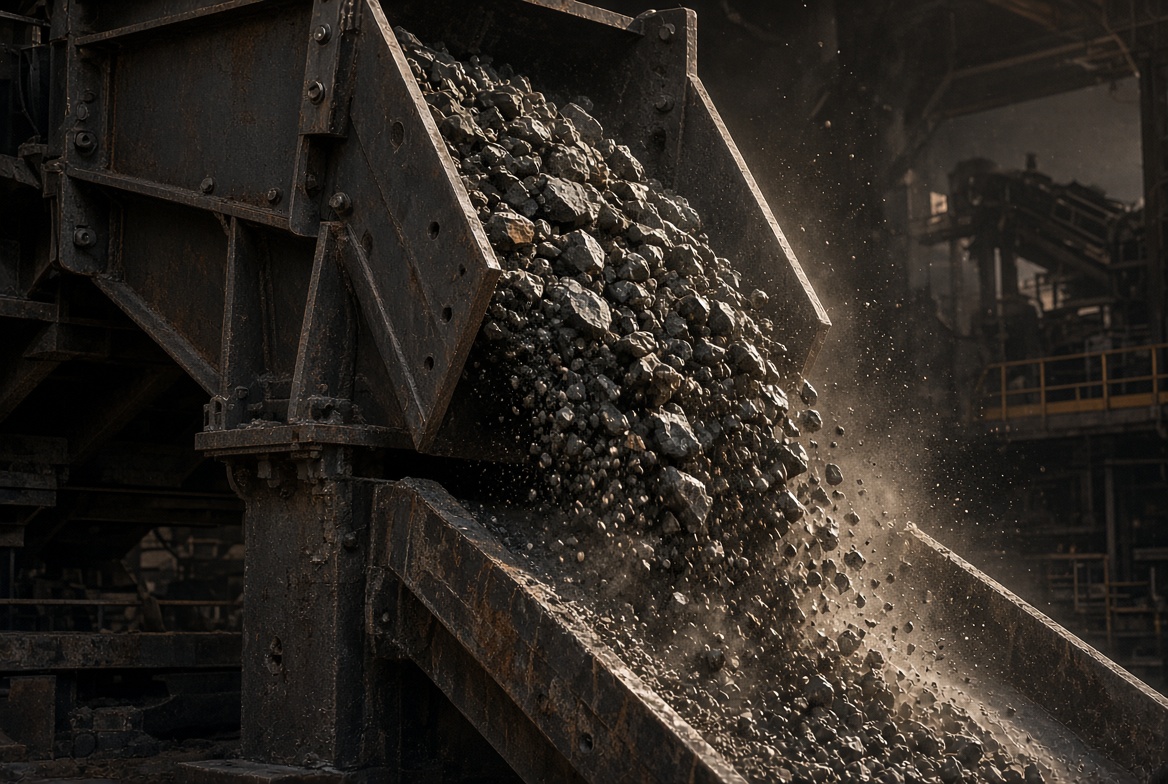
A mining chute is not simply a painted steel part. It is a material-transfer surface exposed to repeated sliding abrasion, localized impact, vibration, possible corrosive moisture, and often ultraviolet light. Damage usually begins at edges, weld seams, bolt holes, sharp bends, and high-flow impact zones.
For exterior mining equipment, a powder coating also needs to retain its protective barrier after long periods of sun, rain, dust, and temperature cycling. A coating that is highly hard but brittle may crack under impact. A coating that is flexible but too soft may wear away rapidly in a concentrated ore-flow zone.
The correct choice depends on the actual failure mechanism:
- Sliding abrasion: Fine ore, sand, mineral dust, and particles continuously rub against the chute surface.
- Impact abrasion: Larger rocks or sharp aggregates strike the surface at transfer points.
- Corrosion: Water, salt, acidic or alkaline residues, and process chemicals attack exposed metal.
- UV exposure: Outdoor equipment needs color and gloss retention, especially where appearance, identification, and safety coding matter.
- Mechanical deformation: Chute panels may flex, vibrate, or experience thermal expansion during operation.
For many mining projects, the best solution is not "the hardest powder." It is the coating system that maintains adhesion and barrier protection for the longest period in the real service environment.
TGIC polyester powder coating uses polyester resin cured with triglycidyl isocyanurate. It is widely used for exterior metal products because it balances weatherability, corrosion resistance, flexibility, impact resistance, and appearance.
An abrasion-resistant TGIC polyester powder coating can be formulated with resin selection, pigments, fillers, additives, and film-build design to improve wear resistance while preserving useful flexibility. This balance is particularly important for fabricated steel chutes that experience vibration, thermal movement, or intermittent impact.
TGIC polyester systems are known for broad exterior durability, strong film appearance, and tolerance across a practical curing window. They are commonly selected for industrial applications where equipment must resist outdoor aging while maintaining a consistent finish.
- Strong outdoor durability for mining equipment exposed to sunlight, rain, and changing weather.
- Good impact resistance and flexibility, helping the film tolerate vibration and minor substrate movement.
- Reliable corrosion protection when applied over properly pretreated steel and specified at sufficient film thickness.
- Good resistance to yellowing from overbake, which supports more forgiving production control.
- Wide color and gloss options for equipment identification, branding, and safety-related color coding.
- Efficient application economics for large-volume fabricated steel components.
TGIC polyester powder coatings can offer good mechanical and chemical resistance, flexibility, impact resistance, and overbake resistance. They can also be formulated for strong scratch, mar, chemical, solvent, and corrosion performance.
A standard TGIC polyester coating should not be treated as a direct replacement for heavy-duty liners in severe bulk-material transfer zones. If the chute carries sharp, large, high-velocity ore continuously, the coating can eventually erode, particularly at impact points.
For extremely aggressive service, a coating should be evaluated alongside alternatives such as:
- Ceramic-lined steel
- Rubber lining
- Polyurethane elastomer liners
- Wear plate
- Replaceable hardfacing systems
- A hybrid protection design combining powder coating on exterior surfaces with wear liners inside the chute
The most effective role for abrasion-resistant TGIC polyester is often external chute protection, moderate-wear internal areas, structural frames, covers, guards, access doors, and equipment where weathering and corrosion are as important as abrasion.
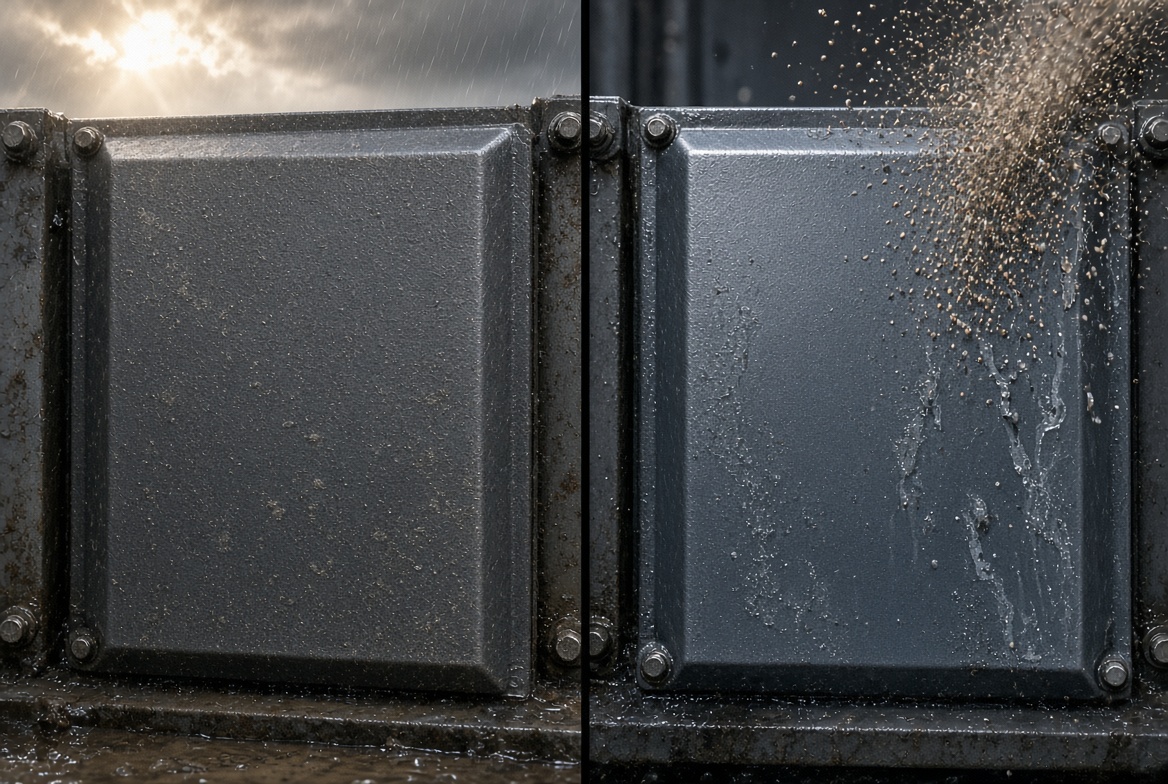
Polyurethane powder coating—often called urethane polyester powder coating—is a thermoset powder system based on polyester resin chemistry and isocyanate curing technology. It is valued for its smooth finish, strong mechanical properties, chemical resistance, and abrasion resistance.
For mining chutes, polyurethane powder coating is often considered when the component is exposed to abrasive dust, fuels, oils, chemicals, cleaning agents, or demanding wear conditions that require a tougher surface film. It is especially useful where the equipment owner prioritizes surface durability and chemical resistance in addition to outdoor appearance.
- Excellent abrasion and scratch resistance in many industrial coating applications.
- High surface hardness with a smooth, durable finish.
- Strong chemical resistance, useful around oils, greases, fuels, process residues, and cleaning chemicals.
- Good exterior durability when the correct formulation is selected.
- Attractive thin-film appearance, supporting premium machinery finishes.
- Good option for high-value equipment parts that require both performance and presentation.
Industry guidance commonly positions polyurethane powder coatings as strong performers for mechanical and chemical resistance, while noting their durable thin-film appearance. Urethane polyester powders are also recognized as one of the principal commercial polyester powder coating technologies.
Polyurethane powder coatings usually demand closer attention to curing conditions. Some systems require relatively high cure temperatures, which can become a practical limitation for heat-sensitive assemblies, certain cast components, or parts that may release gases during bake.
For complex mining fabrications, process engineers should confirm:
1. Metal temperature—not just oven air temperature.
2. Required cure schedule and allowable cure window.
3. Coating behavior on welded, cast, galvanized, or porous substrates.
4. Risk of outgassing, pinholes, or reduced adhesion.
5. Compatibility with pretreatment and primer systems.
6. Whether the chosen coating is intended for exterior UV exposure.
A polyurethane powder coating may provide excellent wear performance but still underperform if it is under-cured, applied over contaminated steel, or specified too thin for the service environment.
| Selection factor | Abrasion-resistant TGIC polyester | Polyurethane powder coating |
|---|---|---|
| Abrasion resistance | Good to very good when reinforced and correctly formulated | Often excellent, especially for demanding surface wear |
| Impact resistance | Generally strong, with useful flexibility | Good, but formulation-dependent |
| Flexibility | Typically strong for fabricated and vibrating steel components | Can be good, but may prioritize hardness and surface durability |
| Outdoor weatherability | Excellent for exterior mining equipment | Good to excellent with exterior-grade formulation |
| Corrosion resistance | Strong with correct pretreatment, film build, and system design | Strong, especially where chemical resistance is important |
| Chemical resistance | Good to very good | Often excellent |
| Cure tolerance | Broad and production-friendly | May require tighter cure control |
| Surface appearance | Good color, gloss, and texture versatility | Very smooth, premium appearance |
| Best-fit applications | Exterior chute structures, frames, covers, guards, moderate-wear components | High-value components requiring enhanced chemical and wear resistance |
| Cost position | Often more cost-efficient for broad industrial use | Often higher due to formulation and process requirements |
Neither chemistry automatically wins every mining chute project. A reinforced TGIC polyester may provide the better lifecycle value for outdoor steel equipment that needs weathering stability, impact tolerance, and scalable production. A polyurethane powder coating may be the better choice for components exposed to aggressive abrasive dust, oils, cleaning chemicals, and premium finish requirements.
Before specifying a powder coating, the project team should map where and how the chute fails. This is more useful than choosing based on a generic statement such as "abrasion-resistant."
1. What material moves through the chute?
Record mineral type, particle hardness, particle size distribution, moisture content, and sharpness.
2. Where does wear occur first?
Separate impact zones, sliding zones, edges, welds, external weather-exposed areas, and bolt connections.
3. How fast does the material move?
Higher transfer speed increases impact energy and can accelerate coating loss.
4. Is the surface exposed to chemicals?
Consider oils, fuel, cleaning agents, acidic slurry, alkaline dust, salt, and process water.
5. Will the chute remain outdoors?
If yes, UV stability and weathering should be part of the specification—not an afterthought.
6. What is the maintenance philosophy?
Determine whether planned recoating is acceptable or whether the system must support longer shutdown intervals.
This assessment often reveals that one coating specification should not cover the entire chute. For example, the chute exterior may use TGIC polyester for weathering and corrosion protection, while the internal impact zone uses a replaceable liner. This approach avoids forcing one coating to solve a problem better handled by a wear-engineered lining system.
A powder coating specification should include more than chemistry and color. It should define the preparation, application, curing, testing, and acceptance requirements needed to achieve repeatable field performance.
1. Inspect the substrate
Confirm steel grade, weld quality, sharp edges, porosity, corrosion condition, and potential contamination.
2. Specify surface preparation
Abrasive blasting and suitable pretreatment are critical for adhesion and corrosion resistance. Coating quality cannot compensate for poor substrate preparation.
3. Select the chemistry by exposure zone
Use abrasion-resistant TGIC polyester for exterior durability and balanced mechanical performance. Use polyurethane powder coating where enhanced chemical and wear resistance is the leading requirement.
4. Define target film thickness
The required dry-film thickness should be selected for the part geometry, expected wear, edge coverage, and corrosion exposure. Excessive film thickness can create curing and appearance issues, while insufficient thickness can reduce barrier protection.
5. Validate curing on real parts
Use metal-temperature verification. Large chute fabrications do not heat at the same rate as thin test panels.
6. Run application-specific tests
Evaluate adhesion, impact, abrasion, corrosion exposure, chemical resistance, and accelerated weathering as relevant to the project.
7. Conduct a field trial
Install coated sample panels or trial parts in the actual mining environment. Field feedback is the most valuable input for refining a coating system.
In our experience with industrial powder coating selection, the most common specification error is expecting a decorative or protective coating to perform like a thick, replaceable mining liner. Even a high-performance polyurethane powder coating is usually a thin protective film compared with rubber, ceramic, or polyurethane elastomer lining systems.
For a metal chute, use powder coating where it creates the most value:
- Protecting external steel from corrosion and UV degradation
- Improving cleanability and visual identification
- Protecting moderate-wear surfaces
- Reducing early rust formation at fabricated components
- Supporting consistent equipment branding and safety colors
- Providing a durable finish for guards, frames, panels, and enclosures
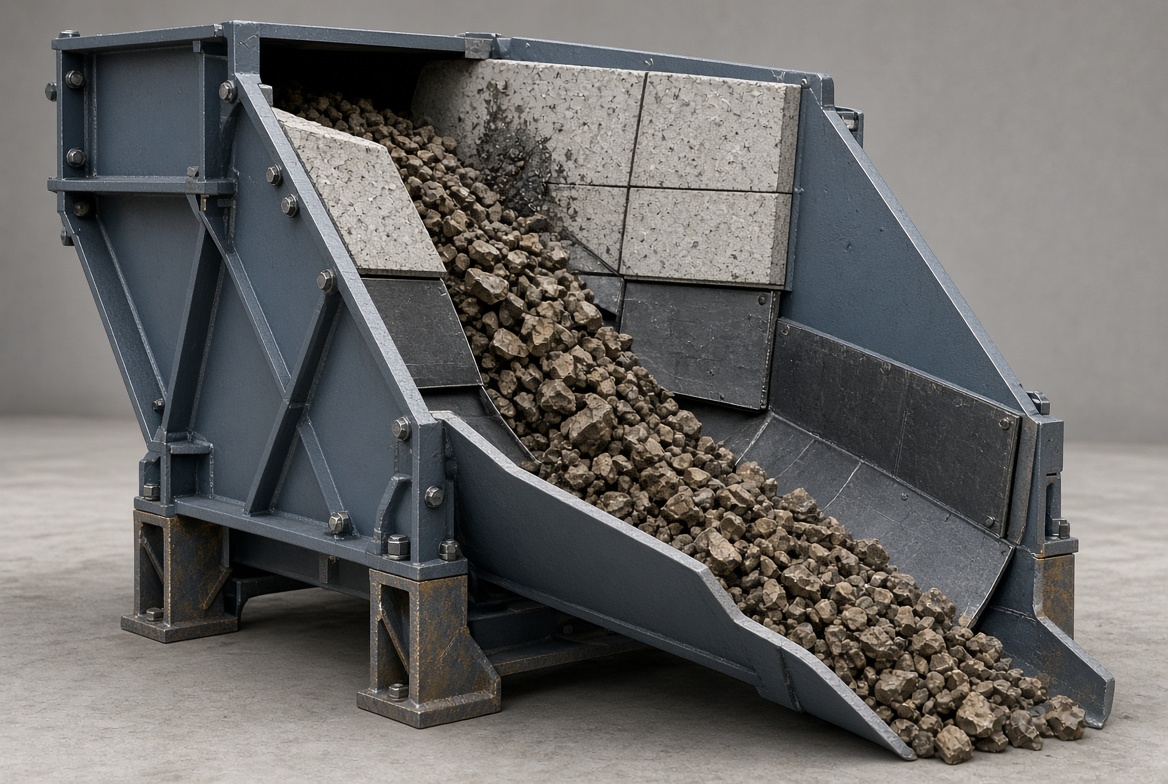
Use dedicated liners where material impact and sliding wear are severe. This division of functions can lower total maintenance cost because the exterior coating remains intact while internal sacrificial components are replaced only where wear is concentrated.
Choose abrasion-resistant TGIC polyester powder coating when your mining equipment metal chute needs a durable exterior finish with strong weathering, corrosion resistance, impact tolerance, flexibility, and cost-efficient production performance. It is a practical option for outdoor chute bodies, supports, covers, guards, and moderate-abrasion components.
Choose polyurethane powder coating when abrasion resistance, chemical resistance, smooth premium appearance, and mechanical surface durability are the dominant priorities. It is particularly suitable for high-value components exposed to abrasive dust, oils, chemicals, or repeated cleaning.
For the most severe internal ore-flow conditions, consider a combined system: powder coating for external corrosion and weather protection, plus engineered wear liners for internal impact and sliding zones.
Yinda Technology can help mining equipment manufacturers evaluate substrate condition, exposure severity, film-build requirements, curing capability, and color requirements to develop a powder coating system matched to the real operating environment. Contact our technical team to discuss an abrasion-resistant TGIC polyester or polyurethane powder coating solution for your metal chute project.
Yes. TGIC polyester powder coating is widely used for exterior industrial applications because it provides strong weatherability, corrosion resistance, flexibility, and impact resistance. The final performance depends on formulation, pretreatment, film thickness, and curing control.
In many applications, polyurethane powder coating provides stronger surface abrasion and chemical resistance. However, performance depends on the specific formulation and service conditions. A reinforced TGIC polyester may be a better overall choice when outdoor weathering, flexibility, impact resistance, and production efficiency are equally important.
Usually, no. Powder coating is typically a thin protective film, while rubber, ceramic, polyurethane elastomer, and wear plate systems are designed for severe impact and bulk-material abrasion. Powder coating is best used as part of a complete protection strategy.
The appropriate dry-film thickness depends on part geometry, corrosion exposure, expected wear, coating chemistry, and curing capacity. A technical coating supplier should define the target range after reviewing the equipment design and operating environment.
Some polyurethane powder systems require higher or more tightly controlled curing conditions than TGIC polyester systems. Always verify the coating supplier's technical data sheet and measure actual metal temperature during production.
Improve lifespan through proper abrasive blasting or pretreatment, edge preparation, correct coating selection, adequate film build, verified curing, protection of high-impact zones with liners, and routine inspection of welds, edges, and bolt areas.
1. [Sherwin-Williams: TGIC Polyester Powder Coatings]
2. [Allnex: TGIC Powder Coating Resins]
3. [SpecialChem: Powder Coating Formulation Guide]
4. [DuPont Powder Coating Technical Guide]
5. [Powder Coated Tough: Guide to Powder Coatings for Extreme Service Environments]


