Language


Views: 277 Author: Yinda Powder Coating Publish Time: 2026-08-23 Origin: Site


Content Menu
● What Is Polyester Powder Coating?
● How the Polyester Powder Coating Process Works
>> 1. Prepare the Metal Surface
>> 2. Apply the Powder Uniformly
>> 3. Cure to the Required Metal Temperature
● Core Benefits of Polyester Powder Coating
>> Outdoor UV and Weather Resistance
>> Decorative Design Flexibility
>> Cleaner Application Profile
● Polyester vs. Epoxy Powder Coating
● Where Polyester Powder Coating Is Used
>> Architectural Aluminium, Doors, and Windows
>> New-Energy Vehicle Components
>> Medical Equipment and Electrical Products
>> Hardware and Consumer Products
● How to Select the Right Coating
>> Define the Service Environment
>> Match the Powder to the Substrate
>> Confirm Finish and Performance Targets
● Common Problems and Prevention
● FAQ
>> What is polyester powder coating used for?
>> Is polyester powder coating suitable for outdoor use?
>> What is the difference between polyester and epoxy powder coating?
>> How long does polyester powder coating last?
>> Can polyester powder coating be applied to aluminium?
>> Is powder coating environmentally responsible?
>> Why does powder coating peel off?
Polyester powder coating is a high-performance dry finishing system designed to protect metal surfaces while delivering consistent colour, texture, and outdoor durability. For manufacturers of aluminium profiles, doors and windows, new-energy vehicles, medical equipment, hardware, and electrical products, it provides a practical balance of appearance, weather resistance, production efficiency, and long-term value.
At Yinda Technology, we develop and manufacture powder coatings and environmentally responsible materials for industrial customers across China, Indonesia, Saudi Arabia, and international markets. From our experience supporting different production environments, the best coating result does not come from powder selection alone. It comes from matching the resin system, pretreatment, film thickness, curing profile, operating environment, and end-use requirements.
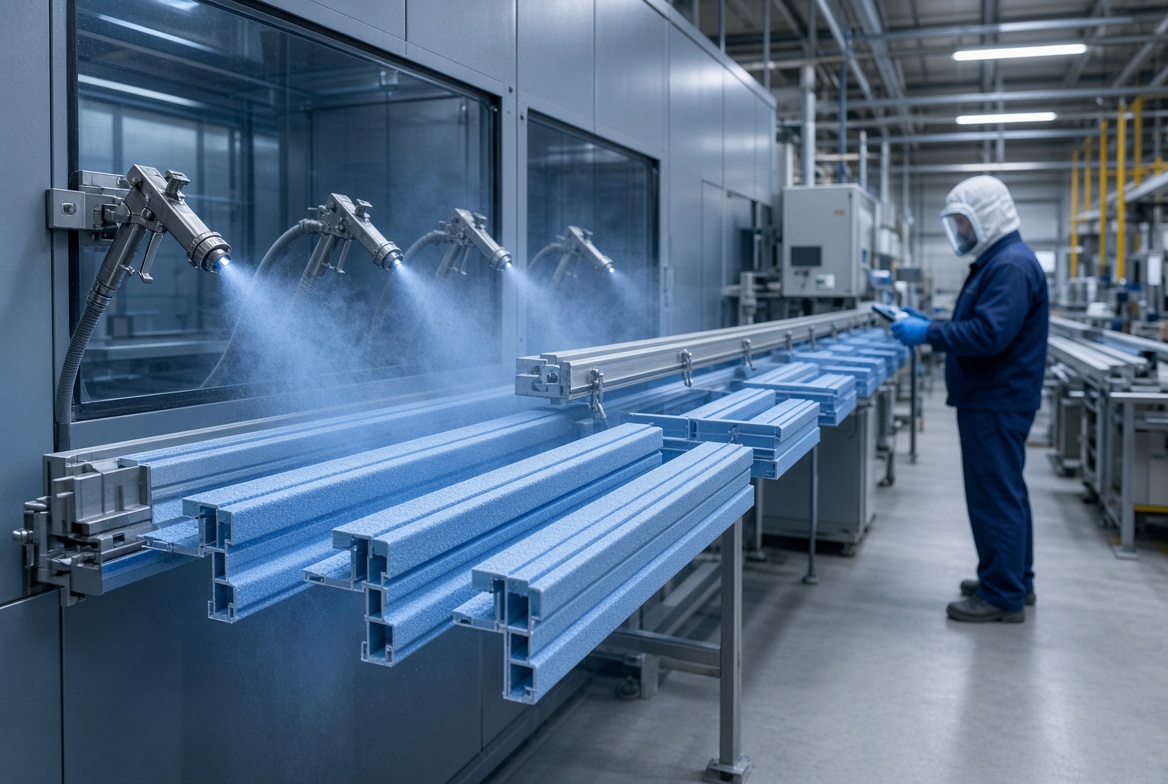
Polyester powder coating is a thermosetting coating made primarily with polyester resin, pigments, curing agents, additives, and performance modifiers. It is supplied as a finely ground dry powder rather than a liquid coating.
During production, the powder is typically electrostatically sprayed onto a grounded metal workpiece. The coated part then enters an oven, where heat melts, flows, and chemically cures the powder into a continuous protective film.
The finished coating can provide:
- Strong outdoor weatherability
- Reliable UV resistance
- Good colour and gloss retention
- Decorative flexibility, including smooth, matte, textured, metallic, and custom finishes
- Resistance to everyday scratches, moisture, and corrosion
- Solvent-free application at the coating stage
Polyester systems are particularly important where products will remain visible and exposed to sunlight, rain, heat, pollution, or repeated handling. Typical examples include aluminium window profiles, curtain-wall components, exterior doors, outdoor furniture, electrical enclosures, bicycle parts, and selected automotive components.
A high-quality coating is the outcome of a controlled production chain. Even an advanced powder formula may underperform if the substrate is contaminated, the film is too thin, or the curing cycle is not properly verified.
Surface preparation determines how well the coating bonds to the substrate. Oils, oxides, welding residue, dust, corrosion products, and moisture can interfere with adhesion.
For aluminium, the process commonly includes cleaning, rinsing, etching, conversion treatment, and drying. For steel, pretreatment may involve degreasing, phosphating, zirconium-based conversion, or other systems selected for the required corrosion resistance.
A properly prepared substrate helps achieve:
- Better adhesion
- Improved corrosion protection
- More uniform appearance
- Lower risk of blistering or peeling
- More stable long-term performance
For demanding architectural or coastal applications, pretreatment selection deserves particular attention. Salt, humidity, airborne abrasives, and industrial pollution can significantly increase corrosion risk at cut edges, joints, and areas of mechanical damage.
An electrostatic spray gun gives powder particles an electrical charge. The grounded workpiece attracts the charged particles, creating a coating layer before oven curing.
Application settings should be adjusted according to part shape, target film thickness, powder type, and surface finish. Corners, deep recesses, welded areas, and Faraday-cage zones need special process control because powder may not deposit evenly in these areas.
Important application checks include:
- Powder output and atomising air
- Voltage and current settings
- Gun-to-part distance
- Booth airflow and powder recovery
- Earthing quality
- Film thickness before curing
Curing is not simply about oven air temperature. The part itself must reach the required metal temperature and remain there for the specified time. This allows the powder to melt, flow, crosslink, and develop its intended hardness, adhesion, chemical resistance, and weatherability.
Under-curing may lead to weak mechanical properties, poor solvent resistance, reduced adhesion, or lower corrosion resistance. Over-curing can affect colour, gloss, and surface appearance, especially with certain bright, metallic, or heat-sensitive shades.
The right approach is to verify the actual part temperature with a thermal profile rather than relying only on the oven display. Industry guidance also emphasizes that the combined time-and-temperature cure profile is essential to full polymerisation and intended coating performance.
| Process Stage | Main Purpose | Risk if Poorly Controlled |
|---|---|---|
| Surface preparation | Remove contamination and create a stable bonding surface | Peeling, blistering, corrosion |
| Electrostatic application | Build a uniform powder layer | Thin areas, uneven finish, poor coverage |
| Oven curing | Form a crosslinked protective film | Soft film, colour shift, weak adhesion |
| Final inspection | Confirm appearance and performance | Defective parts entering the market |
The most important advantage of polyester powder coating is its ability to perform in outdoor conditions. Polyester chemistry is widely selected for products exposed to sunlight because it can maintain colour and gloss more effectively than standard epoxy-only systems.
This makes it suitable for:
- Architectural aluminium profiles
- Window and door frames
- Railings and fencing
- Outdoor electrical cabinets
- Garden furniture
- Exterior equipment housings
- Automotive exterior and accessory components
For projects with severe sunshine, high heat, coastal exposure, or difficult maintenance access, the powder grade should be selected according to the required durability class rather than chosen only by colour or price.
Polyester powder coatings give manufacturers wide design freedom. A single product range can include standard shades, custom colours, low-gloss finishes, high-gloss finishes, fine textures, coarse textures, metallic effects, and special visual effects.
This flexibility supports both functional and commercial goals. An aluminium profile producer may need a durable architectural black; a medical-equipment manufacturer may require a clean, low-gloss white; a consumer appliance brand may need a distinctive branded colour with a tactile surface.
Colour consistency should be evaluated under controlled lighting, especially when coating separate production batches, complex assemblies, or parts from multiple factories.
When the substrate, application, and curing process are properly controlled, polyester powder coating forms a continuous film that protects the base metal from daily wear and environmental exposure.
Its practical strengths can include:
- Good resistance to chipping and abrasion
- Protection against moisture exposure
- Improved corrosion resistance as part of a complete coating system
- Durable coverage on complex metal shapes
- Resistance to ordinary cleaning and handling
The actual performance level depends on the complete system. A coating cannot compensate for poor weld quality, sharp untreated edges, inadequate pretreatment, or insufficient film thickness.
Because powder coating is applied without a liquid solvent carrier, it can avoid the solvent use associated with many conventional liquid-paint processes. Powder coatings are commonly described as solvent-free and can help manufacturers reduce solvent-related handling and emissions in their coating operations.
However, responsible production still requires dust control, safe powder handling, energy-efficient curing, compliant waste management, and appropriate worker protection. Environmental performance should be assessed across the full process, not based on one feature alone.
Polyester and epoxy powder coatings both have valuable roles, but they are designed for different exposure conditions. Choosing between them should begin with the product's actual service environment.
| Feature | Polyester Powder Coating | Epoxy Powder Coating |
|---|---|---|
| Best suited for | Outdoor and visible applications | Indoor and protected applications |
| UV resistance | Strong | Limited under prolonged sunlight |
| Weather resistance | Strong | Lower for exterior exposure |
| Chemical resistance | Good to moderate, depending on grade | Often excellent |
| Typical uses | Profiles, doors, railings, furniture, enclosures | Machinery, pipelines, appliances, industrial interiors |
| Decorative durability outdoors | Strong | May chalk or fade over time |
For exterior products, polyester powder coating is usually the safer starting point. For indoor equipment facing aggressive chemicals, epoxy may be more suitable. Hybrid systems may also be considered for specific indoor applications where balanced appearance and protection are required.
Architectural aluminium is one of the most important applications for polyester powder coating. Window frames, door systems, façade components, louvers, railings, pergolas, and curtain-wall elements need a finish that supports visual design while surviving years of sunlight and weather.
For these projects, buyers should specify more than a colour code. A complete specification should define the substrate, pretreatment, powder durability grade, gloss range, minimum film thickness, inspection criteria, and intended exposure environment.
Quality programs for architectural coating systems may assess properties such as film thickness, adhesion, polymerisation, corrosion resistance, and accelerated weathering.
New-energy vehicles use coated components across battery-related housings, structural accessories, charging equipment, brackets, wheel-related parts, and exterior trim. The coating needs to support appearance, corrosion protection, process consistency, and production efficiency.
Part geometry matters greatly in this sector. Deep corners, sharp edges, weld seams, and complex assemblies can create uneven coverage if the spray process is not optimised. Early sample testing helps manufacturers avoid mass-production defects.
Medical equipment and electrical enclosures often require visually clean, consistent, and durable surfaces. Depending on the product, priorities may include low gloss, smoothness, stain visibility, frequent cleaning tolerance, edge coverage, and controlled colour matching.
For electrical cabinets, control boxes, shelving, and equipment housings, polyester systems can provide a durable decorative coating where products may be installed in semi-outdoor or variable-temperature environments.
Hardware, shelving, tools, furniture frames, bicycle components, lighting fixtures, grills, and household appliances benefit from powder coating's broad design range and durable film properties.
Textured finishes can be particularly useful for hiding minor substrate imperfections and reducing the visibility of fingerprints or light scratches. Smooth high-gloss finishes can create a premium visual effect, but they require more consistent substrate quality and process control.
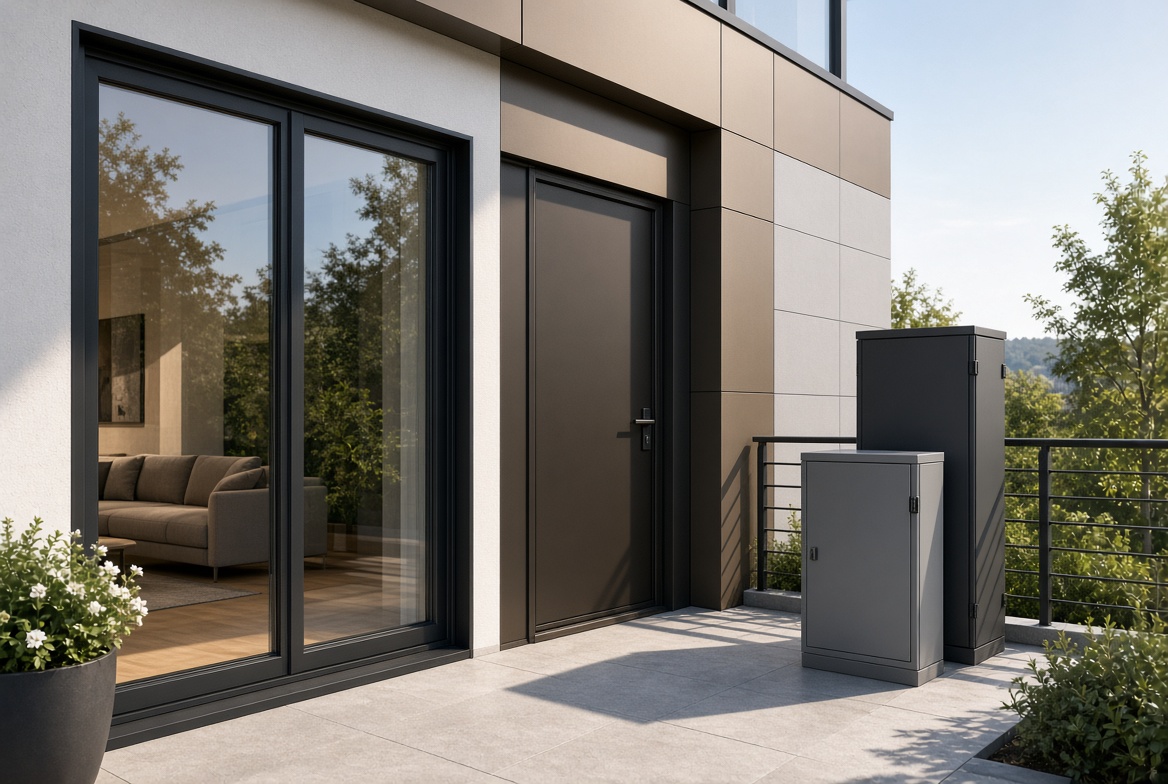
The right polyester powder coating starts with the end use, not with a colour card. Before approving a coating, manufacturers should review the following questions.
Ask where and how the product will be used:
- Will it be installed indoors, outdoors, or near the coast?
- Will it face intense sunlight or high temperatures?
- Is salt, humidity, chemical splash, or industrial pollution present?
- Will the surface be frequently touched, cleaned, or assembled?
- Is the component difficult or expensive to repaint or replace?
A standard exterior polyester may be appropriate for normal outdoor exposure. A more durable architectural grade may be a better choice for high-rise façades, coastal projects, desert environments, or long-life branded products.
Aluminium, galvanized steel, carbon steel, cast aluminium, and mixed-metal assemblies may require different pretreatment and coating-system decisions. The powder must work with the substrate and the complete manufacturing process.
Do not approve a coating based only on a flat test panel. Test the actual part geometry, weld areas, edges, assembly points, and intended film thickness.
Create a practical specification that includes:
1. Colour standard and permitted colour variation
2. Gloss level and surface texture
3. Target film thickness
4. Pretreatment requirement
5. Curing schedule based on metal temperature
6. Adhesion and appearance standards
7. Corrosion and weathering requirements
8. Packaging and handling requirements
This approach reduces avoidable disputes between coating supplier, fabricator, project contractor, and final customer.
Most coating failures are process failures before they become material failures. A structured review can prevent expensive rework.
| Problem | Likely Cause | Practical Prevention |
|---|---|---|
| Poor adhesion | Contamination, weak pretreatment, incomplete cure | Verify cleaning, conversion treatment, and cure profile |
| Orange peel | Excessive film build, unsuitable powder flow, poor settings | Control film thickness and application parameters |
| Pinholes or bubbles | Moisture, porous substrate, trapped gas | Dry parts thoroughly and assess substrate condition |
| Colour variation | Batch variation, cure variation, lighting differences | Use approved standards and control oven conditions |
| Premature corrosion | Thin film, edge exposure, pretreatment failure | Improve edge coverage and validate the full system |
| Fading outdoors | Incorrect powder grade for exposure | Specify exterior-grade or higher-durability polyester |
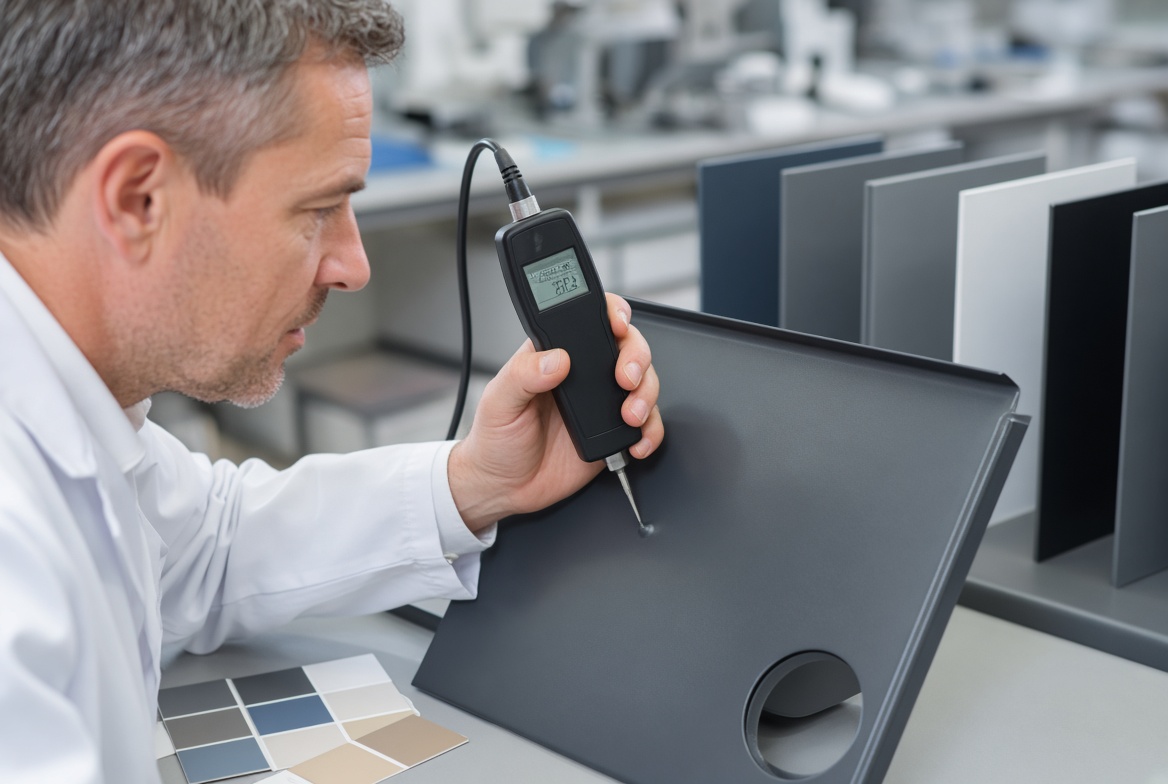
Yinda Technology supports industrial customers with polyester powder coating solutions developed for real production conditions—not only laboratory panels. With operations in China, Indonesia, and Saudi Arabia, we understand that manufacturers need responsive technical communication, stable supply, adaptable colour development, and coatings that work across diverse climates and production lines.
Whether you manufacture architectural profiles, door and window systems, electrical cabinets, medical equipment, hardware, or new-energy vehicle components, our team can help you evaluate the right powder system for your substrate, process, finish, and market requirements.
Contact Yinda Technology to discuss your product application, target performance, colour requirement, and production conditions.
Polyester powder coating is mainly used for metal products that need strong outdoor durability and decorative appearance. Common applications include aluminium profiles, doors, windows, railings, outdoor furniture, electrical enclosures, automotive parts, hardware, and appliances.
Yes. Polyester powder coating is widely selected for outdoor products because it offers strong UV resistance and weather resistance. For harsh climates, coastal locations, high-rise buildings, or long-life projects, choose a higher-durability grade designed for the specific exposure level.
Polyester is generally better for outdoor exposure because of its UV and weather resistance. Epoxy is often preferred for indoor products that need strong chemical or corrosion resistance but will not receive prolonged sunlight.
Its service life varies based on coating grade, pretreatment, film thickness, climate, product design, cleaning, and mechanical damage. A properly specified and applied system can provide long-term protection, but no coating should be evaluated without considering the full substrate-to-cure process.
Yes. Aluminium is one of the most common substrates for polyester powder coating, particularly for architectural profiles, windows, doors, façade components, railings, and outdoor structures. Proper pretreatment is essential for adhesion and corrosion resistance.
Powder coatings are applied without a liquid solvent carrier, which can reduce solvent-related emissions compared with many liquid-paint processes. Responsible operation also depends on powder recovery, energy use, dust management, worker safety, and compliant waste handling.
Peeling is commonly associated with inadequate cleaning, poor pretreatment, substrate contamination, insufficient curing, mechanical damage, or incompatible coating-system selection. Identifying the exact cause requires reviewing the entire process rather than the powder alone.
1. [Kroma Coatings — Polyester Powder Coating: Meaning, Benefits & Applications]
2. [QUALICOAT — Quality Label for Coating on Aluminium and Its Alloys]
3. [QUALICOAT UK & Ireland — What Is Behind This Detailed Specification?]
4. [Smart Systems — Quality Powder Coating and Performance Tests]
5. [Powder Coating Institute — Glossary of Powder Coating Terms]
6. [Interpon — Volatile Organic Compounds and Powder Coatings]
7. [European Commission — VOC Emissions in Paints and Varnishes]
8. [QUALICOAT UK & Ireland — Coastal Powder-Coating Guidance]


