Language


Views: 215 Author: Yinda Powder Coating Publish Time: 2026-10-20 Origin: Site


Content Menu
● How Long Does Epoxy Coating Last in Different Applications?
● Epoxy Powder Coating vs. Liquid Epoxy: Why Lifespan Claims Differ
>> Epoxy Powder Coating for Metal Components
>> Liquid Epoxy Coatings for Floors and Protective Systems
● Seven Factors That Determine Epoxy Coating Lifespan
>> 1. Surface Preparation and Substrate Condition
>> 2. Moisture Beneath the Coating
>> 4. Complete and Controlled Curing
>> 5. Sunlight and Weather Exposure
>> 6. Abrasion, Impact, and Chemical Exposure
>> 7. Maintenance and Damage Response
● Three Often-Overlooked Ways to Assess Epoxy Coating Durability
>> Separate Appearance Life from Protective Life
>> Do Not Convert Salt-Spray Hours into Years
>> Qualify Real Components, Not Only Attractive Samples
● How Regional Conditions Affect Epoxy Coating Selection
● Warning Signs That Epoxy Coating Needs Repair
● A Practical Buying Checklist for Longer Coating Life
>> Can Epoxy Coating Last 20 Years?
>> How Long Does Epoxy Powder Coating Last Outdoors?
>> Does Yellowing Mean Epoxy Has Failed?
>> Does a Thicker Epoxy Coating Always Last Longer?
>> Can New Epoxy Be Applied Over Old Epoxy?
>> How Can Buyers Verify a Supplier's Lifespan Claim?
How long will epoxy coating last? A correctly specified epoxy flooring system can last 10 years or more when it is designed for the expected traffic and exposure. However, that figure should not be transferred automatically to epoxy powder coatings, exterior metalwork, or every product described as "epoxy."
For manufacturers and industrial buyers, the more useful question is: how long will this particular coating system protect this particular component?
At Yinda Technology, our approach to that question starts with the substrate, operating environment, application process, and maintenance expectations—not a universal lifespan claim. This guide explains what determines epoxy coating lifespan and how to make a more reliable purchasing decision.
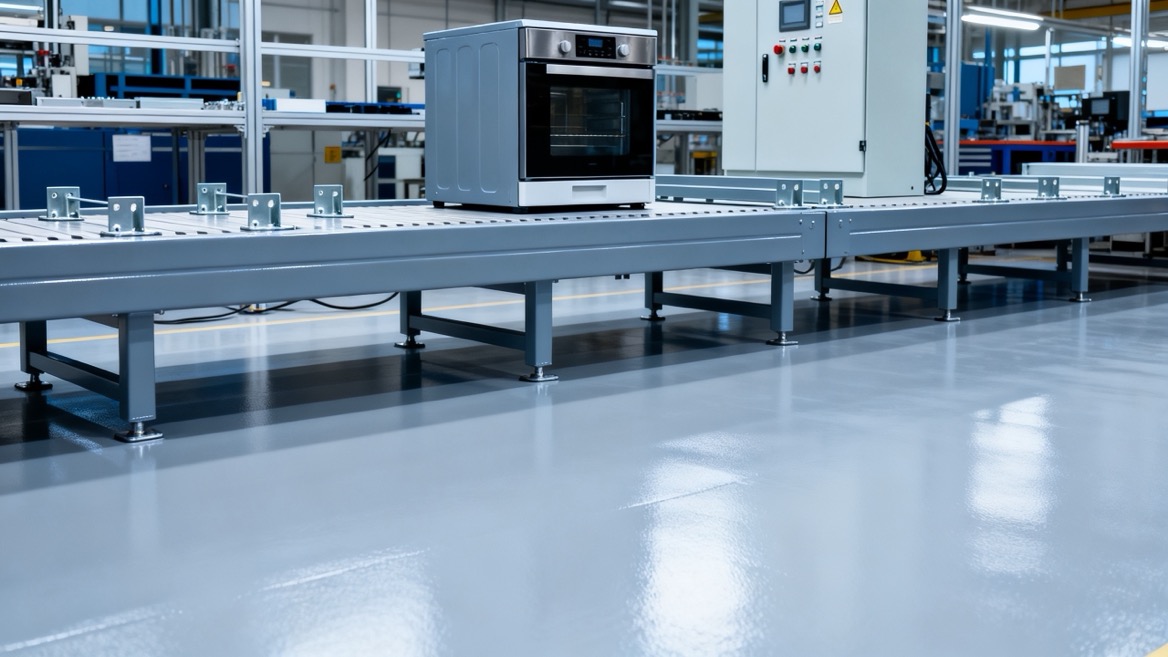
Epoxy is a family of coating technologies, not one standardized finish. Liquid floor coatings, industrial protective coatings, and thermosetting epoxy powders use related chemistry but serve different purposes.
| Application | Responsible lifespan guidance | Main qualification |
|---|---|---|
| Professionally designed epoxy flooring | Ten years or longer can be achievable | System must match traffic, abrasion, chemicals, and substrate conditions |
| Interior epoxy powder-coated metal | Establish a project-specific service-life target | Pretreatment, curing, film thickness, and exposure determine performance |
| Exterior exposed epoxy finish | Do not assume long-term appearance retention | Epoxy generally lacks adequate resistance to sunlight |
| Epoxy primer beneath a weather-resistant topcoat | Assess the complete coating system | Primer, topcoat, substrate preparation, and compatibility all matter |
| Chemically exposed or immersion service | Require application-specific qualification | Chemical identity, concentration, temperature, and exposure duration are critical |
These distinctions prevent a common purchasing mistake: using a floor-coating lifespan estimate to justify a specification for an appliance housing, electrical enclosure, or automotive component.
A coating's service life also depends on what counts as failure.
A decorative panel may become unacceptable when its color changes. A concealed bracket may remain functional despite discoloration. A protective coating may need maintenance when corrosion begins around damaged edges.
Define that endpoint before comparing suppliers.
Epoxy powder coating is applied as a dry powder and heated to form a cured film. Manufacturers commonly consider it for interior components and primers where adhesion, chemical resistance, and corrosion protection are important.
Potential applications include:
- Indoor electrical cabinets and equipment housings.
- Shelving, hardware, and industrial components.
- Selected appliance and medical-equipment parts.
- Protective primers within qualified multilayer systems.
Pure epoxy powders generally have poor weathering resistance. They should not be treated as interchangeable with exterior-grade finishes for architectural profiles, doors, or windows.
Liquid epoxy products include thin-film coatings and thicker resinous flooring systems.
Their performance depends on the entire build-up: substrate preparation, primer, body coat, aggregate where specified, and any protective topcoat.
A thin coating in a heavily trafficked warehouse does not offer the same wear allowance as a thicker system designed for forklift operations.
For this reason, "epoxy lasts ten years" is incomplete unless the application and system design are identified.
A durable coating needs a sound, properly prepared surface.
On metal, oil, rust, scale, contamination, and unsuitable pretreatment can undermine adhesion and corrosion resistance. The preparation route must suit both the alloy and the exposure.
On concrete, weak surface material, contamination, cracks, and moisture require assessment before installation. Mechanical preparation and repairs should follow the selected flooring system's requirements.
Our recommendation is straightforward: review the preparation specification as carefully as the coating formulation.
Moisture is particularly important for epoxy floors.
Concrete that looks dry may still contain moisture capable of affecting a non-permeable flooring system. A slab reaching a customary curing age does not prove that it is ready for coating.
Use the moisture-testing method and acceptance limits required by the flooring manufacturer. Where readings exceed those limits, select an approved mitigation approach rather than assuming an additional epoxy layer will solve the problem.
Too little coating can leave insufficient protection or wear allowance. Applying more material than specified is not automatically beneficial either.
Thickness must remain within the approved range for the product and application.
For powder-coated components, inspect edges, recesses, welds, and other difficult geometries—not just easily measured flat surfaces.
For flooring, evaluate the thickness of the complete system rather than comparing products only by the number of coats.
Powder coating cure depends on the component reaching the specified metal temperature for the required time.
Oven air temperature alone does not establish that a thick steel component has cured correctly. Different part masses can heat at different rates.
Liquid epoxies also require their specified mixing, application, and curing conditions. Premature traffic or chemical exposure can compromise a coating before it enters normal service.
For energy-saving production, use a formulation designed for the intended cure schedule. Simply lowering oven temperature is not a validated efficiency improvement.
Epoxy's outdoor limitation is a major consideration for architectural buyers.
Sunlight can cause appearance deterioration, including chalking and discoloration. A coating may lose its decorative acceptability before all protective function is lost.
For exterior profiles, doors, and windows, specify a finish qualified for the required weathering exposure. Where epoxy serves as a primer, assess the weather-resistant topcoat and the compatibility of the complete system.
The word "industrial" does not describe a single operating condition.
A warehouse aisle experiences different stresses from an indoor control cabinet. Medical equipment may encounter repeated disinfectant cleaning. Automotive components may face oils, road contaminants, impacts, or elevated temperatures.
Chemical resistance must be checked against the actual substance, concentration, temperature, and contact duration.
Likewise, standard epoxy flooring should not automatically be specified for repeated hot-water washdowns. Thermal shock may require another system chemistry.
Abrasive dirt, persistent contamination, and unrepaired damage can shorten useful service life.
A practical maintenance plan should include:
- Removing grit before it causes unnecessary wear.
- Cleaning with products approved for the coating.
- Addressing spills according to chemical compatibility guidance.
- Inspecting high-wear areas and exposed edges.
- Repairing damage before deterioration spreads.
Maintenance should preserve the coating, not introduce a new exposure through aggressive cleaning chemicals or abrasive tools.
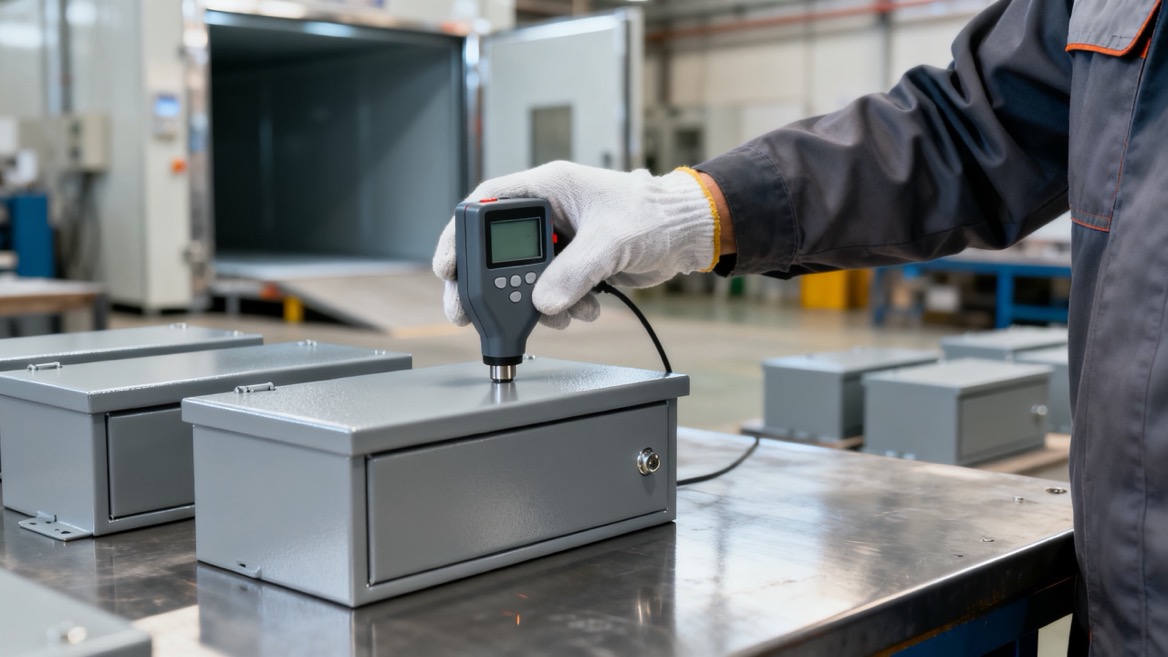
Ask your supplier to distinguish between color and gloss retention, adhesion, corrosion protection, and wear resistance.
These properties do not necessarily deteriorate at the same rate.
This distinction is especially valuable when comparing visible architectural products with concealed industrial components. The same appearance change can have very different commercial consequences.
A useful specification states both the functional requirement and the acceptable visual condition.
A claim such as "1,000 hours of salt spray equals ten years outdoors" should trigger further questions.
ASTM B117 provides a controlled corrosive environment. The standard cautions that standalone salt-spray results have seldom correlated with performance in natural environments.
Test reports are useful evidence, but they are not universal service-life calculators.
Request the substrate, preparation method, film thickness, exposure conditions, and assessment criteria. Results from a specially prepared flat panel may not represent a production part with welds, sharp edges, and assembly damage.
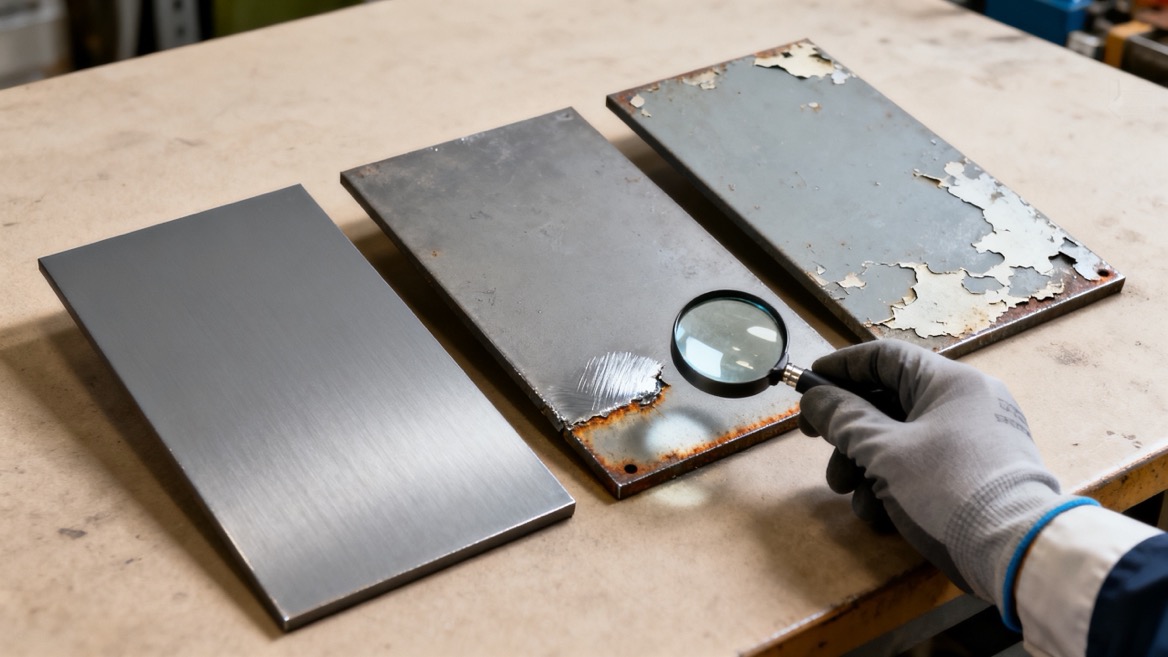
A smooth sample panel demonstrates appearance. It does not establish how a coating will perform on your actual product.
Before approving volume production, consider:
1. Coating representative production components.
2. Recording preparation and application conditions.
3. Checking thickness at critical geometries.
4. Confirming the specified cure.
5. Testing relevant adhesion, corrosion, chemical, or weathering properties.
6. Agreeing on acceptance criteria before reviewing results.
This process connects laboratory evidence with production reality without pretending that a short test guarantees a fixed number of service years.
Yinda Technology has subsidiaries in China, Indonesia, and Saudi Arabia. For projects serving these markets, location should prompt exposure questions—not automatic assumptions.
An air-conditioned indoor appliance and an outdoor coastal enclosure in the same country require different specifications.
| Project condition | What buyers should establish |
|---|---|
| Coastal or salt-contaminated exposure | Corrosion-protection requirements, edge coverage, and suitable system testing |
| High humidity or frequent condensation | Preparation, application conditions, and expected wet exposure |
| Strong sunlight | Weathering resistance of the exposed finish |
| Hot equipment or temperature cycling | Approved service-temperature range and thermal-stress suitability |
| Frequent cleaning or disinfection | Compatibility with actual cleaning agents and procedures |
This application-led approach is more useful than choosing a coating solely because it performed well in another region.
It also helps avoid overspecification: a protected indoor component may not need the same finish as an exposed architectural assembly.
Inspect against the original acceptance criteria rather than waiting for widespread failure.
Common warning signs include:
- Peeling or lifting at edges.
- Blisters or areas of lost adhesion.
- Rust spreading from scratches or exposed steel.
- Deep wear exposing the underlying layer.
- Cracks associated with movement or impact.
- Chalking or discoloration where appearance matters.
Do not assume all defects need complete stripping. Conversely, do not coat over an unidentified failure.
First determine whether the cause is local damage, moisture, poor preparation, incomplete cure, unsuitable exposure, or substrate movement. The repair must address that cause.
A new topcoat cannot reliably correct an unstable underlying system.
Before requesting a lifespan estimate, provide your supplier with:
1. Substrate material and component drawings.
2. Indoor, outdoor, sheltered, or immersion exposure.
3. Expected chemicals, cleaning agents, and temperatures.
4. Abrasion, impact, and traffic conditions.
5. Required appearance and functional performance.
6. Available pretreatment and curing equipment.
7. Inspection, maintenance, and warranty expectations.
Ask the supplier to identify assumptions and exclusions in writing.
For Yinda Technology projects, this information supports a more meaningful discussion about powder chemistry, processing requirements, and performance verification.
Send our team your component details and operating conditions to request an application-specific powder coating recommendation. Together, we can define the evidence needed before production approval rather than relying on a generic lifespan promise.
It may in a suitable application, but twenty years is not a universal expectation. A reputable flooring manufacturer identifies ten years or greater as achievable when the system is correctly designed. Longer targets need project-specific evidence.
There is no reliable universal figure. Pure epoxy powders generally lack adequate sunlight resistance, making them unsuitable as exposed decorative finishes where long-term outdoor appearance is required.
Not necessarily. Discoloration can represent an appearance failure without proving complete loss of adhesion or protection. Investigate the cause and assess the coating against both visual and functional requirements.
No. Thickness must suit the approved system. Additional material cannot compensate for contamination, inadequate preparation, incorrect curing, moisture problems, or an unsuitable coating chemistry.
Sometimes, after assessing adhesion, contamination, compatibility, and preparation requirements. Failed or unstable material must be addressed first. Follow the proposed repair system's instructions rather than assuming any epoxy will bond successfully.
Request comparable service references, the complete system specification, relevant test reports, application records, and written warranty terms. Confirm whether the stated life concerns appearance, corrosion protection, wear, or the time before major maintenance.
- Sherwin-Williams, "Epoxy Flooring: The Complete Guide." Source for the ten-year-or-greater flooring guidance and the relationship between system design, anticipated exposure, and longevity. [industrial.sherwin-williams]
- AkzoNobel Interpon, "Epoxy Technology in Powder Coatings." Source for epoxy powder applications, interior durability, and limitations under sunlight exposure. [interpon]
- Powder Coating Institute, "Frequently Asked Questions." Source for powder coating curing requirements, including metal temperature, bring-up time, and dwell time. [powdercoating]
- ASTM International, "ASTM B117-18: Standard Practice for Operating Salt Spray (Fog) Apparatus," particularly Sections 3.1–3.2.2. Source for the limitations of predicting natural-environment performance from standalone salt-spray data. [store.astm]
- Sherwin-Williams, "Guideline Instructions for Concrete Surface Preparation." Source for substrate inspection, preparation, and the distinction between concrete curing age and moisture readiness. [industrial.sherwin-williams]
- Sherwin-Williams, "Preventing Concrete & Epoxy Floor Blistering (Disbondment)." Source for moisture-related flooring risks and the need for appropriate preparation and system selection. [industrial.sherwin-williams]
- Sherwin-Williams, "Thermal Shock Resistant Flooring and Coatings." Source for the limitations of standard epoxy under rapid temperature changes. [industrial.sherwin-williams]
- Sherwin-Williams, "General Flooring Maintenance Guide." Source for abrasive-dirt management and maintenance considerations for epoxy finishes. [industrial.sherwin-williams]


