Language


Views: 237 Author: Yinda Powder Coating Publish Time: 2026-10-21 Origin: Site


Content Menu
● Epoxy Powder Coating vs Acrylic Powder Coating: Quick Comparison
● What Is Epoxy Powder Coating?
>> Where Epoxy Powder Coating Performs Well
>> Epoxy's Main Limitation: Exterior Appearance
● What Is Acrylic Powder Coating?
>> Where Acrylic Powder Coating Performs Well
>> Acrylic's Main Limitation: Production Compatibility
● Epoxy vs Acrylic Powder Coating: Performance Differences
>> Weather Resistance and Color Retention
>> Chemical Resistance and Cleaning Exposure
>> Adhesion and Corrosion Protection
>> Appearance and Mechanical Performance
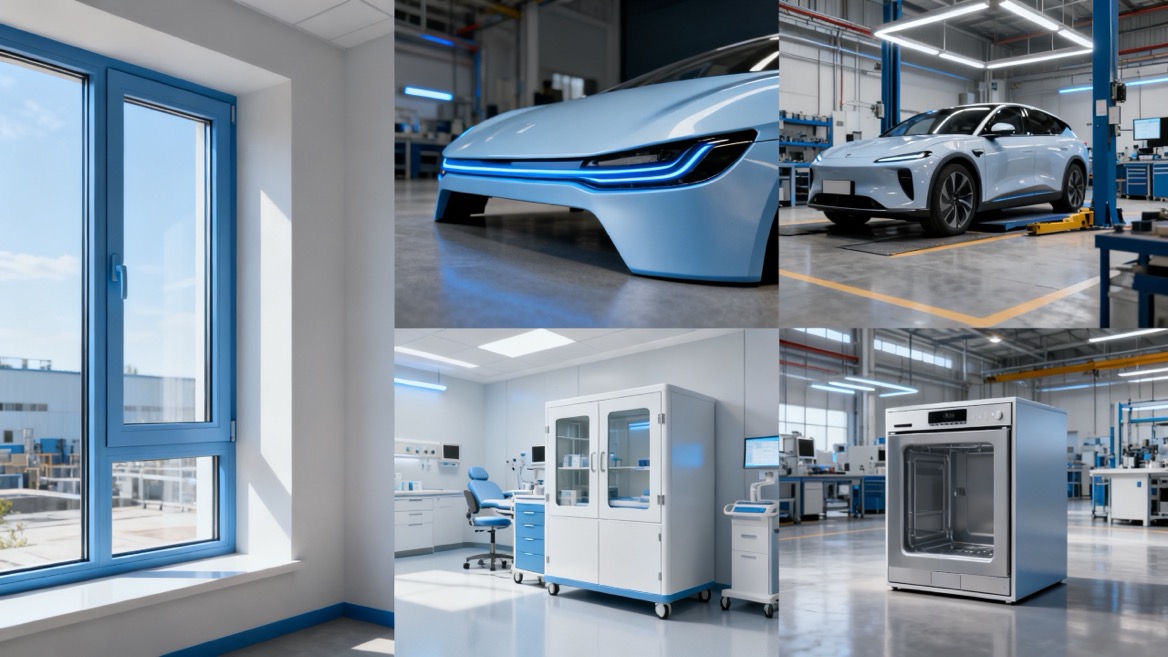
● Which Powder Coating Fits Your Industry?
>> Architectural Profiles, Doors, and Windows
>> New Energy Vehicles and Automotive Components
>> Medical Equipment, Hardware, and Appliances
● Three Practical Ways to Improve Your Coating Decision
>> 1. Build a Weighted Selection Matrix
>> 2. Run a Controlled Sample Qualification
>> 3. Calculate Cost per Accepted Part
● Questions to Ask Your Powder Coating Supplier
● Discuss Your Application with Yinda Technology
>> Is Epoxy Powder Coating Better Than Acrylic Powder Coating?
>> Can Epoxy Powder Coating Be Used Outdoors?
>> Does Acrylic Powder Coating Prevent Corrosion?
>> Can Epoxy and Acrylic Powders Share the Same Coating Line?
>> Which Powder Coating Is Best for Medical Equipment?
>> Does a Higher Salt Spray Result Mean a Longer Service Life?
Choosing between epoxy powder coating vs acrylic powder coating starts with one question: what must the finish survive? Epoxy typically suits indoor components requiring strong adhesion, chemical resistance, and functional protection. Acrylic becomes attractive when exterior appearance, weatherability, and finish clarity carry greater weight.
At Yinda Technology, our focus spans powder coatings, environmentally conscious materials, and energy-saving technologies. With subsidiaries in China, Indonesia, and Saudi Arabia, we serve industries whose coating requirements differ significantly—from architectural profiles and windows to new energy vehicles, medical equipment, hardware, and appliances.
Our selection principle is straightforward: application comes before resin preference. Neither chemistry wins every comparison, and neither performs independently of pretreatment, formulation, and curing.

The following comparison describes general tendencies, not guaranteed specifications for every product.
| Selection factor | Epoxy powder coating | Acrylic powder coating |
|---|---|---|
| Main strength | Functional protection and adhesion | Appearance and weatherability |
| Typical application direction | Interior industrial parts and protective primers | Appearance-critical exterior parts and automotive finishes |
| Direct sunlight exposure | Prone to chalking and appearance deterioration | Weather-resistant grades offer stronger appearance retention |
| Chemical resistance | Often a major strength | Depends on formulation and chemical exposure |
| Surface appearance | Smooth decorative or functional finishes | Particularly attractive for high-quality decorative and clear finishes |
| Corrosion protection | Strong candidate within a qualified coating system | Requires system-specific validation |
| Production considerations | Follow product-specific application requirements | Some systems require stricter segregation and storage controls |
| Cost evaluation | Assess applied cost and required protection | Include appearance value and additional handling requirements |
The practical distinction is between protecting a component's function and preserving its visible finish. Many projects require both, making system design more important than a simple resin ranking.
Epoxy powder coating is a thermosetting finish formulated with epoxy resin and a curing agent. During heating, the ingredients react to create a crosslinked film.
Its major attractions include adhesion, mechanical performance, and chemical resistance. These properties make epoxy a useful candidate for indoor metal components and protective primer layers.
Typical application directions include:
- Indoor industrial housings and fittings.
- Protected machinery components.
- Electrical and electronic equipment parts.
- Functional automotive components.
- Protective primers beneath compatible topcoats.
However, "epoxy" is not a complete performance specification. Different curing agents, pigments, additives, and film builds can produce substantially different results.
Buyers should also distinguish pure epoxy from epoxy-polyester hybrid powder coating. Hybrids combine different resin components and should not automatically inherit the specifications of a pure epoxy product.
Prolonged sunlight can cause epoxy finishes to chalk and lose their original appearance. A tough film is therefore not necessarily a weather-stable decorative finish.
For exposed doors, window frames, or visible exterior equipment, pure epoxy should not be the default standalone topcoat.
An epoxy primer beneath a qualified weather-resistant topcoat may be appropriate, but compatibility and the complete coating schedule must be validated.
Acrylic powder coating uses acrylic resin chemistry to produce a cured protective and decorative film. The category includes several resin and crosslinker combinations rather than one universal formulation.
Some acrylic powders use glycidyl methacrylate, commonly abbreviated as GMA. Although these resins contain epoxy-functional groups, they should not be confused with conventional epoxy powder coatings.
Acrylic systems are particularly relevant when buyers prioritize:
- Exterior appearance retention.
- High-quality surface flow.
- Decorative clarity.
- Automotive-grade visual requirements.
- Weather-resistant finishing.
Acrylic powder coating can be especially attractive for visible automotive components and clear finishes.
However, not every acrylic product has the same weatherability, flexibility, or processing requirements. Select a documented grade rather than relying on the chemistry name.
Some acrylic systems require careful separation from conventional powder coatings. Compatibility problems can make a shared production line more demanding to operate.
Certain formulations may also require controlled storage temperatures or conditioned air.
These are purchasing questions, not minor production details. Before approving acrylic, confirm the supplier's requirements for storage, booth cleaning, reclaim handling, and shared equipment.
For direct sunlight exposure, weather-resistant acrylic generally offers a more suitable starting point than conventional pure epoxy.
However, "outdoor use" needs a clearer definition. A shaded equipment housing and a highly visible façade face different expectations.
Specify acceptable changes in color, gloss, and surface condition. Then request relevant weathering evidence for the exact coating grade.
For architectural aluminum, recognized specifications such as QUALICOAT evaluate approved materials and controlled application processes. Acrylic chemistry alone does not establish architectural compliance.
Epoxy is often attractive where chemicals, oils, or cleaning agents are important selection factors. Nevertheless, broad claims such as "chemical-resistant" provide insufficient guidance.
A useful chemical exposure specification identifies:
1. Chemical name and concentration.
2. Contact temperature.
3. Splash, wiping, or immersion conditions.
4. Exposure duration and frequency.
5. Acceptable visual and functional changes.
For medical equipment, evaluate the actual cleaning and disinfection protocol. Resin identity alone does not establish suitability for repeated disinfectant exposure, sterilization, or direct patient contact.
Epoxy's adhesion and protective properties make it valuable in corrosion-control systems. Yet corrosion performance belongs to the whole coated assembly.
Substrate preparation, pretreatment, edge geometry, film continuity, and curing all influence results.
When comparing epoxy and acrylic, keep those variables consistent. A well-prepared acrylic-coated panel and a poorly prepared epoxy-coated panel do not provide a meaningful chemistry comparison.
Equally, salt spray hours should not be translated directly into years of outdoor service. ASTM B117 cautions against using standalone salt spray results to predict natural exposure performance.
Both resin families can produce attractive finishes. Acrylic becomes particularly relevant when premium appearance, flow, or clear-coat quality drives purchasing decisions.
Epoxy can also deliver smooth decorative surfaces alongside useful mechanical properties.
Avoid assuming that higher hardness automatically means better durability. A component may need flexibility, impact resistance, or resistance to assembly damage instead. Test representative parts against the failure mode that actually matters.
Exterior architectural components need documented weatherability and an appropriate pretreatment system.
Within this comparison, weather-resistant acrylic is a more credible exterior decorative candidate than pure epoxy. However, it should also be compared with qualified architectural polyester systems.
For buyers, the decisive evidence includes the approved coating grade, required durability class, applicator controls, and project warranty conditions—not simply the resin family.
Separate visible exterior parts from protected functional components.
Appearance-critical parts may justify acrylic where its finish and weatherability meet the specification. Protected components may favor epoxy where adhesion, chemical resistance, or protective performance dominates.
For electrically functional parts, request the exact required electrical test data. Neither "epoxy" nor "acrylic" alone guarantees insulation performance or suitability for battery-related applications.
Indoor housings, hardware, and appliance components may benefit from epoxy's functional properties.
Acrylic deserves consideration where premium appearance or daylight exposure becomes important.
For medical equipment, add cleaner compatibility and the relevant product requirements to the qualification plan. Do not describe an ordinary decorative powder as antimicrobial, medically certified, or sterilization-resistant without supporting evidence.
Replace general preferences with project-specific priorities.
For an indoor chemical-exposed housing, chemical resistance and adhesion may carry the most weight. For an exterior decorative cover, weatherability and appearance may dominate.
Score each candidate only after establishing mandatory pass/fail requirements. A high overall score must never compensate for failing a safety requirement or essential customer specification.
This prevents an attractive finish from winning a project it cannot reliably serve.
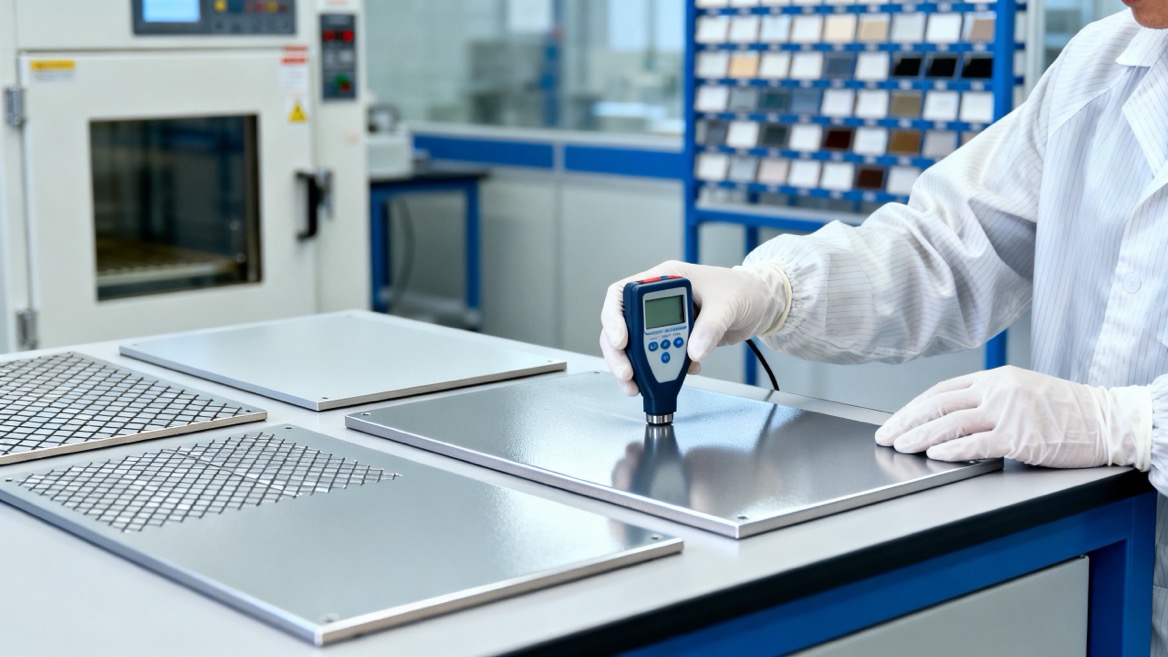
Use a structured trial rather than approving a color panel alone:
1. Record the actual substrate, fabrication condition, and pretreatment.
2. Apply candidate powders to representative parts.
3. Measure film thickness, including difficult edges and recesses.
4. Record the part's temperature profile during curing.
5. Evaluate appearance, adhesion, and relevant mechanical properties.
6. Conduct the specified chemical, corrosion, and weathering tests.
7. Repeat promising results during a production-scale trial.
Use the product's technical data sheet to define curing conditions. Do not substitute an oven air-temperature setting for evidence that the part experienced the required cure schedule.
Solvent rub testing can help assess solvent resistance development, but ASTM D5402 explicitly notes that solvent resistance alone does not establish full cure.
Powder price per kilogram does not reveal the full manufacturing cost.
Use this purchasing framework:
Cost per accepted part=(Powder + preparation + application + energy + changeover + rework costs)/Accepted parts
For acrylic, investigate whether segregation, cleaning, or storage controls change the economics. For either chemistry, include rejects, appearance defects, and production interruptions.
Environmental comparisons need the same discipline. Powder coatings can avoid the solvent carrier used in many liquid systems, but energy use, reclaim efficiency, waste, and product life still matter.
A lower curing temperature may create an energy-saving opportunity. The actual benefit must be measured against the existing oven, throughput, and cure schedule.
Before placing an order, request:
- A technical data sheet and safety data sheet.
- Recommended substrates and pretreatment requirements.
- The curing window and specified film thickness.
- Relevant test reports with acceptance criteria.
- Storage and shelf-life requirements.
- Compatibility guidance for existing equipment.
- Confirmation of any project-specific approvals.
Ask suppliers to distinguish typical laboratory results from guaranteed delivery specifications. This makes quotations more comparable and reduces uncertainty during production approval.
The right finish starts with a clear application brief.
Send Yinda Technology your substrate, part drawing or photographs, exposure environment, cleaning chemicals, appearance targets, and current curing conditions. Include the standards or customer specifications the finished component must meet.
Our powder coating, environmental-materials, and energy-saving focus provides the context for a project-specific discussion. Rather than requesting "the strongest powder," request a candidate coating system and a qualification plan matched to your component.
Neither is universally better. Epoxy often suits indoor functional protection and chemical resistance. Acrylic is particularly relevant where weatherability and high-quality decorative appearance matter. Final selection requires grade-specific evidence.
Pure epoxy is generally unsuitable as an exposed decorative finish where long-term sunlight resistance matters. It may serve as a primer beneath a compatible exterior topcoat within a qualified multilayer system.
It can contribute to corrosion protection, but performance depends on the substrate, pretreatment, formulation, film coverage, and curing. Evaluate the complete system rather than attributing corrosion resistance to acrylic chemistry alone.
Possibly, but compatibility must be checked. Some acrylic systems require segregation and stringent cleaning. Confirm the powder supplier's guidance before sharing booths, reclaim systems, or powder-handling equipment.
Start with the equipment's cleaning agents, contact conditions, regulatory requirements, and appearance expectations. Epoxy may suit some indoor components, but neither resin category automatically establishes medical suitability.
Not automatically. Salt spray testing supports controlled comparisons under specified conditions. It does not provide a universal conversion from laboratory hours to years in service.
1. PPG. "[Powder Coating Process Specifics]." Supports the explanation of thermoset curing and the general application differences between epoxy, polyester, and acrylic powders. [ppg]
2. TIGER Coatings. "[Powder Coating Resins and Their Properties]." Supports epoxy adhesion, chemical resistance, UV limitations, acrylic appearance and weatherability, and formulation-dependent processing limitations. [tiger-coatings]
3. American Coatings Association, CoatingsTech. "[Low-Temperature-Cure Epoxy Powder Coatings]," January–February 2023. Supports distinctions among epoxy and acrylic resin systems, including GMA acrylic chemistry. [paint]
4. Powder Coating Institute. "[What Is Powder Coating?]." Supports the overview of powder ingredients, electrostatic application, and crosslinking during curing. [powdercoating]
5. ASTM International. "[ASTM B117: Standard Practice for Operating Salt Spray (Fog) Apparatus]." Supports the limitations of predicting natural exposure performance from standalone salt spray results. [astm]
6. ASTM International. "[ASTM D5402: Standard Practice for Assessing the Solvent Resistance of Organic Coatings Using Solvent Rubs]." Supports the distinction between solvent resistance development and confirmation of full cure. [astm]
7. QUALICOAT. "[Official Website: Quality Label for Coatings on Architectural Aluminum]." Supports the explanation of material approvals, applicator licensing, and architectural coating quality controls. [qualicoat]


