Language


Views: 243 Author: Yinda Powder Coating Publish Time: 2026-10-18 Origin: Site


Content Menu
● Epoxy vs Polyurethane Powder Coating: Quick Comparison
● What Is the Difference Between Epoxy and Polyurethane Powder Coating?
>> Epoxy Powder Coating: Adhesion and Chemical Protection
>> Polyurethane Powder Coating: Weatherability and Balanced Performance
● Chemical Resistance: Which Powder Coating Performs Better?
>> Start with the Chemical, Not a Generic Rating
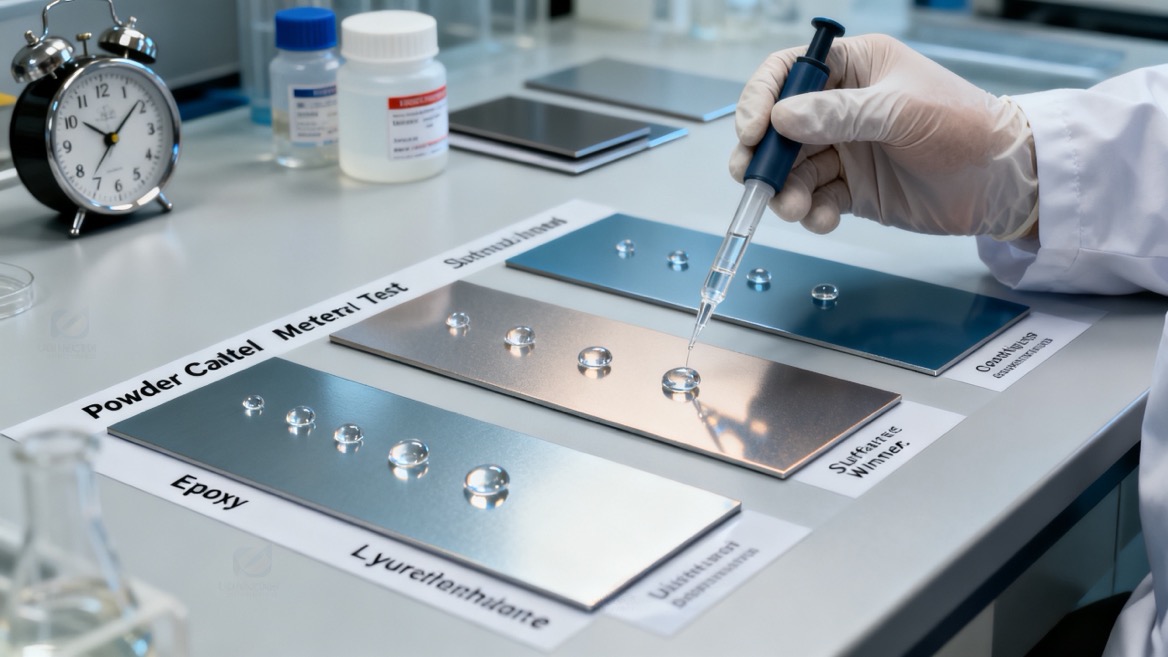
>> Build an Application-Specific Chemical Test Matrix
● Flexibility and Impact Resistance: Avoid the Hardness Trap
>> Hardness Does Not Automatically Mean Brittleness
>> Test the Real Part Geometry
● Durability: Indoor Protection Is Different from Outdoor Appearance
>> UV Resistance Favors Exterior-Grade Polyurethane
>> Corrosion Resistance Belongs to the Whole System
● Curing, Processing, and Environmental Considerations
>> Verify the Part Temperature, Not Just the Oven Setting
>> Check the Polyurethane Crosslinker Technology
● Industry Selection Scenarios for Yinda Technology Customers
● A Five-Step Qualification Plan Before Bulk Ordering
● Discuss Your Coating Requirements with Yinda Technology
>> Is Epoxy Powder Coating More Chemical-Resistant Than Polyurethane?
>> Can Epoxy Powder Coating Be Used Outdoors?
>> Is Polyurethane Powder Coating Always More Flexible?
>> Which Coating Is Better for Medical Equipment?
>> Which Option Costs Less Overall?
>> Does Passing a Solvent-Rub Test Prove Full Cure?
Epoxy powder coating vs polyurethane powder coating is not simply a choice between a stronger finish and a more flexible one. Both can deliver excellent protection, but their advantages emerge under different conditions. Epoxy is a strong starting point for indoor chemical resistance and adhesion. Exterior-grade polyurethane combines chemical resistance with better resistance to sunlight and weathering.
At Yinda Technology, our perspective as a powder coating manufacturer serving construction, new energy vehicles, medical equipment, hardware, and appliances is application-first: specify the exposure before selecting the resin. Our subsidiaries in China, Indonesia, and Saudi Arabia provide the business context for this discussion; the comparisons below describe coating technologies, not verified performance claims for a particular Yinda product.

The decisive question is: exposure. Will the coating face chemicals indoors, outdoor sunlight, repeated deformation, or a combination?
| Selection factor | Epoxy powder coating | Polyurethane powder coating |
|---|---|---|
| Chemical resistance | Strong candidate for demanding indoor chemical exposure | Strong candidate when chemical resistance and weatherability are both needed |
| Flexibility | Can provide excellent flexibility; formulation matters | Often selected for a useful balance of flexibility and finish quality |
| Outdoor appearance | Prone to chalking and discoloration under ultraviolet exposure | Exterior-grade formulations offer good weathering resistance |
| Adhesion and corrosion protection | Strong performance with appropriate preparation | Strong performance with appropriate preparation |
| Surface appearance | Available in multiple gloss and texture options | Known for smooth flow and attractive finishes |
| Typical starting applications | Indoor equipment, protected components, functional metal finishes | Exterior equipment, visible components, chemically exposed outdoor parts |
These are selection tendencies, not universal rankings. Compare technical data sheets and identically prepared test panels before approving either chemistry.
Epoxy powder coatings form a crosslinked thermoset film during curing. Their combination of adhesion, mechanical performance, and chemical resistance makes them useful for protected industrial components.
The main limitation is sunlight. Epoxy coatings can chalk, lose gloss, and change color outdoors. This makes unprotected epoxy a poor default for visible exterior doors, windows, and architectural profiles.
Do not confuse pure epoxy powder with epoxy-polyester hybrid powder. Hybrid formulations represent a separate category, and their properties should not be assumed identical to pure epoxy.
Polyurethane powder coatings commonly use hydroxyl-functional polyester resins with an isocyanate-based curing system. Their crosslinked structure can deliver chemical resistance, flexibility, and a smooth finish.
Exterior-grade polyurethane is especially relevant when a component must tolerate both sunlight and chemical contact. However, "polyurethane" alone does not establish a weathering class, architectural approval, or guaranteed service life.
This comparison concerns polyurethane powder, not two-component liquid polyurethane paint. Application conditions, curing requirements, and handling considerations differ.
Epoxy is often shortlisted for demanding indoor chemical service. Polyurethane becomes particularly attractive when chemical resistance must accompany outdoor durability.
Neither description answers whether a coating will withstand your actual cleaner, process fluid, or disinfectant. Chemical resistance depends on:
- Chemical identity and concentration.
- Contact temperature and exposure duration.
- Splash, wiping, intermittent wetting, or continuous immersion.
- Film thickness, cure, and surface preparation.
- Repeated cleaning and mechanical wear.
A coating that tolerates brief splashes may not survive prolonged immersion. Similarly, a room-temperature result does not establish performance against a heated cleaning solution.
For procurement, replace "excellent chemical resistance" with a written exposure schedule. List each chemical, its concentration, contact time, temperature, and cleaning frequency.
For example, a proposed medical-equipment enclosure evaluation might include the customer's actual disinfectant, repeated wiping, and inspection for discoloration, softening, blistering, or adhesion loss. This is a qualification scenario, not evidence of medical certification.
ASTM D1308 provides a framework for evaluating the effects of household chemicals on organic finishes. More aggressive industrial exposure requires a test protocol appropriate to the service, especially where immersion is involved.
The practical decision is straightforward: shortlist epoxy for demanding protected service, but let side-by-side testing determine whether epoxy or polyurethane performs better against the specified chemical.
It is tempting to describe epoxy as rigid and polyurethane as flexible. That shortcut can eliminate suitable products. Epoxy powders can provide excellent mechanical properties, including flexibility; polyurethane can also combine flexibility with a tough, attractive finish.
The finished result depends on resin design, crosslinking, film thickness, substrate, and cure. A hardness number alone cannot predict resistance to bending or impact.
For components that deform during assembly or use, request relevant evidence:
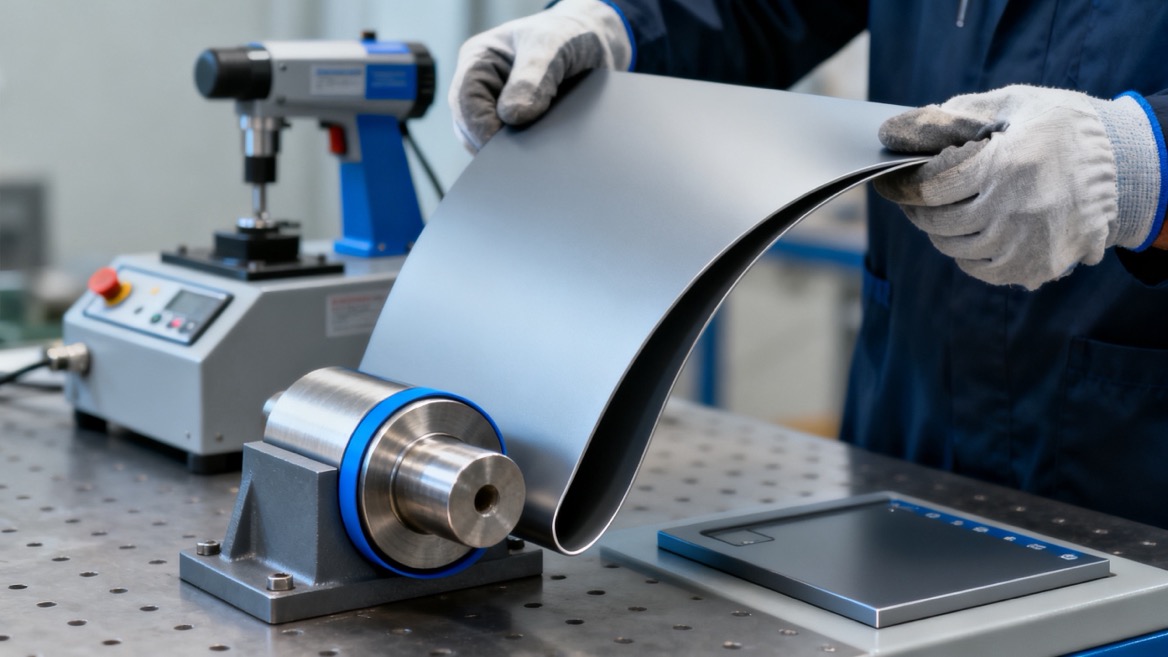
- Mandrel-bend performance for the specified substrate and thickness.
- Direct and reverse impact results where applicable.
- Inspection after the actual forming or assembly operation.
- Adhesion assessment after mechanical and chemical exposure.
A flat panel is useful for screening, but it does not reproduce every edge, weld, corner, or mounting hole.
For hardware, appliance panels, and vehicle brackets, qualify representative components as well as laboratory panels. If parts will be bent after coating, reproduce the intended bend radius and production sequence before approval.
The useful question is not "Which resin is more flexible?" It is "Which finished coating system survives this component's deformation without cracking or losing adhesion?"
For exposed components, polyurethane generally provides a more suitable starting point than unprotected epoxy. Its weathering resistance helps preserve appearance where epoxy is vulnerable to chalking and discoloration.
However, outdoor durability includes more than sunlight. The specification should also address moisture, temperature cycling, cleaning, pollutants, and the substrate's corrosion risk.
For architectural profiles, doors, and windows, request evidence against the project's required weathering and finish specification. A resin name is not a substitute for qualification.
Neither chemistry can compensate reliably for inadequate cleaning, unsuitable pretreatment, poor edge coverage, or incomplete cure.
Compare complete systems: substrate preparation, pretreatment, primer where needed, topcoat, thickness, and curing conditions. A corrosion result from one system should not be transferred to another merely because both use epoxy or polyurethane.
Where an epoxy primer and weather-resistant topcoat are considered, verify intercoat adhesion and compatibility. A multilayer system is an engineered option, not an automatic upgrade.
Both technologies require a suitable cure schedule. Follow the product technical data sheet and verify that the component reaches the specified metal temperature for the required time.
An oven setting alone does not establish adequate cure, particularly when lightweight panels and heavy fabricated parts share a line.
ASTM D5402 solvent-rub testing can help assess solvent resistance during cure evaluation. Importantly, the standard states that solvent resistance alone does not prove full cure. Combine it with process records and the supplier's recommended checks.
Conventional externally blocked polyurethane systems can release a blocking agent during baking. This matters for oven ventilation and process control. Uretdione-based alternatives avoid releasing an external blocking agent.
Therefore, avoid blanket claims that every powder coating process is emission-free. Ask for the safety data sheet, crosslinker information, ventilation requirements, and handling guidance.
For energy-efficiency projects, compare actual cure schedules, line loading, rejects, and rework. A lower nominal cure temperature alone does not demonstrate lower energy consumption per acceptable part.
The following are illustrative selection scenarios, not reported customer projects or measured Yinda results.
| Application | Starting direction | Qualification priority |
|---|---|---|
| Indoor appliance or hardware component | Epoxy where chemical protection and adhesion dominate | Cleaner resistance, appearance, assembly damage |
| Outdoor architectural profile or door component | Exterior-qualified polyurethane candidate | Required weathering class, pretreatment, finish approval |
| New energy vehicle bracket or enclosure | Select by location and exposure | Fluids, corrosion, impact, thermal conditions, customer specifications |
| Medical equipment exterior | Compare both against actual cleaning procedures | Disinfectant resistance, repeated wiping, appearance retention |
| Exterior industrial equipment | Polyurethane where sunlight and chemicals coexist | Combined weathering, chemical exposure, corrosion protection |
Do not infer electrical insulation, battery safety, sterilization resistance, or biocompatibility from resin chemistry alone. Those requirements need separate, application-specific evidence.
1. Define the operating environment. Record indoor or outdoor exposure, chemicals, temperatures, cleaning, substrate, and expected mechanical stress.
2. Select specific candidate products. Obtain technical and safety data sheets, recommended thickness, cure schedules, and available test reports.
3. Prepare comparable samples. Use the same substrate and pretreatment, with documented film thickness and cure conditions.
4. Test realistic failure modes. Evaluate chemicals, bending, impact, adhesion, and weathering as relevant. Establish acceptance criteria before testing.
5. Validate on the production line. Check coverage, finish consistency, part-temperature profiles, rejects, and coating performance on representative components.
This process produces a defensible selection instead of a decision based on resin labels or isolated laboratory numbers.
Send Yinda Technology your substrate, component drawings, exposure conditions, chemical list, target finish, and available curing equipment. Request a product recommendation and sample-testing discussion based on those requirements.
With subsidiaries in China, Indonesia, and Saudi Arabia, Yinda Technology can begin the conversation around your project context. Ask for product-specific documentation and an agreed qualification plan before committing to bulk production.
Epoxy is often a strong candidate for demanding indoor chemical exposure. However, polyurethane can also offer excellent chemical resistance. The exact chemical, temperature, contact time, and formulation determine the better choice.
Unprotected epoxy is generally unsuitable where long-term exterior appearance matters because sunlight can cause chalking and discoloration. An epoxy primer may be considered beneath a compatible weather-resistant topcoat in a qualified system.
No. Both chemistries can provide good flexibility. Compare bend and impact results for the actual substrate, film thickness, and cure conditions rather than relying on a universal resin ranking.
Select according to the equipment's location, cleaning procedure, and relevant requirements. Test the actual disinfectants and repeated wiping. Neither epoxy nor polyurethane automatically establishes suitability for patient contact or sterilization.
A reliable answer requires quotations and production data. Compare powder consumption, transfer efficiency, curing energy, rejects, maintenance, and expected replacement needs—not just price per kilogram.
No. ASTM D5402 explicitly warns that solvent resistance alone does not establish full cure. Use the product's cure requirements, recorded part-temperature history, and additional supplier-recommended checks.
1. AkzoNobel Interpon. "Polyurethane Technology in Powder Coatings." Manufacturer guidance supporting polyurethane's chemical resistance, exterior durability, flow, and flexibility. [interpon]
2. Powder Coating Institute. "Frequently Asked Questions." Industry guidance on powder selection, weatherability, and the chalking limitations of epoxy and epoxy-containing hybrid coatings. [powdercoating]
3. TIGER Coatings. "Powder Coating Resins and their Properties." Technical comparison supporting epoxy adhesion, mechanical properties, chemical resistance, and polyurethane weathering resistance. [tiger-coatings]
4. AkzoNobel Interpon. "Epoxy — Interpon 100." Product-family information supporting epoxy's interior applications, adhesion, corrosion resistance, and flexibility; individual product results should not be generalized to all epoxy powders. [shop.interpon]
5. ASTM International. "ASTM D5402-19: Standard Practice for Assessing the Solvent Resistance of Organic Coatings Using Solvent Rubs." Primary standard explaining solvent-rub assessment and why solvent resistance alone does not establish full cure. [astm]
6. NBS Publication Index. "ASTM D1308-20: Standard Test Method for Effect of Household Chemicals on Clear and Pigmented Coating Systems." Standards summary supporting the proposed chemical-exposure evaluation framework. [thenbs]
7. Powder Coated Tough. "PC Summitry: Polyester Vs. Polyurethane." Technical discussion supporting polyurethane crosslinker chemistry, blocking-agent release, and processing considerations. [powdercoatedtough]
8. PCI Magazine. "Highly Reactive, Blocking Agent-Free Polyurethane Powder Coatings." Technical article supporting the distinction between conventional externally blocked systems and uretdione-based polyurethane technology. [pcimag]


