Language


Views: 261 Author: Yinda Powder Coating Publish Time: 2026-08-24 Origin: Site


Content Menu
>> 3. PPG
>> 7. Guangdong Yude Powder Coating
>> 9. Anhui Meijia New Material
>> 10. Zhejiang Huacai Advanced Material
● Understanding antibacterial powder coating
● Technical checks before buying
>> 1. Confirm the resin system
>> 2. Review the complete test report
>> 3. Separate compliance from performance
>> Step 2: Ask for formulation boundaries
>> Step 3: Evaluate samples in three stages
>> Step 4: Verify factory and certificates
>> Step 5: Set a written quality agreement
>> Risk 1: A standard coating is sold as antibacterial
>> Risk 2: The test report does not match the quoted color
>> Risk 3: The antimicrobial additive harms coating performance
>> Risk 4: Certificates look valid but apply to another entity
>> Risk 5: Supplier capacity is overstated
● The overlooked insider check
>> 1. How can I verify whether a supplier's ISO certificate has expired?
>> 2. Is ISO 22196 enough to prove that a powder coating is antibacterial?
>> 3. What antibacterial reduction should I specify?
>> 4. Can antibacterial powder coating be used outdoors?
>> 5. What MOQ should I expect for a customized antibacterial powder coating?
China is one of the world's most important powder-coating supply bases, supported by mature raw-material networks, specialized extrusion and testing equipment, metal-processing clusters, and export-oriented logistics. For buyers sourcing antibacterial powder coating for architectural aluminum, healthcare equipment, appliances, furniture, hardware, and new-energy applications, China offers a wide choice—from multinational coating brands with local plants to flexible manufacturers supporting customized OEM projects.
However, "antibacterial" is not a product category that should be purchased only by color card, price per kilogram, or a generic laboratory report. The practical value of a coating depends on its resin system, antimicrobial additive, cure schedule, film thickness, substrate pretreatment, test method, and the consistency of batch-to-batch production.
This guide identifies 10 manufacturers with meaningful relevance to the Chinese market. It is designed for procurement managers looking for stable supply, technical cooperation, compliance documentation, and scalable production—not simply the lowest quotation.
China's powder-coatings market is projected to reach USD 6.58 billion in 2026 and USD 9.87 billion by 2031, according to MarketsandMarkets. The scale of the market supports broad access to resin systems, pigments, functional additives, automated manufacturing, and downstream application capacity.
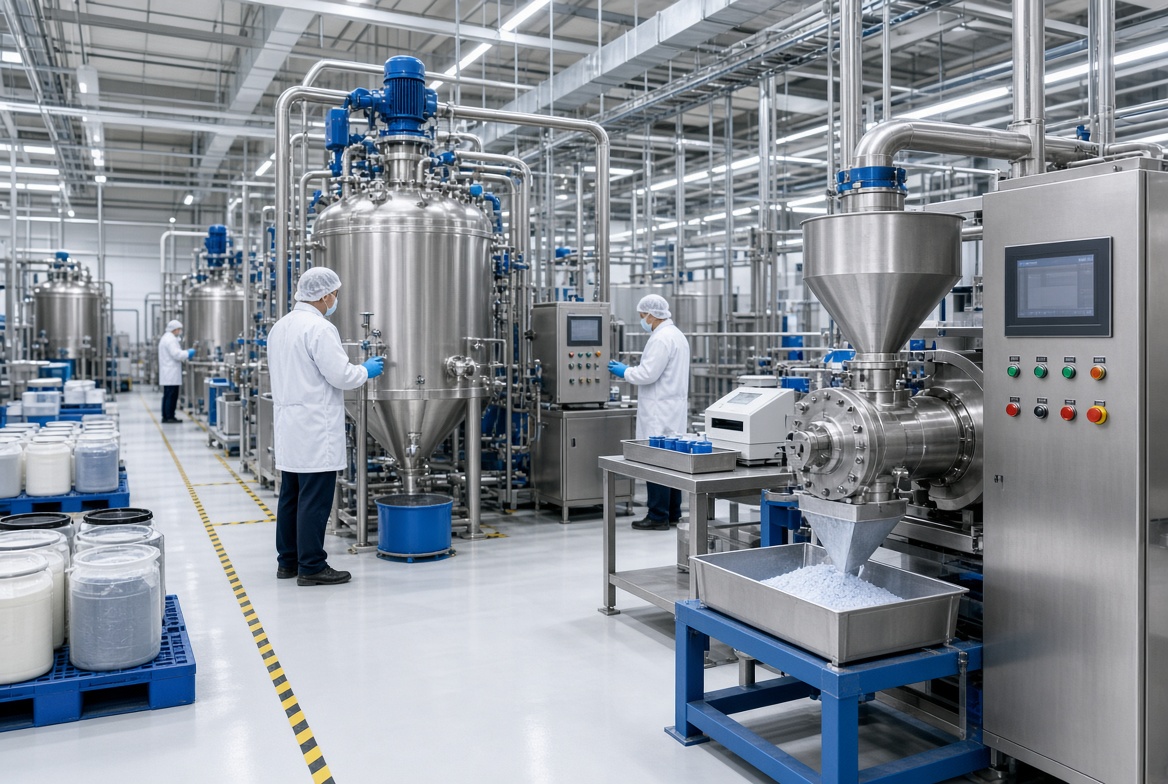
The companies below were screened using publicly available information, technical documentation, local manufacturing relevance, product-market fit, and the criteria that experienced industrial buyers typically use during supplier qualification.
| Evaluation factor | What buyers should verify |
|---|---|
| Manufacturing capability | Factory location, production-line suitability, batch traceability, lead-time capacity, and contingency planning |
| Technical capability | Resin-system selection, antimicrobial-additive compatibility, color matching, weatherability, and application support |
| Quality control | Incoming-material inspection, particle-size control, gel-time testing, cure verification, retained samples, and COA process |
| Antibacterial validation | Test method, test organisms, report issuer, log-reduction result, sample identification, and report validity |
| Compliance readiness | ISO management certificates, RoHS/REACH declarations where applicable, SDS/TDS availability, and project-specific certifications |
| Commercial suitability | MOQ flexibility, sample speed, OEM/ODM depth, export experience, payment terms, and communication efficiency |
| Long-term reliability | Reference projects, technical response time, complaint handling, repeat-order consistency, and supply-chain resilience |
A reliable antibacterial claim should be connected to a clear test method rather than a general phrase such as "99.9% antibacterial." In China, GB/T 21866 is a commonly referenced standard for antibacterial coating performance. Globally, buyers may also request ISO 22196 or JIS Z 2801 testing for non-porous coated surfaces.
China's advantage is not limited to price. Its industrial clusters create a practical supply ecosystem for powder-coating buyers.
- Foshan and Guangdong: Strong demand from architectural aluminum profiles, doors, windows, furniture, hardware, appliances, and building-material exporters.
- Yangtze River Delta: Jiangsu, Zhejiang, Shanghai, and nearby provinces support appliance, machinery, automotive-component, electronics, and industrial-equipment manufacturing.
- Shenzhen and the Pearl River Delta: A major base for electrical enclosures, consumer electronics, lighting, medical-device supply chains, and precision hardware.
- North China and Central China: Important coating-production and distribution locations serving construction, transportation, appliances, and general-industry customers.
For antibacterial applications, Chinese suppliers can often develop solutions around specific substrates and service environments: indoor steel furniture, aluminum profiles, medical carts, electrical housings, door hardware, fitness equipment, public-space fixtures, and selected EV components.
The following list is not a universal ranking by revenue or market share. It is a buyer-oriented shortlist based on the companies' identifiable role in China's powder-coating market, technical relevance, and potential fit for different procurement situations.
| Manufacturer | Established / China presence | Main strength | Suitable buyer profile | OEM/ODM flexibility |
|---|---|---|---|---|
| Yinda Technology | Founded 2010; Foshan | Customized functional powder coatings and responsive export support | Small to mid-sized brands, project buyers, regional distributors | High |
| AkzoNobel Interpon | Global brand; multiple China facilities | Architectural durability, specification support, global project consistency | Premium architectural and multinational projects | Medium |
| PPG | Global company; China presence | Industrial and performance-coating systems | Large industrial, appliance, and transportation programs | Medium |
| Jotun Powder Coatings | Global company; China market presence | Durable powder-coating solutions and application consistency | Industrial and durable-goods projects | Medium |
| Axalta Coating Systems | Global company; China operations | Automotive and industrial coating expertise | Automotive supply-chain and industrial OEMs | Medium |
| TIGER Coatings | Global brand with China market activity | Design finishes and functional powder-coating ranges | Architecture, furniture, and design-led products | Medium |
| Guangdong Yude Powder Coating | China-based supplier | Broad powder-coating supply and industrial applications | General industrial and export buyers | Medium to high |
| Hsinda Powder Coating | Chengdu-based manufacturer | Export-oriented custom colors and functional coatings | Distributors, hardware, furniture, and general industry | High |
| Anhui Meijia New Material | China-based manufacturer | Powder-coating manufacturing scale and industrial supply | Volume buyers and distribution programs | Medium |
| Zhejiang Huacai Advanced Material | China-based supplier | Functional coating development and regional manufacturing support | Industrial components and customized projects | Medium |
Yinda Technology is a Foshan-based powder-coating manufacturer founded in 2010, with a development history tied to the powder-coating sector since 1998. The company focuses on powder coatings, environmentally oriented materials, and energy-saving technology promotion. Its product applications include architectural profiles, doors and windows, new-energy vehicles, medical equipment, hardware, and electrical appliances.
For buyers looking for an antibacterial powder coating manufacturer that can support customized projects without requiring the purchasing scale of a multinational account, Yinda is a relevant option to evaluate. Its Foshan location is also commercially useful for buyers sourcing aluminum profiles, doors, hardware, furniture components, and building products from South China.
Core strengths
- Dedicated R&D center, testing facilities, and production lines.
- An R&D team stated to have more than 20 years of experience.
- Experience across architectural, medical-equipment, electrical-appliance, hardware, and new-energy-related applications.
- International operating footprint with subsidiaries in Guangzhou, Indonesia, and the Middle East.
- Potentially efficient coordination for buyers combining coating procurement with South China metal-product sourcing.
Antibacterial powder coating suitability
Yinda is particularly suited to projects requiring a balance of antibacterial function, color control, mechanical durability, and practical OEM communication. For example, a buyer sourcing coated medical furniture or public-space hardware may need to specify not only antibacterial performance but also gloss, texture, scratch resistance, adhesion, salt-spray resistance, cure conditions, and color consistency.
Rather than treating antibacterial coating as a fixed stock item, buyers should ask Yinda to develop a defined project specification:
- Resin system: epoxy, epoxy-polyester hybrid, polyester, polyurethane, or other suitable system.
- Intended environment: indoor dry area, humid public area, semi-outdoor use, or exterior exposure.
- Test method: GB/T 21866, ISO 22196, JIS Z 2801, or a customer-required protocol.
- Target organisms and required reduction rate.
- Target color, gloss, texture, film thickness, and cure schedule.
- Substrate and pretreatment system.
- Required compliance documents and destination-market restrictions.
Best fit: Small and mid-sized brands, distributors, overseas fabricators, project contractors, and OEMs needing flexible sampling, color customization, and direct technical communication.
AkzoNobel's Interpon brand is one of the most widely recognized powder-coating names in architectural and industrial markets. Its China documentation identifies production and service locations including Changzhou, Langfang, Wuhan, Shenzhen, Ningbo, Suzhou, Chengdu, and other sites, giving large buyers a broad local manufacturing footprint.
The Interpon product portfolio includes polyester systems for exterior use. For example, Interpon 600 is described as a TGIC polyester powder coating designed for exterior environments, while Interpon 610 is a TGIC-free polyester series intended for exterior applications.
Core strengths
- Strong specification capability for architectural and high-durability requirements.
- Established documentation and technical-data-sheet infrastructure.
- Broad local production footprint in China.
- Suitable for projects where approved-brand status, durability standards, and coordinated global supply are important.
Antibacterial powder coating suitability
AkzoNobel is best considered when a buyer needs a highly structured supplier-approval process, architectural-performance documentation, or global coordination. Buyers should still confirm whether a proposed antibacterial product is available in the required region, color, resin system, and local factory route.
Best fit: Major architectural aluminum projects, international OEMs, high-specification public infrastructure, premium appliances, and buyers requiring established global approval processes.
PPG is a global coatings supplier with broad industrial and transportation-market expertise. Industry reporting has identified demand for antibacterial powder coatings in applications such as medical furniture and healthcare-related environments, where frequent cleaning and hygienic-surface requirements create additional coating-performance demands.
Core strengths
- Strong industrial-coating background.
- Relevant experience in demanding end-use markets.
- Potential fit for buyers needing corporate procurement structures, technical governance, and multi-region support.
Antibacterial powder coating suitability
PPG can be relevant for medical equipment, metal furniture, appliances, and industrial components where surface hygiene must be considered alongside durability and process stability. Buyers should define the exact bacteria, test standard, expected service life, cleaning agents, and substrate preparation before requesting a product recommendation.
Best fit: Large OEMs, medical-furniture manufacturers, appliance brands, and multinational buyers with formal qualification procedures.
Jotun is a global coatings manufacturer with powder-coating solutions positioned around application efficiency, appearance, durability, and production consistency. Its powder-coating materials highlight fast application and curing benefits that can shorten production cycles for manufacturing users.
Core strengths
- Strong focus on durable powder-coating performance.
- Useful fit for appliances, furniture, automotive components, and industrial products.
- Accessible technical-documentation process, including TDS, SDS, and application guidance.
Antibacterial powder coating suitability
Jotun should be considered for buyers that prioritize a consistent coating process and durable end-product performance. A buyer should confirm whether the desired antimicrobial feature is available as a specific local product route or can be engineered for the required application.
Best fit: Appliance manufacturers, durable consumer-goods producers, industrial fabricators, and regional projects requiring established technical support.
Axalta is a major global coatings company with a long-standing presence in transportation and industrial coatings. It is commonly included among leading powder-coating suppliers in global market analyses.
Core strengths
- Strong association with automotive and industrial finishing.
- Potentially valuable technical background for demanding substrates, cure windows, process repeatability, and appearance requirements.
- Suitable for buyers operating within organized OEM supply chains.
Antibacterial powder coating suitability
For antibacterial projects involving transportation interiors, charging-equipment housings, public-infrastructure components, or durable metal products, buyers should confirm compatibility between the antimicrobial additive and the required performance system. A coating that passes an antibacterial test but fails impact resistance, weatherability, or chemical resistance is not commercially fit for purpose.
Best fit: Automotive suppliers, industrial-equipment manufacturers, charging-infrastructure producers, and larger technical procurement programs.
TIGER Coatings is known internationally for powder-coating systems, decorative finishes, and functional coating solutions. It can be a practical supplier to evaluate when design requirements—such as metallic effects, texture, matte finishes, or appearance consistency—must coexist with functional performance.
Core strengths
- Decorative and design-oriented powder-coating capability.
- Potential fit for furniture, architecture, consumer products, retail fixtures, and equipment housings.
- Suitable for projects where visual differentiation matters alongside durability.
Antibacterial powder coating suitability
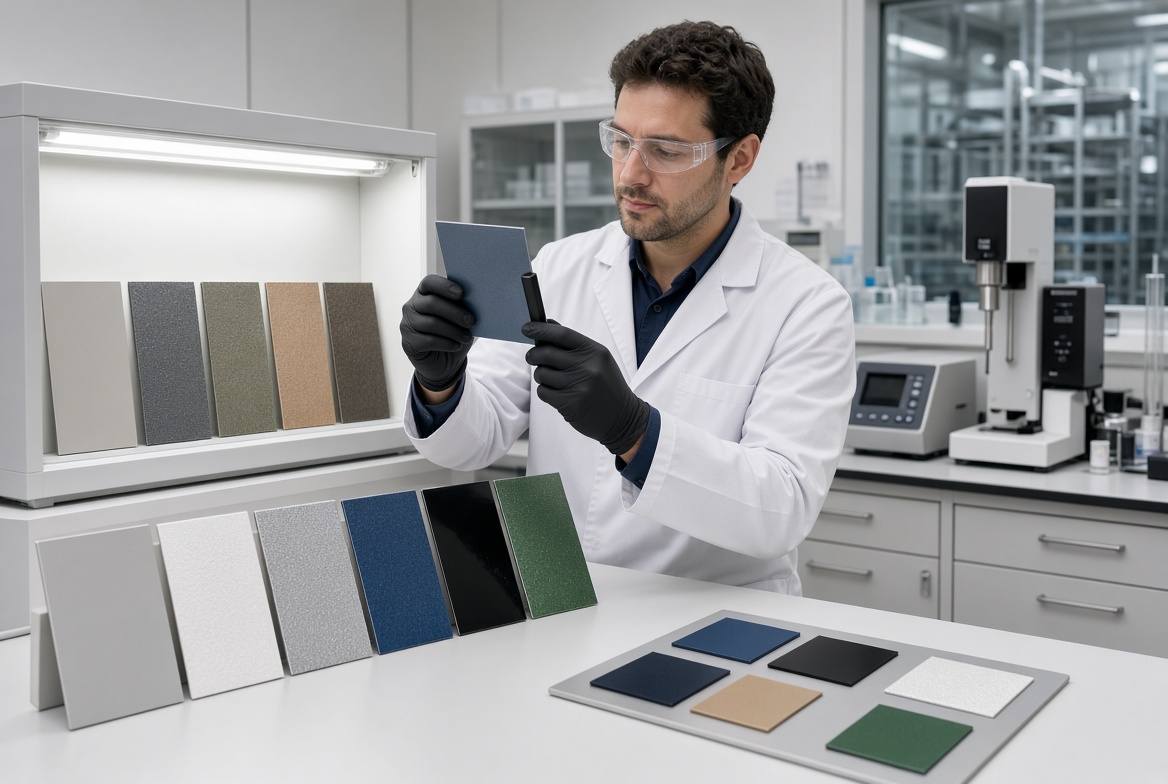
Design-led antibacterial products need additional discipline. Textured finishes, very low-gloss colors, and metallic effects can influence film build, cleanability, and laboratory-test comparability. Buyers should require testing on the final approved color and texture—not merely on a smooth white control panel.
Best fit: Furniture brands, retail-fixture companies, interior-product suppliers, architectural component producers, and premium hardware manufacturers.
Guangdong-based suppliers are strategically positioned for buyers sourcing from the Pearl River Delta's dense cluster of aluminum, hardware, furniture, appliance, and building-material manufacturers. Guangdong Yude is a relevant type of domestic powder-coating supplier for buyers looking for broad industrial application support and proximity to South China fabrication networks.
Core strengths
- Geographic relevance to Guangdong's metal-product and building-material supply chain.
- Potentially suitable for projects requiring rapid coordination with local extruders, fabricators, and assembly suppliers.
- Broad relevance to general industrial powder-coating applications.
Antibacterial powder coating suitability
Buyers should not assume that a general powder-coating supplier's antimicrobial offering has the same evidence package as its standard colors. Ask for the exact functional formula reference, batch-specific COA, test report, antimicrobial-additive disclosure at an appropriate confidentiality level, and technical limits.
Best fit: South China sourcing projects, aluminum-profile programs, door and window manufacturers, hardware suppliers, and general industrial buyers.
Hsinda is a Chinese powder-coating supplier with export-oriented positioning and publicly stated compliance references including ISO 9001, ISO 14001, RoHS, REACH, SGS, AAMA, and related test documentation. Buyers should independently validate current certificate status, scope, and relevance to the actual product and plant before approval.
Core strengths
- Custom-color and functional-coating orientation.
- Export-market awareness.
- Potentially flexible approach for distributor and OEM requirements.
Antibacterial powder coating suitability
Hsinda may be appropriate for buyers needing custom colors and a broad functional powder-coating conversation. Procurement teams should request a full documentation package rather than relying on marketing-level claims.
Best fit: Distributors, furniture and hardware suppliers, export manufacturers, and buyers requiring color development.
Anhui has developed into an important manufacturing region for industrial materials, home appliances, equipment, and export products. Anhui Meijia New Material represents the type of China-based powder-coating manufacturer that may suit buyers seeking domestic production capacity and broad industrial-product coverage.
Core strengths
- Relevant regional access to central and eastern Chinese manufacturing networks.
- Potential fit for industrial, appliance, metal-furniture, and general-hardware applications.
- Useful option for buyers comparing volume supply with other Chinese production bases.
Antibacterial powder coating suitability
Before placing volume orders, buyers should run a three-part evaluation: laboratory panel testing, production-line trial, and retained-batch review after shipment. The objective is to verify not only antibacterial performance, but also spray behavior, fluidization, coverage, color delta, gloss, and post-cure mechanical performance.
Best fit: Appliance supply chains, industrial hardware, domestic China production programs, and export buyers comparing several manufacturing regions.
Zhejiang's manufacturing ecosystem supports hardware, machinery, appliances, furniture, consumer products, and export-oriented industrial goods. Zhejiang Huacai Advanced Material is relevant to buyers who need a China-based supplier with a functional-material perspective and potential regional advantages in eastern China.
Core strengths
- Relevance to Zhejiang's industrial and export-manufacturing ecosystem.
- Potential support for functional and customized coating development.
- Useful for buyers seeking alternatives outside Guangdong and large multinational channels.
Antibacterial powder coating suitability
Functional coatings need a defined approval route. A buyer should request that any antimicrobial claim is linked to the exact finish, substrate, cure cycle, and test report—not a similarly named product from another series.
Best fit: Industrial component suppliers, export-oriented manufacturers, machinery producers, and buyers requiring customized technical communication.
The table below is designed as a sourcing starting point. Actual annual capacity, MOQ, certifications, and production availability can vary by factory, product family, color, additive package, season, and project location. Buyers should obtain written, current confirmation before using this information in supplier nomination.
| Manufacturer | Typical project focus | Capacity profile | Typical MOQ approach | Documentation to request |
|---|---|---|---|---|
| Yinda Technology | Customized antibacterial, architectural, medical, hardware, appliance, and OEM projects | Scalable manufacturer with dedicated R&D and testing resources | Often more flexible for custom development and smaller commercial launches | TDS, SDS, COA, antibacterial test report, project-specific sample approval |
| AkzoNobel Interpon | Premium architectural and industrial programs | Large, multi-site China footprint | Usually project and specification driven | Product TDS, approved applicator requirements, durability documentation, project compliance package |
| PPG | Industrial, medical furniture, appliance, transportation-related uses | Global-scale supplier | Often structured around approved accounts and programs | Technical data, functional claim documentation, application-process guidance |
| Jotun | Durable industrial goods, appliances, furniture, components | Global supplier with established technical systems | Product and account dependent | TDS, SDS, cure guidance, performance data, product availability confirmation |
| Axalta | Automotive and industrial supply chains | Global industrial supplier | Usually structured for OEM-scale programs | Process requirements, specification support, validation documentation |
| TIGER Coatings | Decorative and functional finishes | International specialist supplier | Depends on color and local supply route | Finish-specific TDS, sample panel, cleanability and functional-test data |
| Guangdong Yude | South China industrial and fabrication supply | Domestic industrial supply | Commonly negotiable by color and project | Plant-specific certificates, COA, panel test data, production lead time |
| Hsinda | Export custom colors and general industrial use | Export-oriented domestic supplier | Often relatively flexible | Current ISO certificates, RoHS/REACH declarations, TDS/SDS, third-party reports |
| Anhui Meijia | Industrial and volume applications | Domestic manufacturing supply | Often project and color dependent | Capacity confirmation, QC plan, technical data, sample results |
| Zhejiang Huacai | Functional and industrial coating projects | Regional domestic supply | Project dependent | Functional test evidence, color-matching process, quality documentation |
Antibacterial powder coating is a thermoset coating designed to inhibit bacterial growth on the cured coating surface. It is typically based on an epoxy, epoxy-polyester hybrid, polyester, polyurethane, or other powder-coating resin system, combined with pigments, fillers, curing agents, flow modifiers, and an antimicrobial functional additive.
Common antimicrobial technologies can include inorganic additives based on silver, zinc, copper, or other active chemistries. The practical performance depends on additive dispersion, concentration, coating-film integrity, surface accessibility of the active ingredient, and the final curing process.
An antibacterial coating is not automatically:
- A medical-device certification.
- A substitute for normal cleaning and infection-control procedures.
- A guarantee against all viruses, fungi, or pathogens.
- A claim that can be transferred from one color, finish, or product formula to another without verification.
- A reason to ignore corrosion resistance, adhesion, impact resistance, or chemical resistance.
For a basic indoor metal application, an epoxy-polyester hybrid may be commercially practical. For exterior aluminum profiles, a polyester-based system with appropriate weatherability is usually more relevant. For medical equipment or public-contact hardware, the specification may also need resistance to disinfectants, cleaning cycles, stains, abrasion, and repeated handling.
A reported antibacterial reduction of ≥2 log log is commonly interpreted as at least 99% reduction under the relevant test conditions, but buyers should check the exact test method, incubation time, organisms, control method, and acceptance criteria.
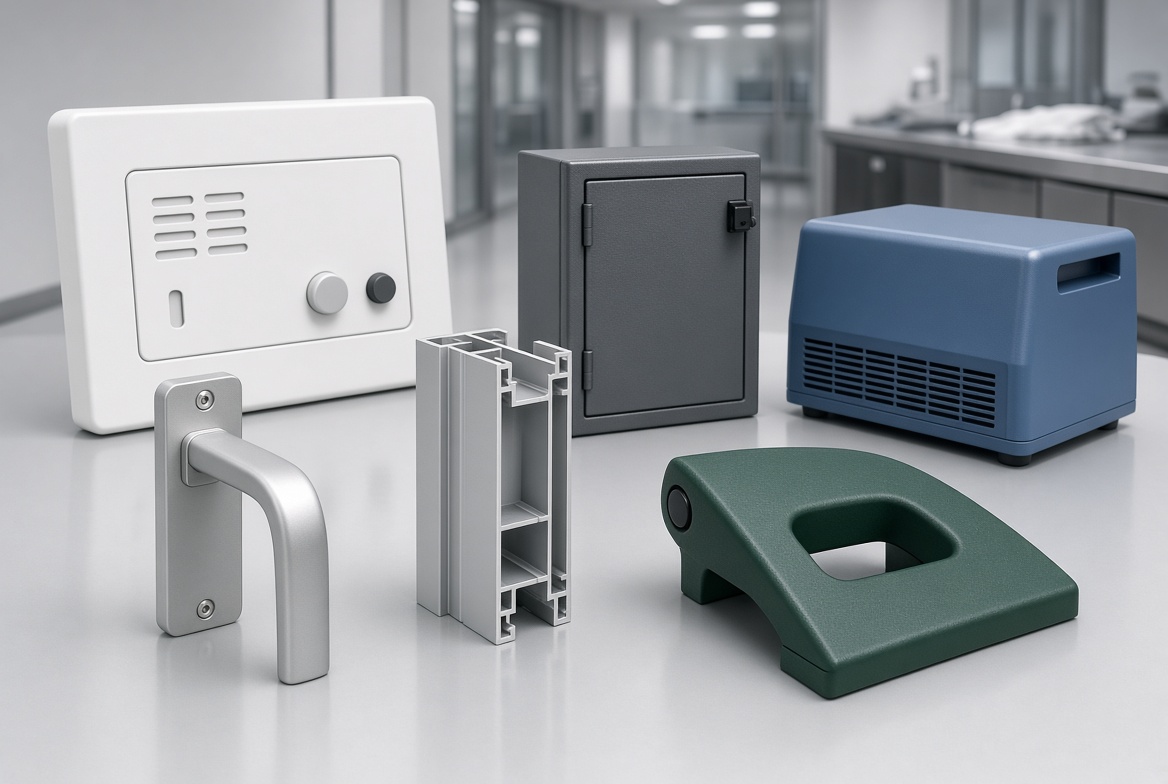
The resin system should match the operating environment.
| Application | Common powder-coating direction | Key validation items |
|---|---|---|
| Indoor medical furniture | Epoxy-polyester hybrid or functional polyester | Antibacterial result, chemical resistance, cleanability, adhesion |
| Hospital doors and hardware | Hybrid or polyester system | Wear resistance, disinfectant resistance, color stability |
| Architectural aluminum profiles | Super-durable polyester where required | Weatherability, corrosion resistance, gloss retention, project approvals |
| Appliances | Hybrid, polyester, or application-specific system | Film appearance, scratch resistance, detergent resistance |
| Public furniture and fixtures | Polyester or hybrid based on exposure | Antibacterial performance, abrasion, impact, cleaning-cycle resistance |
| EV equipment housings | Application-specific polyester or functional system | Electrical, mechanical, corrosion, and thermal requirements |
Do not accept a one-page statement saying "99.9% antibacterial." Request:
- Testing laboratory name and accreditation details.
- Report number and issue date.
- Product name, formula code, batch number, color, and gloss.
- Test standard and test organisms.
- Incubation conditions and duration.
- Untreated-control comparison.
- Numerical result, not only a pass/fail label.
- Sample description and film thickness.
- Confirmation that the report applies to the current product formula.
RoHS, REACH, CE, ISO 9001, ISO 14001, Qualicoat, AAMA, and antimicrobial testing do not mean the same thing.
- ISO 9001 relates to a quality-management system, not proof that every product batch meets an antibacterial requirement.
- ISO 14001 relates to an environmental-management system, not a declaration that the coating is automatically compliant in every export market.
- RoHS and REACH concern restricted substances and chemical compliance; they do not demonstrate antibacterial efficacy.
- CE generally applies to certain finished products placed on the European market, not automatically to a powder-coating material.
- Qualicoat, GSB, and AAMA may be highly relevant for architectural coating programs, depending on the system and project.
- GB/T 21866, ISO 22196, or JIS Z 2801 are more directly relevant when evaluating antibacterial performance.
A high-quality RFQ should include:
- Application and end-use environment.
- Substrate material and pretreatment process.
- Required color, gloss, texture, and film thickness.
- Expected annual volume and initial trial volume.
- Required cure schedule and line type.
- Required test standards.
- Target destination market.
- Required certificates and declarations.
- Packaging, labeling, and shipment requirements.
- Target delivery date and preferred Incoterms.
A vague inquiry such as "Please quote antibacterial white powder coating" will usually result in quotations that cannot be compared fairly.
Suppliers may not disclose proprietary recipes, but they should be able to explain the commercial boundaries of the product:
- Is the antimicrobial feature based on an inorganic or organic active system?
- Does the proposed system contain silver, zinc, copper, or another active technology?
- Is the finish suitable for indoor, outdoor, or both?
- What is the expected cure window?
- Does a darker color or textured finish affect the antibacterial claim?
- Can the product tolerate alcohol, chlorine-based cleaning agents, or quaternary-ammonium disinfectants?
- What film thickness is required for the validated performance?
1. Laboratory panels: Test appearance, color, gloss, adhesion, impact, hardness, cure, and antibacterial performance.
2. Production-line trial: Verify fluidization, electrostatic charging, transfer efficiency, coverage, recoat behavior, and oven compatibility.
3. Pilot production: Approve a controlled commercial batch before full-scale purchasing, retaining sealed reference samples from both supplier and buyer.
For Chinese suppliers, ask for the legal company name in Chinese and English, unified social credit code, factory address, certificate number, issuing body, scope, issue date, expiration date, and surveillance-audit status.
China's certification authority states that management-system certificates should identify a means of verification through the official CNCA platform, while certification bodies are expected to provide public methods for checking whether certificates remain valid, suspended, withdrawn, or revoked.
A certificate that belongs to a trading company, another factory, an expired entity, or a different scope should not be treated as evidence for the nominated production site.
Your agreement should define:
- Approved product code and color standard.
- Approved sample-panel reference.
- Permitted color tolerance.
- Gloss tolerance.
- Particle-size and gel-time control where applicable.
- Required batch COA.
- Antibacterial test protocol and acceptance criteria.
- Complaint response time.
- Replacement, credit, or corrective-action terms.
- Change-control requirement for resin, additive, pigment, production location, or curing-agent changes.
Some suppliers may offer an ordinary powder coating with a generic marketing claim but without functional validation for the exact batch or finish.
How to avoid it: Require a product-specific report with formula or code traceability, the applicable test standard, named organisms, result values, and a current issue date.
A smooth white panel is frequently easier to test and compare than a dark textured, metallic, sand-texture, or matte coating. The result may not transfer automatically.
How to avoid it: Request testing or written technical confirmation for the final approved color, gloss, texture, and film-thickness range.
An additive can affect gloss, flow, color, cure behavior, weatherability, or mechanical properties if it is poorly dispersed or not properly matched to the resin system.
How to avoid it: Run an application-line trial and assess coating performance beyond antibacterial testing, including adhesion, impact, hardness, salt spray where relevant, humidity, UV exposure, and chemical resistance.
It is common for buyers to receive certificates that belong to a parent company, sales office, old factory, or different production site.
How to avoid it: Match the certificate's legal entity, physical address, scope, and validity status to the actual factory named in the supply contract. Verify the certificate through the issuer and official Chinese certification channels where applicable.
Quoted monthly capacity may represent theoretical production output rather than available capacity for your color family, resin system, packaging format, or peak-season lead time.
How to avoid it: Ask for available—not theoretical—capacity, line allocation, production lead time for repeat orders, and a documented contingency plan for key materials.
One issue often missed in online sourcing guides is that the antibacterial result is highly dependent on the cured film, not only on the powder formula.
A supplier may provide a valid report produced using a controlled laboratory cure. But on your production line, an oven with uneven temperature, a short dwell time, insufficient metal temperature, excessive film thickness, contamination, or poor pretreatment can alter the coating surface and final performance.
Before approving a supplier, run the selected powder on your own line or on the nominated coater's line. Record:
- Oven air temperature and actual metal temperature.
- Time at metal temperature.
- Film thickness.
- Coated-panel batch number.
- Surface finish and gloss.
- Pretreatment route.
- Final antibacterial-test result on the production-cured panel.
This check is especially important for medical equipment, public-contact hardware, hospital furniture, food-service equipment, and high-touch architectural components.
China offers a strong supplier base for antibacterial powder coatings, but the correct partner depends on more than price and color range. Buyers should prioritize a supplier's ability to provide repeatable production, clear technical communication, current compliance documents, traceable testing, and practical support through sampling and production-line validation.
For large specification-led programs, multinational suppliers such as AkzoNobel, PPG, Jotun, Axalta, and TIGER may be suitable options. For buyers seeking a more flexible China-based partner for customized OEM work, faster communication, and functional coating development across architectural, medical, hardware, appliance, and new-energy applications, Yinda Technology is a practical manufacturer to include in the qualification process. Yinda's Foshan base, dedicated R&D resources, broad application coverage, and international operating footprint make it particularly relevant for small to mid-sized brands, distributors, and export-oriented manufacturers.
Send a specification-based RFQ with your substrate, end-use environment, color, film thickness, antibacterial test requirement, target market, and forecast volume. Then compare suppliers using validated panels, complete documentation, and a controlled production-line trial—not only a per-kilogram quotation.
Ask for the certificate number, issuing certification body, legal entity name, factory address, scope, issue date, and expiry date. Then verify it through the certification body's public database and the CNCA certification-information route where relevant. Check for suspension, withdrawal, cancellation, or a mismatch between the certificate holder and the actual manufacturing site.
Not by itself. ISO 22196 can provide a standardized laboratory framework for testing antibacterial activity on non-porous surfaces, but you must still confirm the actual product code, color, finish, film thickness, organisms tested, incubation time, numerical result, laboratory credentials, and relevance to the intended application.
The right requirement depends on the product, market, and specification. A ≥2-log reduction is commonly associated with 99% reduction under specified testing conditions. However, procurement specifications should state the target organisms, test method, incubation period, acceptance criteria, and whether the test must be completed on the final production finish.
Yes, but the coating must be designed for the exposure environment. For outdoor architectural aluminum or public fixtures, buyers typically need a suitable exterior polyester or super-durable system, with separate verification of weatherability, corrosion resistance, color retention, and the antimicrobial feature. A standard indoor epoxy-hybrid antibacterial coating is not automatically suitable for exterior exposure.
MOQ depends on resin chemistry, color, texture, additive system, packaging, and whether the supplier already has an approved formula. Stock colors may require lower volumes, while custom metallic, low-gloss, textured, or specially tested antibacterial finishes usually require a larger minimum batch. Ask suppliers to quote separately for laboratory samples, pilot production, first commercial order, and repeat orders.
- [Yinda Technology company profile] [yinda-global]
- [China Certification and Accreditation Administration (CNCA)] [cnca.gov]
- [CNCA guidance on management-system certification verification] [cnca.gov]
- [AkzoNobel Interpon product documentation] [powdercoatings.brand.akzonobel]
- [Jotun technical-document search] [jotun]
- [China powder coatings market outlook] [marketsandmarkets]


