Language


Views: 283 Author: Yinda Powder Coating Publish Time: 2026-07-24 Origin: Site


Content Menu
● Why Professionals Choose Powder Coated Aluminum
● How the Aluminum Powder Coating Process Works
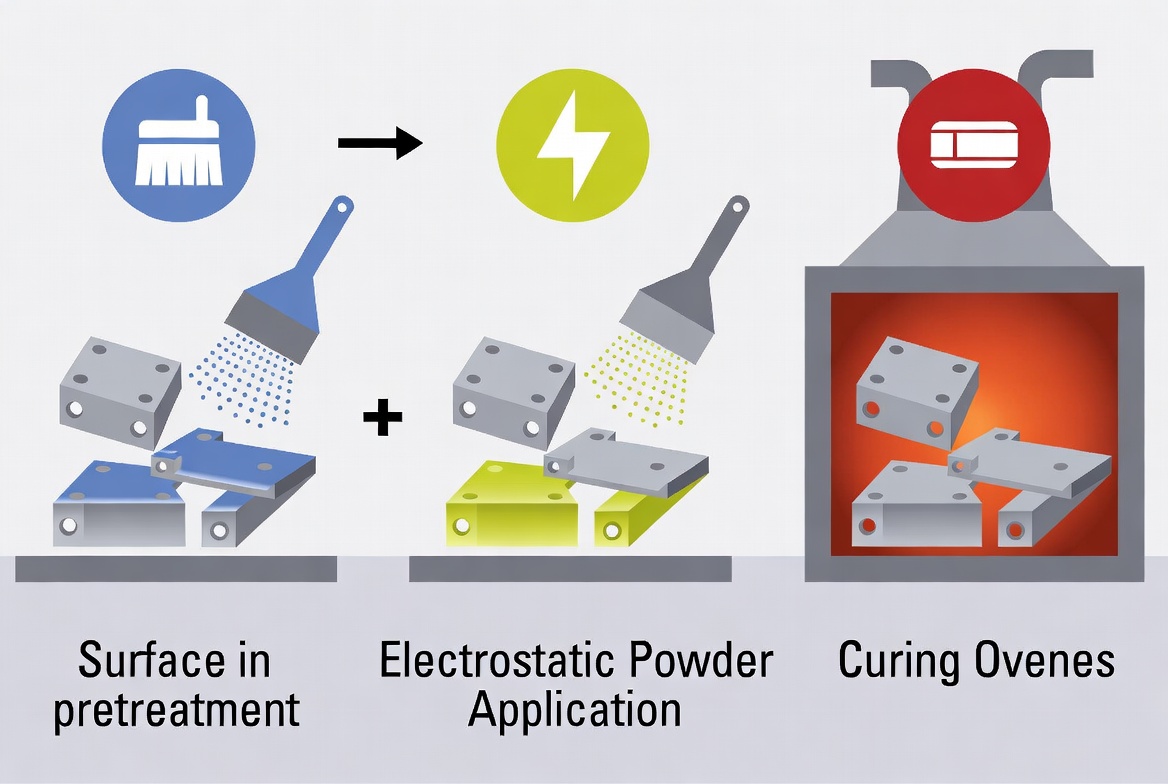
>> Pretreatment: Where Coating Performance Is Decided
>> Electrostatic Application of Powder
>> Curing: Turning Powder into a Continuous Film
● Which Aluminum Grades Can Be Powder Coated?
● Key Applications of Powder Coated Aluminum
● Powder Coating Aluminum Compared with Other Finishes
● Practical Insights from Manufacturing Projects
● Emerging Trends and Environmental Considerations
● Summary for Manufacturers Working with Aluminum
● FAQs About Powder Coating Aluminum
>> 1. Does powder coating protect aluminum from corrosion?
>> 2. Which powder types are commonly used on aluminum outdoors?
>> 3. Are all aluminum parts suitable for powder coating?
>> 4. How long can a good powder coating last on aluminum?
>> 5. What preparation steps matter most before coating aluminum?
Aluminum can be powder coated very effectively when the process is engineered around its unique surface behavior, providing durable protection and attractive finishes for architectural, automotive, and industrial applications.
Powder coating has become one of the most reliable ways to finish aluminum parts used in construction, new energy vehicles, medical equipment, hardware, and electrical housings. When pretreatment, application, and curing are treated as one integrated process, powder coated aluminum delivers consistent adhesion, corrosion resistance, and visual uniformity across demanding environments. This makes it a strong choice for manufacturers who need long-lasting performance, stable color, and efficient production on profiles, frames, complex assemblies, and precision enclosures.

Powder coating transforms aluminum from a bare substrate into a multi‑functional engineered surface that protects, performs, and supports brand positioning.
- Strong resistance to corrosion in coastal, humid, and industrial atmospheres. - High impact and abrasion resistance for moving parts and outdoor structures. - Long-term color and gloss stability with super‑durable polyester or polyurethane systems.
- Solvent‑free application and high transfer efficiency that support environmental and energy‑saving goals.
From a manufacturing standpoint, powder coating adds a controlled film thickness of roughly 50–150 microns, protecting aluminum without significantly altering critical dimensions when masking and tolerances are planned correctly. This combination of dimensional stability and durability is one reason powder coated aluminum is widely specified for façade systems, new energy components, and precision housings.
Experienced coaters often point out that pretreatment is the stage where success or failure is largely determined. Aluminum naturally forms a thin oxide layer that protects the metal but can block bonding if not managed; the aim is not to strip this oxide completely but to stabilize and condition it so the coating can anchor chemically and mechanically.
Typical pretreatment steps include:
- Cleaning and degreasing to remove machining oils, lubricants, and contaminants.
- Light abrasive blasting or chemical etching to introduce controlled micro‑roughness without damaging thin sections.
- Application of a conversion coating, often zirconium‑ or titanium‑based, to create a stable, high‑energy surface with strong corrosion resistance and adhesion.
For anodized or heavily oxidized aluminum, additional etching or stripping is needed so the powder bonds to a fresh, conditioned metallic surface rather than an unstable oxide or worn anodic layer.
Once the surface is prepared, dry powder is sprayed using electrostatic guns that charge the particles and attract them to grounded aluminum parts. Process technicians adjust gun‑to‑part distance, voltage, powder flow, and movement pattern to build a uniform film across flat areas, edges, and recesses.
On complex geometries—such as battery housings, heat‑sink profiles, or intricate medical frames—settings are tuned to overcome Faraday cage effects in deep corners and narrow channels. Stable part grounding, controlled booth airflow, and consistent booth temperature and humidity are essential to achieve even deposition and low defect rates.
After application, coated aluminum enters an oven where it is heated according to the specified cure schedule. At temperature, the powder melts, flows, crosslinks, and forms a continuous polymer network tightly bonded to the substrate.
Technicians closely monitor:
- Part metal temperature (PMT), which must reach and hold the target range long enough for full crosslinking.
- Time at temperature to avoid under‑cure or over‑bake that could reduce mechanical performance.
- Oven airflow and loading patterns to prevent cold spots and color variations.
Modern low‑temperature cure powders help reduce energy usage and allow coating of heat‑sensitive aluminum assemblies, which is especially valuable for large profiles and high‑volume lines.
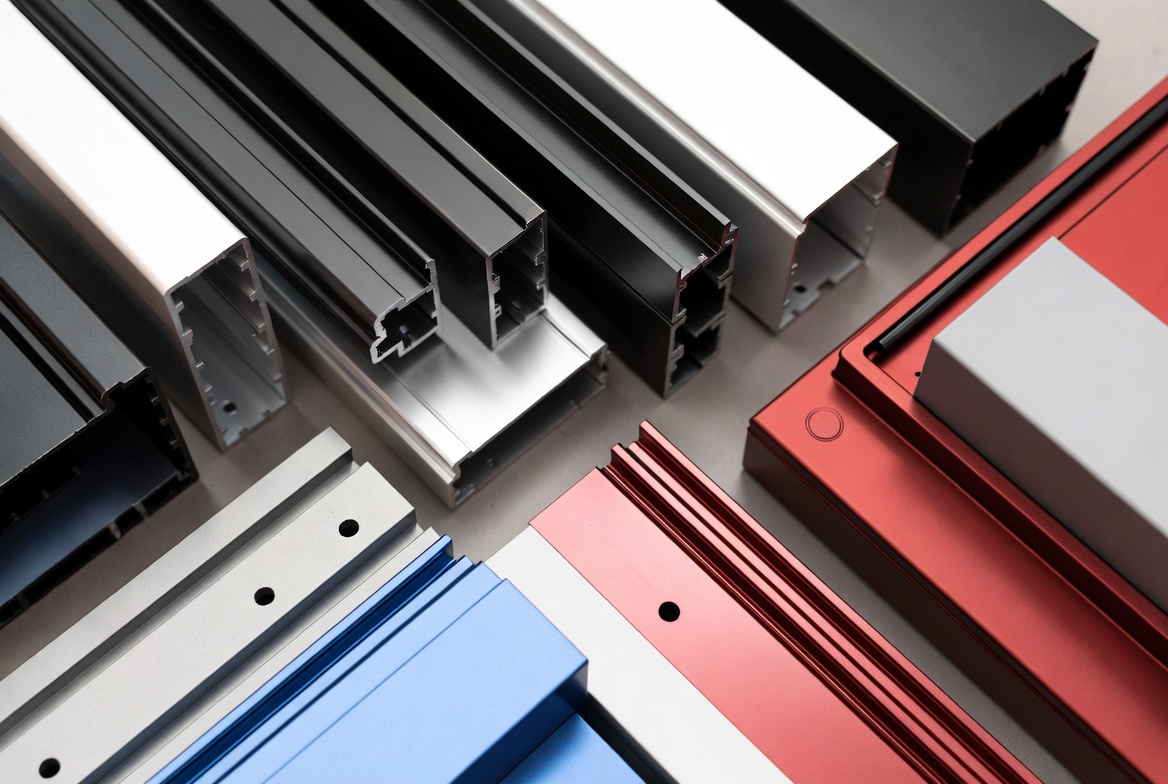
In everyday production, most extruded profiles, sheet, plate, and many cast aluminum parts can be coated successfully when pretreatment and curing are matched to the alloy and casting quality.
- Extruded alloys used in windows, doors, and curtain walls respond well to conversion coating plus polyester powders, offering stable color and strong corrosion resistance. - Cast aluminum components like brackets and housings can be coated, but porosity and trapped gases require careful degassing or outgas‑tolerant primers to minimize pinholes. - Anodized aluminum is typically stripped or etched to remove or open the anodic layer before powder is applied, ensuring adhesion at a clean, conditioned surface.
Skilled finishing teams evaluate alloy type, wall thickness, surface quality, and end‑use conditions before selecting pretreatment and powder chemistry, rather than relying on a single generic process.
Powder coated aluminum now serves as a go‑to solution in sectors where strength‑to‑weight ratio and environmental durability are critical.
- Building façades, window and door systems, balcony railings, and structural profiles exposed to sun, rain, and airborne pollution.
- New energy vehicle components, battery housings, and protective casings that must withstand heat, vibration, and long-term exposure. - Medical equipment frames, carts, and enclosures that endure frequent cleaning with disinfectants while maintaining a professional appearance.
- Hardware, appliances, and consumer furniture where customizable colors, textures, and tactile finishes enhance perceived quality.
By combining aluminum's low weight and structural performance with a robust coating system, designers can meet both functional and aesthetic requirements across global markets.
| Finish type | Color range | Environmental durability | Mechanical robustness | Maintenance profile |
|---|---|---|---|---|
| Powder coating on aluminum | Very wide palette, including standardized color systems and textured effects. | Strong resistance to UV, moisture, and many chemicals with appropriate polyester or polyurethane systems. | Thick, continuous film with excellent impact, abrasion, and chip resistance. | Routine cleaning is usually enough to maintain gloss and color over long periods. |
| Anodized aluminum | Mainly metallic and limited tinted shades. | Good outdoor performance but more sensitive to some aggressive chemicals and pollutants. | Hard surface that resists scratching but can show wear at edges over time. | Surface may need restoration or replacement in harsh environments. |
| Liquid coatings on aluminum | Broad color choice, but less stable over long-term exposure. | More prone to fading, chalking, and solvent‑related defects under demanding conditions. | Thinner film, typically easier to chip and scratch than a cured powder layer. | More frequent repainting and touch‑ups over the component service life. |
For long‑lived outdoor applications and high‑traffic environments, many specifiers now prioritize super‑durable polyester powder systems on properly treated aluminum because these combinations consistently outperform traditional finishes on gloss retention, color stability, and under‑film corrosion.
In real production, coating failures on aluminum are rarely caused by low film thickness alone; they most often relate to surface chemistry and process control. When teams focus on the full system—substrate, pretreatment, powder type, application parameters, and curing—results become more repeatable.
Manufacturing experience shows that:
- Thorough cleaning and stable conversion coating chemistry sharply reduce peeling, blistering, and edge creep.
- Clear sequence control—machining, pretreatment, coating, curing, inspection—prevents contamination and uncontrolled re‑oxidation.
- Defined acceptance criteria for thickness, adhesion, and visual quality align expectations between buyers and coating suppliers.
By treating powder coated aluminum as an engineered solution instead of a simple decorative layer, organizations achieve consistent performance across different plants and product lines.
Advances in powder technology and application equipment continue to refine how aluminum is coated in modern finishing operations.
- Low‑temperature cure powders reduce oven energy demand and allow finishing of heat‑sensitive assemblies without compromising coating integrity. - High‑efficiency spray systems and optimized recovery design commonly reach recovery rates above 90%, lowering waste and improving material utilization. - Chrome‑free conversion coatings are increasingly used to replace traditional hexavalent chromate systems, while still meeting demanding industry standards for architectural aluminum.
Together, these trends support environmental performance and lifecycle efficiency, especially for large‑scale building projects, transport equipment, and industrial machinery produced in global supply chains.
Manufacturers that rely on aluminum for architectural profiles, transport components, medical equipment, and precision hardware can achieve long‑lasting protection and appearance by adopting a carefully controlled powder coating process. When pretreatment chemistry, powder selection, application technique, and curing parameters are aligned with the alloy and end use, powder coated aluminum offers a durable, stable, and visually compelling finish that supports both technical requirements and long‑term product value.
Yes. Aluminum's natural oxide offers baseline protection, but a properly pretreated and powder coated surface adds a continuous barrier that limits moisture ingress and slows corrosion in harsh or coastal environments.
For exterior building elements, transport equipment, and exposed machinery, super‑durable polyester systems are widely used because they combine strong resistance to ultraviolet exposure with robust mechanical performance.
Most extruded and many cast aluminum components can be coated successfully when porosity, wall thickness, and alloy type are considered in pretreatment and curing decisions. Careful process design and testing are important before scaling production on complex geometries or highly porous castings.
With correct pretreatment, suitable powder chemistry, and controlled curing, powder coated aluminum used outdoors can maintain color and protection for many years, often exceeding a decade under typical exposure conditions.
Consistent cleaning, controlled roughening or etching, and a stable zirconium‑ or titanium‑based conversion coating are among the most critical steps for durable adhesion and long‑term corrosion resistance on aluminum substrates.
1. Kroma Coatings – "Can You Powder Coat Aluminum? – Kroma Coatings" https://www.kromacoatings.com/post/can-you-powder-coat-aluminum
2. UL Prospector – "Latest Trends in Powder Coating Technology" https://www.ulprospector.com/knowledge/18349/pc-latest-trends-in-powder-coating-technology/
3. CNC Machining Shops – "Powder Coating Aluminum: Process, Properties & Best Practices" https://www.cncmachiningshops.com/powder-coating-aluminum/
4. HPL Machining – "Ultimate Step-by-Step Guide: How to Powder Coat Aluminum" https://hplmachining.com/blog/how-to-powder-coat-aluminum/
5. Shengxin Aluminium – "Can You Powder Coat Aluminum? Yes: Here's How To Make It Last" https://www.shengxinaluminium.com/can-you-powder-coat-aluminum-yes-here-s-how-to-make-it-last_n468
6. Finishing and Coating – "Top 5 Trends in Powder Coating" https://finishingandcoating.com/index.php/powder-coat/668-top-5-trends-in-powder-coating
7. IMTS – "Can You Powder Coat Aluminum? Expert Guide to Best Practices" https://www.imtsny.com/feeds/blog/powder-coat-aluminum
8. Rapid-Protos – "Powder Coating Aluminum in Manufacturing: Preparation Methods, Coating Types, and Applications" https://www.rapid-protos.com/powder-coating-aluminum/
9. TIGER Coatings – "Tips & Tricks for Powder Coating" https://www.tiger-coatings.com/fileadmin/user_upload/downloads_new/tiger-drylac/tca_global/service/troubleshooting_guide_en_0519.pdf
10. Fabcon – "Best Industrial Powder Coating for Aluminum & Steel Parts" https://fabcon.com/articles/surface-and-finishing/best-powder-coating-aluminum-steel/


