Language


Views: 231 Author: Yinda Powder Coating Publish Time: 2026-07-21 Origin: Site


Content Menu
● Textured Polyester vs. Smooth Powder Coatings on Recycled Aluminum Profiles
● Typical Surface Imperfections on Recycled Aluminum Profiles
● How Powder Coatings Interact with Surface Defects
● What Is Textured Polyester Powder Coating?
● What Is Smooth Powder Coating on Aluminum?
● Side-by-Side Comparison for Defect Hiding
>> Tolerance for Substrate Variability
>> Touch, Grip and Maintenance
● Practical Selection Framework for Recycled Aluminum Profiles
>> Step 1 – Identify Defect Type and Density
>> Step 2 – Define Aesthetic Expectations
>> Step 3 – Assess Pre-Treatment Capability
>> Step 4 – Select Chemistry and Finish
● Sustainability and Market Context
● Architectural Recycled Aluminum Profiles
● Surface Preparation Steps to Maximize Defect Hiding
>> Step 1 – Inspection and Sorting
>> Step 2 – Mechanical Conditioning
>> Step 3 – Cleaning and Degreasing
>> Step 4 – Chemical Pre-Treatment
>> Step 5 – Controlled Application and Cure
● Balancing Aesthetic Ambition and Production Reality
● Key Takeaways for Manufacturing and Design Teams
● FAQs
Recycled aluminum profiles rarely arrive with flawless surfaces, and the choice between textured polyester and smooth powder coatings often determines whether minor imperfections disappear or stand out. From a practical finishing and manufacturing perspective, fine textured polyester finishes typically provide stronger visual defect-masking, while smooth powder coatings excel when the underlying aluminum has already been prepared to a very high standard.
Recycled aluminum profiles support sustainability goals, but they introduce variability in surface quality that traditional finishing approaches do not always address. Coating engineers, project managers and production teams need to understand how surface texture, film build and resin chemistry influence the visibility of scratches, machining marks and shallow dents. Choosing between textured polyester and smooth powder coatings is therefore a strategic decision that affects brand perception, warranty performance and long-term maintenance.
For a manufacturer like Yinda Technology, working across construction profiles, doors and windows, New Energy Vehicles, medical devices and industrial hardware, the finishing system must be robust, repeatable and compatible with varying substrate quality. A coating solution that can visually stabilize recycled aluminum while maintaining durability and environmental performance is no longer optional; it is a core part of product design and production planning.
Recycled aluminum profiles carry the history of previous use, remelting and re-extrusion. That history often appears as visible imperfections on the surface:
- Fine longitudinal scratches from handling and cutting
- Transverse machining marks near joints and connection points
- Minor dents from transportation and stacking
- Casting pores or pinholes in localized areas
- Slight waviness or micro-roughness along long profiles
These imperfections do not necessarily compromise structural performance, but they influence how the final product is perceived by architects, equipment buyers and end-users. A balcony profile or automotive trim piece that looks irregular can weaken confidence, even when mechanical and corrosion properties are fully compliant with specifications.
For recycled aluminum, the reality is that absolute surface perfection is rare. Instead of chasing costly mechanical finishing for every defect, many manufacturers rely on coating choices to manage visual quality. This is where the difference between textured polyester and smooth powder coatings becomes critical.
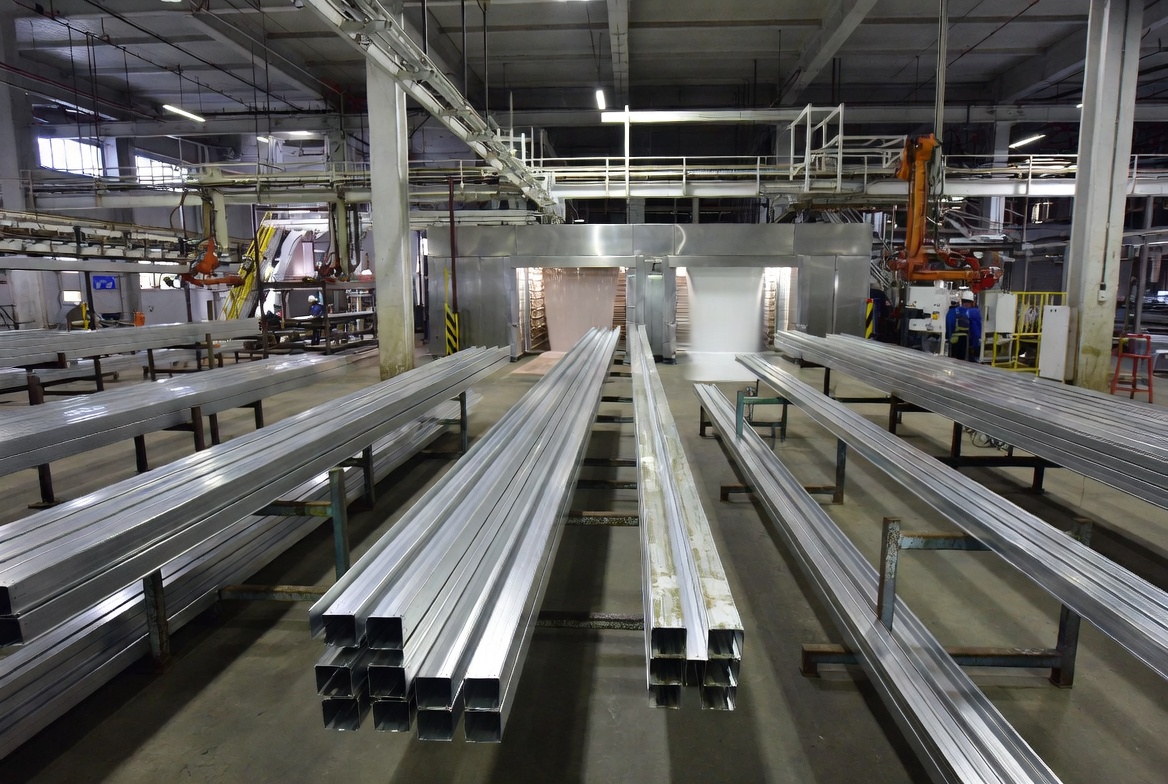
Powder coatings form a continuous film that closely follows the shape of the substrate rather than radically leveling it. When the coating melts and cures, it flows, gels and solidifies on top of the existing surface profile. As a result:
- Shallow scratches and minor marks can be softened but not completely erased
- Deep gouges and sharp edges remain visible, even under thick films
- Micro-roughness is partly smoothed, but still influences gloss and reflection
The visual effect depends heavily on how light reflects off the cured surface. Smooth, glossy coatings behave almost like a polished mirror, revealing every variation in the substrate. Textured coatings, by contrast, scatter light in multiple directions, breaking up the sharp lines that normally draw attention to defects.
Understanding this interaction is essential for teams working with recycled aluminum. Instead of expecting the coating to fix every defect, it is more realistic to treat the coating as a visual management tool: one that can either highlight the substrate or gently disguise its imperfections.
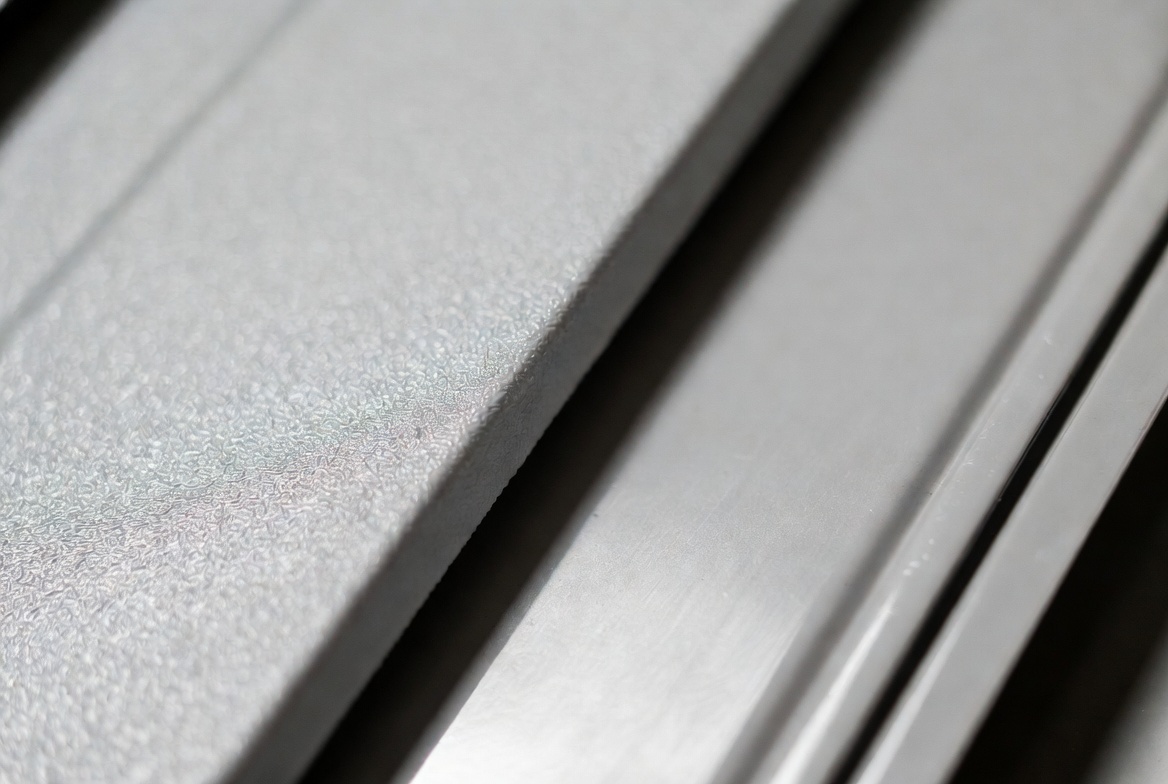
Textured polyester powder coatings are engineered to create a controlled surface texture during curing. This texture can vary from subtle to pronounced, but it is always intentional:
- Fine texture: A soft, sand-like surface that looks matte or low-sheen
- Medium texture: More visible micro-points and light scattering
- Coarse texture or wrinkle: Strong relief patterns and tactile grip
In polyester-based systems, this texture is achieved through the formulation and curing behavior. The film forms micro-structures that scatter light, reduce glare and visually break up otherwise continuous lines of defects. Instead of seeing a single scratch or machining mark, the observer's eye reads a uniform, designed texture.
For recycled aluminum profiles, fine textured polyester finishes are particularly valuable. They can:
- Reduce the visibility of shallow scratches and small dents
- Make micro-roughness look intentional rather than accidental
- Provide a modern matte aesthetic that suits industrial and architectural design
This combination of defect-masking and contemporary appearance has made textured polyester coatings a preferred choice for equipment housings, medical device frames, industrial fixtures and aluminum components that need both durability and a forgiving finish.
Smooth powder coatings are designed to cure to a flat, texture-free surface. They can be formulated as high gloss, semi-gloss, satin or matte, but the defining feature is the absence of tactile texture. When applied to well-prepared aluminum profiles, smooth coatings offer:
- Clean, continuous visual lines
- Strong color definition and clarity
- Easy-to-wipe, low-friction surfaces for regular cleaning
On high-quality substrates, smooth coatings deliver an elegant appearance that aligns with minimalist architectural styles and premium product design. Door and window frames, facade profiles, decorative trims and display structures often rely on smooth finishes to communicate precision and high value.
However, smooth coatings transmit substrate imperfections with high fidelity. Even matte smooth finishes, while slightly more forgiving than high gloss, still reflect the underlying unevenness. On recycled aluminum profiles that have visible scratches or waviness, smooth coatings can unintentionally emphasize every defect, especially in strong daylight or under directional lighting.
To support a clear decision, it is helpful to compare textured polyester and smooth powder coatings specifically in terms of their ability to hide imperfections on recycled aluminum profiles.
- Textured polyester spreads light across micro-structures, making small scratches and marks blend into the overall texture.
- Smooth coatings present a uniform plane, so any change in substrate depth appears as a sharp line or shadow, especially under gloss and metallic finishes.
On long profiles with repeated minor defects, textured finishes typically read as intentional and stable, while smooth finishes can appear inconsistent.
- Textured polyester is more tolerant of micro-roughness, shallow defects and small surface variations.
- Smooth coatings require consistent surface preparation to look truly premium, especially at close viewing distances.
This difference is especially visible on large batches of recycled aluminum profiles where incoming surface quality varies from piece to piece.
- Textured surfaces give a tactile feel and better grip, which can be useful on hand-contact equipment, handles and load-bearing frames.
- Smooth surfaces are easier to wipe clean and show dirt more clearly, which helps maintenance teams quickly identify areas that need attention.
For projects with strong cleaning requirements, smooth or lightly textured finishes can both work, but expectations around visual cleanliness should align with the selected texture level.
Choosing the right coating for recycled aluminum is easier when approached through a structured framework rather than intuition alone. A practical decision flow might include the following steps:
First, evaluate the nature of the imperfections:
- Are defects mainly shallow scratches and uniform micro-roughness?
- Are there local deep gouges, pits or casting voids?
- How frequently do defects appear along each profile?
If defects are mostly shallow and spread across many profiles, textured polyester can provide strong visual stability. If deep damage is common, mechanical repair and sorting become essential before any coating choice.
Second, align coating selection with project aesthetics:
- Is a tactile, slightly rugged appearance acceptable or even desirable?
- Does the design language demand flat, minimal, smooth surfaces?
- How close will observers be to the profiles in typical use?
Architectural facades viewed from a distance can accommodate more texture than interior trim viewed at arm's length. Industrial enclosures and medical devices may prioritize functional durability while still valuing a refined, fine-textured look.
Third, match coating choice to available surface preparation processes:
- Is there capacity for brushing, grinding or blasting to improve substrate flatness?
- Are chemical pre-treatment and cleaning processes consistent and controlled?
- Can the line maintain tight tolerances on film build and cure conditions?
Where pre-treatment capabilities are limited or heavily cost-constrained, textured polyester often gives a more reliable appearance on recycled substrates. Where detailed finishing and inspection are possible, smooth coatings become more viable.
Finally, pick a specific system with the correct resin chemistry and appearance:
- Outdoor profiles typically benefit from polyester-based systems with strong weather resistance.
- Fine texture and matte effect provide balanced defect-masking and modern aesthetics.
- Smooth matte coatings may be chosen when substrates are excellent and visual simplicity is paramount.
By following these steps, project and production teams can reach coating decisions that respect both technical constraints and visual ambitions.
The growing use of recycled aluminum and powder technology sits within a broader market and environmental context. Powder coatings have become a preferred finishing option because they minimize solvent emissions, support high transfer efficiency and allow overspray recovery in many systems. Combined with recycled aluminum, they contribute to reduced lifecycle footprints and improved resource efficiency.
Recycled feedstock introduces variability, but it also allows manufacturers to respond to regulatory pressure and customer expectations around environmental responsibility. Textured polyester coatings, in particular, offer a practical route to integrate more recycled aluminum into visible applications without sacrificing perceived quality. As markets for construction, automotive, medical equipment and industrial hardware continue to expand, the ability to reconcile high recycled content with consistent finish quality becomes a competitive differentiator.
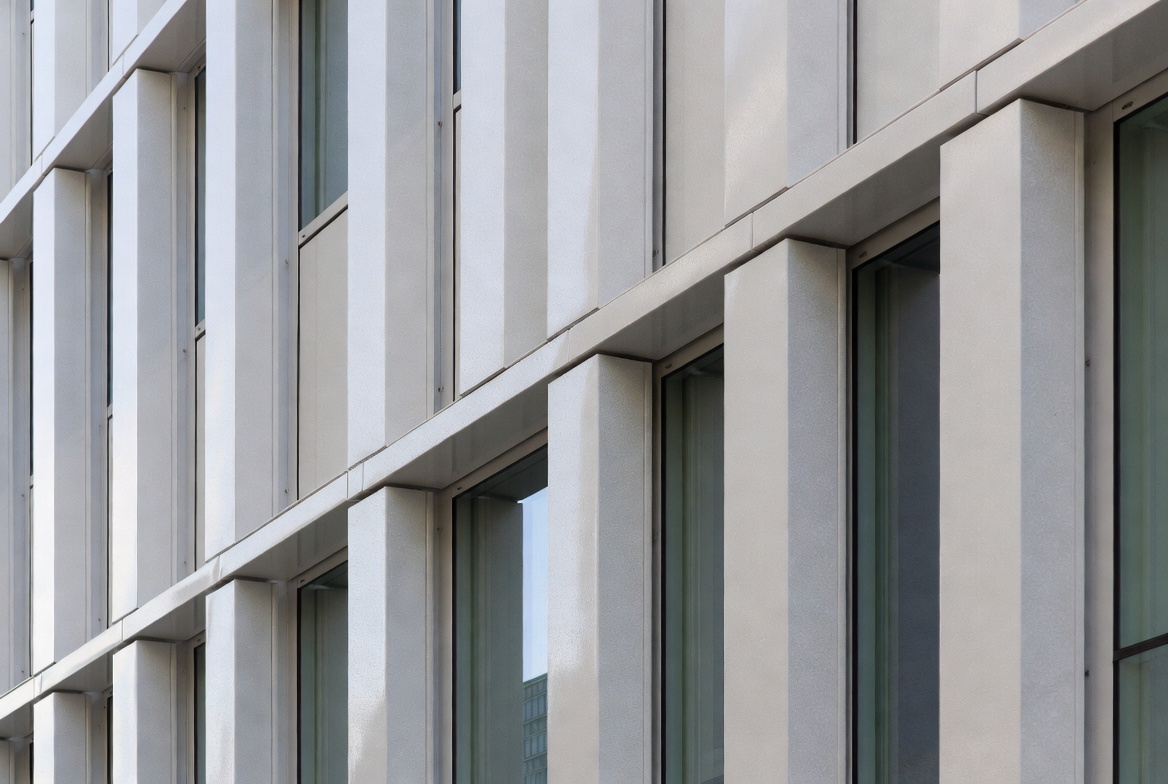
To illustrate the decision process, consider a multi-building project using curtain wall systems and balcony structures made from recycled aluminum profiles. Early mock-up panels reveal shallow extrusion marks and continuous fine scratches that would require intensive mechanical polishing to remove entirely.
The project team, including facade engineers and coating specialists, compares two options:
- A smooth semi-gloss coating that aligns with the architect's vision of minimal, sleek surfaces
- A fine textured polyester matte finish that slightly modifies the aesthetic but aggressively reduces defect visibility
After reviewing sample panels under natural light, the stakeholders recognize that the smooth finish, although elegant on perfect substrates, amplifies the irregularities of the recycled profiles. The fine textured finish, however, delivers a coherent matte appearance that makes the imperfections almost invisible at normal viewing distances.
The chosen solution uses fine textured polyester on the majority of structural profiles, while smooth coatings are reserved for specific high-visibility elements manufactured from primary aluminum or with enhanced mechanical finishing. This combination respects the aesthetic intent while making efficient use of recycled materials.
Regardless of coating type, disciplined surface preparation is essential, especially for recycled aluminum:
- Visually inspect incoming profiles and classify them into quality tiers.
- Set thresholds for acceptable defects in each tier and separate severely damaged parts for rework or scrap.
- Apply light brushing, sanding or blasting to reduce sharp edges and equalize micro-roughness.
- Focus on visible faces and joint areas that are most exposed in the final assembly.
- Remove oils, cutting fluids and contaminants that can interfere with adhesion.
- Use suitable degreasing agents and ensure thorough rinsing and drying.
- Apply conversion coatings or other pre-treatment processes compatible with the chosen powder chemistry.
- Improve corrosion resistance and adhesion, especially on mixed-recycled substrates.
- Maintain consistent film build, avoiding extremes that cause sags or excessive texture.
- Control oven temperature and cure time to ensure the designed texture or smoothness develops correctly.
Following this sequence, coated recycled aluminum profiles achieve more stable appearance and performance, and the chosen texture level can deliver its full defect-masking potential.
From the standpoint of a finishing specialist working across building profiles, New Energy Vehicle components and medical equipment frames, coating decisions on recycled aluminum are fundamentally about balance. On one side lies the ambition for clean, minimalist surfaces. On the other side lies the practical reality of variable substrate quality, production throughput and cost constraints.
Textured polyester coatings provide a robust middle ground. They enable manufacturers to benefit from recycled aluminum while presenting consistent, purposeful finishes to architects, OEMs and end-users. Smooth coatings remain vital for flagship elements and high-precision applications, but they require tighter upstream control and higher investment in surface preparation.
For manufacturers like Yinda Technology, operating across different regions and industries, understanding and applying this balance at scale is a strategic advantage. It transforms coatings from a final decorative step into a central tool for managing both appearance and sustainability across diverse product lines.
- Recycled aluminum profiles inevitably exhibit surface imperfections that influence visual quality.
- Powder coatings follow the substrate shape and cannot erase deep defects, but texture can significantly soften their appearance.
- Textured polyester finishes are generally more forgiving on imperfect profiles and support modern matte aesthetics across many applications.
- Smooth coatings deliver superior visual clarity on high-quality substrates but can highlight even minor flaws on recycled materials.
- A structured decision framework that considers defect type, aesthetic expectations, pre-treatment capability and coating chemistry helps teams select the right solution for each project.
By consciously choosing between textured polyester and smooth powder coatings based on real substrate conditions and design goals, manufacturers and project teams can achieve durable, visually coherent products while integrating more recycled aluminum into demanding applications.
Q1: Can textured polyester coatings completely hide deep scratches on recycled aluminum?
No. Textured polyester coatings are highly effective at softening and visually blending shallow scratches and micro-roughness, but deep gouges and sharp defects still need mechanical repair or sorting before coating.
Q2: Are textured polyester coatings suitable for exterior architectural profiles?
Yes. Polyester-based textured systems are widely used for exterior aluminum applications because they combine strong weather resistance, color stability and effective defect-masking, especially on recycled substrates.
Q3: Do smooth powder coatings offer better protection than textured ones?
Protection depends primarily on resin chemistry, film build and pre-treatment rather than surface texture. Both smooth and textured polyester systems can deliver comparable durability and corrosion resistance when correctly specified and applied.
Q4: How does finish choice affect cleaning and maintenance routines?
Smooth finishes are easier to wipe clean and show dirt clearly, which simplifies inspection. Textured finishes visually reduce minor staining and fingerprints but may require more attention during deep cleaning to reach micro-structured areas.
Q5: Is fine texture a good compromise for projects using recycled aluminum?
Fine texture is often an ideal compromise. It delivers a refined matte appearance compatible with modern design while offering strong defect-masking on recycled profiles, without the heavily industrial look of coarse textures or heavy wrinkles.
1. Member News: Can powder coating cover scratches or surface imperfections on metal? https://alfed.org.uk/member-news-can-powder-coating-cover-scratches-or-surface-imperfections-on-metal/
2. Envirocron architectural powder systems and polyester-based finishes. https://assets-eu-01.kc-usercontent.com/cce44467-0106-013b-6c0b-26132a361492/8725f9f4-a055-4c87-b2ef-c2e71e7cc190/envirocron-p4
3. What Is Powder Coating for Aluminum Profiles? A 2025 Guide. https://alumastergroup.com/blog/powder-coating-for-aluminum-profile
4. Textured Powder Coatings – overview of texture types and applications. https://www.tiger-coatings.com/us-en/tiger-group/tiger-blog/textured-powder-coatings
5. Reduced, Reused and Recycled Powder Coatings Are the Future. https://www.pfonline.com/articles/reduced-reused-and-recycled-powder-coatings-are-the-future
6. Global Aluminium Powder for Coating Market Research Report 2025 (Status and Outlook). https://www.24chemicalresearch.com/reports/258565/global-aluminium-powder-for-coating-market
7. Powder Coatings Market Analysis, Size, and Forecast 2026–2030. https://www.technavio.com/report/powder-coatings-market-analysis
8. Aluminium Powder Market Size, Share, Forecast, 2035. https://www.businessresearchinsights.com/market-reports/aluminium-powder-market-127838
9. Powder Coating Industry Trends for 2025 and Beyond. https://www.msmetal.co.uk/powder-coating/trends/industry-forecast/
10. Powder Coatings: The Sustainable Choice. https://aimetalfinishing.com/industry-news-blog/powder-coatings-the-sustainable-choice/


