Language


Views: 222 Author: Yinda Powder Coating Publish Time: 2026-06-18 Origin: Site


Content Menu
● Understanding the Two Clear Coat Systems
● How Brake Dust Attacks Cast Aluminum Wheels
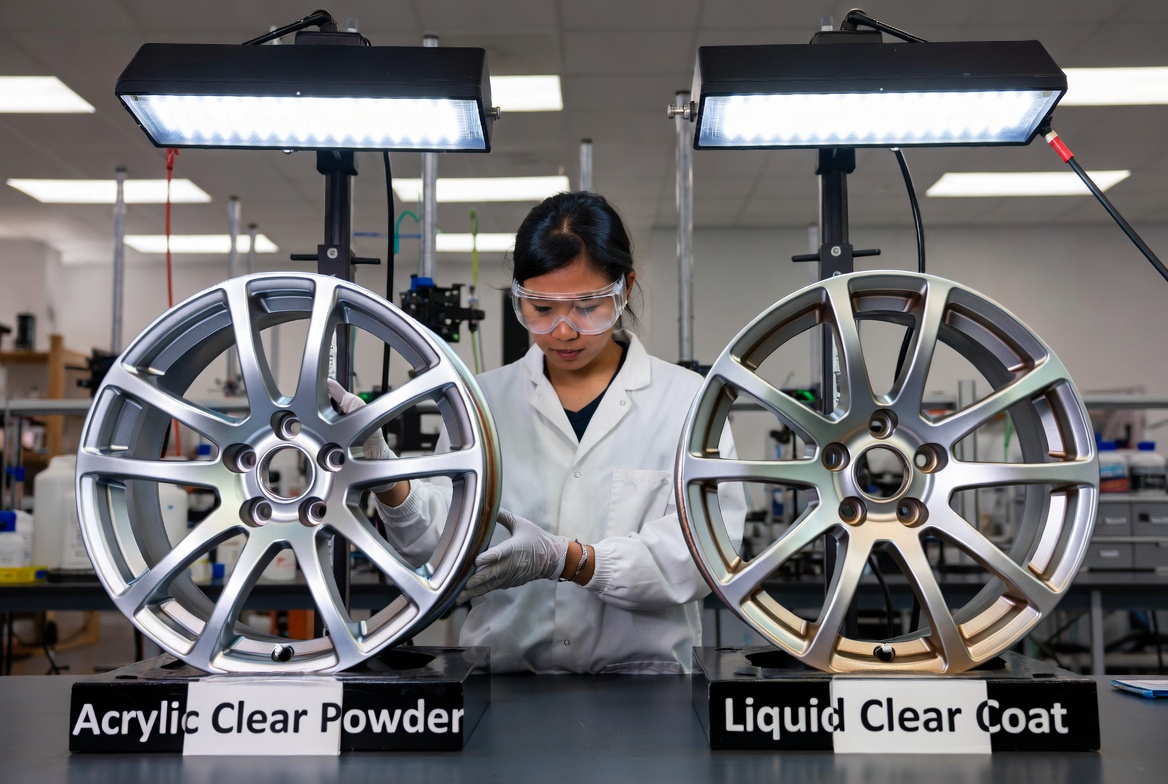
● Acrylic Clear Powder vs. Liquid Clear: Key Differences for Brake Dust Resistance
>> Performance Snapshot for Cast Aluminum Wheels
● Why Acrylic Clear Powder Coatings Excel Against Brake Dust
● Liquid Clear Coats: Where They Still Make Sense
● Expert View: Process Considerations for OEM and Aftermarket Wheel Lines
● Case Insight: Clear Powder on Automotive Aluminum Wheel Hubs
● Environmental and Regulatory Perspective
● Practical Maintenance: How End Users Experience Each Coating
● Step-by-Step: Selecting the Right Clear Coat for Cast Aluminum Wheels
● Yinda Technology's Perspective: Integrating Acrylic Clear Powder into a Global Wheel Strategy
● Implementation Example: Three-Layer Powder System for Brake-Dust-Heavy Fleets
● When a Hybrid Strategy Makes Sense
● Actionable Recommendation for Brake Dust–Focused Applications
● FAQs
Cast aluminum wheels exposed to modern brake systems face intense heat, corrosive contaminants, and stubborn brake dust, so choosing the right clear topcoat—acrylic clear powder coating or liquid clear coat—directly affects appearance, durability, and maintenance effort for both OEM and aftermarket users. For manufacturers and wheel refinishers, this decision also shapes process efficiency, environmental performance, and total cost of ownership. [ppg]
A powder clear coat is a transparent, solid coating applied electrostatically and then cured in an oven to form a continuous film over the cast aluminum substrate. Unlike pigmented powders, clear powders are formulated for high transparency so that the base finish, machined faces, or tinted layers remain visible beneath the coating. [sytechprecision]
A liquid clear coat for wheels is typically a solventborne or waterborne paint system applied by spray, then flashed and baked to crosslink into a protective film. Liquid systems have a long history in automotive finishing and remain widely used, especially where low-temperature curing, field touch-up, or legacy paint lines dominate. [mag911]
Brake dust is a complex mix of iron particles, carbon, binding resins, and road contaminants that embeds into wheel surfaces at elevated temperatures. When left uncleaned, these particles can oxidize, stain clear coats, and create micro-pitting that gradually dulls gloss and clarity. [tiger-coatings]
Modern high-performance and EV braking systems generate higher and more frequent heat cycles, which increases brake dust baking onto the finish and magnifies the importance of chemical resistance and film hardness in the clear coat system. [tiger-coatings]

The table below summarizes the most critical dimensions when evaluating acrylic clear powder coating vs liquid clear coat on cast aluminum wheels for brake-dust-heavy duty cycles.
| Dimension | Acrylic Clear Powder Coating | Liquid Clear Coat |
|---|---|---|
| Film thickness & uniformity | Typically thicker, more uniform film; high edge coverage (tiger-coatings) | Thinner film; more dependent on operator skill (sytechprecision) |
| Brake dust resistance | Higher hardness and chemical resistance, resists embedding better (ppg) | More prone to staining and etching under harsh cleaners (mag911) |
| Heat & cycling durability | Thermoset acrylic with strong crosslinking; stable under repeated heat cycles (en.kmc1992) | Good but more sensitive to softening and micro-cracking over time (sytechprecision) |
| Gloss & clarity | High gloss, excellent clarity and flow for wheel hubs (en.kmc1992) | Excellent gloss, but can lose clarity faster under harsh use (sytechprecision) |
| VOC & environmental footprint | No solvents, near-zero VOC emissions (sytechprecision) | Contains solvents; VOC management required (sytechprecision) |
| Process consistency in OEM lines | Highly repeatable in automated powder lines (sytechprecision) | More variation from spray technique and flash conditions (sytechprecision) |
| Rework and field repair | More complex; requires stripping and re-baking (tiger-coatings) | Easier localized touch-up and blending (sytechprecision) |
Acrylic clear powder coatings engineered for aluminum wheels combine high crosslink density, film thickness, and chemical resistance, creating a robust barrier against the hot, adhesive nature of brake dust. The thermoset network resists softening during repeated braking events, which means brake dust particles are less likely to embed deeply into the film compared with softer liquid clears. [en.kmc1992]
Moreover, dedicated wheel-clear powder systems can be formulated with stain resistance and low-temperature curing, for example at 140–160 °C, to protect heat-sensitive aluminum structures while still delivering high-gloss, high-clarity finishes. These properties allow wheel manufacturers to balance substrate safety with strong brake-dust and chemical resistance. [forums.pelicanparts]
Liquid clear coats remain relevant in scenarios where low-temperature curing, complex repairability, and existing liquid paint infrastructure are dominant constraints. For small refinishing shops or body repair centers, liquid clears allow spot repairs, blending, and air-dry or low-bake cycles that are not always practical with powder systems. [sytechprecision]
However, liquid clear coats typically rely on solvent or water carriers, making them more exposed to VOC regulations and operator-dependent variation in film thickness and cure. Under repeated exposure to acidic wheel cleaners and baked-on brake dust, these thinner, more variable films often lose gloss faster than robust powder clear alternatives. [mag911]
From an OEM or Tier 1 supplier perspective, the decision between acrylic clear powder and liquid clear should be driven by line design, cure window, and total cost per wheel rather than coating price alone. Powder systems require an electrostatic application booth and baking ovens, yet they deliver superior transfer efficiency, less material waste, and easier overspray recovery compared with liquids. [sytechprecision]
For high-volume cast aluminum wheel programs, the stable, automated nature of powder lines reduces operator dependency and helps maintain consistent brake-dust resistance performance across thousands of units per day. This consistency is critical for OEM warranty claims and brand reputation in markets where customers expect long-term gloss retention on premium wheels. [tiger-coatings]
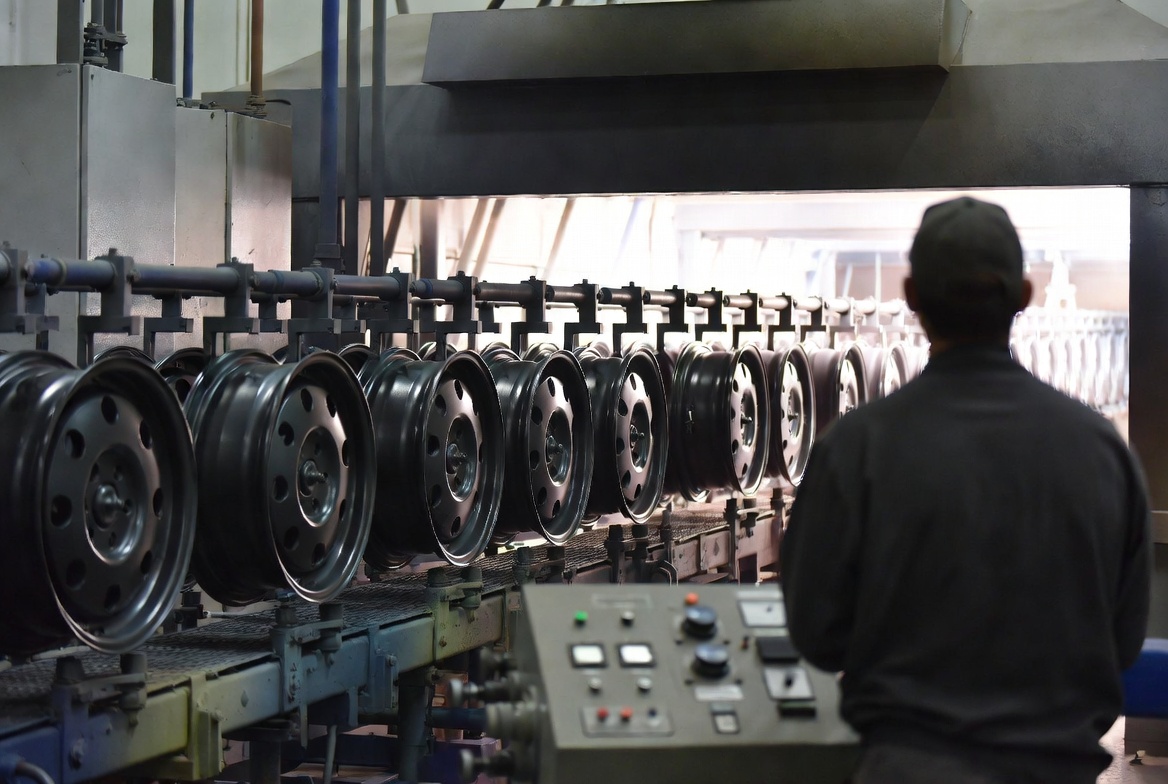
Industry data from specialized acrylic clear powder suppliers shows that clear powder systems explicitly designed for automotive aluminum wheel hubs deliver excellent exterior durability, high gloss, and strong clarity, while maintaining low-temperature curing windows suitable for complex wheel designs. These systems are recommended for aluminum-alloy wheels and high-class metal furniture, reflecting their ability to protect both functional and decorative surfaces. [en.kmc1992]
When integrated into a multi-layer wheel coating system—primer, basecoat, clear powder—the clear layer adds an extra shield against road salt, brake dust, and aggressive cleaning chemicals, key factors in preventing early discoloration and corrosion. [en.kmc1992]
From a sustainability standpoint, powder coatings are inherently attractive because they contain no solvents and emit virtually zero VOCs during curing, aligning with tightening environmental standards in major manufacturing regions. Overspray can often be reclaimed and reused, further reducing waste and lowering lifecycle emissions. [mag911]
Liquid clear coats, by contrast, must manage solvent emissions, flammability, and operator exposure, all of which add compliance and infrastructure costs in modern coating facilities. For multinational manufacturers targeting markets with strict air-quality regulations, this environmental advantage of powder clear systems can be decisive. [sytechprecision]
End users often judge brake dust resistance not by lab data but by how easily wheels clean and how good they look after several winters. Powder-coated wheels with robust clear films tend to withstand high-pH and low-pH wheel cleaners, mechanical scrubbing, and repeated washing cycles better, protecting both the visual finish and substrate. [tiger-coatings]
Liquid clear coats can deliver excellent gloss initially, but thinner and softer films may scar or etch more easily when users rely on aggressive cleaners to remove baked-on dust. Over time, this leads to dulling, micro-scratches, and permanent staining that can be hard to recover without full refinishing. [mag911]
For manufacturing engineers, coating specifiers, and finishing line managers, a structured decision process helps ensure the coating system matches wheel design, brake system, and service environment.
Step 1 – Define performance requirements
1. Profile expected brake-dust load (high-performance, EV, standard passenger car).
2. Clarify chemical exposure: pH range of cleaners, road salt intensity, climate.
3. Set appearance targets: gloss level, clarity, and allowable color shift over time.
Step 2 – Evaluate substrate and design constraints
1. Confirm aluminum alloy series and heat-treatment sensitivity to cure temperatures. [forums.pelicanparts]
2. Assess wheel geometry and thickness to control oven temperature uniformity. [tiger-coatings]
3. Check for limitations on maximum metal temperature during curing or tempering. [forums.pelicanparts]
Step 3 – Compare process routes
1. If you already operate powder lines for architectural profiles, evaluate adding wheel racks and clear powder recipes to leverage existing assets. [made-in-china]
2. If your plant is heavily built around liquid paints, compare the cost of conversion to powder against ongoing VOC and compliance costs. [sytechprecision]
Step 4 – Run validation trials
1. Perform neutral salt spray, chemical resistance, and cyclic corrosion tests with both systems. [tiger-coatings]
2. Simulate brake-dust exposure using repeated heat cycles and aggressive cleaning regimes. [tiger-coatings]
3. Record gloss retention and staining after multiple testing cycles to guide final specification. [sytechprecision]
As a manufacturer specialized in powder coatings and eco-friendly materials, with subsidiaries in China, Indonesia, and Saudi Arabia, Yinda Technology is positioned to support wheel producers operating across diverse climates and regulatory environments. With products already serving architectural profiles, doors and windows, new energy vehicles, medical equipment, hardware, and electrical appliances, the company's portfolio aligns closely with multi-sector surface protection needs, including cast aluminum wheels. [made-in-china]
From an expert standpoint, leveraging a unified acrylic clear powder framework across building profiles and wheel lines can simplify procurement, streamline technical service, and enhance brand consistency in corrosion and brake-dust resistance performance. This integrated approach allows OEMs and industrial coaters to standardize high-gloss, brake-dust-resistant wheel finishes while taking advantage of Yinda's energy-saving and environmentally friendly technologies. [made-in-china]
For fleets such as rideshare vehicles, logistics vans, or high-mileage EVs, a three-layer powder system can deliver enhanced brake-dust resistance and long-term aesthetics:
- Layer 1 – Anti-corrosion powder primer: Optimized for aluminum, provides adhesion and corrosion baseline.
- Layer 2 – Color or effect basecoat: Can be metallic, tinted, or solid to match brand identity. [sytechprecision]
- Layer 3 – Acrylic clear powder coat: High-gloss, chemically resistant, and tailored for wheel hubs. [ppg]
With this stack, brake dust primarily interacts with the top clear powder film, which is engineered for stain resistance and easy cleaning, preserving both color and substrate integrity. By tuning curing profiles and film builds, coaters can balance brake-dust performance with production throughput and energy consumption. [en.kmc1992]
In certain contexts, a hybrid approach—using powder for OEM production and liquid clears for localized field repairs—can be the most pragmatic solution. OEM lines benefit from powder's durability and environmental advantages, while dealerships and refinish shops rely on liquid clears for spot repairs on damaged wheels. [mag911]
This hybrid strategy reduces warranty risk by ensuring initial wheels meet high brake-dust and durability standards, while still providing flexible service options throughout the vehicle lifecycle. [mag911]
For cast aluminum wheels that operate under high brake-dust loads, aggressive cleaning routines, and repeated thermal cycling, the balance of evidence supports acrylic clear powder coating as the primary choice for OEM and large-scale aftermarket production. Liquid clear coats retain value in low-volume repairs, legacy lines, and special cases where oven curing is not feasible or where ultra-localized repair is essential. [ppg]
If your goal is to enhance brake dust resistance, reduce warranty returns, and align with global sustainability trends, adopting an acrylic clear powder solution—backed by a partner experienced in energy-saving, eco-friendly powder technologies—offers a durable, scalable path forward. [made-in-china]
1. Does acrylic clear powder coating always outperform liquid clear for brake dust resistance?
In most high-duty, high-heat wheel applications, acrylic clear powder offers superior hardness, chemical resistance, and film build, which improves brake-dust resistance compared with standard liquid clears. However, performance still depends on substrate preparation, curing accuracy, and overall coating-system design. [ppg]
2. Will powder curing damage heat-treated cast aluminum wheels?
When using properly formulated low-temperature acrylic clear powder systems and carefully controlling metal temperature (often below 300 °F / about 150 °C), wheels can be coated without significantly affecting heat-treated properties. It is essential to validate each alloy and design against the coating's curing window. [forums.pelicanparts]
3. Are powder-coated wheels harder to repair than liquid-coated wheels?
Yes, powder-coated wheels typically require full stripping and re-coating for major damage, which is more involved than liquid spot repairs. For OEM programs, this is often offset by reduced damage incidence due to higher durability. [mag911]
4. How do powder clear coats affect wheel appearance compared to liquid clears?
Modern acrylic clear powders deliver high gloss, clarity, and smooth flow, preserving the visual impact of machined or polished wheel faces. With correct process control, they can match or exceed the aesthetics of liquid clear coats in many OEM applications. [en.kmc1992]
5. Is powder coating compatible with complex multi-color or tinted wheel designs?
Yes, powder coating can integrate primers, effect basecoats, and clear topcoats into multi-layer systems, enabling complex color and effect designs while maintaining robust protection. For highly customized, low-volume designs, some producers still combine powder with selective liquid steps for maximum flexibility. [tiger-coatings]
Hot Tags: Acrylic Clear Powder Coating, Cast Aluminum Wheels, Brake Dust Resistant Coatings, Liquid Clear Coat, Automotive Wheel Finishing, wholesale, custom, manufacturers, suppliers, factory, sampling, trial, prototype


