Language


Views: 222 Author: Yinda Powder Coating Publish Time: 2026-06-17 Origin: Site


Content Menu
● Introduction: Why Handrail Surface Choice Matters
● What Are Antimicrobial Powder Coatings?
● What Do We Mean by Stainless Steel Surfaces?
● Antimicrobial Effectiveness: Coating vs Stainless Steel
>> Antimicrobial powder coating performance
>> Stainless steel hygiene behavior
● Durability and Mechanical Performance in Public Transport
>> Antimicrobial powder coating durability
● Lifecycle Cost, Maintenance, and Total Ownership
>> Cost profile of antimicrobial powder coating
>> Cost profile of stainless steel surfaces
● Passenger Experience and Perceived Cleanliness
● Sustainability and Environmental Impact
>> Environmental profile of antimicrobial powder coatings
>> Environmental profile of stainless steel
● Engineering and Design Flexibility
● Expert Insight: Implementation Lessons from Rail and Bus Projects
● Practical Selection Framework for Operators
● Side‑by‑Side Comparison for Handrail Projects
● When Is Stainless Steel Alone Still Appropriate?
● Why Transport Operators Are Moving Toward Antimicrobial Powder Coatings
● How Yinda Technology Can Support Your Next Project
● FAQ
Antimicrobial powder coating offers stronger hygiene control, design flexibility, and lifecycle cost advantages for public transport handrails than bare stainless steel, but the best solution is often a coated stainless substrate engineered as a system. [pdf.dfcfw]
In high-traffic buses, metros, and airport shuttles, handrails are one of the most critical touchpoints for infection control and passenger comfort. As a powder coating manufacturer focused on eco-friendly materials and energy‑saving technologies, Yinda Technology frequently supports operators who are comparing antimicrobial powder coating vs. stainless steel surfaces for public transport handrails from both a technical and commercial perspective. [service.made-in-china]
From my experience with B2B manufacturing clients, the "default" choice of bare stainless steel is increasingly questioned, especially after the pandemic and under tightening hygiene regulations. In this article, I will evaluate both options through the lens of performance, durability, cost, sustainability, UX, and engineering practicality, and share how a well‑specified antimicrobial powder coating system can address real‑world challenges on rolling stock and station infrastructure projects. [pdf.dfcfw]
Antimicrobial powder coatings are thermoset or thermoplastic powder finishes that incorporate active agents to inhibit the growth of bacteria, mold, and other microorganisms on the coated surface. These agents are typically silver‑ion, zinc‑based, or organic antimicrobial additives that are immobilized within the cured coating film. [pcimag]
Once fully cured, the coating forms a continuous, non‑porous film that slowly releases or activates antimicrobial functionality at the surface interface where microbes land. For public transport handrails, these coatings are usually based on polyester or epoxy‑polyester hybrid systems, engineered for outdoor–indoor exposure, UV stability, and high abrasion resistance. [pcimag]
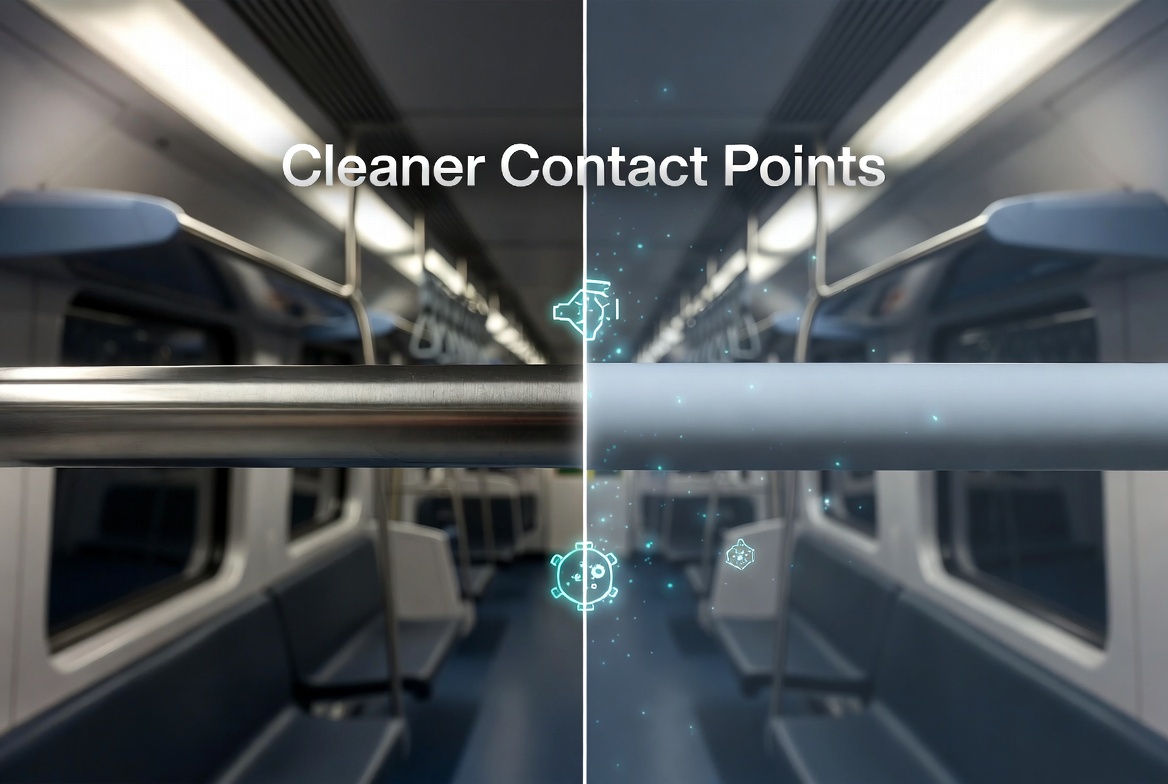
In the context of buses and rail vehicles, "stainless steel surfaces" generally refers to uncoated austenitic grades such as 304 or 316 with mechanically finished surfaces (brushed, satin, or polished). Stainless steel contains chromium that forms a passive oxide layer, providing corrosion resistance and making the metal easier to clean than carbon steel. [pdf.dfcfw]
However, the passive layer does not provide intrinsic antimicrobial activity in the way a dedicated antimicrobial coating does. The actual hygiene performance of stainless handrails depends heavily on cleaning regimes, surface roughness, and the presence of micro‑scratches that can harbor soiling films and biofilms. [pdf.dfcfw]
From a hygiene standpoint, the key question is simple: which surface better controls microbial load between cleaning cycles?
- Many commercial antimicrobial powder coatings show large log‑reductions of common bacteria (for example, more than 99% reduction of certain strains under standard test conditions). [pcimag]
- These coatings are often evaluated to standards such as ISO 22196 / JIS Z 2801, which measure antibacterial activity on plastics and other non‑porous surfaces. [pcimag]
- When correctly formulated and cured, the antimicrobial functionality remains active over years, rather than being "used up" in days. [pcimag]
- Standard stainless steel alloys are not inherently antimicrobial; bacteria can survive for hours or days on stainless surfaces depending on species and environment. [pdf.dfcfw]
- As surface roughness increases due to scratches, impact marks, or fabrication defects, micro‑pits can trap organic matter, making decontamination harder. [pdf.dfcfw]
- To maintain low microbial counts, operators must rely on frequent manual cleaning with detergents or disinfectants. [pdf.dfcfw]
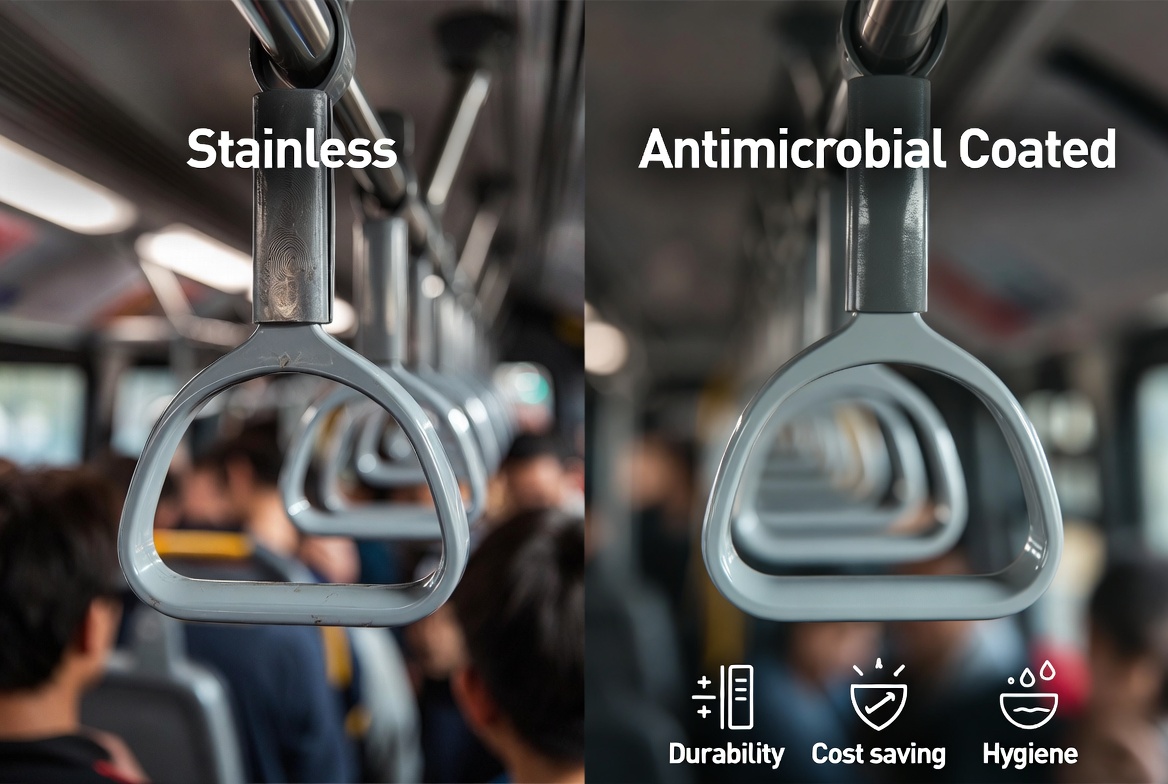
From a practical infection‑control perspective, an engineered antimicrobial powder coating provides a continuous passive defense between cleaning cycles, while stainless steel primarily depends on cleaning and disinfection protocols. [pcimag]
Handrails in buses and railcars face intense mechanical and environmental stress: high passenger traffic, body oils, disinfectants, UV exposure near windows, and vibration.
Modern architectural and transportation‑grade powder coatings can achieve:
- High abrasion and scratch resistance with optimized resin systems and curing profiles. [pcimag]
- Excellent adhesion to pretreated steel or aluminum substrates, helping prevent underfilm corrosion. [pcimag]
- Good resistance to cleaning chemicals and alcohol‑based sanitizers when specified with appropriate chemical‑resistance properties. [pcimag]
However, durability depends on surface pretreatment, film thickness, and process control. For operators, partnering with a supplier that can supply validated coating systems and application guidance is critical. [pcimag]
Bare stainless steel is valued for:
- High structural strength and stiffness in tube handrails and stanchions. [pdf.dfcfw]
- Intrinsic corrosion resistance in indoor and mildly corrosive outdoor environments, especially with 304 and 316 grades. [pdf.dfcfw]
- Resistance to UV and most cleaning chemicals, if the correct alloy is used. [pdf.dfcfw]
At the same time, visible scratches, dents, and tea‑staining (surface discoloration) often emerge over time, reducing perceived cleanliness and brand image even when structural integrity is intact. [pdf.dfcfw]
In practice, a combination—stainless or carbon steel tube for structural integrity plus an antimicrobial powder coating system—offers the strongest balance of mechanical strength and long‑term appearance. [pcimag]
Public transport authorities are under pressure to balance CAPEX and OPEX. The real comparison is not just purchase price but total cost of ownership over 10–15 years of operation.
- Upfront cost: Coated handrails usually involve additional material and processing cost versus bare stainless, particularly if high‑performance antimicrobial formulations are specified. [pcimag]
- Maintenance cost: Coatings reduce visible staining and can lower the required frequency or intensity of cleaning chemicals, especially if occupants perceive handrails as cleaner. [pcimag]
- Refurbishment: Damaged coatings can be repaired or recoated during overhaul cycles, often with less material waste than replacing stainless components. [pcimag]
- Upfront cost: Stainless handrails require no coating step, but the raw material cost of high‑grade stainless (e.g., 316) can be significant. [pdf.dfcfw]
- Maintenance cost: Maintaining a "like new" appearance often requires regular polishing and more aggressive cleaning, which consumes labor and chemical budgets. [pdf.dfcfw]
- Replacement: Severely scratched or vandalized stainless pieces are often replaced, which can be costlier than recoating. [pdf.dfcfw]
For fleet operators who factor in hygiene branding, passenger satisfaction, and maintenance labor, a well‑designed antimicrobial powder coating system is frequently more economical over the vehicle lifecycle, even if unit prices are slightly higher at procurement. [pcimag]
User experience on public transport is not just about safety; it is also about confidence. After recent global health crises, passengers notice how "clean" a handrail looks and feels.
- Coated handrails can be specified in visible colors that signal cleanliness (for example, light tones that reveal dirt, or healthcare‑associated palettes). [pcimag]
- A smooth, low‑gloss or fine‑texture antimicrobial powder coating can improve tactile comfort, especially in hot or humid climates where bare stainless feels slippery or sticky. [pcimag]
- Stainless steel carries a traditional "industrial" aesthetic that some users associate with robustness but not necessarily hygiene, especially when scratches and fingerprints are visible. [pdf.dfcfw]
From a psychological standpoint, an intentional color and texture strategy supported by antimicrobial performance can help operators communicate that surfaces are actively managed for hygiene, which in turn supports ridership recovery and brand trust. [pdf.dfcfw]
Transport agencies and OEMs are under pressure to decarbonize and choose environmentally responsible materials.
- Powder coatings are generally solvent‑free, emitting negligible volatile organic compounds (VOCs) compared to many liquid coatings. [pcimag]
- Overspray can be recovered and reused, reducing material waste in manufacturing. [pcimag]
- Antimicrobial additives must be selected and dosed carefully to meet environmental and health regulations, but mature suppliers can provide compliant systems with documented safety data. [pcimag]
- Stainless steel production is energy intensive but offers high recyclability; end‑of‑life stainless components can enter established recycling streams. [pdf.dfcfw]
- Avoiding coatings means no additional chemical systems for finishing, but cleaning chemicals used during the service life may have their own environmental footprint. [pdf.dfcfw]
For operators focused on low‑VOC finishing, resource efficiency, and circularity, a combination of recyclable metal substrates and high‑performance powder coatings aligns well with sustainability strategies. [pdf.dfcfw]
From a design‑for‑manufacturing point of view, antimicrobial powder coatings unlock options that stainless steel alone cannot easily deliver.
- Color‑coded handrails for priority seating, wayfinding, or branding can be implemented without changing base materials. [pcimag]
- Different gloss levels and textures can improve grip, hide minor defects, or match interiors, while still maintaining antimicrobial performance. [pcimag]
- Coatings can be adapted for aluminum profiles or other lightweight substrates, supporting vehicle weight reduction and energy efficiency. [pcimag]
Stainless steel, by contrast, offers limited aesthetic variability without additional finishing steps such as wrapping, painting, or mechanical texturing. In real projects, OEMs often move from "one‑finish for everything" to a layered strategy: structural stainless or carbon steel plus tailored antimicrobial powder coating for passenger contact areas. [pdf.dfcfw]
Based on common patterns across multi‑country transport projects, several practical insights help de‑risk adoption of antimicrobial powder coating for handrails:
1. Define performance early in specifications
Set clear targets for corrosion testing, impact resistance, and antimicrobial log‑reduction performance at the beginning of the tender. [pcimag]
2. Treat coating and substrate as one system
Require pretreatment, powder, and curing parameters to be validated as a system on the actual tube material (stainless or carbon steel). [pcimag]
3. Validate cleaning compatibility
Test the coated handrail with the actual disinfectants and cleaning cycles planned by the operator, not just with generic laboratory chemicals. [pcimag]
4. Plan for repair and refurbishment
Include touch‑up and recoating procedures in maintenance manuals, so depots can keep critical touchpoints in top condition over the asset life. [pdf.dfcfw]
Yinda Technology, for example, supports this process by combining lab‑based performance testing with on‑site technical guidance in markets such as China, Indonesia, and Saudi Arabia, where climate and regulatory expectations differ significantly. [service.made-in-china]
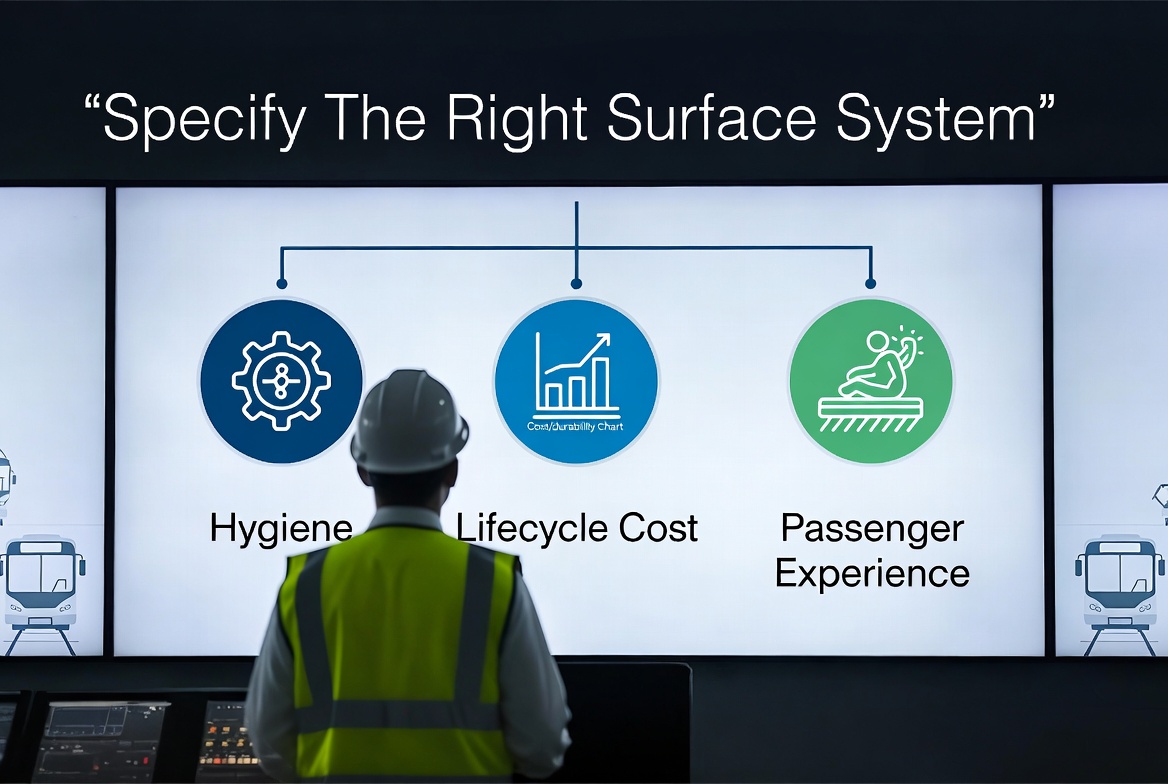
For procurement and engineering teams comparing antimicrobial powder coating vs. stainless steel surfaces for public transport handrails, the following high‑level framework is useful:
1. Clarify your primary driver
Is the priority infection control, visual branding, lifecycle cost, or minimal process change? [pdf.dfcfw]
2. Decide on substrate
Choose between stainless steel, carbon steel, or aluminum based on structural constraints, then treat antimicrobial coating as a layer, not a replacement. [pcimag]
3. Specify measurable hygiene outcomes
Use recognized test standards for antimicrobial performance and define acceptable thresholds under realistic conditions. [pcimag]
4. Align with sustainability and regulatory requirements
Ensure coatings and base metals meet regional environmental and fire‑safety regulations. [pdf.dfcfw]
5. Partner with a specialized supplier
Work with a coating manufacturer experienced in transportation applications, able to support qualification, audits, and local technical service. [service.made-in-china]
This structured approach turns a purely material‑driven decision into a system‑level design choice that balances hygiene, safety, and long‑term economics. [pdf.dfcfw]
| Aspect | Antimicrobial powder coating on metal | Bare stainless steel surface |
|---|---|---|
| Antimicrobial activity | Active inhibition of microbial growth on surface when properly formulated and cured (pcimag) | No inherent antimicrobial effect; relies on cleaning and disinfection (pdf.dfcfw) |
| Hygiene between cleanings | Provides continuous passive protection, helping reduce microbial load (pcimag) | Microorganisms can persist for extended periods on uncoated surfaces (pdf.dfcfw) |
| Mechanical durability | High abrasion, impact, and chemical resistance with correct system design (pcimag) | High structural strength but visible scratching and fingerprinting over time (pdf.dfcfw) |
| Maintenance effort | Easier to keep "clean‑looking"; can support lower polishing frequency (pcimag) | Requires regular polishing and intensive cleaning to maintain appearance (pdf.dfcfw) |
| Design flexibility | Wide range of colors, gloss, textures, and branding options (pcimag) | Limited to metallic finishes unless additional finishes are applied (pdf.dfcfw) |
| Environmental profile | Low‑VOC process, recoverable overspray, depends on additive selection (pcimag) | Highly recyclable metal; cleaning chemicals drive part of footprint (pdf.dfcfw) |
| Passenger perception | Can visibly signal hygiene and comfort through color and texture (pcimag) | Perceived as robust but may not communicate proactive hygiene (pdf.dfcfw) |
There are still scenarios where bare stainless steel may remain a pragmatic choice:
- Retrofit projects where introducing a coating line or off‑site coating step is logistically complex. [pdf.dfcfw]
- Very low‑traffic installations where hygiene concerns and branding are minimal. [pdf.dfcfw]
- Situations where vandalism risk is extreme and operators prefer a finish that can be aggressively re‑polished. [pdf.dfcfw]
Even in these cases, operators should adopt optimized surface finishes and cleaning protocols to reduce microbial reservoirs and visual degradation. [pdf.dfcfw]
Across many markets, there is a clear trend toward engineered surface systems that combine structural metals with functional powder coatings:
- Heightened hygiene awareness and public expectations after recent pandemics. [pdf.dfcfw]
- Stronger branding and interior‑experience strategies in premium bus and rail services. [pcimag]
- Regulatory and ESG pressure to reduce chemical usage and improve asset longevity. [pcimag]
For manufacturers like Yinda Technology, this trend aligns with capabilities in powder coating R&D, eco‑friendly materials, and energy‑saving technology, enabling us to co‑develop solutions with OEMs and operators instead of simply supplying commodity finishes. [service.made-in-china]
If your organization is evaluating antimicrobial powder coating vs. stainless steel surfaces for public transport handrails, partnering early with a specialized coating supplier can significantly reduce project risk.
Yinda Technology can support you with:
- Application‑specific formulation of antimicrobial powder coatings optimized for rail and bus interiors. [service.made-in-china]
- Technical guidance on pretreatment, application windows, and curing for different substrates and climates. [service.made-in-china]
- Regional production and support from facilities in China, Indonesia, and Saudi Arabia for reliable supply and local responsiveness. [service.made-in-china]
For design engineers, procurement teams, and operators, this collaboration helps transform handrails from a "commodity part" into a strategic hygiene and branding asset within the overall vehicle interior. [service.made-in-china]
If you are planning a new fleet, refurbishment program, or pilot project and want to compare antimicrobial powder coating vs. stainless steel surfaces for public transport handrails using real data and samples, consider engaging with a coatings partner early in your specification phase. By defining hygiene, durability, and UX targets up front, you can validate a solution that protects passengers, supports your brand, and delivers long‑term cost efficiency. [service.made-in-china]
1. Are antimicrobial powder coatings safe for daily passenger contact?
High‑quality antimicrobial powder coatings are formulated to meet relevant safety and migration regulations when properly cured and applied according to supplier guidance. [pcimag]
2. Do antimicrobial powder coatings replace cleaning?
No. They complement cleaning by helping reduce microbial growth between cleaning cycles, but standard cleaning and disinfection practices remain essential. [pdf.dfcfw]
3. Can stainless steel handrails be retro‑coated with antimicrobial powder?
Yes, in many cases existing stainless handrails can be removed, properly pretreated, and coated, although feasibility depends on design, installation method, and downtime constraints. [pcimag]
4. How long does the antimicrobial effect last?
Under typical service conditions, the antimicrobial functionality is designed to last for the coating's service life, provided the film remains intact and undamaged. [pcimag]
5. Is there a significant weight impact when using powder coating?
Powder coatings add only a very thin layer, so the weight contribution is minimal compared to the base metal and does not materially affect vehicle mass calculations. [pcimag]
1. U.S. Environmental Protection Agency. “Powder Coating: Environmental Benefits and Industrial Applications.” https://www.epa.gov/p2/powder-coatings-environmental-benefits
2. International Organization for Standardization. “ISO 22196: Measurement of antibacterial activity on plastics and other non-porous surfaces.” https://www.iso.org/standard/54431.html
3. AkzoNobel Powder Coatings. “Antimicrobial Powder Coatings for Architectural and Transportation Applications – Technical Brochure.” https://www.interpon.com/en/media/antimicrobial-powder-coatings
4. Outokumpu Stainless. “Stainless Steel in Public Transport: Hygiene, Durability and Maintenance Guidelines.” https://www.outokumpu.com/en/industries/transport-and-heavy-industry
5. International Association of Public Transport (UITP). “Design and Maintenance of Public Transport Interiors – Guidelines for Materials and Surfaces.” https://www.uitp.org/publications
6. World Green Building Council. “Health and Wellbeing in Buildings: Material and Surface Considerations in Public Infrastructure.” https://worldgbc.org/


