Language


Views: 257 Author: Yinda Powder Coating Publish Time: 2026-11-18 Origin: Site


Content Menu
● How Xylan Fluoropolymer Coatings Work
>> Low friction, nonstick release, and corrosion resistance are different jobs
● Xylan 1070 vs. 1424: Compare the Coating System, Not Just the Grade
● Xylan Coating vs. Conventional Powder Coating: Which Fits the Part?
● How to Specify and Qualify Xylan-Coated Parts
>> 1. Turn the service conditions into acceptance criteria
>> 2. Put coating boundaries and finished dimensions on the drawing
>> 3. Test the assembled part, not just the coated sample
>> 4. Agree on production controls before placing the order
● Worked Example: Qualifying Coated Fasteners for Outdoor Equipment
● Request a Coating Review from Yinda Technology
>> Is Xylan coating the same as PTFE coating?
>> Is Xylan a liquid coating or a powder coating?
>> Does Xylan coating prevent rust?
>> What temperature can Xylan coating withstand?
>> Is Xylan coating approved for food contact or medical use?
>> Can conventional powder coating replace Xylan on a fastener?
>> Does 5,000 hours of salt spray mean the part will last a set number of years?
Xylan coating is a family of branded fluoropolymer coatings used to control friction, improve release, or protect components against corrosion and chemical exposure. It is not one formula or one application process. Some Xylan grades are liquid-applied dry-film lubricants for fasteners and mechanical parts; others are powder topcoats designed for industrial bakeware. The right choice depends on the job the surface must do, the material beneath it, and how the finished part will be tested.
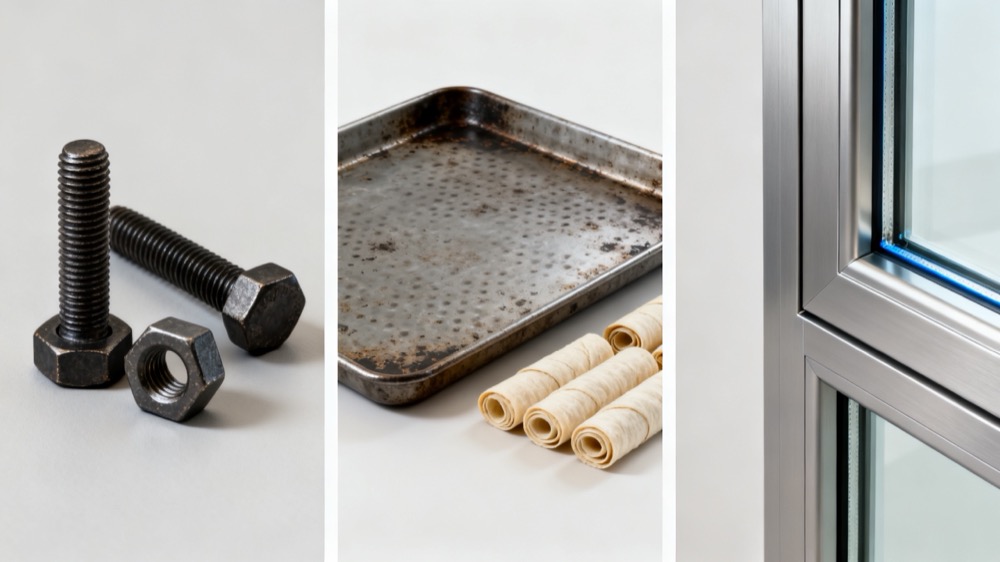
From a coating manufacturer's perspective, the first question is not "Can we coat this part?" It is "What would make this surface fail?" A bolt that produces inconsistent clamp load, a tray that stops releasing baked goods, and an aluminum profile that fades outdoors are three different problems. Specifying the same finish for all three would overlook what each part needs to do.

Xylan is a brand name, not another name for PTFE. PTFE, or polytetrafluoroethylene, is one fluoropolymer used in coating formulations. Other products in the Xylan family use fluoropolymers such as PFA or FEP. Industrial dry-film grades combine lubricating ingredients with a resin binder that helps hold the film to the prepared surface. The exact formulation and application requirements depend on the grade.
The categories can be confusing because *dry film* describes the finished coating, while *powder coating* describes the material as applied. A liquid product can cure into a dry film without ever being a powder. Conversely, some Xylan nonstick topcoats are supplied as powders for electrostatic application. Always check the product data sheet before assessing whether a grade fits your coating line.
- Low friction matters when two surfaces move against each other, as with threads, guides, or selected valve components.
- Nonstick release matters when a product must separate cleanly from a tray, mold, or other contact surface.
- Corrosion resistance depends on the complete system: the substrate, surface preparation, any primer or plating, and the topcoat.
A film that performs well in a friction test is not automatically the best choice for repeated cleaning, outdoor weathering, or chemical immersion. Define the main requirement first, then check what the coating must withstand alongside it.
Xylan 1070 is a solventborne, resin-bonded dry-film coating formulated for threaded components and other industrial applications. Xylan 1424 is a waterborne dry-film option. Both can be evaluated for controlled friction and corrosion resistance, but neither should be specified by grade name alone when pretreatment, primer, or assembly requirements affect performance.
| Selection factor | Xylan 1070 | Xylan 1424 |
|---|---|---|
| Formulation | Solventborne | Waterborne |
| Published dry-film thickness | 15–25 µm | 15–25 µm |
| Published ASTM B117 result over zinc phosphate | More than 500 hours | More than 1,500 hours |
| Published ASTM B117 result over the specified Xylar primer | More than 5,000 hours | More than 5,000 hours |
The useful comparison is what happens when the underlying system changes. Over zinc phosphate, the published salt spray figures differ. Over the specified primer, both exceed the same reported threshold. That does not establish identical performance; it shows why buyers should specify and compare the full coating build rather than rank two topcoats in isolation.
Salt spray hours are laboratory results, not a conversion into years outdoors. When reviewing a report, ask what substrate was tested, which preparation and primer were used, and what counted as failure. If your part will face cleaning chemicals, wet-dry cycles, or repeated disassembly, include those conditions in the qualification plan. Confirm temperature limits separately for the exact grade, distinguishing continuous service from brief peaks and from the temperature needed to cure the film.
The practical comparison is between a specified Xylan system and a conventional industrial powder finish, such as a polyester powder selected for exterior metalwork. It is not a strict choice between "Xylan" and "powder," because some Xylan products are themselves powder coatings.
| Part or application | Primary requirement | Starting point for selection |
|---|---|---|
| Threaded fastener or sliding interface | Controlled friction without compromising fit | Grade-specific dry-film coating; verify on the production assembly |
| Industrial baking tray | Release after repeated baking and cleaning | Food-contact-suitable nonstick system; test with the actual recipe and wash process |
| Exterior aluminum window or door profile | Weatherability, appearance, and color retention | Architectural powder system matched to the project specification |
| Appliance panel or equipment enclosure | Appearance, adhesion, and resistance to handling or cleaning | Industrial powder finish selected for the actual service environment |
One assembly may need more than one finish. Consider an EV equipment enclosure: the housing can be evaluated for a protective powder finish, while its fasteners may require a separate coating specification to control assembly friction. If the enclosure needs an electrical bonding path, identify the designated contact areas on the drawing and verify continuity after finishing. A suitable finish on the panel does not, by itself, qualify the joint or the bonding path.
Record the base material, operating temperatures, exposure time, cleaning chemicals, and expected motion or contact. "Chemical resistant" is too broad to quote or test. A request that names the cleaning solution, its concentration, the wash temperature, and the required number of cycles gives suppliers a basis for comparison. For release applications, define what failure looks like: visible residue, increased removal force, or product damage during release.
Specify the approved grade or substitution route, pretreatment, primer if required, and dry-film thickness at the relevant surfaces. Mark threads, mating faces, seals, and electrical contact points that need special treatment or masking. State which dimensions or gauges must pass *after* coating. A flat test panel can help check the finish, but it cannot show whether a production nut runs freely or a close-fitting shaft still assembles.
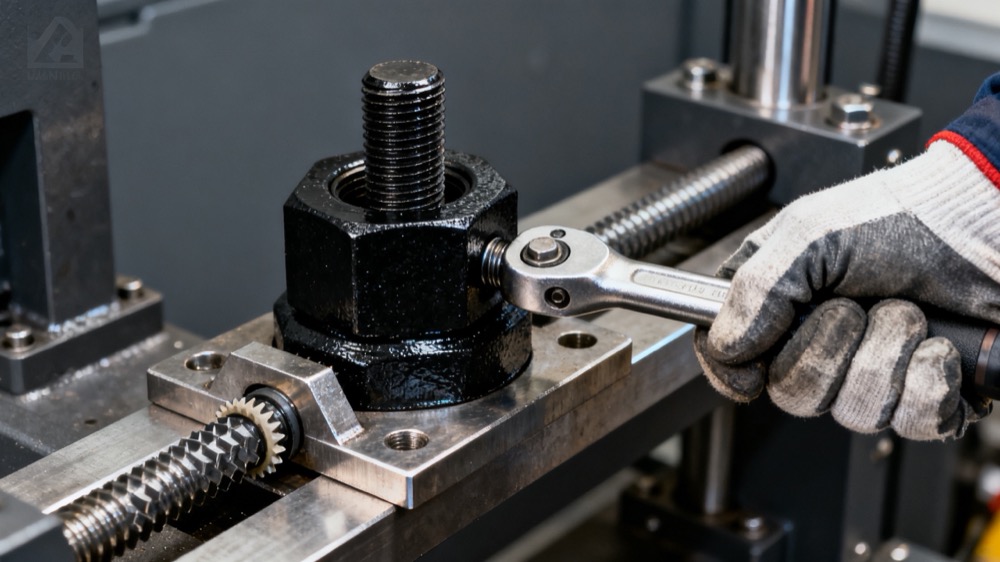
For a coated fastener, test the actual bolt, nut, washer, and bearing surface together. A change in friction can change the clamp load achieved at the same tightening torque. Do not carry over a torque setting from an uncoated or differently coated assembly without engineering verification. For a tray, use the actual product and cleaning cycle: an easy release on the first bake tells you little about performance after repeated use.
Ask the applicator how it controls preparation, film thickness, and cure. Agree on first-article approval, the records required with each lot, and which changes trigger requalification. A change in primer, substrate, or application site can matter even when the topcoat name stays the same. Set those expectations before production so that future lots can be compared against the same approved build.
Suppose a manufacturer is developing an outdoor equipment enclosure and wants the fasteners to remain removable after service exposure. The purchase description says only "black Xylan." Two suppliers can meet that description visually while quoting different pretreatments or coating builds. Color alone tells the buyer nothing about thread fit, clamp load, or how the joint will behave during maintenance.
A better request asks each supplier to identify the grade, pretreatment, primer, and thickness. The manufacturer then checks thread fit after coating, verifies torque versus clamp load on the actual joint, and assesses corrosion and removal after the agreed exposure. This is an illustrative qualification plan, not a claim about a completed customer project.
The same logic applies to other components: choose a test that can reveal the failure you want to prevent. For a bakeware line, that could mean recording sticking or residue over repeated baking and washing cycles. For a window profile, it could mean checking the appearance and adhesion requirements specified for the project instead of paying for a low-friction finish with no functional role.
Send Yinda Technology your part drawing, substrate, end-use environment, target finish, annual volume, and any required standards. We develop and manufacture powder coatings for applications including architectural profiles, windows and doors, new energy vehicles, medical equipment, hardware, and appliances. Our subsidiaries in China, Indonesia, and Saudi Arabia support customers across these markets.
If the drawing already calls for a specific Xylan grade, flag it in your request. That distinction helps us assess where a Yinda powder coating is a candidate and where a separate specialty finish or formal substitution approval is needed.
No. PTFE is a fluoropolymer, while Xylan is a branded family of coatings. Some Xylan grades use PTFE; others use fluoropolymers such as PFA or FEP. Use the exact grade when communicating requirements to a supplier.
Both forms exist. Xylan 1070 is solventborne and Xylan 1424 is waterborne. Selected industrial bakeware topcoats are supplied as powders for electrostatic spray. Verify the application method and process requirements before specifying a grade for an existing line.
It can improve corrosion resistance, but it does not make steel immune to rust. Surface preparation, primer or plating, film coverage, and in-service damage all matter. Review test data for the proposed system and check vulnerable features such as edges and threads on actual parts.
There is no single temperature rating for the family. Check the exact grade's documented working range, then confirm whether it applies to continuous exposure or short peaks. Compare that rating with the temperature the coated part actually reaches, not just the equipment setpoint.
Do not infer approval from the brand name. Some bakeware grades are designed for food contact, but you should obtain documentation for the exact coating system, intended use, and destination market. For a medical device, confirm the requirements for the finished device and its intended contact conditions rather than relying on a generic coating claim.
Not by default. If the drawing requires a Xylan grade to control friction or preserve thread fit, a visually similar powder finish is not an equivalent. Any proposed substitute should satisfy the drawing's requirements and be qualified on the actual fastener assembly before it is approved.
No. A salt spray result describes performance under defined laboratory conditions. It does not establish a service-life conversion. When comparing reports, check the substrate, coating build, test method, and failure criteria as well as the reported hours.
- [Precision Coating Technology & Manufacturing — Xylan Coating Advantages and Applications]. Original article reviewed for its product overview, benefits, and application examples. [precisioncoatingtech]
- [PPG — Xylan 1000 Series High Temperature Low Friction Coatings]. Manufacturer's description of the solventborne series, including Xylan 1070 and its threaded-component applications. [ppg]
- [PPG — Xylan 142X Series High Temperature Low Friction Coatings]. Manufacturer's overview of the waterborne dry-film series and typical industrial uses. [ppg]
- [PPG — Xylan Dry-Film Lubricant Coatings Technical Sell Sheet]. Source of the 1070 and 1424 formulation, thickness, and coating-system-specific ASTM B117 figures. [assets-eu-01.kc-usercontent]
- [PPG — Xylan Powder Topcoats for Industrial Bakeware]. Source for electrostatic powder topcoats, PFA and FEP grade examples, and bakeware applications. [ppg]
- [Powder Coated Tough — Transitioning to Powder Coatings: What You Need to Know]. Industry background on conventional powder coating processes and film-build considerations. [powdercoatedtough]
- [California Fastener — Xylan and Fluoropolymer Coatings]. Industry context for the relationship between coating friction, tightening torque, and clamp load. [californiafastener]


