Language


Views: 222 Author: Yinda Powder Coating Publish Time: 2026-06-16 Origin: Site


Content Menu
● Understanding High-Heat Powder Coatings
● Ceramic-Based vs. Silicone-Based: Core Differences
● Key Performance Comparison for High-Heat Machinery
>> Performance Overview for Industrial Machinery
● How Ceramic-Based Powder Coatings Work
● How Silicone-Based Powder Coatings Work
● High-Heat Industrial Machinery: Critical Selection Factors
● Real-World Use Cases Across Key Industries
● Expert Insight: Balancing Performance, Cost and Sustainability
● Practical Selection Steps for Engineering Teams
● How Yinda-Style Suppliers Support Global Projects
● When to Choose Ceramic-Based vs. Silicone-Based
● Call to Action: Optimizing Your High-Heat Coating Strategy
● Frequently Asked Questions (FAQ)
High-heat industrial machinery increasingly relies on durable metal powder coatings to extend equipment life, reduce downtime and meet tightening environmental regulations in global markets such as China, Indonesia and Saudi Arabia. For metal fabricators, OEMs and EPC contractors, the critical choice is often between ceramic-based powder coatings and silicone-based powder coatings when specifying finishes for high-temperature environments. [shepherdcolor]
High-heat powder coatings are engineered finishes that protect metal substrates exposed to elevated continuous or intermittent temperatures, typically in the range of 200–650 °C, while also resisting corrosion and mechanical damage. Unlike standard architectural or general industrial powders, these systems are built with special binders, pigments and fillers that maintain film integrity, color and adhesion when conventional coatings would blister, chalk or peel. [pcimag]
In heavy-industry applications, high-heat coatings are widely used on industrial ovens, furnaces, exhaust systems, compressors, turbine housings, heat exchangers and high-temperature piping. As global OEMs push for higher efficiency and energy savings, their equipment often runs hotter, making the right powder coating choice a strategic engineering decision rather than a purely cosmetic one. [pdf.dfcfw]
At a high level, ceramic-based powder coatings use ceramic or ceramic-like inorganic fillers and pigments to achieve extreme heat and chemical resistance, often in combination with high-temperature resin systems. Silicone-based powder coatings rely on silicone resins (such as polysiloxanes) that form a flexible, heat-stable network, often hybridized with other resins like polyester or epoxy to balance performance and processability. [shepherdcolor]
The result is two distinct performance profiles: ceramic-based systems excel at dimensional stability, hardness and long-term color retention at very high temperatures, while silicone-based systems stand out for thermal flexibility, thermal shock resistance and good performance in cyclic-heating environments. For many high-heat industrial machinery projects, the optimal choice depends on the specific temperature profile, mechanical stress, and chemical exposure of the equipment. [shepherdcolor]
The table below summarizes the practical differences between ceramic-based and silicone-based metal powder coatings from an industrial machinery perspective. [shepherdcolor]
| Criterion | Ceramic-Based Metal Powder Coating | Silicone-Based Metal Powder Coating |
|---|---|---|
| Typical temperature range | Up to 650–800 °C continuous, higher for short peaks. (shepherdcolor) | Around 260–600 °C depending on resin design. (pcimag) |
| Thermal shock resistance | Good but can be brittle under rapid cycling. (shepherdcolor) | Very good flexibility under heat cycles. (pcimag) |
| Film hardness | Very high hardness and abrasion resistance. (shepherdcolor) | Moderate to high, with better flexibility. (pcimag) |
| Color & gloss retention | Excellent at very high temperatures. (shepherdcolor) | Good in mid-to-high temperature range. (shepherdcolor) |
| Corrosion resistance | Strong when combined with suitable primers. (shepherdcolor) | Strong, especially in hybrid systems. (pcimag) |
| Application thickness | Often medium to high film build. (pcimag) | Flexible in thin-to-medium film build. (shepherdcolor) |
| Typical machinery uses | Furnaces, burners, incinerators, kiln parts, exhaust manifolds. (pcimag) | Ovens, exhausts, heat shields, engine components, structural parts near heat sources. (pcimag) |
This type of structured comparison helps engineers quickly filter options based on their specific temperature and mechanical constraints before moving into detailed specification and testing. [pcimag]
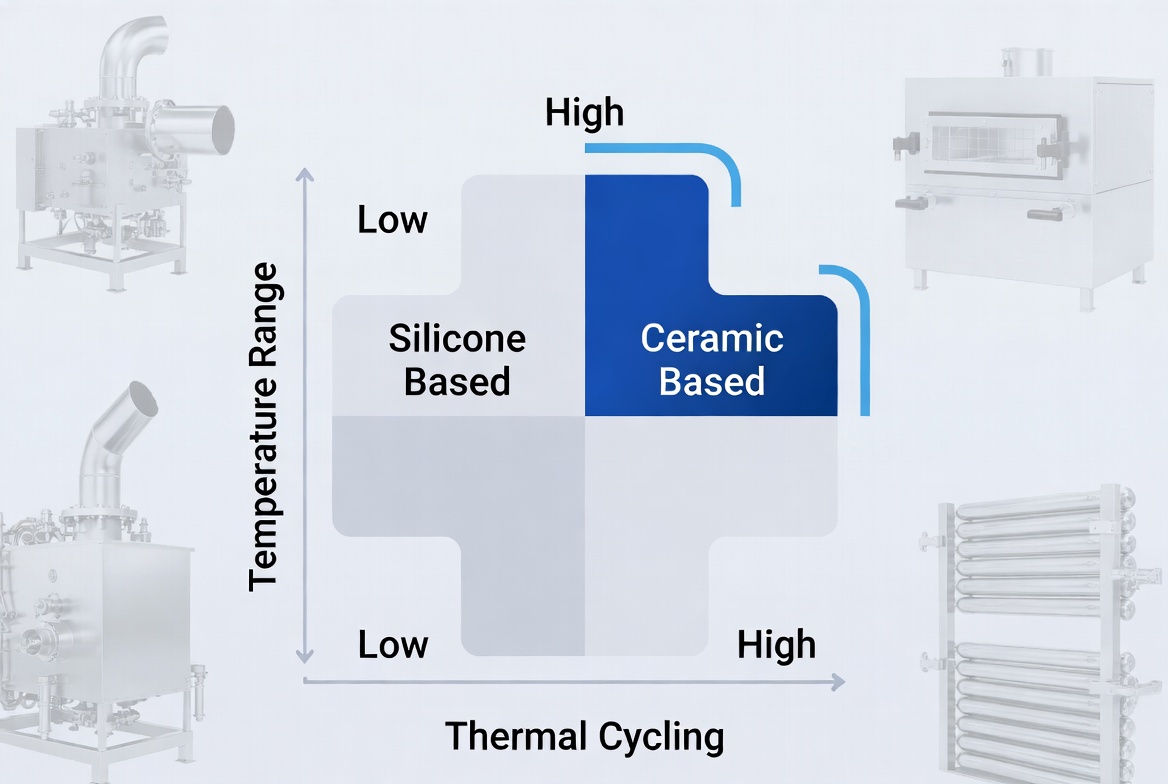
Ceramic-based powder coatings typically incorporate ceramic fillers, ceramic pigments or ceramic-like inorganic phases that remain stable at elevated temperatures, often above the range of organic pigments. These coatings are usually based on high-temperature resins (such as certain silicone hybrids or specialized polyesters) combined with complex inorganic color pigments (CICPs) to provide long-term heat and UV stability. [shepherdcolor]
From a material-science perspective, ceramic components offer low thermal expansion, high hardness and chemical inertness, which helps the coating maintain dimensional stability and resist cracking or chalking under severe heat. In practice, this means ceramic-based powders can be specified for equipment that runs close to red-hot conditions, such as burner housings, incinerator components and high-temperature exhaust systems. [pdf.dfcfw]
Silicone-based powder coatings are built on silicone resin chemistry, where silicon–oxygen backbones provide excellent thermal stability and resistance to oxidation. These coatings can be formulated as pure silicone systems or as hybrids (for example silicone–polyester), allowing formulators to balance heat resistance, flexibility, appearance and cost. [pcimag]
When cured properly, silicone-based coatings form a flexible, heat-resistant network that tolerates repeated expansions and contractions of the metal substrate during heating and cooling cycles. This makes them especially suitable for machinery that experiences frequent start–stop cycles, dynamic loads, or thermal shock, such as industrial ovens, engine parts, and high-heat ducting in manufacturing plants. [pdf.dfcfw]
From an industrial-specification standpoint, the choice between ceramic-based and silicone-based powder coatings for high-heat machinery often comes down to four core factors. [pcimag]
1. Maximum continuous and peak temperature
If equipment runs at very high continuous temperatures (above about 600 °C), ceramic-based systems often provide more robust long-term stability. For machinery at mid-to-high ranges (260–550 °C) with frequent cycling, silicone-based coatings usually offer better flexibility and crack resistance. [shepherdcolor]
2. Thermal cycling profile
Equipment that experiences rapid heat-up and cool-down cycles, such as baking ovens or certain automotive and e-mobility components, benefits from silicone-based options because of their superior thermal shock resistance. For relatively steady-state high-temperature operations, ceramic-based coatings can be optimized for dimensional stability and color retention. [shepherdcolor]
3. Mechanical and chemical environment
Heavy machinery that faces abrasion, impact or corrosive atmospheres may favor ceramic-based coatings for their hardness and chemical inertness, especially when paired with robust pre-treatment and primer systems. Silicone-based systems can still deliver strong corrosion protection, particularly in hybrid formulations, and are often chosen where flexibility and edge-retention are critical. [shepherdcolor]
4. Regulatory and appearance requirements
For machinery installed in visible or regulated environments, such as building-integrated systems or EV production equipment, designers may prioritize color stability, low VOC profiles and environmental compliance. Both ceramic-based and silicone-based powders can be tailored to meet stringent environmental standards and offer a wide color space, but ceramic-based systems often lead when extreme color stability at high temperatures is mandatory. [pdf.dfcfw]
For a manufacturer like Yinda Technology, with operations in China, Indonesia and Saudi Arabia, high-heat powder coatings must serve diverse industrial, climatic and regulatory environments. Below are typical use cases in sectors where Yinda and similar suppliers support global OEMs and fabricators. [service.made-in-china]
- Building profiles and doors/windows near heat sources
Structural frames near industrial ovens or high-temperature exhaust ducts may use silicone-based powders for good flexibility and appearance retention in medium-temperature ranges. [pcimag]
- New energy vehicles (NEVs) and e-mobility components
Battery pack housings, inverters and thermal-management parts can experience localized high temperatures; silicone-based hybrids are often used where thermal cycling and vibration are key factors. Ceramic-enhanced systems may be specified for components close to exhaust or high-heat zones in hybrid and range-extender platforms. [shepherdcolor]
- Medical equipment and devices
Autoclave-exposed frames or components that undergo repeated sterilization cycles benefit from silicone-based coatings with excellent thermal shock resistance and hygiene-compatible surfaces. [pdf.dfcfw]
- Hardware, tools and general industrial machinery
Heat-exposed parts such as conveyor oven frames, burners and high-heat brackets are typical candidates for ceramic-based powders when extremely high surface temperatures are expected. [shepherdcolor]
By mapping each application's temperature profile, mechanical stress and chemical exposure, industrial specifiers can align the right coating family with their long-term reliability targets. [pcimag]
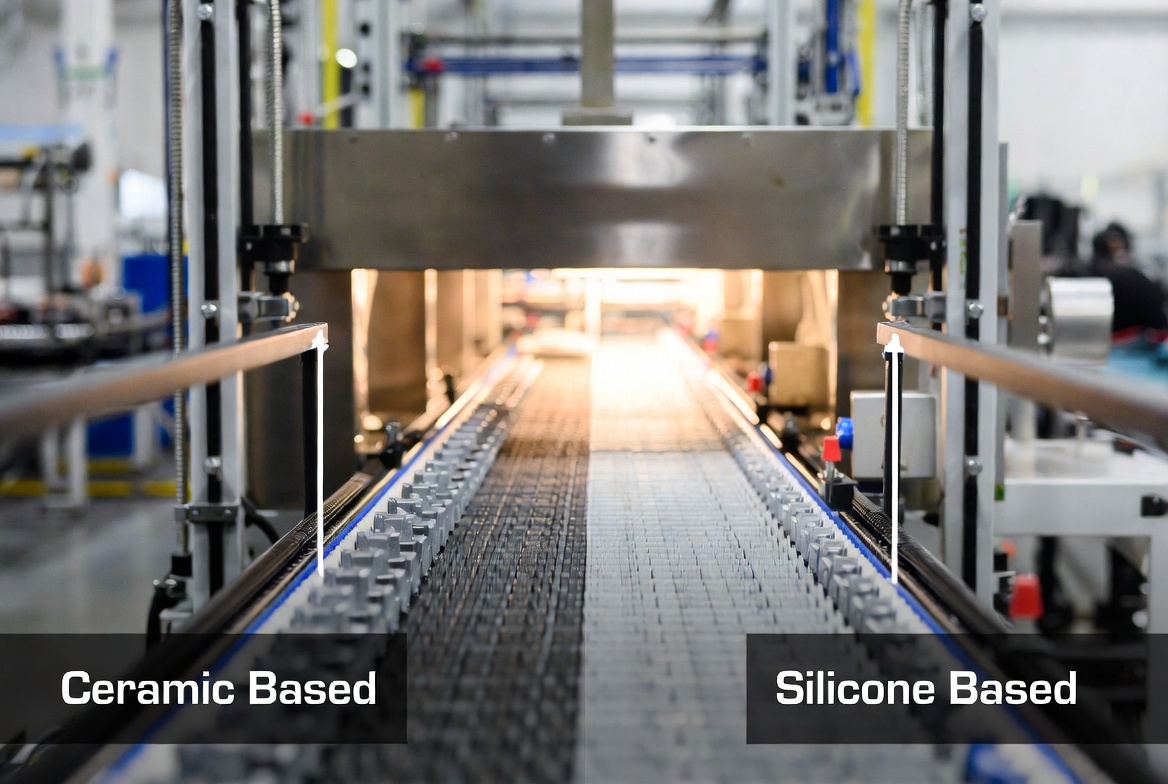
From a practical, plant-level perspective, high-heat coating decisions are rarely made on temperature alone. Based on industry reports and case studies, OEMs and fabricators increasingly evaluate coatings against total lifecycle cost, maintenance intervals and sustainability benchmarks. [pdf.dfcfw]
- Total lifecycle cost
A ceramic-based powder might have a higher initial material cost, but if it doubles the maintenance interval of a critical furnace housing, it can significantly reduce unplanned downtime and labor. [shepherdcolor]
- Energy and curing optimization
Modern high-heat powders can be formulated to cure at lower oven temperatures or shorter dwell times, reducing plant energy consumption. This is particularly important in markets with rising energy prices or CO₂ regulations. [shepherdcolor]
- Environmental compliance
Powder coatings are inherently solvent-free, which aligns with emerging environmental regulations in Asia and the Middle East that target VOC reduction. Selecting between ceramic-based and silicone-based systems becomes part of a broader ESG and sustainability roadmap for global manufacturers. [web.cas]
For a manufacturer with a broad product mix, the ideal portfolio often includes both ceramic-based and silicone-based high-heat solutions, allowing project teams to optimize for cost, performance and sustainability on a case-by-case basis. [pcimag]
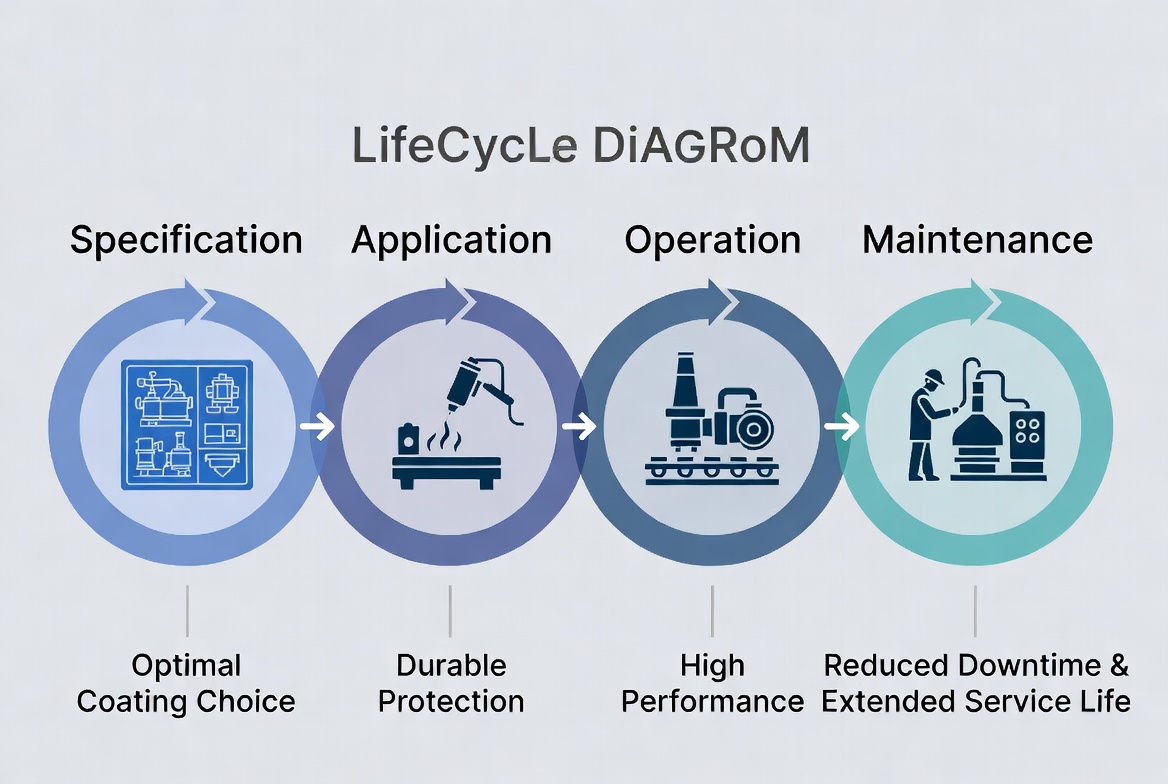
To make this article directly actionable for engineers and procurement teams, the following step-by-step approach can be used when specifying high-heat metal powder coatings. [pdf.dfcfw]
1. Define temperature and cycling profile
Document continuous operating temperatures, peak spikes and expected heating/cooling cycles for each component.
2. Assess mechanical and chemical environment
Identify exposure to abrasion, impact, corrosive gases, cleaning chemicals or sterilization procedures.
3. Set performance and appearance priorities
Decide whether extreme temperature endurance, aesthetic appearance, corrosion resistance or flexibility is most critical for that component.
4. Shortlist ceramic-based and silicone-based options
Based on the above, develop a shortlist of candidate formulations from your coating supplier's portfolio, including ceramic-enhanced systems and silicone hybrids.
5. Run application-specific testing
Conduct adhesion, impact, salt spray, cyclic heat and color-retention tests under conditions that simulate real-world operation.
6. Review regulatory and ESG requirements
Ensure all candidate coatings align with local regulations and customer-specific environmental or safety standards.
7. Select and document the final system
Once validated, formally document the chosen coating, including pre-treatment, film build, curing schedule and inspection criteria.
This process not only reduces coating-related failures, but also creates a repeatable framework that global teams can apply across plants in different countries. [web.cas]
A powder coating manufacturer with R&D, manufacturing and technical-support teams across China, Indonesia and Saudi Arabia can provide localized support for high-heat industrial machinery projects. This includes on-site line audits, customized high-heat formulations and cross-border logistics planning aligned with each client's production schedule. [service.made-in-china]
In practice, this means engineering and procurement teams can standardize specifications across multiple plants, while still adapting to local climate, regulatory and energy-cost conditions. For high-heat coatings in particular, global suppliers can offer ceramic-based and silicone-based product families that are harmonized from a performance and certification standpoint, simplifying qualification and audits. [web.cas]
For busy engineering and sourcing teams, the following rule-of-thumb scenarios provide a quick guide. [shepherdcolor]
- Choose ceramic-based powder coatings when:
- The component operates near the upper end of high-heat ranges (above ~600 °C). [shepherdcolor]
- Extreme color and gloss stability are required at very high temperatures. [shepherdcolor]
- The part faces aggressive corrosive or abrasive environments and is difficult to access for maintenance. [shepherdcolor]
- Choose silicone-based powder coatings when:
- The application involves frequent thermal cycling or large temperature swings. [pcimag]
- Flexibility and resistance to cracking on edges, corners or thin sections are essential. [pcimag]
- Mid-to-high heat (around 260–550 °C) applications must balance appearance, performance and cost. [shepherdcolor]
Ultimately, many OEMs leverage both systems across their machinery portfolio, choosing ceramic-based powders for the hottest, most aggressive zones and silicone-based powders for flexible, cyclic-temperature environments. [shepherdcolor]
If your high-heat industrial machinery operates across multiple regions or production environments, this is an ideal time to review and optimize your coating specifications. By benchmarking current performance against the criteria in this article, engineering and procurement teams can identify where ceramic-based or silicone-based powder coatings will deliver the greatest reliability and lifecycle gains. [pdf.dfcfw]
For best results, collaborate closely with a globally active powder coating partner that can support projects in China, Southeast Asia and the Middle East, and that offers both ceramic-based and silicone-based high-heat solutions for metal substrates. A structured consultation and on-site line assessment can often deliver quick wins in durability, energy efficiency and maintenance intervals without major capex changes. [service.made-in-china]
1. Can ceramic-based and silicone-based high-heat coatings be used on the same production line?
In many cases, yes, as long as proper cleaning, booth management and curing profiles are implemented to prevent cross-contamination and ensure each system reaches its required cure. [shepherdcolor]
2. How do high-heat powder coatings compare to liquid high-heat paints?
High-heat powders provide solvent-free application, better film-build control and often superior durability, while liquid systems may still be chosen for complex geometries or field-applied repairs. [web.cas]
3. Are high-heat ceramic-based coatings always more expensive than silicone-based options?
Not always; while some ceramic-based systems use premium pigments and fillers, total project cost depends on film-build, curing energy, line efficiency and maintenance savings. [pdf.dfcfw]
4. What pre-treatment is recommended for high-heat industrial machinery?
Common approaches include phosphate or advanced conversion-coating systems combined with mechanical preparation for highly stressed components, tailored to the specific substrate and environment. [pcimag]
5. How soon should coated machinery be put into service after curing?
Most high-heat powders reach full mechanical and chemical resistance after proper curing and cool-down, but OEMs often follow internal validation protocols before releasing equipment into full-load operation. [pdf.dfcfw]
1. Shepherd Color. “High-performance pigments for powder coatings and high-heat applications.” https://www.shepherdcolor.com
2. PPCJ / Shepherd Color. “High performance pigments in powder coatings.” (PDF, Chinese edition). https://www.shepherdcolor.com/wp-content/uploads/2022/05/HighPerformancePigmentsArticle_PPCJ_Apr2020_FINAL_Chinese.pdf
3. PCI Magazine. “High-temperature resistant powder coatings for industrial applications.” https://www.pcimag.com
4. Industry report on architectural and industrial coatings markets and regulations. http://pdf.dfcfw.com/pdf/H3_AP201911191370871880_1.pdf
5. Technical resources on complex inorganic color pigments (CICPs) and high-heat powder systems. https://web.cas.org
6. Trade and industry guides on global powder coating markets in Asia and the Middle East. http://service.made-in-china.com


