Language


Views: 210 Author: Yinda Powder Coating Publish Time: 2026-09-29 Origin: Site


Content Menu
● What Do Laser and UV Gel Curing Actually Mean?
>> How Laser Curing Builds the Film
>> How UV Gel Curing Builds the Film
● Laser Curing vs. UV Gel Curing: Key Differences
● Why Ultra-Thin Films Change the Decision
>> Control Film Formation Before Cure Speed
>> Treat Corrosion Protection as a System
● Which Process Fits Sensitive Metal Parts?
>> When Laser Curing Has the Advantage
>> When UV Gel Curing Has the Advantage
>> Practical Example: An EV Electronics Housing
● A Five-Step Qualification Plan for Yinda Customers
● Compare Energy and Cost Per Accepted Part
>> Is UV Gel Curing Completely Heat-Free?
>> Can a Standard Powder Be Used With UV Light?
>> Does Laser Curing Work on Shadowed Surfaces?
>> Is a 20–30 µm Film Enough for Outdoor Metal?
>> Which Method Is Faster in Production?
>> What Should I Send Yinda for an Initial Review?
A metal part is not always heat-sensitive on its own. The challenge may be its gaskets, electronics, adhesives, plated surfaces, or tight dimensional tolerances. For these assemblies, laser curing vs. UV gel curing technology for ultra-thin film powder coating is not simply a contest of cure speed. It is a choice about how to form a continuous film while keeping every vulnerable part of the assembly within its allowable temperature range.
At Yinda Technology, we develop and supply powder coatings for applications including architectural components, new-energy vehicles, medical equipment, hardware, and appliances. From a coating manufacturer's perspective, we would begin with four questions: Can the powder form a sound thin film? Where must curing energy reach? What temperature can the assembly tolerate? And which tests will establish that the finished part meets its specification?

The two technologies deliver energy in different ways. Powder-coating laser systems commonly direct near-infrared energy toward the coating. That energy heats the powder so it can melt, flow, and undergo heat-driven crosslinking. UV-curable powder first needs enough heat to melt into a continuous film. Ultraviolet light then activates ingredients called photoinitiators, which start the crosslinking reaction.
"UV gel curing" is not a universal specification for a single formulation or machine sequence. The word *gel* may refer to powder fusion or to the beginning of network formation. In this article, it means a controlled melt-and-flow stage followed by UV crosslinking. A UV lamp alone does not normally turn loose, cold powder into a smooth, fully cured film.
Laser optics direct energy toward selected coating areas. The powder softens and coalesces; continued, controlled heating enables the resin and hardener to react. Power, scan speed, beam size, overlap, wavelength, color, and part shape all influence heating uniformity.
Laser curing may avoid heating a whole oven and may be worth investigating with a suitable thermoset powder. Compatibility must still be tested. The metal can conduct heat into nearby seals or electronics. A curing cell with cool surroundings does not mean the coating—or every point on the assembly—remains cool.
UV-curable powder requires a preliminary melt-and-flow stage. Published research describes approximately 90–120°C as a common film-formation range for studied formulations. That is not a guaranteed process setting or a safe temperature for every assembly. Once the film has flowed, UV exposure activates a formulation-specific photoinitiator system.
The UV stage can be rapid, but lamp wavelength, delivered dose, pigment, oxygen exposure, and coating temperature affect the result. More lamp power cannot repair powder that failed to level, nor can it cure a recess that receives insufficient light.
| Decision factor | Laser curing | UV gel curing |
|---|---|---|
| Cure mechanism | Directed near-infrared heating supports thermal crosslinking | Heat forms the film; UV initiates photochemical crosslinking |
| Powder requirement | May suit a qualified conventional or laser-tailored thermoset powder | Requires a specifically formulated UV-curable powder |
| Heat exposure | Heating is targeted, but coating and metal still reach process-dependent temperatures | The melt stage heats the part; UV follows after film formation |
| Complex shapes | Steerable optics can target accessible faces, but still need a clear energy path | Recesses may need rotation, multiple lamps, or another exposure strategy |
| Color effects | Energy absorption can vary with pigment and wavelength | Pigment can affect light penetration and cure response |
| Thin-film risk | Fast heating may expose uneven flow or energy delivery | Early UV exposure may freeze poor leveling; low exposure may leave areas undercured |
| Equipment needs | Optics, motion or positioning, controls, and laser-safe enclosure | Melt zone, UV lamps, exposure controls, and suitable shielding |
| Promising starting point | Parts needing localized heating with a qualified thermal powder | Accessible parts that tolerate the melt stage and suit UV chemistry |
This is a screening guide, not a performance ranking. The comparison becomes meaningful only when both processes are tested on representative parts against the same finished-part requirements.
"Ultra-thin" has no single threshold for every powder-coating application. Here, it means approximately 20–40 µm of cured dry film, with the actual target set by the product specification. Industry specialists have reported coherent 20–30 µm powder films on commercial lines. Such results require suitable formulations and application control; they cannot be assumed for a standard powder applied more sparingly.
A thin-film powder must still feed, fluidize, spray, and—where applicable—reclaim reliably. It also needs enough flow to hide the substrate without pulling away from critical edges. As thickness falls, inadequate opacity, visible texture, weak edge coverage, and reduced protective performance can become more significant.
At a 30 µm target, a small local thickness variation represents a meaningful share of the film. If laser heating proceeds too aggressively, powder may not level as intended. If UV exposure starts before the molten film has flowed, crosslinking may lock in spray texture. Neither fast cure can compensate for a bare or poorly covered edge.
A practical development order is to establish the powder's particle-size and spray window, verify flow on the actual metal, and then optimize curing. Measure flats, edges, recesses, and other critical locations separately rather than judging an assembled part by a smooth, flat coupon.
For exterior architectural parts or exposed vehicle hardware, pretreatment, edge design, and coating architecture matter alongside the cure method. A thin decorative topcoat may need an appropriate conversion treatment or primer to meet a demanding corrosion specification.
Specify the minimum acceptable thickness at critical locations, not only the average on an open face. Define the substrate, pretreatment, test specimen, exposure method, and pass criteria together. A glossy surface is not, by itself, evidence of adequate edge protection.
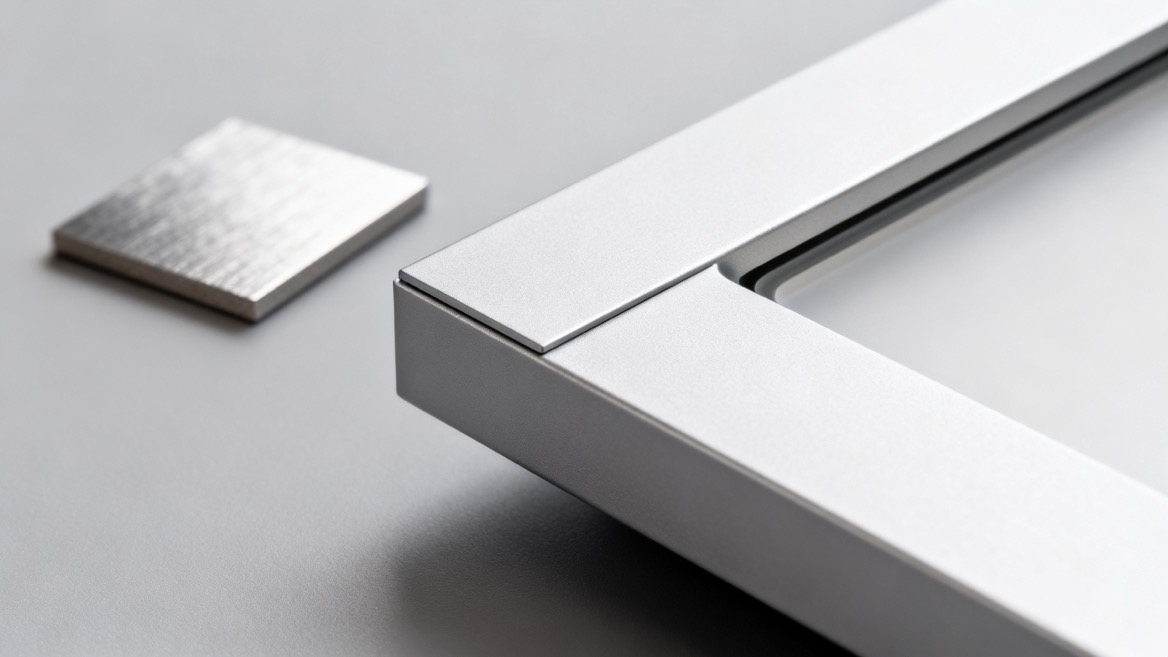
"Sensitive metal" often means a metal assembly containing heat-sensitive materials. Before selecting a curing route, identify the most vulnerable location and establish both its maximum allowable temperature and allowable exposure time. Use those limits to assess the complete process, including film formation.
Investigate laser curing when parts have accessible but varied surfaces, an appropriate thermal-cure powder is available, and targeted heating may reduce the need to warm the whole assembly. Movable optics may reach faces that a fixed UV lamp cannot illuminate, provided those faces remain accessible to the laser.
The caution is heat conduction. A coating can receive targeted energy while an attached gasket still becomes too hot. Measure temperatures at interfaces, check coverage around corners, and validate separate recipes where changes in color or part geometry affect the result.
Investigate UV-curable powder when required surfaces can receive reliable light exposure, a suitable formulation meets the finished-part specification, and the preliminary melt stage stays within the assembly's validated thermal limits. Separating flow from light-triggered cure gives the process a distinct opportunity to establish appearance before crosslinking.
Deep channels, undercuts, and mounting interfaces need particular attention. Dark or heavily filled finishes may also require a different formulation or exposure arrangement. If an assembly cannot tolerate the temperature needed to melt its powder, calling the process "UV curing" does not remove that thermal constraint.
Consider an aluminum enclosure with attached seals and heat-sensitive internal components. It needs a thin exterior finish without losing dimensional control. A useful comparison would coat production-representative housings with a laser-qualified thermal powder and, separately, a UV-curable powder. Keep the substrate condition and finished-part targets equivalent, while allowing each formulation its own validated process settings.
Place temperature sensors near the seal bond, on an exposed face, and at a difficult recess. Record settings and temperature traces. Then compare minimum dry-film thickness, edge coverage, appearance, resistance to separation, chemical resistance, and corrosion results against the specification. This is a proposed trial design—not a claim that Yinda has completed that particular qualification.
A part drawing, known failure limits, and an agreed test plan are more useful than a headline cure-time claim.
1. Define the assembly limits. Record metal grade, thickness, pretreatment, seals, adhesives, electronics, and conductive interfaces. Obtain allowable temperature-and-time limits for vulnerable components.
2. Set coating acceptance criteria. State nominal and minimum dry-film thickness at flats and edges, plus appearance, corrosion, abrasion, chemical-contact, and application-specific requirements.
3. Screen suitable powders. Request information on storage stability, particle-size control, melt behavior, cure chemistry, and available finishes. For UV powder, confirm that lamp output and photoinitiators are matched.
4. Instrument representative trials. For laser processing, record beam settings, coverage, and temperatures. For UV processing, record melt conditions, lamp characteristics, delivered exposure, orientation, and recess coverage.
5. Test before release. Select an appropriate thickness method under ISO 2808. ISO 2409 cross-cut testing assesses resistance to separation; it is not a direct numerical measure of bond strength. Where corrosion matters, define specimens and acceptance criteria alongside ISO 9227 salt-spray exposure.
Plan operator protection as well as coating performance. Laser equipment calls for appropriate beam enclosure and interlocks; UV equipment requires control of stray-light exposure.
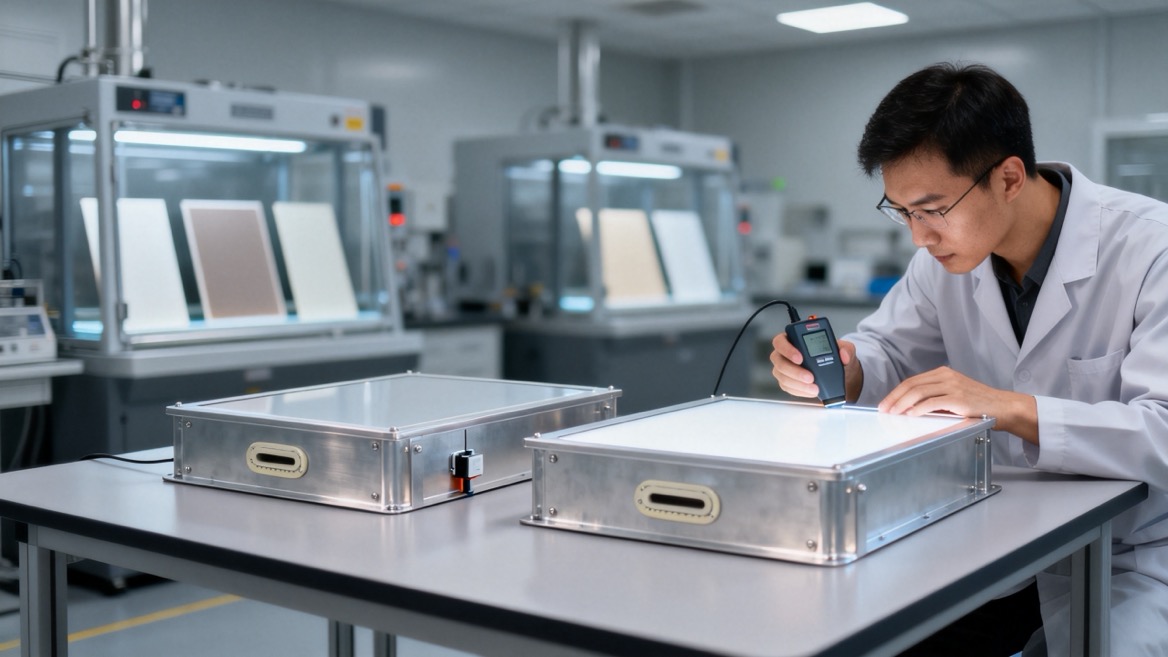
A short irradiation time is not the same as a low-cost finished part. Count powder use and reclaim, pretreatment, electricity, ventilation, cooling, floor space, maintenance, scrap, rework, and line-conversion investment.
For a fair trial, compare energy and cost per accepted part at the same production volume and quality threshold. Include startup and idle time. Count the melt zone for UV curing, rather than reporting lamp power alone. For laser curing, include motion and supporting equipment as well as the energy used to reach the coating's cure condition.
Yinda Technology's practical recommendation is to qualify the formulation and production process together. The strongest choice is the one that protects the assembly, consistently meets the film specification, and makes economic sense on the intended line—not the one with the shortest advertised cure step.
No. UV-curable powder normally needs heat to melt and form a continuous film before UV initiates crosslinking. Measure the resulting temperature at vulnerable seals, adhesives, and electronics.
Changing the lamp is not enough. UV powder needs suitable photo-reactive chemistry and photoinitiators. A conventional thermal powder may be evaluated under laser heating, but its cure and finished performance still require qualification.
Steerable optics can improve access, but the energy still needs a suitable path to the coating. Hidden cavities, contact faces, and fixture-shadowed areas need a coverage study.
Thickness alone cannot answer that. Pretreatment, edge coverage, primer selection, geometry, and service conditions determine whether the complete coating system is suitable.
Either may shorten part of the process, but melting, conveying, rotation, cooling, or inspection may govern total throughput. Compare complete line cycle time at the same accepted quality.
Send the part drawing, substrate and assembly details, temperature limits, pretreatment, target film range, colors, annual volume, and required tests. Ask Yinda Technology for a formulation review and a side-by-side sample-trial plan before committing to either curing route.
- Czachor-Jadacka, D., and Pilch-Pitera, B. "[Progress in development of UV curable powder coatings]." *Progress in Organic Coatings*, 2021. [sciencedirect]
- "[Photopolymerization kinetics of UV-curable polyester powder coatings]." *Journal of Coatings Technology and Research*, 2025. Provides formulation-specific findings on melt temperatures and factors affecting UV conversion. [link.springer]
- PPG. "[PPG is Shaping the Future of Industrial Finishing with Powder Laser Curing]." 2026. Describes near-infrared laser processing and ongoing pilot validation. [ppg]
- Willis, C., and Sides, T. "[Laser Curing: The 'Cure' for Inefficiencies and Unsustainability]." *Products Finishing*, 2026. Industry-authored discussion of laser controls and modeled economics. [pfonline]
- *European Coatings*. "[Films as thin as a few microns can be achieved]." Industry interviews covering commercial thin-film results and limitations. [european-coatings]
- TIGER Coatings. "[Thin-Film Powder Coatings – Characteristics and Advantages]." Discusses specialized thin-film applications and performance trade-offs. [tiger-coatings]
- Keyland Polymer. "[UV Powder for Metal]." Manufacturer information on UV powder applications involving metal assemblies. [kpuvpowder]
- International Organization for Standardization. "[ISO 2808:2019 — Paints and varnishes: Determination of film thickness]." [iso]
- International Organization for Standardization. "[ISO 2409:2020 — Paints and varnishes: Cross-cut test]." [iso]
- International Organization for Standardization. "[ISO 9227:2022 — Corrosion tests in artificial atmospheres: Salt spray tests]." [iso]
- Occupational Safety and Health Administration. "[Guidelines for Laser Safety and Hazard Assessment]" and "[Workplace exposure limits for ultra-violet radiation]." Guidance relevant to equipment-safety planning. [osha]


