Language


Views: 243 Author: Yinda Powder Coating Publish Time: 2026-08-19 Origin: Site


Content Menu
● What Is Textured Powder Coating?
● How Textured Powder Coating Works
>> The Typical Application Process
● Main Types of Textured Powder Coating
>> Fine Sand Texture Powder Coating
>> Wrinkle Texture Powder Coating
>> River Vein and Decorative Textures
● Why Manufacturers Choose Textured Powder Coatings
>> Improved Handling and Tactile Feel
>> Durable Appearance in Daily Use
● Selecting the Right Resin for the Service Environment
● A Practical Selection Framework
>> 1. Where Will the Product Be Used?
>> 3. What Visual Standard Must Be Met?
>> 4. What Performance Must Be Verified?
● Common Application Problems and Prevention
>> Texture Too Fine or Too Coarse
>> Poor Adhesion or Early Corrosion
>> Color or Texture Variation Between Batches
● Expert Guidance for Key Industries
>> Architectural Profiles, Doors and Windows
>> New-Energy Vehicles and Mobility Components
>> Medical Equipment and Electrical Enclosures
>> Hardware, Furniture and Industrial Equipment
● Partner With Yinda Technology
>> What is textured powder coating?
>> Is textured powder coating more durable than smooth powder coating?
>> Which textured powder coating is best for outdoor use?
>> Can textured powder coating hide weld marks and scratches?
>> What film thickness is suitable for textured powder coating?
>> Is sandblasting always required before textured powder coating?
>> Can textured powder coating be used on aluminum doors and windows?
>> Does a textured finish improve slip resistance?
Textured powder coating is a durable, decorative finish that gives metal products a distinctive tactile surface while helping conceal minor substrate defects, improve handling, and support long-term protection. For manufacturers of architectural profiles, doors and windows, new-energy vehicles, medical equipment, hardware, and electrical products, the right texture must be selected as part of a complete coating system—not as a cosmetic decision alone.
At Yinda Technology, we develop and manufacture powder coatings and environmentally responsible finishing materials for demanding industrial applications. With operations in China, Indonesia, and Saudi Arabia, our technical teams work with customers across different climates, substrates, production lines, and product requirements to match texture, resin chemistry, pretreatment, application parameters, and curing conditions.

Textured powder coating is a thermoset or thermoplastic powder finish formulated to create a non-smooth surface after curing. Instead of producing a flat, uniform film, it creates a controlled visual and tactile effect, such as fine sand, wrinkle, hammer tone, orange peel, or river vein.
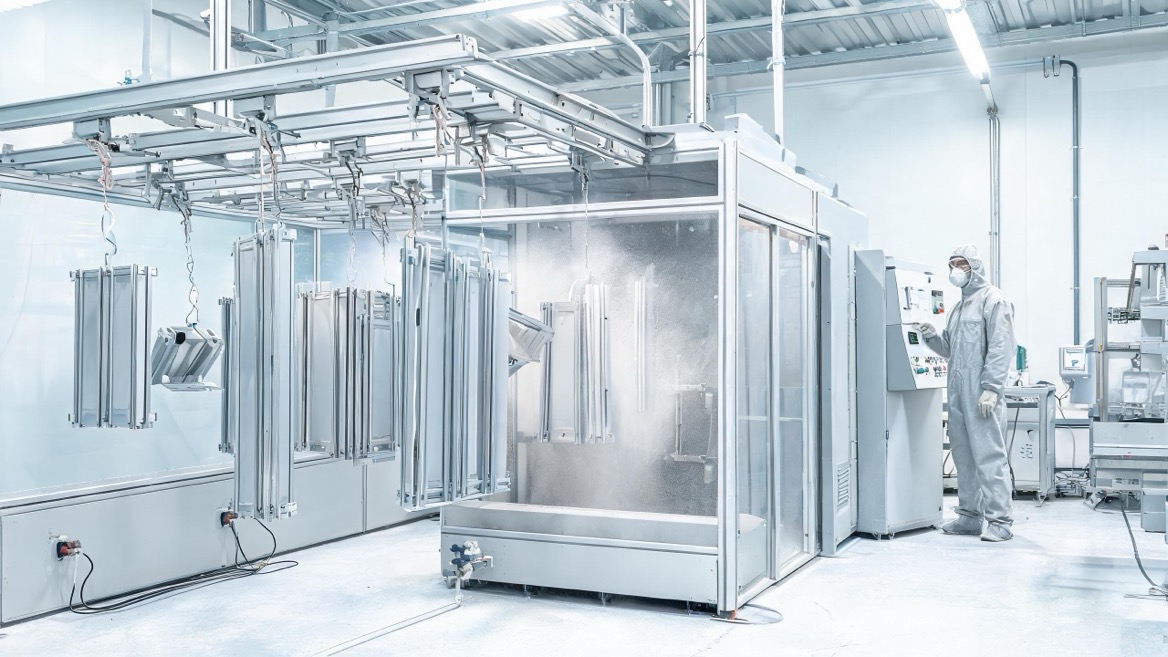
The coating is electrostatically sprayed onto a properly prepared metal substrate. During oven curing, the powder melts, flows, crosslinks, and develops its intended surface profile. The final appearance depends on the powder formulation, film build, electrostatic settings, grounding, substrate geometry, oven temperature, and time at metal temperature.
A textured finish can make a product feel more robust and visually distinctive. More importantly, it can help manufacturers manage the realities of industrial production: weld marks, casting porosity, minor surface unevenness, handling marks, and high-touch use.
A texture does not replace proper metal preparation. It can reduce the visibility of small imperfections, but it cannot compensate for oil contamination, corrosion, poor conversion treatment, sharp edges, inadequate adhesion, or incorrect curing.
A reliable textured finish begins long before powder reaches the spray booth. In our application support work, we treat texture development as a process-control task involving the substrate, powder, equipment, and curing profile.
1. Inspect the substrate
Identify material type, weld quality, edge condition, corrosion, oil, scale, and prior coatings. Steel, galvanized steel, aluminum, die-cast aluminum, and zinc alloys may need different pretreatment routes.
2. Clean and pretreat the metal
Remove oils, dust, oxides, and contaminants. Depending on the substrate and service environment, this may include alkaline cleaning, rinsing, etching, phosphating, zirconium-based treatment, or another conversion-coating process.
3. Dry the component completely
Moisture and pretreatment residues can affect powder deposition, appearance, and film performance.
4. Electrostatically apply the powder
The powder particles are charged and attracted to the grounded workpiece. Gun voltage, powder output, air flow, and gun-to-part distance must be controlled, especially around corners, recesses, and Faraday-cage areas.
5. Cure to the approved metal-temperature profile
The part must reach the required temperature for the specified duration. Oven setpoint alone is not enough; the metal temperature and heat-up behavior of the actual workpiece matter.
6. Inspect the finished coating
Check color, gloss, texture consistency, film thickness, adhesion, cure response, impact resistance, and any project-specific corrosion or weathering requirements.
For architectural aluminum, robust cleaning, etching, and conversion treatment are fundamental to coating adhesion and corrosion protection. Higher-performance architectural specifications also distinguish coating systems by their weathering and corrosion testing requirements.
Texture is not a single category. Each finish creates a different visual impression, tactile experience, and level of defect masking. The choice should reflect the product's end use, cleaning needs, customer expectations, and production capability.
| Textured finish | Visual effect | Key functional value | Common applications |
|---|---|---|---|
| Fine sand texture | Uniform micro-rough surface | Good scratch masking and a practical industrial appearance | Metal furniture, electrical enclosures, machinery, brackets |
| Coarse sand texture | More pronounced granular surface | Strong tactile feel and improved masking of minor substrate variation | Outdoor equipment, utility cabinets, construction hardware |
| Wrinkle texture | Deliberately folded or wrinkled surface | High visual character and useful grip | Tools, equipment housings, handrails, fitness equipment |
| Hammer tone | Metallic, hammered-metal appearance | Decorative depth that helps disguise minor surface marks | Cabinets, industrial equipment, metal furniture, hardware |
| River vein | Flowing, vein-like decorative pattern | High visual differentiation for design-led products | Interior hardware, decorative panels, furniture, display fixtures |
| Orange peel texture | Soft, stippled surface | A balanced appearance between smooth and heavily textured finishes | Appliances, control boxes, automotive accessories, enclosures |
Fine sand texture is one of the most versatile finishes for industrial and commercial products. It offers a refined matte-to-semi-gloss appearance while being more forgiving than a smooth, high-gloss coating.
It is especially suitable where products are handled frequently or exposed to minor abrasion. For example, an electrical enclosure with a fine sand texture can maintain a professional appearance even after routine installation, maintenance, and transportation.
Wrinkle finishes create a distinctly raised surface profile. They are often selected when a product needs an industrial, durable, high-grip appearance.
Because wrinkle development is sensitive to film thickness and curing conditions, production teams should validate the approved application window before mass production. Uneven film build or inconsistent metal temperature can cause unacceptable variation in wrinkle size and distribution.
Hammer tone finishes resemble lightly hammered metal. They deliver visual depth and can be highly effective for cabinets, machinery, metal furniture, and decorative hardware.
This finish is often chosen when customers want a premium industrial look without the maintenance burden of a highly reflective surface. It can also make small handling marks less noticeable than a smooth gloss finish.
River vein and other special-effect textures are designed for products where surface identity matters. They can differentiate door hardware, display fixtures, furniture, decorative metalwork, and selected appliance components.
For these finishes, product samples should be approved under controlled lighting. Texture can look different under daylight, retail lighting, warehouse lighting, and indoor residential lighting.
Textured coatings combine visual appeal with practical production and use-stage benefits. However, the benefits should be defined accurately for the specific coating system and application environment.
A smooth, glossy coating reflects light evenly, which makes dents, sanding marks, weld transitions, and minor surface waviness more visible. A controlled texture breaks up reflected light and can make these small visual defects less obvious.
This benefit is particularly valuable for:
- Fabricated steel frames
- Cast aluminum components
- Metal furniture
- Equipment housings
- Hardware with visible welds or formed edges
- Refurbished metal products
Important: Texture can improve visual tolerance, but it cannot hide severe corrosion, deep scratches, poor weld finishing, contamination, or dimensional defects.
Some textures can improve perceived grip for products that are held, operated, or frequently touched. This makes them useful for hand-operated equipment, tool housings, fitness equipment, handrails, and selected outdoor products.
Grip should not be confused with certified slip resistance. If a project requires a measurable anti-slip performance level, confirm the test method, substrate, coating system, and end-use conditions before specifying the finish.
Textured finishes can make light scratches, fingerprints, and small handling marks less visible than polished or high-gloss surfaces. This can help a product maintain a cleaner-looking appearance during transport, installation, and routine use.
The result still depends on resin type, film thickness, substrate preparation, curing, and environmental exposure. A texture alone does not guarantee abrasion resistance or corrosion protection.
Texture allows product designers to create stronger visual identity without changing the metal component itself. It can make standard steel or aluminum parts look more architectural, premium, technical, or rugged.
For B2B buyers, this can simplify product differentiation across multiple models. The same enclosure design, for example, can be positioned for different markets through color, gloss, and texture combinations.
Texture selection should always be paired with resin selection. A visually attractive finish can fail early if its chemistry does not match the operating environment.
| Resin system | Best-fit environment | Typical strengths | Key consideration |
|---|---|---|---|
| Epoxy | Indoor industrial environments | Chemical resistance, adhesion, mechanical performance | Limited UV durability for exterior exposure |
| Epoxy-polyester hybrid | Indoor equipment and appliances | Balanced appearance, durability, and cost efficiency | Not intended for severe outdoor weathering |
| Polyester | General outdoor products | Good weatherability and broad color options | Select grade based on climate and project expectations |
| Super-durable polyester | Demanding exterior applications | Enhanced color and gloss retention | Confirm test requirements for project conditions |
| Fluoropolymer-based systems | High-performance architecture | Strong UV and weather resistance | Requires project-specific specification and process control |
For exterior architectural profiles, doors, windows, and curtain-wall components, the relevant performance requirement may reference recognized architectural coating specifications. AAMA 2604 is associated with a five-year South Florida exposure requirement, while AAMA 2605 extends this to ten years and includes more demanding weathering and corrosion expectations.
Before choosing a textured powder coating, ask the following questions.
Define whether the product will be installed indoors, outdoors, in coastal areas, industrial zones, humid regions, or chemically exposed environments.
A powder coating for an indoor medical device enclosure may prioritize cleanability and a controlled matte appearance. A coating for outdoor window profiles in high-UV or coastal conditions needs a far more demanding weathering and corrosion strategy.
The metal substrate affects pretreatment, adhesion, film performance, and edge protection.
Common substrates include:
- Cold-rolled steel
- Galvanized steel
- Aluminum extrusion
- Aluminum die casting
- Stainless steel
- Zinc alloy
- Cast iron
Sharp edges, welds, porosity, and complex geometries require special attention. Coating tends to pull away from very sharp edges during cure, so edge radiusing and appropriate film build are important for long-term protection.
Specify the target texture, gloss range, color, visual acceptance distance, sample panel, and lighting conditions. "Black texture" is not a sufficient technical specification. Fine sand black, wrinkle black, coarse texture black, and hammer tone black are different finishes with different production behavior.
Agree on the testing plan before production, rather than after a claim occurs. Relevant checks may include:
- Film thickness
- Cross-cut adhesion
- Impact resistance
- Pencil hardness
- Bend or flexibility testing
- Color and gloss measurement
- Salt-spray or cyclic corrosion testing
- Humidity resistance
- Outdoor weathering performance
- Chemical resistance
For corrosion-protection projects, the coating system should be selected in relation to substrate condition, surface preparation, environmental corrosivity, and expected durability. Guidance for selecting powder coating systems for steel protection also maps environmental conditions to ISO 12944 atmospheric corrosivity categories.
Likely causes: inconsistent film thickness, variable gun settings, poor grounding, uneven powder flow, or insufficient cure consistency.
Prevention: standardize application distance, electrostatic settings, powder output, conveyor speed, and approved film-build range. Measure metal temperature across representative parts, not only oven air temperature.
Likely causes: film build outside the powder supplier's recommended range, incorrect curing profile, or mixing/handling issues.
Prevention: confirm the technical data sheet, run trial panels at different film thicknesses, and approve a controlled production sample before release.
Likely causes: oil, salts, oxides, flash rust, inadequate rinsing, incomplete drying, poor conversion treatment, or contamination from handling.
Prevention: validate every pretreatment stage, monitor bath chemistry, inspect rinse quality, and keep pretreated parts clean before coating. Surface preparation is a decisive part of corrosion protection, not a secondary housekeeping step.
Likely causes: inconsistent substrate, powder batch differences, reclaimed-powder management issues, changes in film thickness, or altered cure conditions.
Prevention: retain approved reference panels, control powder storage, document line parameters, and establish a clear policy for virgin-to-reclaim powder ratios where reclaim is used.
For architectural aluminum, appearance and outdoor durability must work together. A fine sand or subtle textured finish can reduce the visibility of handling marks while delivering a modern matte appearance.
For projects exposed to intense sunlight, humidity, pollution, or coastal salt, select the resin system and pretreatment around the project's performance specification—not merely the desired color card. High-performance architectural systems are evaluated through requirements covering weathering, humidity, corrosion resistance, color retention, gloss retention, and erosion resistance.
Battery enclosures, charging equipment, brackets, frames, and accessory parts often need a finish that balances appearance, abrasion resistance, electrical safety considerations, and production efficiency. Fine sand and low-gloss textures can be effective for reducing visible handling marks on high-contact metal components.
For each component, define temperature exposure, chemical contact, stone-chip risk, electrical grounding requirements, and corrosion-test expectations before confirming the powder system.
Medical and electrical products often require a finish that looks clean and consistent while tolerating regular cleaning and handling. A light texture can improve scratch masking, but it should not be so coarse that it complicates cleaning or retains contamination in demanding environments.
Always assess the actual cleaning agents and disinfection routine. The coating should be tested against the chemicals and contact conditions expected in use.
Textured powder coating is particularly effective for metal furniture, shelving, hand tools, machine housings, fixtures, and hardware. It offers a practical balance between durable appearance, design flexibility, and manageable production control.
For export projects, use a documented sample-approval process. Include color, gloss, texture level, visual inspection distance, film thickness, pretreatment route, and cure profile in the agreed production standard.
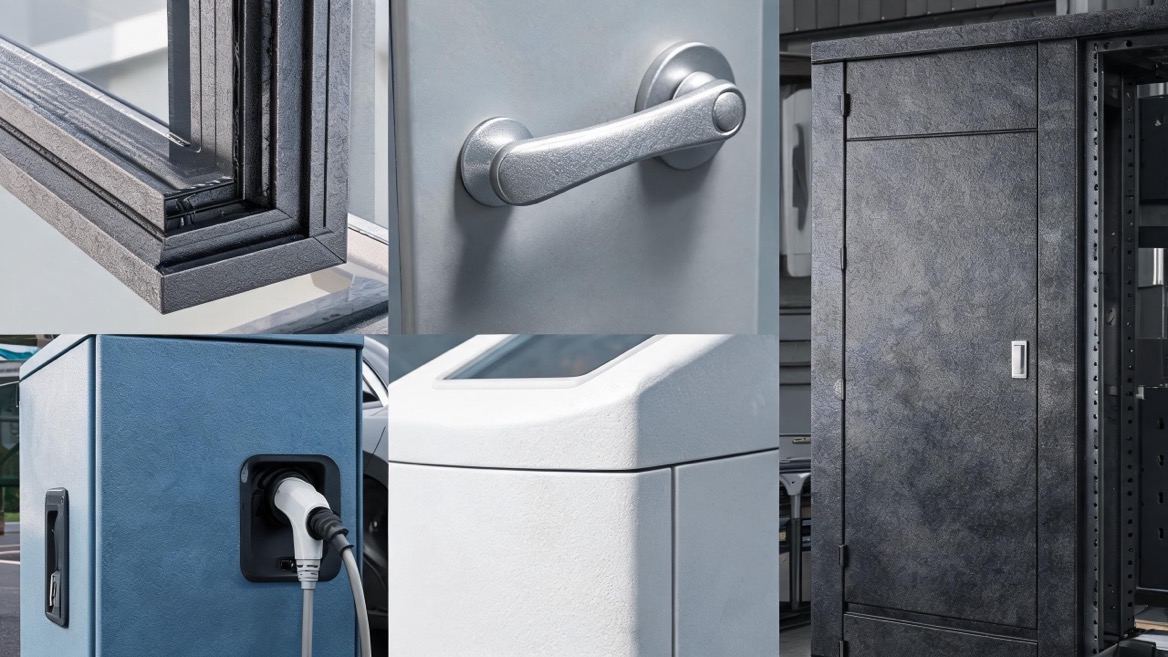
A successful textured powder coating project is built on more than a color selection. It requires the right powder chemistry, surface preparation, film thickness, line parameters, curing profile, inspection plan, and understanding of the final service environment.
Yinda Technology supports manufacturers with textured powder coating solutions for architectural aluminum, doors and windows, new-energy applications, medical equipment, hardware, electrical products, and industrial components. Our teams in China, Indonesia, and Saudi Arabia can help customers evaluate texture options, select suitable systems, and develop production-ready finishing specifications.
Contact Yinda Technology to discuss your substrate, operating environment, target texture, color requirements, and performance standard—and receive a tailored powder coating recommendation for your project.
Textured powder coating is a powder-applied finish that cures into a non-smooth surface, such as sand, wrinkle, hammer tone, or river vein. It provides decorative character and can help reduce the visibility of minor surface imperfections.
Not automatically. Durability depends primarily on the resin chemistry, pretreatment, film thickness, curing quality, substrate condition, and service environment. Texture can improve the appearance of wear by making minor scratches and marks less visible.
For general outdoor use, polyester or super-durable polyester systems are commonly considered. For high-performance architectural environments, a project may require a more demanding system and documented compliance with relevant weathering and corrosion requirements.
It can reduce the visibility of minor weld transitions, sanding marks, and light scratches. It will not correct deep scratches, corrosion, oil contamination, poor weld quality, sharp-edge issues, or major substrate defects.
The appropriate range depends on the specific powder formulation and texture type. Film thickness should follow the powder supplier's technical data sheet and be confirmed through production trials, because texture development can change significantly when the film is too thin or too thick.
No. The correct pretreatment depends on the substrate, condition, performance requirement, and process route. Mechanical cleaning may be appropriate for rusted or heavily scaled steel, while aluminum and other substrates commonly use controlled chemical cleaning and conversion treatment.
Yes. It is widely used for architectural aluminum, provided the pretreatment, resin system, coating specification, application process, and curing conditions are appropriate for the product's exposure environment.
A textured surface can improve tactile grip, but it should not be assumed to meet a formal slip-resistance requirement. If slip performance is critical, define the test method and required result before selecting the coating.
1. [Kroma Coatings — Textured Powder Coating: Definition, Benefits & Applications]
2. [Gordon Inc. — Powder Coatings for AAMA 2604 and AAMA 2605 Applications]
3. [High Performance Coatings — Understanding AAMA 2605 Standards]
4. [AMPP — Guide for Use and Selection of Powder Coating Systems for Protective Purposes]
5. [Starline Windows — Aluminum Powder Coat Product Information]
6. [Ochrona Przed Korozją — Powder Coatings in Anti-Corrosion Applications of Steel Structures]


