Language


Views: 218 Author: Yinda Powder Coating Publish Time: 2026-08-21 Origin: Site


Content Menu
● Key Benefits of Powder Coating
>> 1. Strong resistance to chips, scratches, and daily wear
>> 2. Excellent corrosion protection when the full system is correct
>> 3. Wide choice of colors, gloss levels, and textures
>> 4. Efficient material use and lower overspray waste
>> 5. Faster production flow for high-volume manufacturing
>> 6. Low solvent content supports cleaner finishing operations
● Powder Coating Limitations to Consider
>> 1. Initial equipment investment can be significant
>> 2. Heat-sensitive substrates require specialized solutions
>> 3. Thin-film and sharp-edge coverage can be challenging
>> 4. Repairs require careful preparation
>> 5. Color matching needs production control
● Powder Coating vs. Liquid Paint
● How to Choose the Right Powder Coating
>> Define the real service environment
>> Match resin chemistry to the application
>> Confirm film thickness and cure profile
● A Practical Quality-Control Checklist
● Powder Coating Applications by Industry
>> Architectural profiles, doors, and windows
>> New-energy vehicles and mobility components
>> Hardware and electrical products
● Work With a Powder Coating Partner That Understands the Full System
● FAQs
>> Is powder coating more durable than liquid paint?
>> Can powder coating prevent rust?
>> What is the best powder coating for outdoor use?
>> What film thickness should powder coating have?
>> Can aluminium, steel, and galvanized steel be powder coated?
>> Is powder coating suitable for plastic or MDF?
>> Does powder coating create safety risks?
Powder coating is one of the most effective finishing solutions for metal components that need durability, appearance, corrosion protection, and efficient production. However, it is not automatically the right solution for every substrate, geometry, performance requirement, or production setup.
For manufacturers of architectural profiles, doors and windows, new-energy vehicles, medical equipment, hardware, and electrical products, the best powder coating decision starts with a clear understanding of both its advantages and limitations. This guide explains how powder coating works, where it performs best, what can go wrong, and how to select the right powder coating system for your project.

Powder coating is a dry finishing process in which finely ground coating particles are applied to a prepared surface, usually by electrostatic spray. The coated part then enters an oven, where the powder melts, flows, and cures into a continuous protective film.
Unlike conventional liquid paint, powder coating generally does not rely on a liquid carrier to deliver the resin and pigment. This helps reduce coating waste and can simplify environmental management in many industrial finishing operations.
Most industrial powder coating products fall into two broad categories:
| Powder coating type | Core characteristic | Typical applications |
|---|---|---|
| Thermoset powder coating | Chemically crosslinks during curing and cannot be remelted after cure | Architectural aluminium, appliances, automotive components, electrical cabinets, hardware |
| Thermoplastic powder coating | Melts when heated and may be remelted | Selected functional coatings requiring thickness, flexibility, or chemical resistance |
For most decorative and protective industrial applications, thermoset powder coatings are the common choice. Within this category, epoxy, polyester, epoxy-polyester hybrid, polyurethane, acrylic, and fluoropolymer systems can provide different balances of weatherability, chemical resistance, gloss, color stability, and mechanical performance.
A properly selected and fully cured powder coating can create a robust protective layer that helps products withstand handling, assembly, transportation, and regular use.
This is particularly valuable for:
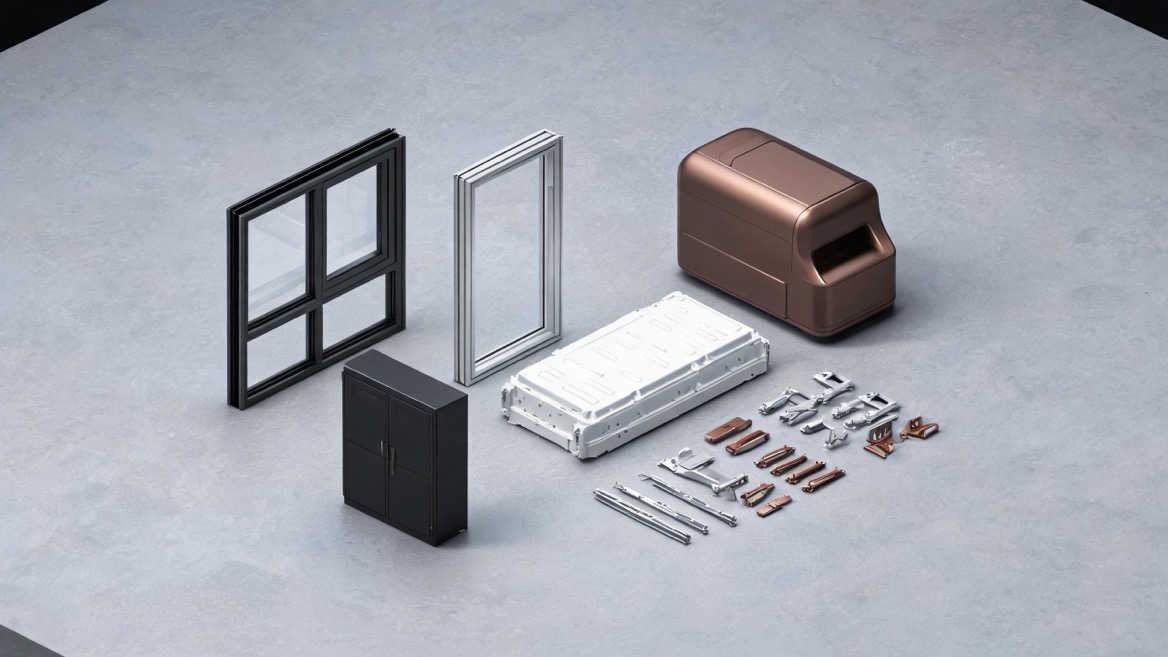
- Metal doors and window frames
- Electrical enclosures
- Furniture and shelving
- Vehicle parts
- Appliance housings
- Hardware and tools
- Industrial machinery components
The final result depends on more than the powder itself. Surface preparation, film thickness, curing profile, and part design all influence real-world durability.
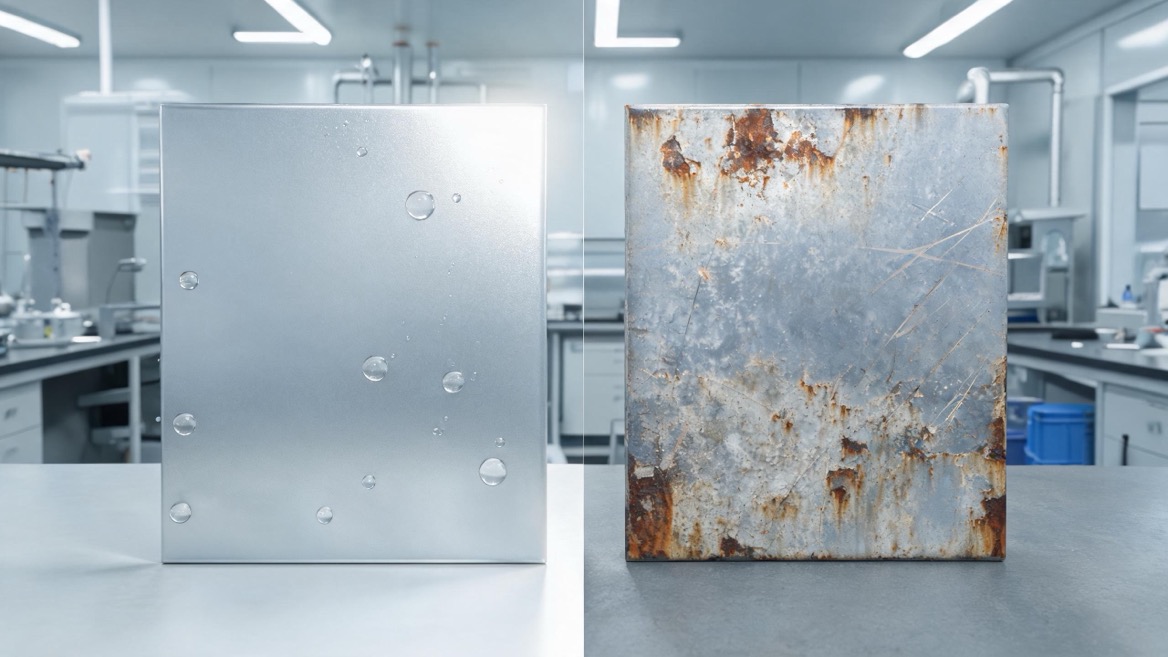
Powder coating can help protect steel, aluminium, and galvanized substrates from moisture, salts, industrial contaminants, and physical damage. Yet corrosion resistance should never be evaluated by powder chemistry alone.
A high-quality corrosion-resistant coating system usually includes:
1. Substrate cleaning to remove oil, dust, oxide, welding residue, and other contaminants
2. Surface pretreatment suitable for the material and exposure environment
3. Correct powder coating selection
4. Controlled application thickness
5. Complete oven curing
6. Inspection and testing before shipment
In our experience serving industrial projects, many early coating failures begin underneath the film. Poor cleaning, inadequate pretreatment, contamination, and incomplete curing can lead to blistering, under-film corrosion, poor adhesion, or peeling even when a premium powder coating has been used.
Powder coating gives manufacturers extensive design flexibility. Depending on the formulation, products can achieve:
- Smooth matte finishes
- Satin finishes
- High-gloss finishes
- Fine-textured surfaces
- Sand-textured finishes
- Wrinkle finishes
- Metallic effects
- Hammer-tone effects
- Wood-grain compatible base coatings
- Custom color matching for brand programs
This makes powder coating especially useful when a product must combine visual appeal with long-term protective performance.
For architectural aluminium and door-and-window systems, color consistency matters across profiles, accessories, and production batches. For electric appliances and hardware, texture can help reduce the visibility of fingerprints, handling marks, and small surface imperfections.
In a well-designed powder coating line, overspray can often be collected and reused, depending on the powder type, color-change requirements, contamination risk, and quality standards.
This can improve material utilization compared with processes where overspray is more difficult to reclaim. However, reclamation is not always appropriate. For highly sensitive colors, metallic finishes, small-batch custom colors, or strict appearance requirements, the coating team should evaluate whether reclaimed powder could affect color, gloss, texture, or contamination control.
The goal is not simply to reuse more powder. The goal is to achieve stable quality with responsible material use.
Powder coating lines can be integrated into automated production systems. Automated spray guns, reciprocators, conveyor systems, recovery equipment, and curing ovens can support consistent output for repeat production.
For high-volume manufacturers, this can provide:
- More stable application conditions
- Better repeatability between batches
- Reduced touch-up work
- Faster throughput after process optimization
- Easier documentation of production parameters
Automation is especially useful for standard parts with repeatable geometry. Complex assemblies, deep recesses, sharp edges, and changing production mixes may still require skilled manual adjustment.
Many powder coating systems contain little or no solvent in the coating material itself. This can reduce solvent-related emissions compared with many conventional liquid coating processes.
That said, responsible production still requires ventilation, dust collection, housekeeping, safe handling, and equipment maintenance. Fine powder particles can become a combustible dust hazard when dispersed in air, so powder coating operations must not treat "low solvent" as equivalent to "risk free." Safety data sheets, local regulations, suitable personal protective equipment, grounding, and explosion-risk controls remain essential.
A complete industrial powder coating line can require investment in:
- Pretreatment equipment
- Drying ovens
- Powder spray booths
- Electrostatic spray guns
- Powder recovery systems
- Curing ovens
- Conveyors
- Air filtration and dust collection
- Testing equipment
- Process control systems
For a manufacturer with stable volume and suitable products, the investment may be justified over time. For low-volume, highly variable, or oversized products, outsourcing to a qualified coating partner may be more practical.
Traditional powder coating cure schedules require elevated temperatures. This makes standard processes unsuitable for many heat-sensitive materials, including some plastics, rubbers, adhesives, assembled electronic parts, and engineered wood products.
Low-temperature cure powder coatings can expand the range of possible substrates, but they still require validation for:
- Substrate deformation
- Adhesion
- Color stability
- Cure completion
- Assembly compatibility
- Long-term durability
A coating supplier should review the complete part construction before recommending a solution.
Powder coating can efficiently build protective film thickness, but extremely thin coatings may be more difficult to control than certain liquid finishes. Complex geometries may also create challenges.
Common difficult areas include:
- Deep recesses
- Inside corners
- Narrow channels
- Weld seams
- Sharp edges
- Faraday-cage areas
- Small holes and intricate mesh structures
Experienced operators can improve coverage through gun settings, powder output, grounding, part positioning, nozzle selection, and application technique. Still, design-for-coating should be considered early in product development.
Powder coatings are durable, but damage can occur during installation, transport, impact, or machining. Local repairs are possible in some cases, but repaired areas may differ slightly in texture, gloss, or color from the original cured coating.
For highly visible architectural surfaces or premium consumer products, a complete recoating process may be preferable when appearance consistency is critical.
Color matching is achievable, but it requires disciplined control of the entire coating process. Color variation may result from:
- Different powder batches
- Film thickness variation
- Incomplete or excessive curing
- Different substrate colors
- Surface roughness changes
- Reclaimed powder management
- Lighting conditions during evaluation
For large projects, manufacturers should approve a control panel, define acceptable tolerances, retain reference samples, and confirm the inspection method before mass production begins.
| Factor | Powder coating | Liquid paint |
|---|---|---|
| Material form | Dry powder | Liquid coating |
| Film build | Often achieves useful thickness in one application | May require multiple coats for target thickness |
| Solvent use | Usually low or none in the coating material | Often uses solvents or water-based carriers |
| Overspray recovery | Often possible with suitable systems | Usually more limited |
| Complex repairs | Can be more difficult to blend invisibly | Often easier for localized touch-up |
| Thin-film control | May be more challenging for very thin films | Often suitable for thin decorative films |
| Heat requirement | Usually requires oven curing | May air dry, force dry, or bake depending on system |
| Best fit | Repetitive industrial metal finishing | Diverse substrates, complex repair, ultra-thin or highly specialized finishes |
Neither process is universally better. The correct choice depends on the part material, desired appearance, exposure conditions, production volume, quality target, and total lifecycle cost.
Start with the question: What will this product face after installation?
Consider:
- Indoor or outdoor use
- Coastal, tropical, desert, industrial, or urban environment
- UV exposure
- Humidity and condensation
- Salt exposure
- Chemical contact
- Abrasion and impact
- Cleaning agents
- Temperature cycling
- Expected product life
For example, an indoor electrical enclosure may prioritize appearance, scratch resistance, and cost efficiency. An exterior aluminium profile in a hot, humid, or coastal environment may require much stronger weathering and corrosion performance.
Different powder coating chemistries provide different strengths.
| Powder coating system | Main strengths | Typical use |
|---|---|---|
| Epoxy | Strong adhesion and chemical resistance | Indoor equipment, pipelines, functional components |
| Epoxy-polyester hybrid | Balanced appearance and indoor durability | Appliances, office furniture, electrical products |
| Polyester | Good outdoor durability and decorative performance | Metal furniture, doors, windows, general exterior products |
| Super-durable polyester | Enhanced UV and weather resistance | Architectural systems, outdoor equipment, premium exterior applications |
| Polyurethane | Smooth finish, chemical resistance, decorative quality | High-end industrial and automotive-related uses |
| Fluoropolymer powder coating | High weatherability and color retention | Demanding architectural and exterior applications |
The coating chemistry should be selected according to validated performance requirements, not simply by the product category.
Film thickness affects appearance, edge coverage, impact resistance, material consumption, and cost. A coating that is too thin may leave insufficient protection. A coating that is too thick may create orange peel, reduced flexibility, gloss variation, poor appearance, or curing issues.
A practical working range for many decorative powder coating applications is often around 60–120 μm, but the correct target must follow the powder supplier's technical data sheet and the project specification.
Curing should be verified by actual part metal temperature and dwell time, not only by the oven display setting. Large, thick, hollow, or complex parts may heat more slowly than a small test panel.
A reliable powder coating result is built through process discipline. Before approving production, ask your supplier or in-house team to verify the following:
1. Surface cleanliness
Oil, oxide, welding residue, dust, and fingerprints must be removed before coating.
2. Pretreatment stability
Monitor chemical concentration, pH, bath temperature, rinsing quality, and conversion coating performance.
3. Powder condition
Store powder under recommended conditions and prevent moisture, contamination, and uncontrolled mixing.
4. Application settings
Check grounding, voltage, current, powder output, spray distance, booth airflow, and part positioning.
5. Film thickness
Measure multiple locations, including edges, corners, recesses, and large flat areas. ASTM D7091 addresses nondestructive thickness measurement on metal substrates.
6. Cure verification
Confirm the correct cure profile through oven profiling and controlled production checks.
7. Final appearance
Inspect color, gloss, texture, coverage, pinholes, craters, orange peel, and contamination.
8. Performance testing
Depending on the application, evaluate adhesion, impact resistance, bending, humidity resistance, salt-spray resistance, chemical resistance, and weathering.
These products need consistent color, surface appearance, UV resistance, and long-term protection against weather exposure. The selected coating must match the installation environment, especially for coastal, high-humidity, high-temperature, or high-UV regions.
Battery enclosures, brackets, frames, charging equipment, wheel-related components, and structural parts may require a balance of corrosion resistance, mechanical durability, electrical requirements, and production efficiency.
Medical carts, cabinets, bed frames, equipment housings, and support structures may require smooth, durable surfaces that can tolerate frequent cleaning. Coating selection should also consider chemical exposure, hygiene procedures, and the product's intended environment.
Power distribution cabinets, switch boxes, racks, shelves, handles, locks, brackets, and outdoor electrical equipment benefit from powder coating's durability, appearance options, and repeatable application.
The right powder coating supplier should do more than provide a color card. They should help evaluate substrate material, pretreatment, exposure environment, curing capability, film target, product geometry, performance standards, and production efficiency.
Yinda Technology develops and manufactures powder coatings and environmentally responsible material solutions for industrial customers. With operations in China, Indonesia, and Saudi Arabia, we support manufacturers serving architectural profiles, doors and windows, new-energy vehicles, medical equipment, hardware, electrical products, and other demanding sectors.
Contact Yinda Technology to discuss your substrate, application environment, required finish, and performance targets. Our technical team can help you select a powder coating system designed for your product and production process.
In many industrial applications, powder coating can provide excellent resistance to chipping, scratching, and wear. Actual durability depends on substrate preparation, powder chemistry, film thickness, curing, and the service environment.
Powder coating can significantly improve corrosion protection, but it does not replace proper surface preparation. Cleaning, pretreatment, coating selection, full coverage, and cure control are all essential for rust prevention.
Polyester and super-durable polyester powder coatings are widely used for outdoor applications. For highly demanding exterior projects, fluoropolymer powder coating may be considered depending on weatherability, color-retention, and specification requirements.
The correct thickness depends on the powder formulation, substrate, product geometry, and performance target. Many decorative applications operate within a range of approximately 60–120 μm, but the supplier's technical data sheet and project specification should always control.
Yes. These substrates are commonly powder coated. Each material requires suitable cleaning and pretreatment to achieve strong adhesion and corrosion resistance.
It can be, but standard powder coating cure temperatures may damage heat-sensitive materials. Specialized low-temperature cure powders and carefully validated processes are usually required.
Powder coating may reduce solvent-related exposure compared with many liquid coating systems, but fine powder dust can present a combustible dust risk. Proper ventilation, dust collection, grounding, housekeeping, safety data sheets, and personal protective equipment are necessary.
- [Kroma Coatings: Top 10 Pros & Cons of Powder Coating Powders & Colors]
- [Axalta Coating Systems: Safety Data Sheet—Diamond Dust Powder Coating]
- [U.S. Environmental Protection Agency: Generic Testing and Quality Assurance]
- [TIGER Coatings: Tips & Tricks for Powder Coating]
- [DeFelsko: Powder Coating Thickness Measurement and Paperless Quality Assurance]


