Language


Views: 233 Author: Yinda Powder Coating Publish Time: 2026-08-12 Origin: Site


Content Menu
● What Is Powder Coating Powder?
● The 8 Main Types of Powder Coating Powders
>> 1. Epoxy Powder Coatings for Chemical and Corrosion Resistance
>> 2. Polyester Powder Coatings for Outdoor Durability
>> 3. Epoxy-Polyester Hybrid Powder Coatings for Indoor Products
>> 4. Polyurethane Powder Coatings for Premium Appearance
>> 5. Super Durable Powder Coatings for High-Exposure Exteriors
>> 6. Fluoropolymer Powder Coatings for Demanding Architecture
>> 7. Bonded Metallic Powder Coatings for Consistent Decorative Effects
>> 8. Antimicrobial Powder Coatings for Hygiene-Sensitive Surfaces
● Powder Coating Types at a Glance
● How to Choose the Right Powder Coating
>> Step 1: Identify the Exposure Environment
>> Step 2: Define the Substrate and Pretreatment
>> Step 3: Set Measurable Performance Targets
>> Step 4: Consider Processing Conditions
● Three Common Reasons Powder Coatings Fail Early
>> Inadequate Surface Preparation
>> Wrong Product for the Environment
● A Practical Supplier Evaluation Checklist
● Choose a Powder Coating System, Not Just a Powder
● FAQs
>> 1. Which powder coating is best for aluminum doors and windows?
>> 2. What is the difference between epoxy and polyester powder coating?
>> 3. Can powder coating be used on electric-vehicle components?
>> 4. Are antimicrobial powder coatings safe for medical equipment?
>> 5. Why does powder coating peel or blister?
>> 6. What powder coating is best for coastal environments?
>> 7. Can metallic powder coatings be recycled?
Choosing among the many types of powder coating powders is not simply a matter of selecting a color or gloss level. The resin chemistry, curing profile, substrate condition, operating environment, and performance target must work together.
In our experience supporting architectural aluminum, metal doors and windows, electric-vehicle components, medical equipment, hardware, and electrical appliances, coating failures rarely come from one single factor. A beautiful finish can still fail early if the wrong powder is selected for UV exposure, chemicals, humidity, heat, or mechanical wear.
The right powder coating should do three things: protect the substrate, preserve the intended appearance, and support an efficient manufacturing process. This guide explains the eight major powder coating powder types, where each one works best, and how to specify a system with greater confidence.
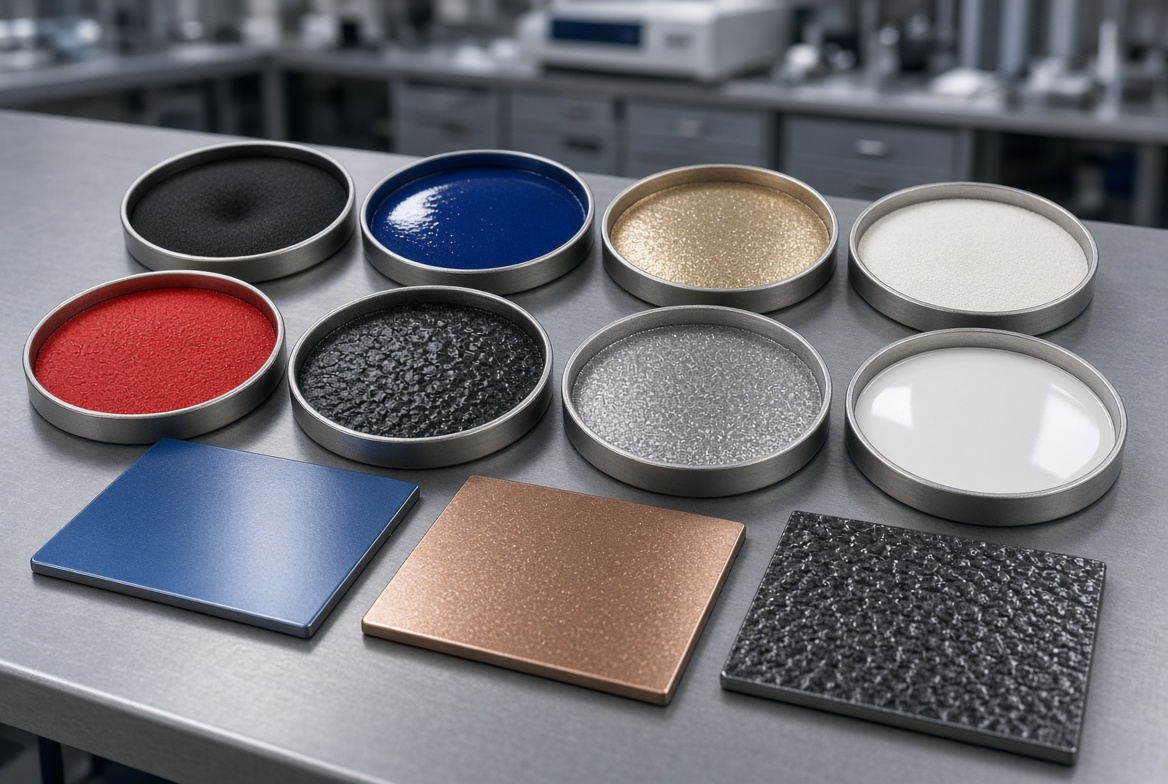
Powder coating powder is a dry finishing material applied electrostatically to a prepared metal surface. The coated part is then heated so the powder melts, flows, and cures into a continuous protective film.
Unlike conventional solvent-borne coatings, powder coatings are formulated without added liquid solvents. They can provide durable color, corrosion protection, chemical resistance, surface texture, and functional performance in one coating system.
However, "powder coating" is a broad category. A powder that performs well on an indoor electrical cabinet may not be suitable for a coastal aluminum window frame. The resin family and formulation must match the actual service conditions.
Epoxy powder coatings are known for strong adhesion, excellent chemical resistance, and dependable protection against moisture and corrosion. They are widely used where the finished part operates indoors or is protected from long-term sunlight exposure.
Epoxy systems are a practical choice for industrial equipment, electrical enclosures, pipe fittings, shelving, machinery components, and selected automotive underbody parts.
Best applications:
- Indoor machinery and production equipment
- Electrical cabinets and switchgear
- Industrial racks, shelving, and storage systems
- Chemical-contact components
- Protective primers beneath another topcoat
The key limitation is ultraviolet exposure. Over time, direct sunlight may cause epoxy surfaces to chalk, fade, or lose gloss. For this reason, epoxy is usually not the first choice for exterior façades, outdoor furniture, or exposed window systems.
Polyester powder coatings are among the most widely specified options for exterior metal products. They offer a balanced combination of weather resistance, flexibility, impact resistance, appearance, and cost efficiency.
For manufacturers of aluminum profiles, metal doors, outdoor furniture, fencing, lighting housings, and general industrial products, polyester powder is often the starting point for an exterior coating discussion.
Best applications:
- Aluminum doors, windows, and profiles
- Outdoor furniture and garden products
- Fencing, railings, and gates
- General automotive components
- Outdoor electrical enclosures
A standard polyester system can provide reliable weathering performance for many projects. Yet it should not automatically be treated as the same as a super durable or fluoropolymer-grade coating. When the project involves strong UV radiation, high temperature, sea salt, desert exposure, or a long color-retention requirement, the specification should be upgraded accordingly.
Hybrid powder coatings combine epoxy and polyester resins. They provide good adhesion, attractive flow, broad color availability, and useful resistance to everyday stains and chemicals.
They are commonly selected for indoor metal furniture, office equipment, appliances, lighting fixtures, shelving, and general metalwork. For many indoor products, hybrids deliver an efficient balance between performance and cost.
Best applications:
- Metal office furniture
- Home appliances
- Indoor lighting fixtures
- Retail displays and storage systems
- General indoor hardware
Hybrid powder coatings should not be specified for long-term outdoor exposure. Their appearance may deteriorate when subjected to extended sunlight. For indoor products, however, they remain a practical and versatile solution.
Polyurethane powder coatings are valued for their smooth finish, excellent flow, abrasion resistance, and strong resistance to many chemicals. They are often selected where the surface must look refined while also tolerating frequent handling or cleaning.
This powder type can be useful for automotive trim, appliances, sports equipment, machinery covers, and premium metal furniture. It is particularly suitable when scratch resistance and visual quality are major priorities.
Best applications:
- Automotive components and trim
- High-end appliances
- Exercise and sporting equipment
- Machinery housings
- Decorative industrial products
Polyurethane powders can perform well in both indoor and selected outdoor uses, depending on the formulation. Buyers should review the cure schedule, chemical-resistance requirement, and exposure conditions before selecting a grade.
Super durable powder coatings are engineered for projects that require better color retention, gloss retention, and weathering resistance than standard polyester systems. They are especially relevant for exterior architectural elements and products exposed to intense sunlight, elevated heat, and changing weather.
For projects in tropical, coastal, or desert environments, a super durable powder may be the more appropriate choice. It can help extend the service appearance of aluminum doors and windows, façades, railings, signage, outdoor equipment, and transport-related components.
Best applications:
- Architectural aluminum profiles
- Curtain-wall and façade systems
- Premium doors and windows
- Outdoor signage and street furniture
- Playground, railing, and public-infrastructure products
The term "super durable" should not be accepted as a generic marketing label. Ask the supplier which weathering program, color-retention requirement, film thickness, and project standard apply to the selected product.
Fluoropolymer powder coatings are designed for long-term exterior durability in highly demanding architectural environments. Their primary strengths are advanced resistance to ultraviolet radiation, fading, chalking, weathering, and chemical attack.
These systems are typically specified for high-value buildings, landmark façades, premium aluminum cladding, curtain walls, and projects where color stability over a long design life is essential.
Best applications:
- High-rise curtain walls
- Architectural cladding panels
- Premium aluminum window and door systems
- Public buildings and transportation hubs
- Coastal or high-UV architectural projects
A fluoropolymer solution should be evaluated as a complete coating system rather than simply a resin name. Substrate quality, pretreatment, film thickness, application control, and curing conditions all influence final performance.
Bonded metallic powder coatings contain metallic-effect pigments that are physically bonded to the base powder. This method improves pigment distribution and helps create a more stable, uniform decorative effect during electrostatic spraying.
These finishes can create metallic, pearlescent, sparkling, textured, or special-effect surfaces for architectural parts, consumer products, automotive components, and premium hardware.
Best applications:
- Decorative aluminum profiles
- Architectural trims and panels
- Automotive accessories
- Consumer appliances
- High-end hardware and furniture
Metallic finishes require disciplined process control. Gun voltage, powder flow, reclaim strategy, grounding, film thickness, and panel orientation can all affect appearance. For color-critical projects, establish an approved sample panel and define the acceptable visual range before mass production.
Antimicrobial powder coatings are formulated to help limit microbial growth on the coated surface. They are used where hygiene, frequent cleaning, and high-touch contact are important considerations.
Potential applications include medical equipment housings, healthcare furniture, laboratory fixtures, public-transport components, appliance surfaces, and selected food-service equipment.
Best applications:
- Medical carts and equipment housings
- Healthcare furniture
- Laboratory storage and fixtures
- Public-touch hardware
- Appliance and sanitary-product components
An antimicrobial finish is not a substitute for cleaning, infection-control procedures, or good product design. It should be treated as one layer in a broader hygiene strategy. Manufacturers should also ensure that the claimed performance is supported by an appropriate test method for the intended application.
| Powder coating type | Main strength | Typical use | Main limitation |
|---|---|---|---|
| Epoxy | Chemical resistance and adhesion | Machinery, electrical products, primers | Limited UV resistance |
| Polyester | Balanced outdoor durability | Profiles, fencing, outdoor furniture | Standard grades may not suit extreme exposure |
| Epoxy-polyester hybrid | Indoor value and appearance | Appliances, furniture, shelving | Not for prolonged outdoor use |
| Polyurethane | Smooth finish and abrasion resistance | Automotive, appliances, premium products | Requires formulation-specific evaluation |
| Super durable polyester | Enhanced weather resistance | Architectural exteriors and signage | Higher performance target may raise cost |
| Fluoropolymer | Long-term exterior protection | Façades, cladding, premium architecture | Usually selected for high-value projects |
| Bonded metallic | Decorative consistency | Profiles, hardware, automotive trim | Requires careful application control |
| Antimicrobial | Hygiene-oriented surface function | Medical and public-touch products | Does not replace cleaning procedures |
Before choosing a color card or requesting a quotation, define the operating conditions. The most efficient specification process begins with the end use, not the powder name.
Ask whether the part will be used indoors, outdoors, near the sea, in a humid tropical climate, in a desert region, or around chemicals. Coastal salt, high UV levels, condensation, industrial pollution, and frequent cleaning can each change the recommended coating system.
For example, a standard indoor hybrid coating may be suitable for a metal filing cabinet. The same formulation would be a poor choice for an aluminum balcony railing exposed to intense sun and rain.
The coating is only as reliable as the surface beneath it. Aluminum, galvanized steel, cold-rolled steel, cast aluminum, and stainless steel each require a suitable pretreatment route.
A robust pretreatment process typically aims to remove oils, dust, oxide layers, and other contaminants while creating a conversion layer that supports adhesion and corrosion resistance. Cleanliness, rinse-water quality, drying control, and the time between pretreatment and coating all matter.
Instead of asking only for "high quality," define measurable requirements. These may include:
- Required color and gloss range
- Dry-film thickness
- Adhesion performance
- Impact and bend resistance
- Salt-spray or humidity resistance
- Chemical or detergent resistance
- Outdoor weathering requirement
- Cure window and production-line speed
Clear targets reduce the risk of comparing products only by price. They also help the coating supplier recommend the right resin chemistry and validate the proposal through testing.
A powder coating must suit the production line as well as the finished product. Review the available oven temperature, metal temperature, line speed, part geometry, spray equipment, and recovery system.
Low-temperature and fast-cure formulations can be valuable where energy use, throughput, or heat-sensitive substrates are critical. Complex parts with deep recesses, sharp edges, or difficult grounding may also need a formulation and application setup designed for better coverage.
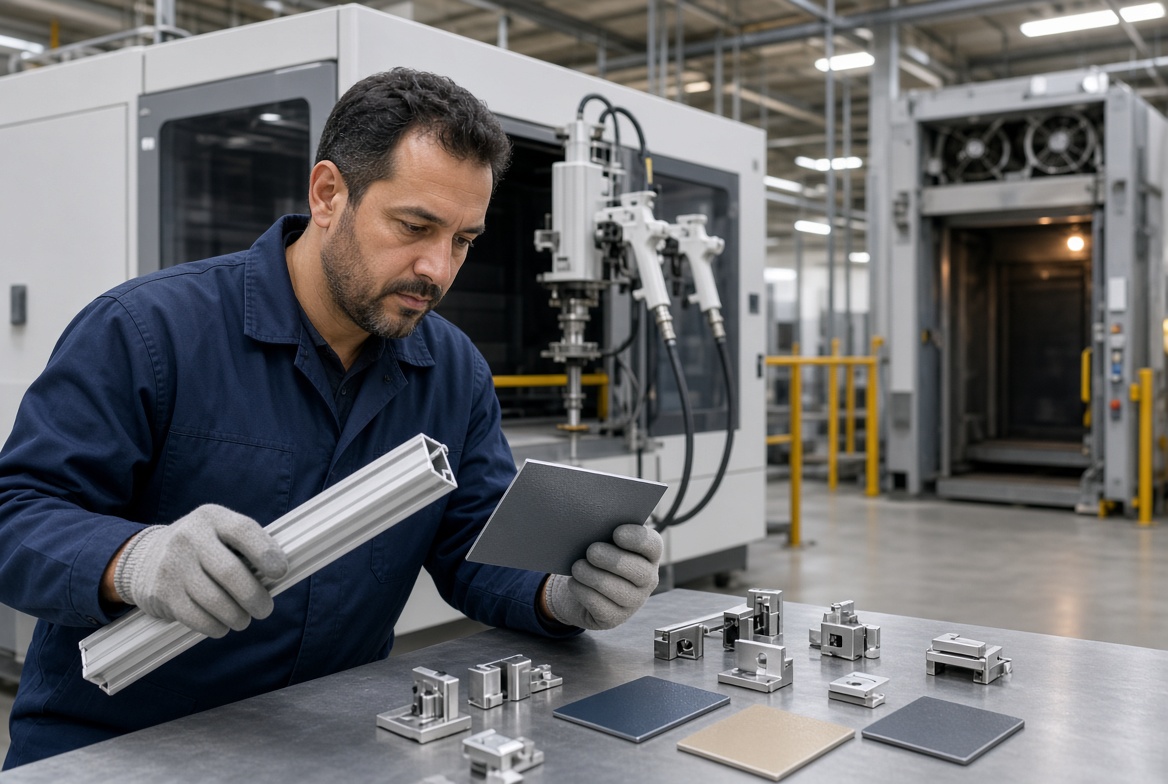
Poor cleaning or pretreatment can lead to weak adhesion, blistering, under-film corrosion, and premature coating loss. Even a premium powder cannot compensate for oil, oxidation, poor rinsing, or contamination on the substrate.
A coating that is too thin may not deliver sufficient protection, especially at edges and corners. A coating that is too thick may create runs, orange peel, poor appearance, or incomplete curing. Measure film thickness regularly rather than relying only on visual inspection.
A coating selected for indoor use may fail rapidly outdoors. A standard exterior powder may also be insufficient for severe UV, coastal salt, or chemical exposure. The most economical powder is not always the lowest-cost powder; it is the system that achieves the required service life with controlled production risk.
When evaluating a powder coating supplier, request more than a color chart. A dependable technical discussion should include:
1. Recommended chemistry for the substrate and environment
2. Technical data sheet and safety documentation
3. Cure schedule, including required metal temperature
4. Suggested dry-film-thickness range
5. Pretreatment recommendations
6. Test methods and project-specific performance data
7. Batch-to-batch color-control process
8. Sample panels or trial coating support
9. Guidance for metallic, textured, matte, or special-effect finishes
10. Local technical service and response capability
For export-focused manufacturers, regional support can be especially valuable. A coating system used in China, Indonesia, or Saudi Arabia may face very different climate conditions, production practices, and project expectations.
The best powder coating is the one that matches the real service environment, substrate, appearance target, and production process. Epoxy may be the right answer for chemical resistance indoors. Polyester may be the practical choice for general exterior products. Super durable and fluoropolymer systems may be better suited to architectural projects where long-term weathering matters.
At Yinda Technology, we help manufacturers assess coating requirements from both material-performance and production-efficiency perspectives. Share your substrate, end-use environment, required color, finish, and performance target with our team to develop a powder coating recommendation tailored to your application.
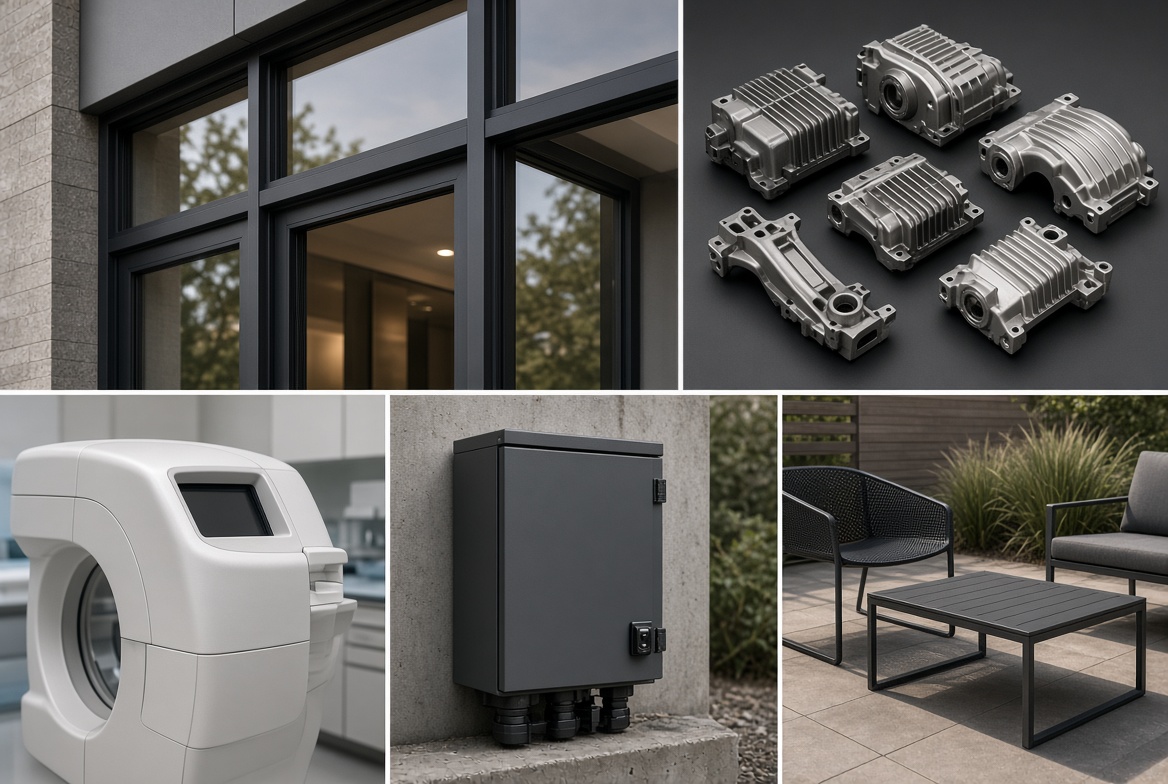
For general exterior doors and windows, polyester powder coatings are widely used. For projects exposed to strong UV, heat, coastal salt, or long-term appearance requirements, super durable polyester or fluoropolymer powder coatings may be more appropriate.
Epoxy powder coatings offer strong chemical resistance and adhesion, making them suitable for indoor industrial uses. Polyester powder coatings provide better UV and weather resistance, so they are generally preferred for exterior applications.
Yes. Powder coatings can be used on selected electric-vehicle components, such as housings, brackets, frames, wheels, and battery-related metal parts. The exact formulation should be selected according to insulation, corrosion resistance, heat exposure, dielectric properties, and chemical-contact requirements.
They can be suitable for selected medical-equipment housings and healthcare surfaces when the coating is properly specified and tested for the intended use. The coating should support, not replace, normal cleaning and hygiene protocols.
Common causes include insufficient cleaning, poor pretreatment, contamination, incorrect curing, unsuitable film thickness, trapped moisture, or selecting a coating that does not fit the operating environment.
Coastal applications require careful consideration of salt exposure, humidity, substrate pretreatment, and edge protection. Super durable polyester or fluoropolymer powder coatings are often evaluated for these projects, together with an appropriate corrosion-protection system.
Reclaimed powder can be more challenging for metallic finishes because appearance consistency may change if virgin and recovered powder are not controlled properly. The recommended reclaim approach depends on the specific bonded metallic formulation and required visual standard.
1. [Kroma Coatings — Top 8 Types of Powder Coating Powders & Finishes]
2. [Powder Coating Institute — Frequently Asked Questions]
3. [QUALICOAT — Recommendations for Corrosion Protection]
4. [IGP Powder Coatings — Pretreatment of Metals]
5. [Kansai Helios — Powder Coatings]
6. [PPG — Envirocron Powder Coatings]
7. [American Coatings Association — Innovation Hotspots in Powder Coatings]


