Language


Views: 222 Author: Yinda Powder Coating Publish Time: 2026-06-14 Origin: Site


Content Menu
● Introduction: Why This Comparison Matters
● What Are Antibacterial Powder Coatings?
● What Is Standard Polyester Powder for Medical Devices?
● Core Comparison: Antibacterial vs. Standard Polyester
>> Performance & Hygiene Outcomes
>> Mechanical and Chemical Performance
● Regulatory, Standards, and Validation Considerations
● Sustainability and Environmental Impacts
● Cost, Total Cost of Ownership, and Risk
● Expert‑Level Selection Framework for Sterile Rooms
>> 1. Risk Mapping of Touchpoints
>> 2. Technical and Regulatory Fit
>> 3. Lifecycle and Maintenance Alignment
● Practical Implementation Steps for OEMs and Hospitals
>> Step 1 – Define Performance and Regulatory Requirements
>> Step 2 – Joint Lab Evaluation
>> Step 3 – Controlled Pilot in Sterile Rooms
>> Step 4 – Scale‑Up Across Regions
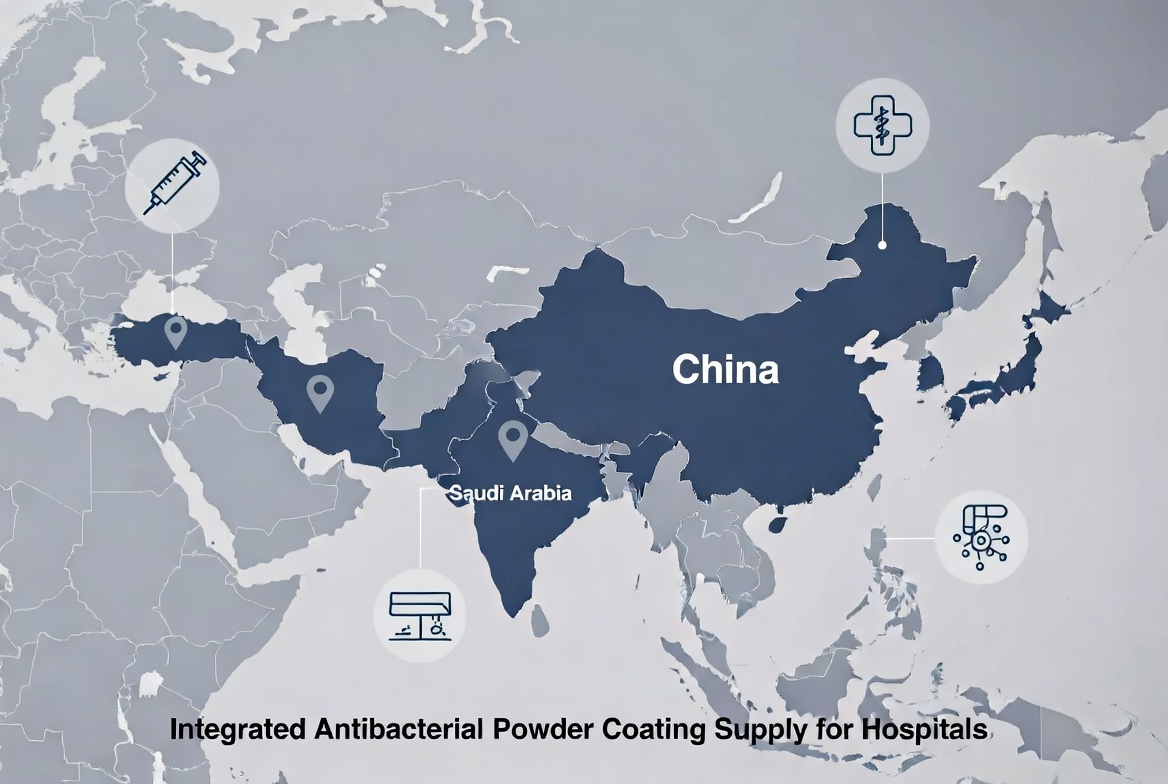
● Yinda Technology Perspective: Integrated, Multi‑Region Support
● When to Choose Antibacterial vs. Standard Polyester
>> Antibacterial Powder Coating Is Recommended When
>> Standard Polyester Powder Is Appropriate When
● Call to Action: Designing Your Coating Strategy
● FAQ
Antibacterial powder coatings offer superior hygiene, durability, and risk control for critical medical device touchpoints in sterile rooms compared with standard polyester systems, but require careful formulation, validation, and cost–performance evaluation to deploy correctly. [pdf.dfcfw]
For OEMs and hospital engineering teams, medical device touchpoints (bed rails, monitor housings, IV pump panels, operating carts, ICU door hardware) are now treated as high‑risk contamination vectors rather than "just painted parts". [pdf.dfcfw]
Regulators, infection‑control teams, and procurement leaders increasingly ask a simple question: *should we still specify standard polyester powder, or move to antibacterial powder coating for these touchpoints in sterile rooms?* [pdf.dfcfw]
As a manufacturer like Yinda Technology, operating R&D and production bases in China, Indonesia, and Saudi Arabia, you are positioned at the intersection of surface engineering, infection control, and sustainable coatings for sectors including building profiles, doors and windows, new energy vehicles, medical equipment, hardware, and electrical products. [service.made-in-china]

Antibacterial powder coatings are thermoset or thermoplastic powder systems that incorporate active agents (commonly silver‑ion, zinc‑based, or organic biocides) designed to inhibit or reduce microbial growth on the coated surface. [pdf.dfcfw]
They do not replace cleaning and disinfection, but they reduce microbial load between cleaning cycles and under hard‑to‑reach geometries. [pdf.dfcfw]
Key technical characteristics:
- Mechanism: Controlled release or contact‑active antimicrobial agents disrupt cell walls, metabolic pathways, or replication of bacteria and sometimes fungi. [web.cas]
- Substrate range: Steel, aluminum, and some conductive medical‑grade assemblies; compatible with existing pretreatment lines in most device factories. [pdf.dfcfw]
- Regulatory context: Often marketed under "antimicrobial" claims that may trigger biocidal or pesticidal regulations depending on jurisdiction (e.g., EU BPR, US EPA). [pdf.dfcfw]
In medical sterile rooms (operating theatres, clean‑room assembly cells, CSSD, isolation wards), the main objective is consistent bioburden reduction on high‑touch surfaces without compromising cleanability, chemical resistance, or device aesthetics. [pdf.dfcfw]
Standard polyester powder coatings for medical device housings are typically TGIC or HAA‑cured polyester systems optimized for mechanical durability, gloss retention, and chemical resistance. [pdf.dfcfw]
They are widely used on carts, cabinets, diagnostic imaging equipment frames, and monitor arms because of their robustness and cost‑effectiveness. [pdf.dfcfw]
Core characteristics:
- Performance focus: Corrosion protection, impact resistance, UV stability (for some outdoor / window‑side equipment), and good appearance. [pdf.dfcfw]
- No active antimicrobial function: They rely entirely on the hospital's cleaning and disinfection procedures to control contamination. [pdf.dfcfw]
- Process familiarity: Standard cure schedules (e.g., 10–20 minutes at 160–200 °C), well‑understood line designs, and wide raw‑material availability. [pdf.dfcfw]
For many non‑critical medical components, standard polyester continues to be the default because it is predictable, scalable, and cost‑optimized. [pdf.dfcfw]
| Dimension | Antibacterial powder coating | Standard polyester powder |
|---|---|---|
| Surface hygiene function | Active antibacterial agents reduce microbial load between cleaning cycles. (web.cas) | No active antimicrobial function; depends on cleaning protocol only. (pdf.dfcfw) |
| Target micro‑organisms | Often tested against common healthcare‑associated bacteria (e.g., S. aureus, E. coli), sometimes fungi. (web.cas) | No specific antibacterial claims or testing beyond general cleanliness. |
| Effect persistence | Designed for long‑term efficacy through controlled release or fixed‑site mechanisms, but must be validated over time. (web.cas) | No antibacterial effect to persist or decay. |
| Cleaning compatibility | Formulated to withstand frequent disinfection (alcohols, quats, some oxidizers), though high‑oxidative chemistries still require testing. (pdf.dfcfw) | Mature resistance data for many cleaning agents; hospitals know how they behave. (pdf.dfcfw) |
From an infection‑control standpoint, antibacterial coatings provide an additional layer of defense on high‑touch, high‑risk surfaces, whereas standard polyester offers only a passive barrier. [pdf.dfcfw]
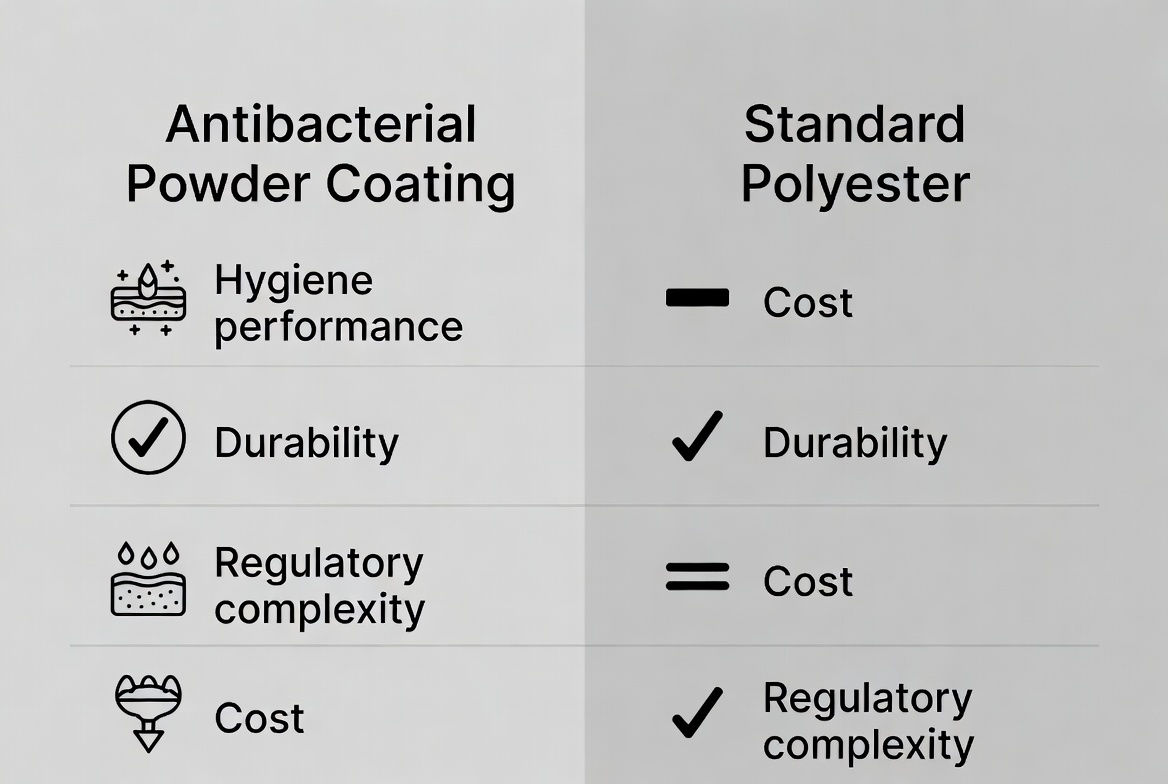
Both coating families can meet stringent mechanical specifications, but there are nuances. [pdf.dfcfw]
- Antibacterial systems must balance antimicrobial agents with film integrity, which can affect hardness, flexibility, or gloss if not optimized. [pdf.dfcfw]
- Standard polyester systems can be more easily tuned for impact resistance, flexibility, and chemical resistance because they are not constrained by active additive packages. [pdf.dfcfw]
In practice, well‑formulated antibacterial powders from experienced manufacturers achieve mechanical performance comparable to premium polyesters used in medical environments. [pdf.dfcfw]
- Application and curing parameters for antibacterial and standard polyester powders are broadly similar, which means existing lines (pretreatment, spray booths, ovens) can often be reused with minimal change. [pdf.dfcfw]
- The key process difference is segregation and contamination control of antibacterial powder materials to avoid mixing with non‑treated products and to preserve label integrity. [pdf.dfcfw]
For global players like Yinda Technology, multi‑plant standardization of pretreatment, cure windows, and quality control procedures is essential to ensure the same coating performance from China to Indonesia to Saudi Arabia. [service.made-in-china]
In sterile‑room contexts, coating choice is deeply tied to compliance and risk management. [pdf.dfcfw]
Important perspectives:
- Biocidal regulations: Antibacterial claims may trigger classification under specific biocide or pesticide regulations, requiring registration, labeling, and claim substantiation. [pdf.dfcfw]
- Medical device standards: Coatings used on device surfaces can be evaluated under ISO 10993 series for biocompatibility (cytotoxicity, sensitization, irritation), especially for surfaces that may come into occasional skin contact. [pdf.dfcfw]
- Clean‑room standards: ISO 14644 and related guidance influence acceptable particle shedding, cleanability, and resistance to disinfectants for surfaces inside controlled environments. [pdf.dfcfw]
From a manufacturer's expert vantage point, two best practices stand out:
1. Build a traceability file: Resin type, additive chemistry, curing conditions, batch QC, and microbiological test results for each antibacterial coating system used on medical devices. [pdf.dfcfw]
2. Align claims with validated test methods (e.g., JIS Z 2801 / ISO 22196 for antibacterial performance on plastics and other non‑porous surfaces), avoiding overstated "self‑disinfecting" language. [pdf.dfcfw]
Standard polyester powders avoid biocidal regulatory complexity but still need to meet biocompatibility and clean‑room compatibility requirements. [pdf.dfcfw]
Both antibacterial powder coating and standard polyester share core powder‑coating advantages: near‑zero VOCs, high transfer efficiency, and recyclable overspray. [pdf.dfcfw]
However, antibacterial systems introduce additional sustainability questions.
Key angles:
- Active ingredient profile: Silver‑ion and certain organic biocides are effective but can raise concerns related to toxicity, environmental persistence, and end‑of‑life leaching. [web.cas]
- Circularity and recycling: Mixed waste streams containing antibacterial and non‑antibacterial powders can complicate recycling or material recovery strategies. [pdf.dfcfw]
- Lifecycle balance: If antibacterial coatings significantly reduce infection rates or cleaning‑chemical usage, the net environmental impact can still be favorable. [pdf.dfcfw]
A technology‑oriented manufacturer can explore low‑leaching, immobilized antimicrobial technologies and eco‑designed resin systems to align infection‑control benefits with corporate sustainability targets. [web.cas]
From a procurement perspective, unit‑price premiums for antibacterial powder coatings are almost inevitable. [pdf.dfcfw]
However, decision‑makers should evaluate total cost of ownership (TCO) rather than per‑kilogram pricing.
Cost points to consider:
- Direct costs: Higher powder price; slightly more complex inventory management; potentially more stringent QC. [pdf.dfcfw]
- Indirect savings: Potential reduction in infection risk, surface‑related contamination events, or frequency of intensive cleaning cycles. [pdf.dfcfw]
- Reputation and compliance: For hospital groups, demonstrating proactive investment in antimicrobial surfaces can support accreditation, audits, and patient‑safety branding. [pdf.dfcfw]
Standard polyester is typically the least expensive option on a pure material basis, making it attractive for non‑critical components or cost‑sensitive projects. [pdf.dfcfw]
From an industry‑expert perspective, the decision between antibacterial powder coating vs. standard polyester for sterile‑room touchpoints should follow a structured framework. [pdf.dfcfw]
Rank surfaces according to exposure and consequence:
1. Tier 1 – Critical high‑touch: Bed rails, infusion pump panels, ventilator control housings, operating table hand controls.
2. Tier 2 – Frequent‑touch infrastructure: Door handles, switch plates, control panels, mobile workstation frames.
3. Tier 3 – Low‑touch structural: Ceiling grids, wall panels, under‑bed frames, remote brackets.
A typical strategy is to prioritize antibacterial powder coatings on Tier 1 and selected Tier 2 surfaces, while using standard polyester for Tier 3 to optimize cost and manage complexity. [pdf.dfcfw]
For each touchpoint category:
- Confirm substrate type, thermal limits, and assembly sequence.
- Verify that the selected antibacterial system meets biocompatibility, flammability, and clean‑room criteria for each market served.
- Ensure cross‑border consistency across plants (China, Indonesia, Saudi Arabia) to avoid regional spec drift. [service.made-in-china]
Engage with clinical engineering and infection‑control teams to align:
- Expected cleaning agents and frequencies.
- Tolerance for gloss change, discoloration, or micro‑scratching over time.
- Preferred balance between active antimicrobial features and robustness under aggressive disinfection. [pdf.dfcfw]
To move from concept to implementation, an experienced coating partner can guide through a staged process. [pdf.dfcfw]
- Document target bacteria, required log‑reduction levels, and applicable test standards.
- Map all regulatory regimes (e.g., EU, Middle East, ASEAN) and associated coating documentation needs. [pdf.dfcfw]
- Run side‑by‑side tests of antibacterial vs. standard polyester on representative substrates.
- Evaluate appearance, curing window, cross‑hatch adhesion, impact resistance, and resistance to hospital disinfectants. [pdf.dfcfw]
- Coat a limited number of devices or touchpoints and deploy in real sterile‑room environments.
- Monitor surface condition and collect feedback from clinical staff and maintenance teams. [pdf.dfcfw]
- Standardize specifications and QC protocols across manufacturing sites.
- Train local finishing lines and integrators to handle antibacterial powders with proper segregation. [service.made-in-china]
A manufacturer with R&D, production, and sales capabilities across China, Indonesia, and Saudi Arabia is uniquely positioned to deliver:
- Co‑developed formulations: Custom antibacterial powder coatings tailored to specific medical device geometries, substrates, and regional regulatory needs. [service.made-in-china]
- Sustainability and energy‑saving options: Low‑temperature cure, high‑transfer‑efficiency powders that reduce energy use and overspray waste in sterile‑room device production. [pdf.dfcfw]
- Cross‑sector expertise: Experience in building profiles, door and window systems, new energy vehicles, hardware, and electrical devices that feed into hybrid medical infrastructure projects. [service.made-in-china]
From a UX and procurement standpoint, working with one integrated coatings partner simplifies specification, validation, and supplier management across multi‑country hospital and OEM networks. [service.made-in-china]
- Touchpoints are high‑risk and high‑frequency in sterile rooms.
- Hospitals aim to visibly strengthen their infection‑prevention program.
- Devices are exported to markets where antimicrobial surfaces are becoming an expectation in tender documents. [pdf.dfcfw]
- Surfaces are low‑touch or non‑clinical, such as structural frames or hidden brackets.
- There is a strong need for cost optimization without added regulatory complexity.
- Devices operate in environments where infection‑control risk is relatively low, and standard cleaning procedures are sufficient. [pdf.dfcfw]
In many cases, the optimal solution is a tiered coating strategy that combines both technologies in a single equipment portfolio. [pdf.dfcfw]
If you are planning a new medical device platform, renovating sterile rooms, or updating material specifications, now is the right time to re‑evaluate powder coating choices for every touchpoint. [pdf.dfcfw]
Collaborating early with a coatings partner that understands antibacterial powder coating, standard polyester systems, and clean‑room constraints enables you to design a balanced, compliant, and sustainable surface strategy from day one. [pdf.dfcfw]
Get your engineering, infection‑control, and procurement teams around the same table and define where antibacterial performance delivers the most value—then standardize that approach across all of your plants and suppliers. [service.made-in-china]
1. Can antibacterial powder coatings replace routine disinfection in sterile rooms?
No. Antibacterial powder coatings are designed to complement, not replace, standard cleaning and disinfection protocols by lowering microbial load between cleaning cycles. [pdf.dfcfw]
2. Do antibacterial powder coatings affect the mechanical properties of medical devices?
Properly formulated systems maintain core mechanical performance (adhesion, impact resistance, hardness) similar to standard polyester powders, but each application should be validated. [pdf.dfcfw]
3. Are antibacterial coatings safe for patients and staff?
When developed under appropriate biocidal and medical device regulations and tested for biocompatibility, antibacterial powder coatings can be used safely on non‑invasive medical device surfaces. [pdf.dfcfw]
4. How long does the antibacterial effect typically last?
Effective lifetime depends on the technology and use conditions; many systems are designed for multi‑year performance, but real‑world durability should be confirmed through testing and field data. [web.cas]
5. Can we mix antibacterial and standard polyester coatings on the same device?
Yes, many OEMs adopt a hybrid approach, specifying antibacterial coatings for critical touchpoints and standard polyester for non‑critical areas, provided both systems are compatible with the manufacturing process. [pdf.dfcfw]
1. American Coatings Association – “Powder Coatings in Architectural and Industrial Markets”. https://www.paint.org/coatingstech-magazine
2. CAS – “Emerging Antimicrobial and Biomaterial Trends in Healthcare Surfaces”. https://www.cas.org/resources
3. ISO – “Guidance on Antibacterial Performance Testing for Non‑Porous Surfaces (ISO 22196 / JIS Z 2801)”. https://www.iso.org
4. European Chemicals Agency (ECHA) – “Biocidal Products Regulation (BPR) and Treated Articles Guidance”. https://echa.europa.eu
5. World Health Organization – “Prevention of Hospital‑Acquired Infections: A Practical Guide”. https://www.who.int
6. ISO – “Cleanrooms and Associated Controlled Environments (ISO 14644 Series)”. https://www.iso.org
7. Research reports on global powder coatings in medical and architectural applications. https://pdf.dfcfw.com/pdf/H3_AP201911191370871880_1.pdf


