Language


Views: 248 Author: Yinda Powder Coating Publish Time: 2026-07-30 Origin: Site


Content Menu
● What Antimicrobial Powder Coating Is
● What Electropolished Stainless Steel Is
● Performance in Surgical Rooms
● Cleaning and Maintenance Differences
● Cost, Procurement, and Lifecycle
● FAQ
>> 1. Is antimicrobial powder coating enough for an operating room?
>> 2. Why is electropolished stainless steel preferred in healthcare?
>> 3. Does electropolished stainless steel kill bacteria?
>> 4. Can powder-coated cabinets be used in surgical rooms?
>> 5. Which option is better for long-term value?
Which is better for hospital surgical room metal cabinetry? In most operating-room use cases, electropolished stainless steel is the safer default for core cabinetry because it offers excellent cleanability, strong corrosion resistance, and a proven fit for sterile environments, while antimicrobial powder coating can be a smart option when design flexibility, cost control, and added surface protection matter more than maximum chemical and abrasion tolerance.
Hospital surgical room cabinetry is not just storage. It is part of the infection-control and workflow system of the operating room. In that setting, surface finish, seam quality, cleanability, and long-term durability matter as much as appearance.
The core question is simple: should a surgical room metal cabinet be finished with an antimicrobial powder coating, or should it be made from electropolished stainless steel? Both can serve healthcare environments, but they solve different problems. The right choice depends on cleaning intensity, exposure to disinfectants, lifecycle expectations, and whether the cabinetry sits inside the most critical sterile workflow zones.

Operating rooms depend on disciplined environmental hygiene. A 2024 WHO report states that healthcare-associated infections remain a major patient-safety burden, and many of these infections are preventable with strong infection-prevention and control measures. A 2026 systematic review found that evidence on environmental decontamination and patient outcomes is still uncertain, which means surface materials should support cleaning, not replace it.
That point is important. A cabinet finish does not eliminate the need for cleaning and disinfection. It can only make that process easier, more reliable, and more durable over time. In practice, the best surface is one that withstands repeated cleaning without breaking down, trapping soil, or creating hard-to-sanitize defects.
Antimicrobial powder coating is a dry-applied finish that cures into a protective film on metal. Healthcare-focused versions may include additives such as silver or copper-based antimicrobial agents that help inhibit microbial growth between cleanings. This makes the finish appealing for hospital furniture, cabinet doors, support units, and other equipment where visual design and color matching also matter.
The main advantage is functional versatility. Powder coating can be applied in many colors and textures, can improve perceived cleanliness, and can provide good surface protection when cabinets are exposed to normal wear rather than harsh abrasion. However, the antimicrobial effect should be understood correctly: it supports hygiene, but it does not replace routine cleaning, and it is not the same as a fully self-sanitizing surface.
Electropolished stainless steel is stainless steel that has undergone an electrochemical finishing process to remove microscopic peaks and valleys from the surface. The result is a smoother finish with fewer places for residue to cling, which improves cleanability and supports corrosion resistance. That is why it is widely favored in cleanrooms, labs, and healthcare furniture applications that demand frequent wipe-downs and aggressive disinfectant use.
For surgical room cabinetry, this matters because cabinet handles, edges, drawer fronts, and splash-prone zones are touched repeatedly and cleaned often. A smoother stainless surface is generally easier to disinfect and less likely to degrade under repeated chemical exposure than a coated surface that may chip, scratch, or dull over time. In a high-use operating room, long-term stability often outweighs short-term cosmetic benefits.
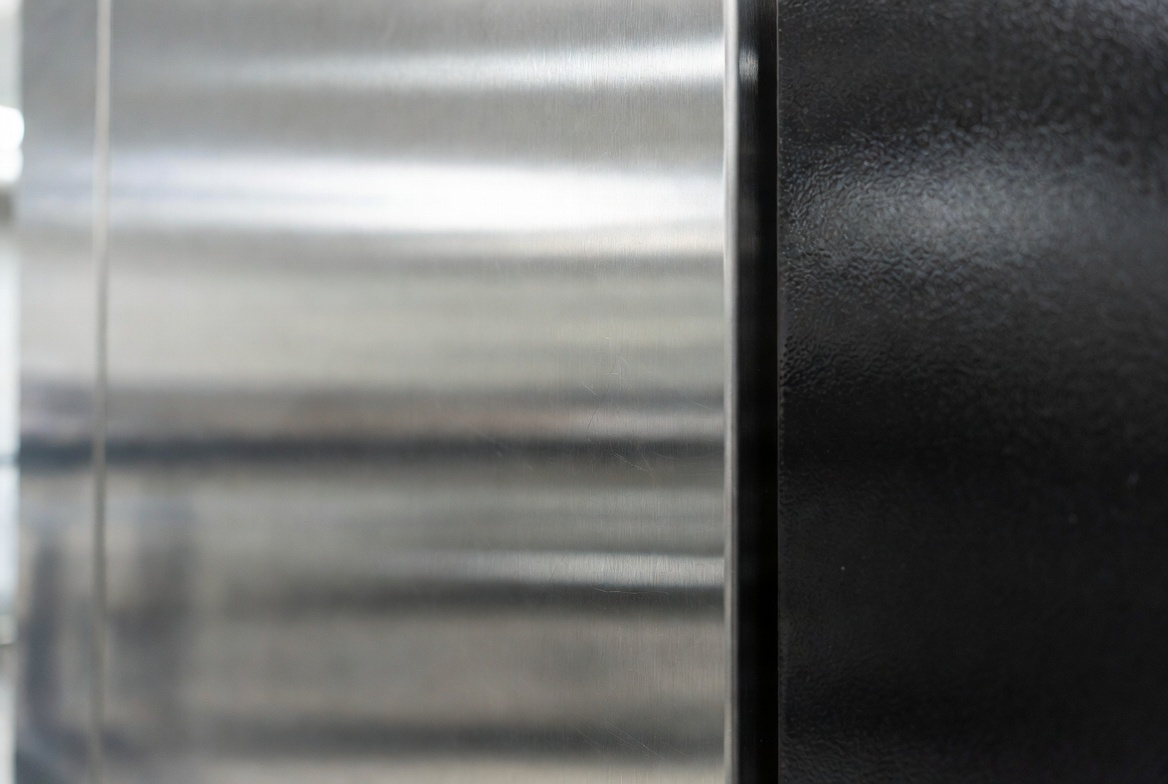
| Factor | Antimicrobial Powder Coating | Electropolished Stainless Steel |
|---|---|---|
| Hygiene support | Helps inhibit growth between cleanings | Smooth, nonporous, easy to disinfect |
| Cleanability | Good, but can be affected by scratches or wear | Excellent due to smoother surface finish |
| Chemical resistance | Depends on coating chemistry and thickness | Strong resistance to many healthcare cleaning routines |
| Corrosion resistance | Good if coating remains intact | Excellent, especially with electropolishing and proper care |
| Durability | Vulnerable to chips, abrasion, and edge wear | Very durable for heavy-use surgical settings |
| Appearance options | Wide range of colors and textures | More utilitarian, but premium and professional |
| Best use case | Support cabinetry, non-critical zones, design-led facilities | Core OR cabinetry, sterile-adjacent, high-cleaning areas |
For surgical room cabinetry, the deciding factor is usually not the claimed antimicrobial property alone. It is how well the surface performs after hundreds or thousands of cleaning cycles. WHO notes that HAIs are a persistent threat, and the 2026 review shows that cleaning interventions alone do not guarantee better patient outcomes, which increases the value of durable, easy-to-clean materials.
Electropolished stainless steel performs especially well where cabinets are exposed to frequent wiping, disinfectant contact, humidity, blood-related splashes, and friction from carts or instrument handling. Powder coating performs well when cabinets are in lower-abuse zones, but if the film is scratched or chipped, the underlying steel may become more vulnerable and the finish can lose both visual quality and protective function. In a surgical room, that risk is not trivial.
Maintenance often decides total cost. Stainless steel generally tolerates strong cleaning programs better, provided the surface is handled correctly and abrasive damage is avoided. Electropolished finishes are especially valued because the smoother surface can be easier to maintain and less likely to trap contamination.
Powder-coated cabinetry requires more care around impact points, edges, and high-touch interfaces. Once a coating is compromised, repairs may be visible and localized corrosion protection may weaken. That does not make powder coating a poor choice, but it does mean facilities must be more disciplined about inspection and touch-up protocols. For hospital engineers and infection-control teams, that is an operational cost, not just a materials decision.
Powder coating usually has an advantage on initial cost and can support faster aesthetic customization. For large projects, that can be attractive, especially when the cabinetry is outside the most demanding sterile workflow areas. But initial savings can disappear if the finish wears prematurely or needs replacement sooner.
Electropolished stainless steel often costs more upfront, yet it can deliver lower lifecycle risk in surgical environments because it is more resilient to cleaning chemistry, mechanical wear, and long service life expectations. For hospitals, the real question is not "What is cheapest today?" but "What remains reliable after years of disinfecting, touching, and traffic?" That is where stainless steel often wins.
A practical way to choose is to classify cabinetry by risk zone.
1. Use electropolished stainless steel for core surgical room cabinets, scrub-adjacent storage, casework exposed to frequent chemical cleaning, and zones where long-term durability matters most.
2. Use antimicrobial powder coating for secondary storage, utility cabinetry, administrative support rooms, and areas where appearance customization is important and surface abuse is lower.
3. Avoid treating antimicrobial additives as a substitute for hygiene protocols because surface disinfection remains essential and its clinical effect is not guaranteed by material choice alone.
This is the most realistic procurement model for modern hospitals. Instead of choosing one material universally, leading facilities often mix materials by zone, risk, and cleaning burden.
From a surgical-room perspective, I would prioritize electropolished stainless steel for the main cabinetry line inside or near the operating theater. It aligns better with high-frequency cleaning, harsh disinfectants, repeated contact, and long service life. For non-critical support cabinetry, antimicrobial powder coating can be a cost-effective and attractive alternative, especially when the facility wants a broader color palette or lighter visual design.
For a manufacturer like Yinda Technology, the strongest commercial positioning is not to argue that one finish is universally superior. It is to help hospitals specify the right finish for the right zone. That is a more credible, more useful, and more customer-focused message.
Before buying surgical room cabinetry, use this checklist:
- Define the cabinet location: sterile-adjacent, prep zone, support zone, or administrative zone.
- Review the cleaning chemicals used by the hospital.
- Check whether the cabinet will face repeated impact, cart contact, or splash exposure.
- Confirm surface finish details, including smoothness, seams, weld quality, and edge treatment.
- Evaluate lifecycle cost, not just purchase price.
- Ask for maintenance and repair guidance in writing.
A cabinet that looks good in a brochure may fail in daily use if its finish cannot survive real hospital conditions.
Not by itself. It can support hygiene, but it should still be paired with strict cleaning and disinfection.
Because it is smooth, easy to clean, and highly resistant to corrosion and routine hospital cleaning.
No. Its main advantage is cleanability and reduced surface irregularities, not active biocidal action.
Yes, especially in support areas, but the finish must be durable enough for the expected cleaning and wear.
For core surgical-room cabinetry, electropolished stainless steel usually offers better long-term value because it is more durable and maintenance-friendly.
1. World Health Organization. *Global report on infection prevention and control 2024*. [Link] [who]
2. Lopez-Alcalde J, et al. *Decontamination of environmental surfaces in hospitals to reduce hospital-acquired infections: a systematic review*. [Link] [pmc.ncbi.nlm.nih]
3. CME Corp. *Benefits of Stainless Steel Cabinets in Operating Rooms*. [Link] [blog.cmecorp]
4. Cleanroom Technology. *Do you need to be electropolishing in your aseptic process?* [Link] [cleanroomtechnology]
5. Valmet. *Stainless steel care, cleaning, surface prep and passivating*. [Link] [valmet]
6. Cleanroom World. *Electropolished Stainless Steel | Cleanrooms, Labs*. [Link] [cleanroomworld]
7. TIGER Coatings. *TIGER Drylac® Antimicrobial Powder Coatings*. [Link] [tiger-coatings]
8. Sundial Powder Coating. *Infection Control for Healthcare and Public Facilities*. [Link] [sundialpowdercoating]
9. Future Market Insights. *Antimicrobial Powder Coating Market*. [Link] [futuremarketinsights]
10. Cleanroom World / related stainless steel electropolishing guidance. [Link] [harrisonep]


