Language


Views: 222 Author: Yinda Powder Coating Publish Time: 2026-06-13 Origin: Site


Content Menu
● Understanding the Two Coating Systems
● Why UV Resistance Matters for Architectural Aluminum Doors
● Super Durable Polyester Powder: Key Features
● PVDF Liquid Coating: Key Features
● UV Resistance and Color Retention: Polyester vs. PVDF
● Practical Performance Metrics for Architectural Doors
● Application Process and Production Efficiency
● Mechanical Durability, Cleanability, and Maintenance
● Cost, Lifecycle Value, and Specification Strategy
● Expert Perspective: Matching Coatings to Climate Zones
● Step-by-Step Selection Framework for Architects and OEMs
● Summary Table: Super Durable Polyester vs. PVDF for Aluminum Doors
● How a Powder Coating Manufacturer Can Add Value
● Call to Action for Specifiers and Door Manufacturers
● Frequently Asked Questions (FAQ)
Architectural aluminum doors that need long-term UV resistance are typically finished with either super durable polyester powder coating or PVDF (polyvinylidene fluoride) liquid coating, and both systems can deliver strong performance when specified correctly. From an architectural specifier and coating manufacturer perspective, the real difference lies in lifecycle UV stability, gloss and color retention, application complexity, and total cost of ownership over 15–25 years of outdoor exposure. [qs-wiremesh]
Super durable polyester powder coating is a thermoset powder applied by electrostatic spray, then cured to form a continuous film on the aluminum surface. These powders are based on special polyester resins with enhanced weathering resistance and are widely used in architectural aluminum profiles, doors, and windows. [kgecoating]
PVDF liquid coating (often called fluorocarbon or Kynar-type coating) is a solventborne or waterborne liquid system based on polyvinylidene fluoride resin, typically applied in multiple layers (primer, mid-coat, topcoat) on aluminum. PVDF coatings are recognized by many façade and curtain wall specifications worldwide for their outstanding long-term color and gloss retention in harsh UV environments. [kgecoating]
Architectural aluminum doors installed in high-sun regions—such as the Middle East, Southeast Asia, and coastal areas—face long-term exposure to UV radiation, humidity, and temperature cycling. Without a high-performance coating, these factors cause chalking, fading, gloss loss, and sometimes premature corrosion at cut edges or hardware interfaces. [qs-wiremesh]
For building owners, visible color shift or chalking on entry doors directly affects perceived building quality and brand image, especially in commercial projects, transportation hubs, and healthcare facilities. For OEMs and fabricators, choosing the right coating system is a strategic decision that balances warranty requirements, application cost, and lifecycle maintenance needs in each climate zone. [kgecoating]
Super durable polyester powder coatings are an evolution of standard architectural polyester powders, engineered to deliver improved UV and weathering resistance. Many of these products are developed to meet or exceed international standards such as AAMA 2604 or equivalent European/Asian specifications for architectural applications. [qs-wiremesh]
Core characteristics of super durable polyester powders include:
- Enhanced UV stability compared with standard polyester powders, resulting in better color and gloss retention for mid- to long-term outdoor exposure. [kgecoating]
- Film thickness typically in the range of 60–120 μm, providing robust mechanical protection against abrasion and minor impact. [qs-wiremesh]
- High transfer efficiency during electrostatic application, which helps reduce overspray waste and improves coating utilization in industrial lines. [kgecoating]
From a production perspective, these powders allow single-coat application with integrated color and texture, which simplifies line design for many door and façade manufacturers. When combined with proper pretreatment (e.g., chromate-free conversion layers or advanced zirconium systems), they can offer strong corrosion performance in architectural environments. [qs-wiremesh]
PVDF liquid coatings are usually applied as multi-layer systems—commonly two- or three-coat structures—on coil or extrusion lines, especially for high-end façade and door systems. The backbone resin, polyvinylidene fluoride, is a highly non-reactive fluoropolymer known for its resistance to UV radiation, chemicals, and environmental pollutants. [kgecoating]
Typical performance characteristics of PVDF liquid systems include:
- Outstanding color and gloss retention over 20–25 years, with many façade specifications expecting minimal color shift during this period. [kgecoating]
- Excellent resistance to chalking and dirt pick-up, thanks to the low surface energy of fluoropolymer chemistry, which makes the surface less prone to contamination. [qs-wiremesh]
- Strong resistance to acids, solvents, and environmental pollutants, supporting long service life in industrial and coastal atmospheres. [kgecoating]
Because the total film build is often 35–60 μm, PVDF systems rely on the synergy between primer, mid-coat, and fluoropolymer topcoat to provide comprehensive barrier and UV protection. These systems are widely used for premium curtain wall panels, metal roofs, and high-profile architectural projects where long-term aesthetics are critical. [kgecoating]
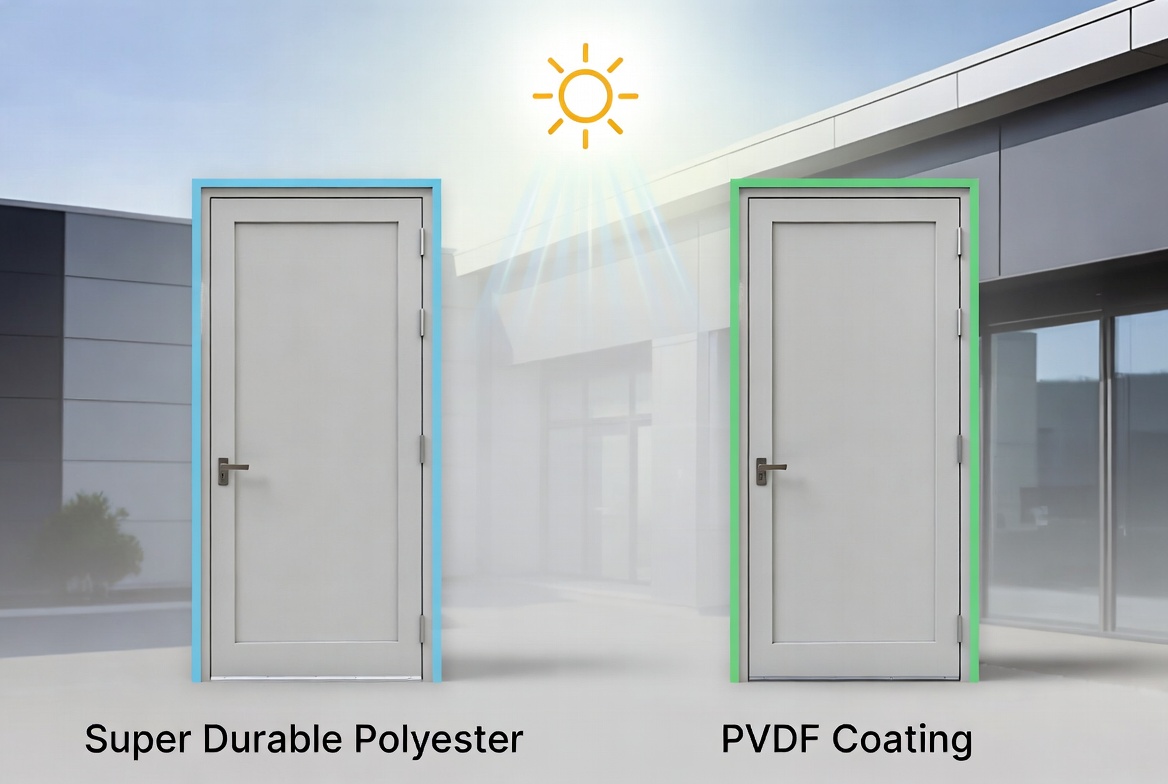
When focusing specifically on UV resistance for architectural aluminum doors, PVDF liquid systems generally provide the highest level of long-term performance. Their fluoropolymer backbone absorbs far less UV energy than conventional and even super durable polyesters, resulting in slower color and gloss changes under intense sunlight. [kgecoating]
Super durable polyester powders still offer significantly better UV performance than standard polyester powders and are often sufficient for many projects targeting 10–15 years of stable appearance. However, in hot, high-UV regions—such as Middle Eastern deserts or tropical coastal zones—PVDF systems are often specified when the design intent is to maintain color fidelity for 20+ years with minimal maintenance. [kgecoating]
In real projects, architects and door manufacturers evaluate coating systems using measurable criteria such as chalking, color retention (ΔE), gloss retention, and corrosion resistance. Many international standards and test protocols (e.g., AAMA 2604/2605 or equivalent) reference accelerated weathering tests that simulate years of outdoor exposure. [kgecoating]
From a practical perspective for doors:
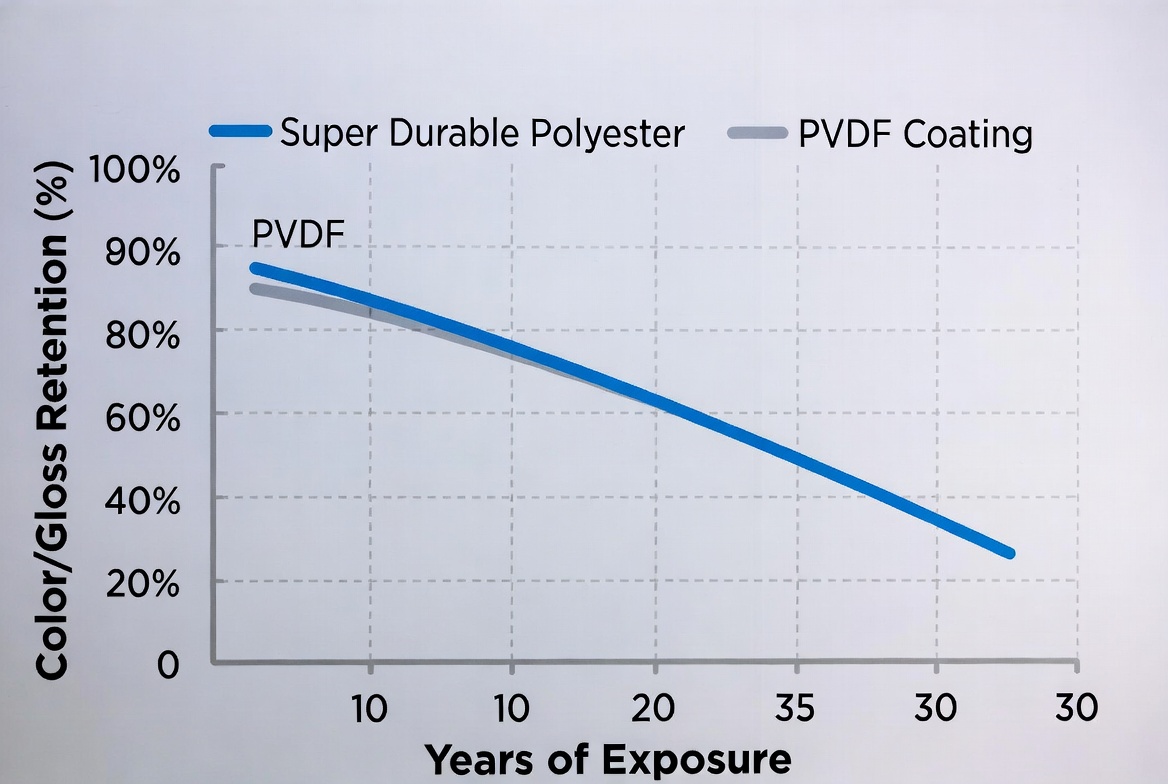
- Super durable polyester powders typically target good color and gloss retention for 10–15 years in standard urban environments when applied and maintained correctly. [qs-wiremesh]
- PVDF systems often aim for 20–25 years of appearance retention in demanding climates, especially in façade and curtain wall applications, and this performance level translates well to aluminum doors exposed to similar conditions. [kgecoating]
For many commercial door projects, this difference directly impacts maintenance cycles, repainting intervals, and warranty terms negotiated between building owners and suppliers. [kgecoating]
From a manufacturer's standpoint, the coating process needs to be efficient, reproducible, and compatible with existing lines. Super durable polyester powders and PVDF liquids require different equipment setups, which affects capital investment and throughput. [qs-wiremesh]
Super durable polyester powder:
- Applied via electrostatic powder spray, followed by oven curing to crosslink and form the coating film. [qs-wiremesh]
- Process typically consists of three main stages: pretreatment, powder application, and curing, making it relatively straightforward to manage on extrusion and door fabrication lines. [qs-wiremesh]
- Suitable for flexible batch sizes and color changes, which is important for custom door projects and regional color preferences. [kgecoating]
PVDF liquid coating:
- Often requires multi-coat application with precise control over film builds and flash-off times between coats. [kgecoating]
- Typically implemented on continuous coil coating lines or specialized spray lines with advanced curing ovens, solvent handling, and emissions control. [kgecoating]
- Higher complexity and tighter process windows mean that PVDF coating is usually concentrated in specialized facilities, then supplied to door fabricators as pre-coated profiles or panels. [kgecoating]
For many mid-sized manufacturers, powder coating provides a more accessible route to integrating high-quality finishes in-house, while PVDF may be sourced through external coil coaters or strategic partners. [kgecoating]
Architectural doors face frequent handling, impact from trolleys or luggage, and cleaning cycles, so mechanical durability and cleanability are important alongside UV resistance. Super durable polyester powders often build thicker films, improving their resistance to abrasion and minor damage in daily use. [kgecoating]
PVDF coatings, although thinner, provide excellent resistance to chemicals and pollutants and have very smooth, low-energy surfaces that reduce dirt accumulation. In many façade applications, this property translates into lower cleaning frequency and more stable appearance, especially in polluted or coastal environments. [qs-wiremesh]
For high-traffic doors, the choice between systems may balance thicker, more impact-tolerant powder films versus PVDF's superior resistance to chalking and environmental staining, depending on the specific risk profile of the building. [kgecoating]
In general, PVDF liquid systems carry a higher material and process cost compared with super durable polyester powders because of their resin chemistry, multi-layer structure, and more complex application lines. Powder systems are usually more economical for many commercial and residential door projects, especially when produced in high volumes with efficient powder recovery. [qs-wiremesh]
However, lifecycle value needs to consider total cost over 15–25 years, including potential repainting or replacement due to aesthetic degradation. In premium commercial buildings or projects with strict corporate identity requirements, the extended color stability of PVDF can justify the higher upfront cost by delaying or avoiding future recoating campaigns. [kgecoating]
From an industry practitioner perspective, a practical way to decide between super durable polyester powder and PVDF liquid coatings for aluminum doors is to align the system with climate severity, building type, and warranty expectations. [kgecoating]
- Moderate UV / urban climates: Super durable polyester powders often provide an optimal balance of cost, appearance, and service life for commercial and residential doors. [qs-wiremesh]
- High UV / coastal or desert climates: PVDF systems are commonly used when architects want long-term color fidelity with minimal chalking and are willing to invest in higher-spec finishes. [kgecoating]
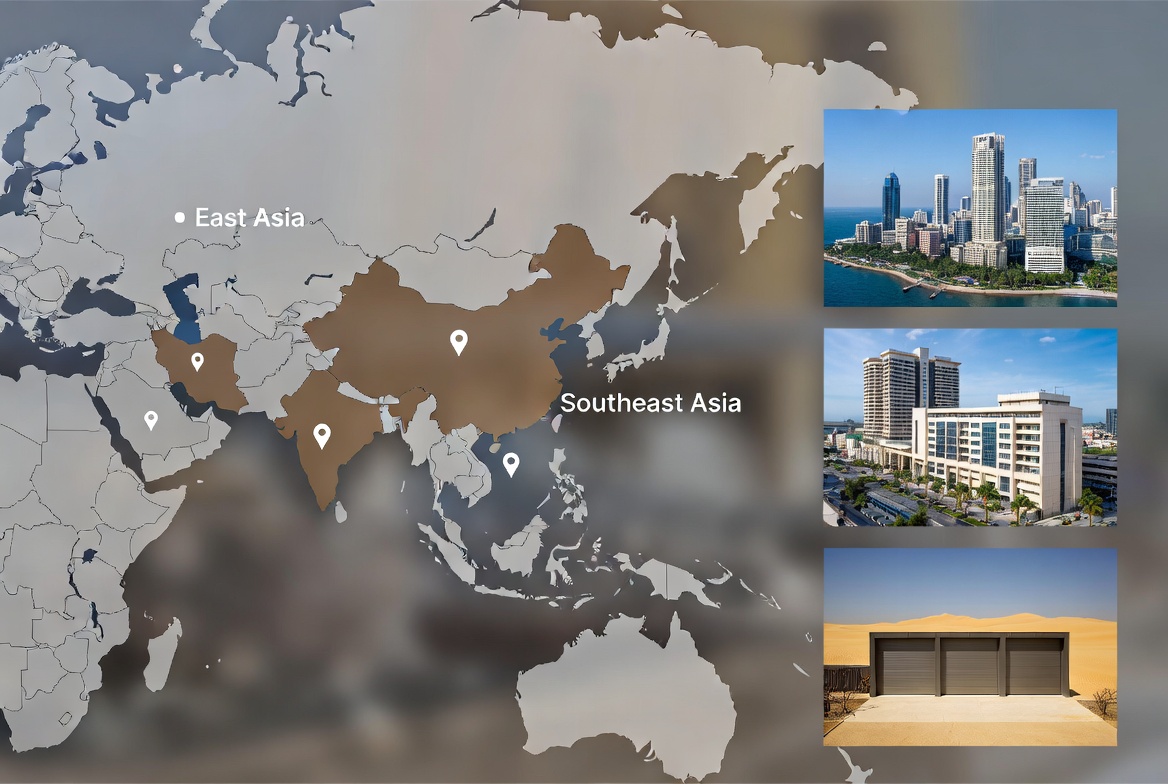
For global manufacturers operating in regions such as China, Indonesia, and Saudi Arabia, a dual-coating strategy—using super durable polyester powders for standard projects and PVDF systems for flagship or highly exposed projects—can help align product offerings with regional climate and customer expectations. [kgecoating]
To support specifiers and OEMs, the following simplified framework can be used when deciding between super durable polyester powder and PVDF liquid coatings for aluminum doors:
1. Define service life expectations
- Determine whether the project targets 10–15 years or 20+ years of stable appearance with minimal repainting. [kgecoating]
2. Assess climate severity and exposure
- Evaluate UV index, orientation (e.g., south-facing façades), proximity to coastline, and pollution levels. [qs-wiremesh]
3. Align with building type and brand requirements
- For landmark buildings, airports, or corporate headquarters, prioritize long-term aesthetic stability; for standard commercial or residential projects, balance cost and performance. [kgecoating]
4. Review available application infrastructure
- Decide whether in-house powder coating or external PVDF coil/spray coating is more realistic for current production capabilities. [kgecoating]
5. Specify performance standards and warranties
- Align coating choice with relevant industry standards and negotiate warranties that reflect realistic service life in the actual climate. [kgecoating]
This structured approach helps ensure that both architects and manufacturers make decisions grounded in performance data, practical constraints, and project-specific priorities. [kgecoating]
| Aspect | Super Durable Polyester Powder | PVDF Liquid Coating |
|---|---|---|
| Core resin | Super durable polyester thermoset (qs-wiremesh) | Polyvinylidene fluoride fluoropolymer (qs-wiremesh) |
| Typical film thickness | 60–120 μm (qs-wiremesh) | 35–60 μm (multi-layer) (qs-wiremesh) |
| UV / color retention | Strong, often 10–15 years in moderate climates (qs-wiremesh) | Excellent, often 20–25 years in harsh climates (qs-wiremesh) |
| Chalking behavior | Reduced vs. standard powder, but higher than PVDF (qs-wiremesh) | Very low chalking due to fluoropolymer chemistry (qs-wiremesh) |
| Mechanical durability | Very good impact and abrasion resistance (qs-wiremesh) | Good; thinner film but robust chemistry (qs-wiremesh) |
| Cleanability | Good, but slightly more prone to dirt pickup (qs-wiremesh) | Excellent, low surface energy resists soiling (qs-wiremesh) |
| Application process | Single-coat powder, simpler line setup (qs-wiremesh) | Multi-coat liquid, higher process complexity (qs-wiremesh) |
| Typical usage | Doors, windows, profiles in standard and mid-range projects (qs-wiremesh) | Premium façades, high-end doors, long-life architectural panels (kgecoating) |
| Relative cost | Generally lower material and application cost (qs-wiremesh) | Higher material and processing cost (qs-wiremesh) |
A manufacturer specializing in powder coatings and eco-friendly materials with international operations can play a strategic role in helping customers choose and implement the right coating system. By combining R&D, localized technical support, and energy-efficient application technologies, such manufacturers can tailor super durable polyester solutions to regional climates while collaborating with PVDF system providers when necessary. [qs-wiremesh]
This integrated approach supports door and façade fabricators across markets such as China, Indonesia, and Saudi Arabia, where climatic conditions and regulatory contexts vary widely. It also allows consistent quality and appearance across global projects while maintaining flexible production options and optimized energy use on coating lines. [qs-wiremesh]
Architects, façade consultants, and aluminum door manufacturers who want to optimize UV resistance and lifecycle value should start by reviewing their current coating specifications and regional climate exposure profiles. Engaging with a technically oriented coating supplier capable of providing both super durable polyester powder solutions and guidance on PVDF system integration can help align project performance, cost, and sustainability targets. [kgecoating]
For upcoming projects, consider developing differentiated specifications for standard and flagship buildings, and ensure that coating choices are backed by clear performance data, test results, and realistic warranties aligned with actual UV exposure conditions. [kgecoating]
1. Is super durable polyester powder coating sufficient for all architectural aluminum doors?
Super durable polyester powder is often sufficient for doors in moderate UV climates and standard commercial or residential buildings when combined with proper pretreatment and maintenance. However, in high-UV or coastal environments, projects with long service life expectations may benefit from PVDF systems for enhanced color retention. [qs-wiremesh]
2. Can PVDF coatings be applied directly by all door manufacturers?
PVDF liquid systems typically require specialized application lines, multi-coat processing, and solvent management, so they are more often applied by coil coaters or dedicated coating plants rather than every door manufacturer handling them in-house. Many door fabricators instead source pre-coated profiles or panels for final fabrication. [kgecoating]
3. How do coating standards like AAMA 2604 and 2605 relate to these systems?
Super durable polyester powders often target performance levels similar to AAMA 2604, which addresses mid- to long-term weathering for architectural applications. PVDF systems are often associated with performance comparable to AAMA 2605, which specifies more stringent requirements for long-term color and gloss retention in severe climates. [kgecoating]
4. What maintenance practices are recommended for coated aluminum doors?
Regular cleaning with mild detergents, avoidance of abrasive tools, and periodic inspection of edges and hardware interfaces help maintain both super durable polyester and PVDF-coated doors. In polluted or coastal environments, more frequent cleaning can reduce the accumulation of salts and pollutants that stress the coating system. [qs-wiremesh]
5. How does coating thickness influence performance for doors?
Thicker powder films can enhance mechanical durability and impact resistance, which is beneficial for high-traffic doors. PVDF systems, although thinner, leverage fluoropolymer chemistry and multi-layer design to achieve long-term UV and chemical resistance, so performance is not solely determined by thickness. [kgecoating]
1. QS Wire Mesh – “PVDF涂料与粉末涂料的区别 (Differences between PVDF coating and powder coating).” https://www.qs-wiremesh.com/cn/technology/pvdf-vs-powder-coating.html
2. KGE Coating – “PVDF vs Polyester Powder Coating for Aluminum.” https://www.kgecoating.com/pvdf-compare-polyester/
3. KGE Coating – “现代建筑铝板的PVDF 氟碳涂料.” https://www.kgecoating.com/zh-CN/pvdf-fluorocarbon-coatings-for-aluminum-panels-in-modern-architecture/


