Language


Views: 233 Author: Yinda Powder Coating Publish Time: 2026-08-04 Origin: Site


Content Menu
● What each coating is designed to do
● Regulatory and documentation lens
● Practical selection framework
● Manufacturing insight from a coating specialist
● Recommendation by application
● FAQ
For medical diagnostic equipment housing, the real question is not only which finish looks better, but which one better supports cleaning, durability, risk control, and long-term product reliability. In most cases, a biocide-infused powder coating offers a stronger surface-protection story for high-touch medical environments, while standard industrial polyester remains the more practical choice when the priority is cost, color stability, and broad industrial performance.
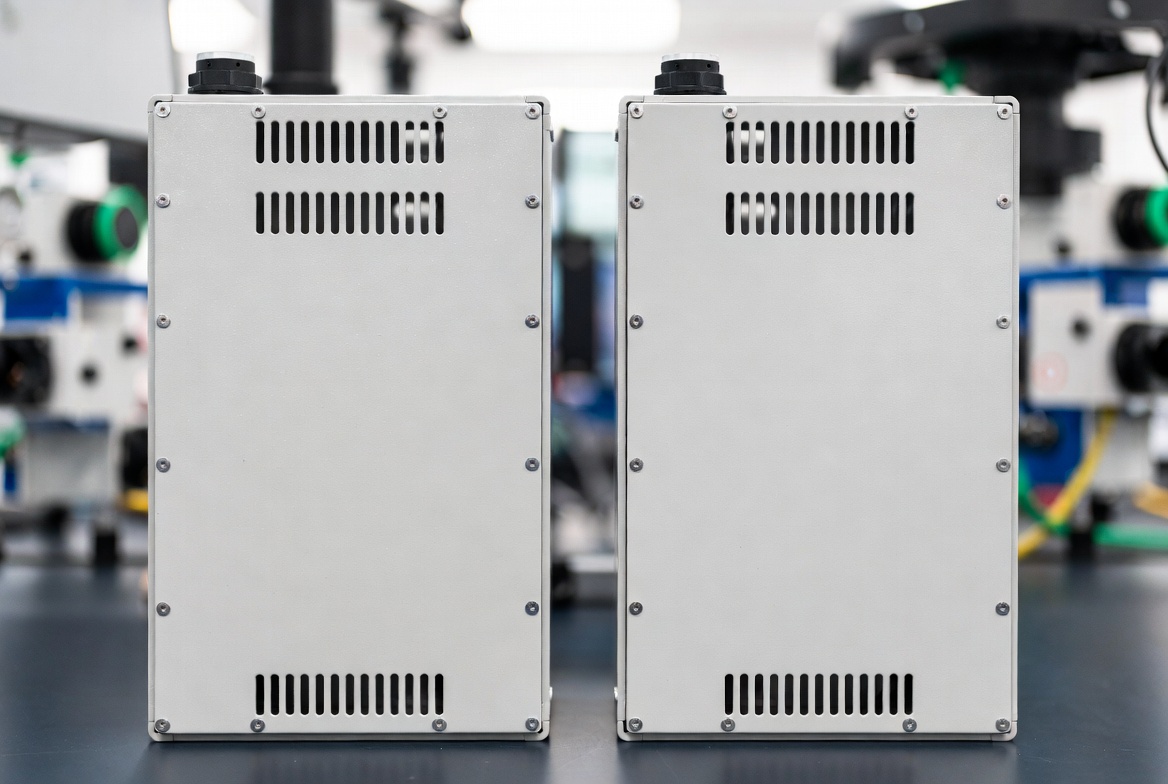
Medical diagnostic housings sit in a demanding environment. They are handled frequently, wiped repeatedly with disinfectants, and expected to stay visually clean while protecting the internal electronics and user interface. Medical-device quality systems also emphasize controlled documentation, traceability, process validation, and risk-based control across the product lifecycle.
That means coating selection is not cosmetic. It affects cleaning compatibility, surface wear, chemical resistance, and how confidently a manufacturer can support product performance over time. For that reason, the right finish should be chosen based on the device's use case, cleaning protocol, and exposure profile rather than on finish type alone.
A biocide-infused powder coating is formulated with antimicrobial additives, often silver-ion based, that help inhibit microbial growth on the coated surface between cleanings. These coatings do not replace cleaning, but they add a passive surface-defense layer that can be valuable on high-touch enclosures and shared diagnostic equipment.
A standard industrial polyester powder coating is built mainly for durable appearance, good chemical resistance, and strong weathering performance. Polyester systems are widely used in industrial and architectural applications because they balance toughness, gloss retention, and broad processing compatibility.
| Factor | Biocide-Infused Powder Coating | Standard Industrial Polyester |
|---|---|---|
| Surface hygiene support | Helps inhibit bacterial growth on the coated surface between cleanings | No antimicrobial function; relies on routine cleaning |
| Cleaning resilience | Good, but formulation and disinfectant compatibility must be validated | Good general chemical resistance, but not designed for antimicrobial performance |
| Best use case | High-touch housings, shared diagnostic devices, clinic-facing panels | Low-risk housings, internal covers, industrial enclosures, cost-sensitive projects |
| Appearance and finish options | Broad color and texture options, depending on supplier | Very broad finish flexibility and mature supply chain |
| Cost | Usually higher because of the antimicrobial additive and validation burden | Usually lower and easier to specify at scale |
| Compliance support | Often requires stronger technical documentation and risk justification | Easier to qualify for general industrial use, but still needs device-specific validation |
For diagnostic equipment, the finish must survive repeated wiping with hospital-grade cleaners. In that sense, the most important metric is often not "antimicrobial or not," but whether the coating keeps its integrity after continuous exposure to alcohols, quaternary cleaners, peroxide-based solutions, and daily abrasion. Medical-device surface evaluation increasingly follows a risk-based approach, where manufacturers assess chemistry, intended use, and lifecycle exposure rather than relying on a single fixed test list.
Biocide-infused powder coating has a clear advantage when the enclosure is touched constantly by clinicians, technicians, or patients. The antimicrobial additive can help reduce microbial buildup on the surface between cleaning cycles, which is especially relevant for front panels, grip areas, and external housings in busy diagnostic rooms.
Standard industrial polyester, however, can still be excellent when the housing is mainly decorative, structural, or only indirectly exposed to contamination. It is a strong option if the device sits in a lower-touch area or if the manufacturer wants a simpler coating specification with predictable supply and lower total cost.
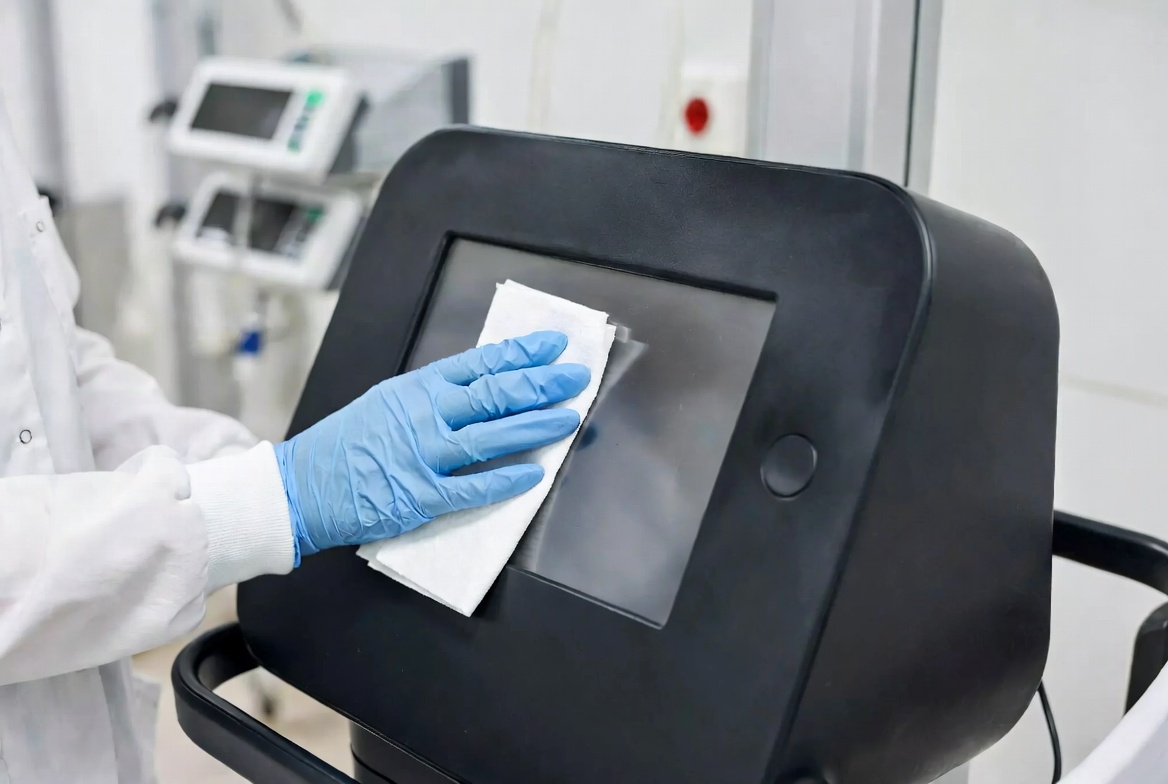
Medical products are not judged only by finish performance. They are judged by how well the manufacturer can show process control, product consistency, and risk management across the device lifecycle. ISO 13485 emphasizes controlled documentation and supplier control, while ISO 10993-1 focuses on biological evaluation within a risk management process for materials that may contact the body directly or indirectly.
That matters because antimicrobial claims can create extra scrutiny. If a coating is described as biocide-infused, the supplier should be able to provide technical data, durability evidence, and any claim limitations in a way that fits the manufacturer's compliance file. A standard polyester finish may be easier to document, but it still needs proof that it withstands the intended cleaning and production environment.
Use this simple decision path when choosing a coating for diagnostic housings:
1. Identify how often the enclosure is touched. High-touch surfaces favor antimicrobial protection.
2. Map the cleaning chemistry. Stronger disinfectants demand validated chemical resistance.
3. Define the required appearance life. If the finish must keep gloss and color for years, polyester may be sufficient.
4. Check compliance documentation. Medical products need structured records, not just sample approvals.
5. Compare total lifecycle cost. A higher upfront coating cost may be justified if it reduces surface risk or replacement frequency.
This framework helps prevent a common mistake: choosing a coating based only on marketing language. In medical hardware, the best finish is the one that aligns with use, cleaning, and documentation, not the one with the most impressive label.
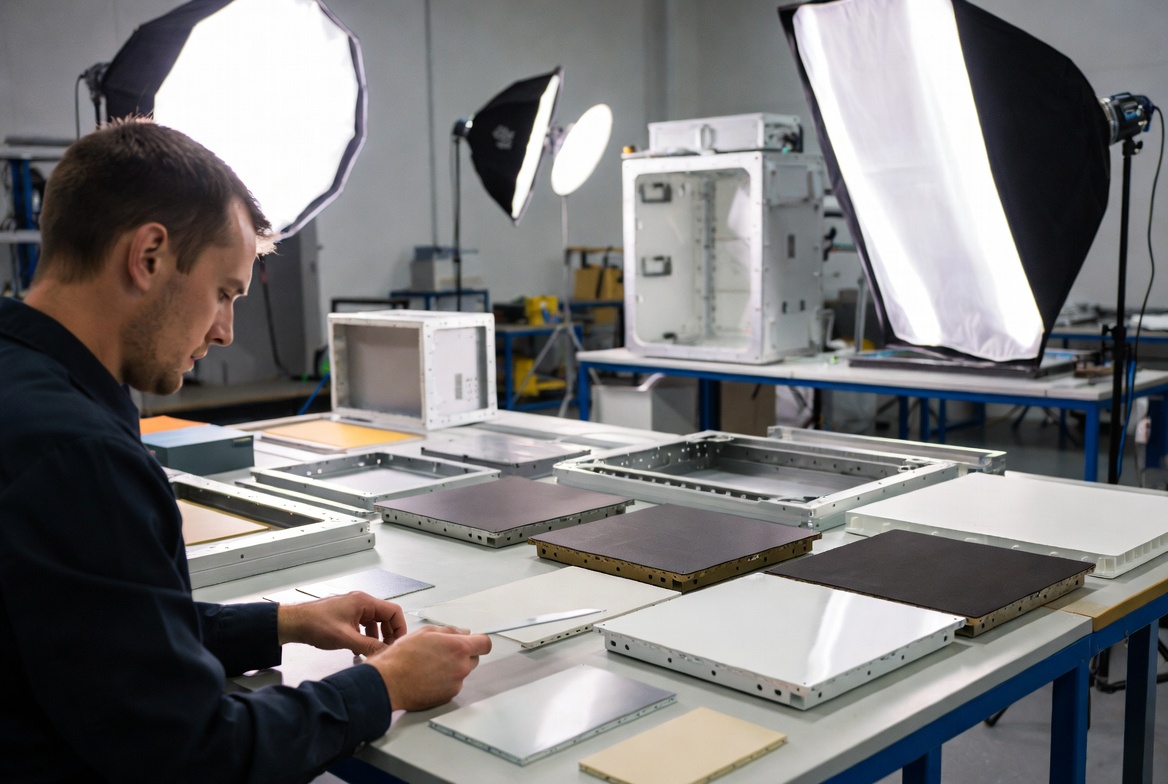
From a manufacturer's perspective, the biggest issue is often not the coating chemistry itself, but the execution. Surface preparation, cure profile, film thickness, and adhesion control determine whether the coating actually performs in a medical environment. Powder coatings are known for delivering durable, uniform films when the pretreatment and cure process are tightly controlled.
At Yinda Technology, the most effective projects usually start with application context, not color chips. For a diagnostic housing, I would first ask whether the device is touched by clinicians all day, whether it is disinfected multiple times per shift, and whether the enclosure must support antimicrobial messaging in the market. Only after that do I finalize the coating route.
Biocide-infused powder coating is usually the stronger choice for:
- External housings of shared diagnostic devices.
- Front panels and touch-heavy enclosures.
- Facilities that prioritize passive surface hygiene between cleanings.
Standard industrial polyester is usually the better choice for:
- Internal covers and non-contact structural parts.
- Cost-sensitive product lines.
- Projects where appearance, color retention, and supply flexibility matter more than antimicrobial performance.
If the goal is to improve the surface story of medical diagnostic equipment housing, biocide-infused powder coating usually wins on hygiene support and perceived medical suitability. If the goal is broader industrial practicality with a cleaner cost structure, standard industrial polyester is still a highly capable option. The right answer depends on touch frequency, disinfection intensity, and how the manufacturer plans to document performance over the product lifecycle.
Build your coating specification around the device's cleaning protocol, touch profile, and documentation needs, then validate the finish with real-use testing before approving mass production.
1. Is biocide-infused powder coating always better for medical housings?
No. It is better when the enclosure is high-touch or part of a cleanliness-sensitive workflow, but standard polyester can be enough for lower-risk parts.
2. Does antimicrobial powder coating replace cleaning?
No. It supports the surface between cleanings, but routine disinfection is still required.
3. Which coating is easier to qualify for production?
Standard industrial polyester is usually easier because it is more common and simpler to document, though both options still need device-specific validation.
4. Can both coatings be used on the same device platform?
Yes. Many manufacturers use different finishes for different parts of the same platform, such as antimicrobial coating for the outer shell and standard polyester for internal covers.
5. What matters most in coating selection for diagnostic equipment?
The key factors are disinfectant resistance, touch frequency, appearance retention, and the quality of the supporting documentation.
- [Powder Coating Medical Devices & Equipment] [sundialpowdercoating]
- [Powder Coating for Metal Parts: Process, Types & When to Use It] [evsmetal]
- [Understanding Medical Grade Coatings] [crestcoating]
- [Powder Coating Chemistry Options for Medical Applications] [powdercoatedtough]
- [ISO 10993-1: Biological evaluation of medical devices] [iso]
- [ISO 13485:2016 Medical device quality management systems] [jamasoftware]
- [FDA guidance on ISO 10993-1] [resource.nlm.nih]
- [Standard Test Method for Evaluation of Chemical Resistance] [medicaldesignbriefs]
- [FDA recognizes updated ISO 10993-1] [exponent]
- [Antimicrobial Coatings for Powder] [industrial.sherwin-williams]
- [Infection Control for Healthcare and Public Facilities] [sundialpowdercoating]
- [Powder Coating for the Medical Industry] [sprayquickpowdercoating.co]
- [How Do Antimicrobial Coatings Work?] [crestcoating]
- [Cleanability of Metal Surface Finishes in Medical Devices] [trinupowdercoating]


