Language


Views: 248 Author: Yinda Powder Coating Publish Time: 2026-08-06 Origin: Site


Content Menu
● Chemical Resistance in Daily Use
● A Practical Selection Method
● FAQ
>> 1. Is antimicrobial epoxy always better than polyurethane?
>> 2. Which coating is easier to clean?
>> 3. Can polyurethane handle lab chemicals?
>> 4. Is epoxy good for metal workbenches?
>> 5. Which option is better for a medical or clinical lab?
>> 6. What should I check before choosing a coating?
Choosing between chemical-resistant polyurethane and antimicrobial epoxy for laboratory metal workbenches is not a cosmetic decision. It affects cleaning performance, corrosion control, user safety, maintenance cost, and the usable life of the bench in real lab conditions.
Laboratory workbenches are exposed to solvents, disinfectants, heavy instruments, moisture, and repeated abrasion. In that environment, the surface finish must do more than look durable; it must help protect the metal substrate, support hygiene protocols, and remain stable under daily use.
For laboratories that value long service life, easier sanitation, and reduced downtime, the best choice depends on the work profile. This article compares the two coating types from a practical laboratory perspective, with a focus on performance, maintenance, and suitability for modern lab environments.

Chemical-resistant polyurethane is typically chosen for its strong resistance to wear, impact, and many cleaning agents. It is often valued where the workbench needs a smooth protective layer that can handle frequent wiping, minor abrasion, and moderate chemical exposure.
Antimicrobial epoxy is designed to create a hard, nonporous surface that supports sanitation and helps reduce microbial buildup on the bench surface. In laboratory settings, epoxy is widely associated with chemical resistance, seamless construction, and dependable performance in wet or high-contact environments.
| Factor | Chemical-resistant polyurethane | Antimicrobial epoxy |
|---|---|---|
| Chemical resistance | Strong for many common lab chemicals and cleaning agents, but performance depends on formulation and exposure level. | Broad chemical resistance is a major strength, including acids, bases, and solvents in many lab use cases. |
| Hygiene support | Good cleanability when the finish is smooth and properly maintained. | Better suited to sanitation-focused environments because of its hard, nonporous character. |
| Wear and abrasion | Often performs well against scuffs, handling, and repeated surface contact. | Durable, but the key advantage is usually chemical and sanitary performance rather than flexibility. |
| Moisture exposure | Can perform well if properly specified, but formulation matters. | Strong fit for wet labs and humid conditions. |
| Repair and maintenance | Can be easier to refresh in some systems, depending on coating type and facility workflow. | Usually selected for long-term stability and cleanability; repairs may require more controlled resurfacing. |
| Best fit | General lab metal furniture, support benches, and areas with frequent handling. | Clinical labs, wet labs, and hygiene-critical workbenches. |
In a lab, chemical resistance is not only about rare spills. It also includes the cumulative effect of disinfectants, reagent residue, cleaning cycles, and accidental contact with acids or solvents. Lab surface guidance consistently identifies chemical and stain resistance as essential, especially in wet labs and other high-risk environments.
Epoxy usually has the edge when the bench is exposed to aggressive chemistry or when the facility wants a proven, highly inert surface. Polyurethane can be an excellent option when the exposure is less severe but abrasion, handling, and routine wipe-downs are constant.
Antimicrobial epoxy is the more direct choice when surface hygiene is a top priority. In laboratory and healthcare-adjacent settings, the goal is to reduce the chance that microbes persist on frequently touched surfaces, especially where disinfection is part of the daily workflow.
That does not mean polyurethane cannot be used in sanitary environments. It can still be cleanable and durable, but its main advantage is usually not antimicrobial performance itself. If the bench will support biological work, clinical testing, or frequent disinfectant use, epoxy is often the more defensible specification.
Modern laboratory surfaces must resist more than chemistry. They also need to handle movement, vibration, impact from tools or equipment, and the stress of reconfigurable work areas. Industry guidance shows that mechanical performance is now nearly as important as chemical resistance in flexible labs.
Polyurethane often earns attention when the bench will see frequent mechanical abuse, because it can offer a resilient and forgiving finish. Epoxy is tougher in the hygiene and corrosion context, but polyurethane may feel more practical in support areas where knocks, carts, and repeated handling are part of the job.
A lab bench coating should match the way the space is actually used. The wrong surface can lead to faster wear, higher replacement costs, or more frequent cleaning failures.
Use chemical-resistant polyurethane when:
- The bench sees regular handling and abrasion.
- Chemical exposure is moderate rather than extreme.
- The lab wants a durable finish with a practical maintenance profile.
Use antimicrobial epoxy when:
- Hygiene and disinfection are central to operations.
- The bench is part of a wet lab, clinical lab, or contamination-sensitive area.
- The surface must tolerate repeated cleaning with harsh agents.
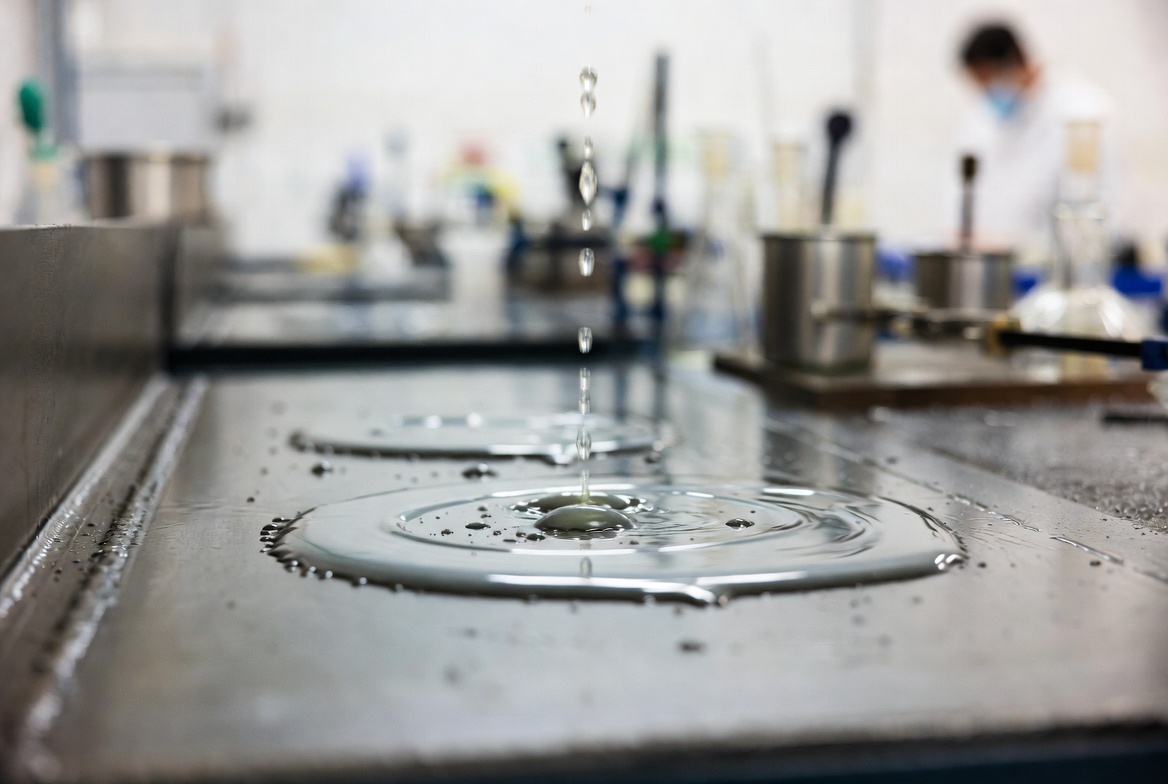
The coating is only part of the story. On metal workbenches, the substrate quality, pretreatment, adhesion system, and edge coverage matter just as much as the topcoat itself. If the metal is poorly prepared, even a strong coating can fail early at joints, corners, or high-contact edges.
This is where a manufacturer with coating expertise becomes important. Yinda Technology positions itself as a global powder coating and eco-material manufacturer with R&D, testing capability, and medical-equipment-oriented coating solutions, which is relevant when a lab project needs both durability and hygiene-focused performance.
A good specification process is simple and disciplined. It should start with the actual lab use case, not with the coating name alone.
1. Identify the dominant exposure.
2. Define the cleaning chemicals and disinfection frequency.
3. Confirm whether microbial control is a primary requirement.
4. Assess impact, abrasion, and moisture conditions.
5. Match the coating system to the maintenance plan and service life target.
If the answer to most of those questions points to sanitation and chemical durability, epoxy is usually the safer recommendation. If the lab is more focused on handling resistance, general durability, and balanced performance, polyurethane can be the smarter choice.
Modern laboratories are becoming more flexible, more shared, and more equipment-heavy. That shift increases demand for work surfaces that are not only durable, but also easy to install, easy to clean, and resilient enough to support changing workflows over time.
Sustainability is also influencing surface selection. Lab buyers are paying more attention to long service life, low-emission materials, and reduced replacement cycles, because a longer-lasting bench surface lowers both operational disruption and environmental burden.
From a coatings strategy standpoint, I would treat antimicrobial epoxy as the first option for hygiene-critical laboratory metal workbenches and chemical-resistant polyurethane as the strong alternative for general-duty benches where abrasion resistance and day-to-day handling matter more. That approach aligns well with the practical way labs are designed today: by function, risk, and maintenance burden, not by a single material label.
For manufacturers like Yinda Technology, this also creates a valuable product story: a coating portfolio that supports medical, industrial, and laboratory applications with durable and environmentally responsible finishes.
If your priority is cleanability, microbial control, and broad chemical resistance, choose antimicrobial epoxy. If your priority is impact tolerance, handling durability, and balanced protection, chemical-resistant polyurethane may be the better fit.
The best laboratory metal workbench is the one that matches the chemistry, cleaning routine, and lifecycle expectations of the facility. For procurement teams and project specifiers, that means asking one simple question: which failure mode matters most in this lab—surface contamination, coating wear, or chemical attack?
No. Epoxy is usually better for hygiene-focused and chemical-heavy labs, but polyurethane can be better when abrasion and general wear are the main concerns.
Antimicrobial epoxy is typically easier to sanitize because it is hard and nonporous, making it a strong choice for wet labs and contamination-sensitive spaces.
Yes, chemical-resistant polyurethane can handle many common laboratory chemicals and cleaning agents, but the exact performance depends on the formulation and exposure severity.
Yes. Epoxy is widely used on laboratory workbenches because it supports chemical resistance, moisture resistance, and cleanability on metal substrates.
Antimicrobial epoxy is usually the better choice because hygiene, disinfection, and contamination control are more important in those environments.
Check the chemicals used, cleaning frequency, moisture level, impact risk, and whether antimicrobial performance is a core requirement.
1. Tradeline, Inc. "Lab Surfaces in Flux" — [https://www.tradelineinc.com/reports/2017-6/lab-surfaces-flux] [tradelineinc]
2. H2I Group. "What is a Laboratory Bench? Exploring Different Types" — [https://h2igroup.com/blogs/what-is-laboratory-bench/] [h2igroup]
3. LOC Scientific. "Choosing The Right Lab Bench Material For Your Workspace" — [https://www.locscientific.com/choosing-the-right-lab-bench-material-for-your-workspace/] [locscientific]
4. WorkPlace New Hampshire. "Chemical Resistant Workbenches — Epoxy, Phenolic & Stainless Steel Surfaces for Labs" — [https://workplacenh.com/feeds/category/chemical-resistant-workbench] [workplacenh]
5. Yinda Technology Official Website — [https://www.yinda-global.com/] [yinda-global]
6. Guangzhou Yinda Powder Coatings Co., Ltd. — [https://www.made-in-china.com/showroom/6f4b36fdadb3f5c8/] [made-in-china]


