Language


Views: 291 Author: Yinda Powder Coating Publish Time: 2026-06-26 Origin: Site


Content Menu
● What Are Dormant Powder Coatings?
● How Dormant Powder Coatings Work (Technical View)
● Visual Characteristics and Gloss Options
● Correct Curing and Process Control
● Application and Handling Best Practices
● Where Dormant Powder Coatings Are Used
● Sustainability and Regulatory Alignment
● Yinda Technology's Perspective on Dormant and Special‑Effect Powders
● Design and Purchasing Checklist for Dormant Systems
● Dormant vs Conventional Metallic Powder Coatings
● Common Application Challenges and How to Avoid Them
● Why Dormant Powder Coatings Matter for Future‑Ready Manufacturers
● FAQ
Dormant powder coatings are a special-effect metallic powder system that uses a colored basecoat plus clear topcoat to unlock a deep, "candy-like" visual effect while still delivering the durability and sustainability benefits of powder technology. From an applicator's and OEM buyer's perspective, they sit at the intersection of design, performance, and eco-friendly coatings strategy in markets like architectural profiles, EV parts, medical devices, and high-end hardware. [thebusinessresearchcompany]
Dormant powder coatings are two‑layer metallic systems where a dye‑rich or vibrantly pigmented metallic basecoat is overcoated with a clear powder topcoat to create the final finish. During curing, the dye migrates from the base layer into the clear coat, producing a deep, "distant" metallic effect that differs from a conventional bonded metallic. [made-in-china]
Without a clear topcoat, the base layer simply looks like a normal metallic powder. Only when the clear is applied and cured does the dormant color "wake up", which is why these systems are called dormant coatings. This architecture gives designers intense color, depth, and sparkle while retaining the mechanical and environmental advantages of powder technology. [globenewswire]
At a formulation level, dormant powders rely on the different solubility behavior of dyes and pigments in polymer resins. Dyes are relatively soluble in the coating polymer, while inorganic pigments are generally insoluble and remain as discrete particles within the film. [thebusinessresearchcompany]
In a dormant system:
- The basecoat contains metallic pigments plus dye or vibrant colorants.
- A clear powder topcoat is sprayed over the partially cured base.
- During cure, the dye diffuses into the clear coat, while the metallic particles visually "sit behind" the clear layer. [thebusinessresearchcompany]
This dye migration creates an optical effect where the metallic appears deeper in the film, similar to multi‑coat liquid candy finishes. Compared to single‑layer metallic powders, this two‑layer approach delivers more depth, color saturation, and perceived value, especially on complex geometries and consumer‑facing components. [made-in-china]

Dormant powders are often compared to liquid candy coatings because they deliver bright, vibrant colors and a pronounced metallic depth. For brands and OEMs, they offer a way to differentiate products without switching to solvent‑borne multi‑coat liquids. [6wresearch]
Key appearance variables include:
- Gloss level of the clear – High‑gloss clears maximize sparkle, brightness, and clarity of the metallic effect. Satin or matte clears can still activate the dormant color, but the reflected light is softer and less brilliant, often yielding a more subdued metallic look. [made-in-china]
- Film thickness – Both base and clear film builds influence depth, color uniformity, and final gloss; excessive or uneven thickness can cause muddiness or color shift. [made-in-china]
- Curing profile – Under‑ or over‑curing alters flow and intercoat bonding, which can further impact gloss and distinctness of image. [thebusinessresearchcompany]
For product designers, this means you can tune the same dormant base color with different clears to achieve high‑gloss, satin, or more industrial "machined metal" aesthetics without redesigning the underlying chemistry. [made-in-china]
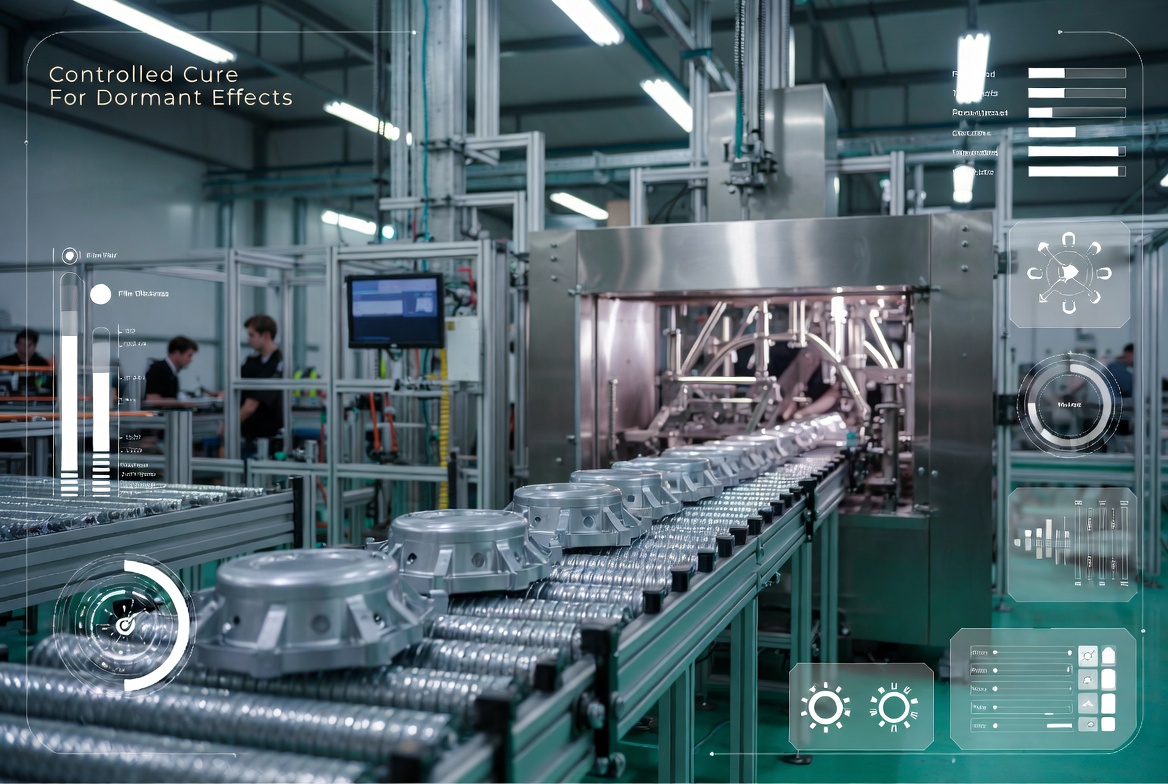
From an applicator's point of view, dormant coatings demand tight process control to deliver consistent results. The base dormant layer is typically cured at 200 °C (substrate temperature) for around 2.5–5 minutes before applying the clear. [thebusinessresearchcompany]
This partial‑to‑full cure achieves two things:
- The basecoat reaches a gel state that allows the clear coat to mechanically and chemically "latch onto" it, improving intercoat adhesion. [thebusinessresearchcompany]
- Flow of the base is mostly complete, reducing the risk of both layers trying to level at the same time and creating surface defects. [thebusinessresearchcompany]
If the base is undercured, it may continue to flow while the clear layer is also flowing, which can lead to crackled or muddled appearance. If the base is overcured, intercoat adhesion may suffer because the surface is too inert for optimal bonding. [made-in-china]
For production lines, this makes oven calibration, part temperature measurement, and cure validation (e.g., DSC, solvent rubs, or MEK tests) essential quality checks, especially when shifting between standard and dormant metallic lines. [globenewswire]
Dormant powders can typically be sprayed using standard electrostatic powder coating equipment without changes to the fundamental process. That said, their effect pigments and dye‑rich character make them more sensitive to certain variables than conventional solid colors. [made-in-china]
Best‑practice recommendations include:
- Maintain specified film thickness – Follow the product data sheet closely for both base and clear to avoid under‑ or over‑build that can dull the effect or create orange peel. [made-in-china]
- Time and temperature control – Always cure to the specified substrate temperature and dwell time; part mass and geometry must be considered in oven settings. [thebusinessresearchcompany]
- Careful line cleaning – Thoroughly clean spray booths, guns, and reclaim systems after running dormant colors to eliminate cross‑contamination with other powders. [made-in-china]
- Reclaim management – Although high batch consistency and cycle stability support the use of reclaimed powder, tight control of reclaim ratios is vital for color stability. [made-in-china]
Dormant products are generally not intended for architectural use and are better suited to decorative, industrial, or consumer-facing applications where design impact takes priority over long‑term facade performance. For exterior architectural projects, other series optimized for UV and weather resistance are recommended instead. [marketdataforecast]
From my experience working with industrial and B2B coatings buyers, dormant powders are typically specified when the finish needs to stand out visually while still meeting process‑efficiency and environmental goals. [6wresearch]
Common application areas include:
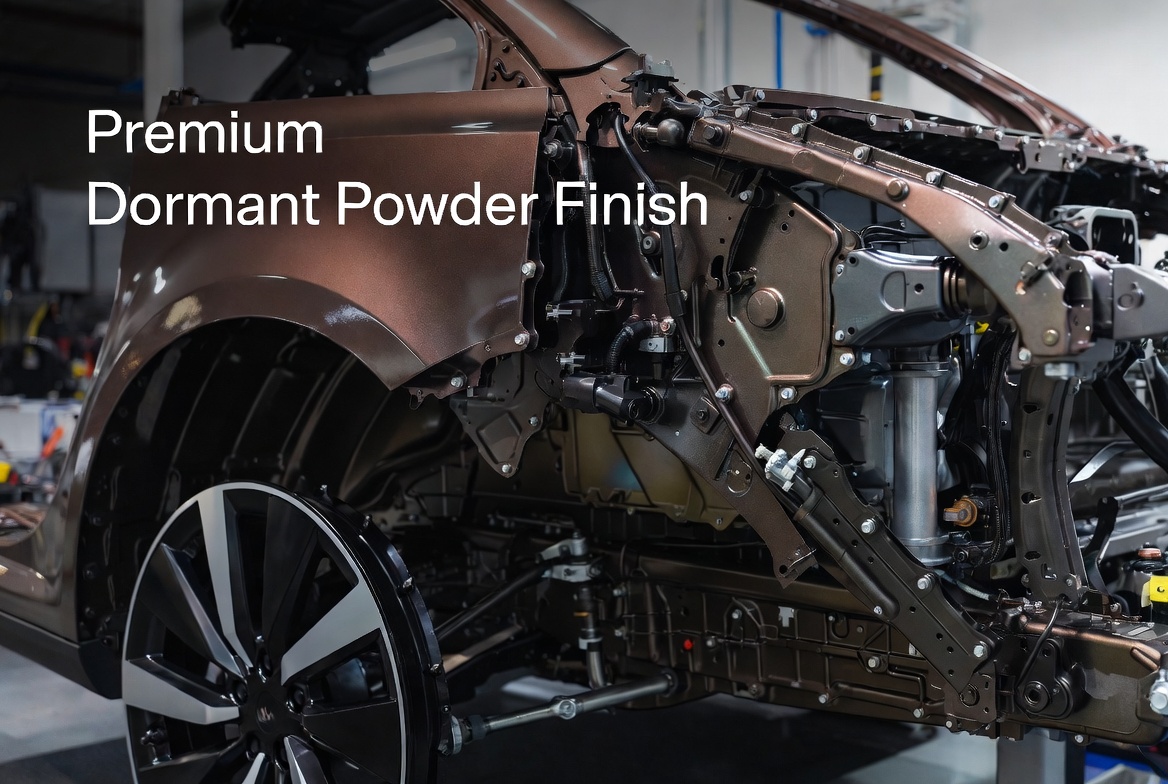
- EV and automotive components (wheels, trim parts, frames, accessories).
- High‑end hardware, tools, and consumer equipment.
- Furniture and specialty metalwork.
- Premium electrical enclosures, lighting, and signage.
Global demand for visually distinctive yet eco‑friendly coatings is rising as manufacturers shift away from high‑VOC liquid systems. With the global powder coatings market projected to reach over USD 31 billion by 2035, specialty effects like dormant metallics are becoming an important differentiator for OEMs in competitive segments. [researchandmarkets]
For many OEMs and specifiers, the business case for dormant powders goes beyond aesthetics. Powder systems are inherently solvent‑free, which means no VOC emissions during application and curing. This helps manufacturers align with tightening environmental regulations and internal ESG commitments. [6wresearch]
In Asia Pacific, where Yinda Technology operates across China, Indonesia, and Saudi‑linked trade routes, demand for green and low‑emission coatings is expanding rapidly. Powder coatings are among the fastest‑growing segments within the regional paints and coatings market, driven by construction, automotive, and electronics manufacturing. [marketsandmarkets]
For customers evaluating dormant powders against liquid multi‑coat systems, the sustainability benefits typically include:
- No solvent emissions and no need for expensive VOC abatement.
- High material utilization rates due to reclaim, reducing waste. [made-in-china]
- Safer working environments versus solvent‑borne lines. [6wresearch]
As a powder coating manufacturer specializing in R&D and eco‑friendly materials, Yinda Technology approaches dormant and other special‑effect powders as part of a broader surface‑engineering and energy‑efficiency strategy. [aluminiumchina]
Key pillars of this approach include:
- Design‑driven innovation – Developing special‑effect formulas (including dormant‑like metallics) that help OEMs differentiate products in architectural profiles, doors and windows, EV components, medical devices, and hardware. [aluminiumchina]
- Regional technical support – Serving customers through subsidiaries in China, Indonesia, and Saudi‑related markets enables localized color matching, process audits, and training for complex multi‑layer systems. [indoent]
- Energy‑efficient coating solutions – Integrating lower‑temperature cure technologies and optimized oven loading patterns to reduce energy consumption without compromising performance. [indoent]
For buyers, this means dormant‑style visual effects can be engineered alongside corrosion resistance, weather durability, and line efficiency, rather than being treated as a purely cosmetic add‑on.
When I work with coating buyers and engineers, I usually recommend walking through a simple checklist before committing to a dormant system:
1. Define the visual target clearly.
Decide whether you are aiming for a "candy" gloss, a softer satin metallic, or a more industrial matte depth, and request physical panels under real lighting conditions. [made-in-china]
2. Confirm substrate and end‑use.
For outdoor architectural facades, consider weathering‑optimized systems; for EV parts, tools, and equipment, dormant effects may be ideal. [globenewswire]
3. Validate process capability.
Review oven curves, gun settings, booth cleanliness, and reclaim strategy to ensure your line can reliably handle two‑coat dormant processes. [thebusinessresearchcompany]
4. Align on performance requirements.
Clarify corrosion resistance, chemical resistance, and mechanical performance targets so the powder supplier can recommend appropriate base and clear chemistries. [globenewswire]
5. Run pilot trials.
Test on small batches or representative components first to fine‑tune thickness, curing, and handling procedures before full‑scale production.
Approaching dormant coatings with this structured mindset dramatically reduces trial‑and‑error costs and shortens the time from lab samples to stable mass production.
A clear understanding of how dormant coatings compare with standard metallic powders helps both engineers and purchasing teams justify specification decisions.
| Aspect | Dormant powder coatings | Conventional metallic powder |
|---|---|---|
| Layer structure | Metallic base + clear topcoat | Single‑layer metallic |
| Visual effect | Deep, candy‑like, high color saturation | Flatter metallic, less depth |
| Process complexity | Two‑coat with tight cure window | One‑coat, simpler to run |
| VOC emissions | None during application and cure | Typically none (powder) |
| Cost impact | Higher (extra layer, more control) | Lower per finished m² |
| Best suited for | High‑impact, premium visual parts | General industrial and architectural finishes |
For many B2B buyers, the decision is less about basic protection and more about how much visual differentiation is required to win in competitive markets such as EVs, consumer equipment, and high‑end hardware.
Dormant powders can deliver outstanding results, but the same properties that create their distinctive appearance also introduce some risk if not managed correctly. [thebusinessresearchcompany]
Typical challenges include:
- Muddled or crackled appearance – Often the result of under‑curing the basecoat, so both layers are flowing simultaneously. [thebusinessresearchcompany]
- Poor intercoat adhesion – Can occur if the basecoat is over‑cured and the clear can no longer "bite" into the surface. [thebusinessresearchcompany]
- Color drift between batches – May be influenced by reclaim ratios, booth contamination, or inconsistent film builds on complex geometries. [made-in-china]
Practical counter‑measures:
- Implement regular cure‑profile checks with contact thermometers or data‑loggers.
- Use dedicated booths or rigorous cleaning procedures for dormant runs.
- Work closely with your powder supplier's technical team to set reclaim limits and adjust gun settings for complex parts.
With disciplined process control, dormant powders can be as repeatable as standard solids while delivering a much higher perceived finish value.
Looking at global coatings trends, dormant powders sit at the intersection of several growth vectors: eco‑friendly technologies, EV and next‑gen mobility, and design‑driven differentiation. [linkedin]
Industry data shows:
- The global powder coatings market is expected to grow strongly through 2035, supported by demand for durable, VOC‑free finishes in automotive, appliances, and general industrial segments. [researchandmarkets]
- Asia Pacific, where Yinda operates multiple facilities and investments, remains the fastest‑growing region for paints and coatings, with powder technology outpacing many liquid systems. [marketsandmarkets]
- Green and environmentally friendly coatings – including powder – are gaining share as regulations tighten and customers demand lower‑emission supply chains. [globenewswire]
Within this context, dormant and other special‑effect powder technologies give manufacturers a way to elevate product appeal while staying aligned with sustainability and operational efficiency goals.
If your team is exploring ways to upgrade the look and feel of coated components while reducing VOC emissions and energy use, dormant‑style powder systems are an option worth evaluating with real‑world trials and technical support. Based on your current product mix—such as architectural profiles, doors and windows, EV components, medical devices, and hardware—engaging early with a specialized powder manufacturer to co‑develop effect colors and process windows can unlock both visual and operational advantages in your next coating project. [aluminiumchina]
1. Are dormant powder coatings suitable for outdoor architectural facades?
In general, dormant products are not recommended for architectural facades and curtain walls, where long‑term UV and weathering performance require specialized architectural series. For those projects, you should specify systems designed and tested specifically for architectural use. [marketdataforecast]
2. Can I run dormant powders on an existing powder coating line?
Yes, most dormant powders can be processed on standard electrostatic powder coating lines, provided you can control cure temperature, dwell time, film thickness, and booth cleanliness. A short line audit with your supplier is the best way to confirm readiness. [thebusinessresearchcompany]
3. Do dormant coatings cost significantly more than regular metallic powders?
Per finished square meter, dormant systems typically carry a higher cost because they require two layers and tighter process control. However, they also deliver a higher perceived value and can justify premium pricing in many end‑markets. [thebusinessresearchcompany]
4. How do dormant powders contribute to sustainability goals?
Like other powder coatings, dormant systems are solvent‑free and generate no VOC emissions during application and cure. High transfer efficiency and reclaimability further reduce waste compared with many liquid multi‑coat systems. [globenewswire]
5. What industries benefit most from dormant powder coatings?
Dormant coatings are particularly attractive in markets where design and brand differentiation are critical, including EV components, premium hardware, specialty equipment, and consumer products. They are less common in high‑volume, cost‑driven protection‑only applications. [researchandmarkets]
1. TIGER Coatings. "What are Dormant Powder Coatings?" – Technical blog. Available at: [https://www.tiger-coatings.com/us-en/tiger-group/tiger-blog/what-are-dormant-powder-coatings]
2. TIGER Coatings. "Dormant Effect Powder Coatings." Product and application overview. Available at: [https://www.tiger-coatings.com/special-effects/dormant]
3. The Business Research Company. "Powder Coatings Global Market Report." Market trends and growth drivers. Available at: [https://www.thebusinessresearchcompany.com/report/powder-coatings-global-market-report]
4. Research and Markets. "Powder Coatings Market Outlook 2026–2034." Market size and forecast. Available at: [https://www.researchandmarkets.com/reports/5688029/powder-coatings-market-outlook-2026-2034-market]
5. GlobeNewswire. "Powder Coatings Market Manufacturers & Suppliers Company Analysis." Technology and sustainability trends. Available at: [https://www.globenewswire.com]
6. Market Data Forecast. "Asia Pacific Paints and Coatings Market Report." Regional growth and technology segmentation. Available at: [https://www.marketdataforecast.com/market-reports/asia-pacific-paints-and-coatings-market]
7. MarketsandMarkets. "Asia Pacific Paints & Coatings Market worth $134.10 billion by 2030." Regional trends and CAGR. Available at: [https://www.marketsandmarkets.com/PressReleases/asia-pacific-paints-&-coatings.asp]
8. Towards Chemical and Materials / GlobeNewswire. "Green Coatings Market Size to Worth USD 236.27 Bn by 2035." Sustainability and green coatings growth. Available at: [https://www.globenewswire.com]
9. 6Wresearch. "What is the Outlook for the Coatings Market." Low‑VOC and powder adoption insights. Available at: [https://www.6wresearch.com/market-takeaways-view/what-is-the-outlook-for-the-coatings-market]
10. Guangdong Yinda Technology Co., Ltd. Corporate and exhibitor profile. Available at: [https://www.aluminiumchina.com] and [https://www.made-in-china.com/showroom/6f4b36fdadb3f5c8/]
11. Environmentally Friendly Coatings Market. Regional growth and sustainability trends. Available via industry reports: [https://www.linkedin.com]


