Language


Views: 258 Author: Yinda Powder Coating Publish Time: 2026-10-01 Origin: Site


Content Menu
>> Dual-coat co-curing: Two coats, one final bake
>> Inter-coat baking: A bake between layers
● Co-Curing vs. Inter-Coat Baking
● What Determines Corrosion Protection?
>> Substrate and pretreatment come first
>> Primer and topcoat must have distinct jobs
>> Edges can defeat an excellent flat-panel result
● Which Method Fits Your Line?
>> Choose co-curing for a qualified, repeatable process
>> Choose inter-coat baking for control or specification needs
>> Match the decision to the component
● A Practical Qualification Plan
>> Run a fair, side-by-side trial
>> Look beyond salt-spray hours
>> Calculate savings after yield
● What Should Buyers Ask Yinda?
>> Is dual-coat co-curing always faster?
>> Can any powder primer and topcoat be co-cured?
>> Does inter-coat baking require fully curing the primer?
>> Which method provides better corrosion resistance?
>> Are more salt-spray hours proof of longer outdoor life?
>> How should a buyer verify that the final cure is complete?
>> What should be included in a supplier trial request?
For multi-layer anti-corrosion metal protection, the choice between dual-coat co-curing and inter-coat baking affects more than oven time. It changes how a powder primer and topcoat are applied, how their bond is formed, and which defects a production line must control. The better method is the one that delivers repeatable protection on your actual metal parts—not simply the one with fewer process steps.
A two-layer system typically uses a primer to support corrosion resistance and a topcoat to provide the required appearance and outdoor durability. Both routes can work. Neither compensates for poor pretreatment, inadequate edge coverage, or an unverified cure schedule.

In dual-coat co-curing, the applicator sprays the primer and then applies the topcoat before the primer has received a full cure. Both layers complete their cure during one final oven cycle. A dry-on-dry, or dust-on-dust, process applies the second powder over a primer that remains uncured.
This is not a shortcut that works with any two powders. The primer and topcoat must be formulated and qualified for the intended application sequence. Their flow, electrostatic application behavior, and cure requirements must work together. If they do not, a saved oven pass may become a costly adhesion or appearance failure.
A related but distinct route gives the primer a short heating step so that it flows into a continuous film without fully curing. The topcoat is then applied, followed by the final cure. This fused-primer method still uses intermediate heat, so its energy and throughput benefits differ from true dry-on-dry co-curing.
In inter-coat baking, the applicator sprays the primer, heats it to a specified condition, applies the topcoat, and then runs the final bake. The intermediate step may be a partial bake or a near-full or full primer cure, depending on the products' technical data sheets and the approved process.
That distinction matters. "Baked primer" does not automatically mean "fully cured primer." A partial bake may leave a suitable surface for the next layer, while excessive heat exposure can make intercoat adhesion more difficult. Conversely, a primer that has received too little heat may not perform as intended under the topcoat.
For purchasing and production teams, the first question should therefore be: What condition must the primer reach before topcoating? Ask for an approved process window, not just an oven setpoint.
| Decision factor | Dual-coat co-curing | Inter-coat baking |
|---|---|---|
| Application sequence | Primer and topcoat are applied before one final cure | Primer receives an intermediate bake before topcoating |
| Formulation requirement | Requires a pair validated for simultaneous curing | Requires a validated primer bake and topcoat cure schedule |
| Oven passes | Usually one final curing pass; a fused-primer variation adds intermediate heat | Intermediate primer heating plus final topcoat bake |
| Production potential | Can reduce reheating, cooling, handling, and oven demand | Gives operators an opportunity to assess the primer before topcoating |
| Main process risk | Layer interaction, powder application, or cure mismatch | Primer overbake or inconsistent intermediate bake |
| Best fit | Repeatable production with a qualified coating pair and controlled line | Lines needing a defined primer stage or using systems specified for separate baking |
| Evidence needed | Final-film adhesion, cure, appearance, and corrosion results on representative parts | The same final-film evidence, plus control of primer condition before topcoating |
The table describes process tendencies, not guaranteed performance rankings. A well-controlled inter-coat bake can outperform a poorly matched co-cure pair, and the reverse can also be true. Compare complete systems on the same substrate, with the same pretreatment, target film build, and exposure criteria.
A coating system begins at the metal surface. Oil, oxides, weld residue, sharp burrs, and unsuitable pretreatment can undermine either curing route. The correct preparation depends on whether the part is carbon steel, galvanized steel, or aluminum, as well as its intended service environment.
For an architectural aluminum profile near a coast, the critical question may be resistance to corrosion that spreads beneath the finish. For a fabricated steel bracket, exposed edges, welds, and difficult-to-reach recesses may dominate the risk. These are different problems. The same powder pair should not be assumed to solve both without application-specific testing.
A primer can improve a protective system, but it does not replace surface preparation. Before comparing bake methods, confirm that both trial groups receive the same documented cleaning and pretreatment. Otherwise, a difference in corrosion results may be wrongly attributed to curing.
A two-layer design should explain why each layer exists. An appropriately selected primer supports the required barrier or corrosion-protection function. The topcoat delivers the specified color, gloss, texture, and weathering performance.
For exterior parts, do not assume that a topcoat will make an unsuitable underlying layer fit for prolonged outdoor exposure. Likewise, do not assume that a corrosion-resistant primer alone will preserve the appearance of an exposed component. Select the pair as a system, including its intended substrate and service conditions.
Compatibility is particularly important with co-curing. A supplier should confirm that the specific primer and topcoat are approved for application together in the proposed sequence. For inter-coat baking, the supplier should state how much primer cure is required before the second coat—and what happens if the line runs hotter or slower than planned.
Sharp edges, cutouts, welds, and corners deserve their own inspection plan. A two-coat process can improve coverage at vulnerable features, but flat test panels alone may hide problems on formed production parts.
This is an easily missed procurement trap: a sample panel may look excellent while a bracket's inside corner receives a much thinner or less uniform finish. Ask for trial pieces that include the worst-case geometry, not only smooth panels. Inspect accessible edges after coating and include representative edges in corrosion testing where the product specification permits.

Dual-coat co-curing is attractive when throughput, oven capacity, part handling, or energy use constrain production. Removing an intermediate full cure can avoid a heating and cooling cycle. That can matter especially for large, heavy, or high-volume components.
Yet the practical benefit must be measured on the real line. Two spray applications are still required, and booths, color changes, racking, and powder transfer remain part of the process. If an uncured primer becomes contaminated during transfer, or the topcoat does not apply uniformly over it, the theoretical cycle-time advantage may disappear in rework.
Choose this route when the coating supplier can provide a validated co-cure pair, the line can maintain the required application conditions, and trials demonstrate acceptable final-film performance. Do not convert a conventional two-bake system to one bake merely by omitting the first oven pass.
An intermediate bake can give operators a defined primer condition before they apply the topcoat. It may also fit existing equipment or a specified coating system that has not been qualified for dry-on-dry application.
The trade-off is additional thermal processing and, potentially, more handling and floor space. The primer may experience heat twice. If the intermediate stage overshoots its approved window, the next layer may adhere less reliably. Mixed-gauge assemblies make this harder: thin sections and heavy sections can reach different metal temperatures during the same oven pass.
Inter-coat baking is therefore not the "safer" option by default. It is the better option when its actual primer condition can be controlled and the complete system passes the required tests.
An architectural window profile, an electric-vehicle component, and an appliance panel may all need corrosion protection, but they do not face identical demands. Exposure, shape, cosmetic tolerance, production volume, and customer specifications should guide the process choice.
| Component scenario | Question to settle before selecting a route |
|---|---|
| Coastal architectural aluminum | Is the pretreatment and finished system appropriate for the specified coastal exposure and appearance requirements? |
| Fabricated steel hardware | Do edges, welds, and recesses retain protection after the proposed application sequence? |
| High-volume vehicle-related parts | Does one-cure processing improve line capacity without increasing rework or reducing specified performance? |
| Appearance-critical appliances | Does either route change gloss, texture, color consistency, or visible defects on production parts? |
| Heavy-gauge equipment | Has the thickest section reached the required metal-temperature cure schedule? |
These are qualification questions, not claims that one route is universally preferable for a particular industry.
The most useful comparison is a controlled trial on the part you intend to ship. Start with the customer's exposure and appearance requirements. Then compare processes without changing several variables at once.
1. Define the service conditions. Record substrate, intended environment, expected cleaning or chemical exposure, and cosmetic requirements.
2. Prepare representative parts. Include production-grade metal, the specified pretreatment, welds, cut edges, recesses, and both thin and thick sections where applicable.
3. Agree on the coating systems. Identify primer and topcoat products, batch details, target film build, and approved application and cure instructions.
4. Record the thermal history. Measure metal temperature on representative locations rather than relying only on the oven display. Log the intermediate step, if used, and the final cure.
5. Inspect the finished film. Check appearance, thickness, adhesion, and the location of any failure—at the substrate, between layers, or within a layer.
6. Test against the specification. Use the agreed corrosion, weathering, and mechanical tests, with pass/fail limits set before results are reviewed.
7. Repeat under production conditions. A successful laboratory panel is a starting point; a stable production run is the stronger decision basis.
This plan gives the buyer evidence about process capability, not merely a single attractive sample.
Salt-spray exposure is useful when a specification calls for it, but a headline number of hours is not a service-life warranty. A meaningful report identifies the method, substrate, pretreatment, film build, specimen condition, exposure duration, and how defects were assessed.
For demanding outdoor service, consider whether the customer also requires cyclic testing that introduces changing conditions. Adhesion measurements should likewise be read carefully: a tape test can reveal important weaknesses, but it may not distinguish small differences between otherwise well-adhered coatings. Record where failure occurs, because intercoat separation and loss of adhesion to the metal suggest different corrective actions.
For architectural aluminum, check the applicable architectural-coating specification and pretreatment requirements rather than automatically applying a steel-structure test program. For protective steel systems, use the relevant customer specification and qualification methods. A standard's test procedure alone does not supply every project's pass/fail limit.
A one-bake process may reduce oven time, but oven passes are only one part of cost. A useful purchasing comparison is:
Cost per accepted part = powder + pretreatment + energy + labor + handling + inspection + rework + scrap, divided by accepted parts.
Run that calculation for both methods using measured trial data. Include color-change losses, any extra booth time, and the cost of testing. If the co-cure route saves heat but produces more rejected parts, its apparent advantage may shrink. If inter-coat baking requires an extra full thermal cycle on heavy steel, that cost may be substantial.
This is why the strongest business case connects corrosion performance, first-pass yield, and line capacity rather than treating cure time as a stand-alone metric.
Yinda Technology develops and manufactures powder coatings and serves applications including architectural profiles, doors and windows, new-energy vehicles, medical equipment, hardware, and appliances. For a two-layer anti-corrosion project, the useful conversation is about a specific part and performance target—not a generic promise that one process is better.
Send the technical team your substrate and pretreatment details, component drawings or photos, annual volume, exposure conditions, appearance requirements, available oven profile, and applicable customer specification. Ask for a proposed primer–topcoat pairing and written confirmation of whether it is intended for co-curing, a fused-primer route, or inter-coat baking.
Request a trial plan that identifies target film build, cure window, representative test pieces, and acceptance criteria. If energy savings are a priority, ask for a comparison using your line's measured conditions. If corrosion risk is the priority, start with pretreatment, vulnerable features, and the tests that match the part's actual service.
Ready to evaluate a two-layer system? Contact Yinda Technology with your component specification and request a side-by-side coating trial before committing to a production method.
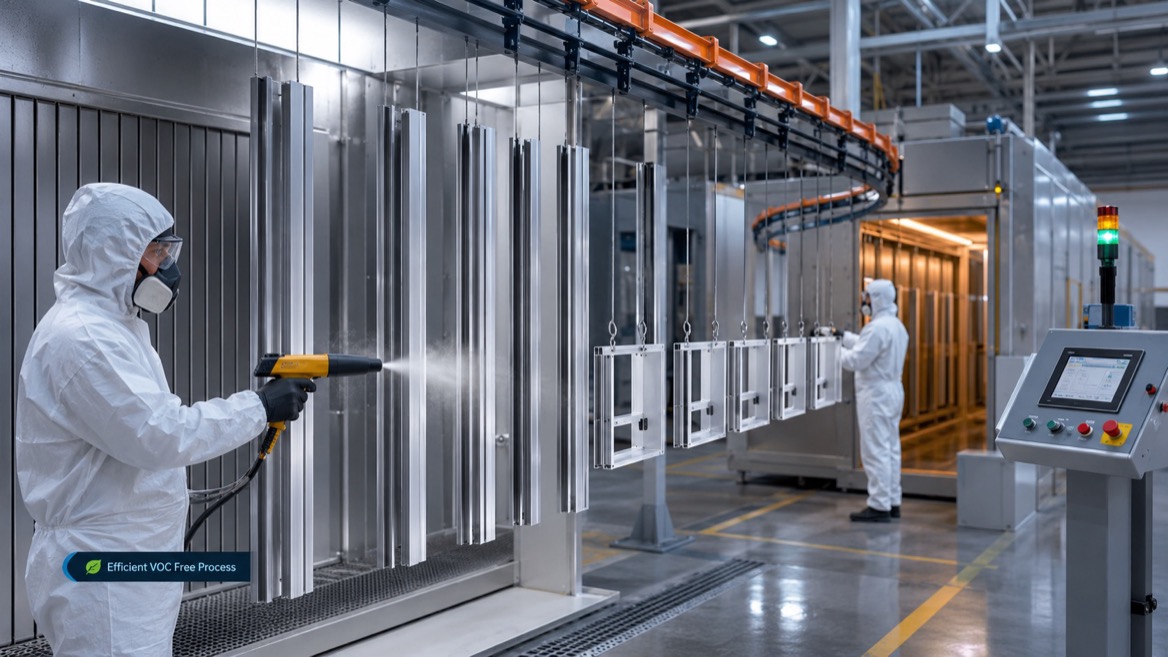
It removes an intermediate full curing cycle in a dry-on-dry process, but the overall gain depends on spraying, transfer, cooling, inspection, and rework. Measure accepted parts per shift rather than assuming that one fewer bake automatically delivers a proportionate throughput increase.
No. Use a pairing that the supplier has qualified for the intended application and final cure. Two powders that perform well separately may not apply, flow, or cure acceptably together.
Not always. The specified intermediate condition may be partial, near-full, or full cure. Follow the approved product instructions; an overbaked primer may present an intercoat adhesion risk, while insufficient heating can also compromise the system.
Neither wins universally. Corrosion resistance depends on substrate preparation, compatible materials, film coverage, cure, and exposure. Compare finished systems under the same specified test conditions and inspect vulnerable part geometry.
No. Salt-spray results need an agreed method and acceptance criteria, and they do not directly convert into years of service. Outdoor performance also depends on conditions that a continuous salt fog does not reproduce.
Review the coating supplier's cure schedule and record metal temperature and time on representative parts, particularly the slowest-heating sections. Then use the specified physical or chemical checks on the finished coating; an oven-air reading alone is insufficient.
Provide the metal and pretreatment, part geometry, service environment, appearance target, production volume, oven capability, and customer test requirements. Ask the supplier to identify the exact powder pair, application sequence, target thickness, cure window, and proposed pass/fail criteria.
1. [Diamond Vogel — *Application of the Powder Primer/Powder Topcoat System*]. Technical bulletin covering fused-primer application, intercoat adhesion, pretreatment, and final-cure checks. [diamondvogel]
2. [Fiona Levin-Smith, *How to Apply a Two Coat Powder Coating System*, Finishing & Coating]. Industry guidance on two-cure and dry-on-dry processes, compatibility, film build, and application risks. [finishingandcoating]
3. [Rob Breitzman, *Dust-on-Dust Powder Coatings: A Breakthrough in Energy and Efficiency*, *Powder Coated Tough*, 2026]. Industry account of a formulated one-cure system and its production considerations; product-specific claims should not be generalized to all powder pairs. [powdercoatedtough]
4. [TCI Powder Coatings — *Powder Coating Primers*]. Supplier guidance on primer roles and the need to test adhesion when topcoating cured primer films. [tcipowder]
5. [QUALICOAT UK & Ireland — *Seaside Specification*]. Architectural-aluminum pretreatment and filiform-corrosion considerations for coastal exposure. [qualicoatuki]
6. [KTA — *ISO Testing Specifications According to ISO 12944-6 and ISO 12944-9*]. Explanation of protective steel-system qualification, specimen preparation, adhesion assessment, and corrosion-testing limitations. [kta]
7. [ISO — *ISO 9227:2022, Corrosion Tests in Artificial Atmospheres — Salt Spray Tests*]. Official scope of salt-spray methods and their limitations for predicting long-term resistance. [iso]
8. [ASTM International — *ASTM D3359-23, Standard Test Methods for Rating Adhesion by Tape Test*]. Official method description and limitations, including considerations for multicoat films. [store.astm]
9. [Yinda Technology — *About Us*]. Company profile, manufacturing focus, and stated application industries. [yinda-global]


