Language


Views: 294 Author: Yinda Powder Coating Publish Time: 2026-10-03 Origin: Site


Content Menu
● Enclosed Cyclone Recovery vs. Cartridge Filter Systems: The Main Difference
● How Enclosed Cyclone Powder Recovery Works
>> Separation, Sieving, and Reuse
>> Why Cyclones Suit Frequent Color Changes
● How Cartridge Filter Powder Recovery Works
>> Direct Overspray Collection
>> Dedicated Modules Change the Comparison
● Recovery Efficiency vs. Actual Powder Utilization
>> Keep Three Performance Measures Separate
>> Evaluate the Powder That Can Actually Be Reused
● Color Changes and Cross-Contamination Control
>> Measure Time Until Acceptable Production Restarts
>> Test Difficult Color Transitions
● Metallic Powders and Industry-Specific Requirements
>> Metallic and Special-Effect Finishes
>> Different Products Create Different Priorities
● Total Operating Cost: A Practical Comparison
>> Look Beyond Equipment Price
>> An Illustrative Changeover Calculation
● A Five-Step Qualification Plan for Multi-Color Powder Lines
>> 1. Document the Real Production Mix
>> 2. Define Acceptance Criteria
>> 3. Run Representative Production Trials
>> 4. Measure the Complete Material Balance
>> 5. Verify Repeatability and Serviceability
● Energy, Maintenance, and Powder-Coating Safety
● Which Powder Recovery System Should You Choose?
>> Is cyclone recovery always better for multi-color powder coating?
>> Do cartridge systems recover more powder?
>> Does a cyclone system still need filters?
>> Can the same cartridge be used for different colors?
>> Can metallic powder be reclaimed?
>> What should a supplier demonstrate before purchase?
Enclosed cyclone recovery vs. cartridge filter systems is an important comparison for manufacturers running multi-color industrial powder lines. Both technologies capture overspray, but they manage reusable powder, color changes, and contamination differently. The right choice depends less on the highest advertised collection percentage than on your production schedule, coating specifications, and ability to restart with acceptable parts.
For Yinda Technology customers coating architectural profiles, doors and windows, new-energy vehicle components, medical equipment, hardware, and appliances, recovery selection should begin with the powder and finished-part requirements.
My recommendation is to prioritize consistency: choose the system that maintains an acceptable finish while controlling powder consumption, changeover losses, and downtime.
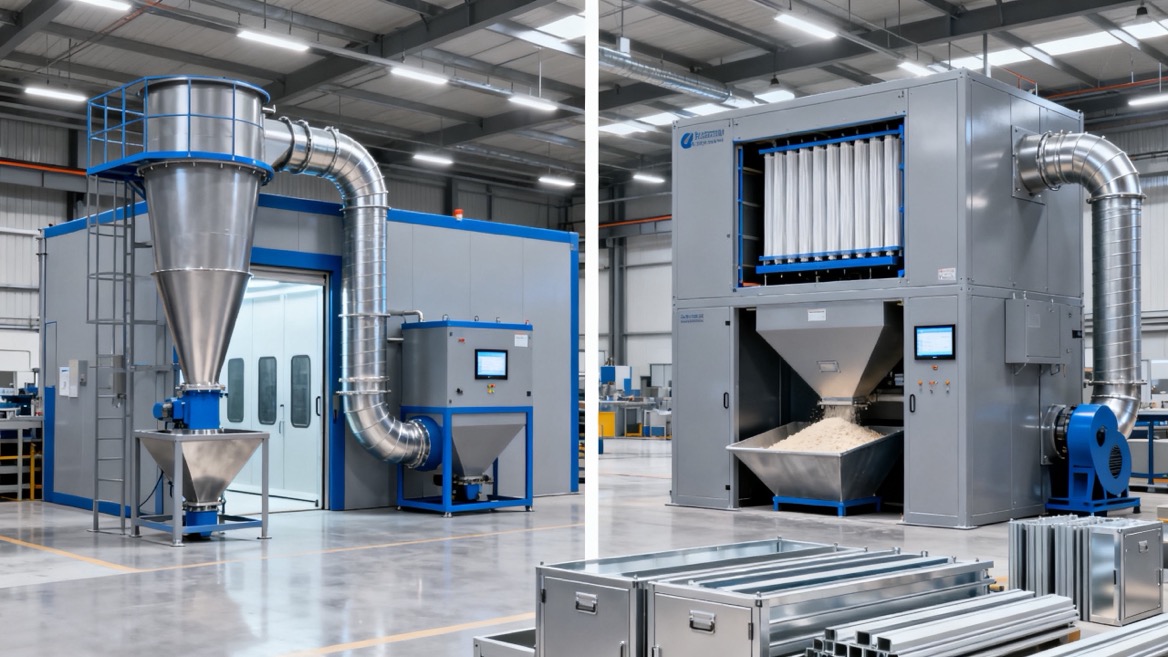
An enclosed cyclone recovery system separates powder from extraction air using centrifugal action. Recovered material enters a reclaim circuit, while the remaining fine particles travel to downstream filtration.
A cartridge recovery system collects overspray directly on filter media. Pulse cleaning releases accumulated powder into a collection hopper for potential reuse.
Importantly, this is not simply a comparison between cyclones and filters. A cyclone installation normally also uses final filters. The real distinction is where reusable powder is separated and how that powder-contact equipment is cleaned between colors.
"Enclosed" describes containment and equipment arrangement. It does not establish a standardized recovery efficiency, cleaning time, or contamination guarantee.
| Selection factor | Enclosed cyclone recovery | Direct cartridge recovery |
|---|---|---|
| Primary separation | Centrifugal separation | Filtration through cartridge media |
| Typical production fit | Frequent color changes and varied batches | Single colors or a limited recurring palette |
| Reclaim characteristics | Some fines pass to final filtration | Captures a broader particle-size fraction |
| Color-change approach | Clean accessible powder-contact surfaces | Exchange dedicated modules or clean designated components |
| Main contamination concern | Residue in ducts, transfer lines, and reclaim equipment | Previous color retained in filter media and collection areas |
| Economic priority | Reduce changeover losses | Maximize collection during stable production |
These are selection tendencies, not universal rules. Modular cartridge systems can handle multiple colors effectively when dedicated color modules and storage space are available.
Extraction airflow carries overspray from the booth into the cyclone. The swirling flow drives particles toward the walls, allowing separated powder to descend into the recovery section.
The reclaim circuit can then transfer and sieve that powder before returning it to the feed center. Sieving removes appropriately sized contaminants; it does not remove an unwanted color made from particles similar in size to the desired powder.
Powder that escapes cyclone separation reaches downstream filters. Depending on the equipment configuration, this material may be collected as waste rather than returned to production.
Therefore, final-filter capture should not automatically be counted as usable powder recovery.
Cyclones generally offer cleanable internal surfaces rather than a large powder-retaining filter-media area in the primary reclaim stage.
However, the complete cleaning task still includes:
- Booth walls and floor.
- Guns, pumps, and powder hoses.
- Extraction ducts and cyclone surfaces.
- Sieves, transfer lines, and reclaim receivers.
- Feed hoppers and other powder-contact components.
A fast-cleaning cyclone cannot compensate for residue elsewhere. Evaluate the whole powder path, not the separator alone.
In direct cartridge recovery, extraction air passes through filter cartridges. Powder accumulates on the media, and pulse cleaning dislodges it into a hopper.
This arrangement can provide high collection efficiency. It is particularly attractive when a line runs one powder for long periods and recovered material remains suitable for reuse.
Nordson publishes recovery figures of over 95% for its twin-cyclone systems and up to 99% for cartridge recovery booths. These are manufacturer-specific figures, not guaranteed results for every installation or powder.
For multi-color production, cartridge systems may use removable, color-specific recovery modules.
This avoids treating a powder-loaded cartridge as though routine cleaning makes it suitable for every subsequent color. Nevertheless, dedicated modules introduce additional requirements:
- Purchase and replacement costs.
- Protected storage space.
- Clear color identification.
- Safe handling procedures.
- Cleaning of shared powder-contact equipment.
A dedicated module protects only its own recovery section. Shared guns, hoses, booth surfaces, and feed equipment can still introduce contamination.
Equipment quotations often use efficiency figures without explaining their boundaries. Ask suppliers to distinguish:
1. First-pass transfer efficiency: the proportion of sprayed powder deposited on parts during the initial application.
2. Recovery efficiency: the proportion of overspray captured in the specified recovery stage.
3. Overall material utilization: the proportion of purchased powder ultimately contributing to acceptable production.
These measures answer different questions.
A final filter may capture nearly all particles reaching it while contributing little reusable powder. Similarly, high overspray collection does not guarantee low consumption if operators discard contaminated reclaim or reject coated parts.
Recoverable powder must remain suitable for the coating specification.
Repeated reclamation can change the particle-size distribution of the working mixture. Cyclones may separate finer particles differently from coarser ones, while direct cartridge collection retains a broader fraction.
The production effect depends on the formulation, operating settings, reclaim ratio, and part geometry. Monitor application behavior, film thickness, appearance, and charging performance instead of prescribing a universal virgin-to-reclaim ratio.
The appropriate ratio should be qualified with the powder supplier and line trials.
A quoted color-change time may describe only an automated purge or an equipment-cleaning sequence.
For purchasing decisions, measure the interval from the final acceptable part in color A to the first acceptable production part in color B.
Include cleaning, module exchange, powder stabilization, inspection, and any rejected restart parts. This prevents a short equipment demonstration from being mistaken for a complete production changeover.
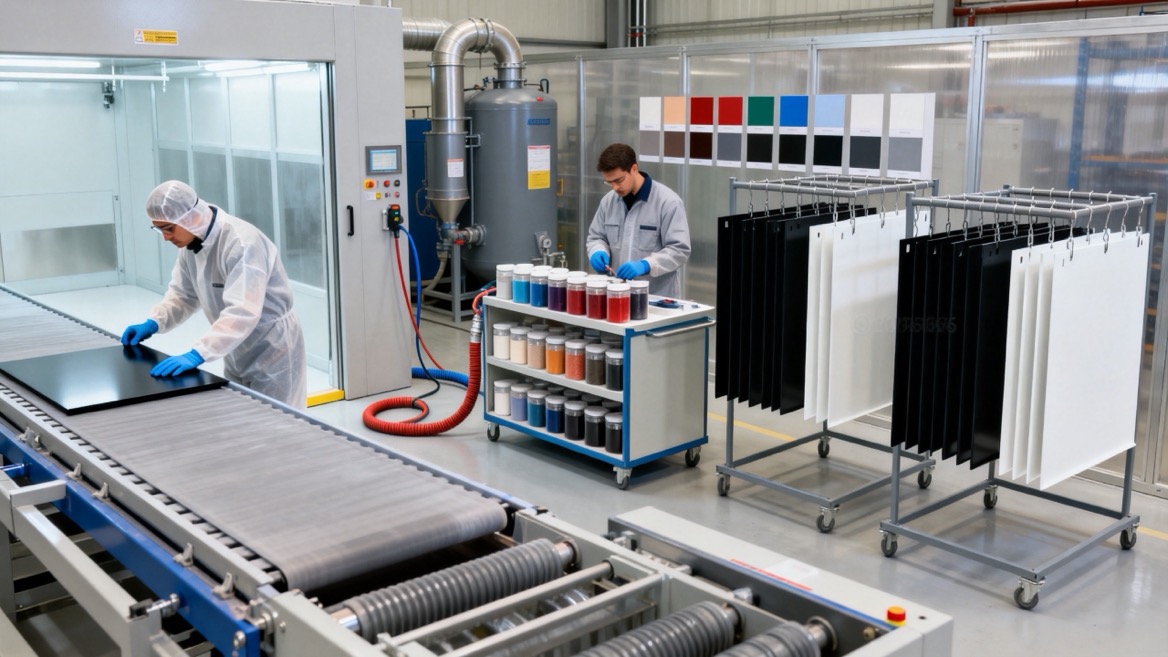
Challenge the proposed system with representative transitions:
- Black to white.
- Strong colors to pale finishes.
- Textured powder to smooth powder.
- Metallic finishes to solid colors.
- Different powder chemistries where cross-contamination is unacceptable.
Inspect recesses, corners, and broad visible surfaces. Small traces of previous powder can be especially noticeable on light or smooth finishes.
For particularly demanding batches, a validated spray-to-waste start may be preferable to immediate reclaim. Treat that discarded powder as a measured production cost.
Metallic powders require additional attention because changes in the working powder mixture can affect visual appearance.
Do not assume that either recovery technology guarantees consistent metallic shade. Confirm whether the formulation is intended for reclaim, establish permitted operating conditions, and compare virgin and reclaimed application panels.
Where appearance is critical, qualify the actual formulation rather than applying a general rule to all metallic powders.
| Application | Main recovery-selection priority |
|---|---|
| Architectural profiles and windows | Consistent visible color and dependable changeovers |
| New-energy vehicle components | Compliance with specified functional and coating requirements |
| Medical equipment housings | Appearance consistency and documented cleanliness controls |
| Hardware and appliances | Stable finish quality with economical production |
A recovery system does not create weather resistance, electrical insulation, or antimicrobial performance. Those properties depend on the specified coating, substrate preparation, application, curing, and testing.
For Yinda Technology, powder selection and recovery qualification should therefore be coordinated rather than treated as separate purchasing decisions.
Compare annual operating costs using the same production assumptions.
Include:
- Powder purchases and discarded reclaim.
- Color-change labor.
- Lost productive time.
- Filter and module replacement.
- Electricity and compressed air.
- Maintenance and waste handling.
- Rework and rejected parts.
A cartridge system can be economical for extended single-color runs. A cyclone system may justify additional investment where frequent changes create substantial downtime or contamination losses.
Neither result should be assumed before reviewing the batch schedule.
Consider a line completing eight color changes per day. If one configuration reduces validated changeover time by six minutes per change, it saves 48 minutes daily.
Across 250 production days, that equals 200 hours annually. At an assumed productive-hour value of $120, the potential capacity value is $24,000.
This is an illustrative calculation, not a Yinda customer result. It becomes commercially meaningful only when the recovered time supports additional profitable production or reduces actual operating costs.
Compare that benefit against equipment premiums, powder losses, and maintenance differences.
Record batch sizes, colors, powder types, part dimensions, and change frequency.
Include occasional difficult finishes. A system optimized around the most common powder may struggle with a small but commercially important product group.
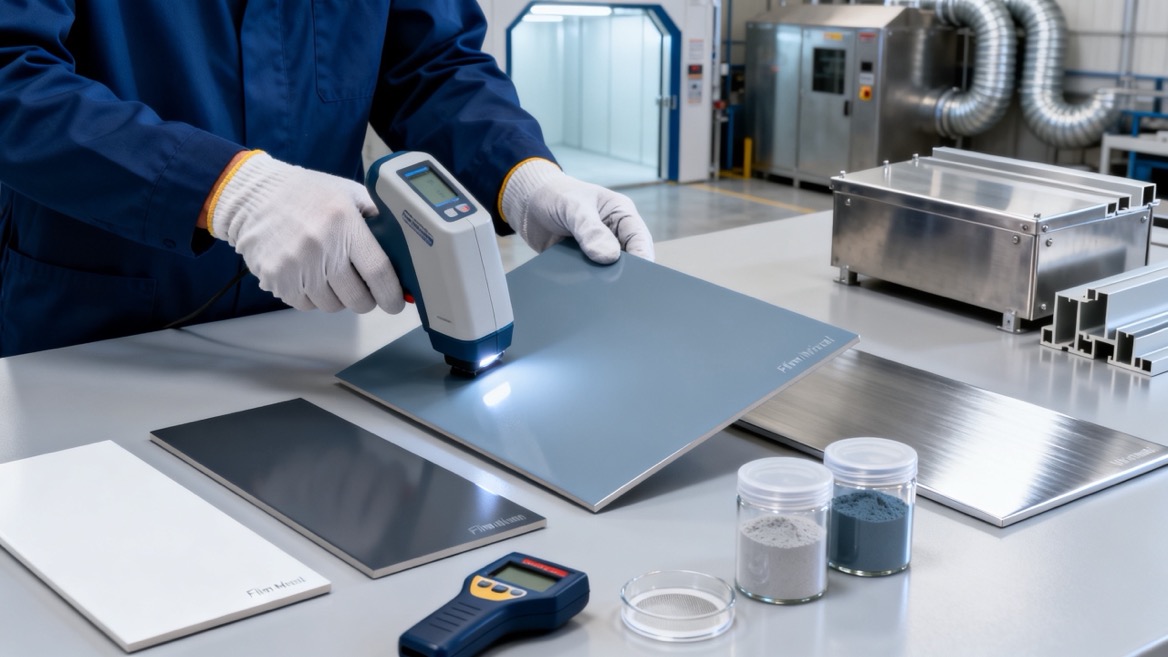
Agree on film thickness, appearance, permitted color variation, and contamination limits.
Define how many acceptable restart parts are required before a changeover is considered complete.
Use actual powder formulations and representative parts.
Test both favorable and difficult color sequences under the proposed operating procedure. Avoid relying solely on demonstrations using easy-to-clean powders or simple panels.
Record powder issued, usable reclaim retained, discarded material, coated output, and rejects over a defined trial.
Account for powder remaining inside the system. Otherwise, inventory changes can distort apparent consumption and recovery results.
Repeat trials with the operators expected to run the line.
Inspect cleaning access, module handling, spare-parts availability, and maintenance requirements. Request written descriptions of the operating conditions behind supplier performance claims.
Neither technology is automatically the lower-energy choice. Fan demand depends on airflow, system resistance, and operating conditions. Cartridge pulse cleaning and powder transport also consume compressed air.
Compare measured electricity and compressed-air consumption at equivalent production rates and containment requirements.
Maintenance should include filter-condition monitoring, airflow checks, seal inspection, and reclaim-circuit inspection according to the equipment instructions.
Powder coatings can present combustible-dust hazards. Enclosure does not remove the need for suitable grounding, ventilation, housekeeping, and professionally designed protection measures.
Use applicable local requirements for installations in China, Indonesia, and Saudi Arabia. United States occupational rules offer a useful public reference, but they do not establish compliance in those jurisdictions.
Favor enclosed cyclone recovery when frequent color changes, a broad palette, and accessible cleaning are central to production.
Favor direct cartridge recovery when long same-color runs dominate or a manageable number of recurring colors can use dedicated modules.
For very short batches or finishes with strict reclaim limitations, include spray-to-waste operation in the comparison.
Yinda Technology develops, manufactures, and supplies powder coatings and environmentally focused materials, with subsidiaries in China, Indonesia, and Saudi Arabia. When discussing a project with Yinda, provide your powder specifications, color sequence, batch sizes, part drawings, and current recovery arrangement.
Ask for powder selection and reclaim-validation guidance, then coordinate equipment trials with your recovery-system supplier before committing to a line configuration.
No. It often suits frequent changes, but dedicated cartridge modules can work well for a limited recurring palette. Compare actual changeover procedures and acceptable restart production.
They can achieve higher collection efficiency in specified configurations. However, captured powder is not automatically reusable. Contamination, formulation requirements, and rejects affect overall utilization.
Yes, cyclone installations normally include downstream filtration to capture particles not separated by the cyclone. The treatment of that collected material depends on the system design.
Retained powder can cause contamination. Follow the equipment manufacturer's instructions; multi-color reclaim commonly requires dedicated cartridges or modules rather than assuming complete cleaning.
Sometimes. Suitability depends on the formulation and appearance requirements. Obtain supplier guidance and validate the permitted reclaim conditions using coated test panels.
Request representative color transitions, complete changeover timing, powder-loss measurements, coating-quality checks, and repeatable results with normal production operators.
1. Nordson, "Powder Coating Booths." Manufacturer-specific recovery figures and booth configuration information. These figures should not be interpreted as universal guarantees. [nordson]
2. Gema Switzerland GmbH, "Powder Recovery Systems." Cyclone recovery, downstream filtration, and filter-separation information; supports the distinction between recovery and final particle capture. [gemapowdercoating]
3. Nordson, "ColorMax3 Powder Coating Booth." Technical description of twin-cyclone recovery, sieving, final-filter waste collection, and cleaning access. [nc-p-001.sitecorecontenthub]
4. Nordson, "Colormax Powder Coating System Color Change Process," document 1015049B. Operating instructions covering reclaim-path cleaning, dedicated color-specific reclaim filter elements, and spray-to-waste operation. Procedures are equipment-specific. [emanuals.nordson]
5. Products Finishing, "Color Change Systems for Powder Coating Applications." Industry guidance describing cartridge recovery with removable color modules. [pfonline]
6. Occupational Safety and Health Administration, "29 CFR 1910.107—Spray Finishing Using Flammable and Combustible Materials." Public United States requirements relevant to powder application, ventilation, and safe overspray removal. [osha]


