Language


Views: 208 Author: Yinda Powder Coating Publish Time: 2026-08-14 Origin: Site


Content Menu
● What Is Epoxy Powder Coating?
>> Why Epoxy Coatings Perform So Well
● How the Epoxy Powder Coating Process Works
>> 1. Prepare the Metal Surface
>> 2. Apply the Powder Electrostaticaly
>> 3. Cure the Coating Correctly
● Key Benefits of Epoxy Powder Coating
>> Lower-Emission Coating Operations
>> Long-Term Cost Is More Than Powder Price
● Where Epoxy Powder Coating Works Best
>> Electrical and Electronic Equipment
>> Appliances and Metal Furniture
>> Automotive and New Energy Vehicle Components
>> Medical Equipment and Metal Hardware
>> Pipes, Valves, and Industrial Equipment
● Epoxy vs. Polyester vs. Hybrid Powder Coatings
● How to Select the Right Epoxy Powder Coating
>> Ask These Questions Before Ordering
>> Define the Tests Before Production
● Practical Steps to Prevent Coating Defects
>> Common Defects and Corrective Actions
● Partner With Yinda Technology
>> Is epoxy powder coating suitable for outdoor use?
>> What is the difference between epoxy powder coating and liquid epoxy paint?
>> Can epoxy powder coating prevent rust?
>> How thick should epoxy powder coating be?
>> Is epoxy powder coating safe after curing?
>> What should be tested before mass production?
Epoxy powder coating is one of the most dependable protective finishes for metal components exposed to corrosion, chemicals, abrasion, and demanding indoor operating conditions. For manufacturers of building hardware, electric appliances, new energy vehicles, medical equipment, industrial machinery, and metal fabrications, the right epoxy powder coating can extend part life, improve appearance, and reduce maintenance-related costs.
At Yinda Technology, we work with manufacturers that need more than a coating that simply looks good after curing. They need a finish that adheres consistently, survives real operating conditions, supports efficient production, and matches the requirements of their export markets. This guide explains how epoxy powder coating works, where it performs best, where it should not be used alone, and how to choose a coating system with confidence.
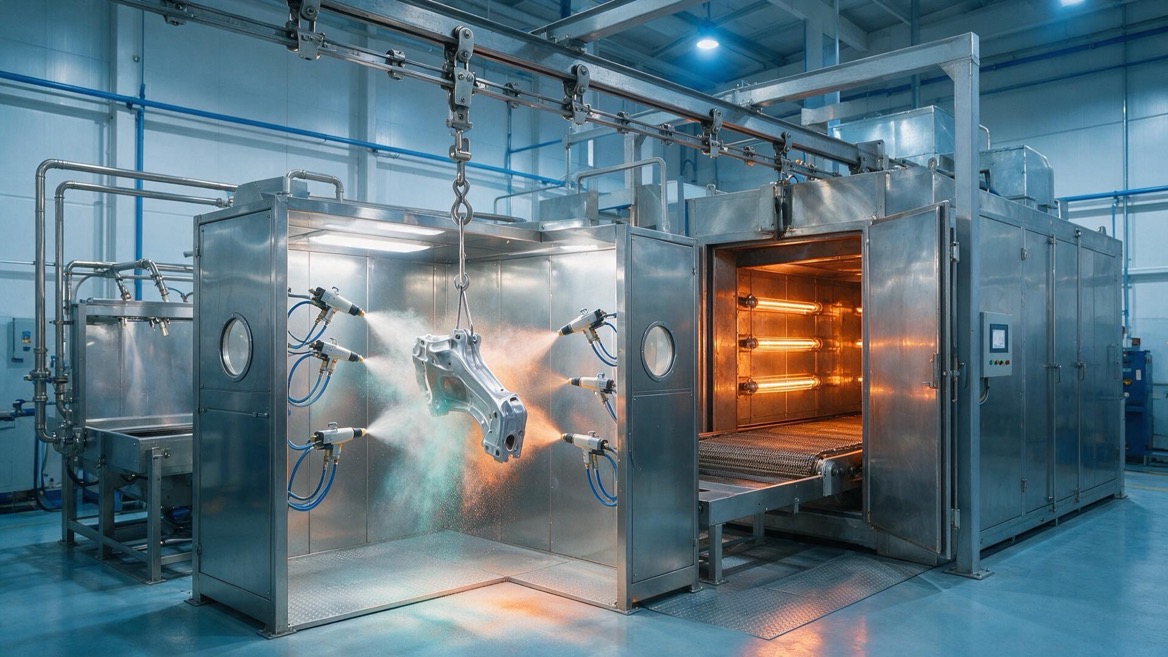
Epoxy powder coating is a dry thermoset coating made primarily from epoxy resin, curing agents, pigments, fillers, and functional additives. It is electrostatically sprayed onto a properly prepared substrate, typically steel, aluminum, or galvanized metal. The coated part then enters a curing oven, where the powder melts, flows, and chemically crosslinks into a continuous protective film.
Unlike conventional liquid paint, epoxy powder coating does not rely on a large volume of liquid carrier to deliver the coating to the part. This makes it a practical option for manufacturers seeking a robust finish with efficient material use and a clean, controlled application process.
Once fully cured, the coating becomes a solid film with strong adhesion and excellent resistance to many chemicals, moisture, oils, and mechanical wear.
The performance of an epoxy powder coating comes from its tightly crosslinked molecular structure. During curing, the epoxy resin reacts with the curing agent to form a durable network that bonds firmly to the substrate.
This structure gives epoxy powder coating several important functional advantages:
- Adhesion to well-prepared metal surfaces
- Corrosion protection in indoor and controlled environments
- Resistance to many oils, cleaning agents, solvents, and chemicals
- Strong film hardness and abrasion resistance
- Good electrical insulation properties for selected applications
- Uniform coverage on complex metal parts
- A wide range of colors, gloss levels, textures, and special effects
However, high performance is not automatic. Resin selection, pretreatment, film thickness, curing profile, part geometry, and application settings all influence the final result.
A reliable coating result begins long before the powder reaches the spray gun. In production, the process should be treated as a connected system rather than a series of isolated steps.
Surface preparation is the foundation of coating adhesion and corrosion resistance. Oil, welding residue, oxide scale, dust, fingerprints, and salts can weaken the bond between the coating and substrate.
Typical pretreatment steps may include:
1. Degreasing to remove oil and processing contaminants
2. Rinsing to prevent chemical carryover
3. Mechanical cleaning or conversion treatment, depending on the substrate
4. Drying before powder application
5. Checking cleanliness and surface condition before coating
For steel components, a suitable chemical pretreatment or blasting process can significantly improve coating consistency. For aluminum profiles, conversion treatment and controlled handling are essential, especially when appearance standards are strict.
A premium powder cannot compensate for poor pretreatment. If adhesion, corrosion performance, or edge coverage is inconsistent, the first investigation should begin with the substrate and pretreatment line.
During electrostatic spraying, powder particles receive an electrical charge and are attracted to the grounded metal component. This allows the powder to cling to the surface before it is cured.
Application settings should be adjusted according to part shape, desired film thickness, powder type, and reclaim ratio. Deep corners, sharp edges, recesses, and Faraday-cage areas require particular attention because they can receive less powder than open, flat surfaces.
For high-volume production, stable gun parameters and booth airflow help maintain a uniform coating film. Operators should also monitor powder fluidization, humidity, grounding, and spray distance. Small process variations can create visible differences in gloss, texture, film thickness, or color.
After application, the part enters an oven. Heat causes the powder to melt, flow across the substrate, and cure into a continuous film. The objective is not simply to heat the part for a certain number of minutes; the coating must reach the specified metal temperature and remain there long enough to complete the chemical reaction.
Undercuring may lead to reduced hardness, weak solvent resistance, poor adhesion, or premature corrosion. Overcuring can cause yellowing, gloss change, brittleness, or color variation, depending on the formulation.
Production teams should verify the real metal temperature with appropriate measurement tools rather than relying only on the oven display. Thick steel parts, thin sheet metal, aluminum components, and densely loaded racks may all heat differently.
Epoxy powder coating is widely selected for functional protection because it combines strong mechanical properties with reliable chemical and corrosion resistance.
| Performance Area | What Epoxy Powder Coating Delivers | Typical Value for Manufacturers |
|---|---|---|
| Adhesion | Strong bonding to correctly prepared metal | Reduces peeling and delamination risk |
| Chemical resistance | Resistance to many oils, cleaners, solvents, and industrial chemicals | Suitable for equipment and indoor industrial products |
| Corrosion protection | Effective barrier against moisture and corrosive exposure | Extends the service life of metal components |
| Mechanical durability | Good hardness and wear resistance | Helps parts withstand handling and routine use |
| Appearance | Smooth, textured, matt, semi-gloss, and glossy finish options | Supports functional and brand-specific design requirements |
| Application efficiency | Dry application and recoverable overspray in suitable systems | Helps reduce material loss and improve line efficiency |
Powder coating is frequently chosen as part of a lower-emission finishing strategy because it is applied as a dry material rather than a conventional solvent-heavy liquid coating. Nevertheless, environmental performance should be evaluated at the formulation and production-line level.
Curing conditions, resin chemistry, cleaning operations, energy use, powder recovery, and waste management all affect the overall footprint of a coating process. A responsible supplier should provide technical documentation and support customers in selecting systems that fit their manufacturing and compliance requirements.
The lowest powder price does not always create the lowest total cost. A coating system that improves first-pass yield, reduces rework, minimizes downtime, and protects parts for longer can deliver better value over the full life of the product.
When evaluating coating cost, consider:
- Material usage per square meter
- Transfer efficiency and reclaim stability
- Required coating thickness
- Oven energy consumption
- Rework and rejection rates
- Maintenance expectations
- Product service environment
- Customer appearance and durability requirements
Epoxy powder coating is especially effective in indoor, sheltered, and industrial environments where chemical resistance, adhesion, and corrosion protection matter more than long-term UV exposure.
Epoxy powder coating is commonly used on electrical enclosures, cabinets, switchgear housings, brackets, busbar-related components, and selected electronic hardware. Its insulating properties and resistance to industrial environments make it a strong candidate for functional protective finishes.
For these applications, coating selection should account for operating temperature, dielectric requirements, film thickness, assembly tolerances, and any exposure to oils or cleaning chemicals.
Household appliances, shelving, office furniture, storage systems, metal cabinets, and interior fixtures often benefit from epoxy or epoxy-polyester hybrid powder coatings. These products need a clean appearance, reliable adhesion, and resistance to ordinary household chemicals and handling damage.
A textured finish can help hide minor substrate imperfections, while smooth high-gloss finishes may be suitable for visible appliance panels with stringent appearance requirements.
Epoxy powder coatings can serve selected automotive and new energy vehicle applications, particularly where parts require corrosion protection, chemical resistance, and mechanical durability. Typical examples include brackets, battery-related metal housings, under-hood parts, mounts, chassis-adjacent components, and internal metal structures.
The final selection depends on the actual service environment. A component exposed to road salt, stone impact, high heat, UV radiation, battery chemicals, or outdoor weather needs a system designed and tested for that specific combination of risks.
Medical equipment frames, carts, cabinets, diagnostic-device structures, and metal hardware may use epoxy-based systems when a durable, easy-to-clean finish is needed. However, a coating should never be described as suitable for medical or hygiene-sensitive use without confirming the relevant cleaning, chemical, biocompatibility, and regulatory requirements of the end product.
For demanding equipment, manufacturers should identify the disinfectants, sterilization methods, frequency of cleaning, and expected mechanical wear before finalizing a formulation.
Pipelines, valves, pumps, machinery frames, storage equipment, and industrial enclosures often face aggressive conditions involving moisture, chemicals, abrasion, or repeated handling. Epoxy powder coating can provide an effective protective layer when the surface preparation, coating thickness, and curing process are properly controlled.
For highly corrosive service, a single coating layer may not be sufficient. A multi-layer system, specialty primer, or application-specific fusion-bonded epoxy solution may be more appropriate.
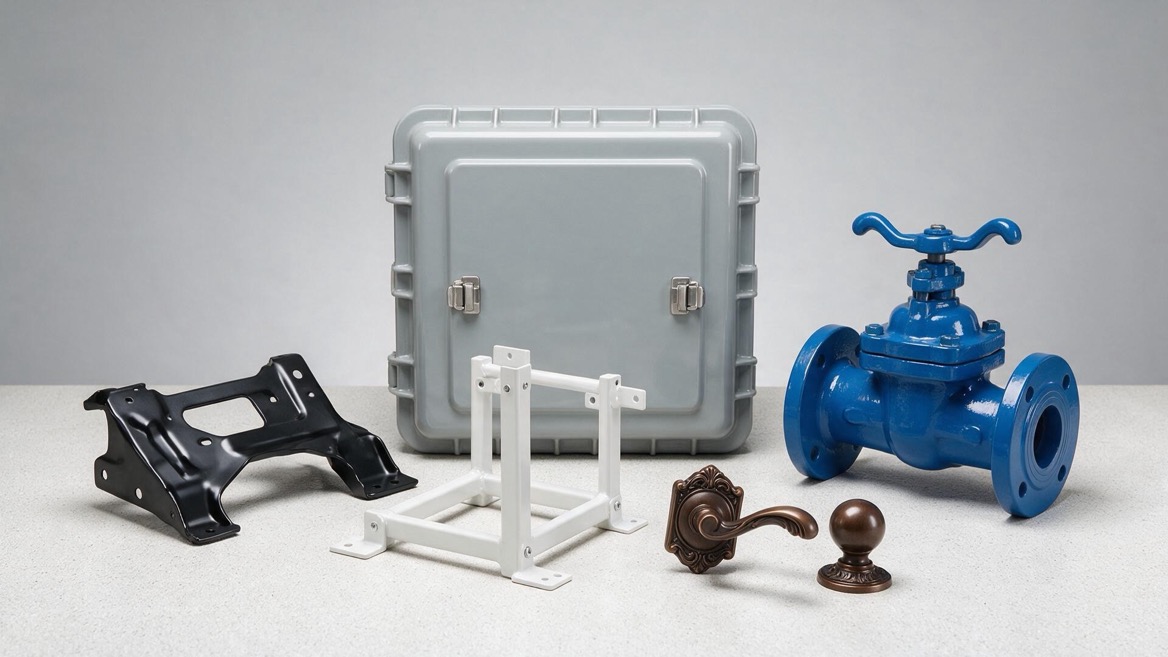
Choosing the wrong resin family is one of the most common and expensive coating mistakes. Epoxy is not a universal replacement for every powder coating type.
| Powder Coating Type | Main Strength | Main Limitation | Best-Fit Applications |
|---|---|---|---|
| Epoxy | Excellent adhesion, chemical resistance, and indoor corrosion protection | Limited long-term UV resistance | Indoor machinery, electrical products, industrial hardware |
| Polyester | Strong outdoor weatherability and color retention | May offer lower chemical resistance than epoxy in certain conditions | Architectural components, outdoor furniture, exterior metal products |
| Epoxy-polyester hybrid | Balanced appearance, cost, and indoor performance | Not intended for demanding exterior exposure | Appliances, furniture, shelving, interior equipment |
| Polyurethane | Smooth appearance and strong durability | Often requires more specific handling and processing control | Premium industrial and decorative applications |
| Fluoropolymer | Exceptional weatherability for demanding exterior use | Higher cost and specialized system requirements | Architectural façades and harsh outdoor environments |
Pure epoxy powder coatings generally should not be the first choice for prolonged outdoor exposure. Sunlight can cause chalking, fading, gloss loss, and degradation over time. This does not mean epoxy is a weak coating; it means the resin should match the environment.
For exterior aluminum profiles, doors, windows, façade systems, outdoor enclosures, and sun-exposed hardware, a weather-resistant polyester or other exterior-grade coating system is often the better choice. In some projects, epoxy can serve as a functional primer beneath a suitable weather-resistant topcoat.
A successful specification starts with the part's real service conditions, not just a color card or a general request for "high quality."
- Is the part used indoors, outdoors, or in a mixed environment?
- What is the substrate: cold-rolled steel, galvanized steel, aluminum, stainless steel, or cast metal?
- What chemicals, oils, cleaners, moisture, or salt exposure will occur?
- Is UV exposure expected?
- What temperature range will the component experience?
- What appearance is required: smooth, sand texture, wrinkle, matt, gloss, metallic, or special effect?
- What coating thickness can the assembly tolerate?
- Which test standards or customer specifications must the product meet?
- Is the coating used on a high-visibility surface or a hidden functional component?
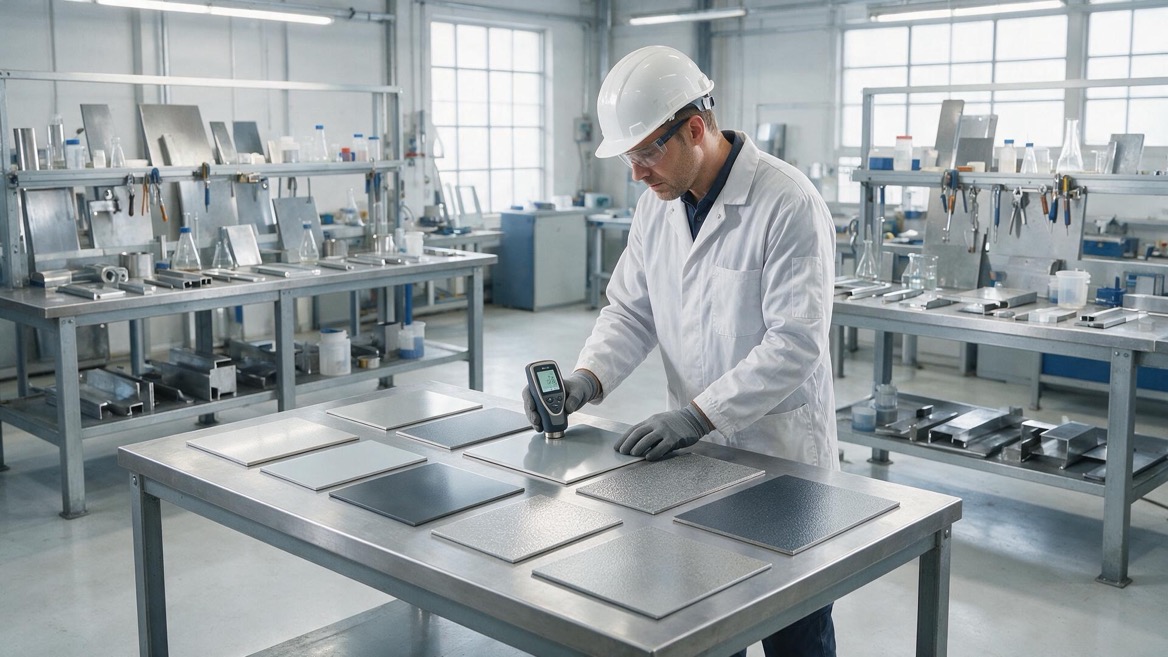
Quality should be written into the specification, not discussed only after a problem occurs. Depending on the product and market, the quality plan may include film thickness, adhesion, impact resistance, hardness, gloss, color difference, bend performance, chemical resistance, humidity resistance, and salt-spray evaluation.
Adhesion testing is especially important because the protective function of a coating depends on its ability to remain bonded to the substrate. Salt-spray testing can provide comparative corrosion information under controlled conditions, but it should not be treated as a direct prediction of every real-world service life.
Test targets must be agreed according to product function, substrate, pretreatment process, coating system, and operating environment.
Most coating defects have a process-related cause. Identifying that cause early reduces waste and protects delivery schedules.
| Defect | Likely Cause | Practical Action |
|---|---|---|
| Poor adhesion | Inadequate cleaning, weak pretreatment, undercuring | Inspect pretreatment, verify cure profile, review contamination control |
| Orange peel | Film too thick, poor powder flow, unsuitable settings | Adjust thickness, review powder storage and application parameters |
| Pinholes | Substrate outgassing, contamination, excessive heat | Improve substrate preparation and optimize the bake schedule |
| Thin edges or recesses | Difficult geometry or poor gun positioning | Adjust gun angle, voltage, air flow, and coating sequence |
| Color or gloss variation | Mixed batches, inconsistent curing, unstable reclaim | Control batch use, monitor oven profile, manage reclaim ratio |
| Early corrosion | Inadequate pretreatment, insufficient film, coating damage | Review the full system, including substrate, edges, handling, and testing |
A strong supplier-customer relationship is valuable when defects occur. The fastest solution usually comes from reviewing actual samples, process records, film thickness data, oven curves, pretreatment controls, and the service environment together.
Yinda Technology develops and supplies powder coatings and environmentally oriented material solutions for manufacturers serving construction profiles, doors and windows, new energy vehicles, medical equipment, hardware, electrical appliances, and other industrial sectors. With operations in China, Indonesia, and Saudi Arabia, we support customers that require stable supply, technical communication, and solutions adapted to local production conditions.
Our approach starts with the application, not just the color. We help customers evaluate substrate type, service conditions, appearance targets, curing capability, and validation requirements before recommending a coating system.
Contact Yinda Technology to discuss your part, production line, target market, and performance requirements. Our technical team can help you identify an epoxy powder coating or alternative powder coating system designed for reliable production and long-term product protection.
Pure epoxy powder coating is generally not the preferred choice for long-term outdoor exposure because UV light can cause chalking, fading, and gloss loss. For exterior applications, polyester, fluoropolymer, or another weather-resistant system is usually more suitable.
Epoxy powder coating is applied as a dry powder and then heat-cured. Liquid epoxy paint is applied in liquid form and may use solvents, water, or reactive components. Both can offer strong protection, but the right option depends on the substrate, equipment, part size, operating environment, and application method.
It can provide strong corrosion protection when used on a properly prepared substrate and cured correctly. However, no coating can perform reliably if the metal surface is contaminated, damaged, poorly pretreated, or exposed beyond the system's intended service conditions.
The target thickness depends on the powder formulation, part geometry, required appearance, corrosion target, and customer specification. Applying more powder is not always better; excessive thickness can create appearance problems, curing issues, or assembly tolerance concerns.
A fully cured coating forms a stable solid film, but suitability must always be evaluated for the intended end use. For products involving food contact, medical use, frequent chemical disinfection, or special regulations, request the relevant technical and compliance documentation before approval.
At minimum, manufacturers commonly check appearance, color, gloss, film thickness, adhesion, and cure condition. Depending on the end use, they may also require impact, bend, hardness, chemical resistance, humidity, or salt-spray tests.
1. [Kroma Coatings, "What Is Epoxy Powder Coating? Meaning, Uses and Benefits"] — Background on epoxy powder-coating composition, electrostatic application, curing, benefits, limitations, and common applications. [kromacoatings]
2. [ASTM International, ASTM D3359-23: Standard Test Methods for Rating Adhesion by Tape Test] — Test methodology for evaluating adhesion of coating films to metallic substrates. [store.astm]
3. [ASTM International, ASTM B117-26: Standard Practice for Operating Salt Spray (Fog) Apparatus] — Controlled salt-spray environment used to generate comparative corrosion-resistance information for coated metal specimens. [store.astm]
4. [United States Environmental Protection Agency, Compliant Low/No VOC/HAP Inks and Coatings] — Powder coatings are included among examples of low- or no-VOC/HAP coating technologies, while actual compliance depends on the documented formulation and applicable limits. [epa]
5. [United States Environmental Protection Agency, Powder Coatings: A Technology Review] — Technical overview of powder-coating chemistry, environmental considerations, markets, performance development, and application technology. [cfpub.epa]
6. [SpecialChem, "Powder Coatings: How to Formulate With Right Ingredients?"] — Overview of powder-coating resin families, application areas, temperature capability, and typical industrial uses. [specialchem]


