Language


Views: 299 Author: Yinda Powder Coating Publish Time: 2026-11-03 Origin: Site


Content Menu
● Epoxy Powder Coating vs Liquid Paint: The Essential Differences
● Calculate Total Cost per Accepted Metal Part
● Material Cost: Compare Applied Coverage, Not Purchase Price
>> Powder utilization and liquid solids content
>> A practical coverage calculation
● Equipment, Energy, and Labor: Where Savings Can Disappear
>> Capital investment and production volume
>> Labor, handling, and changeovers
● Durability and Maintenance: Where Chemistry Changes the Answer
>> Indoor corrosion and chemical exposure
>> Outdoor metal parts need a different comparison
>> Repairs and service-life evidence
● Worked Example: An Illustrative Annual Cost Comparison
● Three Hidden Variables That Can Reverse the Result
>> 2. Product mix and reclaim suitability
>> 3. Local operating conditions
● A Five-Step Qualification Plan for Metal Manufacturers
● Build a Part-Specific Cost Comparison with Yinda Technology
>> Is epoxy powder coating cheaper than liquid paint?
>> Can epoxy powder coating be used outdoors?
>> Is liquid paint better for heat-sensitive assemblies?
>> Can all powder overspray be reused?
>> Does powder coating eliminate maintenance?
>> What information is needed for an accurate coating quotation?
Epoxy powder coating vs liquid paint is not simply a comparison of coating prices. For metal manufacturers, the real question is which finishing system delivers the lowest cost per acceptable part—and the lowest ownership cost throughout its intended service life.
Epoxy powder coating can be an economical choice for repeat-production metal components requiring indoor corrosion and chemical resistance. Liquid paint can offer better economics for heat-sensitive assemblies, oversized fabrications, frequent color changes, or field repairs.
My starting point for any comparison is TCO: total cost of ownership. Material consumption, preparation, equipment, energy, labor, rejects, maintenance, and future repairs all belong in the calculation.
For Yinda Technology customers across architectural products, new-energy vehicles, medical equipment, hardware, and appliances, choosing the right chemistry comes before calculating the savings.

Epoxy powder coating uses dry, thermosetting particles applied to prepared metal, commonly through electrostatic spraying. Heating melts and cures the coating into a crosslinked film.
Liquid paint carries its binder and pigments in a liquid medium. Depending on the formulation, the coating dries through evaporation, chemical reaction, baking, or a combination of these mechanisms.
Importantly, "liquid paint" describes an application category, not one chemistry. Liquid epoxies, polyurethanes, acrylics, and alkyds have different performance and processing requirements.
A credible comparison therefore specifies the actual products, substrate, preparation, film thickness, and exposure conditions.
| Decision factor | Epoxy powder coating | Liquid paint |
|---|---|---|
| Common strengths | Indoor protection, chemical resistance, repeatable factory finishing | Formulation flexibility, repairability, large-part finishing |
| Curing requirements | Heat curing; verify the product schedule | Ambient or elevated-temperature curing |
| Material recovery | Compatible overspray may be reclaimed | Conventional spray overspray is generally not reusable |
| Outdoor appearance | Exposed epoxy has limited ultraviolet resistance | Weatherability depends on the selected chemistry |
| Color changes | Cleaning and reclaim management affect downtime | Can suit frequent changes, depending on equipment |
| Field repairs | Usually require a compatible repair system | Often easier to apply locally |
| Economic priority | Utilization, oven loading, accepted output | Solids content, transfer efficiency, drying, labor |
Neither process wins automatically. The application determines which advantages translate into measurable savings.
A low coating price can hide an expensive finishing process.
For production decisions, use:
Cost per accepted part=Total production finishing cost/Number of accepted parts
For lifecycle decisions, add expected inspection, repair, recoating, downtime, and replacement costs over an agreed service period. Discount future cash flows when comparing substantial investments.
Include these cost categories:
- Surface cleaning, blasting, pretreatment, and drying.
- Coating materials, additives, and consumables.
- Application and handling labor.
- Heating, ventilation, compressed air, and electricity.
- Equipment ownership, maintenance, and floor space.
- Color-change losses and production interruptions.
- Inspection, stripping, recoating, and scrap.
- Waste management and applicable compliance costs.
- In-service maintenance and warranty exposure.
Keep the accounting boundary consistent. An outsourced coating quotation should not be compared with an in-house material-only estimate.
Powder overspray recovery can substantially improve overall material utilization. However, first-pass transfer efficiency and total utilization are different measurements.
First-pass efficiency measures how much sprayed powder initially reaches the workpiece. Overall utilization also accounts for recovered powder that eventually becomes acceptable coating.
The Powder Coating Institute explains that suitable reclaim systems can achieve overall utilization above 95%. That is a potential operating outcome, not a guaranteed result for every line.
Color contamination, cleaning losses, fines, and quality restrictions can reduce usable recovery.
For liquid paint, volume solids are equally important. The wet coating volume does not become an equivalent volume of dry film. Evaluate the ready-to-spray mixture, including required thinning or mixing components.
For a powder coating:
Purchased powder, kg=(A×t×ρ)/(1,000×U)
Here, A is coated area in square meters, t is dry-film thickness in micrometers,ρ is cured-film density in grams per cubic centimeter, and U is overall utilization expressed as a decimal.
For liquid paint:
Purchased paint, liters=(A×t)/(1,000×Vs×TE)
Here, Vs is volume solids and TE is transfer efficiency.
Calculate each layer separately for multicoat systems. Compare systems that meet the same specification, rather than forcing equal thickness where different products require different builds.
An epoxy powder coating line may require pretreatment equipment, drying and curing ovens, spray booths, recovery equipment, conveyors, and controls.
Liquid finishing may require booths, pumps, mixing equipment, ventilation, drying space, and potentially emissions-control equipment.
The relevant question is not which process needs equipment. Both do. Ask how much additional investment your facility requires and how effectively that investment will be used.
A lightly loaded powder line can struggle to recover its fixed costs. Outsourcing may be more economical than building an underused installation.
Powder requires heat curing, but liquid paint is not automatically the lower-energy option. Some liquid systems also require baking, substantial ventilation, or conditioned make-up air.
Measure energy per accepted part, including:
- Pretreatment and drying.
- Oven warm-up and idle operation.
- Part heating and conveyor loading.
- Booth extraction and air conditioning.
- Compressed-air demand.
Follow the specified part-metal-temperature and time requirements. Oven air temperature alone does not prove that a heavy component has cured correctly.
Powder can support efficient production when parts move through a stable, well-loaded line. Liquid finishing can remain competitive where batches are small, colors change frequently, or assemblies cannot tolerate powder-curing conditions.
Count masking, hanging, cleaning, mixing, inspection, and packing—not just spray time.
Where finishing limits factory output, changeover downtime also has an opportunity cost. Avoid counting that loss twice if it is already included in the line's hourly burden.
Epoxy powder coating is often a strong candidate for indoor metal parts needing protective performance. Nevertheless, resin chemistry alone does not determine durability.
Preparation, contamination control, pretreatment, edge coverage, film thickness, and cure all influence the finished system.
Specify the actual exposure. Resistance to occasional cleaner contact does not establish resistance to prolonged chemical immersion.
For medical equipment, validate compatibility with the intended cleaning agents. For vehicle components, assess the relevant fluids, temperatures, mechanical demands, and customer specifications.
Exposed epoxy powder should not be treated as a universal solution for outdoor architectural profiles, doors, or windows. Its limited ultraviolet stability can cause chalking and appearance deterioration.
Where appropriate, compare a qualified epoxy-primer-and-weatherable-topcoat system against a suitable liquid system. Weatherable polyester powder may also deserve consideration.
This changes TCO because additional coats introduce material, labor, handling, and processing costs.
Liquid coatings often offer practical advantages for local repairs and installed equipment. Powder-coated parts may require stripping and recoating, replacement, or an approved liquid repair procedure.
Do not convert salt-spray test hours directly into years of outdoor service. Laboratory corrosion results support qualification, but they do not independently establish field lifespan.
Consider 100,000 accepted indoor steel parts annually, each with 0.20 square meters of coated area.
The following figures are assumptions—not supplier quotations, industry averages, or Yinda Technology production results. Both systems are assumed to satisfy the same application requirements.
| Assumption | Epoxy powder | Liquid paint |
|---|---|---|
| Annual coated area | 20,000 m² | 20,000 m² |
| Dry-film thickness | 70 µm | 50 µm |
| Powder density | 1.5 g/cm³ | Not applicable |
| Overall powder utilization | 90% | Not applicable |
| Liquid volume solids | Not applicable | 50% |
| Liquid transfer efficiency | Not applicable | 65% |
| Illustrative material price | US$5/kg | US$8/liter |
| Calculated annual consumption | 2,333 kg | 3,077 liters |
| Calculated annual material cost | US$11,667 | US$24,615 |
Under these assumptions, powder saves approximately US$12,948 annually in coating material.
That is not the final ownership saving.
If powder adds US$20,000 annually in equipment ownership and energy but saves US$15,000 in labor, waste, and rework, its net annual advantage becomes approximately US$7,948.
An additional US$60,000 investment would then have a simple payback of about 7.5 years, before financing, taxes, and lifecycle maintenance differences.
This example shows why a large material saving does not necessarily produce a short investment payback.
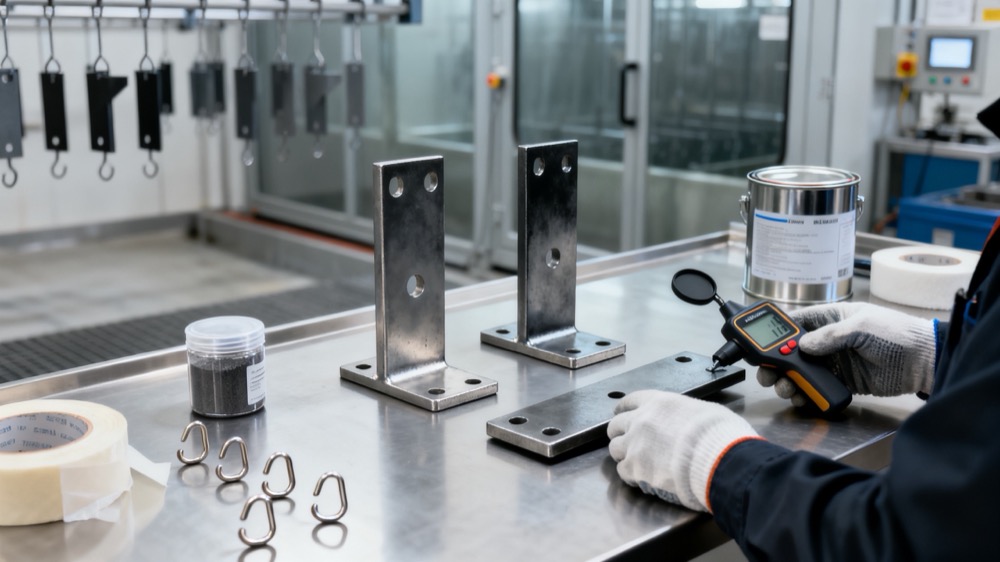
Track the percentage of parts accepted without repair or recoating. Purchased material savings can disappear when contamination, poor coverage, or curing defects generate extra handling and stripping.
Record defect causes separately. Otherwise, a preparation problem may be incorrectly blamed on the coating chemistry.
A long run of one approved color creates different recovery economics from many short runs with strict contamination limits.
Evaluate reclaim by product family. Do not apply the best utilization result from a stable black production run to every metallic finish or custom color.
For projects in China, Indonesia, and Saudi Arabia, use the facility's actual utility tariffs, labor costs, waste charges, freight, storage conditions, and production schedule.
Ambient conditions can influence storage and process control, but location alone does not determine the winning system.
Request the same technical specification and cost template from each facility so regional comparisons remain meaningful.
1. Define the service environment. Specify indoor or outdoor exposure, chemicals, appearance, temperature, and maintenance expectations.
2. Establish equivalent systems. Document substrate, preparation, coating layers, thickness, and acceptance criteria.
3. Trial representative parts. Include recesses, welds, sharp edges, heavy sections, and masking areas.
4. Measure actual consumption and output. Record purchased material use, energy, labor, changeovers, accepted output, and rework.
5. Test economic sensitivity. Recalculate using lower volume, poorer utilization, higher energy prices, and increased reject rates.
Include safety and compliance in the assessment. Powder's lack of a solvent carrier does not eliminate dust, ventilation, housekeeping, grounding, or fire-protection requirements.
Likewise, waterborne liquid paint should not automatically be treated as emission-free or hazard-free. Review the actual formulation and applicable local requirements.
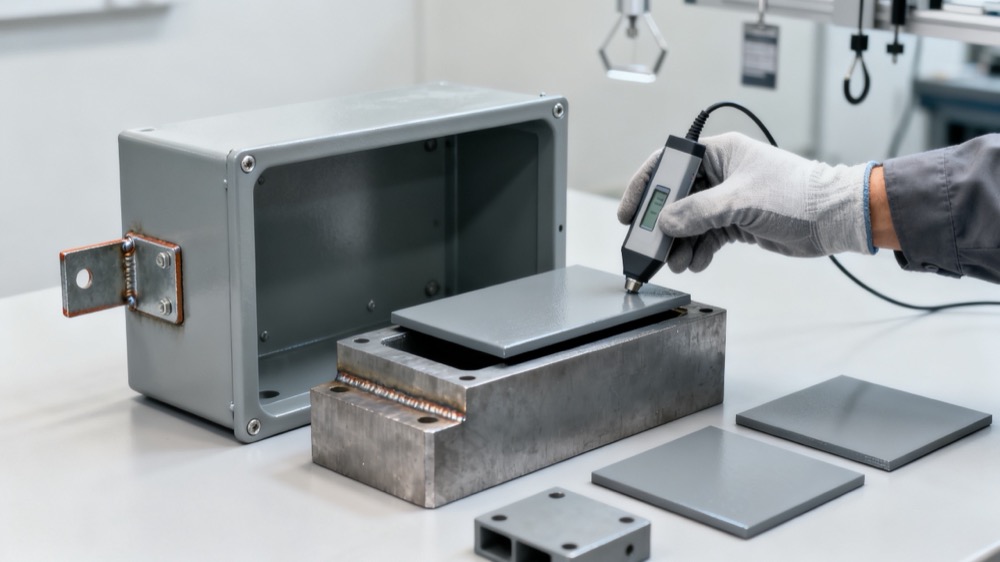
Yinda Technology develops, manufactures, and supplies powder coatings and environmentally oriented materials, with subsidiaries in China, Indonesia, and Saudi Arabia.
For a useful technical discussion, provide your substrate, drawings, annual volume, exposure conditions, finish requirements, current coating specification, and curing limitations.
Ask Yinda Technology to review a candidate powder system and define a representative trial. Then compare measured performance and cost per accepted part against your current liquid process.
The objective is not to replace every liquid coating. It is to identify where epoxy powder coating offers a defensible technical and financial advantage.
It can be, particularly for repeat-production indoor metal parts with effective material recovery. However, equipment utilization, energy, labor, quality, and maintenance determine the final result.
Exposed epoxy is generally unsuitable where long-term appearance retention under sunlight matters. Consider a qualified weatherable topcoat or a different powder chemistry.
It may be. Some liquid formulations cure at ambient or lower temperatures. Check the selected coating's requirements and the temperature limits of every assembly component.
No. Reuse depends on recovery equipment, contamination control, formulation, particle distribution, color requirements, and the approved virgin-to-reclaim operating practice.
No. Inspection, cleaning, damage repair, and corrosion management may still be necessary. Estimate maintenance from the specified system and service conditions.
Provide material type, part dimensions, coated area, quantity, preparation requirements, color, gloss, film thickness, exposure, masking details, acceptance criteria, and delivery schedule.
1. Powder Coating Institute. "Coatings Comparison Calculator." Explains applied material cost, liquid volume solids, transfer efficiency, and potential powder-reclaim utilization above 95%. [powdercoating]
2. Products Finishing. "Performance of Liquid Paint Vs. Powder Coating." Discusses why substrate, preparation, coating chemistry, film thickness, application conditions, and heat sensitivity must be specified before comparing systems. [pfonline]
3. Products Finishing. "Measuring and Controlling Transfer Efficiency." Describes weight-based measurement and the relationship between transfer efficiency, part geometry, equipment condition, and operating cost. [pfonline]
4. Products Finishing. "Evaluating Coating Options." Examines economic modeling for powder and liquid lines, including reclaim decisions, color changes, production downtime, volume solids, and throughput. [pfonline]
5. AkzoNobel Interpon. "Hybrid Technology in Powder Coatings." Explains interior applications, epoxy-related properties, and ultraviolet limitations; distinguishes hybrid technology from pure epoxy. [interpon]
6. ASTM International. "Standard Practice for Operating Salt Spray (Fog) Apparatus," B117-07a. Its significance-and-use guidance cautions against predicting natural-environment performance from standalone salt-spray results. Consult the current specified edition for contractual testing. [store.astm]
7. Occupational Safety and Health Administration. "29 CFR 1910.107—Spray Finishing Using Flammable and Combustible Materials." Provides U.S. requirements covering spray-finishing ventilation, grounding, powder accumulation, and fire precautions. Local requirements must be assessed separately. [osha]
8. Powder Coating Institute. "Environmental Impact." Discusses solvent-related emissions, powder recovery, ventilation, and potential operating benefits. [powdercoating]


