Language


Views: 263 Author: Yinda Powder Coating Publish Time: 2026-10-25 Origin: Site


Content Menu
● Epoxy vs Polyester Powder Coating: Quick Comparison
● How Epoxy Powder Coating Protects Against Corrosion
>> Adhesion and Barrier Performance
>> Chemical Resistance Requires Specific Evidence
>> Why Exposed Epoxy Is Usually Not the Outdoor Choice
● How Polyester Powder Coating Protects Against Corrosion
>> Exterior Durability Is Its Main Advantage
>> Polyester Can Deliver Strong Corrosion Performance
>> Weathering and Corrosion Are Different Measurements
● Which Powder Coating Performs Better in Different Environments?
>> Indoor Equipment With Chemical Exposure
>> Outdoor Architectural Profiles, Doors, and Windows
>> Coastal or Persistently Humid Locations
>> New-Energy Vehicles and Electrical Equipment
● Why Pretreatment and Curing Can Change the Result
>> Surface Preparation Is Part of the Protective System
>> Cure the Component According to the Product Specification
>> Inspect Difficult Geometry, Not Just Flat Panels
● How to Compare Corrosion-Test Results Without Being Misled
>> Salt-Spray Hours Are Not Service-Life Years
>> Compare the Conditions Behind the Number
>> Use More Than One Type of Evidence
● A Practical Five-Step Selection Framework
>> 1. Define the Real Exposure
>> 2. Identify the Dominant Requirement
>> 3. Decide Whether a Primer Is Necessary
>> 4. Validate Representative Parts
>> 5. Approve a Reproducible Production Specification
● Request an Application-Specific Recommendation From Yinda Technology
>> Is epoxy powder coating more corrosion-resistant than polyester?
>> Which powder coating is better for outdoor use?
>> Can polyester powder coating be applied over an epoxy primer?
>> Are epoxy-polyester hybrid powders suitable outdoors?
>> Does a longer salt-spray result guarantee longer service life?
>> What information should I send a powder-coating supplier?
Epoxy powder coating vs polyester powder coating for corrosion resistance is not a contest with one universal winner. Epoxy is often the stronger candidate for indoor components exposed to chemicals, while exterior-grade polyester is usually the better exposed finish for outdoor applications. In demanding environments, a compatible epoxy primer and polyester topcoat may provide a more balanced solution than either coating alone. Product formulation, pretreatment, and application quality remain decisive.
For manufacturers, the most useful question is not simply, "Which resin is better?" It is, "Which coating system will protect this metal component under its actual operating conditions?"
At Yinda Technology, our work spans powder coatings, environmentally oriented materials, and energy-saving technology promotion, with subsidiaries in China, Indonesia, and Saudi Arabia. For customers serving architectural profiles, doors and windows, new-energy vehicles, medical equipment, hardware, and appliances, coating selection should begin with the application—not a generic performance claim.

The following comparison describes typical characteristics, not guaranteed results for every formulation. Manufacturer literature supports epoxy's indoor chemical-resistance strengths and polyester's exterior-weathering advantages.
| Selection factor | Epoxy powder coating | Polyester powder coating |
|---|---|---|
| Typical strength | Adhesion, chemical resistance, protective barrier | Outdoor weatherability and appearance retention |
| Indoor corrosion protection | Strong candidate for demanding applications | Suitable when the formulation meets exposure requirements |
| Outdoor exposure | Generally unsuitable as an exposed decorative finish | Exterior grades are designed for outdoor service |
| Chemical exposure | Often preferred, subject to chemical-specific testing | Performance varies with formulation and chemical |
| Architectural applications | More relevant as a compatible primer | Common choice for exposed profiles and components |
| Main selection caution | Poor weathering can limit exposed use | Exterior durability does not prove superior corrosion resistance |
| High-demand system option | Protective primer layer | Weather-resistant topcoat over a compatible primer |
The key distinction is system performance: resin chemistry matters, but it cannot compensate for unsuitable surface preparation or application.
Epoxy powder coatings are valued for adhesion, mechanical properties, chemical resistance, and corrosion protection. These characteristics make them useful for indoor functional components and protective applications. Interpon's epoxy product guidance, for example, identifies these strengths while limiting typical decorative epoxy powders to interior exposure.
A coating must remain attached to the substrate to maintain its protective function. When comparing products, therefore, corrosion results should be considered alongside adhesion and mechanical performance—not as an isolated number.
Epoxy is often a sensible starting point for equipment exposed to cleaning agents, oils, or industrial chemicals. However, "chemical resistant" does not mean resistant to every chemical at every concentration.
The required resistance depends on the formulation and exposure. Buyers should identify the actual substance, concentration, temperature, contact duration, and cleaning frequency before requesting validation. Manufacturer guidance explicitly cautions that chemical resistance is formulation-dependent.
For a medical-equipment housing, this means testing the intended disinfectant rather than relying on a general chemical-resistance description.
Epoxy's main limitation is weatherability. Typical decorative epoxy powders have poor weathering characteristics and are recommended for interior exposure. Strong indoor corrosion performance should not be interpreted as proof of long-term outdoor finish durability.
For outdoor equipment, epoxy is better considered as part of an appropriately qualified multilayer system, rather than automatically selected as the exposed finish.
Exterior-grade polyester powder coatings combine protective properties with resistance to outdoor weathering. Manufacturer technical literature identifies applications including fencing, outdoor furniture, signs, and general exterior metal finishing.
This makes polyester a logical candidate for exposed architectural profiles, doors, windows, and outdoor hardware.
However, polyester is a broad product category. Buyers should compare the specific grade, technical data sheet, intended application, and qualification evidence—not just the word "polyester."
Polyester should not be dismissed as merely decorative. Corrosion performance depends on the complete formulation and application system.
For example, PPG introduced a specialized polyester powder topcoat designed to improve corrosion protection in a single-coat application. This illustrates why a blanket statement that all epoxies outperform all polyesters is technically unreliable. Product-specific claims still require review of their test conditions and intended uses.
A well-qualified polyester system may be more appropriate than an epoxy system that is poorly matched to the exposure or production process.
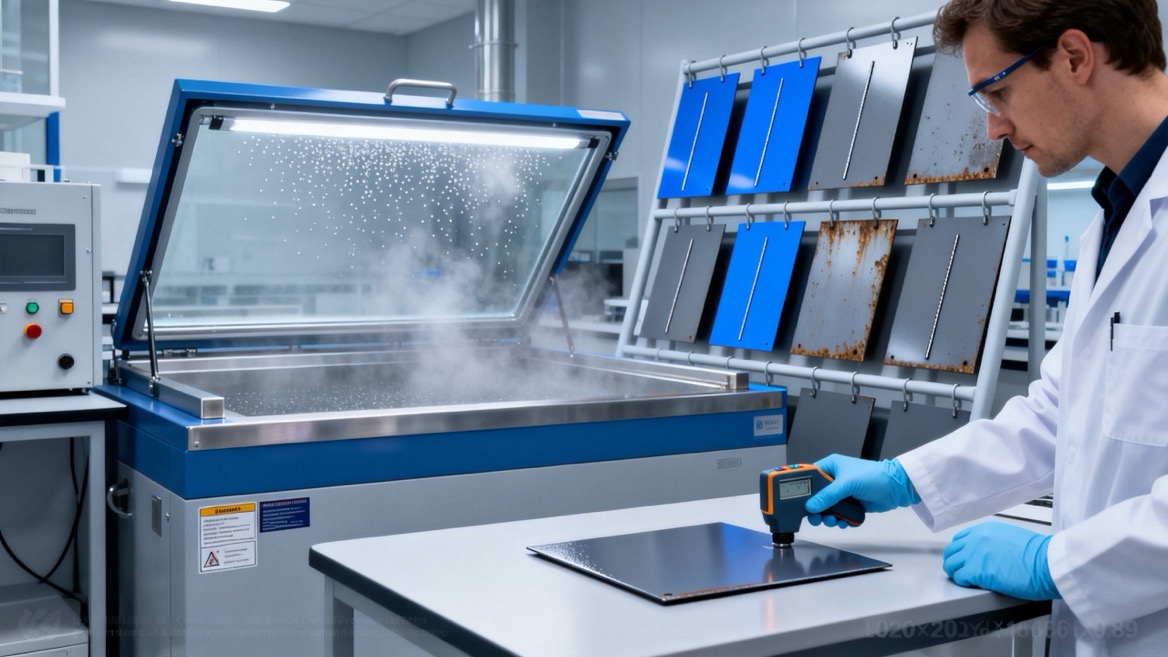
Weathering concerns how a coating tolerates outdoor exposure, including changes in appearance. Corrosion testing evaluates protection of the underlying metal under specified conditions.
These properties are related, but they are not interchangeable. Polyester technical data sheets report exterior durability, chemical resistance, humidity resistance, pretreatment, and curing requirements separately because each describes a different aspect of performance.
Epoxy is often the better starting point when the component remains indoors and chemical resistance is a major requirement. Its suitability must still be confirmed against the actual chemical exposure and required finish properties.
Relevant examples include sheltered machinery housings, functional hardware, and selected appliance components.
For medical equipment, corrosion protection alone is insufficient. The specification should also address repeated cleaning, appearance changes, and compatibility with the intended disinfectants.
Exterior-grade polyester is generally the more appropriate exposed finish because it is designed for outdoor weathering. Architectural quality frameworks also assess more than powder chemistry: QUALICOAT specifications address coating materials, application facilities, and finished products.
Buyers should therefore ask whether the proposed coating and production process meet the project's requirements. A general claim that a powder is "architectural grade" is not a substitute for relevant documentation.
For coastal projects in any market, neither "epoxy" nor "polyester" alone is a sufficient specification.
Substrate preparation, primer selection, topcoat compatibility, and application control must be evaluated together. Primer technical guidance explicitly links corrosion protection to the substrate, its preparation, and the topcoat applied.
The practical decision is whether a validated single-coat system is sufficient or whether the exposure justifies a compatible primer-and-topcoat system.
Avoid selecting one coating for every component simply because it belongs to the same vehicle or equipment platform.
An exposed enclosure, sheltered bracket, and indoor control cabinet can have different requirements. The specification should separate corrosion protection, outdoor durability, mechanical performance, and any electrical function.
Manufacturers offer distinct powder-coating technologies for industrial protection, electrical insulation, and thermal management, reinforcing the need for application-specific selection.
An epoxy-versus-polyester comparison is meaningful only when the substrate and pretreatment are clearly defined.
Manufacturer guidance specifies different preparation routes for different metals. For example, an exterior polyester technical data sheet describes particular preparation requirements for galvanized steel and reports laboratory results using a stated pretreatment and substrate.
Before purchasing, request:
- Substrate type and condition.
- Cleaning and pretreatment sequence.
- Powder product identification.
- Recommended film thickness.
- Curing requirements.
- Corrosion-test results for the proposed combination.
Curing requirements are product-specific. One exterior polyester data sheet, for example, provides multiple time-and-temperature schedules rather than a universal curing instruction.
Production approval should establish that representative components satisfy the selected powder's requirements. A coating specification that lists only an oven setting leaves an important process question unresolved.
Flat test panels are useful, but actual products may include bends, recesses, welds, and edges.
Manufacturer guidance highlights edge protection as relevant to corrosion performance and warns that cracks created during post-bending can lead to corrosion. Qualification should therefore include representative components where geometry or subsequent fabrication could affect protection.
ASTM B117 provides a controlled corrosive environment for comparative testing. The standard states that natural-environment performance has seldom correlated with salt-spray results used as standalone data.
A claim such as "1,000 hours equals ten years outdoors" is therefore not justified by a B117 result alone.
Nor does a higher hour count automatically prove that one resin family is universally better.
When reviewing two test reports, check whether they use comparable:
1. Substrates and pretreatment.
2. Film thicknesses and curing conditions.
3. Exposure methods and durations.
4. Scribed or unscribed specimens.
5. Evaluation criteria and acceptance limits.
6. Numbers of replicate specimens.
ASTM specifically identifies specimen type, evaluation criteria, operating conditions, and replication as important influences on results.
A report without this context is a weak basis for a purchasing decision.
A practical qualification package should combine relevant corrosion testing with adhesion, chemical-resistance, humidity, and weathering evidence where applicable.
Outdoor polyester technical literature reports several of these properties separately. ASTM also advises that extrapolation to natural exposure requires appropriate corroborating long-term atmospheric evidence.
Record whether the component will face sunlight, condensation, coastal contamination, chemical cleaning, or mechanical damage.
Include foreseeable changes in use. A sheltered component installed outdoors may need a different specification from the same component used inside a factory.
Use epoxy as an initial candidate for demanding indoor chemical exposure. Use exterior polyester as an initial candidate for an exposed outdoor finish. Treat these as screening decisions, not final approvals.
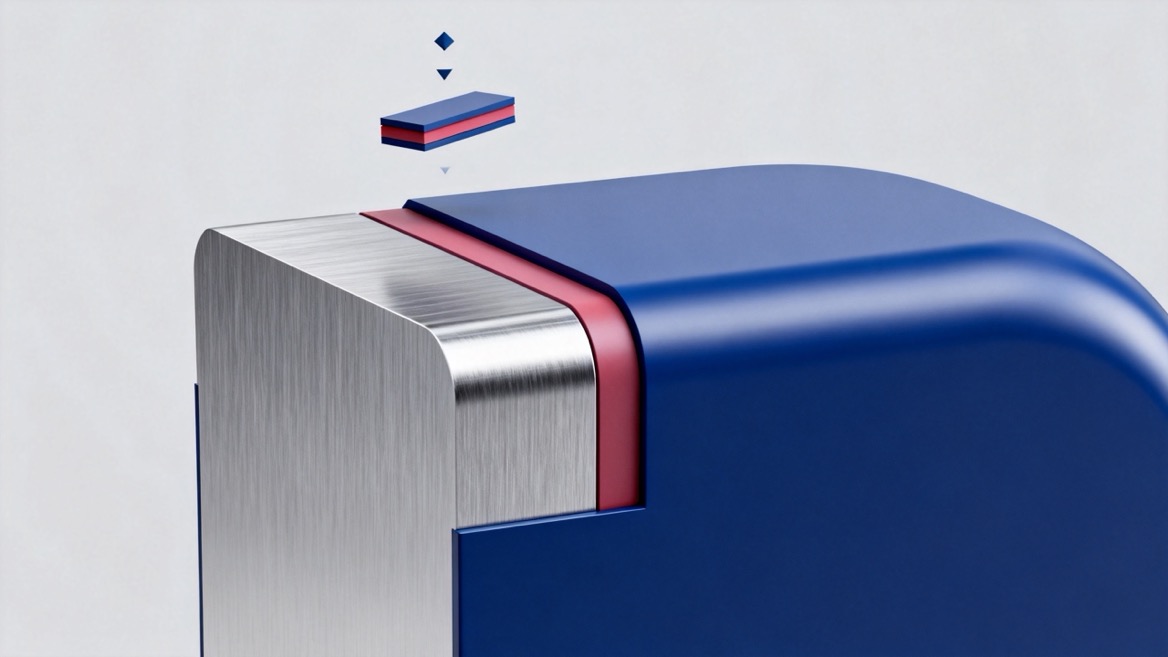
Where stronger protection is required, evaluate a compatible primer and topcoat.
Do not assume every epoxy primer works with every polyester topcoat. Manufacturer guidance for protective primers includes specific overcoating and curing instructions, demonstrating why compatibility must be documented.
Test the proposed substrate, preparation, powder, and cure combination. Include actual components when edge coverage, recesses, bending, or assembly could affect performance.
The final document should identify the coating products, process requirements, inspection points, and acceptance criteria.
This turns a successful sample into a repeatable manufacturing requirement rather than an informal color approval.
The best coating is the one supported by evidence for your component and operating environment—not the one with the broadest performance claim.
Send Yinda Technology your substrate, application location, indoor or outdoor exposure, cleaning chemicals, target appearance, and required test criteria. Include drawings or photographs of difficult geometries.
Our team can use this brief to discuss an epoxy, polyester, or compatible multilayer approach and define what validation is needed before production.
Not universally. Epoxy offers useful adhesion and chemical-resistance properties, but corrosion performance depends on the formulation, substrate preparation, application, and exposure. Specialized polyester products can also provide strong corrosion protection.
Exterior-grade polyester is generally the better exposed finish. Typical decorative epoxy powders have poor weathering characteristics and are recommended for interior use.
A compatible system may be suitable, but it must follow the relevant product instructions. Verify primer–topcoat compatibility, curing, film thickness, and overcoating requirements rather than assuming universal compatibility.
Standard epoxy-polyester hybrids are primarily intended for indoor applications. Interpon notes that their limited ultraviolet resistance makes them unsuitable for recommended outdoor use. They should not be confused with a qualified primer-and-exterior-topcoat system.
No. ASTM B117 warns against predicting natural-environment performance from standalone salt-spray data. Results need context and, for field-life extrapolation, appropriate corroborating exposure evidence.
Provide the substrate, component geometry, operating environment, chemicals, appearance requirements, and acceptance criteria. These details allow the supplier to relate product data and test evidence to the actual application.
1. AkzoNobel Interpon, "Epoxy." Manufacturer guidance on adhesion, chemical properties, corrosion resistance, and interior-use limitations. [shop.interpon]
2. AkzoNobel, "Interpon 610: Technical Data Sheet." Exterior polyester applications, pretreatment, film thickness, curing, and performance information. [powdercoatings.brand.akzonobel]
3. ASTM International, "ASTM B117-19: Standard Practice for Operating Salt Spray (Fog) Apparatus." Test purpose, variability, and limitations of field-performance prediction. [store.astm]
4. QUALICOAT, "Specifications." Quality requirements covering coating materials, application equipment, and finished architectural products. [qualicoat]
5. AkzoNobel Interpon, "Hybrid Technology in Powder Coatings." Epoxy-polyester hybrid properties and outdoor-use limitations. [interpon]
6. AkzoNobel, "Interpon Redox APA / EL286A: Technical Data Sheet." Protective primer requirements, topcoat dependence, and application instructions. [specifyinterpon.com]
7. PCI Magazine, "PPG Debuts Polyester Powder Topcoat," October 14, 2020. Example of a specialized corrosion-resistant polyester formulation. [pcimag]
8. TIGER Coatings, "Series 59: Product Data Sheet." Formulation-dependent chemical resistance and post-bending precautions. [tiger-coatings]


