Language


Views: 294 Author: Yinda Powder Coating Publish Time: 2026-10-31 Origin: Site


Content Menu
● Epoxy vs Polyester Powder Coating: Chemical Resistance at a Glance
● Why Epoxy and Polyester Powder Coatings Perform Differently
>> Epoxy Powder Coating: An Indoor Chemical-Resistance Candidate
>> Polyester Powder Coating: Chemical Protection with Exterior Durability
● Comparing Resistance to Common Chemical Exposures
>> Solvents, Degreasers, and Maintenance Fluids
>> Acids, Alkalis, and Industrial Cleaners
>> Oils, Greases, and Automotive Fluids
>> Disinfectants and Repeated Cleaning
● Chemical Resistance Is Not the Same as Corrosion Resistance
● Three Practical Selection Scenarios
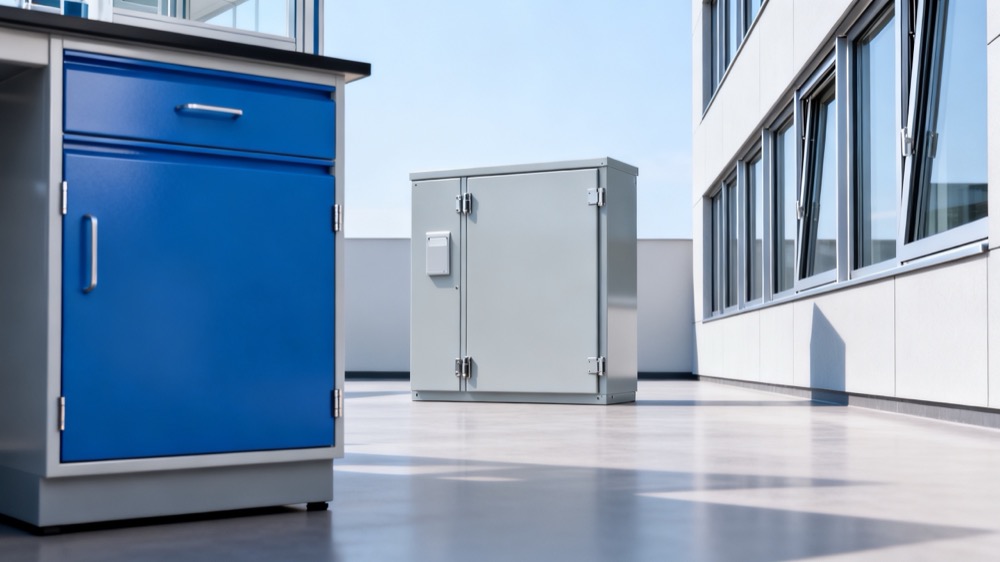
>> Indoor Laboratory Cabinets with Frequent Chemical Cleaning
>> Exterior Aluminum Doors, Windows, and Architectural Profiles
>> Electrical Enclosures and Appliance Housings
● A Six-Step Chemical-Resistance Qualification Process
>> 1. Create an Exposure Register
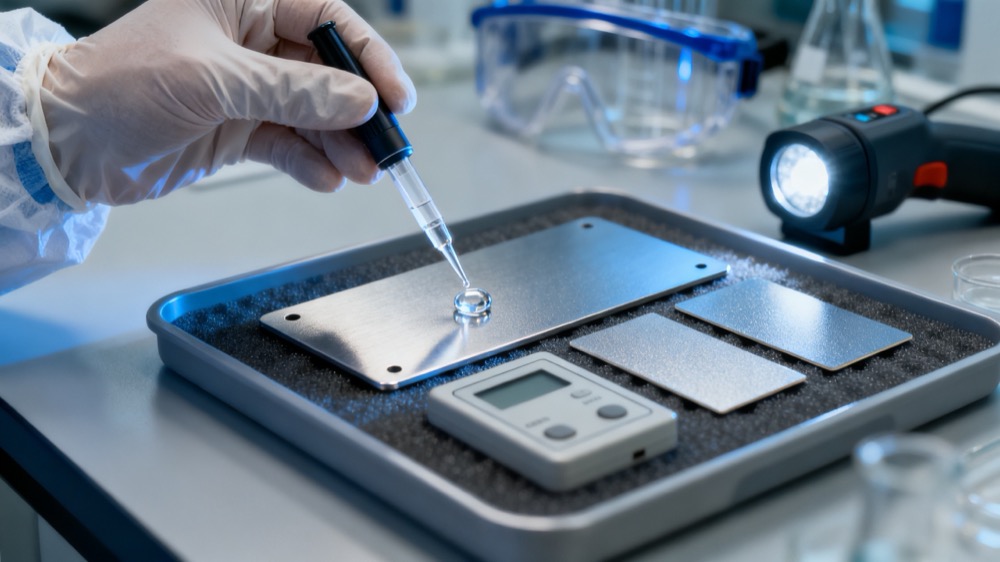
>> 2. Prepare Representative Test Panels
>> 3. Verify Application and Cure Conditions
>> 4. Select Tests That Match the Exposure
>> 5. Agree Acceptance Criteria Before Testing
>> 6. Validate Production Performance
● How to Compare Supplier Claims Without Being Misled
● Cost and Environmental Considerations
● Discuss Your Application with Yinda Technology
>> Is epoxy powder coating always more chemically resistant than polyester?
>> Can polyester powder coating withstand industrial cleaners?
>> Can epoxy powder coating be used outdoors?
>> Are epoxy-polyester hybrid powder coatings a compromise?
>> Does passing a solvent rub test prove chemical compatibility?
>> Which coating should I choose for prolonged immersion?
Choosing between epoxy powder coating vs polyester powder coating for chemical resistance starts with one practical question: what will actually touch the coated surface? Epoxy is generally the stronger starting point for chemically demanding indoor applications. Polyester is usually the better starting point when sunlight, weathering, and exterior appearance also matter.
However, neither resin name guarantees compatibility with a particular cleaner, solvent, acid, or process fluid. The formulation, application quality, chemical concentration, temperature, and contact time all influence performance.
At Yinda Technology, our recommendation is to specify the exposure before selecting the resin. With subsidiaries in China, Indonesia, and Saudi Arabia, we serve industries whose operating conditions vary considerably—from architectural profiles and appliances to new energy vehicles and medical equipment.
This guide explains the differences and provides a practical framework for selecting and validating a coating.

The following comparison describes typical selection priorities, not guaranteed ratings for every formulation.
| Selection factor | Epoxy powder coating | Polyester powder coating |
|---|---|---|
| Primary strength | Chemical protection for indoor applications | Weatherability combined with useful chemical resistance |
| Chemical exposure | Often the first candidate for demanding indoor service | Suitable for many routine exposures; verify the exact formulation |
| Sunlight resistance | Generally poor; chalking and appearance changes are concerns | Generally better suited to exterior exposure |
| Typical applications | Laboratory equipment, cabinets, tools, protected components | Architectural profiles, doors, windows, outdoor equipment |
| Corrosion protection | Depends on formulation, substrate preparation, and application | Also depends on the complete coating system |
| Selection requirement | Test the actual chemical and exposure conditions | Test chemicals alongside relevant weathering requirements |
The important distinction is not "chemical-resistant" versus "non-resistant." Both technologies offer chemical-resistant products. The question is which formulation provides the right balance for the intended service.
Epoxy powder coatings are valued for their combination of adhesion, mechanical properties, corrosion protection, and chemical resistance.
For indoor metal components exposed to cleaning products or industrial fluids, epoxy is often a sensible first candidate. Established commercial epoxy ranges include laboratory equipment, hospital beds, metal cabinets, and tools among their applications.
The limitation is weatherability. Conventional epoxy coatings can chalk and lose their original appearance under outdoor exposure. Therefore, strong indoor performance should not be interpreted as evidence of suitability for exposed architectural surfaces.
Polyester powder coatings are widely used where weathering and appearance retention matter. Typical applications include architectural components, electrical equipment, appliances, and outdoor furniture.
Polyester should not be dismissed as a purely decorative coating. Commercial polyester formulations can provide useful chemical resistance alongside mechanical performance and weatherability.
However, improved exterior durability does not automatically establish resistance to an aggressive cleaner or solvent. Likewise, a "superdurable" designation should not be treated as a universal chemical-resistance rating.
For solvent-intensive indoor service, epoxy is commonly the first technology worth evaluating. Nevertheless, "solvent resistance" is too broad to serve as a complete specification.
Record:
- The solvent or commercial product name.
- Its working concentration.
- Whether contact involves wiping, splashing, pooling, or immersion.
- Surface temperature during exposure.
- Cleaning frequency and recovery time.
A coating that tolerates an occasional wipe may not withstand prolonged contact with the same liquid. Avoid approving an entire chemical family based on one successful test.
Neither epoxy nor polyester should receive a blanket approval for "acid resistance" or "alkali resistance."
The precise substance, concentration, temperature, and exposure duration matter. Commercial cleaners can also contain ingredients that make their behavior different from a simple laboratory solution.
For purchasing decisions, request compatibility evidence for the actual working solution. Where information is incomplete, arrange representative testing rather than relying on a generic "excellent chemical resistance" statement.
Both coating families may be candidates for components exposed to oils and maintenance fluids. The surrounding environment often determines which technology deserves priority.
An indoor equipment enclosure presents a different challenge from an exterior vehicle component. Sunlight, heat, mechanical damage, and fluid exposure may need to be considered together.
For new energy vehicle applications, separately specify any electrical, thermal, fire-performance, or other functional requirements. A chemically resistant coating is not automatically qualified for every vehicle-related duty.
Medical equipment and appliance surfaces may experience repeated exposure rather than one long chemical contact.
The qualification plan should reproduce the intended cleaning procedure: product dilution, dwell time, wiping material, frequency, and rinsing instructions.
Epoxy can be a useful candidate for indoor equipment. Polyester may suit other components, depending on their operating conditions. Neither choice alone establishes sterilization compatibility, biocompatibility, or regulatory compliance.
This distinction can prevent expensive specification mistakes.
Chemical resistance concerns how a coating responds to a substance. Relevant changes include softening, staining, blistering, loss of gloss, or reduced adhesion.
Corrosion resistance concerns protection of the underlying metal. It depends on the coating system, substrate, pretreatment, defects, edges, and exposure conditions.
Salt-spray results therefore cannot replace chemical-exposure testing.
Published supplier data illustrate the difference. One commercial epoxy range reports no blistering and less than 1/8-inch creep after 500 hours of salt spray. Certain commercial polyester ranges report no blistering and less than 1/16-inch creep after the same duration.
These figures do not prove that polyester is universally better at corrosion protection. They describe different products under their stated conditions—not a controlled comparison of every epoxy and polyester formulation.
For buyers, the lesson is straightforward: compare test reports, not isolated numbers.
The following scenarios are decision-making examples, not reported Yinda Technology customer trials.
Begin by identifying the laboratory's actual reagents and cleaning products.
Epoxy is a logical first candidate where demanding indoor chemical exposure dominates. Test representative cabinet panels, especially where liquids can collect around joints, shelves, or fasteners.
Appearance alone should not determine acceptance. Check adhesion and film integrity after exposure as well.
Start with an exterior-grade polyester formulation because weatherability is central to the application.
Next, evaluate the cleaning chemicals likely to be used during installation and maintenance. A weather-resistant finish can still be unsuitable for a particular cleaning process.
For projects in China, Indonesia, or Saudi Arabia, define the actual site conditions rather than assuming every project within a country has the same exposure.
First establish whether the part operates indoors, outdoors, or in a sheltered transitional location.
For indoor chemically demanding service, evaluate epoxy. For exposed outdoor service, evaluate polyester and verify the required chemical compatibility.
If no single formulation satisfies the complete specification, discuss an alternative chemistry or a qualified multilayer system. Do not force a choice between two unsuitable products.
List every relevant process fluid, cleaner, disinfectant, and maintenance product.
Record concentration, temperature, contact duration, frequency, and whether rinsing occurs. Include foreseeable misuse separately from normal operating conditions.
This document gives the coating supplier a meaningful basis for recommending candidates.
Use the intended substrate, pretreatment, film thickness, and production curing conditions.
A laboratory panel made under ideal conditions may not represent a production component. Include difficult geometries or vulnerable areas where appropriate.
Keep an unexposed control panel for comparison.
Follow the selected product's technical data sheet and confirm the required part-temperature and time conditions.
Solvent rub testing can support process control, but it has limits. ASTM D5402 explicitly states that solvent resistance alone does not establish full cure.
It also does not prescribe a universal solvent, number of double rubs, or passing result. Those requirements must be agreed for the coating and service.
ASTM D1308 addresses the effects of household chemicals on coating systems. ASTM D5402 addresses solvent resistance using solvent rubs.
These methods answer different questions. Neither should automatically stand in for prolonged immersion, repeated disinfectant wiping, or a specialized industrial exposure.
For conditions outside a standard method's intended scope, define an appropriate protocol with the supplier and testing laboratory.
Specify what counts as failure before reviewing the results.
Possible criteria include:
- No blistering or visible coating breakdown.
- No unacceptable staining or gloss change.
- No persistent softening.
- Acceptable adhesion after exposure.
- No unacceptable corrosion at defined inspection locations.
Where measurements are required, agree the method, tolerance, inspection timing, and recovery period in advance.
After selecting a candidate, run a controlled production trial.
Document the powder grade, batch, substrate preparation, film thickness, and cure profile. Retain samples and establish checks for future production.
Qualification should also be reviewed when the chemical, cleaning procedure, pretreatment, or coating formulation changes.
A useful chemical-resistance report should identify the complete test conditions.
Ask for the coating grade, substrate, preparation, thickness, cure schedule, chemical identity, concentration, temperature, exposure method, duration, and assessment criteria.
Then ask three questions:
1. Does the test reproduce our actual use?
2. Are the compared products tested under equivalent conditions?
3. Does the evidence cover appearance and protective performance?
A short "pass" statement without supporting conditions offers limited purchasing value. A detailed report helps explain where a coating works—and where its limitations begin.
Compare the cost of a finished, qualified component rather than powder price alone.
Relevant factors include pretreatment, application efficiency, curing requirements, rework, cleaning restrictions, and replacement risk. A lower-cost powder may be poor value if the finished part fails its operating requirements.
Environmental claims also need boundaries. Do not assume that all epoxy or polyester products have identical hazard profiles or curing needs.
Request current safety and technical data sheets. For energy-saving projects, ask whether a lower-temperature or shorter-cure candidate can meet the same validated performance requirements on the actual production line.
Send Yinda Technology your substrate, operating environment, chemical list, cleaning procedure, and production curing conditions.
Our powder-coating and environmental-materials business serves architectural profiles, doors and windows, new energy vehicles, medical equipment, hardware, and appliances. With subsidiaries in China, Indonesia, and Saudi Arabia, we welcome application-specific discussions.
Request a coating recommendation and an agreed validation plan before committing to full-scale production.
No. Epoxy is often the first candidate for demanding indoor chemical service, but the actual formulation and exposure conditions determine suitability.
Some formulations can. Approval should be based on the specific cleaner, dilution, temperature, contact time, and cleaning frequency.
Conventional epoxy is generally unsuitable as an exposed decorative finish where appearance matters because of its limited weatherability. A qualified system may use epoxy beneath a suitable topcoat.
Hybrids can offer a useful balance for indoor applications. However, they generally remain limited in exterior weatherability and should not be assumed to equal either parent chemistry in every property.
No. A solvent rub test evaluates resistance under defined rubbing conditions. It does not demonstrate universal chemical resistance or, by itself, full cure.
Do not select by resin family alone. Obtain evidence covering the exact liquid, concentration, temperature, and immersion duration, and consider a specialized lining if necessary.
1. [AkzoNobel Interpon — Epoxy]. Commercial epoxy applications, weathering limitations, and published performance data. [shop.interpon]
2. [AkzoNobel Interpon — Polyester TGIC Free]. Polyester applications, weatherability, chemical-resistance positioning, and published performance data. [shop.interpon]
3. [Powder Coating Institute — Frequently Asked Questions]. Exterior suitability, ultraviolet exposure, and limitations of epoxy-containing coatings. [powdercoating]
4. [ASTM International — ASTM D5402-19(2024): Standard Practice for Assessing the Solvent Resistance of Organic Coatings Using Solvent Rubs]. Scope, interpretation, and limitations of solvent rub testing. [store.astm]
5. [ASTM International — Paint Standards and Related Coating Standards]. Listing and scope identification for ASTM D1308 and related coating test methods. [store.astm]
6. [AkzoNobel Interpon — Hybrid Technology in Powder Coatings]. Epoxy-polyester hybrid characteristics, indoor applications, and ultraviolet-resistance limitations. [interpon]


