Language


Views: 264 Author: Yinda Powder Coating Publish Time: 2026-11-14 Origin: Site


Content Menu
● Epoxy vs Polyester Powder Coating: Performance at a Glance
● Why Humidity Alone Does Not Tell You Which Powder to Use
>> Condensation is different from humid air
>> Salt and cleaning chemicals change the exposure
● When Epoxy Powder Coating Is the Better Choice
● When Polyester Powder Coating Is the Better Choice
● Three Practical Ways to Specify a Coating for Humid Service
>> 1. Match the test to the failure you need to prevent
>> 2. Compare production parts as well as flat panels
>> 3. Compare the cost of passing the specification, not the cost per kilogram
● What to Send Yinda Technology for a Coating Recommendation
>> Is epoxy powder coating waterproof?
>> Is polyester powder coating suitable for tropical climates?
>> Is an epoxy primer with a polyester topcoat always better than one coat?
>> Can powder coating prevent rust at scratches and cut edges?
>> Can I compare suppliers using their salt spray hours?
>> Does polyester powder coating need a primer on aluminum?
When comparing epoxy powder coating vs polyester powder coating for humid environments, start with two questions: Will the part see direct sunlight, and what will be in the water that reaches it? Epoxy powder coating is often the better starting point for indoor metal parts exposed to condensation and cleaning chemicals. Polyester powder coating is usually the better choice for sun-exposed doors, windows, and architectural profiles. For coastal installations or parts that stay wet, qualify the complete coating system rather than choosing by resin alone.
From a manufacturer's perspective, "high humidity" is not a coating specification. A medical equipment housing wiped down daily, a steel bracket that collects condensation, and an aluminum window frame exposed to salt-laden air all need different evidence before approval. Here's how to make that distinction and turn it into a specification a supplier can quote and a production line can meet.
 Epoxy vs Polyester Powder Coating: Performance at a Glance
| Selection factor | Epoxy powder coating | Polyester powder coating |
|---|---|---|
| Best starting application | Indoor or enclosed metal parts where adhesion and chemical resistance matter | Exterior metal parts where color and gloss retention matter |
| Humidity and condensation | A strong candidate when the substrate is properly prepared and the film fully cured | A viable option; verify wet adhesion and blister resistance on the specified substrate |
| Direct sunlight | Generally unsuitable as a visible exterior finish because it can chalk and lose gloss | Outdoor-grade formulations resist weathering better; select the grade for the project |
| Cleaners and process fluids | Often the first candidate to screen for chemical exposure | Performance varies by formulation and chemical; test the actual exposure |
| Coastal or salt exposure | Can serve as a primer in a qualified exterior system | Can serve as the exposed topcoat in a qualified exterior system |
| Application cost | Compare single-coat and primer-only roles separately | Compare the installed cost of a single coat with the added application and cure steps of a two-coat system |
Condensation forms when a metal surface cools below the dew point of the surrounding air. A chilled equipment enclosure can therefore collect droplets indoors even when there is no leak. The questions to ask are where the water collects, how long it stays, and whether the part dries between cycles. Look at undersides, seams, and recesses, not just the most visible face.
A coastal window frame faces sunlight and salt deposits as well as moisture. When those deposits become wet, they create conditions that can accelerate corrosion at scratches, cut edges, and joints. A medical equipment housing may never see direct sun but can encounter repeated disinfectant contact. For that housing, a test using the specified cleaner, concentration, contact time, and wipe frequency tells you more than a generic claim of chemical resistance.
Start with epoxy for enclosed steel brackets, indoor hardware, or equipment panels where wet adhesion and resistance to known chemicals are priorities. Epoxy is also a candidate for the primer layer beneath a compatible exterior topcoat. In both roles, ask for data on the actual substrate and preparation process. Results from a coated steel panel do not establish how the same product will perform on galvanized steel or cast aluminum.
The main limitation is sunlight. Ultraviolet exposure can break down the surface and leave a powdery residue known as chalking. If an enclosure has both a sheltered interior and an exposed exterior, do not assume the same visible finish is appropriate on both sides. Also distinguish a pure epoxy from an epoxy-polyester hybrid: a hybrid can be useful indoors, but the presence of polyester does not make it equivalent to an exterior-grade polyester.
Start with an exterior-grade polyester for architectural aluminum profiles, door and window frames, or external appliance housings that face both humidity and sunlight. For a project with demanding color and gloss retention requirements, evaluate a super-durable polyester against the specified weathering criteria. A "super-durable" label describes a weathering advantage; it does not, by itself, establish corrosion resistance or approval for a particular architectural project.
For coastal service, pay particular attention to the aluminum pretreatment or steel preparation, edge coverage, drainage, and protection at installation cuts. If testing shows a single coat does not meet the specification, compare it with a compatible primer and polyester topcoat. Qualify the two layers together at the specified film thickness and cure schedule. Separate data sheets do not establish adhesion between the layers.
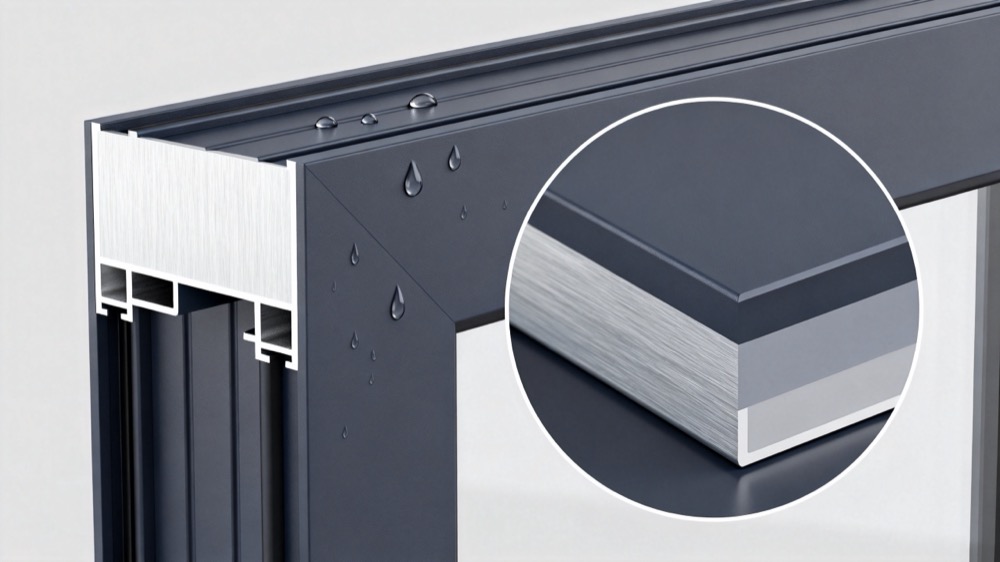
A useful test plan starts with the likely failure, not the largest number of chamber hours on a data sheet.
- Condensation and blistering: Use a specified condensation exposure, such as a method under ISO 6270-2. Agree on the cycle, duration, and acceptable blistering or adhesion loss beforehand. State when adhesion will be assessed after exposure.
- Corrosion at damaged areas: Where the project calls for an ISO 9227 salt spray test, define how the coating will be scribed and how far corrosion may spread from that deliberate cut. Record substrate and pretreatment alongside the result. Do not translate chamber hours into years in service.
- Sunlight and appearance: For exterior work, specify weathering evidence and acceptable color change and gloss retention. An intact film can still fail the appearance requirement.
- Cleaning and disinfection: Use the intended cleaning agents and a representative contact and wipe routine. Inspect for softening, discoloration, gloss change, and adhesion loss as applicable.
Use flat panels to compare candidate finishes under controlled conditions, then coat representative parts on the intended line. Include a formed edge, an area around a fastener, and a recess if those features exist on the finished part. A panel can pass while a sharp edge has too little film or an inside corner receives less powder than the adjacent flat face.
Record the substrate, pretreatment, dry film thickness, and part-metal temperature during cure. The oven setpoint is not the temperature reached by the part. On a mixed load, a heavy bracket and a thin cover can heat at different rates. Verify that each representative part meets the powder supplier's time-at-temperature requirement. For two-coat systems, verify the schedule for both layers and check adhesion between them.
Consider two illustrative decisions. For an outdoor aluminum window frame, compare an exterior-grade polyester single coat with a compatible primer and polyester topcoat only if the exposure or specification warrants it. The decision should depend on documented weathering and corrosion performance, including vulnerable areas, rather than the number of coats.
For an indoor equipment enclosure exposed to repeated disinfection, run a side-by-side comparison of epoxy and any polyester candidate that otherwise meets the design brief. Include coating consumption, line time, additional handling, inspection, and expected rework in the quote comparison. If both candidates pass the agreed tests on production parts, the simpler process may offer better value. If only one passes, a lower powder price is not a meaningful saving.
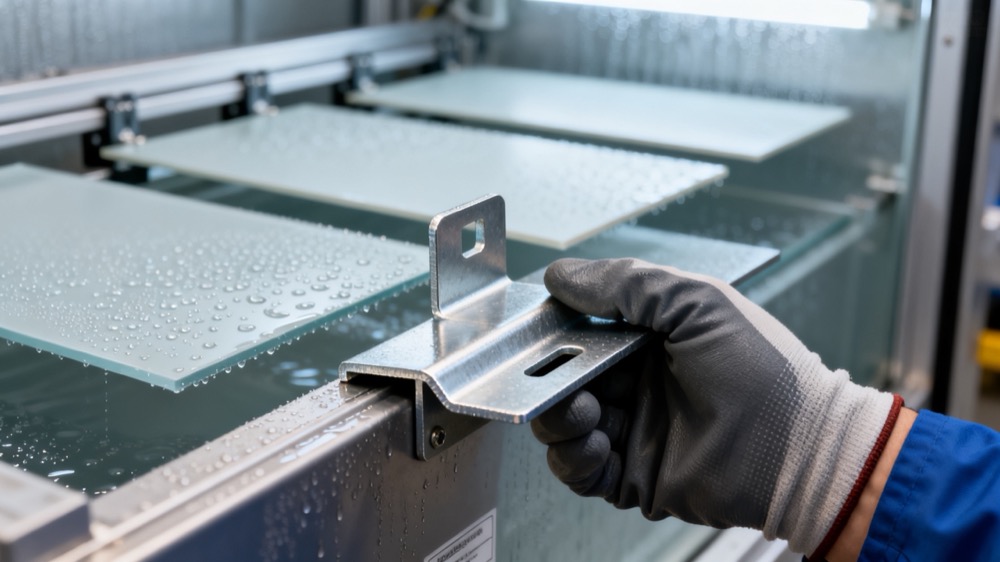
Yinda Technology develops and manufactures powder coatings and environmental materials and has subsidiaries in China, Indonesia, and Saudi Arabia. Its products serve architectural profiles, doors and windows, new energy vehicles, medical equipment, hardware, and appliances. For parts produced at multiple sites, use the same written acceptance criteria and verify the coating process on each production line before treating the finishes as interchangeable.
Send Yinda Technology your part drawing or photos, substrate and pretreatment details, installation location, exposure to sunlight or salt, cleaning agents, finish requirements, and any required test methods. Include your oven constraints and target film thickness if already specified. Request a shortlist of candidate systems, the corresponding technical data sheets, and a sample-panel or pilot-part test plan. For a coastal window frame, identify the cut edges and drainage details; for a medical housing, attach the actual cleaning protocol. Those details make the recommendation easier to validate.
A properly applied epoxy film can resist water exposure, but "waterproof" is too broad for a specification. Condensation, repeated washdown, and continuous immersion are different conditions. If a component remains submerged or holds standing water, specify that exposure and request data for the complete coating system under comparable conditions.
Yes, an outdoor-grade polyester is a sensible starting point for sun-exposed metal in a tropical climate. Check the required color and gloss retention, as well as the effects of frequent wetting. If the installation also faces salt-laden air, assess pretreatment, drainage, and corrosion performance separately from weathering.
No. A compatible primer and topcoat can be useful for more aggressive exposures, but a second coat adds application steps and an interface that must adhere. A qualified single-coat system is often the better choice when it meets the same acceptance criteria on the production part.
An intact coating protects the metal beneath it, but a scratch or cut can expose the substrate. On steel, corrosion can spread under the surrounding film. Specify how fabrication cuts and installation damage will be addressed, and use scribed test panels where the project requires evidence of resistance to corrosion spread.
Only if the test method, substrate, pretreatment, coating build, scribe condition, and pass criteria are comparable. A report that states only "1,000 hours" does not tell you what passed. Ask for the test conditions and the actual corrosion, blistering, or scribe-creep ratings.
Not necessarily. A single-coat polyester system may meet the project requirements on properly pretreated aluminum. Use a primer when the specification requires one or when testing shows that a compatible two-coat system is needed to meet the agreed performance criteria.
- Prismatic Powders, *Pros and Cons of Different Powder Types*. Supports the comparison of epoxy, polyester, and hybrid finishes, including UV exposure and the use of epoxy as a primer. [prismaticpowders]
- SpecialChem, *Powder Coatings: How to Formulate with the Right Ingredients?* Supports the discussion of formulation-dependent properties and the limitations of epoxy-polyester hybrids in exterior exposure. [specialchem]
- AMICO Architectural, *Understanding AAMA 2604 vs. AAMA 2605: Choosing the Right Powder Coating*. Provides industry context for architectural aluminum pretreatment, exterior weathering, and corrosion protection. [amicoarchitectural]
- López-Ortega et al., *Evaluation of Protective Coatings for High-Corrosivity Category Atmospheres in Offshore Applications* (2019). Provides testing context for condensation, salt spray, and the evaluation of scribed and unscribed specimens. The article above does not present the paper's results as product-specific evidence for Yinda Technology. [pmc.ncbi.nlm.nih]
- DÖRKEN, *Evolution of Corrosion Testing*. Explains why different accelerated test environments produce different corrosion mechanisms and why chamber results cannot be converted directly into outdoor service life. [doerken]
- ERICHSEN, *Salt Spray Test According to DIN EN ISO 9227*. Describes salt spray methods and assessment criteria including rust, blistering, and corrosion spread. [erichsen]


