Language


Views: 264 Author: Yinda Powder Coating Publish Time: 2026-11-07 Origin: Site


Content Menu
● Epoxy vs Polyester Powder Coating: Quick Comparison
● What Is the Difference Between Epoxy and Polyester Powder Coating?
>> Epoxy Powder Coating: Protection with a Sunlight Limitation
>> Polyester Powder Coating: Designed for Exterior Exposure
>> Epoxy-Polyester Hybrids Are a Separate Category
● Which Powder Coating Performs Better Outdoors?
>> UV Resistance, Chalking, and Color Retention
>> Corrosion Resistance: Compare Systems, Not Resin Names
>> Chemical and Mechanical Performance
● When Should You Use an Epoxy Primer and Polyester Topcoat?
>> When a Single Polyester Coat May Be Appropriate
● Standard vs Superdurable Polyester: What Should Buyers Specify?
● Three Practical Outdoor Metal Selection Scenarios
>> Architectural Aluminum Windows and Doors
>> Outdoor Steel Cabinets and Charging Equipment
>> Industrial Components with Chemical Exposure
● How to Validate a Powder Coating Before Full Production
>> Step 1: Define the Exposure
>> Step 2: Request a Complete System Proposal
>> Step 3: Coat Representative Parts
>> Step 4: Verify the Cure Process
>> Step 5: Establish Acceptance Criteria
● Cost and Sustainability: Compare More Than Powder Price
● Discuss Your Outdoor Coating Requirements with Yinda Technology
>> Can epoxy powder coating be used outdoors?
>> Is polyester powder coating waterproof?
>> Does polyester powder coating prevent rust?
>> Is superdurable polyester always necessary?
>> Can polyester powder be applied over an epoxy primer?
>> How long will outdoor powder coating last?
When comparing epoxy powder coating vs polyester powder coating for outdoor metal applications, the most important question is not which coating is stronger. It is which coating can withstand the actual exposure. Polyester powder coating is generally the better exposed finish because of its weatherability. Epoxy powder coating offers valuable adhesion, chemical resistance, and barrier protection, but direct sunlight can cause chalking and appearance deterioration.
For some projects, the right solution combines both: an epoxy primer beneath a compatible polyester topcoat.
At Yinda Technology, our perspective is to evaluate the substrate, environment, appearance requirements, and production process together. With subsidiaries in China, Indonesia, and Saudi Arabia, and a focus on powder coatings, environmentally oriented materials, and energy-saving technology, we understand why buyers need more than a simple resin comparison.
This guide explains where each chemistry fits—and how to specify an outdoor coating system with fewer assumptions.

The following comparison describes typical characteristics, not guaranteed performance for every formulation.
| Selection factor | Epoxy powder coating | Exterior polyester powder coating |
|---|---|---|
| Main strength | Adhesion, chemical resistance, and barrier protection | Weatherability and outdoor appearance retention |
| Direct sunlight | Generally unsuitable as an exposed decorative finish | Generally preferred |
| Color and gloss retention outdoors | Vulnerable to chalking and deterioration | Better, depending on durability grade and pigmentation |
| Corrosion protection | Useful as a protective primer within a qualified system | Depends on pretreatment, formulation, coverage, and system design |
| Chemical exposure | Often a strong candidate; verify specific chemicals | Formulation-dependent; testing remains necessary |
| Typical outdoor role | Protected primer beneath a compatible topcoat | Exposed topcoat |
| Architectural applications | Usually not the exposed finish | Common choice for profiles, windows, and doors |
| Purchasing priority | Compatibility and corrosion-system evidence | Weathering grade and finished-system evidence |
The practical takeaway: select polyester for the exposed surface, then determine whether the underlying metal needs additional protection.
Epoxy powder coatings form crosslinked films that can provide strong adhesion and protective properties. They are useful where chemical exposure, mechanical performance, or barrier protection matters.
Their limitation outdoors is ultraviolet exposure. Sunlight can degrade the organic binder, producing chalking, gloss loss, and color change. Chalking appears as a powdery residue on the surface.
This does not mean every epoxy-coated component immediately loses all protective function outdoors. It means exposed epoxy is generally a poor choice when long-term appearance matters.
For visible fencing, exterior doors, and building components, that distinction is commercially important.
Exterior polyester powder coatings offer better resistance to ultraviolet light and weathering. This makes them common choices for architectural aluminum, outdoor furniture, and exterior equipment.
However, "polyester" is a chemistry description—not a complete performance specification.
Standard-durable and superdurable products can deliver different weathering performance. Color, pigmentation, gloss, application quality, and exposure also influence results.
A buyer should therefore request the exact product grade and supporting evidence rather than accept "outdoor polyester" as sufficient documentation.
Epoxy-polyester hybrid powder coatings should not be confused with exterior polyester topcoats.
Hybrids can offer useful interior performance, but their epoxy content means they are generally not recommended for outdoor applications where appearance retention is important.
Always confirm the chemistry on the technical data sheet.
For an exposed decorative finish, polyester usually has the decisive advantage.
Consider a window frame or outdoor equipment enclosure. Even if its coating remains attached, visible chalking or uneven fading can trigger complaints, refinishing, or replacement.
My recommendation is to treat appearance retention as a functional requirement—not merely a cosmetic preference.
Specify:
- Acceptable color change.
- Required gloss retention.
- Chalking limits.
- Relevant weathering evidence.
- Cleaning and maintenance conditions.
These requirements make competing proposals easier to compare.
Corrosion protection cannot be ranked reliably by comparing resin names alone.
The finished result depends on:
- Substrate type and condition.
- Surface cleaning and pretreatment.
- Film continuity and thickness.
- Edge, weld, and recess coverage.
- Cure quality.
- Exposure conditions.
- Primer and topcoat compatibility.
An epoxy primer can improve protection within an appropriately designed system. However, it cannot compensate for contamination, unsuitable pretreatment, or incomplete coverage.
Likewise, a polyester topcoat with excellent weatherability does not automatically provide sufficient corrosion protection for every outdoor steel structure.
Epoxy is often attractive where chemical resistance and protective properties are priorities. Nevertheless, "chemical-resistant" is incomplete without naming the exposure.
Ask which chemical is involved, at what concentration, at what temperature, and for how long.
For mechanical performance, avoid assuming one chemistry always wins. Impact resistance, flexibility, and adhesion depend on formulation, film thickness, substrate, and cure.
Evaluate the actual coated component when possible.
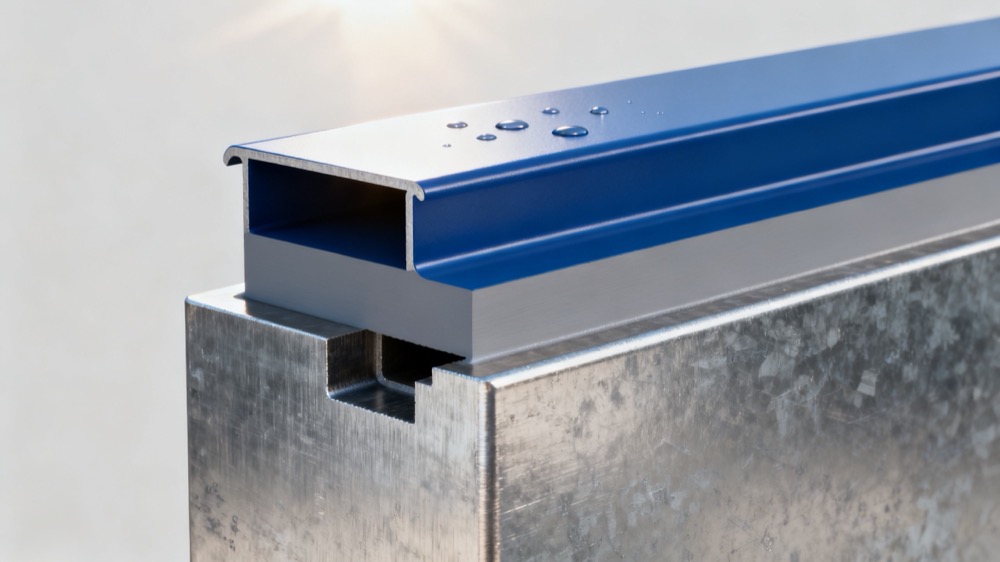
An epoxy–polyester system separates two functions:
1. The epoxy primer contributes adhesion and corrosion-barrier protection.
2. The polyester topcoat provides the exposed, weather-resistant finish.
This approach deserves consideration for outdoor steel equipment, railings, enclosures, and components exposed to demanding corrosion conditions.
However, two coats do not automatically make a qualified system.
The primer and topcoat must be compatible. Application thickness, intercoat conditions, and curing schedules must follow the approved process.
Also, do not confuse an epoxy primer plus polyester topcoat with a single-layer epoxy-polyester hybrid. They are different coating arrangements.
A single exterior polyester coat may be suitable for properly pretreated aluminum or other applications where the specified system meets the exposure requirements.
Adding a primer without a defined benefit increases material use and processing complexity.
The better question is: what evidence demonstrates that the proposed system meets this project's requirements?
After choosing polyester, the next decision is its weathering grade.
Superdurable polyester formulations are intended to provide improved exterior appearance retention compared with standard-durable alternatives. They deserve consideration for sun-exposed façades, premium doors and windows, and projects where refinishing would be difficult.
Architectural qualification schemes help turn broad marketing descriptions into measurable requirements.
For example, QUALICOAT documentation distinguishes Class 1 and Class 2 coatings using different natural weathering exposure periods: one year and three years in Florida, respectively.
These exposure periods are qualification requirements—not direct service-life promises.
Before purchasing, request:
- The applicable specification and class.
- Evidence covering the proposed product.
- Relevant color and finish limitations.
- Current approval details, where required.
- Application and pretreatment requirements.
No certification or approval should be assumed to apply to a supplier's entire product range.
The following examples are specification scenarios, not reported Yinda customer projects.
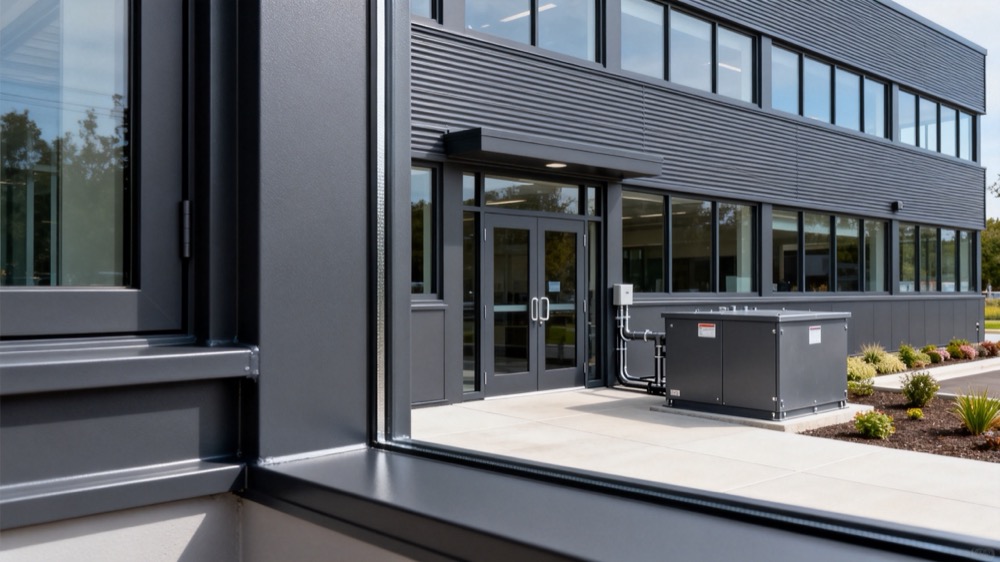
For visible exterior aluminum, prioritize polyester weatherability, color consistency, and suitable pretreatment.
Where appearance expectations are demanding, evaluate a higher-durability polyester grade.
Ask whether qualification evidence covers the proposed finish and whether the applicator can maintain the required process controls. A premium powder cannot correct inconsistent substrate preparation.
For outdoor cabinets, including new-energy-vehicle charging equipment housings, evaluate both appearance and corrosion protection.
A compatible epoxy primer and polyester topcoat may be appropriate where the exposure justifies a multilayer system.
Review the entire fabrication—not only flat test panels. Seams, hinges, cut edges, and recessed areas deserve particular attention during trial coating.
For an outdoor component exposed to both sunlight and chemicals, neither resin name provides a complete answer.
List the actual chemicals and cleaning procedures. Then verify the proposed coating system against those conditions.
An epoxy primer may provide useful underlying protection, but the exposed topcoat must also tolerate the chemicals it will encounter.
A structured trial is more valuable than a generic durability claim.
Record the installation location, substrate, sunlight exposure, moisture conditions, and potential salt or chemical contact.
Separate appearance requirements from corrosion requirements. A coating can perform differently against each.
Ask the supplier to identify:
- Powder product and chemistry.
- Pretreatment process.
- Primer, if applicable.
- Required film-thickness range.
- Cure schedule.
- Relevant performance evidence.
Reports should identify the tested system clearly enough to judge whether it represents your proposed production conditions.
Include actual production features such as welds, edges, recesses, and different metal thicknesses.
A flat panel is useful, but it does not reproduce every application difficulty.
Follow the product's specified time and temperature conditions.
Distinguish oven air temperature from the metal temperature required by the coating schedule. Different component masses can respond differently during heating.
Confirm the process before treating an apparently smooth finish as proof of adequate cure.
Agree on appearance, adhesion, film thickness, and relevant weathering or corrosion requirements before production begins.
Also define inspection frequency, handling requirements, and the response to nonconforming parts.
This makes quality control actionable rather than subjective.
The cheapest powder per kilogram is not necessarily the lowest-cost coating solution.
Compare total applied cost, including:
- Material consumption.
- Transfer efficiency and reclaim suitability.
- Pretreatment.
- Oven operation.
- Additional coating passes.
- Rework and rejects.
- Maintenance and refinishing.
A two-layer system costs more to apply, but may be justified where additional protection reduces failure risk. A higher-durability polyester may also be worthwhile when access for future refinishing is difficult.
Powder coating can offer environmental advantages because it generally avoids the liquid solvent carrier associated with conventional solventborne paints.
However, neither chemistry is automatically "greener." Energy demand, processing efficiency, material waste, and service life all matter.
Low-temperature or faster-curing products should be assessed against both production conditions and required finished performance.
For most exposed outdoor metal applications, begin with an exterior polyester topcoat. Evaluate an epoxy primer when the substrate and exposure require additional corrosion protection.
Yinda Technology develops, manufactures, and supplies powder coatings and environmentally oriented materials for architectural profiles, doors and windows, new-energy vehicles, medical equipment, hardware, and electrical appliances.
Send Yinda Technology your substrate details, installation environment, color and gloss requirements, pretreatment process, and oven conditions. Request a coating-system recommendation, relevant technical documentation, and samples for production trials.
A useful proposal should explain not only which powder to use, but why the complete system suits your application.
Yes, but its role matters. Epoxy is generally unsuitable as an exposed decorative finish where sunlight and appearance retention are important. It can serve as a primer beneath a compatible exterior topcoat.
Polyester can provide a protective film, but "waterproof" is too broad a specification. Moisture performance depends on the complete system, coverage, cure, substrate preparation, and exposure conditions. Immersion requires separate evaluation.
It can help protect steel, but it does not make every coated component rustproof. Pretreatment, continuous coverage, edge protection, and system selection remain essential.
No. The appropriate grade depends on sunlight exposure, appearance expectations, project specifications, and maintenance access. Select a grade supported by relevant evidence.
Yes, when both products form a compatible system. Follow the supplier's instructions for application, intercoat conditions, film thickness, and curing.
There is no universal lifespan. Performance depends on the powder grade, substrate, pretreatment, application quality, environment, and maintenance. Request project-relevant evidence and written warranty conditions rather than a generic number.
1. [Powder Coating Institute — Frequently Asked Questions]. Industry guidance on weatherability, ultraviolet exposure, epoxy chalking, exterior polyester applications, and epoxy-containing hybrids. [powdercoating]
2. [AkzoNobel Interpon — Interpon 100, Black, Very Matt]. Manufacturer description of an epoxy powder coating intended for applications without anticipated long-term ultraviolet or exterior weathering exposure. [shop.interpon]
3. [AkzoNobel Interpon — Interpon Redox Plus, RAL 7032 Primer]. Technical product information identifying a pure epoxy barrier primer and the requirement for a suitable topcoat. [shop.interpon]
4. [QUALICOAT — Specifications]. Requirements framework covering coating materials, application equipment, and finished products. [qualicoat]
5. [QUALICOAT — Appendix to the Specifications, 26th Edition]. Documentation describing Class 1 and Class 2 Florida exposure periods. Qualification periods should not be interpreted as service-life guarantees. [qualicoat]
6. [Powder Coating Institute — Why Powder Coating?]. Background on protective performance, environmental benefits, and finishing economics. [powdercoating]


