Language


Views: 298 Author: Yinda Powder Coating Publish Time: 2026-11-16 Origin: Site


Content Menu
● Introduction: How to Identify a Powder Coating Supplier Worth Qualifying
● Selection Criteria: What Put These Six Suppliers on the List?
● Six Powder Coating Manufacturers and Suppliers to Shortlist
>> 1. Yinda Technology — Custom Powder Coatings for Small and Mid-Sized Manufacturers
>> 2. ALWAN — Riyadh-Based Thermosetting Powder Manufacturer
>> 3. Jotun — Architectural, Industrial, and Functional Powder Coatings
>> 4. AkzoNobel Interpon — Specification-Led Architectural and Industrial Supply
>> 5. National Paints — Regional Powder Production and Custom Color Matching
>> 6. Qemtex — UAE Powder Production With Custom Batch Options
● Supplier Comparison: Capacity, MOQ, and Approvals
● Buyer's Guide: How to Qualify a Powder Coating Supplier
>> 1. Specify the coating system, not just the color
>> 2. Audit the factory that will manufacture the order
>> 3. Move from a lab sample to a production trial
>> 4. Compare delivered cost and plan for Gulf logistics
>> 5. Insider check: Test the restart and reclaim conditions, not just the first panel
● Conclusion: Qualify the Supply Route Before Awarding the Contract
>> 1. How can I tell whether a supplier's ISO 9001 certificate is still valid?
>> 2. Can I use the same QUALICOAT approval if the supplier changes plants or offers a custom color?
>> 3. How can I detect a cheaper formulation substituted after sample approval?
>> 4. Can a low-temperature powder reduce energy use without taking a performance hit?
>> 5. Who owns a custom formula, and can I move it to another supplier?
A powder coating supplier earns a place on your approved vendor list by reproducing an agreed finish on your production line, not just by sending an attractive sample panel. Before comparing prices, check four things: which factory will make your powder, whether its research and development team can work within your process limits, how it releases and traces production batches, and whether it can meet repeat-order lead times for your exact product code. A supplier that answers those questions with documents and production data is easier to qualify than one that leads with group-wide capacity or a catalog full of certification logos.
This guide focuses on Saudi Arabia and the United Arab Emirates as two sourcing markets within the Arabian Peninsula. It compares six suppliers of powder coating material, not companies that only apply coatings to metal parts. Some manufacture in the region; others may serve an order through a regional subsidiary, warehouse, or cross-border supply route. That distinction determines what you can verify about origin, lead time, and the factory covered by a certificate. Yinda Technology publishes this guide and appears first; the list is a procurement shortlist, not an independent ranking by sales or quality.
Saudi Arabia offers an established industrial base for sourcing. The Saudi Authority for Industrial Cities and Technology Zones, known as MODON, traces its industrial-city network to the founding of sites in Riyadh, Jeddah, and Dammam in 1973 and lists multiple industrial cities in both Riyadh and Dammam. In the UAE, supplier footprints in Jebel Ali, Sharjah, and Umm Al Quwain give buyers additional options for comparing domestic and cross-border replenishment. A nearby plant is an advantage only if it makes your specific grade or holds usable stock; ask for the production and dispatch addresses separately.
IMARC Group's Saudi Arabia Powder Coatings Market report, updated in June 2026, estimates the Saudi market at USD 146.72 million in 2025 and forecasts USD 219.17 million by 2034, with a reported compound annual growth rate of 4.56% for 2026–2034. These are commercial market estimates, not official production statistics or evidence that any supplier has spare capacity. Use them to understand the market, then qualify each supplier on the production line that would handle your order.

The shortlist favors companies with a documented powder coating portfolio, a relevant Saudi or UAE supply route, and a clear reason for professional buyers to request a quotation. Public disclosures establish the starting point; they do not replace a factory audit, a certificate check, or a production trial. The following five checks help turn the shortlist into an approved vendor decision.
| Selection criterion | What to verify during qualification |
|---|---|
| Factory identity and certification | Legal manufacturer, production address, outsourcing arrangements, and any required ISO certificate or product approval covering the proposed site and scope. |
| Formulation and application support | Ability to match a physical standard and work within your resin, gloss, texture, film thickness, and cure requirements without substituting an unapproved grade. |
| Quality control and traceability | A certificate of analysis from a recent production lot, retained samples, raw-material-to-carton traceability, and written controls for formulation or site changes. |
| Capacity and delivery reliability | Available capacity for your product family, stock versus made-to-order lead times, color-change constraints, and recent on-time shipment performance for comparable orders. |
| Commercial fit | Minimum order quantity per product code, pilot and reorder quantities, development charges, freight, and total coating cost per accepted part. |
Founded in 2010 and headquartered in Foshan, China, Yinda Technology develops and manufactures powder coatings and environmentally oriented materials. The company reports a dedicated R&D center and testing facilities, and it serves applications including architectural profiles, doors and windows, new energy vehicles, medical equipment, hardware, and electrical appliances. Its network includes China, Indonesia, and the Middle East, with a Saudi subsidiary identified by the company. The corporate profile also describes a Middle East factory plan; that does not establish that a particular order is manufactured in Saudi Arabia. Ask Yinda to identify the manufacturing plant, invoicing entity, shipping point, and country of origin for the quoted grade.
Yinda is a candidate for small and mid-sized brands looking for a cost-effective custom formulation rather than the lowest price per kilogram. The best test of its flexibility and communication is a defined development brief: provide a physical color master, a sample component, the current oven profile, and the target finish. Ask for a named technical contact, a date for the first sample, a timetable for revisions, and separate prices for the pilot and repeat orders. If the job needs more than color matching—for example, a different cure window for a heat-sensitive assembly—ask Yinda to document exactly what it will develop, test, and guarantee.
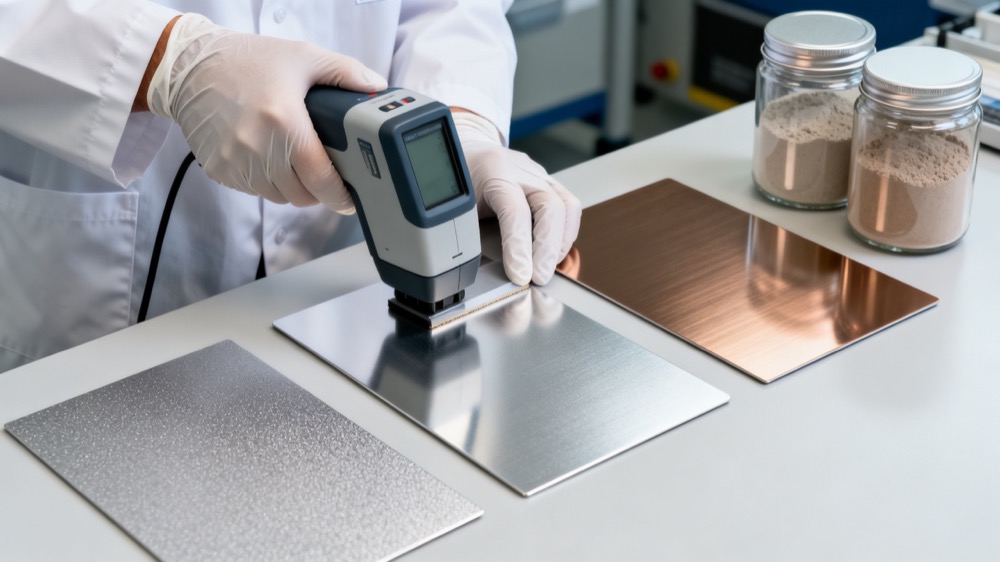
Gulf Polyester Powder Coating Company, trading as ALWAN, was established in Riyadh in 1993 and manufactures thermosetting powder coatings. It is a direct Saudi manufacturing candidate for buyers who prioritize access to a Riyadh factory and want to qualify a local production route. Its public materials establish the core specialty, but do not provide enough detail to compare export destinations, available line capacity, or minimum order quantities on equal terms with other suppliers.
For original equipment manufacturer (OEM) work, ask ALWAN to distinguish standard grades from custom color matching and new formulation development. If the project specifies an exterior durability class, request the exact approval or test evidence for the proposed system. Also ask whether the factory can reproduce the same matte or textured finish in a small follow-up batch after the main project run.
Jotun was founded in Norway in 1926. Its Saudi-facing business identifies building components, general industry, pipelines, appliances, and furniture as powder coating markets. Industry reporting documents a Saudi powder production facility, giving buyers a local manufacturing route to investigate alongside the group's wider regional network. The existence of a Saudi plant, however, does not show that every product in the Jotun portfolio is made there.
Jotun is worth evaluating when a specification calls for an established product system and technical application support. Ask which standard product series meets the requirement, whether project-specific colors or finishes are available in that series, and where the exact code will be made. For a pipeline or other functional application, request evidence against the applicable system specification rather than treating experience in architectural finishes as interchangeable. Private-label manufacturing and formula ownership should be negotiated separately if required.
Akzo Nobel was formed in 1994 and adopted the AkzoNobel brand identity in 2008. Industry reporting places the opening of its Jebel Ali powder coating facility in 2008 and describes regional services such as color matching, made-to-order products, and technical support. Its Interpon portfolio serves architectural components, appliances, metal furniture, and automotive applications, with gloss, matte, textured, and metallic finishes.
Interpon is a practical candidate when a UAE or regional buyer needs a specification-led grade or a repeatable project finish. Ask whether the custom color is available in the required product family, what minimum applies to the first and repeat batches, and whether the proposed product code is covered by any required approval. A comparable color from a different series is not the same commercial or technical offer if the durability class changes.
National Paints was founded in Jordan in 1969, began operations in Sharjah in 1977, and dates its powder coating business to 2001. Its powder division reports six powder production plants across five countries, a Saudi powder manufacturing site, and exports to other Middle East and North Africa markets. Its range includes epoxy, polyester, and epoxy-polyester powders, as well as functional fusion-bonded epoxy products for applications such as pipe and rebar.
The company advertises custom color matching within 24–48 hours and special-color production within two to three working days. Treat those figures as published service targets, not confirmed door-to-door lead times. They are useful for comparing project-color services, but your quotation should state when the clock starts, whether time for sample approval is excluded, which factory makes the powder, and whether the same terms apply to reorders.
Qemtex dates the launch of its brand to 2023 and the start of its Umm Al Quwain facility to 2024. Its corporate history traces the underlying distribution business to 2003. The UAE facility produces architectural, industrial, and specialty powder coatings. At launch, the company identified the UAE as a domestic market and the Gulf Cooperation Council, wider Middle East and North Africa, Europe, and the United States as export targets. Those targets should not be read as a breakdown of current sales.
Qemtex advertises customization of color, texture, and composition, with batch sizes ranging from small to large. It is a useful candidate when a buyer wants a UAE production route for a custom finish. The plant's announced first-stage capacity was 5,000 tonnes per year, with 10,000 tonnes planned for a later stage. Ask for current capacity, actual lead time, and the minimum for your formulation rather than treating either figure as available capacity.
The table separates powder-specific disclosures from broader company figures. Minimum order quantity (MOQ) should be quoted per product code and finish, not just per purchase order. "Not disclosed" means the cited sources did not establish a comparable figure; it does not imply that a supplier lacks capacity, certifications, or approvals.
| Supplier | Regional sourcing focus | Public powder capacity disclosure | MOQ to verify | Certification or approval check |
|---|---|---|---|---|
| Yinda Technology | Custom development; Saudi subsidiary support | Comparable site-level tonnage not disclosed; verify the actual plant | Pilot, custom formulation, and repeat MOQ | Request the manufacturing site's ISO certificate and any grade-specific approval required by the project. |
| ALWAN | Thermosetting powder production in Riyadh | Comparable annual powder tonnage not disclosed | Standard versus custom color MOQ | Request current site certificates and evidence for the exact powder system. |
| Jotun | Saudi powder production; architectural and industrial systems | Comparable Saudi powder tonnage not disclosed | Stock grade versus made-to-order MOQ | Verify the relevant approval against the proposed product, color restrictions, and source plant. |
| AkzoNobel Interpon | Jebel Ali powder production; specification-led finishes | Comparable Jebel Ali powder tonnage not disclosed | MOQ by series, color, and finish | Check the exact approval number and source plant for the quoted Interpon system. |
| National Paints | Multi-plant regional supply; custom colors and functional powder | Six powder plants reported; no comparable site tonnage established | Special-color and repeat MOQ | Company reports QUALICOAT Class 1 and Class 2 approvals; verify the current listing for the offered system. |
| Qemtex | Umm Al Quwain production; custom batches | 5,000 tonnes/year announced initially; 10,000 tonnes/year planned | Small-batch capability advertised; numeric MOQ to quote | Request the current approval number and match its scope to the offered grade and production site. |
Start the request for quotation with the substrate, pretreatment, end-use environment, expected service conditions, finish, target film thickness, and cure limits. An epoxy powder can be a candidate for indoor or functional applications where the specified chemical or corrosion performance matters; do not assume that an epoxy-containing grade is interchangeable with a weathering-grade polyester topcoat for exposed architectural aluminum. For outdoor work, define the required weathering class and the complete coating system. "Exterior grade," a RAL color, and a gloss value are not a complete specification.
For architectural aluminum, check the applicable QUALICOAT class and exact coating system approval number, or P-number, when specified. Separately verify the applicator's licence if the project requires one. For industrial work, state which tests apply and how results will be judged: for example, cross-cut adhesion, impact resistance, corrosion testing with a defined scribe assessment, or accelerated weathering with agreed limits for color and gloss change. A claim such as "passes 1,000 hours" is hard to interpret without the method, substrate, pretreatment, film build, and acceptance criteria.
Keep management certification and regulatory evidence separate. ISO 9001 addresses a quality management system; it does not approve every powder formulation. CE marking is not a general environmental certification for powder coatings. Where EU RoHS applies to the finished electrical or electronic equipment, ask for supporting evidence specific to the proposed coating material, including the product code and relevant color or formulation scope. For a medical device or vehicle component, agree on the actual end-use requirements instead of relying on a generic "medical grade" or "automotive grade" description.
Match the quotation, certificate, and production-site address. During an audit, select a finished carton and ask the supplier to trace its batch through the release record, production line, and raw-material lots. Then pick a raw-material lot and ask which finished batches used it. Request a recent certificate of analysis (CoA), the corresponding inspection results, and a sample change notification. This makes it easier to distinguish a working quality system from a well-prepared document pack.
Put change control in the purchase agreement. Require written notification before changes to the resin system, critical pigments, manufacturing site, or other agreed formulation and process variables. The buyer does not need the supplier's confidential recipe to control substitution. It needs a unique product code, agreed performance limits, retained samples, and the right to requalify a material change before delivery.
- Lab sample: Approve the finish against a physical reference, not a screen image. Record the panel material, pretreatment, thickness, color, gloss, and texture. For visual finishes, agree on lighting and viewing conditions.
- Line trial: Run the powder on actual parts, including the thickest section and a geometry that is difficult to coat. Log part metal temperature through the oven. The oven's air setpoint alone does not establish that the component reached the powder's specified cure window.
- Production validation: Request powder from a normal production run at the intended factory. Record the lot number, keep sealed powder and coated reference panels, and compare the first repeat batch with the approved trial.
Compare quotations per accepted part or square meter, not just per kilogram. Suppose Powder A costs USD 3.00/kg and your line consumes 0.20 kg per accepted part, while Powder B costs USD 3.40/kg and consumes 0.16 kg. Powder A costs USD 0.60 per accepted part; Powder B costs about USD 0.54. The higher-priced powder is cheaper on this measure. Use a line trial to determine actual consumption and include rework, color-change waste, freight, and inventory costs without counting the same loss twice. Ask suppliers to quote the same film build and finish requirements so the comparison is meaningful.
For each offer, specify the Incoterm and named place, manufacturing origin, dispatch warehouse, and date from which lead time is measured. Have your broker confirm the tariff classification and shipment documents for the actual product. For hot-season deliveries, get the supplier's written storage and transport limits, set a minimum remaining shelf life at receipt, and agree on who records and reviews temperature excursions if the shipment is delayed. A warehouse in the Gulf can improve replenishment, but it does not establish local manufacture or protect a shipment from poor handling.
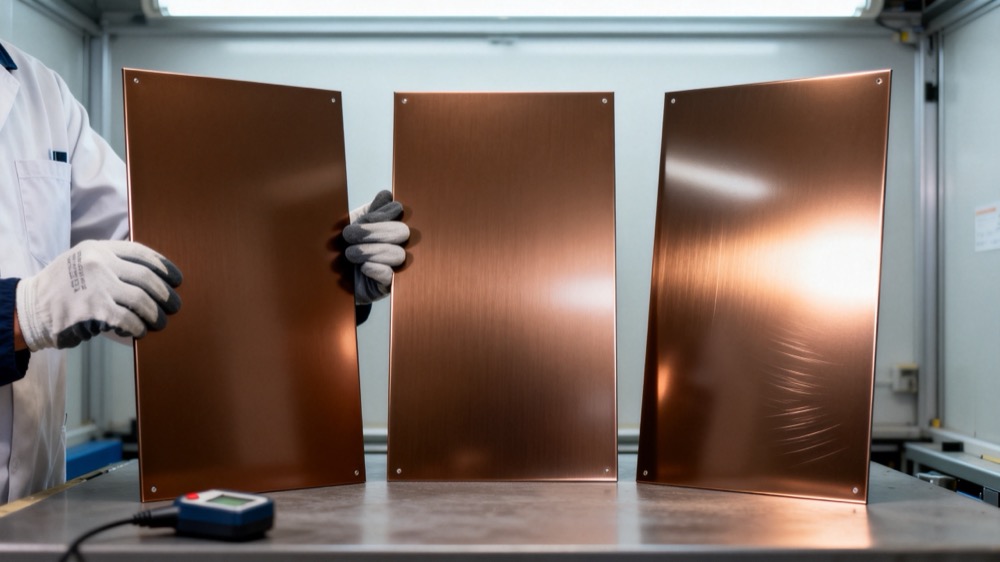
A perfect lab panel can conceal a fragile finish. For a metallic or textured powder, run the first trial with fresh powder and then repeat it after a normal line stop and restart. If the supplier permits reclaim—the reuse of collected overspray—repeat the trial at the agreed production reclaim ratio. Retain the panels side by side and compare appearance under the same lighting and viewing angles. For adjacent façade panels, agree whether a lot change is acceptable within one visible elevation. If the finish only matches with fresh powder, build that restriction into the purchase specification and cost model rather than discovering it after installation.
Shortlist suppliers against the job your line needs to run. ALWAN is a candidate when Saudi manufacturing in Riyadh matters. Jotun and Interpon warrant a look for specification-led systems. National Paints and Qemtex give buyers regional options for comparing custom-color and batch services. Yinda Technology is a candidate when a smaller or mid-sized manufacturer wants to test a flexible development process, direct technical communication, and the economics of an OEM formulation. In every case, make the award conditional on the exact site, product code, approval scope, and repeat-batch performance.
To request a technical review from Yinda Technology, email info@yindapc.com with your substrate, end use, annual volume, order size per color, physical color reference, cure profile, mandatory approvals, and delivery location. Ask for a written proposal identifying the intended manufacturing site, pilot MOQ, sample timeline, validation plan, and repeat-order lead time. That gives your team a quotation it can compare on the same terms as competing offers.
Search CertSearch by certificate number or legal company name. Check the status, covered sites, and scope against the factory named in your quotation. If the record is missing or conflicts with the submitted certificate, ask the issuing certification body to verify it directly. Do not accept an unexpired PDF as proof if the certificate has been suspended or if the quoted plant is not covered.
Do not assume so. Request the exact approved system number, current listing, manufacturing source, and any restrictions covering the proposed color or finish. Then confirm the applicator's licence separately when the contract requires it. Ask for written clarification before accepting a change of product series or manufacturing source, even if the exterior color looks identical.
A color match cannot establish formulation identity. Retain sealed samples from the approved trial and early production batches, require lot-specific CoAs, and compare agreed properties such as density, particle-size distribution, cure response, gloss, and film performance. Investigate unexplained shifts before releasing the lot. The strongest protection is an enforceable change-control clause backed by traceability and a right to test or reject nonconforming batches.
It may, but test it on the actual line rather than assuming that a lower oven setpoint delivers savings. Ask for the cure schedule at part metal temperature and log both the slowest-heating component and a thin part that heats quickly. Test the agreed adhesion, appearance, and any end-use performance requirements after the trial. Compare energy per accepted part at equivalent throughput; savings that increase rejects or slow the line may not improve total cost.
Negotiate that before paying a development fee. Distinguish ownership of the physical color master, product specification, and test data from ownership of the formulation itself. Put permitted use, exclusivity, and transfer rights in writing. If the manufacturer retains the recipe, secure a documented performance specification and reference panels so a backup supplier can develop and qualify an equivalent—not simply match the color.
- Saudi Authority for Industrial Cities and Technology Zones (MODON): industrial-city locations and government background on Saudi manufacturing clusters. [modon.gov]
- QUALICOAT Specifications: requirements for architectural coating materials, application plants, and finished products. [qualicoat]
- QUALICOAT approved coating systems directory: lookup for current or cancelled P-numbers; use the separate applicator directory to check a coater's licence. [qualicoat]
- ISO certification guidance and CertSearch: instructions and lookup tools for checking accredited management system certificates. [iso]


