Language


Views: 262 Author: Yinda Powder Coating Publish Time: 2026-07-29 Origin: Site


Content Menu
● What Heat Does to Powder Coating Colors
>> Common visual changes include
● Typical Heat Resistance Ranges
● Curing Temperature Is Not Service Temperature
>> Best practice for production teams
● Industries That Need Better Heat Performance
● How to Choose the Right Color
● Testing Before Mass Production
● Why This Matters for Yinda Technology
● FAQ
>> 1. How much heat can powder coating colors withstand?
>> 2. Does curing temperature equal heat resistance?
>> 3. Why do powder coating colors fade?
>> 4. Can powder coating be used on automotive and EV parts?
>> 5. How do I choose the right color for a hot environment?
Powder coating colors can handle a wide temperature range, but heat resistance depends on the resin system, pigment selection, cure quality, and the actual service environment. In many standard systems, color stability is limited well below the cure temperature, which means a finish may look perfect after production yet still change appearance under prolonged heat exposure.
For manufacturers and buyers, the key question is not only "how hot can it get?" but also how long the coating will stay stable at that temperature. That distinction matters in building components, outdoor hardware, EV parts, appliances, medical equipment, and industrial assemblies exposed to repeated thermal cycling.
Heat affects powder coating colors in different ways. A coating may soften, lose gloss, darken, chalk, fade, or shift hue depending on the chemistry and the duration of exposure.
A properly cured coating can survive normal service conditions, but sustained heat near or above the product's limit can break down the surface and change how the color looks. In practical terms, appearance is often the first signal that the coating is under thermal stress.
- Color fading.
- Yellowing or darkening.
- Loss of gloss.
- Surface chalking.
- Brittleness or reduced flexibility.
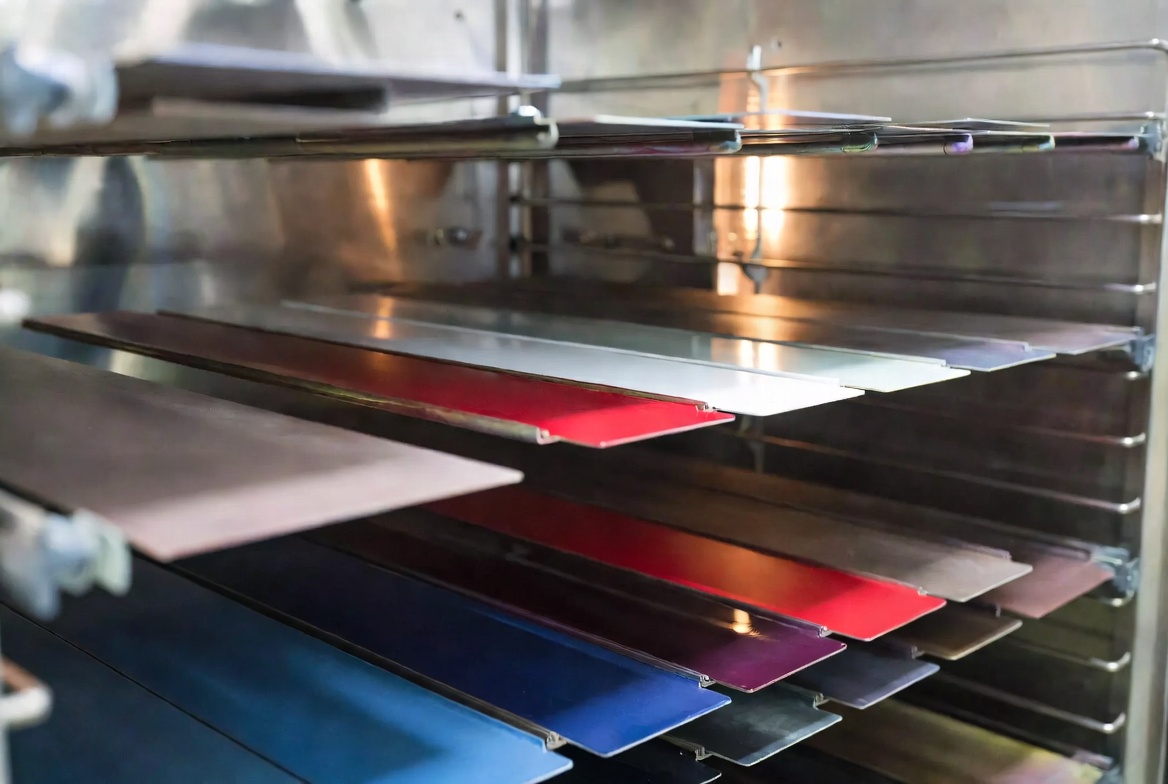
Most standard powder coatings are designed for everyday industrial use, not extreme heat. Industry sources generally place standard performance around ambient conditions up to about 200°F, with some intermittent spikes higher than that depending on formulation.
High-temperature powder coatings are a different category. Specialized systems can tolerate much hotter environments, and some advanced formulations are designed for continuous exposure well above the range of ordinary decorative powders.
| Coating type | Practical heat range | Typical use case |
|---|---|---|
| Standard powder coating | Up to about 200°F, with brief spikes higher | General metal products, furniture, appliances |
| Heat-resistant powder coating | About 300°F to 500°F | Automotive parts, outdoor hardware, equipment housings |
| High-temperature specialty powder coating | Up to 800°F or more in select formulations | Exhaust parts, industrial furnaces, energy systems |
Color performance is not controlled by temperature alone. The pigment package, resin type, film thickness, surface preparation, and oven control all influence whether a finish keeps its original appearance.
Dark shades often show heat-related shifts faster than light colors because they absorb more energy. Metallics, bright reds, and certain organic pigments can also be more sensitive to discoloration when exposed to prolonged heat or uneven curing.
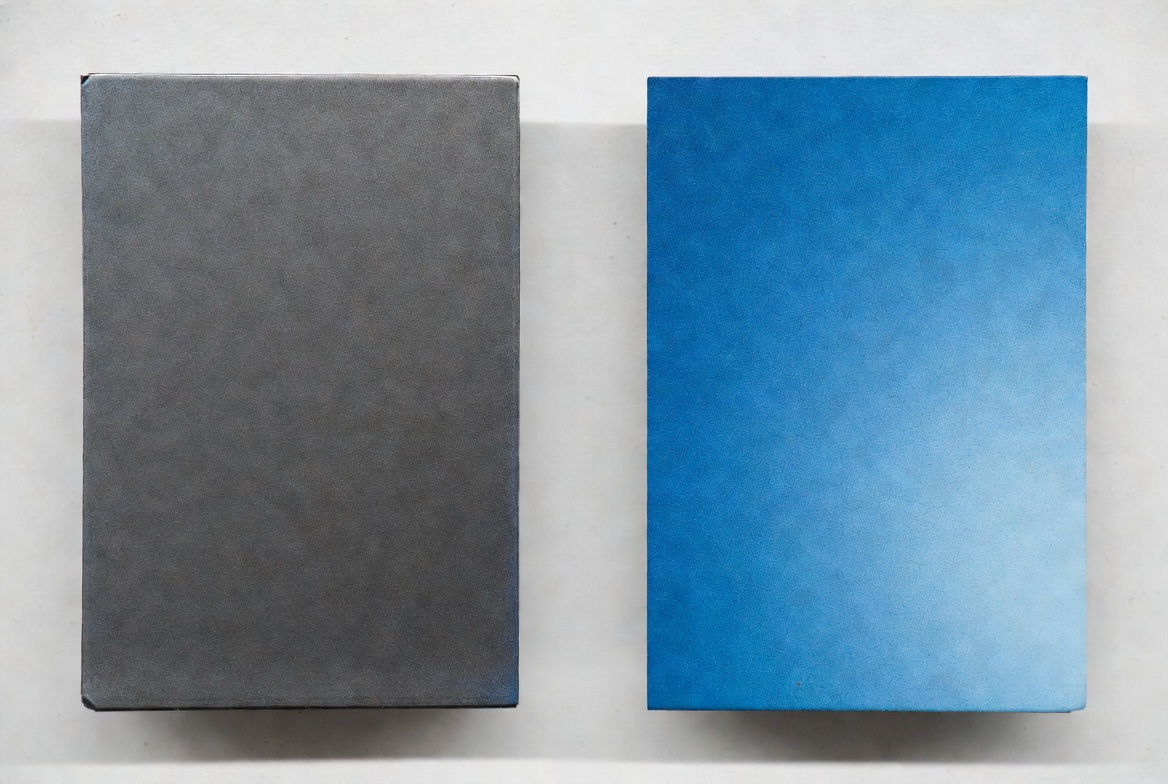
One of the most common misunderstandings is confusing curing heat with real-world heat resistance. Most thermoset powders cure in a controlled oven, often in the 350°F to 450°F range depending on the formulation, but that does not mean the finished part can live at that temperature indefinitely.
The real test is the temperature the coated part reaches during service, how long it stays there, and whether the exposure repeats. A coating can cure successfully and still fail visually or mechanically if the service temperature is too high.
1. Check the technical data sheet for the exact cure window.
2. Measure part temperature, not just oven air temperature.
3. Confirm dwell time after the part reaches target temperature.
4. Test representative parts under real operating conditions.
5. Record results for repeat jobs and future audits.
Heat-resistant powder coating colors are especially important in sectors where durability, safety, and appearance all matter. Automotive applications now include functional powder systems for EV battery packs, structural parts, and accessory components that must balance corrosion resistance, thermal management, and long-term appearance.
Other sectors benefit from thermal stability as well. Building components, window and door systems, electrical parts, and industrial hardware often face sunlight, summer heat, and local heat buildup that can gradually degrade color quality.
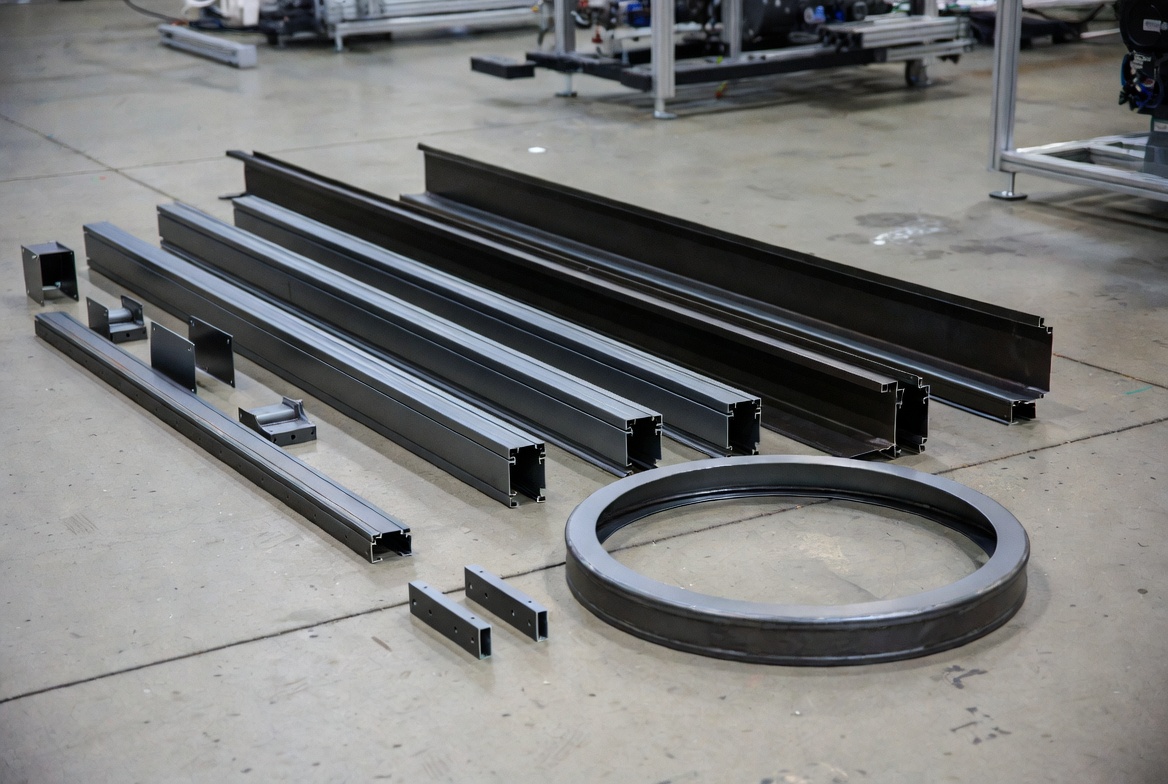
Choosing the right color is not just a design decision. It is also a technical decision that should match the part's operating temperature, sunlight exposure, mechanical stress, and cleaning environment.
Use the following checklist:
- Confirm the maximum service temperature.
- Define whether exposure is continuous or intermittent.
- Ask whether the part sits in direct sunlight.
- Check whether the color must stay visually stable.
- Match the coating chemistry to the application.
- Request sample testing before full production.
| Application | Priority | Recommended approach |
|---|---|---|
| Building profiles and window systems | Appearance and weather resistance | Choose stable outdoor-grade colors with proven UV and heat performance |
| EV and automotive parts | Thermal stability and functional durability | Use specialized powders designed for the component environment |
| Medical and electrical equipment | Clean appearance and controlled performance | Select verified formulations with consistent cure control |
| Industrial hardware | Corrosion resistance and heat endurance | Test against expected peak and continuous temperatures |
From a buyer's perspective, the safest choice is not the "highest temperature" product on paper. The best choice is the coating that matches the part's real working conditions and keeps its color stable for the full service life.
From a manufacturer's perspective, process consistency matters as much as chemistry. Even a strong formulation can show color drift if the oven has hot spots, the part is overloaded, or the cure cycle is not verified correctly.
Before approving a finish for mass use, request a small trial run. This is especially important when the product will face direct sunlight, repeated heating, or customer-visible surfaces where color accuracy matters.
A good test program should include:
- Heat exposure at expected operating temperature.
- Short-term spike testing.
- Visual inspection after cooling.
- Adhesion and surface integrity checks.
- Comparison against the approved sample.
For manufacturers like Yinda Technology, powder coating color performance is not only about decoration. It is about helping customers protect assets, improve product life, and maintain a reliable appearance across demanding industrial environments.
That is especially relevant across building profiles, doors and windows, new energy vehicles, medical equipment, hardware, and electrical products, where heat, weather, and visual consistency all affect product value.
If your application involves elevated temperatures, repeated heat cycles, or strict color requirements, choose a formulation that is validated for the actual working environment. For technical support, color matching, or project-specific powder coating recommendations, contact the Yinda Technology team for a tailored solution.
Standard powder coatings usually handle everyday conditions up to about 200°F, while specialized heat-resistant systems can perform much higher depending on formulation.
No. Curing temperature is the oven temperature needed to form the coating, while heat resistance is the temperature the finished part can tolerate during use.
Colors fade because of heat, UV exposure, poor cure control, pigment sensitivity, or a mismatch between the coating and the service environment.
Yes. Powder coatings are widely used in automotive applications, including EV battery components, structural parts, and decorative or functional accessories.
Start with the maximum service temperature, then verify UV exposure, dwell time, coating chemistry, and test results before mass production.
1. [How much heat can powder coating withstand?] [prismaticpowders]
2. [High Temperature Powder Coating up to 1000°F | Infernex] [forrestpaint]
3. [Industrial Powder Coatings for High-Temperature Challenges] [builtamericanequipment]
4. [How Much Heat Can Powder Coating Withstand] [gz-supplies]
5. [Understanding the Heat Resistance of Powder Coating] [thermalspray]
6. [High Temperature Powder Coatings] [crestcoating]
7. [Determining the Best Temperature for Powder Coating] [lsrpf]
8. [How to Prevent Color Inconsistency in Powder Coating Ovens] [paintbooth]
9. [Powder Coating Cure Time and Temperature] [blog.powderx]
10. [The Role of Powder Coatings in the Evolving Automotive Industry] [lsrpf]
11. [What is powder coating? Surface finishes for CNC machining] [hubs]
12. [Will My Powder Coated Items Be Okay in the Summer Sun and Heat?] [borotekusa]


