Language


Views: 243 Author: Yinda Powder Coating Publish Time: 2026-10-04 Origin: Site


Content Menu
● How Thick Is Powder Coating After Curing?
>> Powder Coating Thickness in Microns and Mils
● How Powder Coating Changes Finished Part Dimensions
>> External Dimensions Increase on Both Coated Sides
>> Internal Openings Become Smaller
>> Two Coated Mating Parts Can Consume More Clearance
● Worked Example: Will a Coated Shaft Still Fit?
● What Determines Powder Coating Film Thickness?
>> Powder Formulation and Finish
>> Application Method and Equipment Settings
>> Geometry and Surface Preparation
>> Curing Is a Separate Control Requirement
● Is Thicker Powder Coating Always Better?
>> Choose Thickness by Function
● How to Measure Powder Coating Thickness Correctly
>> Measuring Powder Before Curing
>> Build a Repeatable Inspection Routine
● A Practical Thickness-Control Workflow for Production
>> Step 1: Identify Critical Features
>> Step 2: Agree on the Coating Window
>> Step 3: Qualify Representative Parts
>> Step 4: Record the Approved Process
● What Buyers Should Include in a Powder Coating Specification
● Discuss Your Thickness Requirements with Yinda Technology
>> How Much Thickness Does Powder Coating Add Per Side?
>> Does Powder Coating Add Thickness on Both Sides?
>> Can Powder Coating Affect Threads and Small Holes?
>> Is 100 Microns Too Thick for Powder Coating?
>> Can I Measure Thickness Before the Powder Is Cured?
>> Does Adding a Second Coat Double the Thickness?
How much thickness does powder coating add? For conventional electrostatic spray applications, a useful starting estimate is approximately 50–125 microns per coated surface, or roughly 2–5 mils. However, the correct powder coating thickness depends on the formulation, application requirements, and approved specification—not a universal number.
For manufacturers, the important question is what that added thickness does to the finished component. A coating that looks excellent can still interfere with a sliding profile, threaded connection, mounting hole, or close-fitting enclosure.
At Yinda Technology, we approach this subject from a powder manufacturer's perspective: material selection, film build, curing, and dimensional requirements must be considered together. This guide explains how to turn a general thickness estimate into a practical production specification.
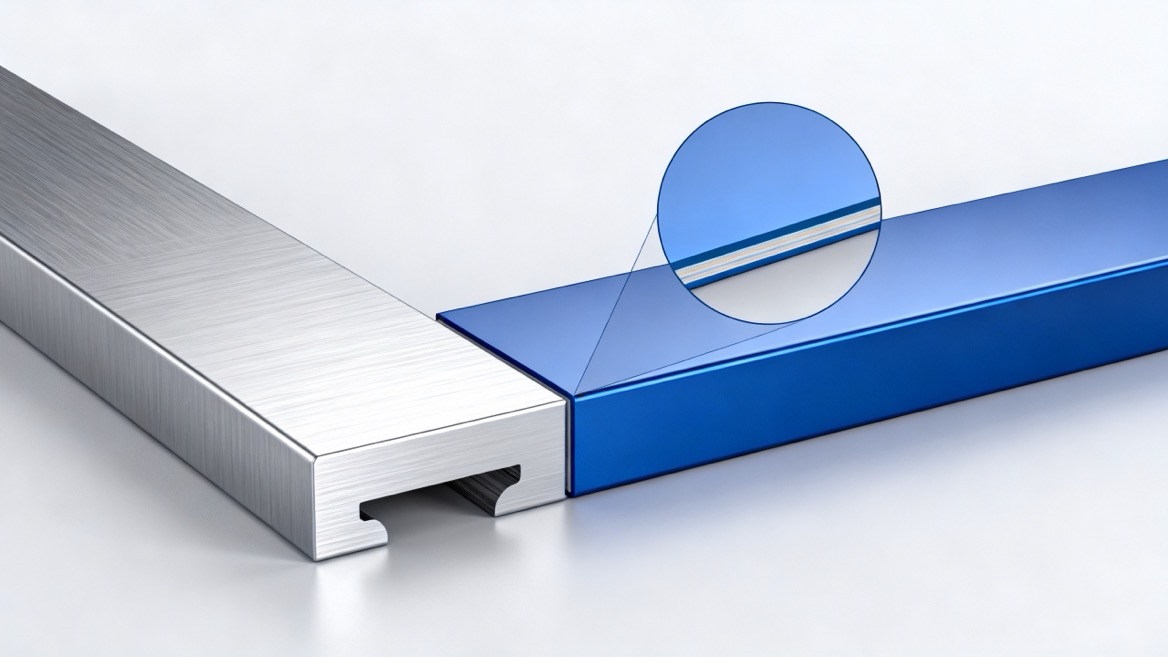
Powder coating thickness normally means dry film thickness, often abbreviated as DFT. This is the thickness of the finished coating after the powder has melted, flowed, and cured.
The loose powder deposited before baking is not the same thickness as the final film. Its height generally decreases during curing, so an uncured measurement needs an appropriate prediction method.
A mil is one thousandth of an inch. It is not a millimeter.
The conversion is:
- 1 mil = 25.4 microns.
- 1 micron = 0.001 millimeter.
- 100 microns = 0.10 millimeter.
| Film thickness per surface | Millimeters | Approximate mils |
|---|---|---|
| 50 microns | 0.050 mm | 1.97 |
| 60 microns | 0.060 mm | 2.36 |
| 80 microns | 0.080 mm | 3.15 |
| 100 microns | 0.100 mm | 3.94 |
| 125 microns | 0.125 mm | 4.92 |
These values describe one coated surface. They do not automatically describe the total increase across a component.
A published Interpon 600 product data sheet, for example, recommends 2.0–2.5 mils for that particular formulation. This illustrates why a product-specific requirement should take priority over a broad industry estimate.
The most useful engineering distinction is between film thickness and dimensional change.
The controlling principle is clearance: identify every coated surface that moves toward another surface during assembly.
If opposite faces are coated, the finished dimension increases by the thickness on both faces.
For equal film thickness:
Finished dimension=Bare dimension+2t
Here, t is the cured coating thickness per surface.
A 20.00 mm bar coated with 0.08 mm on each opposite face becomes approximately 20.16 mm across those faces.
This calculation assumes reasonably uniform coating. Actual production dimensions must account for local variation, surface texture, and the original machining tolerance.
A coated hole or slot loses space as coating builds inward.
For a uniformly coated circular bore:
Finished bore diameter=Bare bore diameter−2t
A 10.00 mm bore with 0.08 mm on each opposing wall would theoretically finish at approximately 9.84 mm.
Small holes and deep recesses may not receive uniform deposition. Treat the calculation as a design estimate, then verify the actual coated opening.
Consider a shaft entering a bore when both surfaces are coated.
The shaft diameter increases by approximately 2t, while the bore diameter decreases by approximately 2t. With equal coating thickness, diametral clearance decreases by approximately 4t.
This is why "only 80 microns" can become an assembly problem.
The following is an illustrative engineering example, not a reported customer project.
Assume:
- Bare shaft diameter: 10.00 mm.
- Bare bore diameter: 10.30 mm.
- Coating thickness: 0.08 mm on both components.
The coated shaft becomes approximately 10.16 mm.
The coated bore becomes approximately 10.14 mm.
The original 0.30 mm diametral clearance becomes a theoretical 0.02 mm interference. The parts may no longer assemble.
The correct response is not automatically to reduce the film below its approved minimum. Instead, evaluate:
1. Masking the mating surfaces.
2. Revising the bare component dimensions.
3. Selecting a qualified thinner-film system.
4. Changing the assembly design.
The final decision must preserve both fit and coating performance.
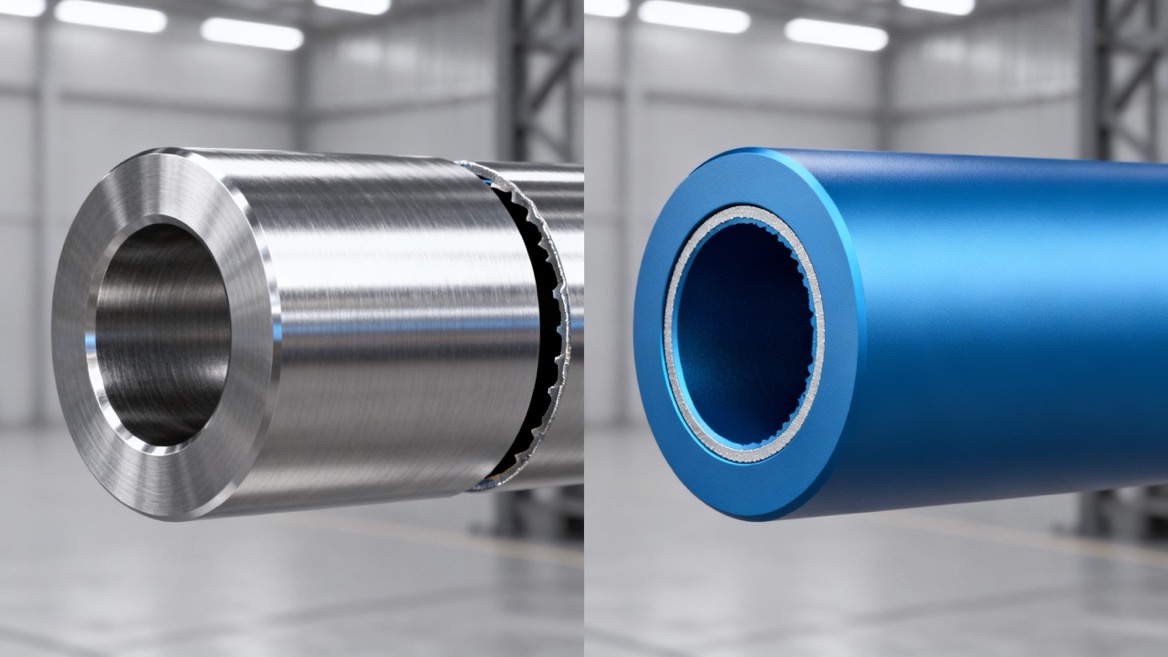
Film build results from the interaction of powder properties, equipment settings, component geometry, and process control.
Resin chemistry, pigment loading, particle distribution, melt flow, and the intended finish influence application behavior.
A smooth finish, textured finish, and specialized functional coating should not be assumed to share the same thickness requirement.
Smaller powder particles do not automatically guarantee a thinner acceptable coating. The finished film still needs enough material to achieve coverage, appearance, and specified performance.
Start with the selected powder's technical data sheet, then validate it on representative parts.
Electrostatic spray is widely used for decorative and protective powder finishes. Fluidized-bed processes can produce different film builds and require their own specifications.
Within a spray process, thickness can vary with:
- Powder delivery rate.
- Gun movement and exposure time.
- Gun-to-part distance.
- Voltage and current settings.
- Grounding quality.
- Part spacing and orientation.
Do not compensate for poor deposition by simply increasing powder output. That may overcoat accessible areas without adequately covering difficult features.
Flat panels are easier to coat consistently than recessed channels, internal corners, and complex profiles.
Electrostatic effects can make recessed areas difficult to cover while surrounding surfaces receive more powder.
Surface preparation also matters. Contamination can undermine adhesion, while surface roughness affects measurement and local coverage.
However, rougher metal does not automatically require an arbitrarily thicker coating. The preparation method and approved coating system must work together.
Steel and aluminum heat differently, but this does not establish a simple rule that steel always receives a thicker coating.
Part mass, geometry, oven loading, and thermal response affect how quickly the component reaches its required curing temperature.
The relevant cure schedule is based on part temperature and time, not simply the oven display. Verify curing separately from film thickness.
No. The objective is a qualified film within the specified range.
Insufficient thickness can cause incomplete coverage, poor appearance, and reduced performance in required tests.
Excessive thickness can also create problems, including poor appearance and reduced flexibility or impact performance. It may interfere with assembly even when the coating remains visually acceptable.
A thicker film cannot compensate for inadequate pretreatment or incomplete cure.
| Application | Main thickness-related concern | Additional verification |
|---|---|---|
| Architectural profiles | Coverage without disrupting assembly | Weathering requirements and profile fit |
| Doors and windows | Movement, seals, and hardware clearance | Finished assembly trial |
| New energy vehicle components | Dimensional interfaces and specified protection | Component-specific testing |
| Medical equipment housings | Fit, appearance, and cleaning exposure | Required cleaning compatibility |
| Hardware and appliances | Consistency and functional openings | Assembly and performance checks |
These are specification priorities, not universal thickness recommendations.
The coating selected for an outdoor architectural profile may differ substantially from one used on an indoor equipment enclosure.
A reliable inspection plan starts with the substrate and the measurement stage.

For conventional nonconductive powder films:
- Magnetic methods are commonly used over steel.
- Eddy-current methods are commonly used over aluminum and other suitable nonferrous metals.
- Ultrasonic methods can measure suitable coatings over nonmetallic substrates.
Instrument suitability depends on the coating, substrate, thickness range, and geometry.
ASTM D7091 addresses nondestructive dry film thickness measurement using magnetic and eddy-current gauges on applicable metal substrates.
A single reading on an accessible flat surface cannot establish the thickness of the entire component.
Pre-cure inspection can identify application problems before parts enter the oven.
Powder combs measure uncured powder height but disturb the powder where they contact it. That height requires a validated reduction factor to estimate cured thickness.
Noncontact ultrasonic instruments can predict cured thickness without touching the powder. Their suitability and adjustment still need verification for the application.
ASTM D7378 addresses methods for measuring applied powder to predict cured thickness.
1. Select a gauge suitable for the substrate.
2. Verify its operation using appropriate reference standards.
3. Follow the manufacturer's adjustment instructions.
4. Define measurement locations on the drawing.
5. Take multiple readings at representative areas.
6. Record variation, not just the overall average.
7. Check finished dimensions independently.
An average can conceal an undercoated recess or an overcoated mating edge. Acceptance rules should state how local readings and grouped measurements are assessed.
A good workflow connects purchasing, engineering, coating, and inspection.
Mark sliding surfaces, bores, threads, sealing interfaces, electrical contact areas, and visible faces.
Decide which features must be coated and which should be masked. Do not leave this interpretation entirely to the operator.
Specify an acceptable cured thickness range rather than an unexplained nominal number.
Confirm that the range supports the powder's intended performance and the component's dimensional requirements.
Use production-like parts with real corners, recesses, and interfaces. A flat test panel alone cannot establish assembly suitability.
Measure film distribution, verify cure, and perform a finished assembly trial.
Document the powder designation, pretreatment, application setup, cure profile, masking method, and inspection plan.
Recheck the process after meaningful changes such as different part geometry, line speed, powder formulation, or oven loading.
"Apply powder coating" is not a complete purchasing instruction.
A useful specification should identify:
- Substrate and surface preparation.
- Powder designation and finish.
- Cured film thickness range.
- Critical measurement locations.
- Masked surfaces and openings.
- Finished dimensional tolerances.
- Required cure conditions.
- Relevant performance tests.
- Sampling and acceptance criteria.
- Documentation and traceability requirements.
For multilayer systems, clarify whether the thickness requirement applies to each layer or the complete system.
A conventional gauge reading may represent total film thickness rather than separately identifying primer and topcoat.
Yinda Technology develops, manufactures, and sells powder coatings and environmentally focused materials, alongside energy-saving technology promotion. With subsidiaries in China, Indonesia, and Saudi Arabia, we serve architectural profiles, doors and windows, new energy vehicles, medical equipment, hardware, and appliances.
Before selecting a powder, send our team your component drawing, substrate, exposure conditions, required finish, and critical assembly clearances.
Request a product-specific thickness recommendation and an agreed sample-validation plan. This helps connect material selection with measurable coating performance and finished-part fit.
A common starting estimate for conventional electrostatic spray coatings is approximately 50–125 microns per coated surface. The selected product's technical data sheet and approved application specification determine the actual requirement.
Yes, when both opposing surfaces are coated. An external dimension increases by the sum of the two film thicknesses. A coated internal opening becomes smaller by the corresponding sum.
Yes. Coating can reduce openings and interfere with mating threads. Specify masking or another approved protection method where fit is critical, then inspect the finished feature.
Not necessarily. It may be acceptable for one coating system and excessive for another. Assess it against the product requirements, finish, performance tests, and dimensional limits.
Yes, using a suitable pre-cure method. Powder-height readings require correlation with cured thickness. Appropriate noncontact instruments can predict cured thickness before baking.
Not automatically. Each application can deposit a different amount, and the resulting system must be measured. Recoating also requires confirmation of intercoat adhesion, curing compatibility, and dimensional suitability.
1. Precision Coating Technology & Manufacturing — "How Much Thickness Does Powder Coating Add?"
Original article used as the restructuring baseline, including its typical electrostatic spray thickness range and discussion of application variables. [precisioncoatingtech]
2. AkzoNobel Powder Coatings — "Interpon 600 Product Data Sheet," product JD014QF.
Product-specific example recommending a film thickness of 2.0–2.5 mils. This recommendation belongs to the identified product and is not presented as a universal requirement. [powdercoatings.brand.akzonobel]
3. DeFelsko — "How to Measure Powder Coating Thickness on Steel, Aluminum, or Other Substrates."
Technical basis for cured and uncured measurement methods, powder-height reduction factors, and the application of ASTM D7091 and ASTM D7378. [defelsko]
4. DeFelsko — "Powder Coating Thickness Measurement & Paperless QA."
Additional explanation of dry film thickness gauges, substrate-dependent measurement principles, and noncontact prediction of cured thickness. [defelsko]
5. Powder Coating Institute — "Frequently Asked Questions."
Basis for distinguishing oven temperature from metal temperature and for explaining the time-and-temperature requirements of proper cure. [powdercoating]
6. IFS Coatings — "Quality Control for Powder Coating."
Manufacturer guidance on measuring multiple locations, assessing film variation, and understanding the consequences of insufficient or excessive thickness. [ifscoatings]
7. PowderCoatPro — "Powder Coating Faraday Cage: Causes, Solutions & kV Settings."
Supporting explanation of electrostatic deposition difficulties in corners, channels, and recessed geometries. [powdercoatpro]


