Language


Views: 251 Author: Yinda Powder Coating Publish Time: 2026-07-01 Origin: Site


Content Menu
● What Is Orange Peel in Powder Coating?
● Why Orange Peel Matters for Modern Manufacturers
● Main Causes of Orange Peel in Powder Coating
>> 1. Film Thickness and Melt Flow Issues
>> 2. Substrate Preparation and Profile
>> 3. Curing Schedule and Oven Control
>> 4. Equipment Settings and Electrostatics
>> 5. Powder Quality, Storage and Recovery
● Practical Steps to Diagnose Orange Peel
>> Step 1: Check Substrate and Surface Profile
>> Step 2: Verify Film Thickness and Application
>> Step 3: Analyze Cure Schedule
>> Step 4: Review Electrostatic Settings and Grounding
>> Step 5: Evaluate Powder Handling
● Diagnostic Reference: Typical Causes and Corrections
● Expert Tips from Industrial Practice
● Designing for Smooth Finishes in High‑Demand Sectors
● Environmental Benefits and Stable Appearance
● Case‑Style Scenario – From Chronic Orange Peel to Stable Quality
● Step‑by‑Step Checklist to Avoid Orange Peel
● How Yinda Technology Can Support Your Powder Coating Quality
● Call to Action: Move from Troubleshooting to Stable Excellence
● Frequently Asked Questions (FAQ)
If you run a high‑throughput powder coating line, the orange peel effect is more than a cosmetic defect—it is rework, rejects, and frustrated customers. Orange peel is avoidable when you treat it as a controllable process variable rather than an inevitable flaw, combining correct powder selection, precise application parameters, and disciplined oven control. [pfonline]
Orange peel in powder coating is a surface texture that visually and tactilely resembles the skin of a citrus fruit, with small dimples and an uneven gloss level on what should be a smooth finish. It is evaluated visually against industry standards such as the Powder Coating Institute (PCI) smoothness charts, and acceptable levels vary by segment—for example, automotive exterior trim has a much tighter tolerance than hidden structural parts. [tiger-coatings]
From a customer's perspective, orange peel signals poor quality even if corrosion resistance and adhesion are technically within specification. In sectors like architectural aluminum, new energy vehicles (NEV) and medical equipment—key application areas for Yinda Technology—surface appearance directly influences perceived value and brand trust. [powdercoating]

In global markets such as China, Indonesia and Saudi Arabia, OEMs and EPC contractors increasingly specify not only performance metrics (salt spray hours, impact resistance) but also appearance standards in their procurement documents. Failure to control orange peel can lead to: [finishingandcoating]
- Higher rework and scrap rates
- Line speed reductions due to troubleshooting
- Warranty claims from architectural and automotive customers
Conversely, consistent low‑orange‑peel finishes allow fabricators of doors, windows, building profiles, NEV components and medical devices to differentiate on aesthetics while maintaining throughput. This is particularly important as end users shift to environmentally friendly powder coatings to meet VOC and sustainability regulations. [powdercoating]
Orange peel rarely has a single cause; it is usually the result of several minor deviations stacking up. Below are the most common root causes identified in industrial practice. [pfonline]
Film thickness is one of the most sensitive variables. If the coating is too thin, the film may not fully flow, producing a fine, tight texture; if too thick, the melt flow is overwhelmed, leading to a bulky, wavy surface. Most general‑purpose powders are designed to perform in a "sweet spot" around 2–3 mils (50–80 μm), and consistently staying within this window is critical. [linkedin]
In addition, powders have specific melt viscosity and flow characteristics, so mismatching film thickness with the powder's flow behavior increases orange peel risk, especially on large, flat panels. [powdercoating]
A rough substrate profile—often from aggressive blasting—telegraphs through the powder layer. If the blast profile is coarse and the film thickness is not adjusted accordingly, the coating cannot fully level, creating a persistent orange peel or even a sand‑like texture. [finishing]
For architectural aluminum and precision steel components, inadequate sanding or polishing before coating is a frequent contributor. Even when the powder is applied correctly, a poor substrate ruins the finish. [pittsburghsprayequip]
Improper cure schedule is a classic driver of orange peel. If the metal temperature ramps up too slowly or overshoots, the powder may gel before it fully levels, locking in an uneven texture. Typical issues include: [finishingandcoating]
- Parts with heavy wall thickness lagging behind lighter sections
- Oven temperature variation across the conveyor width
- Parts entering the cure oven at inconsistent preheat temperatures
Periodic temperature profiling (e.g., using a datalogger through batch or conveyor ovens) is now considered best practice to verify cure curves and keep orange peel in check. [linkedin]
Modern powder guns rely on electrostatic charging to deposit an even film. Common application‑related causes of orange peel include: [youtube]
- Excessive kV causing back ionization and roughness
- Gun‑to‑part distance too close, leading to heavy localized build
- Poor grounding of parts due to dirty hooks or racks
- Using the wrong nozzle or pattern for complex geometries
These factors interact: for example, high kV plus poor grounding often leads to uneven deposition, localized over‑build, and pronounced orange peel after curing. [youtube]
Powder itself can contribute to orange peel if particle size distribution, storage conditions or reclaim ratios are off. [pfonline]
- Excessive reclaimed powder can shift the particle size mix, reducing flow and leveling
- Pre‑reacted or aged powder, often due to high storage temperatures, can partially cure in the box, increasing viscosity
- Mixing incompatible powders—such as different chemistries or gloss levels—can destabilize flow and gloss, amplifying texture defects
A disciplined powder management program is essential, particularly in high‑volume plants where reclaim systems recycle significant material. [pfonline]
Industrial users benefit from a structured diagnostic approach instead of trial and error. Below is a concise decision path based on common shop experience. [pittsburghsprayequip]
1. Inspect blasted or mechanically prepared surfaces under consistent lighting.
2. If the profile is visibly coarse, try sanding with 300‑grit or finer abrasive on a test piece and recoat. [pittsburghsprayequip]
3. Compare the orange peel level of the sanded test vs. the original part to isolate substrate contribution. [pittsburghsprayequip]
1. Measure film thickness at multiple locations (edges, flat areas, recessed zones).
2. Compare readings to the powder's Technical Data Sheet (TDS) target, typically 50–80 μm. [finishingandcoating]
3. If thickness is above range, reduce powder feed and/or number of passes; if below, adjust gun settings to improve coverage without over‑build. [finishingandcoating]
1. Use a temperature probe or data logger to measure metal temperature through the oven cycle. [linkedin]
2. Compare the actual time‑at‑temperature to the cure schedule specified in the TDS (e.g., 10 minutes at 180 °C).
3. If parts are under‑cured, increase dwell time or verify oven calibration; if over‑cured, reduce exposure to prevent premature gelling. [powdercoating]
1. Inspect hooks and racks, removing paint build‑up to restore clean metal contact. [youtube]
2. Adjust kV to recommended ranges, often lower for recoating or edges, and maintain an appropriate gun‑to‑part distance. [youtube]
3. Confirm that nozzle type and pattern are suitable for the component's shape. [youtube]
1. Check reclaim ratios and ensure they stay within the powder supplier's recommended limits. [pfonline]
2. Verify storage conditions, keeping powder below the manufacturer's maximum temperature and away from direct heat sources. [pfonline]
3. Avoid mixing different powders in the same booth unless cross‑compatibility is documented. [powdercoating]
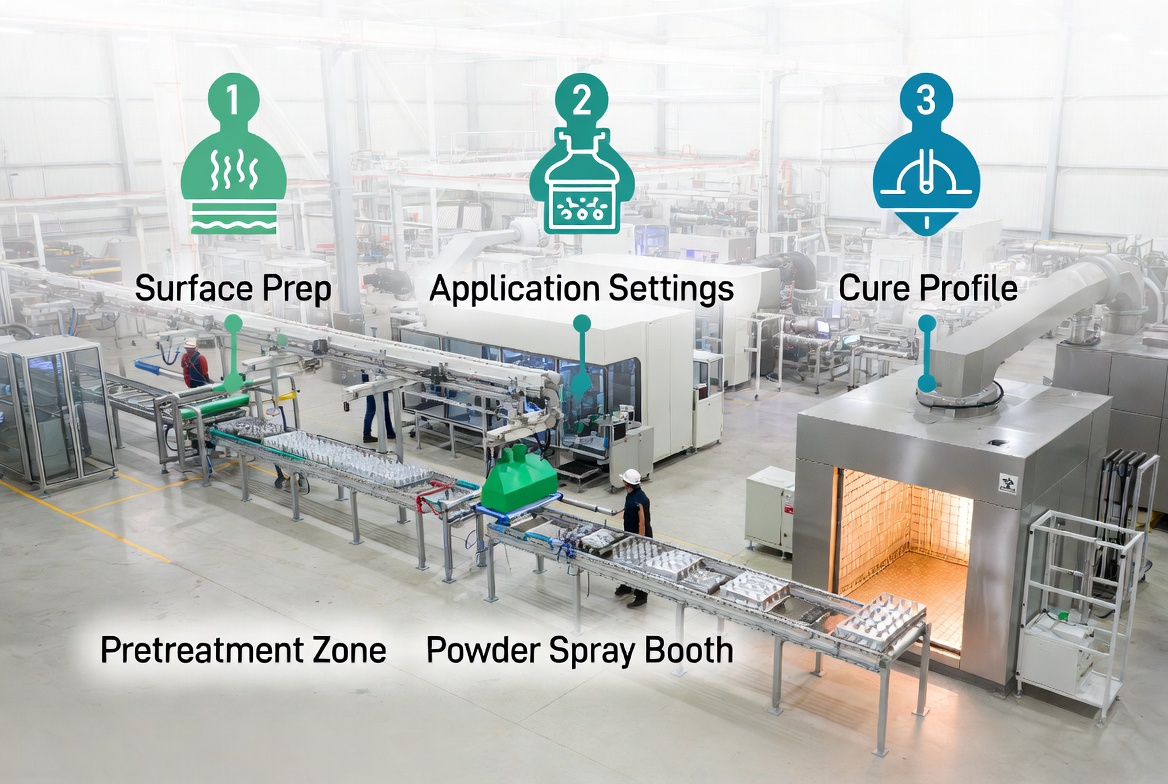
| Symptom | Likely Cause | Recommended Action |
|---|---|---|
| Heavy, wavy texture on large flat areas | Film thickness too high | Reduce powder feed, fewer passes, increase gun distance. (pfonline) |
| Fine, tight texture, almost sand‑like | Film thickness too low, under‑curing | Increase film build and verify cure schedule. (pfonline) |
| Orange peel mainly on edges and corners | High kV, gun too close, localized over‑build | Lower kV, increase distance, adjust pattern. (pfonline) |
| Orange peel appears after switching colors | Incompatible powders or contamination | Clean booth, avoid mixing incompatible powders. (pfonline) |
| Texture increases over time during the day | Reclaim ratio too high, powder aging | Reduce reclaim, refresh powder supply. (pfonline) |
Drawing on real‑world experience from technical service teams and finishing shops, several practical tips stand out. [youtube]
- Stay grounded: Maintain clean hooks, racks and hangers to ensure consistent grounding and prevent kV rejection. [youtube]
- Recoating requires new settings: A cured powder layer acts as an insulator; you must adjust voltage and application technique when recoating parts. [linkedin]
- Mind your distance: Keep a stable, recommended gun‑to‑part distance to avoid over‑build and back ionization. [youtube]
- Profile your oven regularly: Running a temperature logger through the oven every quarter or half‑year detects drift before it causes quality complaints. [finishingandcoating]
- Document your process: Keeping process records—line speed, oven temperature, film thickness—greatly simplifies troubleshooting when orange peel appears. [linkedin]
These principles are particularly relevant for high‑mix operations coating different substrates for architectural profiles, doors and windows, NEV components, medical equipment and appliances.
In markets such as construction, automotive and healthcare, aesthetic standards are becoming as strict as corrosion or mechanical requirements. Engineers and buyers increasingly specify gloss levels, texture classes and orange peel limits in their drawings and RFQs. [powdercoating]
For example:
- Architectural aluminum: Curtain wall systems and window frames often require low orange peel for uniform reflections and color consistency across large façades.
- New energy vehicles: EV body panels, battery housings and trim pieces rely on powder coated finishes that must match or complement liquid painted components.
- Medical equipment: Smooth, easy‑to‑clean surfaces with minimal texture are important for hygiene and brand perception.
By integrating finishing requirements during the design phase—such as avoiding unnecessarily deep recesses or difficult geometries—OEMs can reduce the risk of orange peel and lower total finishing costs. [finishingandcoating]
Powder coating is widely recognized as an environmentally friendly technology due to its near‑zero VOC emissions and high material utilization. However, the shift to low‑VOC and sustainable materials places additional emphasis on process control, because customers expect eco‑friendly and visually perfect surfaces simultaneously. [powdercoating]
Adopting energy‑efficient curing technologies, improved heat management and optimized powder chemistries allows manufacturers to reduce their carbon footprint without compromising appearance. For global suppliers operating in China, Southeast Asia and the Middle East, this combination of sustainability and visual quality is now a key competitive differentiator. [finishingandcoating]
Consider a typical architectural aluminum coater struggling with chronic orange peel on long extrusions. After repeated customer complaints, the plant team and powder supplier jointly audited the line and discovered several compounding issues: inconsistent film thickness on vertical profiles, overloaded reclaim systems, and an oven temperature drop at the entrance zone. [pfonline]
By tightening film thickness control, capping reclaim ratios, cleaning grounding points and re‑profiling the oven, the plant reduced orange peel defects to below their customer's PCI target within a few weeks. At the same time, overall rework decreased, energy use stabilized and the company strengthened its position as a preferred supplier for façade systems in regional projects. [pfonline]
Below is a practical checklist coating teams can implement immediately in daily operations. [pittsburghsprayequip]
1. Before Coating
- Verify substrate preparation and surface smoothness.
- Confirm powder type and batch, reviewing the TDS for target film build and cure schedule.
- Check storage conditions and expiry date of powder.
2. During Application
- Set appropriate kV and microamp limits based on part geometry and recoating needs.
- Maintain proper gun‑to‑part distance and consistent gun movement.
- Monitor film thickness frequently with a gauge, especially when changing operators or line speed.
3. During Curing
- Ensure parts enter the oven at a stable, suitable preheat temperature.
- Confirm oven setpoints and perform regular temperature profiling.
- Avoid over‑cure or under‑cure by matching exposure time to TDS.
4. After Curing
- Perform visual inspection against reference panels and PCI charts.
- Record process parameters for any batch that shows deviation.
- Implement corrective actions immediately if orange peel appears.
As an R&D‑driven manufacturer specializing in powder coatings and eco‑friendly materials, Yinda Technology designs solutions for demanding sectors such as building profiles, doors and windows, new energy vehicles, medical devices, hardware and electrical appliances. Our regional presence in China, Indonesia and Saudi Arabia allows us to provide localized technical support and faster response times for industrial customers. [powdercoating]
By partnering with your production and quality teams, we can help you:
- Select powder systems optimized for smoothness, gloss and durability
- Fine‑tune application and curing parameters to minimize orange peel
- Develop custom formulations aligned with regional climatic and regulatory constraints
If you are facing persistent orange peel or other appearance issues, a structured audit of your line, combined with tailored powder selection, often delivers rapid, measurable improvements in both surface quality and operating efficiency. [finishingandcoating]
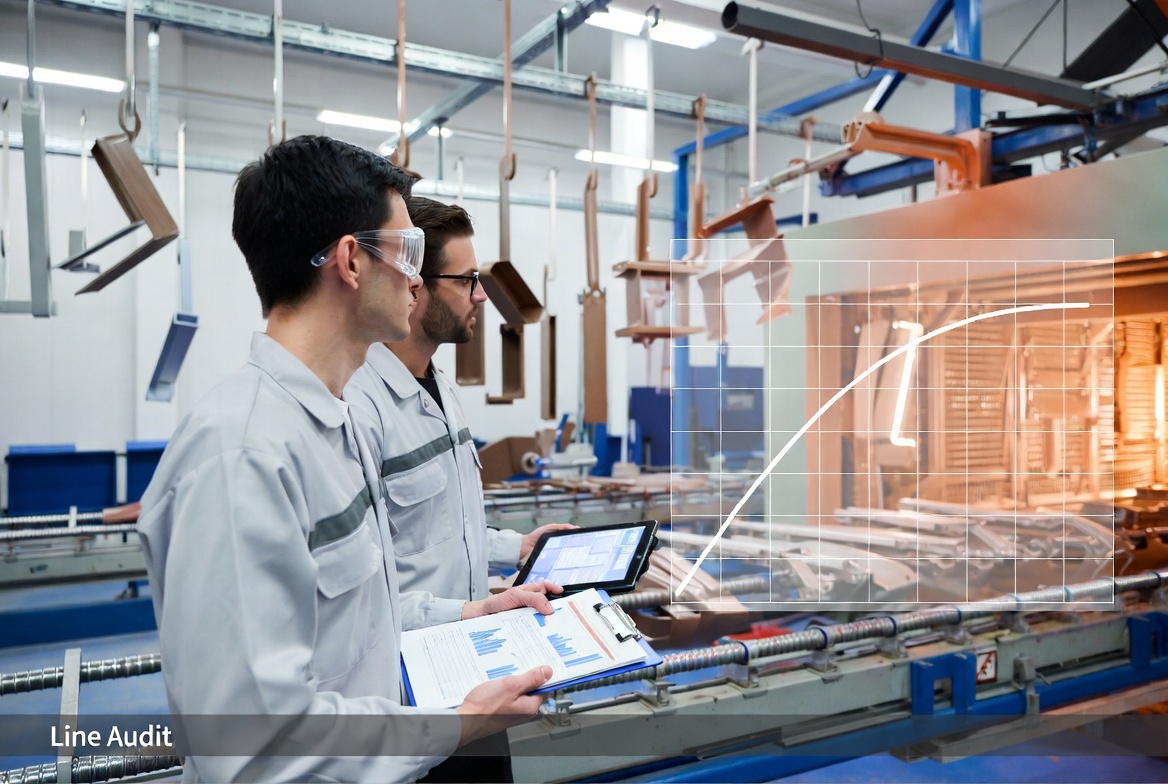
If orange peel is affecting your powder coating line today, you don't have to accept it as "normal." A combination of correct powder choice, controlled application, verified curing and disciplined process monitoring can transform your finish quality and reduce rework.
To discuss your current challenges—whether on architectural aluminum, NEV components, medical devices or industrial equipment—reach out to Yinda Technology's technical team and request a targeted line assessment and powder recommendation tailored to your plant conditions.
1. Is some level of orange peel acceptable in powder coating?
Yes, a small amount of orange peel can be acceptable depending on the product category and the customer's appearance specification, often guided by PCI smoothness standards and reference panels. [finishing]
2. Can I completely remove orange peel on existing coated parts?
In many cases, severe orange peel cannot be fully removed without stripping and recoating, but minor texture can sometimes be reduced with sanding and a carefully controlled recoating process. [linkedin]
3. Does using high‑gloss powder reduce orange peel automatically?
Not necessarily; gloss level and orange peel are related but distinct. High‑gloss powders may show orange peel more clearly, so controlling film thickness, cure schedule and application parameters remains essential. [pfonline]
4. How often should I profile my curing oven?
Many industrial finishing lines perform a full temperature profile at least once per quarter, and more frequently when major changes occur, such as burner maintenance, line speed adjustments or oven repairs. [linkedin]
5. Can reclaimed powder be used without increasing orange peel risk?
Yes, reclaimed powder can be used safely if reclaim ratios are controlled, particle size distribution remains within specification and the total blend is regularly checked against fresh powder performance. [powdercoating]
1. Products Finishing – "How to Avoid Orange Peel in Powder Coating." https://www.pfonline.com/articles/how-to-avoid-orange-peel-in-powder-coating
2. TIGER Coatings – "How to Avoid Orange Peel Effect When Powder Coating." https://www.tiger-coatings.com/us-en/tiger-group/tiger-blog/how-to-avoid-orange-peel-effect-when-powder-coating
3. Pittsburgh Spray Equipment – "How to Prevent Orange Peel in Powder Coating – A Guide." https://pittsburghsprayequip.com/blogs/pittsburgh-spray-equipment-company/how-to-prevent-orange-peel-in-powder-coating-a-guide
4. Finishing and Coating – "Fixing Appearance Issues: When Powder Coating Jobs Go Wrong." https://finishingandcoating.com/index.php/powder-coat/1233-fixing-appearance-issues-when-powder-coating-jobs-go-wrong
5. Finishing.com – "Avoiding Orange Peel in Coating Process." https://www.finishing.com/22/07.shtml
6. PowderCoating.blog – "Powder Coating Orange Peel: Causes and How to Fix It." https://powdercoating.blog/en/powder-coating-orange-peel/
7. Intech Surface Coating – "How to Avoid the Orange Peel Effect in Powder Coating" (video transcript, key points on grounding, nozzle selection and cure schedule). https://www.youtube.com/watch?v=497mGOK3m9I
8. Technical video resource – "Preventing Powder Orange Peel – Problem Solving Powder Coating" (grounding, gun settings and film build). https://www.youtube.com/watch?v=4gSg5Hspmeg
9. Cloverdale Paint Industrial – "How to Avoid Orange Peel in Powder Coating" (industry insights on grounding, film thickness and recoating). https://www.linkedin.com/posts/cloverdalepaintindustrial_cloverdalepaintindustrial-innovation-powdercoatings


