Language


Views: 208 Author: Yinda Powder Coating Publish Time: 2026-07-17 Origin: Site


Content Menu
● Understanding complex geometric parts
● Core principles for reliable coating coverage
● Step‑by‑step process: coating complex geometries
>> Preparation and grounding of parts
>> Optimizing gun setup and powder cloud
>> Controlling voltage and amperage for penetration
>> Application sequence on geometric parts
● Diagnosing poor penetration into recesses
● Common causes vs practical corrections
● Advanced techniques for difficult geometries
● Real‑world production insights from multi‑industry operations
● Balancing film build, adhesion, and appearance
● Practical checklist for technicians on the floor
A practical, field-tested approach to coating complex geometries starts with disciplined control of grounding, gun setup, and application sequence, then builds on process data and real-world case experience to deliver consistent film build in every corner and recess. This guide shares hands-on lessons from daily production work with architectural profiles, vehicle components, medical devices, and precision hardware to help finishers move from trial‑and‑error to predictable results on challenging parts. [tiger-coatings]

Geometric parts with recesses, sharp corners, deep cavities, and multi‑layer profiles behave very differently from flat panels during electrostatic application. Curves, blind recesses, and inside corners can create strong electric field gradients, leading to a Faraday cage effect that pushes powder away from exactly the areas where coverage is most critical. [cmethod]
In daily production, this shows up as thin films in corners, heavy build on external edges, powder bridging over narrow gaps, and inconsistent gloss from surface to recess. These issues are especially visible on architectural aluminum, automotive brackets, and medical frames, where tight tolerances and visual quality must both be maintained. [surface-technology]
Finishing technicians who consistently achieve good coverage on complex parts tend to follow the same set of fundamental principles. [tiger-coatings]
1. Parts must be grounded reliably through clean hooks or fixtures, with low transfer resistance maintained throughout the batch. [tiger-coatings]
2. Gun distance stays controlled, typically around 8–12 inches for standard electrostatic spray on medium‑sized parts. [electrostaticmagic.co]
3. Powder flow and air dispersion are tuned to create a gentle, lingering cloud rather than a fast jet that bounces off recesses. [cmethod]
4. Voltage is kept in the normal range for good charging, while amperage is reduced when working inside corners or cavities to improve penetration. [cmethod]
5. Corners, crevices, and difficult recesses are coated first, then broad external surfaces are finished in smooth, even passes. [tiger-coatings]
These principles apply equally in manual booths and automated lines; the difference lies in how consistently they are implemented and monitored over long production runs. [thefabricator]
Proper preparation is the foundation for any durable coating on complex geometries. [wikihow]
- Clean all substrates to remove oils, cutting fluids, fingerprints, and dust before they enter the booth.
- Dry parts completely, especially castings or hollow sections that may trap moisture and later cause out‑gassing. [cmethod]
- Use dedicated hooks or racks that provide solid electrical contact, and regularly test transfer resistance to confirm effective grounding. [tiger-coatings]
In practice, experienced technicians pay close attention to hooks and contact points, because even a thin layer of overspray or oxidation on the hanger can degrade grounding and immediately reduce penetration into recesses. [cmethod]
Gun setup is where many coating teams unlock performance on geometric parts. [electrostaticmagic.co]
- Maintain a gun‑to‑part distance of about 8–12 inches for most workpieces to achieve solid wrapping without excessive charge concentration. [tiger-coatings]
- Adjust powder flow so that the spray pattern forms a soft, controllable cloud rather than a high‑velocity stream that causes bounce‑back. [cmethod]
- Fine‑tune supplemental or tribo air to reduce turbulence and keep the cloud stable as it approaches recesses and internal corners. [tiger-coatings]
Where nozzle choice is flexible, many finishers find that flat spray nozzles or deflectors help direct powder into cavities more effectively than a narrow, focused jet. [cmethod]
Electrostatic parameters play a decisive role in how well powder enters deep recesses. [tiger-coatings]
- Keep voltage within normal ranges recommended by the equipment manufacturer to ensure powder particles are fully charged and attracted to the substrate. [electrostaticmagic.co]
- Reduce amperage to about 20 microamps or less when targeting corners, crevices, and internal areas, focusing the charge within the center of the powder cloud. [tiger-coatings]
- After difficult areas are coated, return amperage to standard settings for broader surfaces to avoid excessive film build. [cmethod]
When working with extremely tight tolerances or aggressive Faraday cage effects, some production lines use tribo charging and lower voltage to further improve penetration without over‑loading external edges. [cmethod]
The order in which surfaces are coated significantly affects overall film distribution on complex parts. [tncoating]
1. Start with corners and crevices where coverage is traditionally weakest, using reduced amperage and controlled powder flow.
2. Move gradually outward to recessed faces, then to mid‑level features, ensuring each area receives an even pass while avoiding heavy build at transitions. [tiger-coatings]
3. Finish with broad, accessible surfaces, applying smooth, machine‑like passes and lightly overlapping previous strokes to stabilize film thickness. [tncoating]
By treating internal features as the primary priority rather than the afterthought, coaters reverse the usual pattern of defects and achieve more balanced film profiles across the entire part. [cmethod]
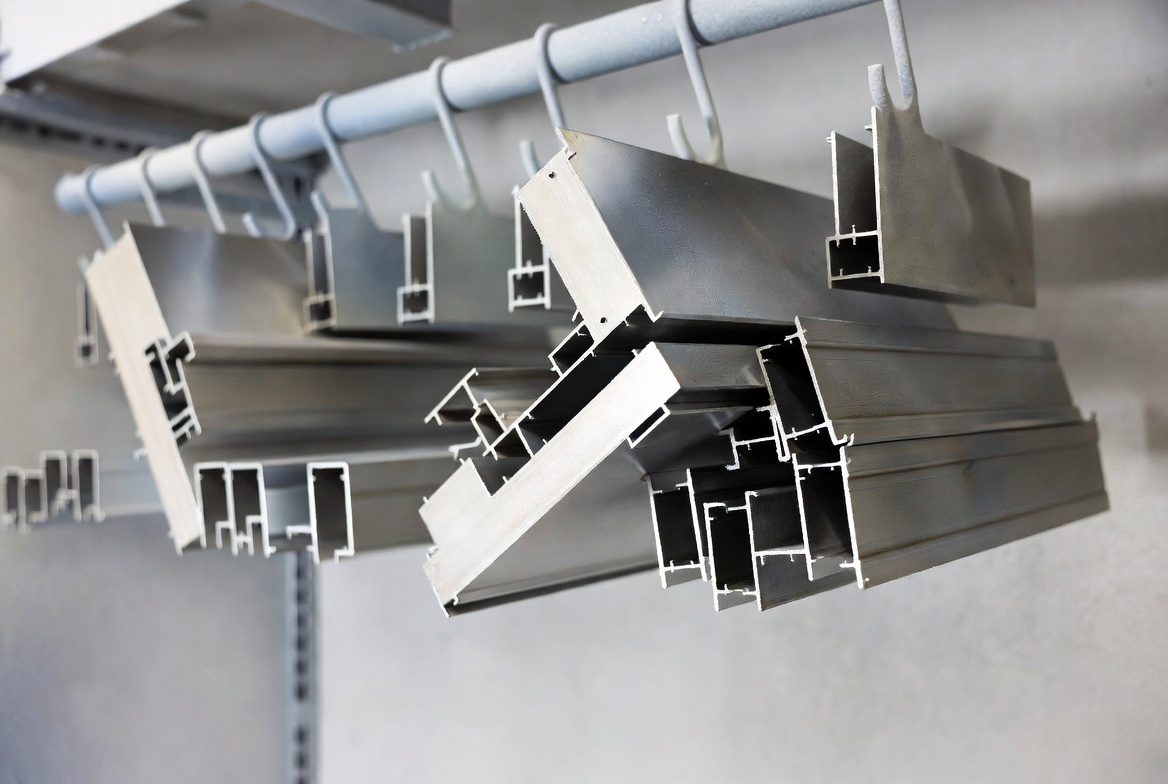
Even experienced finishers encounter situations where powder refuses to enter corners or internal pockets at the desired thickness. Recognizing common causes and corresponding corrections helps teams recover quickly. [tiger-coatings]
Typical contributing factors include:
- Excessively high feed air or air speed, which pushes powder past recesses instead of allowing it to settle. [cmethod]
- Powder flow that is either too high, causing bounce‑back and bridging, or too low, leaving corners thin. [tiger-coatings]
- Unsuitable nozzles or overly wide spray patterns that fail to concentrate powder in targeted areas. [tiger-coatings]
- Insufficient charging or defective guns, leading to poor attraction at the substrate. [electrostaticmagic.co]
- Faraday cage effects caused by steep geometries and high voltage. [cmethod]
- Weak grounding through contaminated or worn hooks. [tiger-coatings]
A structured checklist enables operators to adjust one parameter at a time and confirm improvements through routine film thickness measurements and visual inspection.
| Cause in recess coating | Practical correction |
|---|---|
| Feed or tribo air too high (tiger-coatings) | Reduce pressure until the powder cloud becomes soft and stable. (tiger-coatings) |
| Air speed too high across part (tiger-coatings) | Adjust controls to lower velocity and minimize turbulence. (tiger-coatings) |
| Powder flow too high (tiger-coatings) | Decrease flow for better control and reduced bounce‑back. (tiger-coatings) |
| Not enough powder flow (tiger-coatings) | Optimize flow rate to suit part size and geometry. (tiger-coatings) |
| Unsuitable nozzle or spray angle (tiger-coatings) | Switch to flat spray or deflector nozzles and re‑align gun orientation. (tiger-coatings) |
| Insufficient charging or gun issues (tiger-coatings) | Test voltage settings; contact equipment support if output is unstable. (tiger-coatings) |
| Voltage too high causing repulsion (tiger-coatings) | Lower voltage to ease Faraday cage effects in corners. (tiger-coatings) |
| Poor grounding through fixtures (tiger-coatings) | Clean hooks and verify low resistance with regular testing. (tiger-coatings) |
| Spray pattern too wide for cavities (tiger-coatings) | Narrow pattern or change nozzle to focus powder into recesses. (tiger-coatings) |
| Unsuitable powder particle distribution (tiger-coatings) | Work with the powder supplier to refine particle size or formulation. (tiger-coatings) |
This kind of table gives line operators and quality teams a shared reference they can use on the floor when diagnosing defects in geometric parts.
When part geometries become particularly challenging—such as long narrow channels, sharp internal corners, or very small precision components—basic tuning alone may not be enough. At that point, more advanced strategies become valuable. [dspace.unitus]
- Applying coatings in multiple thin layers helps build thickness gradually while reducing bridging and trapped air. [dspace.unitus]
- Adding small radii to inside corners during design reduces electrical field concentration and makes coverage more uniform. [sendcutsend]
- Using part‑specific tooling that supports masking, orientation, and automated movement can stabilize film build around complex features. [surface-technology]
- Working at slightly lower voltage with refined air control can reduce Faraday cage effects and improve penetration in deep slots or cavities. [okdor]
Manufacturers who invest in these design‑for‑coating practices often see fewer reworks, faster line speeds, and more consistent appearance across multiple batches.
In multi‑industry environments—such as those serving architectural profiles, doors and windows, new energy vehicles, medical equipment, and hardware—coating teams face a broad range of geometries and performance requirements. [thefabricator]
Daily production feedback highlights several recurring insights:
- Architectural and window profiles with long channels benefit from carefully controlled gun movement and lower amperage to support penetration along the full length. [surface-technology]
- Vehicle brackets and battery housings often combine thick structural elements with fine recesses, making masking and part orientation critical. [sendcutsend]
- Medical frames demand stable film thickness for both aesthetics and cleanability, so pre‑bake cycles to eliminate out‑gassing are used more frequently. [wikihow]
- Hardware and electrical components frequently require strict tolerance control, so multi‑layer application and detailed film measurement routines are standard practice. [okdor]
Across these sectors, teams that standardize best practices for geometric parts tend to experience more predictable throughput and fewer last‑minute adjustments.
Complex geometries expose the trade‑offs between film thickness, adhesion, and surface appearance more sharply than flat panels. Too thin a coating in corners can lead to early corrosion or wear, while excessive thickness on edges may cause cracking, chipping, or dimensional issues. [dspace.unitus]
Maintaining a balanced profile involves:
- Establishing target thickness ranges for each product category and verifying them with regular measurement.
- Monitoring humidity, powder storage conditions, and part temperature to prevent rough, dull surfaces or bubbles from out‑gassing. [cmethod]
- Reviewing cleaning and drying procedures when adhesion issues appear, especially around sharp corners and recess transitions. [wikihow]
By treating thickness and appearance as measurable process outputs rather than purely visual judgments, teams can adapt parameters based on data instead of relying solely on operator intuition.
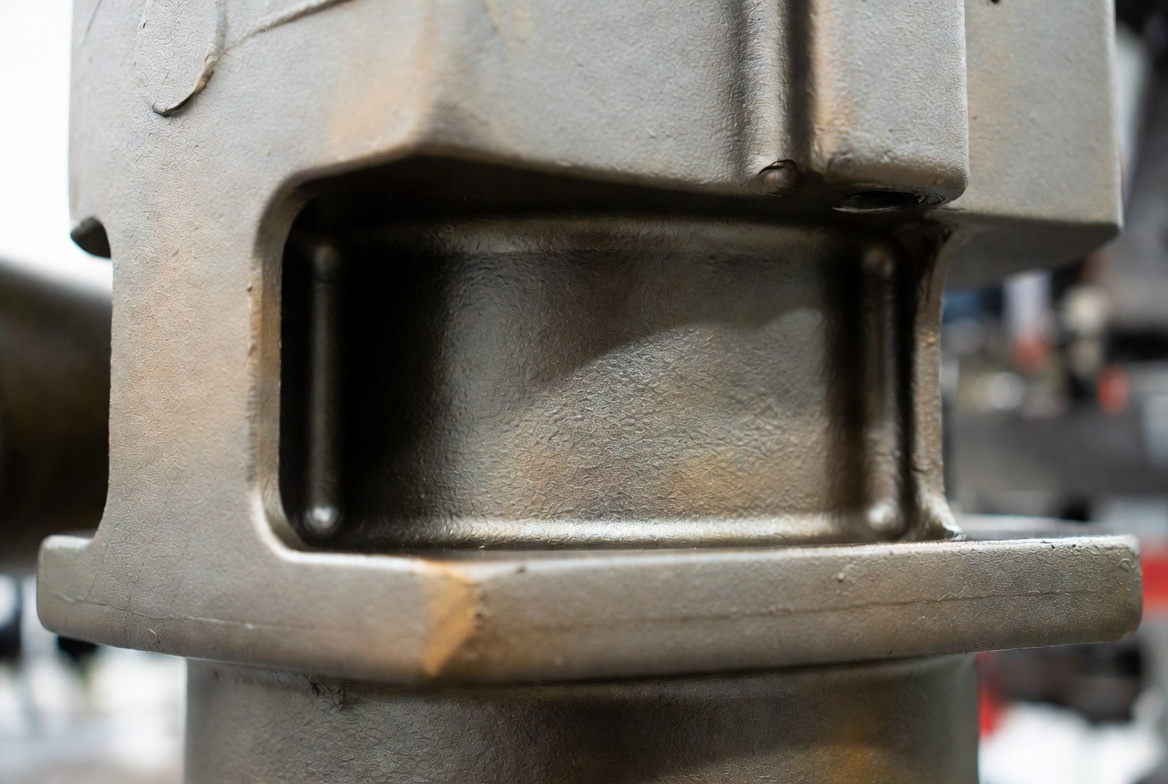
For finishing staff working directly in the booth, having a quick reference checklist improves consistency from shift to shift. [cmethod]
- Confirm part preparation, cleaning, and drying steps are complete.
- Verify hooks and fixtures are clean and conductive, with acceptable resistance.
- Set gun distance in the 8–12 inch range and stabilize powder cloud.
- Adjust powder flow and air pressures to avoid bounce‑back and turbulence.
- Reduce amperage when coating corners and recesses, then restore normal settings for external surfaces.
- Coat difficult internal areas first, then move to broad faces using smooth, overlapping passes.
- Inspect corners and cavities for adequate film build before curing, and correct any bridging or gaps while powder is still dry. [tiger-coatings]
Teams who embed this routine into training for new operators generally see faster skill development and more uniform results across different product sets. [tncoating]
Q1: Why do corners on complex parts always seem thinner than flat areas?
Corners concentrate electric fields and create Faraday cage effects, which push powder away from internal surfaces, especially at higher voltage. Lower amperage, optimized gun angles, and multi‑layer application help restore coverage. [cmethod]
Q2: What is the most effective way to improve penetration into deep recesses?
Reducing amperage, moderating voltage, and stabilizing the powder cloud are the most direct steps, supported by careful part orientation and nozzle selection for the target geometry. [tncoating]
Q3: How can I avoid powder bridging over narrow gaps or slots?
Use controlled, lower powder flow, inspect gaps before curing, and remove accumulated powder with suitable tools while it is still dry; multi‑layer application also reduces bridging risk. [cmethod]
Q4: When should parts be pre‑heated before coating?
Pre‑heating is useful when improved adhesion in internal corners is critical or when parts tend to trap moisture, but it must be managed carefully to avoid excessive film build. [tiger-coatings]
Q5: What role does masking play for geometric parts?
Masking protects functional areas, avoids undesired powder build, and helps guide operators in focusing on critical surfaces, especially on precision hardware and automotive components. [okdor]
1. TIGER Coatings – How to Properly Powder Coat Geometric Parts – https://www.tiger-coatings.com/us-en/tiger-group/tiger-blog/how-to-properly-powder-coat-geometric-parts
2. Creative Method LLC – Optimal Coating Geometries (PDF) – https://cmethod.com/wp-content/uploads/2020/03/Optimal-Coating-Geometries.pdf
3. The Fabricator – Powder Coating Basics for Metal Fabricators – https://www.thefabricator.com/thefabricator/article/finishing/powder-coating-basics-for-metal-fabricators-part-i
4. SendCutSend – How to Optimize Parts for Powder Coating – https://sendcutsend.com/blog/how-to-optimize-parts-for-powder-coating/
5. Electrostatic Magic – How to Powder Coat Like a Professional – https://www.electrostaticmagic.co.uk/pages/how-to
6. Surface Technology – Efficient Powder Coating of Geometrically Complex Components – https://www.surface-technology.info/topics/topic-area/painting/efficient-powder-coating-of-geometrically-complex-components
7. TN Coating – Powder Coating Parts – Tips and Tools – https://tncoating.com/blog/powder-coating-parts/
8. OKdor – 101 of Powder Coating – https://okdor.com/knowledge-base/surface-finishing/101-of-powder-coating/
9. WikiHow – How to Powder Coat – https://www.wikihow.com/Powder-Coat


