Language


Views: 259 Author: Yinda Powder Coating Publish Time: 2026-07-19 Origin: Site


Content Menu
● Introduction: Why Pretreatment Decides Coating Success
● What Pretreatment In Powder Coating Really Means
● Mechanical Pretreatment – Cleaning By Impact
● Chemical Pretreatment – Cleaning And Converting The Surface
● Combining Mechanical And Chemical Pretreatment
● Typical Pretreatment Line Configuration
● Measurable Benefits In Real Production Environments
● Energy Efficiency And Sustainability Opportunities
● Practical Process Control Guidelines
● Application‑Based Pretreatment Strategies
>> Architectural Profiles, Doors And Windows
>> New Energy Vehicles And Battery Components
>> Medical Devices And Equipment
>> Hardware And Electrical Equipment
● Emerging Trends In Powder Coating Pretreatment
● Expert Perspective On Risk Management And Quality Assurance
● Summary
● FAQ
A robust pretreatment process is the foundation of durable, attractive and cost‑effective powder coating performance across demanding applications such as building profiles, doors and windows, new energy vehicles, medical devices, hardware and electrical equipment. From years of working with industrial manufacturers, it is clear that combining well‑designed mechanical and chemical pretreatment consistently reduces rework, stabilises quality and unlocks long‑term savings in materials and energy.
Before any powder coat is applied, the substrate must be cleaned, conditioned and prepared so that the coating can bond to a stable, contamination‑free surface. Any oil, oxide, dust or residue left between the metal and the coating film becomes a weak point that can lead to peeling, under‑film corrosion and premature failure in service.
In modern manufacturing environments—from architectural aluminum extrusion plants to EV component lines—pretreatment is a production‑critical step. Its performance directly influences warranty risk, visual consistency, corrosion resistance and the reputation of every brand that relies on coated parts in harsh environments.
Pretreatment for powder coating is the combination of mechanical and chemical operations used to prepare a metal surface before the powder is applied and cured. The objective is simple: deliver a clean, reactive surface with the right micro‑roughness and chemistry for long‑term film adhesion.
A typical pretreatment process removes:
- Oils, lubricants and coolants from machining and forming
- Oxides, mill scale and welding residues
- Dust, fingerprints and transport contamination
- Existing paint or coating that must be stripped
When these contaminants are properly removed and the surface is converted into a stable, finely structured layer, powder coating can achieve its full performance potential in terms of colour stability, gloss, impact resistance and corrosion protection.
Mechanical pretreatment uses physical force to clean and texture the substrate. The most common techniques include:
- Sandblasting or grit blasting with silica, garnet or aluminium oxide
- Shot blasting with steel shot or cut wire
- Mechanical brushing or grinding for localised weld cleanup
During blasting, abrasive media impact the surface at high speed, breaking away heavy rust, mill scale, old coatings and welding slag. This action creates a visible anchor profile—small peaks and valleys—that help subsequent coatings grip the substrate.
However, mechanical pretreatment alone has limitations:
- It may push contaminants deeper into the surface rather than fully removing them.
- Embedded media and residual dust can weaken adhesion if not followed by proper cleaning.
- It cannot control surface chemistry, which is essential for corrosion resistance.
For high‑end applications such as architectural facades, EV components and medical equipment housings, mechanical pretreatment is most effective when integrated with a carefully engineered chemical sequence.
Chemical pretreatment relies on formulated solutions to dissolve soils, etch oxides and create a chemically bonded conversion layer. Typical stages include:
The first chemical step is usually an alkaline or neutral cleaner designed to remove oils, greases, coolants and light particulate contamination. This cleaner is applied by spray or immersion and must be compatible with the substrate.
Important control points include:
- Concentration of active ingredients
- Bath temperature
- Contact time and line speed
Effective cleaning ensures that subsequent stages can reach the bare metal without interference from residues.
After cleaning, one or more rinsing stages remove remaining chemicals and loosened soils. Rinsing prevents carry‑over into downstream tanks and stabilises the reactions that follow.
Etching or pickling is then used to remove oxides and lightly roughen the surface at the micro level. On aluminium, this step can adjust gloss and improve uniformity; on steel or galvanised substrates, it helps provide a consistent base for conversion coatings.
Conversion coatings transform the very top layer of the metal into a finely crystalline, chemically bonded structure. Common systems include:
- Zinc or iron phosphate for steel and galvanised substrates
- Chrome‑free technologies such as zirconium‑based coatings for aluminium
- Multi‑metal formulations designed for mixed material lines
These coatings provide:
- Improved adhesion for the powder film
- Enhanced corrosion resistance under humidity and salt exposure
- Better resistance to under‑film creep at damage sites
When well‑controlled, conversion coating is the core of a high‑performance pretreatment system.
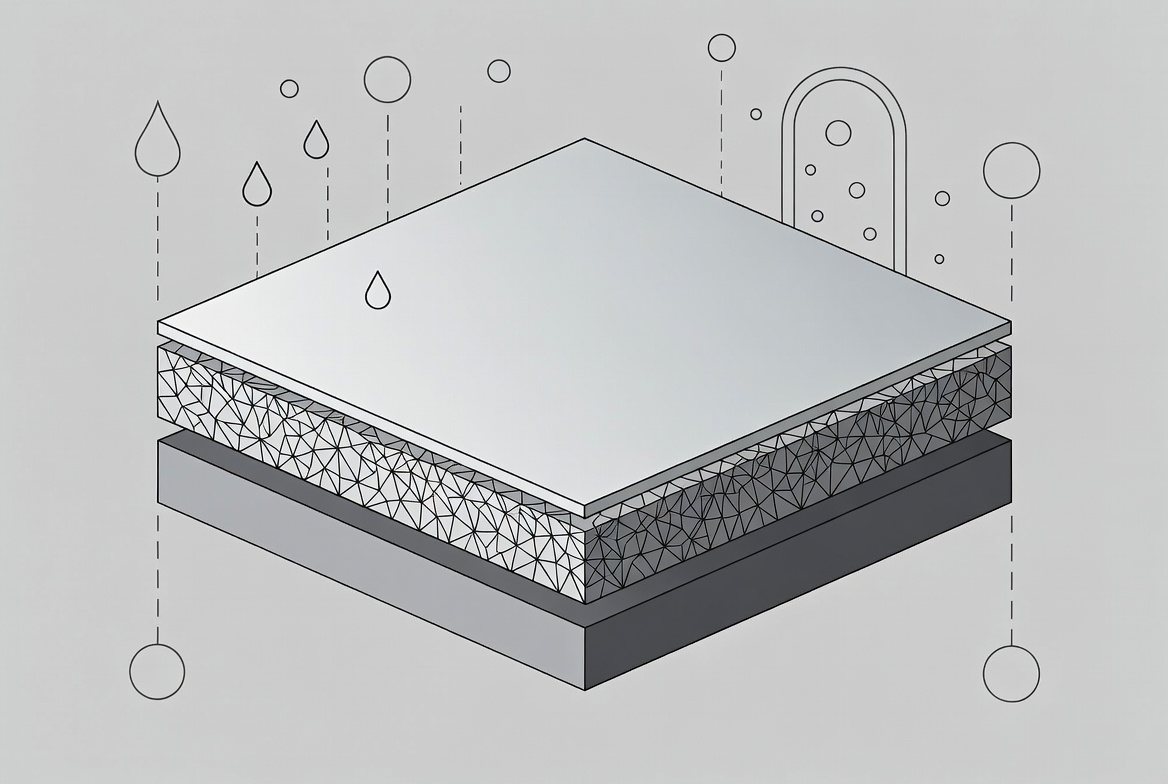
In many factories, incoming parts show mixed surface conditions: some are clean and lightly oxidised, others heavily rusted or contaminated by welding and transport damage. Relying on a single pretreatment method often leads to unpredictable results.
A combined approach offers several advantages:
- Mechanical blasting removes gross defects, thick rust and old paint.
- Chemical cleaning and conversion then address fine soils, embedded media and surface chemistry.
- The resulting surface has both the physical profile and chemical reactivity needed for robust coating adhesion.
This is particularly important for sectors such as:
- Outdoor architectural systems exposed to UV and moisture
- New energy vehicle components and battery housings subject to vibration and thermal cycles
- Medical equipment enclosures requiring smooth, hygienic surfaces
- Heavy hardware and electrical equipment operating in harsh industrial environments
By blending mechanical and chemical pretreatment, manufacturers widen their process window and reduce sensitivity to upstream variability.
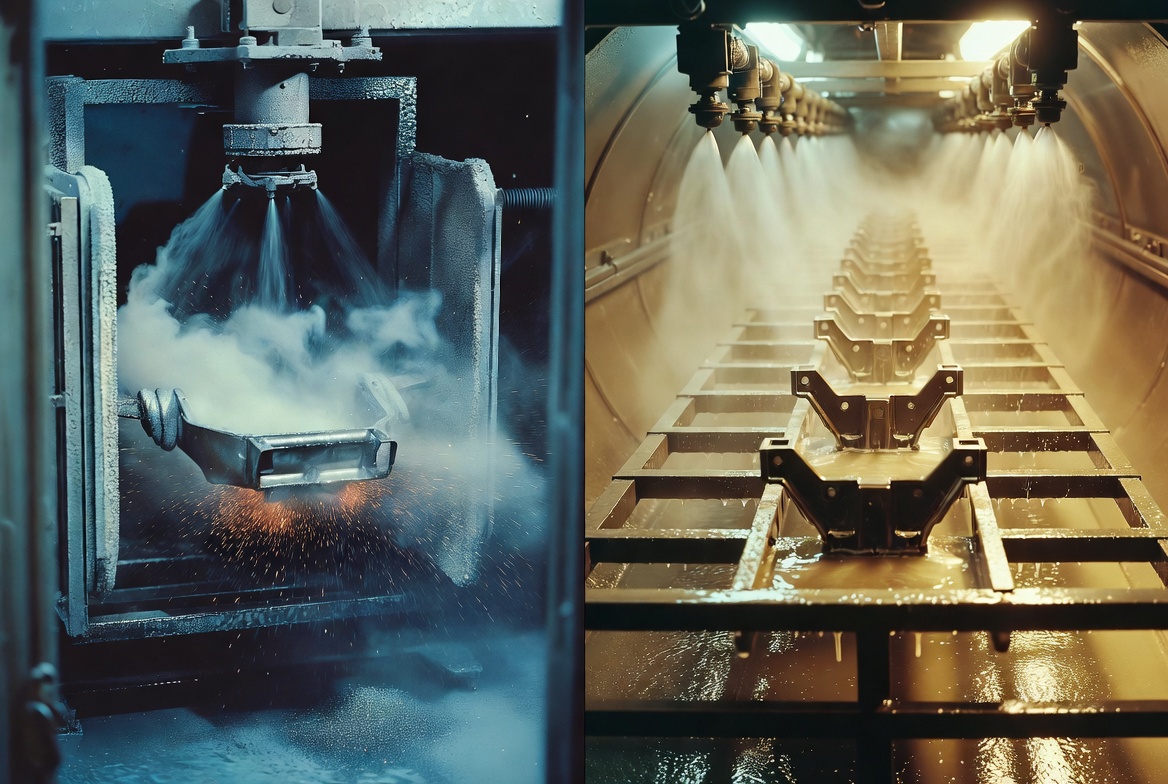
A modern pretreatment line for powder coating often follows a staged sequence. A simplified example for mixed metal parts might look like this:
1. Optional mechanical blasting or brushing for heavily contaminated parts
2. Alkaline or neutral cleaning to remove oils and shop soils
3. Water rinse to remove cleaner residues
4. Etching or de‑oxidising step matched to the substrate
5. Conversion coating (phosphate or zirconium‑based)
6. Final rinse, sometimes with demineralised water
7. Drying in an oven or warm air tunnel
8. Powder application and curing
Each stage has defined process parameters—temperature, pH, concentration, conductivity and dwell time—that must be monitored and recorded. Consistent control of these values is one of the most reliable predictors of long‑term coating performance.

When pretreatment systems are upgraded and stabilised, the impact on overall production performance can be dramatic. Manufacturers report:
- Significant reductions in powder consumption per square metre
- Lower waste rates and fewer rejected parts leaving the coating line
- Reduced energy usage thanks to more efficient application and curing
- Improved throughput, with more coated parts per hour at stable quality
- Fewer unplanned stoppages due to pretreatment‑related defects
These improvements do not come from a single change, but from a combination of better bath management, tighter process control, improved filtration and alignment between chemical suppliers and production teams.
For export‑oriented manufacturers, these gains translate directly into higher competitiveness, more reliable delivery, and stronger long‑term customer relationships.
Pretreatment and curing together often account for a substantial share of energy consumption in powder coating operations. As energy prices and sustainability expectations rise, optimising these areas becomes strategically important.
Several practical levers help reduce energy intensity:
- Heat recovery systems on ovens and drying tunnels
- Improved insulation and sealing to minimise heat loss
- Optimised line speed and cure schedules to avoid over‑baking
- Efficient pumps and spray systems with controlled flow rates
- Compressed air management to limit unnecessary consumption
On the chemical side, modern conversion coatings and cleaners are increasingly formulated to work at lower temperatures and shorter contact times, cutting energy use without compromising performance.
In addition, adopting heavy‑metal‑free and low‑emission chemistries helps meet stricter environmental standards, while demonstrating commitment to responsible manufacturing.
From an operational perspective, several disciplines consistently correlate with better pretreatment outcomes:
- Routine bath testing: Regular checks of pH, concentration, temperature and contamination levels.
- Clear operating windows: Defined upper and lower limits for each parameter, with corrective actions for deviations.
- Effective filtration: Removal of sludge, particulates and drag‑out from pretreatment tanks to keep reactions stable.
- Controlled line speed: Ensuring sufficient dwell time in each stage without unnecessary exposure.
- Thorough drying: Eliminating residual moisture before powder application to avoid blistering and micro‑defects.
- Operator training: Helping teams recognise defect patterns that point back to pretreatment issues, so root causes are addressed quickly.
By integrating these practices into daily routines, factories build a robust, repeatable pretreatment process rather than relying on occasional interventions.
Different end‑use environments require tailored pretreatment strategies. A one‑size‑fits‑all approach rarely delivers optimal results.
For outdoor architectural products, focus is placed on:
- High‑integrity conversion coatings for aluminium and steel
- Controlled etching to balance appearance and adhesion
- Rinse quality to minimise staining and water marks
Long‑term resistance to UV, moisture, temperature variation and atmospheric pollutants is critical.
EV components often face vibration, thermal cycling and exposure to road contaminants. Pretreatment for these parts should emphasise:
- Strong adhesion on complex geometries and mixed metal assemblies
- Robust corrosion protection around joined and welded areas
- Stable film builds that maintain dimensional accuracy
In medical environments, cleanliness and smooth surfaces are essential. Pretreatment must:
- Minimise inclusions and surface defects
- Deliver coatings that withstand frequent cleaning and disinfection
- Support aesthetic quality for sensitive environments such as clinics and hospitals
Hardware and electrical components frequently operate in industrial or outdoor conditions. Effective pretreatment supports:
- Mechanical durability and chip resistance
- Reliable corrosion protection for steel, aluminium and galvanised parts
- Consistent colour and gloss across mixed batches
Matching pretreatment strategy to application avoids both under‑protection and unnecessary process complexity.
Industry developments are steadily reshaping how manufacturers approach pretreatment. Some of the most relevant trends include:
- Eco‑friendly chemistries: Wider adoption of heavy‑metal‑free conversion coatings and lower‑emission cleaners.
- Automation and inline monitoring: Use of sensors, dosing systems and digital tracking to stabilise bath conditions.
- Advanced filtration and sieving: Better control of particles and contaminants in pretreatment baths and powder recovery systems.
- Integrated energy management: System‑level optimisation of ovens, dryers and spray systems to reduce energy intensity.
These trends reflect evolving regulatory expectations, customer demands and the global drive for higher productivity with lower environmental impact.
From an industry practitioner's point of view, pretreatment should be treated as a controlled manufacturing process with defined performance indicators. Useful metrics include:
- Reject rate and rework incidence after coating
- Chemical consumption per square metre of coated area
- Energy use per batch or per production shift
- Downtime linked to pretreatment‑related issues
Tracking these values over time allows teams to spot early warning signs of process drift and intervene before defects become systemic.
Cross‑functional reviews involving production engineering, quality, maintenance and chemical partners help align pretreatment capability with customer expectations. This is particularly important for export‑driven manufacturers supplying architectural, automotive and high‑value industrial markets.
Ultimately, a stable, well‑documented pretreatment process becomes a strategic asset, supporting consistent quality, reliable delivery and stronger trust with downstream customers.
Mechanical and chemical pretreatment together form the technical backbone of any high‑performance powder coating operation. When cleaning, etching, conversion coating and drying are properly designed and controlled, manufacturers gain predictable adhesion, long‑term corrosion protection, stable appearance and lower total cost of ownership.
By investing in robust pretreatment systems, aligning them with specific application requirements and continually refining process control, coating lines can deliver durable, visually appealing and reliable surfaces that support both industrial performance and brand value.
1. Why is pretreatment essential before powder coating?
Pretreatment removes contamination and conditions the metal surface, creating a stable interface where the coating can bond securely and resist corrosion, impact and environmental stress over time.
2. Can mechanical blasting alone prepare the surface adequately?
Mechanical blasting can remove heavy rust and old coatings, but without chemical cleaning and conversion stages there is a higher risk of residual contamination, uneven chemistry and premature coating failure.
3. What is the main function of conversion coatings?
Conversion coatings transform the top layer of the metal into a finely structured, chemically bonded surface that significantly improves adhesion and long‑term corrosion resistance under humidity and salt exposure.
4. How does pretreatment influence energy and material usage?
A well‑tuned pretreatment system reduces rework and stabilises film builds, enabling more efficient powder application and curing. This lowers energy consumption and powder waste per square metre of coated area.
5. Which pretreatment developments are most relevant for modern manufacturers?
Key developments include environmentally responsible chemistries, automation and inline monitoring, improved filtration, and integrated energy management across the pretreatment and curing sections of the coating line.
1. TIGER Coatings – Mechanical and Chemical Pretreatment for Powder Coatings. https://www.tiger-coatings.com/us-en/tiger-group/tiger-blog/chemical-blasting-pretreatment-process-for-powder-coatings
2. Finishing and Coating – The Different Types of Pretreatments for Powder Coatings. https://finishingandcoating.com/index.php/powder-coat/939-the-different-types-of-pretreatments-for-powder-coatings
3. IGP Powder Coatings – Technical Information: Pretreatment of Metals. https://igp-powder.com/09_Documents/04_Technical_Documents/TIS/TI100-pretreatment-of-metals-igp-powder-coatings-v4-en.pdf
4. Chemical Leasing – Case Study: Electrostatic Powder Coating in Fabricated Metal Products Manufacturing. https://chemicalleasing.com/wp-content/uploads/2020/11/CHL_CA2.pdf
5. Energy Efficiency Opportunities within the Powder Coating Industry. https://odr.chalmers.se/server/api/core/bitstreams/7786c743-e966-4d76-a468-d3ad100bef6c/content
6. Ecoline – Quality Revolution in Powder Coating for the Nowy Styl Group. https://ecoline.com.pl/en/case-study-2/revolution-in-painting-quality-and-efficiency/
7. JETIR – Study on Powder Coating Process and Surface Preparation. https://www.jetir.org/papers/JETIR2301180.pdf
8. Market Research Future – Powder Coating Pretreatment Market Overview. https://www.marketresearchfuture.com/reports/powder-coating-pretreatment-market-30705


