Language


Views: 202 Author: Yinda Powder Coating Publish Time: 2026-07-18 Origin: Site


Content Menu
● What Metallic Powder Coating and Anodized Finish Really Are
● Why Color Consistency Matters on Large Aluminum Facades
● Core Technical Differences That Influence Color Consistency
● Color Consistency in Real Projects
>> Panel-to-Panel Appearance on Large Surfaces
● Visual Character: Depth, Gloss and Texture
>> Metallic Depth and Light Interaction
>> Gloss and Surface Texture Options
● Durability, Maintenance and Lifecycle Considerations
>> Exterior Exposure and Long-Term Color Stability
>> Cleaning and Repair Strategies
● Design and Specification Considerations for Large Facades
>> Aligning Finish Choice with Design Intent
>> Sampling, Mock-Ups and Early Decisions
● Practical Guidelines for Choosing Between Metallic Powder Coating and Anodized Finish
>> Situations Favoring Metallic Powder Coating
>> Situations Favoring Anodized Finish
● Expert Perspective on Balancing Performance, Risk and Aesthetics
● FAQ
Metallic powder coating and anodized finish may look similar from a distance, but they perform very differently when the façade stretches across thousands of square meters of aluminum panels. For architects, façade engineers and developers, the decision between these two finishes directly affects color consistency, lifecycle performance and visual identity on large projects.
Metallic powder coating is a dry, electrostatically applied film built from resins, pigments and metallic effect particles, then cured to form a continuous protective layer on aluminum. It creates a solid, controllable color envelope around each panel, with wide freedom in shade, gloss and texture.
An anodized finish, in contrast, is an electrochemical conversion process that thickens the natural oxide layer of aluminum. The color comes from the oxide itself and, in many systems, from dyes or metallic particles embedded within that layer. The result is a translucent, metal-forward appearance that highlights the character of the base alloy.
On large-scale facades, both technologies can deliver long-lasting performance. Their key difference lies in how they manage color across large surface areas, multiple batches and varying viewing conditions.
Large facades act like visual billboards for a building. Long rows of spandrel panels, deep soffits, corner transitions and vertical fins make even small color shifts obvious to the human eye. When panels vary slightly in shade or gloss, the envelope can look patchy or unintentionally segmented.
Developers and building owners are sensitive to this effect because color inconsistency can compromise brand expression and perceived quality. Façade contractors and system manufacturers are equally concerned; inconsistent color can trigger disputes, rework and delays.
In this context, color consistency is not just aesthetic. It becomes a risk management issue and a key factor in long-term satisfaction with the building envelope.
In metallic powder coating, color is formulated in the coating itself. Resins, pigments and metallic effect particles are precisely blended to achieve a target shade and gloss. Because the coating is applied as a film on top of the aluminum, it can mask variations in alloy composition and surface microtexture.
In anodized finishes, color is closely tied to the aluminum substrate. Alloy composition, surface preparation, bath chemistry and process parameters all influence how the oxide layer forms and how dyes or metallic particles are absorbed. This direct link between metal and finish is the source of anodizing's characteristic metallic depth, but it also introduces more sensitivity to process variation.
Metallic powder coatings build a measurable film thickness on the surface. When application parameters are controlled and curing is consistent, this film helps create a uniform visual appearance across panels. Texture and gloss can be tuned, and color can remain stable from panel to panel.
Anodized finishes grow the oxide layer from the metal itself. The thickness and microstructure of that layer depend on time in the bath, current density and alloy behavior. Although this layer is thin compared to a powder film, its precise nature has a strong impact on color, especially in more saturated or darker anodized tones.
In multi-phase developments, panels are often manufactured over months or years, and sometimes across different plants. This is where batch-to-batch color consistency becomes critical.
Metallic powder coatings, when produced under a defined formulation and quality control regime, can achieve tight color tolerances across batches. Color standards and laboratory checks help ensure that new production runs align with the original façade appearance. This capability supports large and phased builds where additional wings, towers or refurbishments must visually match earlier stages.
Anodized finishes are more sensitive to differences in alloy supply and process conditions. Panels from different extrusion lots or subcontractors can show slightly different tones, even when processed under similar conditions. On smaller projects, this variation may be acceptable or even desirable. On very large, highly visible facades, it can be more problematic.
On wide curtain walls and extended cladding zones, color differences become more apparent as sunlight changes throughout the day. Metallic powder coatings, especially high-performance systems formulated for architecture, tend to produce a more predictable panel-to-panel appearance when application parameters are tightly controlled.
Anodized finishes can exhibit subtle tonal variation across adjacent panels. This is particularly visible where different alloys are combined or where surface preparation varies. Some designers embrace this effect, using anodizing to achieve a more organic, material-driven look. Others prefer a strictly uniform visual field, which points more naturally toward metallic powder solutions.
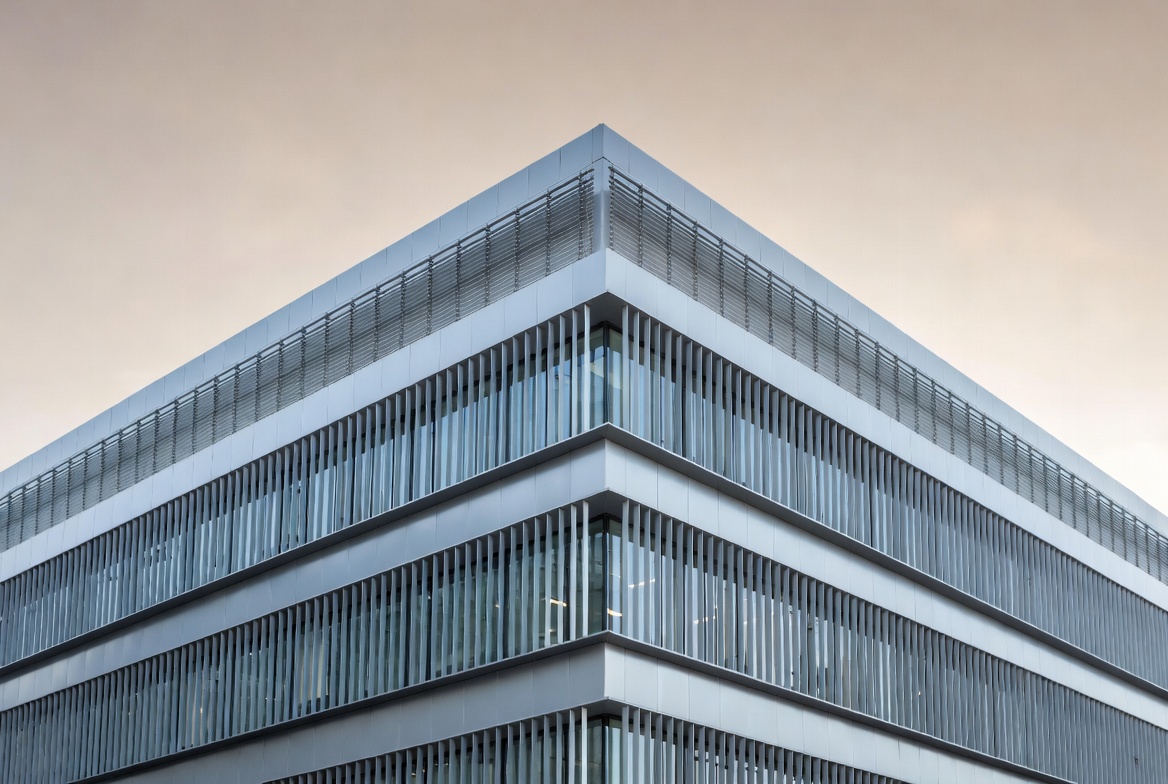
Anodized aluminum is valued for its metallic depth. Because the oxide layer is translucent and integral to the metal, light penetrates the surface and reflects back, creating a distinctive, layered look. This effect can be especially attractive on brushed or polished substrates, where the underlying texture remains visible.
Metallic powder coatings use special-effect pigments to simulate metallic depth. Advanced formulations can create striking visual results, but they still behave like an applied film rather than a converted oxide. The appearance can be finely controlled and reproduced; however, it will not replicate the exact visual depth of anodized metal.
Metallic powder systems offer broad control over gloss, from very low-gloss matte to high-gloss finishes. They can be formulated with smooth, fine-textured, wrinkled or hammered effects. For large facades, controlled low to mid-gloss metallic powder finishes can help reduce glare and minimize visible minor surface imperfections.
Anodized finishes tend to sit in the matte to satin range, reflecting the base metal's surface preparation. Brushed, bead-blasted or polished aluminum will retain its character after anodizing, allowing designers to pair surface texture and metallic depth in predictable ways.
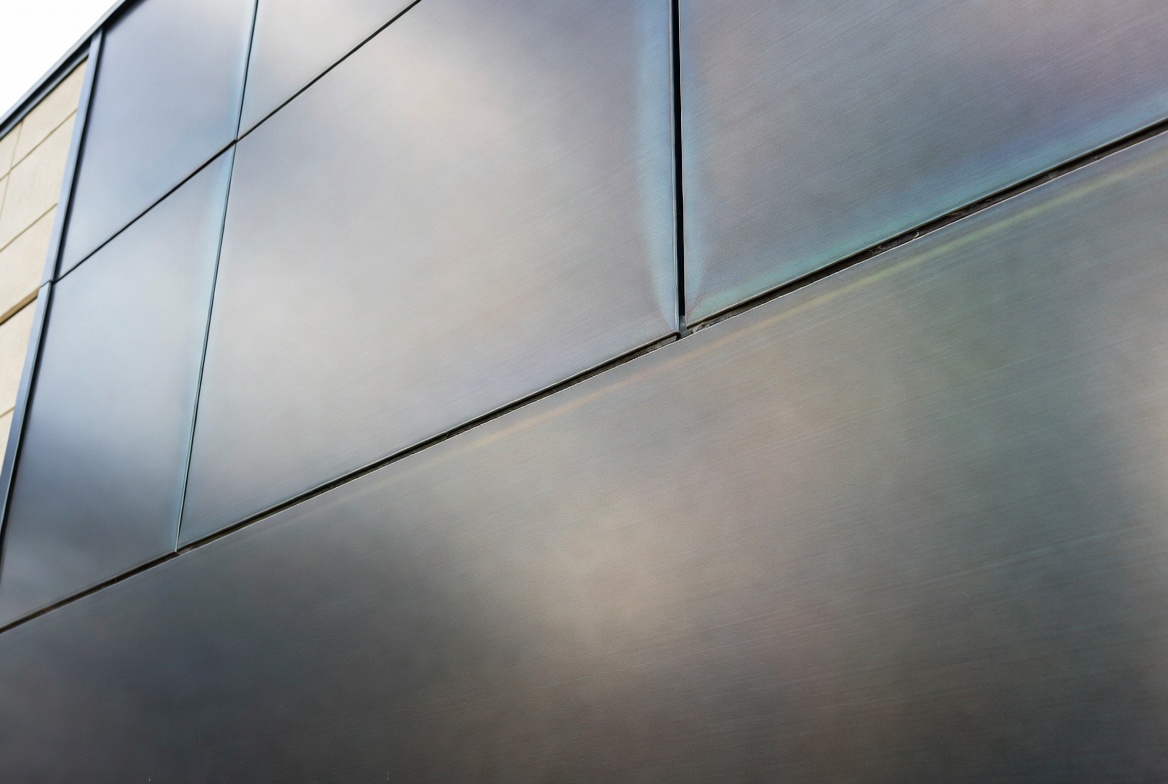
Both metallic powder coatings and anodized finishes are used successfully on exterior facades with long service life expectations. High-performance architectural powder systems are designed to resist UV degradation, chalking and erosion when specified appropriately for the climate and environment.
Anodized finishes leverage an inorganic oxide layer, which provides excellent resistance to sunlight and weathering. Metallic tones derived from the oxide itself generally show high long-term stability. Dyed anodizing can be more sensitive, so careful specification and process control remain important.
From a lifecycle perspective, both options can deliver stable color performance when correctly designed, applied and maintained. The choice often comes down to how strongly a project prioritizes strict uniformity versus a more natural metallic expression.
Metallic powder-coated facades can be cleaned with standard non-abrasive methods, and damaged panels are typically replaced rather than repaired in place. Because color is defined by a repeatable coating formulation, replacement panels can be closely matched to the original ones if production controls are maintained.
Anodized surfaces are also straightforward to clean, and the integral oxide layer resists many common contaminants. However, repairing localized damage is more complex. Re-anodizing in place is generally not feasible, so damaged panels are replaced. Matching existing anodized colors can be more challenging when alloy and process details of the original installation are not fully documented.
When the façade concept is built around brand colors, strict visual uniformity and clear, controlled gloss, metallic powder coatings align well with that intent. They allow project teams to specify exact shades and replicate them across large areas, different building phases and multiple suppliers.
When the design language focuses on material authenticity, subtle variation and intrinsic metallic character, anodized finishes often provide a better fit. They echo the behavior of the underlying aluminum and can deliver nuanced, light-dependent effects that change gently throughout the day.
For large projects, small sample chips rarely tell the full story. Large-scale mock-ups are essential to capture how color, gloss and texture behave in natural light, at different viewing distances and on substantial panel formats.
Metallic powder coating mock-ups show how the film build, gloss level and texture read across a realistic area. Anodized mock-ups reveal panel-to-panel variation potential due to alloy and process differences. Comparing both under real conditions helps design teams make informed decisions about which finish better supports their long-term visual objectives.
Metallic powder coating tends to be the more suitable choice when:
- Precise color matching to corporate or project-specific palettes is required.
- Color consistency must be maintained across thousands of panels and multiple building phases.
- The façade includes mixed materials, complex geometries or deep profiles that benefit from a unified color envelope.
- Replacement, refurbishment or future expansion must blend visually with existing cladding.
In these situations, a carefully engineered metallic powder system, combined with well-defined application windows and quality control, helps stabilize façade appearance throughout the building's life.
An anodized finish is often preferred when:
- The architecture emphasizes natural metallic depth and subtle, material-led variation.
- Long-term exposure in intense sun or demanding climates calls for highly stable metallic tones.
- Fine surface textures, machining marks or precision geometries need to remain clearly visible.
- The project embraces gradual visual evolution of the façade rather than absolute uniformity.
In such cases, anodizing supports a more elemental expression of aluminum, aligning with both aesthetic and performance expectations.
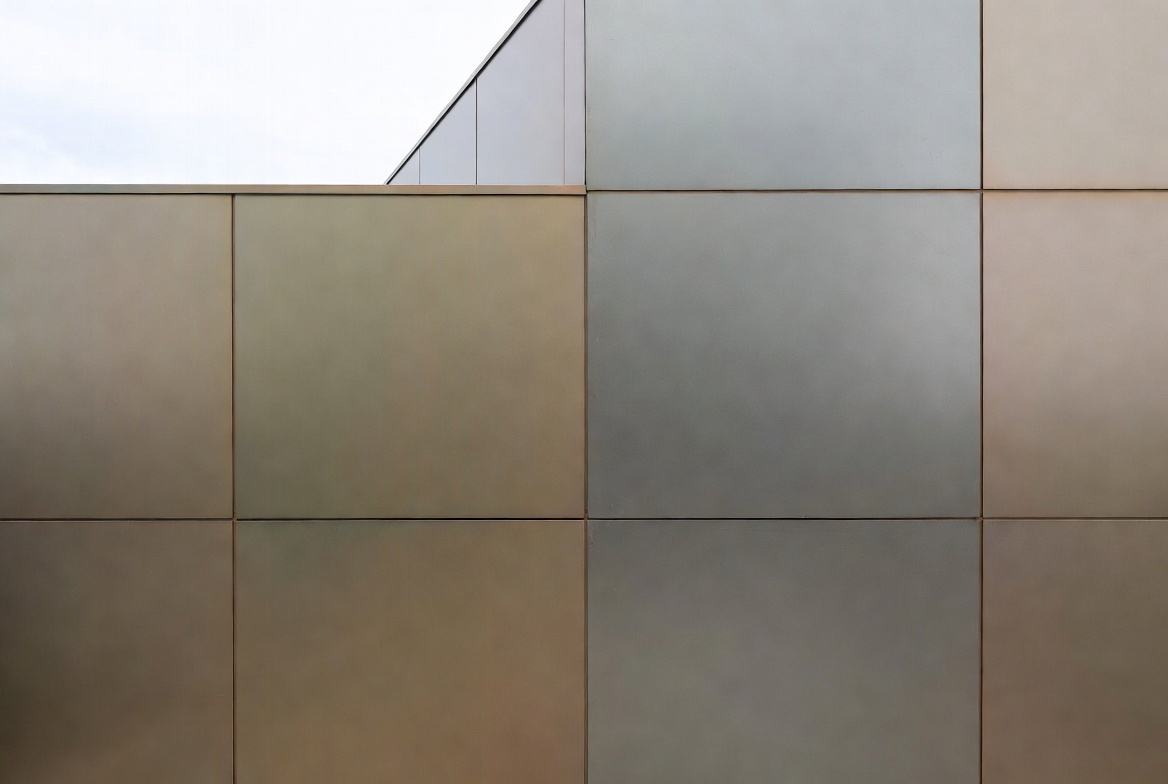
From an expert standpoint, the most resilient façade strategies begin with a clear understanding of the building's visual role, exposure conditions and lifecycle expectations. Metallic powder coatings offer strong advantages in repeatable color and flexible design options, helping reduce risk on brand-sensitive or multi-phase projects. Anodized finishes stand out where the façade is intended to showcase aluminum as a material, with depth and subtle variation as part of the design language.
Neither solution is universally superior. The best choice comes from aligning finish characteristics with the project's priorities: color consistency, visual identity, material expression, maintainability and long-term performance. When these factors are mapped early, and large-scale mock-ups are used to validate assumptions, façade teams can move forward with confidence that the envelope will remain visually coherent and technically robust over time.
When color consistency in large-scale aluminum facade panels is the primary concern, metallic powder coatings generally provide more controllable and repeatable results, especially where strict uniformity and brand alignment are critical. Anodized finishes, however, deliver a distinctive metallic depth and material honesty that many landmark projects value, even with subtle panel-to-panel variation.
By understanding the behavior of each finish, testing them on realistic mock-ups and aligning them with project goals, design and engineering teams can select a solution that not only performs mechanically, but also maintains a stable, satisfying visual presence for the building throughout its lifecycle.
Q1: Are metallic powder-coated facades more likely to show color differences over time than anodized facades?
High-performance metallic powder systems designed for exterior use can maintain color stability for many years when correctly specified and applied. Anodized metallic tones also show strong long-term stability. Differences over time usually arise from inadequate specification, poor application control or harsh cleaning methods rather than from the finish type alone.
Q2: Why do some anodized facades show visible color variation between panels?
Color variation in anodized facades often comes from differences in alloy composition, extrusion sources and process parameters. Even small changes in alloy or bath conditions can create tonal differences, especially in darker anodized colors, making panel-to-panel variation more visible on large surfaces.
Q3: Can metallic powder coatings realistically mimic the appearance of anodized aluminum?
Modern metallic powder coatings can get close to anodized-like appearance, using special-effect pigments to create a metallic look and controlled gloss levels. They provide strong color control and design freedom, but they still behave as a film on top of the metal rather than a translucent oxide layer, so the visual depth will not be identical.
Q4: How important are large mock-ups when selecting between these finishes?
Large mock-ups are essential. They show how color, gloss and texture behave under real light at different times of day and at relevant viewing distances. Without large mock-ups, it is difficult to predict how panel variations, reflections and shadows will affect the perceived uniformity of the façade.
Q5: What is the main risk of mixing anodized and powder-coated panels in one façade without a clear visual strategy?
Mixing finishes without a deliberate design concept can result in noticeable differences in color, sheen and texture under sunlight. These differences can make the façade look fragmented or inconsistent, even if each finish performs well on its own. A clear visual strategy and targeted mock-ups are needed when combining them.
1. Valmond Gibson – "Powder Coat vs. Anodised Aluminium: Choosing Your Finish" – https://valmondgibson.com/blog/powder-coat-vs-anodised-aluminium-when-to-use-each/
2. CNC Machining Shops – "Anodized vs Powder Coat Aluminum: Performance, Failures" – https://www.cncmachiningshops.com/anodized-vs-powder-coat/
3. Aluminum Processing Hub – "When to Use Anodized vs Powder-Coated Aluminum for Architectural Finishes" – https://aluminumprocessinghub.com/blog/when-to-use-anodized-vs-powder-coated-aluminum-architectural-finishes/
4. JLC CNC – "Powder Coating vs Anodizing: Differences, Cost & Applications" – https://jlccnc.com/blog/powder-coating-vs-anodizing
5. ASUZAC ACM – "What is Building Facade Design in 2026?" – https://asuzac-acm.com/what-is-building-facade-design-in-2026/
6. Lighting Line – "Anodized Aluminum vs. Powder-Coated Profiles" – https://lightingline.eu/anodized-aluminum/
7. Drametal – "Anodizing vs Powder Coating: Complete Comparison Guide for Sheet Metal Parts (2026)" – https://drametal.com/blog/anodizing-vs-powder-coating/
8. Aplank – "2026 Trends in Aluminum Facade Systems & Design" – https://www.aplank.com/blog/aluminum-facade-system-trends-2026
9. Yinda Technology – "How Advanced Powder Coatings Deliver Reliable Edge Coverage for ACE and Industrial Applications" – https://www.yinda-global.com/how-advanced-powder-coatings-deliver-reliable-edge-coverage-for-ace-and-industrial-applications.htm


