Language


Views: 277 Author: Yinda Powder Coating Publish Time: 2026-08-16 Origin: Site


Content Menu
● What Is Polyester Powder Coating?
● How Polyester Powder Coating Works
>> 1. Surface Preparation Comes First
>> 2. Electrostatic Powder Application
>> 3. Controlled Curing Creates the Final Film
● Why Polyester Powder Coating Is Used Outdoors
● Polyester Powder Coating vs. Epoxy Powder Coating
● Selecting the Right Polyester Powder Coating Grade
>> Texture and Functional Finishes
● A Practical Specification Checklist
>> Architectural Aluminum Profiles, Doors, and Windows
>> New-Energy Vehicle Components
>> Medical Equipment and Appliances
>> Hardware and Industrial Products
● Partner With Yinda Technology
● FAQs
>> Is polyester powder coating suitable for outdoor use?
>> What is the difference between polyester powder coating and ordinary powder coating?
>> How long does polyester powder coating last?
>> Can polyester powder coating be applied to aluminum?
>> Is polyester powder coating better than epoxy powder coating?
>> What film thickness should polyester powder coating have?
>> Can powder-coated parts be repaired?
Polyester powder coating is one of the most widely specified finishing systems for metal products that need reliable outdoor protection, stable color, and a refined decorative appearance. For aluminum profiles, doors and windows, EV components, hardware, appliances, medical equipment, and architectural metalwork, the right coating system can determine whether a product remains attractive and protected after years of use.
At Yinda Technology, we work with manufacturers and project teams that need more than a color sample. They need a coating solution matched to the substrate, service environment, fabrication process, visual target, and performance expectations. This guide explains how polyester powder coating works, where it performs best, how to select the right grade, and which production details matter most.
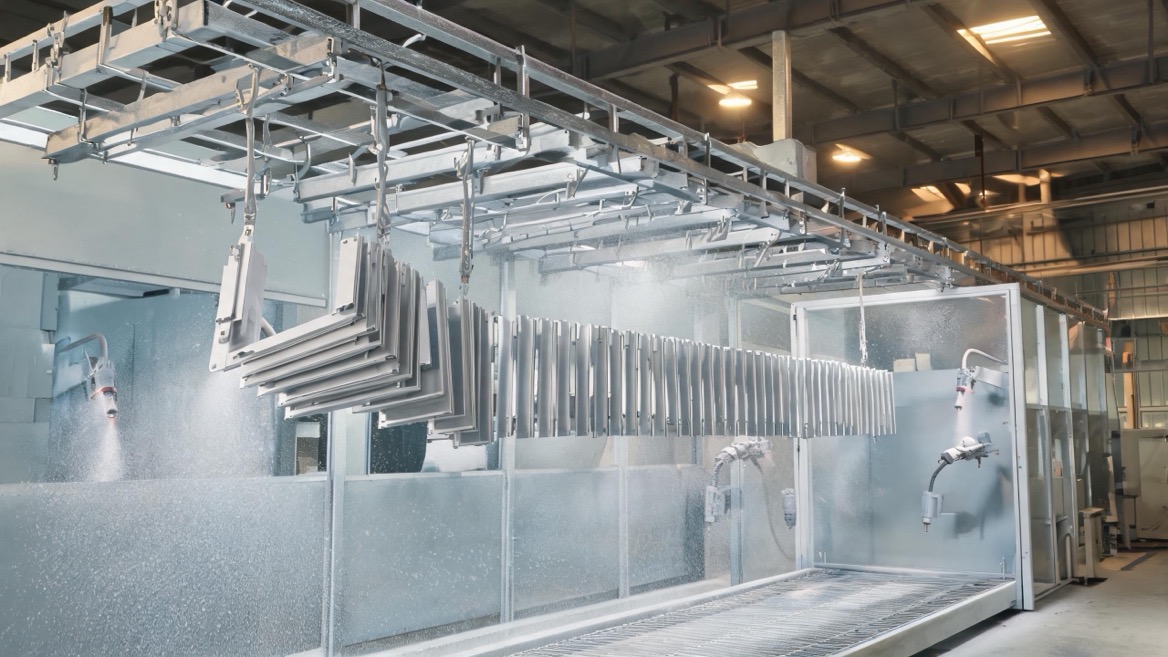
Polyester powder coating is a dry, thermosetting finish formulated primarily with polyester resin, pigments, curing agents, and functional additives. It is electrostatically sprayed onto a properly prepared metal part, then heated in an oven. During curing, the powder melts, flows, and chemically crosslinks into a continuous protective film.
Unlike conventional liquid paint, powder coating is supplied as a free-flowing powder rather than a solvent-borne liquid. This makes it particularly suitable for manufacturers seeking a high-quality finish with efficient material use and lower solvent-related emissions.
The finished coating can provide:
- Strong weather resistance for outdoor exposure
- Good color and gloss retention
- Resistance to chipping, scratching, and everyday wear
- A wide selection of colors, textures, and gloss levels
- A smooth, uniform decorative finish
- Reliable coverage on complex metal shapes
Polyester powder coating is especially valued where sunlight, rain, humidity, and temperature variation are part of normal service conditions. It is therefore a common choice for exterior aluminum profiles, railings, fencing, garden furniture, metal doors, architectural facades, and automotive-related components.
A durable powder-coated finish depends on the complete system—not only on the powder itself. In practical manufacturing, coating performance is shaped by substrate condition, pretreatment, application parameters, curing accuracy, film thickness, and handling after coating.
Pretreatment is the foundation of coating performance. Oil, dust, oxide layers, welding residue, rust, fingerprints, or moisture can interfere with adhesion and create early corrosion risks.
A typical preparation sequence may include:
1. Degreasing to remove oils and processing residues
2. Rinsing to eliminate cleaner residues
3. Chemical conversion treatment suited to steel, galvanized steel, or aluminum
4. Final rinsing and drying
5. Inspection before powder application
For aluminum architectural profiles, pretreatment should be selected according to the alloy, project specification, and expected environment. For steel products, the process must address rust prevention as well as coating adhesion.
A well-formulated polyester powder cannot compensate for poor pretreatment. If corrosion begins beneath the film, even an attractive surface may fail prematurely.
The powder is normally applied using an electrostatic spray gun. The particles receive an electrical charge and are attracted to the grounded metal workpiece.
This process helps achieve efficient, even coverage across many shapes, including:
- Aluminum extrusion profiles
- Steel frames and brackets
- Electrical cabinets
- Automotive components
- Hardware and appliance panels
- Fabricated metal assemblies
Application settings must be adjusted for the component geometry. Recesses, sharp corners, deep cavities, and Faraday-cage areas may require special spraying techniques to maintain consistent coverage.
After application, the workpiece enters a curing oven. The powder melts and crosslinks into a durable film.
For many conventional polyester systems, curing commonly occurs around 180–200°C metal temperature, but the correct schedule always depends on the product's technical data sheet and the actual temperature of the workpiece—not simply the oven air temperature. Full cure requires both the required metal temperature and the required time at that temperature.
This distinction matters. A part with a thick steel section may take much longer to reach the required metal temperature than a thin aluminum profile. Under-curing can reduce mechanical performance and chemical resistance; excessive heating may affect color, gloss, or film appearance.
The main reason to choose polyester powder coating is its balance of decorative flexibility, durability, and outdoor stability.
Exterior metal surfaces face solar radiation, rain, humidity, thermal cycling, dust, and air pollutants. Standard polyester coatings are designed to offer useful outdoor durability, while super-durable polyester powder coatings are formulated for higher color and gloss retention in demanding exterior projects.
For a visible facade, window system, balcony, or outdoor furniture range, this difference can be commercially important. The finish may be technically intact but still unacceptable if it loses its intended color or gloss too quickly.
When outdoor appearance is critical, specify the coating class based on:
- Geographic location and UV intensity
- Building orientation and exposure angle
- Coastal, industrial, urban, or desert conditions
- Target service life
- Color selection, especially bright, dark, or highly saturated shades
- Project performance standard
Architectural performance specifications distinguish between different durability levels. Intermediate-grade exterior finishes are commonly associated with super-durable polyester technology, while the highest long-term exterior specifications may require more specialized systems depending on the project.
Polyester powder coating creates a physical barrier between the metal surface and the surrounding environment. However, corrosion resistance is a system result, not a powder-only claim.
The following factors all influence outcome:
| Performance factor | Why it matters |
|---|---|
| Metal substrate | Aluminum, galvanized steel, and carbon steel require different preparation approaches |
| Pretreatment | Promotes adhesion and improves resistance to under-film corrosion |
| Film thickness | Insufficient or uneven film can leave vulnerable areas |
| Edge coverage | Sharp edges need careful fabrication and application control |
| Curing | Full cure helps the coating reach its designed performance |
| Installation environment | Marine, chemical, and high-humidity settings demand more robust specifications |
For example, a powder-coated steel railing installed near the coast should not be specified in the same way as an indoor appliance panel. The expected environment must lead the material and process decision.
Because powder coatings are applied as dry particles, they do not rely on the same solvent content as traditional liquid coatings. EPA technical material notes that powder coatings release no VOCs during application and only minimal quantities during curing, making them among the lowest-VOC coating options for industrial finishers.
This does not remove the need for proper ventilation, dust control, operator protection, and responsible manufacturing practices. However, it gives powder coating an important advantage for factories working toward more efficient finishing operations.
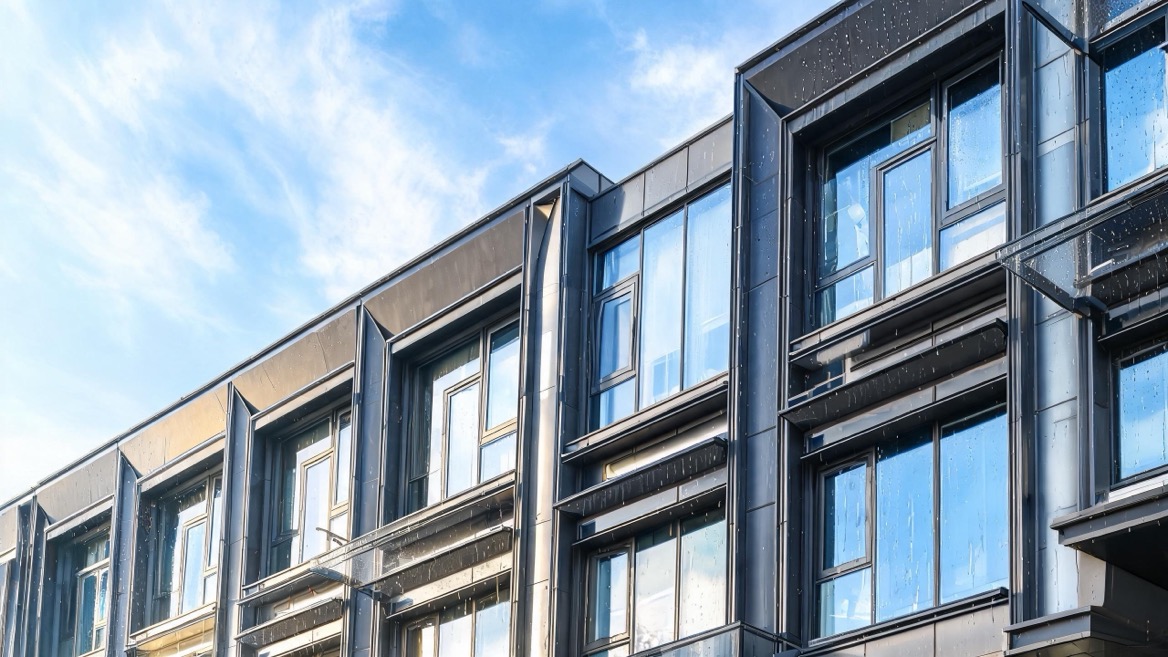
Polyester and epoxy powder coatings are both valuable, but they serve different environments. Selecting the wrong resin type can lead to avoidable appearance loss or premature failure.
| Feature | Polyester Powder Coating | Epoxy Powder Coating |
|---|---|---|
| Outdoor UV stability | Strong, especially in exterior-grade systems | Limited; can chalk or degrade in sunlight |
| Best environment | Outdoor and mixed indoor/outdoor use | Indoor, sheltered, and chemical-exposure environments |
| Weather resistance | Good to excellent, depending on grade | Generally not intended for long-term exterior exposure |
| Chemical resistance | Good for many normal applications | Often stronger against certain chemicals and solvents |
| Decorative options | Broad color, texture, and gloss range | Broad range, but often used where function is primary |
| Typical applications | Profiles, windows, doors, furniture, fencing, EV-related parts | Appliances, machinery, interior metal parts, industrial equipment |
Choose polyester when outdoor appearance, UV durability, and weather exposure are major requirements. Choose epoxy when the component will remain indoors and chemical resistance is the primary priority.
In some applications, hybrid or specialized formulations may be more appropriate. A coating supplier should evaluate the actual use case rather than recommend one chemistry for every product.
Not all polyester powder coatings offer the same weathering performance. A clear specification prevents misalignment between project expectations and actual coating capability.
Standard durable polyester is often suitable for general exterior products where a practical balance of cost and performance is needed.
Typical uses include:
- General metal furniture
- Fences and railings
- Outdoor electrical enclosures
- Agricultural or light industrial equipment
- Consumer metal products
Super-durable polyester is a stronger option for projects that require enhanced resistance to UV exposure, color change, and gloss loss. It is frequently specified for demanding architectural applications, including aluminum profiles, windows, doors, facades, and balcony systems.
This category is particularly relevant for:
- High-visibility building exteriors
- Warm and high-UV regions
- Dark, vivid, or premium architectural colors
- Long-life commercial developments
- Export projects with defined performance specifications
A finish is not only a design decision. It can also improve usability and production consistency.
Common options include:
- High gloss: Creates a reflective, polished visual effect
- Satin: Offers a balanced, refined sheen
- Matte: Reduces glare and suits contemporary architectural designs
- Fine texture: Helps mask minor substrate imperfections
- Sand texture: Adds a tactile, durable appearance
- Metallic finish: Provides decorative depth but requires controlled application
- Wrinkle texture: Often used on machinery and industrial equipment
For high-touch products, consider how the finish will show fingerprints, scuffs, and cleaning marks. For fabricated metalwork, texture can sometimes provide better visual tolerance than a high-gloss surface.
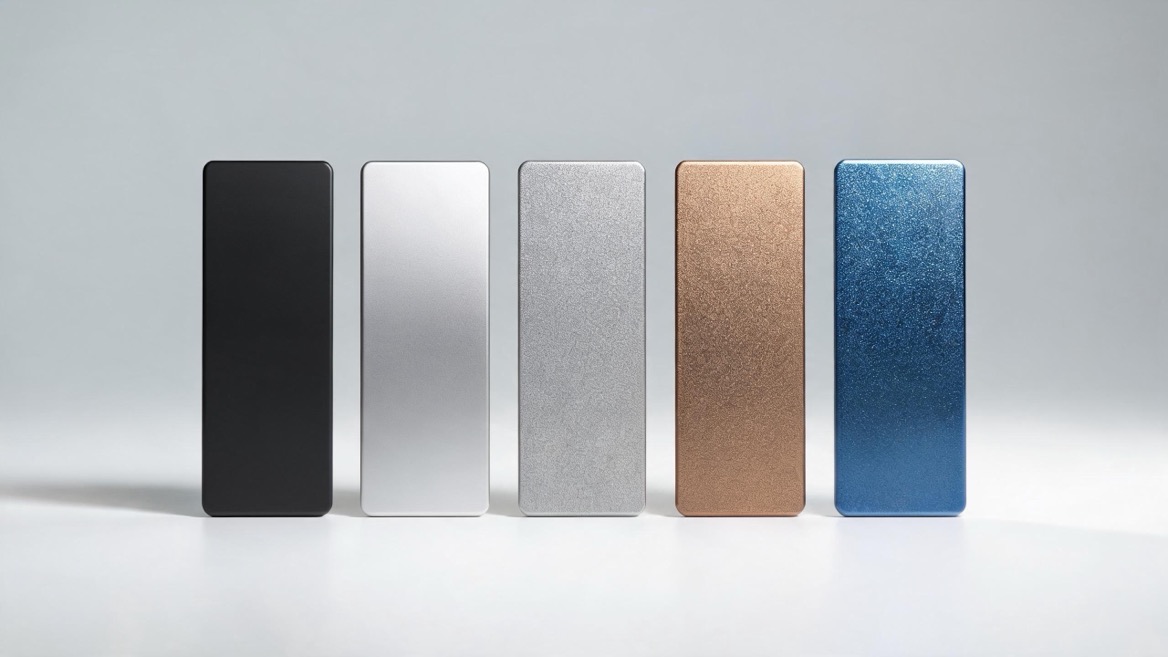
Before approving a polyester powder coating for production, ask these questions:
1. What is the substrate? Aluminum, galvanized steel, cold-rolled steel, stainless steel, or another metal?
2. Where will the finished product be used? Indoor, outdoor, coastal, industrial, desert, tropical, or mixed exposure?
3. What service life is expected? A short-cycle consumer product and a building facade require different performance levels.
4. Which color and gloss are required? Dark colors, metallic shades, and low-gloss finishes may need additional testing.
5. Which standard applies? Confirm project, customer, or regional requirements before mass production.
6. What pretreatment process will be used? The powder must be compatible with the actual production line.
7. What is the target film thickness? Define an appropriate range based on geometry, substrate, finish, and specification.
8. How will curing be verified? Confirm actual metal temperature and cure time rather than relying only on oven settings.
9. Which tests are needed? Consider adhesion, impact resistance, bend test, film thickness, gloss, color, humidity, and salt-spray testing.
10. How will coated parts be packed and transported? Mechanical damage after coating can undermine an otherwise successful process.
This checklist helps procurement teams, fabricators, and project owners compare coating options based on measurable requirements rather than color cards alone.
Polyester powder coating is widely used on aluminum window frames, door systems, curtain-wall components, louvers, and exterior profiles. These applications demand both aesthetic consistency and long-term weather resistance.
For major architectural projects, coating selection should account for facade orientation, local climate, required durability class, and color approval procedures. Sample panels should reflect the actual substrate, pretreatment, application method, and curing conditions planned for production.
Electric-vehicle and mobility supply chains require coating systems for brackets, housings, battery-adjacent structures, charging equipment, wheels, and exterior metal components. The selected coating must balance appearance, impact resistance, assembly compatibility, and exposure requirements.
For parts exposed to road debris, moisture, or frequent handling, coating teams should review edge coverage, film thickness, chip resistance, and any post-coating assembly operations.
Medical equipment housings, electrical enclosures, appliance panels, and hardware products often require a smooth, cleanable surface with consistent visual quality. Depending on the end use, the coating selection may need to consider cleaning agents, indoor lighting conditions, scratch resistance, and low-gloss requirements.
Metal shelves, cabinets, tools, fixtures, gates, agricultural equipment, and industrial frames benefit from the broad decorative and protective capabilities of polyester powder coating. Textured finishes are often useful where products receive frequent handling or where minor fabrication marks must be less visible.
A good powder-coated surface does not require complicated maintenance, but it should be cleaned correctly.
- Wash periodically with clean water and a mild, pH-neutral detergent.
- Use a soft cloth, sponge, or non-abrasive brush.
- Rinse thoroughly to remove detergent and surface contaminants.
- Avoid steel wool, aggressive scouring pads, and strong solvents.
- Inspect for chips, deep scratches, or damaged edges, especially in exterior and coastal installations.
- Repair exposed metal promptly to reduce the risk of corrosion spreading beneath the finish.
For buildings and exterior installations, cleaning frequency should increase in polluted, coastal, or high-dust environments.
The best polyester powder coating is not simply the one with the right color. It is the one that matches your substrate, application process, environmental exposure, required finish, and product-life expectations.
Yinda Technology develops and supplies powder coating and environmentally responsible material solutions for industrial customers across China, Indonesia, and Saudi Arabia. Our team can support your project with color development, finish selection, application guidance, and coating recommendations for architectural profiles, doors and windows, new-energy vehicles, medical equipment, hardware, electrical products, and other metal applications.
Contact Yinda Technology to discuss your coating requirement, request technical guidance, or develop a powder coating solution tailored to your product and market.
Yes. Polyester powder coating is commonly used outdoors because it offers good resistance to weathering and UV exposure. For high-visibility architectural projects or intense sunlight, super-durable polyester may be the more appropriate choice.
Powder coating describes the general dry-finishing process and coating category. Polyester powder coating is a specific resin chemistry within that category, selected mainly for its outdoor durability, color retention, and decorative versatility.
Service life varies significantly by pretreatment, film thickness, coating grade, substrate, climate, maintenance, installation quality, and mechanical damage. Rather than relying on a universal lifespan claim, specify the needed performance standard and validate the complete coating system.
Yes. It is widely used for aluminum profiles, window frames, doors, facades, furniture, and fabricated components. Proper cleaning and conversion pretreatment are essential for adhesion and long-term durability.
Neither is universally better. Polyester is generally the stronger choice for exterior exposure and UV stability. Epoxy often performs well indoors where chemical resistance is more important and long-term sunlight exposure is limited.
The suitable film thickness depends on the powder type, substrate, product geometry, finish, standard, and environmental requirements. Your powder supplier and coating-line team should define and monitor a target range for the specific project.
Small chips or scratches can often be repaired using an appropriate touch-up system. However, the repaired area may not perfectly match the original powder-coated texture, gloss, or color. Prevention through careful packaging, transport, and installation remains the best approach.
1. [Kroma Coatings — What Is Polyester Powder Coating? Benefits and Applications]
2. [Powder Coating Institute — Frequently Asked Questions]
3. [United States Environmental Protection Agency — Powder Coatings Technology Update]
4. [Ametek Atlas — Architectural Powder Coatings]
5. [AAMA 2603, AAMA 2604 and AAMA 2605 Overview]
6. [IGP Pulvertechnik — Pretreatment of Metals Technical Information]


