Language


Views: 222 Author: Yinda Powder Coating Publish Time: 2026-06-06 Origin: Site


Content Menu
● What Is Powder Coating vs Paint?
● Key Technical Differences: Powder Coat vs Paint
>> 1. Film Formation and Thickness
>> 2. Durability and Corrosion Resistance
>> 3. Environmental and Regulatory Profile (VOCs and Sustainability)
● Application Process, Throughput and Quality Control
>> 4. Application Efficiency and Overspray Recovery
>> 5. Curing Time and Line Speed
● Design Flexibility, Aesthetic Options and Market Expectations
>> 6. Color, Texture and Finish Possibilities
>> 7. Substrate Compatibility and Design Constraints
● Cost, Lifecycle Economics and Total Cost of Ownership
>> 8. Initial Investment vs Long‑Term Savings
>> 9. Maintenance, Recoating and Field Performance
● Where Powder Coating Clearly Outperforms Paint
● Where Liquid Paint Still Makes Sense
● New Expert Insights: 2026 Coating Trends You Should Not Ignore
>> 10. Sustainability, Low‑VOC and Circularity Trends
>> 11. Digitalization, Quality Data and Smart Coatings
● Practical Selection Framework for Manufacturers
● Summary Table: Powder Coat vs Paint for Industrial Applications
● How Yinda Technology Supports Better Powder Coating Decisions
● FAQs: Powder Coat vs Paint for Industrial Users
Choosing between powder coating and liquid paint is no longer just a question of color and gloss – it is a strategic decision that impacts durability, sustainability, lifecycle cost and brand perception, especially for manufacturers in sectors like architectural profiles, EV components, medical devices and electrical hardware. From my experience working with global B2B manufacturers – and based on Yinda Technology's role as a world‑class powder coating producer serving China, Indonesia, Saudi Arabia and global markets – powder coating increasingly delivers superior value where long‑term protection and environmental compliance are non‑negotiable. [keystonekoating]
Powder coating is a dry finishing process where a finely ground polymer powder is electrostatically charged, sprayed onto a grounded substrate (typically metal), and then cured in an oven to form a cross‑linked, solid protective film. Liquid paint, by contrast, suspends pigments and binders in solvents or water, is applied wet by spray, brush or roller, and then dries or cures as the carrier evaporates or chemically reacts. [pinturaindustrialmestres]
From an industrial standpoint, this fundamental difference – solid powder plus heat vs liquid film plus solvent – drives most of the performance, environmental and cost contrasts you see in real projects. For companies like Yinda Technology that integrate R&D, manufacturing and energy‑saving technology promotion, choosing the right system means balancing application realities, regulatory demands and customer expectations across multiple regions and industries. [yindapc]

Powder coating typically builds a thicker and more uniform film than liquid paint in a single pass. Industrial powder coatings often range from roughly 60–120 microns (and higher in special systems), while most industrial liquid paints sit in a much thinner range per coat, requiring multiple passes to reach similar protection levels. [finishingsystems]
Because powder particles are electrostatically attracted to grounded metal, they naturally wrap around complex geometries and edges, reducing runs, drips and thin spots that are common with conventional spray paint. For applications such as aluminum architectural profiles, EV battery enclosures, or complex HVAC housings, this edge and corner coverage translates directly into better corrosion resistance and a more consistent appearance. [youtube]
For demanding industrial environments, powder coatings almost always outperform standard liquid paint in terms of chip resistance, abrasion resistance and long‑term gloss/color retention. The cured thermoset network formed in powder coatings provides a tougher, more chemically resistant film that resists scratching, impact and weathering – a critical factor for exterior building components, EV chassis parts, and exposed electrical enclosures. [keystonekoating]
Liquid paint can be engineered for high performance as well (e.g., epoxy or polyurethane systems), but reaching comparable durability often requires multi‑coat systems, thicker total film builds and more complex process control. For manufacturers looking to reduce warranty claims on powder coated windows, doors, or medical equipment frames, a robust powder system offers a clear reliability advantage over single‑coat paint solutions. [pinturaindustrialmestres]
The environmental gap between powder coating and traditional solvent‑borne paint is widening as regulations tighten and customers demand greener products. Powder coatings are typically formulated without solvents and have near‑zero VOC emissions, which simplifies air‑permit requirements and helps facilities comply with regional environmental regulations in markets such as China, Southeast Asia and the Middle East. [coatings-vietnam]
Solvent‑based paints, on the other hand, rely on VOC‑containing carriers that must evaporate during drying, contributing to air pollution and requiring expensive capture or abatement systems. While water‑borne paints and low‑VOC formulations have improved the sustainability of liquid systems, they still cannot fully match the inherently solvent‑free nature of powder coatings, especially when you factor in overspray recyclability and overall material utilization. [solutions.covestro]
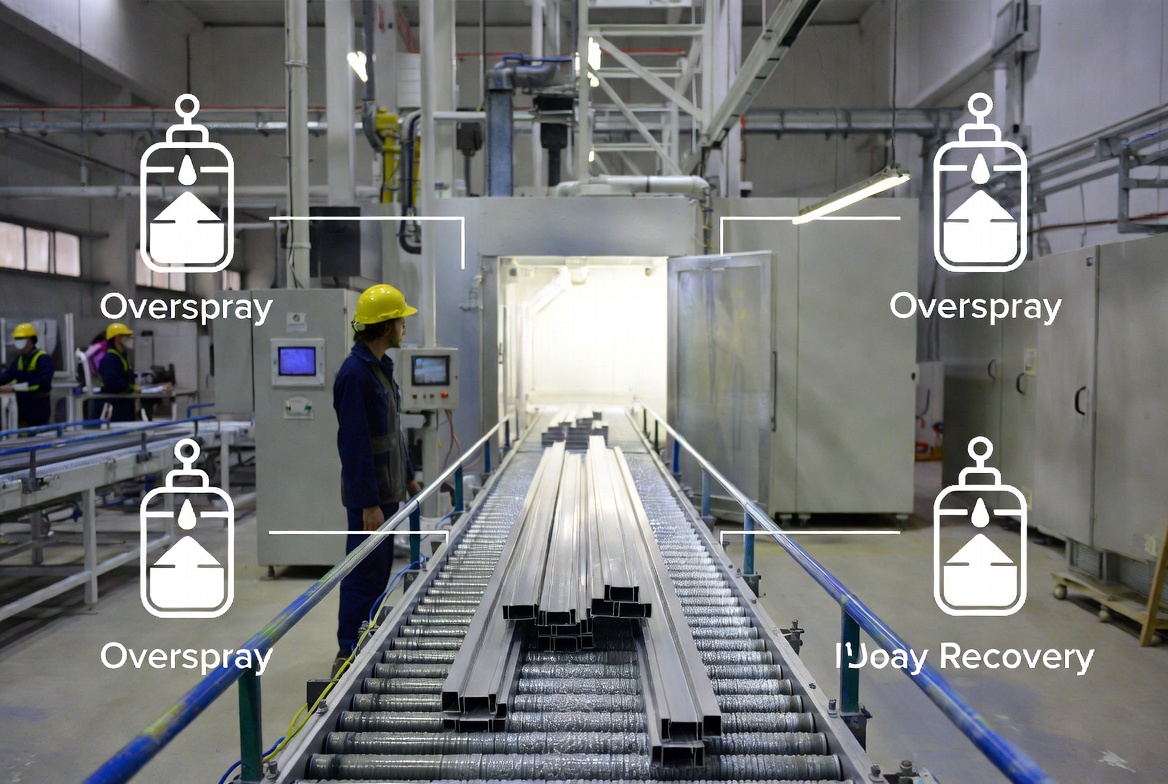
In a well‑designed powder line, material utilization rates of 95% or higher are achievable because oversprayed powder can be captured and reused within a controlled color‑management system. This is particularly attractive for high‑volume operations coating aluminum profiles, appliances or automotive components, where every percentage point of transfer efficiency affects cost per part. [solutions.covestro]
Liquid paint typically loses a much higher percentage of material as overspray, and reclaimed paint is far more difficult to reuse without compromising quality. The ability to recycle powder overspray not only improves cost efficiency but also supports corporate sustainability targets and aligns with emerging circular‑economy expectations in global procurement. [coatings-vietnam]
Both powder and paint require proper curing, but the nature of that cure is different. Powder coatings require bringing the entire coated part to a specific temperature profile (often 160–200°C, depending on chemistry) for a defined time to achieve full cross‑linking, which demands reliable ovens and temperature tracking. [keystonekoating]
Liquid paints may air dry or bake at lower temperatures, which can be an advantage for heat‑sensitive substrates like certain plastics or wood. However, in metal manufacturing environments with continuous lines, modern ovens and optimized curing profiles allow powder systems to deliver high line speeds with predictable film properties, and new fast‑curing and UV‑curable technologies are further reducing energy consumption and cycle time. [finishingsystems]
Contrary to older perceptions, powder coating offers an extremely wide design palette, from smooth matte and silk gloss through high‑gloss, metallic, textured, and special‑effect finishes. For architectural projects, powder systems can be matched to international color standards and certified performance classes, supporting consistent branding across global building portfolios. [youtube]
Liquid paint still has strengths in ultra‑high‑gloss, mirror‑like finishes and special effects used in niche applications such as luxury automotive or certain consumer electronics. In sectors like medical equipment, EV body structures, and industrial machinery, however, customers increasingly accept – and often prefer – the refined, slightly textured aesthetic of a durable powder coat that hides minor substrate imperfections and resists everyday wear. [youtube]
One of the genuine limitations of powder coating is its reliance on elevated cure temperatures, which makes it best‑suited to metal substrates and certain high‑temperature‑resistant materials. For low‑melting plastics, wood or composites that cannot tolerate typical bake cycles, liquid paint or specialized low‑temperature powder technologies may be required. [pinturaindustrialmestres]
Liquid paint remains highly flexible for field touch‑ups, repairs and small‑batch custom work on mixed substrates. Many of Yinda Technology's customers combine powder coating for mass‑produced metal components (aluminum profiles, steel structures, hardware) with specialized liquid systems for non‑metal accessories, trim parts or on‑site repainting. [yinda-global]
From a CAPEX perspective, powder coating lines often require higher upfront investment due to curing ovens, booths, reclaim systems and more advanced handling equipment. This can be a barrier for small workshops or projects with very low volumes. [finishingsystems]
However, when you look at total cost of ownership across the coating lifecycle, powder coating frequently wins for medium‑ to high‑volume manufacturers. Higher transfer efficiency, overspray reuse, fewer rejects, reduced maintenance, longer service life and lower regulatory burden all contribute to lower cost per coated square meter, especially in export‑oriented factories and large regional plants like those operated by Yinda Technology in China and Indonesia. [indoent]
In the field, a well‑specified and properly applied powder coating can significantly extend maintenance intervals compared to traditional paint, particularly in UV‑intense or corrosive environments. For façade systems, industrial doors, EV charging infrastructure and outdoor electrical housings, this reduces site visits, downtime and disruption. [keystonekoating]
Liquid paint may be easier to touch up locally, but frequent repainting quickly erodes its initial cost advantage. Many asset owners now run whole‑life cost models that favor durable powder solutions for high‑exposure components, even when a hybrid paint–powder strategy is used for the overall system. [coatings-vietnam]
For manufacturers and project owners evaluating powder coat vs paint, powder coating is typically the preferred choice when:
- Long‑term durability and corrosion resistance are critical (e.g., architectural aluminum, EV chassis parts, industrial equipment housings). [pinturaindustrialmestres]
- Regulatory and ESG pressures make VOC emissions and hazardous waste disposal a major concern. [coatings-vietnam]
- Production volumes justify investment in automated lines and overspray recovery systems. [solutions.covestro]
- Consistency of appearance and film build across thousands of parts is a priority for brand and quality control. [youtube]
In these scenarios, partnering with a specialized powder manufacturer such as Yinda Technology – with integrated R&D, global application experience and technical support across China, Indonesia and other markets – helps ensure that the chosen powder system aligns with performance specifications and local regulatory frameworks. [yindapc]
Despite its limitations, liquid paint remains relevant in several use cases:
- Coating heat‑sensitive substrates such as certain plastics, wood or composites that cannot withstand powder cure temperatures. [finishingsystems]
- On‑site refurbishment, maintenance and touch‑up work where oven curing is not practical. [keystonekoating]
- Ultra‑high‑gloss or specialized decorative finishes, especially in niche automotive and consumer applications where appearance supersedes maximum durability. [finishingsystems]
In practice, many industrial ecosystems adopt a hybrid strategy, combining powder coatings for structural and high‑wear components with liquid paints for specialty parts and field maintenance, aligning each technology with its strengths. [pinturaindustrialmestres]
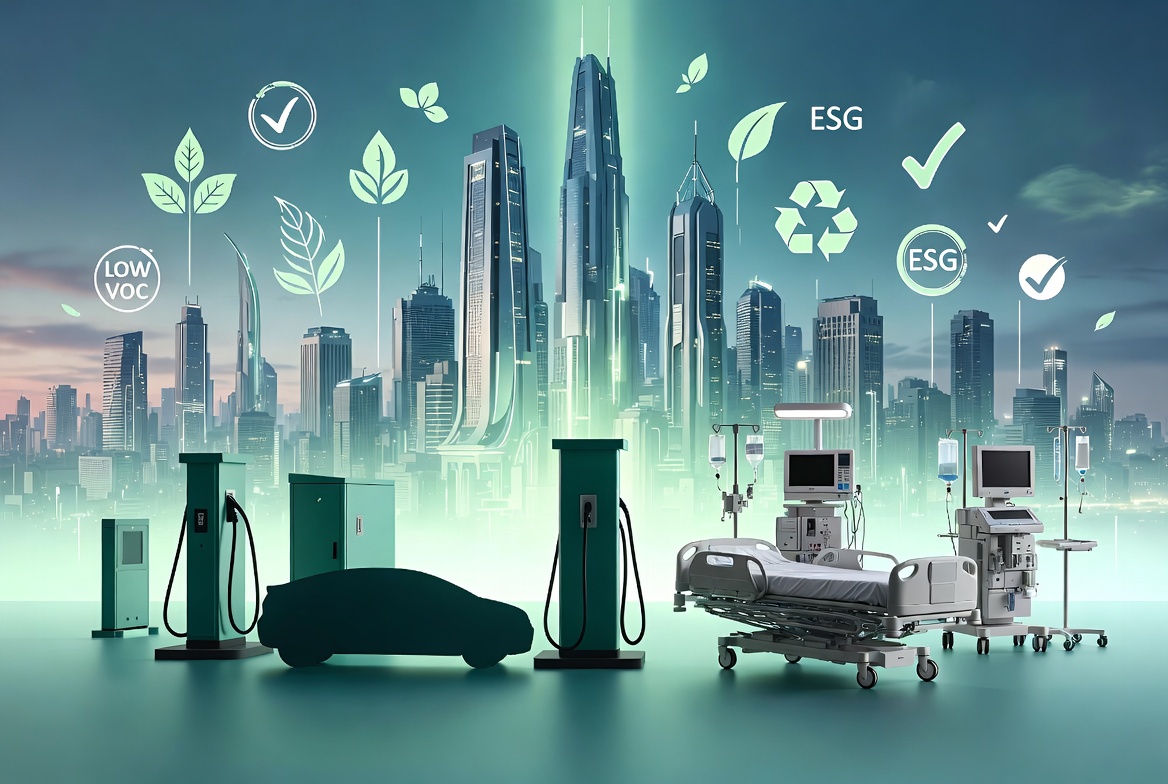
Global industrial coating trends through 2026 show a decisive shift toward low‑VOC, energy‑efficient and circular solutions, driven by regulations and customer expectations. Powder coatings fit naturally into this trend with their solvent‑free formulations, high material utilization and compatibility with emerging energy‑saving curing technologies such as fast‑cure and UV‑assisted systems. [solutions.covestro]
For manufacturers supplying international markets, aligning product finishes with these trends can become a market access factor – particularly in architecture, EVs and medical devices where sustainable materials are now part of procurement criteria. Yinda Technology's focus on environmentally friendly new materials and energy‑saving technology promotion positions powder users ahead of evolving regulatory baselines. [indoent]
The coatings industry is rapidly adopting digital control, automation and data‑driven quality assurance to improve consistency and reduce waste. Automated powder lines with real‑time monitoring of film thickness, cure temperature and defect rates integrate more easily into Industry 4.0 environments than manual paint booths. [coatings-vietnam]
At the same time, research into smart and nanostructured coatings – including self‑healing and condition‑monitoring systems – is reshaping expectations for corrosion protection and asset management. Powder coating platforms offer a robust base for incorporating such advanced functionalities, especially in high‑value infrastructure and transportation assets where predictive maintenance delivers measurable ROI. [pinturaindustrialmestres]
When advising B2B clients on whether to specify powder coating or paint, I recommend evaluating five core dimensions for each project:
1. Substrate and geometry
- Metals and heat‑resistant substrates with complex shapes favor powder; heat‑sensitive or mixed substrates may require liquid paint. [keystonekoating]
2. Performance and environment
- High UV, chemical exposure or mechanical wear usually justifies powder's superior durability; controlled indoor environments may accept well‑formulated paints. [keystonekoating]
3. Volume and line design
- Continuous, high‑volume production with stable color ranges benefits from a dedicated powder line; low‑volume, high‑mix operations may balance both technologies. [solutions.covestro]
4. Regulatory and ESG requirements
- Sites under tight VOC regulations or corporate sustainability goals gain a measurable advantage from using powder coatings. [coatings-vietnam]
5. Lifecycle cost and brand positioning
- When asset life and brand perception are central, the higher initial investment for powder is typically offset by lower maintenance and better long‑term aesthetics. [pinturaindustrialmestres]
| Criteria | Powder Coating | Liquid Paint |
|---|---|---|
| Film formation | Dry powder, electrostatic application, oven‑cured thermoset film (keystonekoating) | Wet film, solvent or water‑based, air or oven‑dried (keystonekoating) |
| Typical VOC emissions | Very low to near‑zero, solvent‑free systems (keystonekoating) | Higher VOCs unless low‑VOC or water‑borne systems used (keystonekoating) |
| Durability and corrosion | High chip, abrasion and corrosion resistance (keystonekoating) | Variable; high performance requires special chemistries (finishingsystems) |
| Application efficiency | High transfer efficiency, overspray reclaim possible (keystonekoating) | Lower transfer efficiency, overspray usually waste (finishingsystems) |
| Substrate limitations | Best for metals and heat‑resistant substrates (keystonekoating) | Suitable for metals and many heat‑sensitive substrates (finishingsystems) |
| Aesthetic flexibility | Wide range of colors, textures, effects (keystonekoating) | Very wide, including ultra‑high‑gloss, niche effects (finishingsystems) |
| Capex and line complexity | Higher initial investment, more automation (keystonekoating) | Lower initial investment for simple setups (finishingsystems) |
| Sustainability and regulations | Strong fit with low‑VOC, green mandates (pinturaindustrialmestres) | Requires low‑VOC/water‑borne systems to comply (pinturaindustrialmestres) |
| Best‑fit applications | Architectural profiles, EV parts, appliances, industrial systems (keystonekoating) | Mixed substrates, field touch‑ups, low‑volume specials (finishingsystems) |
Yinda Technology, founded in 2010 and headquartered in Foshan, Guangdong, operates as a world‑class powder coating manufacturer, integrating R&D, environmentally friendly materials, manufacturing, global sales and energy‑saving technology promotion. With subsidiaries and projects serving China, Indonesia and other strategic markets, Yinda's powder solutions are widely used in hardware and electrical appliances, building profiles, medical equipment and energy‑saving vehicles. [yindapc]
For OEMs, fabricators and finishing shops evaluating powder coat vs paint, partnering with Yinda means access to application‑specific formulations, technical trials, line optimization support and region‑appropriate compliance guidance, rather than a one‑size‑fits‑all product catalogue. This integrated approach helps reduce implementation risk, accelerate line ramp‑up and ensure that powder coating delivers its full performance and sustainability potential in real‑world conditions. [yinda-global]
1. Is powder coating always more durable than paint?
In most industrial metal applications, a properly specified and cured powder coating offers higher chip, abrasion and weathering resistance than standard liquid paint systems. Specialized multi‑coat liquid systems can approach this performance, but usually with greater process complexity and cost. [finishingsystems]
2. Can powder coating be used on plastic or wood components?
Standard powder coatings require cure temperatures that many plastics and wood cannot tolerate, so liquid paint is often preferred for these substrates. Emerging low‑temperature and UV‑curable powder technologies are expanding possibilities, but feasibility still depends on substrate and project constraints. [solutions.covestro]
3. How does powder coating help with ESG and sustainability goals?
Powder coatings are generally solvent‑free and generate very low VOC emissions, reducing environmental impact and the need for complex abatement systems. High transfer efficiency and overspray recycling also contribute to lower waste and more resource‑efficient production. [solutions.covestro]
4. When is liquid paint a better choice than powder coating?
Liquid paint is often preferable for on‑site touch‑ups, small or highly customized batches, and substrates that cannot withstand powder cure temperatures. It is also the usual choice where ultra‑high‑gloss or niche decorative finishes are non‑negotiable. [finishingsystems]
5. How can manufacturers transition from paint to powder coating?
A successful transition typically involves feasibility studies, pilot trials, line and oven design, and careful alignment of powder formulation with performance specifications and local regulations. Working with an experienced powder supplier like Yinda Technology helps manufacturers manage this change while optimizing cost, quality and sustainability outcomes. [indoent]
1. Keystone Koating. "How to Tell the Difference Between Powder Coating and Paint." [Link] [keystonekoating]
2. Guangdong Yinda Technology Co., Ltd. "Company Profile." [Link] [yindapc]
3. Pintura Industrial Mestres. "Industrial coating trends for 2026: innovation, sustainability and high performance." [Link] [pinturaindustrialmestres]
4. Finishing Systems. "Powder Coating vs. Paint." [Link] [finishingsystems]
5. Eastwood Company. "Powder Coating Vs. Paint: Which Is Better For Your Project?" [YouTube video] [youtube]
6. Yinda Powder Coating. "Applications & Case." [Link] [yinda-global]
7. Coatings Vietnam. "Coating Industry is Shaping The Future With These 3 Trends." [Link] [coatings-vietnam]
8. Covestro. "Powder Coatings – high efficiency and improved sustainability." [Link] [solutions.covestro]
9. Indoent. "Yinda Technology Powder Coating Enterprise Invests in Indonesia Plant." [Link] [indoent]


