Language


Views: 202 Author: Yinda Powder Coating Publish Time: 2026-07-25 Origin: Site


Content Menu
● Single-Stage Architectural Powder
● Which System Fits Which Project
● A Practical Selection Framework
● Why This Matters for Yinda Technology
● FAQ
>> 1. Is architectural powder coating suitable for high-rise window mullions?
>> 2. Is PVDF always better than powder coating?
>> 3. Which system is more environmentally friendly?
>> 4. What is the main weakness of single-stage powder on façades?
>> 5. What should owners ask before specifying a coating?
>> 6. Can both systems be used on aluminum mullions?
For high-rise window mullions, the right finish is not just about appearance. It directly affects weathering resistance, color retention, maintenance cycles, project cost, and sustainability.
High-rise window mullions sit in one of the toughest exterior conditions in building design. They face strong UV exposure, wind-driven rain, airborne pollutants, thermal movement, and long service expectations. In this comparison, single-stage architectural powder coating and multi-coat PVDF systems solve the same problem in very different ways, and the best choice depends on the project's exposure, design intent, and lifecycle goals.
Architectural powder coatings are widely valued for being solvent-free and offering strong coverage with efficient application, while PVDF systems are long recognized for premium exterior durability and color stability in demanding architectural use. For window mullions specifically, the decision should be made with the building's environment, appearance targets, warranty expectations, and maintenance strategy in mind.

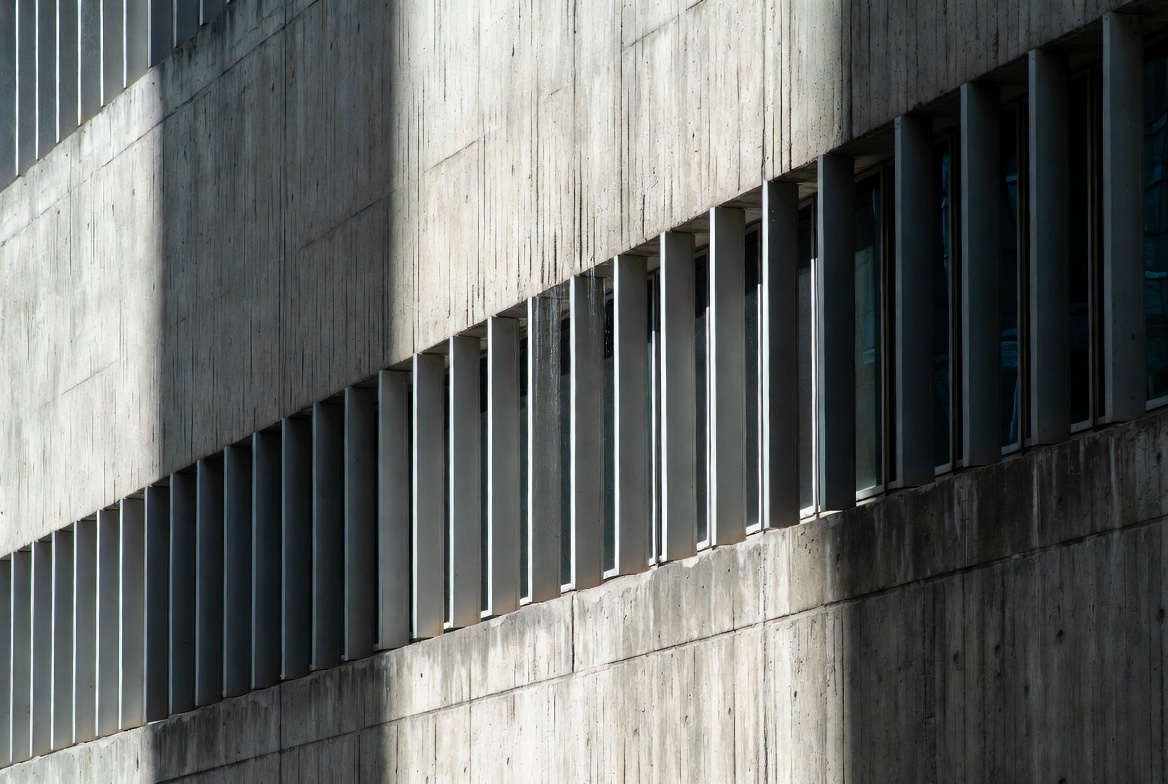
Window mullions are not decorative parts alone. They support façade geometry, influence sightlines, and remain visible at close range and from street level. Because they are vertical exterior members, defects such as fading, chalking, uneven gloss, or edge wear are easy to notice and expensive to correct once installed.
A good finish for mullions must usually deliver:
- Strong adhesion to aluminum or metal substrates.
- Resistance to UV, moisture, and pollutants.
- Consistent color across long façade runs.
- Tolerance for handling, fabrication, and installation.
- A service life aligned with the building's maintenance plan.
Single-stage architectural powder coating is a dry-applied finish cured by heat into a solid film. In architectural use, it is commonly selected for its efficient application, broad color range, and environmentally favorable profile because it contains no solvent and no VOCs during application.
For mullions, the strengths are practical:
- Fast processing. One coating cycle can simplify production.
- Uniform film build. Good edge coverage is easier to achieve than with some liquid systems.
- Cleaner manufacturing. Overspray can often be reclaimed, reducing waste.
- Design flexibility. Matte, gloss, textured, and special-effect finishes are available.
Its limits are equally important. A single-stage powder system generally does not match the very highest weatherability tier of premium PVDF systems in the harshest exterior conditions, especially where long-term color stability is critical.
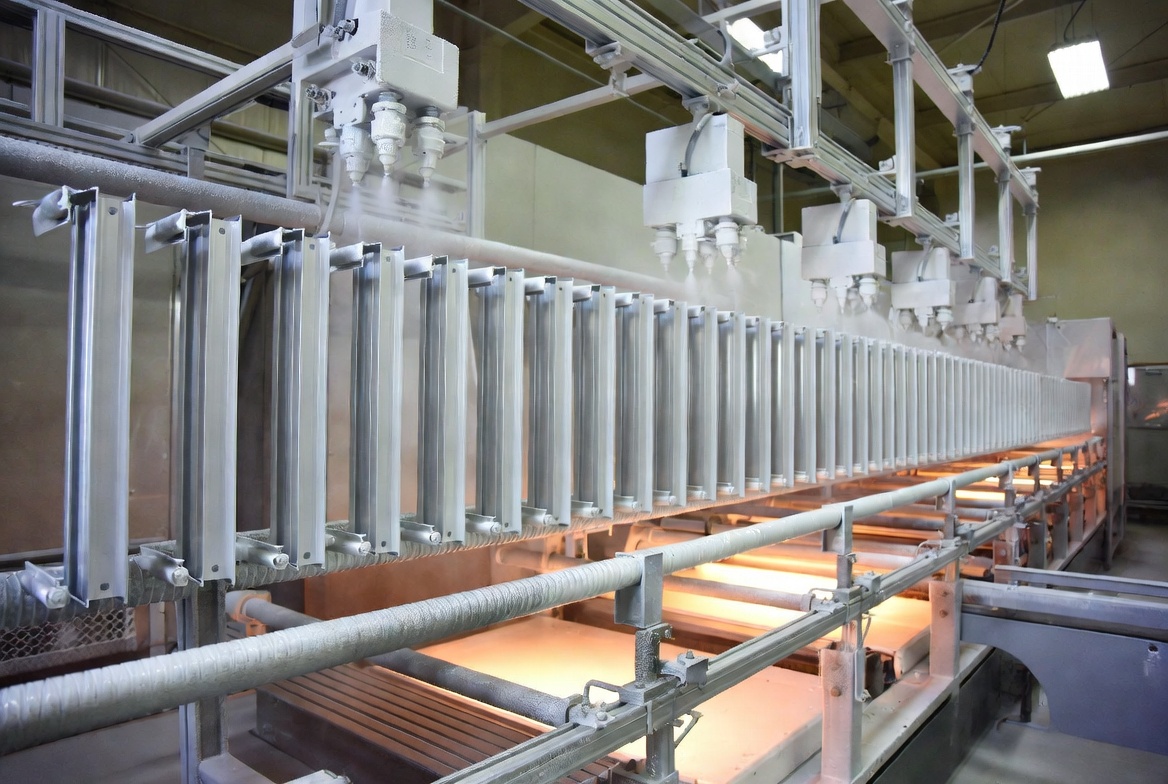
Multi-coat PVDF systems typically use a primer plus a PVDF-based topcoat, and in high-performance architectural use they are associated with premium exterior durability and long-term appearance retention. These systems are often specified for demanding façades where the owner expects a long aesthetic life and reduced maintenance risk.
Their advantages include:
- Excellent UV resistance.
- Strong color and gloss retention over time.
- Proven use on premium exterior metal architecture.
- Better fit for severe climates and high-visibility towers.
The trade-offs are clear. PVDF systems are more complex to apply, usually involve more steps, and often increase cost and lead time. They may be the safer choice for the most exposed projects, but they are not always the most efficient solution for every high-rise mullion package.
| Factor | Single-Stage Architectural Powder | Multi-Coat PVDF System |
|---|---|---|
| Application | One dry powder coat, heat cured | Primer plus PVDF-based coat(s) |
| Appearance retention | Good for many projects, but less premium in extreme exposure | Excellent in severe sunlight and long-life façades |
| Environmental profile | Solvent-free, low waste, no VOCs during application | Liquid-based systems often involve solvents |
| Process complexity | Lower | Higher |
| Cost profile | Usually more efficient | Usually higher |
| Best fit | Moderate exposure, speed, value engineering | Premium towers, harsh weather, long-term appearance |
For many projects, the choice is less about "better or worse" and more about fit for exposure. A moderate-urban tower may perform very well with a high-quality architectural powder system, while a coastal or ultra-premium tower may justify multi-coat PVDF for added weathering confidence.
The right choice depends on where the building stands and how it will be judged over time.
Choose single-stage architectural powder when:
- The project is in a moderate climate.
- Speed and manufacturing efficiency matter.
- The façade budget must be controlled.
- The design calls for a broad palette with stable repeatability.
Choose multi-coat PVDF when:
- The building is a landmark or premium-grade tower.
- The project faces strong UV, coastal air, or pollution.
- Long-term gloss and color stability are non-negotiable.
- The owner wants maximum confidence in exterior appearance.
A common mistake is selecting a finish by name alone. In practice, the right outcome depends on substrate preparation, film build, cure control, edge treatment, and the actual exposure category of the site. Even a strong coating system can fail early if the pretreatment or application process is weak.
For mullions, three specification checks matter most:
1. Confirm the exposure environment, not just the city name.
2. Match the coating system to the maintenance expectation.
3. Verify the applicator's quality control records and test discipline.
Here is a simple decision path that works well in project discussions:
1. Define the environment. Is the building inland, urban, coastal, or industrial?
2. Set the performance target. Is the priority value, aesthetics, or maximum longevity?
3. Check the substrate. Mullions are often aluminum extrusions, which need the right pretreatment and coating match.
4. Review installation and maintenance access. Hard-to-reach façades favor the more durable system.
5. Align with owner expectations. The finish should support the full life cycle, not only the handover date.
As a manufacturer focused on powder coatings and eco-friendly materials, Yinda Technology is positioned to support building-product producers who want both performance and manufacturing efficiency. For architectural profiles, window systems, and façade components, the real value comes from matching the coating chemistry to the climate, substrate, and project goal—not from choosing the most expensive finish by default.
From an industry standpoint, the strongest specification is the one that balances appearance, durability, compliance, and sustainable production. That is why powder coating continues to gain traction as a low-waste, solvent-free solution, while PVDF remains the premium benchmark for severe exterior exposure.
If the project is a standard high-rise in a normal urban setting, a high-quality architectural powder system is often the smarter commercial choice. If the building is coastal, iconic, or expected to retain a premium façade appearance for a very long time, multi-coat PVDF is usually the safer premium specification.
The best decision is not made at the finish stage alone. It is made when coating, substrate, exposure, and maintenance strategy are designed together from the start.
Yes, it can be a strong option for many high-rise mullions, especially in moderate environments where efficiency, color choice, and low-waste production are important.
No. PVDF is usually better for the harshest exterior exposure and premium long-term appearance, but it may be unnecessary or uneconomical for many projects.
Architectural powder coating is generally more environmentally friendly in application because it is solvent-free and does not generate VOC emissions during spraying.
Its main limitation is that it may not match the very highest weathering performance of premium PVDF systems in extreme UV or coastal conditions.
They should ask about exposure category, expected service life, pretreatment, film thickness, applicator quality control, and maintenance requirements.
Yes. Both are used on architectural metal components, but the coating system should be matched to the substrate preparation and performance target.
- [QUALICOAT website] [qualicoat]
- [QUALICOAT specifications 2024] [qualital]
- [ISO 12944 corrosion environment overview] [icorr]
- [Axalta powder coating selection guide] [axalta]
- [Sherwin-Williams PVDF coatings guide] [industrial.sherwin-williams]
- [FGIA/AAMA 2605 overview] [ppg]
- [IIBEC: PVDF coating failures] [iibec]
- [QUALICOAT seaside class] [qualicoatuki]
- [Powder coatings can be sustainable and expressive] [paint]


