Language


Views: 292 Author: Yinda Powder Coating Publish Time: 2026-07-02 Origin: Site


Content Menu
● What Makes TGIC-Free Super Durable Powder Coatings Different?
● Key Performance Benefits for ACE Equipment
● Industry Context: Why ACE Manufacturers Are Moving TGIC-Free
● Yinda Technology's Role in TGIC-Free Coating Solutions
● Low-Cure Technology: Cutting Energy While Protecting Performance
● Durability Testing and Industry Standards
● Application Best Practices for ACE Manufacturers
● Sustainability and Circularity in Powder Coating
● Where TGIC-Free Super Durable Coatings Are Headed Next
● How Yinda Technology Supports ACE and Industrial Customers
● Practical Steps for ACE Manufacturers Considering TGIC-Free Systems
● FAQ
As an industry practitioner working with global OEMs in China, Indonesia, and Saudi Arabia, I've seen first-hand how TGIC-free super durable powder coatings have shifted from "nice to have" to a strategic necessity in agricultural, construction, and industrial equipment (ACE) applications. Beyond meeting tightening environmental regulations, these coatings now play a central role in equipment lifecycle cost, brand perception, and global compliance. [datainsightsreports]
TGIC-free super durable polyester powder coatings are engineered to deliver long-term exterior durability while avoiding traditional triglycidyl isocyanurate (TGIC) curing agents. This chemistry shift reduces health and environmental concerns associated with TGIC, while retaining high levels of UV resistance, color stability, and mechanical performance. [chinapowdercoating]
In ACE applications, coatings are exposed to intense UV radiation, high humidity, mud, fertilizers, de-icing salts, and mechanical impact, all of which accelerate coating degradation. Super durable TGIC-free systems are specifically designed to withstand these stressors over extended service intervals, reducing repainting frequency and total cost of ownership. [archivemarketresearch]

For agricultural, construction, and industrial equipment manufacturers, TGIC-free super durable powder coatings offer several performance advantages that directly impact field reliability. [datainsightsreports]
- Outstanding edge coverage on laser-cut and complex geometries, reducing corrosion risk at vulnerable sharp edges. [datainsightsreports]
- Excellent color and gloss retention under long-term outdoor exposure, preserving equipment appearance and brand image. [archivemarketresearch]
- High-level corrosion protection validated through salt spray and humidity chamber testing, extending equipment lifespan in aggressive environments. [chinapowdercoating]
- Superior first-pass transfer efficiency, which improves powder utilization and reduces material waste. [datainsightsreports]
- Low-temperature cure technology that cuts oven energy consumption and expands compatibility with temperature-sensitive substrates. [chinapowdercoating]
- Smooth, consistent finish that enhances perceived build quality and simplifies cleaning. [datainsightsreports]
From a user's perspective, these benefits translate into equipment that looks newer for longer, resists chipping and rusting, and requires less downtime for repaint or repair. [archivemarketresearch]
The shift toward TGIC-free super durable powder coatings is driven by three converging trends in the global ACE sector. [paint]
1. Stricter environmental and health regulations
Regulatory bodies worldwide are increasing scrutiny on hazardous substances in coating formulations and emissions from finishing lines. TGIC-free solutions help manufacturers align with evolving requirements while maintaining performance targets. [paint]
2. Sustainability and energy efficiency goals
OEMs and tier suppliers are under pressure to reduce CO₂ emissions and energy consumption across their finishing operations. Low-cure TGIC-free powders that crosslink at lower temperatures support these goals by cutting oven energy while remaining solvent-free and low-VOC. [trendhunter]
3. Demand for longer warranties and extended service life
Buyers increasingly expect multi-year corrosion and color warranties, particularly for construction, agricultural, and material-handling equipment. Super durable powder coatings provide the UV stability and mechanical robustness required to support these extended warranties. [archivemarketresearch]
For manufacturers, moving to TGIC-free super durable systems is no longer just a compliance exercise—it is a competitive differentiator that can support premium positioning and after-sales confidence. [archivemarketresearch]
As a powder coating manufacturer with R&D, production, and sales footprints across China, Indonesia, and Saudi Arabia, Yinda Technology provides tailored super durable powder coating systems for ACE, architectural, e-mobility, medical, hardware, and electrical applications. Our formulations are developed to align with local regulatory frameworks while delivering globally benchmarked performance in corrosion resistance, UV stability, and energy-efficient curing. [yinda-global]
Yinda's technical teams collaborate closely with OEM coating lines to optimize process parameters, including surface preparation, film thickness, curing profile, and reclaim strategies. This application support ensures that TGIC-free systems perform consistently across automated and manual lines, even in regions with fluctuating power quality and varying substrate standards. [yinda-global]
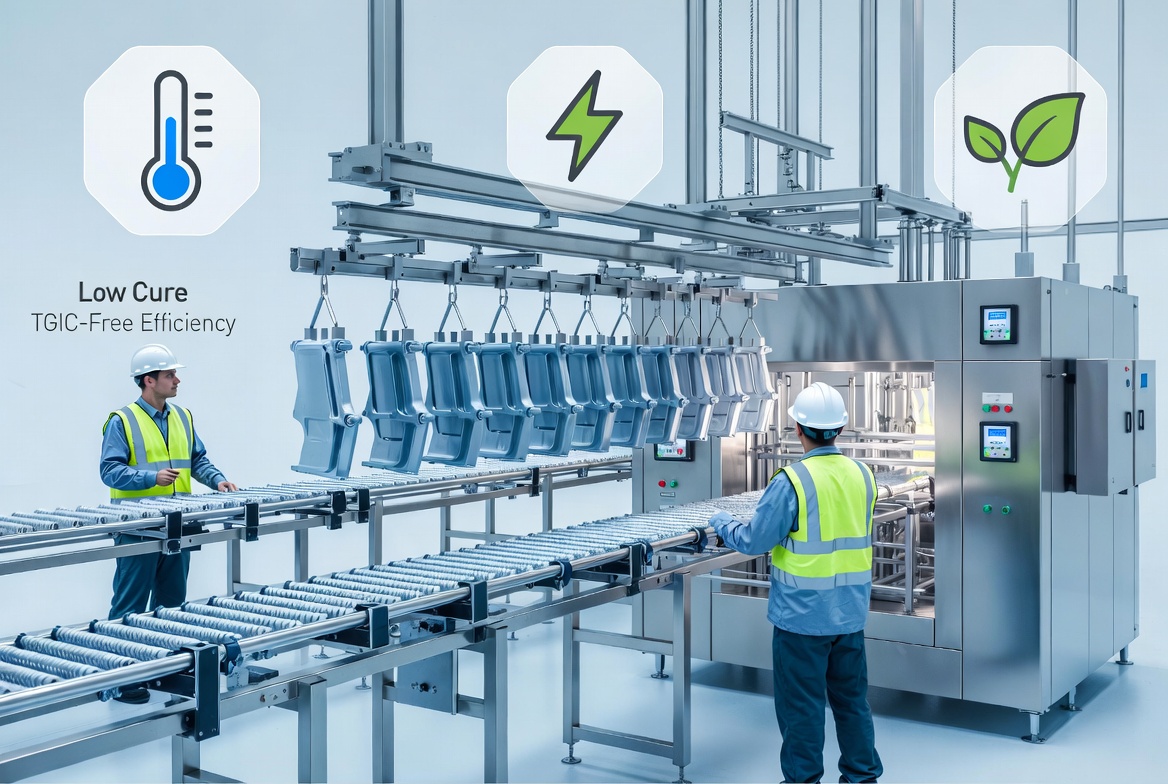
One of the most important innovations in TGIC-free super durable systems is low-cure technology, which allows full crosslinking at significantly lower oven temperatures. [chinapowdercoating]
Typical conventional powders cure at 180–200 °C, whereas advanced low-cure TGIC-free systems can reach full cure at approximately 120–140 °C with appropriate catalyst and resin design. This reduction in cure temperature delivers several practical advantages: [chinapowdercoating]
- Reduced energy consumption per square meter coated, directly lowering operating costs. [chinapowdercoating]
- Less thermal stress on temperature-sensitive components such as thin-gauge metals, composite parts, and certain assembled modules. [chinapowdercoating]
- Extended oven life and reduced maintenance due to lower operating temperatures. [chinapowdercoating]
From a process-engineering standpoint, combining infrared preheating with convection curing can further improve edge coverage and film build uniformity on complex ACE geometries. For manufacturers scaling production in emerging markets, these energy and process gains are particularly significant. [chinapowdercoating]
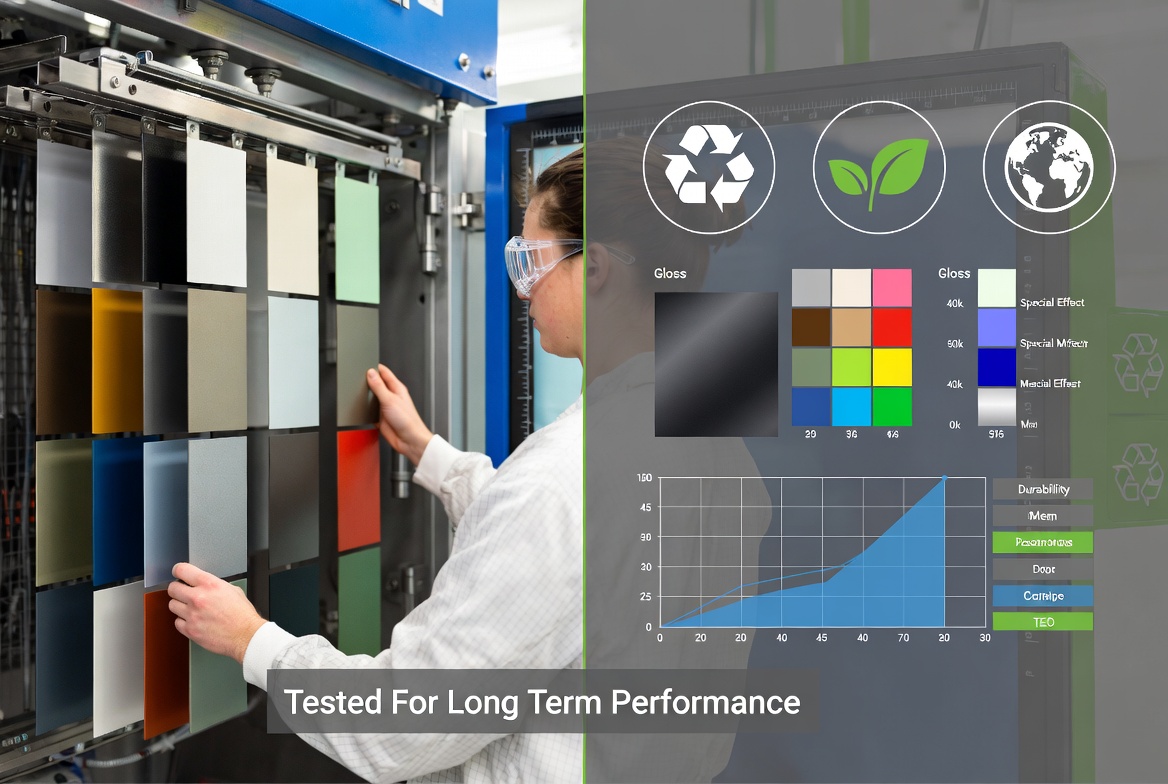
To earn the "super durable" designation, TGIC-free powder coatings undergo rigorous accelerated testing that simulates years of field exposure. [datainsightsreports]
Common test protocols for ACE and architectural applications include:
- Salt spray testing to evaluate corrosion resistance under chloride-rich environments. [archivemarketresearch]
- Humidity chamber exposure to assess moisture-driven degradation and blistering. [datainsightsreports]
- Xenon-arc or UV weathering tests to quantify color change and gloss loss over time. [archivemarketresearch]
Architectural-grade super durable systems often target compliance with standards such as AAMA 2604, which define minimum performance levels for color retention, chalking, and film integrity under specified exposure conditions. While ACE equipment may follow different internal OEM standards, the underlying performance metrics—corrosion resistance, UV stability, and mechanical robustness—are comparable. [datainsightsreports]
From an operational viewpoint, achieving the full benefit of TGIC-free super durable coatings requires attention to application fundamentals as much as to formulation choice. [archivemarketresearch]
Key best practices include:
- Substrate preparation: Thorough cleaning, degreasing, and conversion coating are essential to maximize adhesion and corrosion protection, especially on laser-cut edges and welded joints. [archivemarketresearch]
- Consistent film build: Controlling film thickness across complex geometries reduces weak spots, ensures adequate barrier properties, and prevents orange peel or sagging. [chinapowdercoating]
- Optimized cure schedules: Matching oven temperature and dwell time to the coating's specified cure window avoids under- or over-baking, which can compromise mechanical performance. [datainsightsreports]
- Powder reclaim management: Monitoring reclaim ratios and particle-size distribution maintains color consistency and reduces defects in high-throughput lines. [chinapowdercoating]
When these process controls are in place, ACE manufacturers can reliably deliver coated equipment that meets both internal quality benchmarks and external warranty promises. [archivemarketresearch]
Beyond operational efficiency, TGIC-free powder coatings contribute to broader sustainability and circular-economy goals in the coatings and manufacturing sectors. [trendhunter]
Technical developments include:
- Integration of post-consumer recycled materials, such as PET, into powder resin backbones to achieve up to 40% recycled content without compromising performance. [trendhunter]
- Lower crosslink density in certain low-cure systems, which can improve recyclability and reuse rates in closed-loop powder systems compared with conventional powders. [chinapowdercoating]
- Solvent-free application that reduces VOC emissions and helps facilities meet increasingly stringent air-quality regulations. [paint]
For ACE manufacturers and their customers, these advances allow sustainability commitments to translate into tangible product attributes—reduced embodied emissions, higher recycled content, and improved recyclability at end-of-life. [trendhunter]
Looking ahead, R&D in TGIC-free super durable powder coatings is focused on three main directions. [archivemarketresearch]
- Enhanced performance on non-traditional substrates such as engineered wood and composite materials used in cabins, housings, and interior structures. [chinapowdercoating]
- Hybrid curing systems combining low-heat thermal processes with UV or electron-beam crosslinking to push cycle times down while maintaining film integrity. [chinapowdercoating]
- Smart surface functionality, including self-healing microcapsule systems and digitally controlled textures that deliver differentiated aesthetics without multiple coating layers. [chinapowdercoating]
For ACE OEMs, these innovations will enable expanded design freedom, lighter structures, and more integrated components—all while preserving the durability and sustainability profile expected from modern equipment. [archivemarketresearch]
In practice, successful adoption of TGIC-free super durable coatings is as much about partnership as it is about chemistry. At Yinda Technology, our approach typically includes: [yinda-global]
- Collaborative line audits to align coating choice with substrate mix, pretreatment capability, oven design, and throughput targets. [yinda-global]
- Pilot runs to validate film build, cure profiles, color matching, and reclaim behavior before full-scale rollout. [yinda-global]
- Ongoing technical support and troubleshooting, particularly when expanding to new product lines or entering markets with different climatic and regulatory conditions. [yinda-global]
For manufacturers operating across multiple regions, this integrated technical and commercial support reduces risk when transitioning to TGIC-free systems and helps ensure a consistent finish standard across plants. [yinda-global]
For ACE and industrial equipment manufacturers evaluating TGIC-free super durable powder coatings, a structured transition plan is essential. [archivemarketresearch]
1. Define performance and warranty targets
Clarify expected service life, exposure conditions, and warranty commitments for each product family. [archivemarketresearch]
2. Map current line capabilities
Assess pretreatment, oven capacity, application equipment, and reclaim systems versus the cure and film-build requirements of TGIC-free powders. [chinapowdercoating]
3. Run controlled trials
Conduct side-by-side testing on representative parts using agreed-on test protocols (salt spray, humidity, UV exposure, mechanical testing). [datainsightsreports]
4. Evaluate total cost of ownership
Consider energy savings from low-cure systems, reduced repaints, extended warranties, and potential brand and sustainability benefits. [archivemarketresearch]
5. Plan phased implementation
Start with high-visibility or high-corrosion-risk product lines, then roll out across broader portfolios once performance is validated. [archivemarketresearch]
By following these steps, manufacturers can move to TGIC-free super durable coatings in a controlled way that minimizes downtime and maximizes return on investment. [archivemarketresearch]
If your organization is exploring TGIC-free super durable powder coatings for ACE or related industrial applications, engage your coating partner's technical team early to align chemistry, process parameters, and performance expectations. A joint evaluation project—covering lab tests and limited field trials—often provides the clearest path to a confident, scalable implementation. [yinda-global]
Q1: Are TGIC-free super durable powder coatings suitable for existing ACE coating lines without major hardware changes?
In many cases, TGIC-free systems can be integrated into existing lines by optimizing pretreatment, gun settings, and cure schedules rather than replacing equipment, though low-cure systems may require oven reprogramming to fully capture energy savings. [datainsightsreports]
Q2: How do TGIC-free coatings compare to traditional TGIC systems in long-term outdoor durability?
Modern TGIC-free super durable formulations can match or exceed traditional TGIC-based systems in UV resistance and color retention, provided they are applied and cured within the specified windows. [datainsightsreports]
Q3: Will moving to TGIC-free super durable coatings increase coating cost per unit?
Material cost may be comparable or slightly higher, but reduced energy usage, improved transfer efficiency, and extended service life typically offset these differences over the equipment lifecycle. [datainsightsreports]
Q4: Can TGIC-free powders be used on mixed substrates, such as steel, aluminum, and certain composite parts?
With appropriate pretreatment and cure management, TGIC-free systems can be successfully applied across multiple substrates, although specific formulations may be needed for sensitive materials. [chinapowdercoating]
Q5: How do TGIC-free super durable coatings support sustainability reporting?
They contribute through lower VOC emissions, potential energy savings from low-cure technology, and, in some systems, integration of recycled feedstocks that increase recycled content in finished products. [paint]
1. TIGER Drylac – "TGIC-Free Super Durable Powder Coatings for ACE Applications." [Link]
2. TIGER Drylac – "Series 138: Architectural TGIC-Free Super Durable Polyester." [Link]
3. ChinaPowderCoating – "How Low-Cure Powder Coatings Are Revolutionizing Temperature-Sensitive Substrates." [Link]
4. Yinda Technology – "Custom Powder Coating Manufacturer." [Link]
5. Arkema – "Sustainable Powder Coatings with Recycled PET Content." [Link]
6. Archive Market Research – "Super Durable Powder Coating Analysis Report 2025." [Link]
7. American Coatings Association – "Emerging Technical Trends in the Powder Coatings Industry." [Link]


