Language


Views: 264 Author: Yinda Powder Coating Publish Time: 2026-10-10 Origin: Site


Content Menu
● What Makes Epoxy Powder Coating Different?
>> Pure Epoxy, Hybrid, and Fusion-Bonded Epoxy Are Not Interchangeable
● Top 10 Epoxy Powder Coatings Manufacturers for Different Buyer Needs
>> 1. Yinda Technology: A Development-Oriented Partner for Customized OEM Projects
>> 2. AkzoNobel: Interpon and Resicoat for Decorative and Functional Requirements
>> 3. PPG: Envirocron Epoxy Primers and Interior Systems
>> 4. Sherwin-Williams: Epoxy Powder Options for Industrial Equipment
>> 5. Axalta: Nap-Gard for Fusion-Bonded Epoxy Protection
>> 6. TIGER Coatings: Interior Epoxy Finishes and Protective Primer Systems
>> 7. IGP Pulvertechnik: Interior Epoxy and Substrate-Specific Primers
>> 8. Teknos: INFRALIT Epoxy Powder Coatings
>> 9. IFS Coatings: Customizable Epoxy for Interior Industrial Products
>> 10. Jotun: Epoxy-Polyester Options for Interior Commercial Products
● How to Compare Epoxy Powder Coating Suppliers Fairly
● A Five-Step OEM Qualification Process
>> Step 1: Send a Complete Application Brief
>> Step 2: Establish the Documentation Baseline
>> Step 3: Test Real Components
>> Step 4: Verify Actual Curing Conditions
>> Step 5: Approve Repeatability Before Scaling
● Three Procurement Pitfalls That Manufacturer Lists Often Miss
>> Comparing Price per Kilogram Instead of Cost per Accepted Part
>> Treating Laboratory Results as a Universal Guarantee
>> Assuming "Low Bake" Means Guaranteed Energy Savings
● Request an Application-Specific Proposal From Yinda Technology
>> Is Epoxy Powder Coating Suitable for Outdoor Aluminum Windows?
>> What Is the Difference Between Epoxy and Epoxy-Polyester Powder Coating?
>> Can Epoxy Powder Be Used on Medical Equipment?
>> How Should Buyers Evaluate a Custom OEM Supplier?
>> Are All Epoxy Powders Applied With the Same Cure Schedule?
>> Does a Powder Supplier Also Provide Coating Application Services?
Choosing among the top 10 epoxy powder coatings manufacturers requires more than comparing company names or prices per kilogram. Buyers need to understand resin chemistry, application conditions, technical support, and batch consistency. The right supplier should deliver a coating that protects the product and works reliably on the production line.
This guide compares ten manufacturers for different purchasing needs, from customized industrial finishes to specialized pipeline protection. My central purchasing principle is compatibility: choose the coating system and supplier around the application, rather than forcing the application to fit a familiar brand.
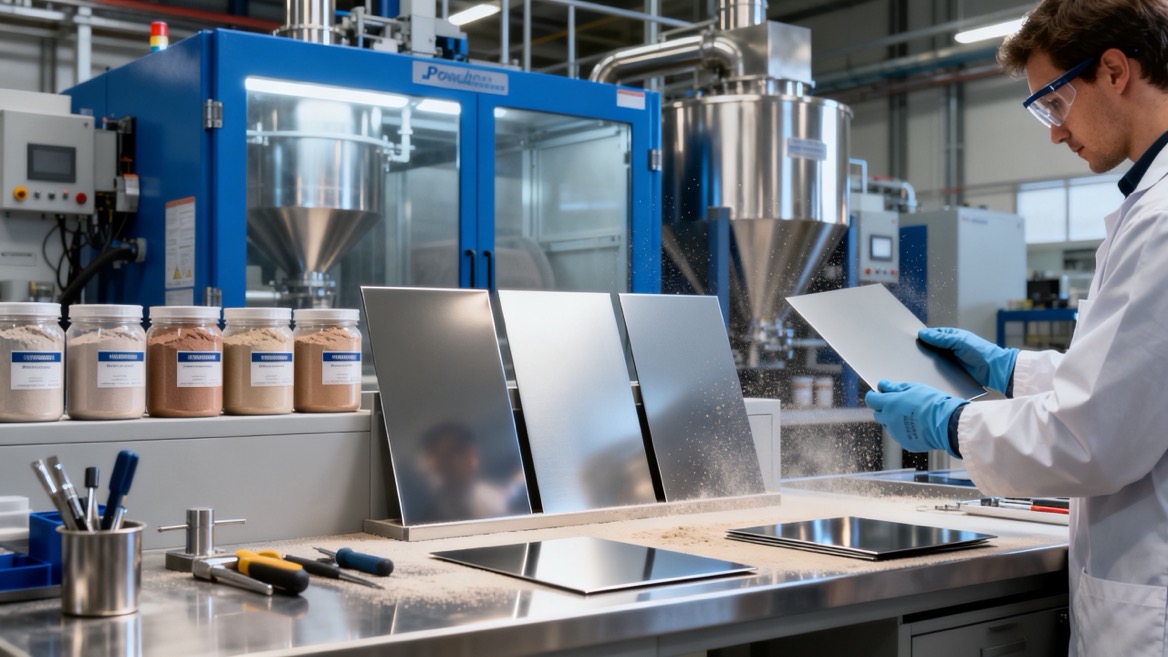
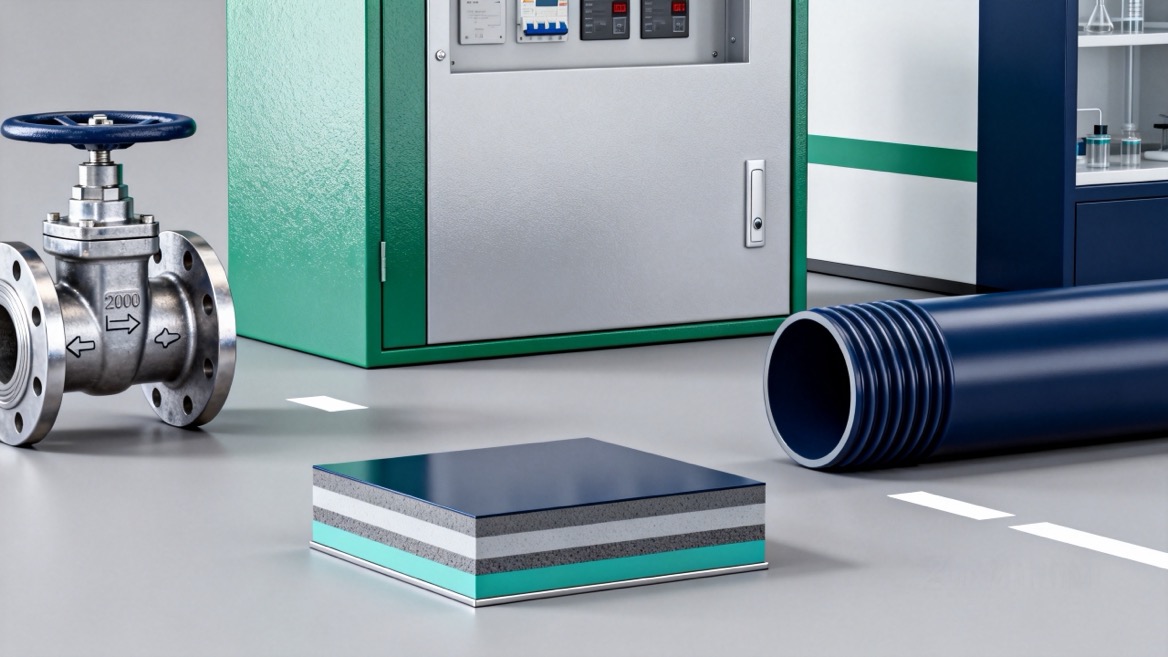
Epoxy powder coating uses epoxy resin to form a cross-linked protective film during curing. Its principal strengths include adhesion, chemical resistance, and corrosion protection. These properties make it useful for interior industrial equipment, metal cabinets, protected automotive components, and protective primers.
Its important limitation is sunlight exposure. Conventional epoxy coatings can chalk, discolor, and lose gloss outdoors. For exposed architectural profiles, doors, and windows, an appropriate exterior polyester system generally makes more sense than a standalone epoxy finish. An epoxy primer may still be appropriate beneath a compatible weather-resistant topcoat.
| Coating category | Typical purchasing priority | Important distinction |
|---|---|---|
| Pure epoxy powder | Interior chemical resistance and protective performance | Not intended as a sunlight-exposed decorative finish |
| Epoxy-polyester hybrid | Appearance and balanced interior performance | Does not automatically provide exterior-grade durability |
| Epoxy powder primer | Corrosion protection beneath another coating | Requires a validated primer-and-topcoat system |
| Fusion-bonded epoxy | Specialized pipeline and infrastructure protection | Requires application-specific equipment and specifications |
These categories serve different requirements. A manufacturer offering interior hybrid powder is not automatically an alternative to a qualified fusion-bonded epoxy supplier.
Yinda Technology researches, manufactures, and sells powder coatings and environmentally friendly materials. Its public company profile identifies a dedicated research center, testing facilities, production lines, and an experienced development team. The company serves architectural products, new-energy vehicles, medical equipment, hardware, and appliances.
According to the company information supplied for this guide, Yinda has subsidiaries in China, Indonesia, and Saudi Arabia. Its public website describes operations in China, Indonesia, and the Middle East more broadly.
For small and medium-sized brands, Yinda's proposed value lies in combining formulation development with flexible project communication. Buyers can explore custom colors, gloss, texture, curing requirements, and OEM documentation rather than selecting solely from a standard catalog.
Treat cost-effectiveness as something to demonstrate through trials. Request a named technical contact, sample-development schedule, agreed acceptance criteria, and written commercial terms. Minimum order quantities, private-label arrangements, and formulation-change procedures should be confirmed for each project.
AkzoNobel's epoxy portfolio includes Interpon 100 and Resicoat products. Interpon 100 targets corrosion protection and chemical resistance, while Resicoat includes functional applications such as electrical insulation, valves, fittings, and pipes.
This makes AkzoNobel relevant when purchasing teams need to distinguish decorative interior finishes from specialized protective coatings. Ask for the exact product code and regional technical data sheet; brand recognition alone does not establish suitability.
PPG's Envirocron portfolio includes the PCM P5 epoxy anticorrosive primer series and PCF P8 epoxy-polyester indoor topcoats. Its low-bake range also includes epoxy and hybrid options.
PPG is worth evaluating for industrial programs that need coordinated primer, topcoat, and curing options. When comparing low-bake products, check actual part-temperature requirements and verified line performance rather than relying on the oven setting.
Sherwin-Williams identifies epoxy powder coatings within its construction-equipment offering, emphasizing edge coverage, corrosion resistance, color consistency, and technical support.
For equipment buyers, the useful question is how the recommended system performs on their actual geometry. Welds, edges, recesses, and mixed metal thicknesses should be included in qualification samples.
Axalta's Nap-Gard fusion-bonded epoxy coatings address internal and external pipe protection, valves, and girth welds. The range includes single-, dual-, and multilayer systems for demanding infrastructure environments.
Nap-Gard belongs on a shortlist for specialized pipeline protection, not simply as a substitute for decorative appliance powder. Specify operating conditions, application method, and the required coating standard before requesting a recommendation.
TIGER's Series 69 includes epoxy-based coatings for scientific equipment and laboratory furniture. Its Dryprotector epoxy primer is also used within the two-coat TIGER Shield system beneath a weather-resistant topcoat.
For laboratory applications, compare resistance to the actual chemicals and cleaning agents involved. For exterior protection, evaluate the complete two-coat system, including intercoat adhesion and curing instructions.
IGP-DURA pox 02 comprises smooth epoxy powder coatings for interior applications, with chemical resistance and several gloss options. IGP-KORROPRIMER 1001 provides an epoxy primer option for aluminum and steel, with a version intended for outgassing substrates.
IGP is relevant where appearance, chemical exposure, and substrate behavior must be considered together. Identify galvanized steel or die-cast components early so the supplier can recommend an appropriate formulation.
Teknos offers epoxy powders within its INFRALIT portfolio. Products such as INFRALIT EP 8074-00 and EP 8026-00 use epoxy resin and form their final film through elevated-temperature curing.
Buyers should request product-specific information on film thickness, preparation, cure conditions, and performance testing. A portfolio name is only the starting point for a technical comparison.
IFS describes its epoxy powders as interior and enclosed-application coatings with adhesion, hardness, and chemical-barrier properties. Its published information also identifies customization options for flexibility, curing schedule, and gloss.
IFS is relevant to buyers seeking formulation discussions around a defined production line. Ask how adjustments affect other properties; increasing hardness or chemical resistance can introduce trade-offs.
Jotun's Guard Classic range includes epoxy-polyester and polyester technologies for interior steel products such as shelving, fixtures, furniture, and appliances.
Its inclusion requires a clear qualification: this is a hybrid comparison, not evidence of a pure-epoxy or pipeline-grade offering. Buyers seeking aggressive chemical resistance should obtain a specific recommendation and supporting test data.
The most useful comparison starts with a common specification. Otherwise, two attractive quotations may describe materially different coating systems.
| Evaluation area | Evidence to request | Purchasing question |
|---|---|---|
| Chemistry | Product code and technical data sheet | Is this epoxy, hybrid, or another resin system? |
| Protection | Test report with preparation and thickness details | Does the tested system resemble our product? |
| Production fit | Cure schedule and application instructions | Can our line reproduce these conditions? |
| Customization | Written sample and approval procedure | How are changes controlled? |
| Supply reliability | Batch records and commercial terms | Can repeat orders match the approved sample? |
| Service | Technical contact and escalation process | Who resolves application problems? |
Use the same checklist when evaluating Yinda Technology and multinational suppliers. A smaller factory should not receive a lower technical standard, and a larger brand should not receive automatic approval.
Provide the substrate, component drawings, exposure environment, chemical contact, color, gloss, texture, film thickness, and production volume.
For example, when approaching Yinda Technology for medical-equipment housings, identify the actual cleaning agents and disinfection conditions. An application label alone does not define the required coating performance.
Request:
- Technical and safety data sheets.
- Recommended preparation and curing conditions.
- Storage requirements and shelf life.
- Relevant product-specific test results.
- Batch identification and agreed inspection records.
Published product sheets illustrate why these details matter: curing windows, storage limits, film thickness, and preparation requirements differ between products.
A flat panel can establish an initial reference, but the production trial should include representative parts.
Use components with the edges, welds, recesses, and substrate variations found in normal manufacturing. Record application settings and coating thickness so later trials remain comparable.
Check the temperature reached by the component and how long it remains within the specified curing window. Do not substitute oven-air temperature for a product instruction that specifies object temperature.
Approve a documented finish standard, then assess a repeat batch. Agree how color variation, gloss, defects, and formulation changes will be handled.
For OEM projects, this approval process is where responsive communication becomes measurable: clear records and controlled revisions matter more than broad promises of flexibility.
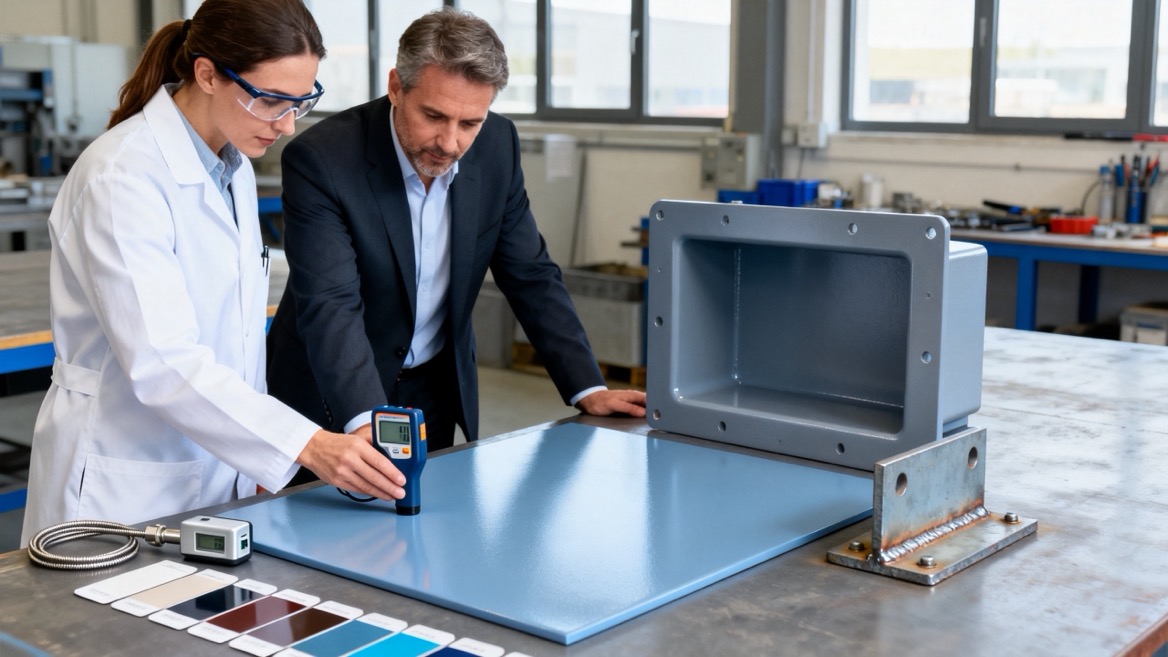
A lower powder price does not necessarily produce a lower finishing cost. Buyers should compare consumption, required film thickness, application losses, curing demands, and rejected parts.
For a Yinda trial, for example, track accepted output alongside powder usage. This provides a more meaningful basis for assessing value than an unsupported "lowest-price" claim.
A published test result describes a particular coating system under particular conditions. Preparation, substrate, film thickness, and curing can affect whether that result is reproducible.
Interpon's epoxy documentation specifies preparation and thickness alongside performance results, while PPG instructs coaters to verify the suitability of surface preparation. Request comparable information from every shortlisted supplier.
Lower-temperature or faster-curing products can offer production benefits. PPG publishes both lower-cure and speed-cure options within its low-bake portfolio. However, project-level savings should be verified on the buyer's line, considering throughput, part mass, oven operation, and rejection rates.
Send Yinda Technology your substrate details, service environment, finish target, cleaning chemicals, current curing conditions, and expected order volume.
Request a proposed coating chemistry, technical data sheet, sample-development plan, and documented trial procedure. For customized OEM work, also confirm the communication contact, approval milestones, packaging requirements, and repeat-order controls.
The objective is a qualified manufacturing partnership: a coating that meets the specification, a process the production team can reproduce, and commercial terms that fit the purchasing program.
Usually not as a standalone decorative finish. Conventional epoxy lacks the sunlight resistance required for exposed exterior appearance. Evaluate an exterior-grade system, or a validated epoxy-primer and weather-resistant-topcoat combination where appropriate.
Pure epoxy generally prioritizes chemical resistance and protective interior performance. Epoxy-polyester hybrids balance different appearance and processing requirements. A hybrid should not automatically be treated as an exterior-grade coating.
It can be considered for suitable equipment components, but application-specific qualification remains necessary. Match the coating to cleaning agents, exposure conditions, and component requirements. Specialized epoxy products exist for scientific equipment and laboratory furniture, but that does not establish universal medical suitability.
Compare the development process, not just the initial sample. Request defined specifications, trial records, repeat-batch approval, technical contacts, and written change-control procedures. Use the same requirements for Yinda Technology and other shortlisted manufacturers.
No. Published data sheets show different curing requirements across products. Follow the specific product instructions and verify the required conditions on the component being coated.
Do not assume so. This guide concerns powder-material manufacturers. Confirm separately whether each company supplies application services, recommends qualified applicators, or provides technical support for your own coating line.
1. Yinda Technology. "About Us." Company background, research and development capabilities, manufacturing operations, and application industries.
[https://www.yinda-global.com/aboutus.html] [yinda-global]
2. AkzoNobel Interpon. "Epoxy Technology." Overview of epoxy powder coating chemistry, protective properties, application categories, and limitations under ultraviolet exposure.
[https://www.interpon.com/br/en/technologies/epoxy] [interpon]
3. AkzoNobel. "Interpon 100 AM — Technical Data Sheet." Product-specific guidance covering epoxy powder coating performance, surface preparation, application, and curing requirements.
[https://powdercoatings.brand.akzonobel.com/m/46960704104e8fe1/original/TDS-Interpon-100-AM.pdf] [powdercoatings.brand.akzonobel]
4. PPG. "Envirocron® Powder Coatings." Overview of the Envirocron powder coating portfolio and industrial coating systems.
[https://www.ppg.com/en-US/industrial-powder/products/envirocron-powder-coatings] [ppg]
5. PPG. "Envirocron® Low Bake Powder." Low-temperature and faster-curing powder coating options, with discussion of productivity and energy-efficiency opportunities.
[https://www.ppg.com/en-US/industrialcoatings/powder-coatings/envirocron-low-bake-powder] [ppg]
6. PPG. "Epoxy PCMT70152 — Product Data Sheet." Product-specific information on application, recommended film thickness, surface preparation, and coating performance.
[https://buyat.ppg.com/rep_powder/PDFs/CDPFILES/PCMT70152.pdf] [buyat.ppg]
7. Sherwin-Williams. "Powder Coatings." Powder coating solutions for construction equipment, including epoxy options and considerations such as edge coverage, corrosion resistance, and color consistency.
[https://industrial.sherwin-williams.com/na/us/en/general-industrial/catalog/category/products-by-industry/heavy-equipment/construction/powder.10656655.html] [industrial.sherwin-williams]
8. Axalta Coating Systems. "Nap-Gard®." Fusion-bonded epoxy coating systems for internal and external pipelines, valves, and girth weld protection.
[https://www.axalta.com/corporate/en_US/products-and-customers/powder-coatings-/nap-gard.html] [axalta]
9. Axalta Coating Systems. "Nap-Gard® 7-2555 High Tg Fusion Bonded Epoxy — Technical Data Sheet." Revised August 8, 2023. Technical information for a specialized thermosetting epoxy powder coating.
[https://www.axalta.com/content/dam/NA/HQ/Public/Powder%20Coatings/Documents/TDS/Nap-Gard%20Pipe/Nap-Gard%207-2555%20TDS.pdf] [axalta]
10. TIGER Coatings. "Series 69 — Dryprotector Zinc-Free Primer 69/70000 — Product Data Sheet." Epoxy powder primer for steel and aluminum substrates within a two-coat protective system.
[https://www.tiger-coatings.com/fileadmin/user_upload/msds/user_upload/TIGER_DRYPROTECTOR_Zinc-free_Primer_69-70000_TDC_EN.pdf] [tiger-coatings]
11. TIGER Coatings. "Series 69 — SEFA Compliant — Product Data Sheet." Epoxy-based interior powder coating for scientific equipment and laboratory furniture, with chemical-resistance information.
[https://pim.tiger-coatings.com/api/download/138944?location-context=europe&force-download=1] [pim.tiger-coatings]
12. IGP Pulvertechnik AG. "IGP-DURA®pox 02." Smooth epoxy powder coatings for interior applications requiring chemical resistance and controlled appearance.
[https://igp-powder.com/en/industry-interior/igp-dura-pox-02] [igp-powder]
13. IGP Pulvertechnik AG. "IGP-KORROPRIMER 1001." Epoxy resin primer for corrosion protection on aluminum and steel.
[https://igp-powder.com/en/specialities/igp-korroprimer-1001] [igp-powder]
14. Teknos. "INFRALIT EP 8074-00." Product information for an epoxy resin powder coating that melts and cures at elevated temperatures.
[https://www.teknos.com/products/infralit-ep-8074-00/] [teknos]
15. Teknos. "INFRALIT EP 8026-00." Product information for an epoxy powder coating, including its resin basis and heat-curing mechanism.
[https://www.teknos.com/products/infralit-ep-8026-00/] [teknos]
16. IFS Coatings. "Epoxy Powder." Interior epoxy powder coating properties, application considerations, and customization options.
[https://ifscoatings.com/epoxy-powder/] [ifscoatings]
17. Jotun. "Guard Classic." Interior powder coating range for commercial products, including epoxy-polyester and polyester technologies.
[https://www.jotun.com/ww-en/products-and-services/products/guard-classic] [jotun]
18. Zhejiang Keyco New Material Co., Ltd. "Top 10 Epoxy Powder Coatings Manufacturers in the World 2025." Original manufacturer-roundup page supplied as the starting point for the rewritten article.
[https://www.keyco-powdercoating.com/blog/top-10-epoxy-powder-coatings-manufacturers-in-the-world-2500053.html] [keyco-powdercoating]


