Language


Views: 264 Author: Yinda Powder Coating Publish Time: 2026-10-24 Origin: Site


Content Menu
● Why Source Industrial Epoxy Powder Coating from China?
>> What the Latest Market Research Actually Shows
● Selection Criteria: How to Evaluate a Qualified Supplier
● Understand the Chemistry Before Comparing Suppliers
>> Epoxy-Polyester Hybrid Powder Coatings
>> Fusion-Bonded Epoxy Systems
● Top 10 Manufacturers and Suppliers to Consider
>> 2. Kinte Material Technology
>> 3. Zhejiang Huacai Advanced Material
>> 4. Fujian Wanan Industry Group
>> 5. Chengdu Hsinda Polymer Materials
>> 9. TIGER Coatings — TIGER Drylac
● Supplier Comparison: Capacity, MOQ, and Certification Evidence
● Buyer's Guide: From Factory Verification to Production Approval
>> 1. Issue an Application-Based Technical Brief
>> 2. Separate Factory Certification from Product Compliance
>> 3. Approve Samples Through a Controlled Trial
>> 4. Compare Test Conditions, Not Just Test Hours
>> 5. Put Logistics and Change Control in the Purchase Agreement
● The Overlooked Procurement Trap: A Cheap Kilogram Can Produce an Expensive Part
● Conclusion: Choose the Supplier That Fits Your Qualification Process
>> 1. How Can We Verify Whether a Supplier's ISO Certificate Is Expired, Suspended, or Outside Scope?
>> 2. Can We Substitute Epoxy-Polyester Hybrid Powder for Pure Epoxy to Reduce Cost?
>> 3. Does a "CE/RoHS/REACH-Compliant" Statement Establish That a Coating Is Suitable for Europe?
>> 4. Why Might a Coating Pass on the Supplier's Panel but Fail on Our Components?
>> 5. How Should We Protect Ourselves Against Undisclosed Formulation Changes?
Choosing an industrial epoxy powder coating supplier involves more than comparing colors and prices. A coating that performs well on a laboratory panel may behave differently on welded assemblies, recessed electrical enclosures, heavy steel components, or an automated production line.
For procurement managers, the real objective is to find a manufacturing partner that can deliver repeatable performance, documented compliance, dependable production scheduling, and practical technical support.
China offers a broad supplier base, including domestic formulation specialists and international coatings companies with local manufacturing operations. However, these suppliers differ significantly in customization flexibility, application expertise, order economics, and qualification procedures.
This guide compares ten companies worth considering for industrial epoxy powder coating procurement. It also explains how to evaluate their capabilities, interpret technical claims, and avoid purchasing mistakes that can increase your actual finishing cost.

China's powder coating supply chain includes resin development, formulation, extrusion, grinding, application equipment, testing, and industrial finishing services.
The geographic spread of the shortlisted manufacturers illustrates this depth. Yinda operates from Foshan, Kinte identifies production bases in Guangzhou and Wuhan, Huacai has operations in Zhejiang and Guangdong, and Hsinda manufactures in Chengdu. International suppliers also maintain manufacturing or technical operations in China.
For buyers, this creates several practical sourcing opportunities:
- Access to both locally developed and internationally specified coating systems.
- Alternative suppliers for standard industrial colors and customized finishes.
- Technical discussions closer to the manufacturers producing the finished equipment.
- Options ranging from smaller customized programs to multinational procurement arrangements.
The *Epoxy Powder Coatings Global Market Report 2026*, published by The Business Research Company and distributed through GII, estimates the global market at USD 4.28 billion in 2025 and USD 4.44 billion in 2026. It identifies Asia-Pacific as the largest regional market in 2025. These are commercial research estimates, not official Chinese production or export statistics.
This distinction matters. Global epoxy powder coating revenue, China's total powder coating output, and exports of all coating types measure different markets. They should not be combined to imply a precise Chinese epoxy powder coating market share.
A credible supplier evaluation should assess repeatability, not simply the appearance of one sample.
Use the following framework when comparing manufacturers:
| Evaluation area | Evidence to request | Procurement significance |
|---|---|---|
| Manufacturing identity | Business license, factory address, production-site details | Establishes who actually manufactures the powder |
| Quality management | Current certificates with manufacturing scope and site coverage | Helps assess documented process control |
| Formulation capability | Application-specific proposals and trial records | Shows whether customization extends beyond color matching |
| Production control | Batch traceability, retained samples, release criteria | Supports consistency and complaint investigation |
| Technical performance | Product-specific reports with substrate and curing details | Makes supplier comparisons meaningful |
| Delivery capability | Written production lead time, stock policy, change-control procedure | Reduces interruption risk |
| Commercial suitability | MOQ by formulation, sample charges, packaging, payment terms | Reveals the practical cost of cooperation |
An ISO certificate should be checked against the issuing body's records or a certificate verification database. The legal entity, factory location, scope, and current status all matter—not only the expiry date printed on the document.
"Industrial epoxy powder coating" is not a single interchangeable product category.
Pure epoxy powders are particularly relevant when chemical resistance, mechanical performance, corrosion protection, or electrical insulation takes priority over outdoor color retention.
Axalta's Alesta E documentation, for example, identifies anticorrosion protection, electrical insulation, and indoor decorative protection as suitable applications. It also explicitly warns against direct sunlight or artificial ultraviolet exposure because of limited UV resistance.
Epoxy-polyester hybrids are a separate formulation family. Jotun's Guard Classic range includes epoxy-polyester technology for applications such as industrial shelving, metal fixtures, furniture, refrigerators, and washing machines. Buyers should therefore distinguish a hybrid quotation from a pure epoxy quotation.
Fusion-bonded epoxy, commonly abbreviated as FBE, belongs to a more specialized procurement category. Jotun identifies dual-layer FBE systems for pipeline protection, while TIGER publishes dedicated FBE product documentation for highly corrosive and marine environments. General decorative powder should not be treated as an equivalent substitute.
For every quotation, ask the supplier to identify the exact chemistry, intended substrate, exposure conditions, coating thickness, and curing schedule.
Established: 2010; Guangdong Yinda Technology's Foshan milestone dates to 2020.
Location: Foshan, Guangdong, China.
Market coverage: China and international customers, with overseas operations described in Indonesia and the Middle East.
Primary sourcing fit: Customized powder coating programs requiring direct technical communication.
Yinda Technology develops, manufactures, and sells powder coatings and environmentally oriented materials. Its company profile identifies a dedicated research and development center, testing facilities, production lines, and an R&D team with more than 20 years of experience. Its stated application sectors include architectural profiles, doors and windows, new-energy vehicles, medical equipment, hardware, and electrical appliances.
For small and medium-sized brands, the relevant opportunity is a development-oriented purchasing relationship: discuss the application directly, define the target finish, and evaluate whether the proposed formulation fits existing production equipment.
Yinda's profile emphasizes tailored products and fast support. These are useful starting points for evaluating communication efficiency and OEM customization, but buyers should confirm response times, trial arrangements, and commercial flexibility through an actual development project.
OEM/ODM discussion scope: Application-specific formulation proposals, color and finish development, and technical coordination. Private labeling, formula ownership, exclusivity, and minimum batch quantities should be agreed separately.
Buyer checkpoint: Assess cost competitiveness through an application trial and written quotation. Public information reviewed here does not establish a verified annual capacity, standard MOQ, or current certificate register.
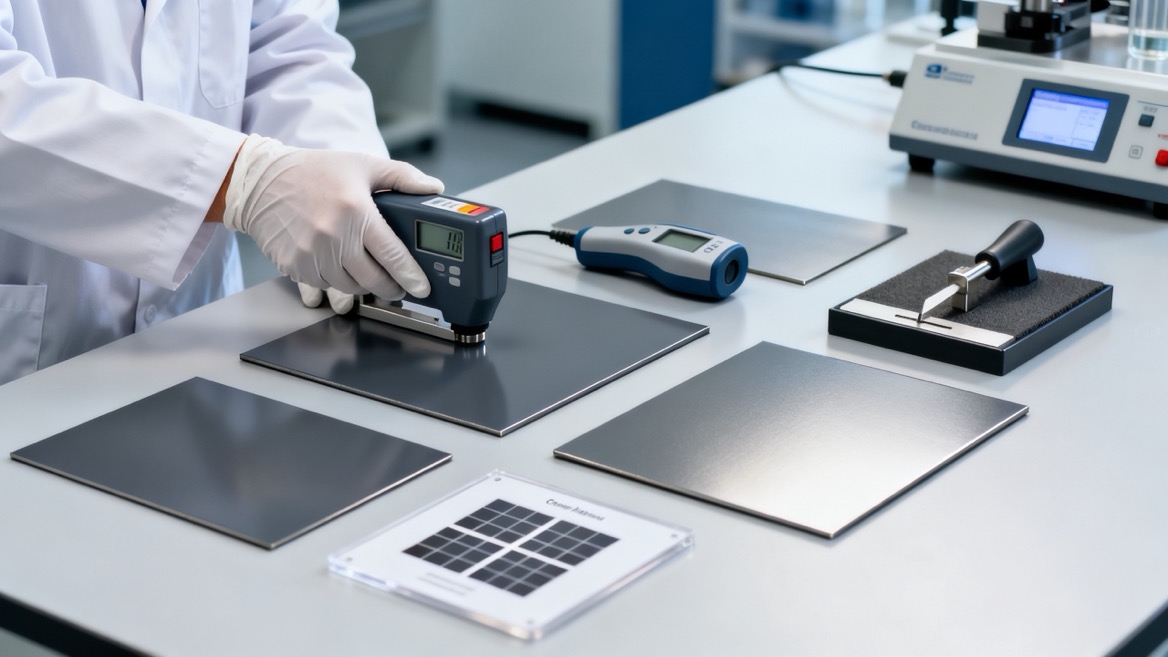
Established: Powder coating division founded in 1992.
Production footprint: Guangzhou and Wuhan bases identified in its powder coating overview.
Market coverage: The company reports sales to more than 30 countries.
Primary sourcing fit: Technically specified industrial programs requiring established development capabilities.
Kinte's powder coating background is associated with the China National Electric Apparatus Research Institute. Its published overview reports approximately 30,000 tonnes of annual powder coating capacity across 20 production lines. These figures cover powder coatings generally, not verified epoxy-only capacity.
Its connection to electrical-apparatus research makes it a relevant candidate for buyers evaluating coatings for appliances and industrial components.
OEM/ODM discussion scope: Technical formulation development, industrial finish matching, and application-specific qualification. The permitted scope of private-label supply requires confirmation.
Buyer checkpoint: Kinte's public pages contain different capacity descriptions and historical certification references. Obtain a current, site-specific capacity statement and valid certificates rather than relying on an undated website summary.
Established: 1998.
Location: Huzhou, Zhejiang, with a Guangdong operation established in 2016.
Market coverage: Manufacturer and exporter serving industrial powder coating applications.
Primary sourcing fit: Buyers comparing pure epoxy and epoxy-polyester hybrid options.
Huacai publishes dedicated epoxy and hybrid product information. Its website reports 34 semi-automatic production lines and annual output of up to 30,000 tonnes across its powder coating business. These are manufacturer-reported figures, not independently verified epoxy production volumes.
Its hybrid offering includes variations in gloss, color, texture, and curing requirements for products such as appliances, communication equipment, toolboxes, filing cabinets, and shelving.
OEM/ODM discussion scope: Custom colors, gloss levels, textures, and application-specific curing options.
Buyer checkpoint: Ensure the quoted grade is the intended resin family. A hybrid coating should not be accepted as equivalent to pure epoxy without application testing.
Established: 1996.
Location: Zhangzhou, Fujian, China.
Market coverage: China-centered industrial supply with internationally marketed products.
Primary sourcing fit: Buyers seeking a larger domestic thermosetting powder coating producer.
Wanan specializes in the research, manufacturing, and sale of thermosetting powder coatings. Its website lists annual production capacity of 80,000 tonnes and markets epoxy-based products alongside other powder coating technologies. The capacity figure applies to its broader business, not specifically to epoxy powder.
OEM/ODM discussion scope: Custom industrial coating specifications, color matching, and finish requirements, subject to technical and commercial agreement.
Buyer checkpoint: Ask which factory and production line would manufacture the approved formulation. Group-level capacity does not establish the available production slot for your order.
Established: 2015.
Location: Chengdu, Sichuan, China.
Market coverage: Domestic and overseas customers.
Primary sourcing fit: Export-oriented industrial buyers seeking epoxy, hybrid, and functional powder options.
Hsinda's published information identifies epoxy, polyester, and epoxy-polyester hybrid product families. Its company materials report approximately 5,000 tonnes or more of annual production, depending on the page consulted.
The company also describes laboratory and sample-development capabilities, making it relevant for buyers who need to evaluate a custom finish before approving production.
OEM/ODM discussion scope: Color matching, industrial formulation proposals, and sample development. Confirm private-label terms and formula-change controls in writing.
Buyer checkpoint: Review the actual product data sheet and test reports rather than treating broad website compliance statements as proof for every formulation.
Established: Current group formed in 1994; predecessor businesses are older.
China presence: An established local powder coating manufacturing network.
Market coverage: China and multinational industrial supply programs.
Primary sourcing fit: Buyers prioritizing a recognized coating platform and standardized product selection.
AkzoNobel's China operations include powder coating manufacturing, while its Interpon Ready-to-Ship program was introduced to provide locally available colors and finishes for industrial and architectural coaters. At launch, the program included almost 200 industrial options and allowed orders from a single box. Current stock, chemistry, and order conditions require reconfirmation.
This makes AkzoNobel relevant to purchasers who want to compare standard stocked products with custom-development alternatives.
OEM/ODM discussion scope: OEM specification support and product selection. Own-label manufacturing should not be assumed.
Buyer checkpoint: Interpon includes multiple resin families. A product's brand recognition does not establish that it is an epoxy grade or suitable for the intended chemical exposure.
Established: 1883 at group level.
China presence: Published manufacturing information identifies multiple Chinese powder coating locations.
Market coverage: Global industrial OEM customers.
Primary sourcing fit: Buyers requiring industrial coating-system qualification and multi-location support.
PPG's powder coating documentation illustrates an important procurement principle: performance is tied to a defined system.
Its shipping-container powder offering specifies substrate preparation, a two-coat structure, film thickness, and test conditions. Listed testing includes ISO 2409 adhesion, ISO 9227 corrosion testing, and cyclic corrosion assessment. These results apply to the documented system, not to every ENVIROCRON product..pdf)
OEM/ODM discussion scope: OEM coating-system development, application support, and specification qualification. Private labeling is not established by the reviewed material.
Buyer checkpoint: Request the precise epoxy or epoxy-containing product proposal for your application. Do not transfer performance claims from a different coating system.
Established: Axalta brand launched in 2013; predecessor coating operations are older.
China presence: Documented powder coating manufacturing and partnership history.
Market coverage: Automotive, transportation, pipeline, furniture, information technology, and general industrial applications.
Axalta offers particularly clear epoxy product documentation. Alesta E is positioned for anticorrosion protection, electrical insulation, and indoor decorative protection, with applications including gas cylinders and automotive components.
Its historical China manufacturing announcements identify operations in Qingpu and other regions. Because those announcements are historical, buyers should verify the current manufacturing entity and supply route instead of assuming the earlier structure remains unchanged.
OEM/ODM discussion scope: Application-specific product selection, industrial qualification, and technical collaboration. Private-label arrangements require separate confirmation.
Buyer checkpoint: Obtain a China-supply product data sheet. A grade shown in an overseas catalog is not automatically stocked or manufactured locally.
Established: 1930; powder coating activities began in 1968.
China presence: First Chinese production plant opened in 2000.
Market coverage: International industrial and architectural coating customers.
Primary sourcing fit: Technically demanding primers and specialized protective powder systems.
TIGER's published portfolio includes an epoxy-polyester hybrid zinc-free primer designed for porous substrates and a separate FBE product for highly corrosive and marine environments. These illustrate why supplier selection should begin with the application rather than a generic "epoxy powder" label.
OEM/ODM discussion scope: Finish selection, application engineering, and specification support. Own-label manufacturing is not verified.
Buyer checkpoint: Confirm local availability, approved topcoats, and the complete coating-system requirements. An overseas product sheet alone does not prove China production or stock.
Established: 1926.
China presence: A powder coating factory and regional research facility in Zhangjiagang were reported opened in 2012.
Market coverage: International industrial, infrastructure, and protective coating applications.
Primary sourcing fit: Buyers comparing interior hybrids, corrosion-protective primers, and specialized pipeline systems.
Jotun's China facility announcement identified FBE, epoxy-polyester hybrids, polyester powders, and specialized products among its intended technologies.
Its current product information distinguishes interior Guard Classic coatings from specialized pipeline and rebar protection systems. That separation is useful for buyers managing more than one coating application.
OEM/ODM discussion scope: Coating-system selection and industrial application support. Private-label production should not be presumed.
Buyer checkpoint: Confirm the exact regional grade, manufacturing location, approved system, and technical support available for your project.
The following figures are public manufacturer statements, not independently audited production data. They refer to overall powder coating operations unless stated otherwise.
"Not verified" means no sufficiently specific figure or current certificate was established from the reviewed material—not that the capability is absent.
| Supplier | Public capacity information | MOQ position | Certification and documentation checkpoint |
|---|---|---|---|
| Yinda Technology | Not verified | Obtain formulation-specific quotation | Request current factory certificates and grade-specific reports |
| Kinte | Approximately 30,000 tonnes/year on one official overview | Not verified | Public page lists management and product approvals; verify current scope and status |
| Huacai | Up to 30,000 tonnes/year reported | Not verified | Request certificates for the actual manufacturing entity |
| Wanan | 80,000 tonnes/year reported | Not verified | Confirm site-specific certificates and product test evidence |
| Hsinda | Approximately 5,000+ tonnes/year reported | Not verified | Verify certificate validity and formulation-specific compliance |
| AkzoNobel | Comparable epoxy-only figure not verified | Historical China stock program offered single-box orders | Confirm current stocked grade and relevant documentation |
| PPG | Comparable epoxy-only figure not verified | Project-specific quotation required | Review the exact coating-system qualification package |
| Axalta | Comparable current figure not verified | Grade-specific quotation required | Confirm current supplying entity and regional product documents |
| TIGER | Comparable China epoxy-only figure not verified | Grade-specific quotation required | Verify local grade availability and system approvals |
| Jotun | Comparable China epoxy-only figure not verified | Project-specific quotation required | Confirm regional product and manufacturing-site documentation |
Capacity and historical order information above derive from the manufacturers' published materials and the reported China stock program.
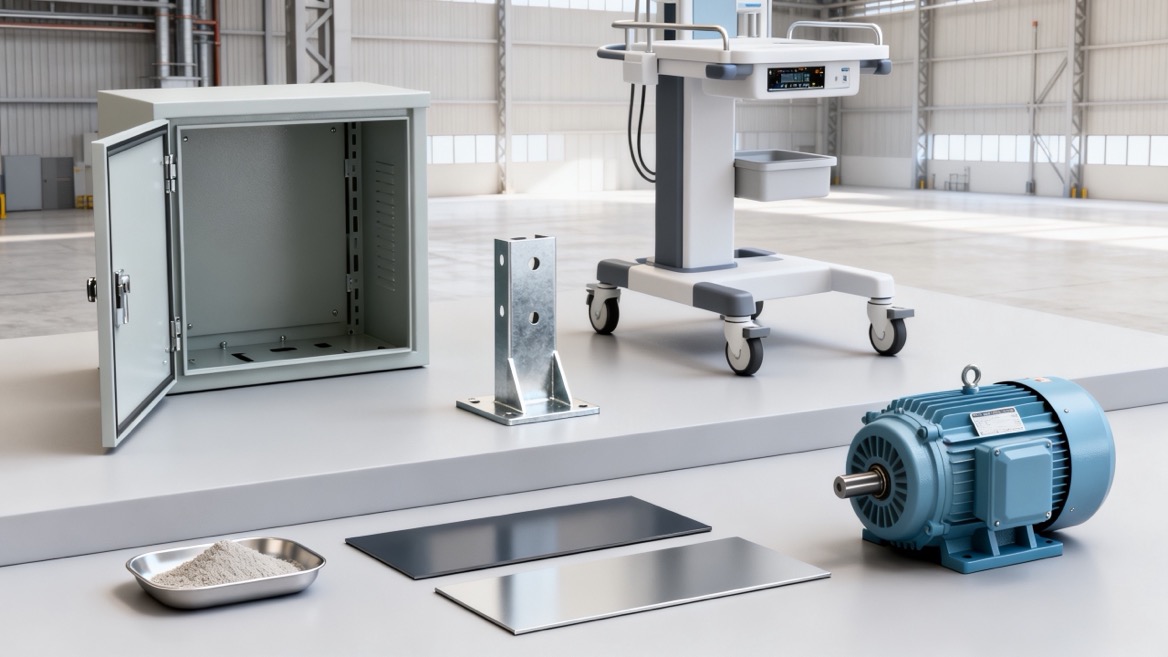
Do not request only "black epoxy powder, lowest price."
Provide a written application brief covering:
- Substrate and pretreatment.
- Indoor, outdoor, sheltered, or chemical-service conditions.
- Required color, texture, and gloss tolerance.
- Target dry-film thickness.
- Part geometry and maximum metal thickness.
- Oven configuration and production speed.
- Required adhesion, impact, corrosion, and chemical-resistance tests.
- Destination-market documentation.
- Expected annual demand and order frequency.
Ask suppliers to identify any requirement their proposed grade cannot satisfy. A qualified limitation is more useful than an unsupported promise.
Management-system certification and product compliance answer different questions.
A factory certificate concerns the stated management system and its scope. Product compliance requires evidence relevant to the actual formulation and intended market.
CE marking is not a universal environmental certificate for powder coatings. European Commission guidance states that it is required only for products covered by legislation that specifically mandates it; it must not be used where no applicable requirement exists.
For electrical and electronic applications, ask for evidence addressing the applicable substance restrictions rather than accepting a generic "RoHS certificate" without a product identifier.
REACH also requires careful interpretation. It concerns substances, mixtures, supply-chain information, and potentially registration obligations. A supplier declaration should address the relevant formulation and supply arrangement rather than implying that one test report resolves every obligation.
Use a staged approval process:
1. Review the proposed technical data sheet and safety data sheet.
2. Evaluate laboratory panels.
3. Spray actual production parts.
4. Record pretreatment, film thickness, and curing conditions.
5. Run agreed performance tests.
6. Approve a pilot production batch.
7. Retain powder and coated reference samples.
Do not approve a supplier solely because its own test panel looks acceptable. The purpose of the trial is to establish whether the product works within your manufacturing conditions.
A corrosion claim without the test conditions is incomplete.
PPG's published container-system documentation, for example, identifies the substrate preparation, coating structure, thickness, test methods, and acceptance criteria. This illustrates the level of detail buyers should request when comparing performance claims..pdf)
Require each report to identify:
- Product and batch number.
- Substrate.
- Pretreatment.
- Coating thickness.
- Cure conditions.
- Test method and exposure duration.
- Scribe preparation where applicable.
- Acceptance criteria.
- Testing laboratory and report date.
Ask the supplier to state product-specific storage limits, shelf life, packaging requirements, and transport precautions in writing.
Also agree on:
- Minimum remaining shelf life at dispatch.
- Protection against moisture and excessive heat.
- Batch identification on every package.
- Shipment inspection and damage-reporting procedures.
- Notification before raw-material or formulation changes.
- Complaint investigation responsibilities.
- Replacement and credit terms.
Check transport classification against the current safety data sheet rather than assuming all powder coatings have identical shipping requirements.
An important sourcing trap is comparing powder coatings exclusively by price per kilogram.
Two products may have the same color and a similar panel appearance while delivering different practical coverage, reject rates, and production behavior.
A useful contract safeguard is to agree on a formulation fingerprint. Include the relevant density range, particle-size distribution, gel time, flow behavior, appearance tolerance, and application performance in the approval package. Then compare subsequent production batches against that agreed baseline.
This is particularly valuable when investigating suspected resin reduction, excessive filler loading, unauthorized reclaimed material, or an undisclosed raw-material change. These should be treated as risks to control—not accusations against any supplier in this list.
For purchasing decisions, use:
Powder cost per accepted part=(Powder consumed×Price per kilogram)/Accepted parts
Then add labor, energy, rework, disposal, and downtime where material.
The practical lesson is straightforward: buy an approved production result, not merely a bag of powder.
The right supplier depends on your application and purchasing model.
Yinda Technology is a relevant starting point for buyers seeking a tailored development relationship and direct support for industrial coating projects. Its published profile emphasizes research capability, testing resources, tailored products, and responsive service. These capabilities should be evaluated through a documented trial rather than assumed from promotional claims.
Kinte, Huacai, Wanan, and Hsinda offer additional domestic manufacturing options, while AkzoNobel, PPG, Axalta, TIGER, and Jotun provide internationally established coating platforms and application resources.
To begin a qualified discussion with Yinda Technology, submit your substrate, exposure conditions, target finish, curing profile, required tests, and forecast order volume. Request a proposed grade, technical documentation, sample plan, and itemized quotation before moving to production approval.
Request the complete certificate, including its number, legal entity, covered sites, scope, issuing body, and validity dates.
Check the certificate through the issuer or a verification database such as IAF CertSearch. Review its active status and manufacturing scope. A certificate may be suspended or withdrawn before the printed expiry date, so the document alone is insufficient.
If a record cannot be found, ask the issuing certification body directly rather than immediately concluding that the certificate is fraudulent.
Not automatically.
The two formulations may serve different performance priorities. Pure epoxy documentation commonly emphasizes chemical resistance, anticorrosion performance, and electrical insulation, while hybrid ranges are widely positioned for interior industrial and decorative applications.
Require a written technical comparison and repeat the application-specific qualification tests before approving substitution.
No. Those terms address different regulatory questions.
CE marking applies only where the relevant legislation requires it. REACH obligations depend on substances, mixtures, roles in the supply chain, and other conditions. A broad marketing statement does not replace product-specific documentation or an assessment of the imported finished product.
Ask the supplier to identify the regulation, formulation, supporting evidence, and responsible legal entity behind each claim.
The tested coating system may not match your production conditions.
Compare substrate, pretreatment, thickness, cure, and part geometry against the approved test setup. Also review whether the proposed chemistry is appropriate for the exposure environment. Pure epoxy's limited UV resistance, for example, cannot be corrected simply by matching the original color.
Resolve the cause through a jointly documented production trial rather than changing powder grades without controlling the application variables.
Include a written change-notification clause covering resin, curing agent, pigments, fillers, additives, manufacturing location, and critical process changes.
Define which changes require new samples, which require repeat testing, and who must approve them. Retain reference samples from approved batches and establish a complaint process that uses measurable evidence.
For custom formulations, clarify ownership, exclusivity, and transfer rights separately. Custom development does not automatically grant the buyer ownership of the formulation.
- Yinda Technology: company history, R&D resources, application sectors, and international presence. [yinda-global]
- The Business Research Company, via GII: *Epoxy Powder Coatings Global Market Report 2026*, including market estimates and regional positioning. [giiresearch]
- Kinte: official powder coating overview, reported capacity, and historical certification statements. [en.kmc1992]
- Huacai: epoxy product information, company history, and reported production resources. [huacaipowdercoating]
- Wanan: official company profile and reported annual production capacity. [wananpowder]
- Hsinda: company profile, product families, and reported production capability. [hsinda-powdercoating]
- AkzoNobel: reported China manufacturing investment and Interpon stock-service introduction. [pcimag]
- PPG: industrial powder coating system documentation and manufacturing-location information. [assets-eu-01.kc-usercontent]
- Axalta: Alesta E technical guidance and historical China manufacturing announcements. [axalta]
- TIGER Coatings: official company history and specialized primer/FBE documentation. [pim.tiger-coatings]
- Jotun: official history and industrial powder coating product information. [jotun]
- European Commission: official CE-marking requirements and restrictions on its use. [europa]
- European Union: official REACH guidance and regulation text. [europa]
- IAF CertSearch: certificate-status and scope verification resources. [iafcertsearch]


