Language


Views: 228 Author: Yinda Powder Coating Publish Time: 2026-11-02 Origin: Site


Content Menu
● Indonesia's Position in the Powder Coating Supply Chain
>> Where the Industrial Cluster Advantage Matters
● Selection Criteria: How This Shortlist Was Built
● Supplier Comparison: Capacity, MOQ, and Certification Evidence
● 1. Yinda Technology: A Customization-Oriented Option for Growing Manufacturers
>> Company Background and Market Focus
>> Core Strengths and Customization Fit
● 2. AkzoNobel / Interpon: A Structured Option for Architectural and Industrial Programs
>> Company Background and Market Focus
>> Core Strengths and Customization Fit
● 3. Jotun: A Long-Established Supplier for Architectural and Industrial Applications
>> Company Background and Market Focus
>> Core Strengths and Customization Fit
● 4. Axalta: A Technical Portfolio for Decorative and Functional Requirements
>> Company Background and Market Focus
>> Core Strengths and Customization Fit
● 5. Protech / Oxyplast: A Network-Based Option With an East Java Presence
>> Company Background and Market Focus
>> Core Strengths and Customization Fit
● Buyer's Guide: How to Qualify an Indonesian Powder Coating Supplier
>> 1. Specify the Coating System Before Comparing Prices
>> 2. Separate Factory Certification From Product Compliance
>> 3. Approve Production Conditions, Not Just Sample Panels
>> 4. Compare Cost per Accepted Component
>> 5. Define Tropical Storage and Logistics Requirements
● Common Sourcing Traps—and How to Avoid Them
>> A Similar-Looking Powder Is Substituted for the Approved Grade
>> A Certificate Covers the Wrong Company or Activity
>> Capacity Is Quoted Without Product-Specific Availability
● Insider Pitfall: Metallic Samples Can Hide Reclaim Problems
● Conclusion: Select for Repeatability, Not Just the First Sample
>> 1. How Can I Check Whether a Supplier's ISO Certificate Has Expired or Been Suspended?
>> 2. Can Two Suppliers Use the Same Color Reference but Produce Visibly Different Results?
>> 3. Can a Successful Salt-Spray Test Guarantee Outdoor Service Life?
>> 4. What Happens if the Powder Meets Its Data Sheet but Fails on Our Production Line?
>> 5. How Can a Small Buyer Obtain Custom Powder Without Accepting Excessive Inventory?
Indonesia offers several credible routes for sourcing powder coating: multinational manufacturers with established local operations, regional technology networks, and internationally connected suppliers that support customized industrial projects. For procurement managers, the right choice depends less on brand recognition than on manufacturing consistency, application support, and the supplier's ability to deliver the same approved finish repeatedly.
This guide examines five powder coating manufacturers and suppliers with documented Indonesian operations or representation: Yinda Technology, AkzoNobel, Jotun, Axalta, and Protech/Oxyplast. It compares their sourcing relevance while identifying information that buyers must still verify.
Before approving any supplier, evaluate five fundamentals: factory certification scope, formulation and development capability, batch-level quality control, realistic production availability, and delivery reliability. A competitive quotation is useful only when the supplier can reproduce the approved result on your production line.

Indonesia's manufacturing base creates demand for protective and decorative finishes across building components, appliances, furniture, automotive parts, and general metal fabrication. Its industrial supply chain also supports both domestic consumption and export-oriented manufacturing.
The latest available official trade context illustrates that scale. Indonesia's statistics agency, BPS, reported manufacturing-product exports of US$18.51 billion in January 2026, compared with US$17.11 billion in January 2025. These figures cover manufacturing broadly; they are not powder coating export totals.
Industry research also points toward sustained regional demand. The Powder Coatings Market Report 2026, distributed by Research and Markets, identifies Asia-Pacific as the largest powder coatings region in 2025 and includes Indonesia in its country-level analysis. Market-size estimates vary between publishers, so buyers should avoid treating a global forecast as a precise measure of Indonesia's available production capacity.
The Greater Jakarta industrial network is particularly relevant for supplier visits, application trials, and technical coordination. AkzoNobel's Indonesian powder coating documentation identifies a Cikarang location, while Axalta lists its Indonesian powder coating office in the same industrial area. Protech's network documentation identifies an Indonesian thermoset powder coating operation in Beji, Pasuruan, East Java.
These concentrations can simplify factory audits and supplier meetings. However, an Indonesian sales address does not automatically mean that every powder coating grade is manufactured locally.
Ask suppliers to identify:
- The manufacturing site for each proposed product.
- The warehouse that will dispatch commercial orders.
- The laboratory responsible for color approval and complaint analysis.
- Whether specialty products are imported.
- Which entity accepts contractual responsibility for quality claims.
This is a procurement-oriented shortlist, not a ranking by independently audited market share.
The assessment prioritizes suppliers with identifiable company information, documented powder coating activities, and a relevant Indonesian presence. Product portfolios and historical milestones come from company publications and other cited sources.
Yinda Technology appears first because this guide is prepared for Yinda. Its inclusion should not be interpreted as an independently verified claim that it exceeds every competitor in price, capacity, or performance.
The most useful evaluation criteria are:
| Evaluation area | Evidence buyers should request | Why it matters |
|---|---|---|
| Manufacturing identity | Registered entity, factory address, production-site declaration | Distinguishes manufacturers from resellers |
| Quality management | Current certificates showing site and activity scope | Establishes which operation is actually covered |
| Development capability | Trial procedure, technical team access, formulation-change controls | Supports customized colors and performance requirements |
| Batch consistency | Certificate of analysis, retained samples, batch traceability | Reduces repeat-order variation |
| Application performance | Trials on actual substrates and equipment | Tests suitability beyond laboratory panels |
| Supply continuity | Product-specific lead times, stock policy, contingency arrangements | Identifies operational delivery risk |
| Commercial flexibility | MOQ by color, trial quantity, repeat-order conditions | Shows whether the supplier fits your buying pattern |
Public sources do not consistently disclose comparable Indonesian plant capacities, customized-color MOQs, or current certificates for every supplier. Missing information is therefore identified rather than replaced with estimates.
"Not publicly verified" means that a comparable figure or current document was not established from the sources reviewed. It does not mean the supplier lacks capacity or certification.
| Manufacturer or supplier | Relevant establishment milestone | Indonesian presence | Powder capacity | MOQ | Certification or qualification evidence |
|---|---|---|---|---|---|
| Yinda Technology | Established in 2010; Indonesian subsidiary established in 2017 | Indonesian subsidiary reported by the company | Not publicly verified | Request by formulation and color | Request current site-specific certificates and product reports |
| AkzoNobel / Interpon | Global coatings heritage dates to 1792; this is not the Indonesian plant's founding date | Cikarang powder coating contact and manufacturing scope documented | Not publicly verified for the Indonesian operation | Request stock-color and custom-color quantities separately | Published global certificates list the Indonesian site under ISO 9001 and ISO 45001 scopes; current validity requires checking |
| Jotun | Group established in 1926; company history records completion of an Indonesian factory in 1996 | Longstanding Indonesian operations | Not publicly verified on a comparable powder-only basis | Request by product family | Request current Indonesian manufacturing certificates and exact product approvals |
| Axalta | Established as an independent company in 2013 | PT Axalta Powder Coating Systems Indonesia listed in Cikarang | Not publicly verified | Request by grade and color | Product-approval information is available; confirm the exact formulation, site, and current approval |
| Protech / Oxyplast | Protech Group established in 1976; Indonesian entity founding year not confirmed | Indonesian thermoset production operation listed in Pasuruan | Not publicly verified | Request from the Indonesian operation | Confirm local certificates separately from group-level product information |
Company history, location, and certificate-scope information are supported by the manufacturers' publications. None of the dates above should be used as a substitute for the incorporation date of the Indonesian contracting entity.
Yinda Technology reports that it was established in 2010 and is headquartered in Foshan, Guangdong, China. Its published history records the establishment of Yinda Indonesia in 2017. The company describes its business as powder coating and environmentally oriented materials research, manufacturing, sales, and energy-saving technology promotion.
Its stated application sectors include architectural profiles, doors and windows, new energy vehicles, medical equipment, hardware, and electrical appliances. The company reports worldwide sales, although its public profile does not provide a country-by-country revenue breakdown.
Yinda's company profile identifies a dedicated development center, testing facilities, production lines, and a technical team with more than 20 years of industry experience. It also emphasizes tailored solutions and responsive support. These are relevant attributes for buyers whose requirements extend beyond standard catalog colors.
For small and medium-sized brands, Yinda is worth evaluating as a potential value-oriented development partner. The commercial case should be tested through a structured quotation and sample program rather than assumed from positioning alone.
A useful OEM development brief would ask Yinda to address:
- Color, gloss, and texture matching.
- Substrate and pretreatment compatibility.
- Required weathering or chemical resistance.
- Cure-window compatibility with existing ovens.
- Pilot-order quantities and repeat-batch tolerances.
- Packaging, labeling, and private-label availability, where required.
These are proposed qualification topics, not a claim that every option is automatically available.
Confirm whether the quoted powder will be manufactured in Indonesia or supplied from another group location. Request the applicable factory certificates, technical data sheet, safety data sheet, trial quantity, and committed response times.
For procurement teams prioritizing flexibility and communication efficiency, define measurable expectations: sample turnaround, technical-query response time, and the number of approval stages before production.
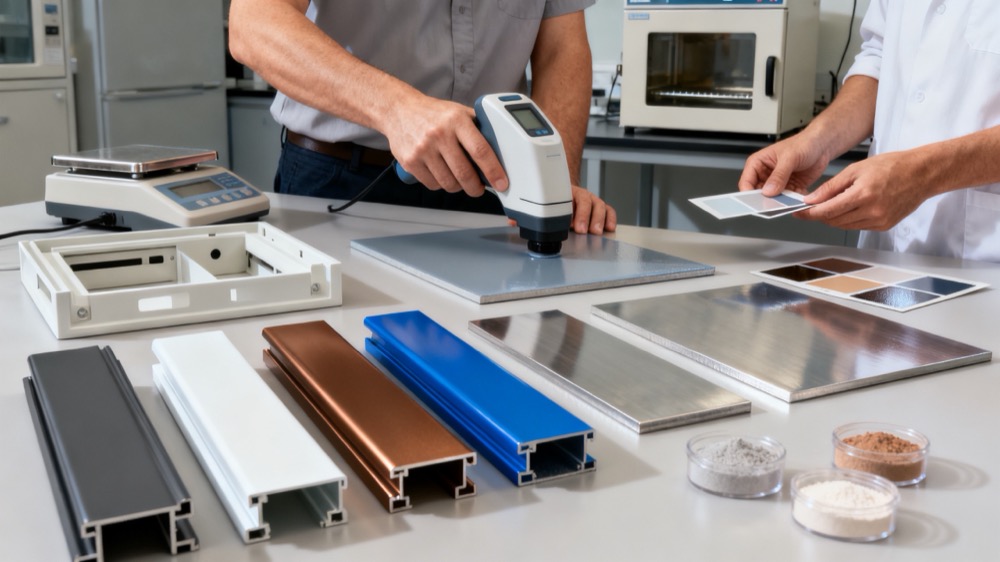
AkzoNobel traces its coatings heritage to 1792. Its powder coating business includes the Interpon brand, which serves a wide range of metal-finishing applications. Indonesian product documentation identifies PT International Paint Indonesia in Cikarang as a regional contact.
The published industrial range distinguishes Interpon 600 polyester products intended for light and weather resistance from Interpon 700 epoxy-polyester products intended for interior applications. That distinction is important: a visually similar finish is not necessarily suitable for the same exposure conditions.
AkzoNobel is a relevant candidate for buyers seeking established product families, documented technical specifications, and coordination between industrial design requirements and coating selection.
Its likely procurement fit includes:
- Architectural metal components.
- Appliance and equipment housings.
- Industrial products requiring specified colors and finishes.
- Programs that need documented product selection across several applications.
Custom-color development, private-label supply, formulation ownership, and exclusivity should be discussed separately. Supplying an OEM does not automatically mean a manufacturer offers private-label powder.
Published global certificates list the Cikarang site with activities involving performance coatings and powder coatings under ISO 9001:2015 and ISO 45001:2018 scopes. Buyers must still verify certificate validity and ensure the named manufacturing site matches the quotation.
Also confirm local availability. A product appearing in a regional catalog may have a different lead time from a routinely stocked Indonesian grade.
Jotun was established in Norway in 1926. Its corporate history links the development of its powder coating business to Corro-Coat in 1968, while its annual reporting records completion of an Indonesian factory in 1996. That factory milestone should not be interpreted as the founding date of every Indonesian Jotun entity or powder production line.
Jotun identifies appliances, furniture, automotive components, architecture, and infrastructure among its application areas. Its international presence makes it relevant for manufacturers balancing Indonesian production with requirements from overseas customers.
Jotun is a candidate for projects where finish durability, appearance, and technical specification must be coordinated. Its architectural offering includes powder finishes and technical support directed toward design and long-term property protection.
Relevant development discussions include:
- Matching an approved architectural finish.
- Selecting a suitable durability category.
- Coordinating powder selection with the coating applicator.
- Establishing project-specific appearance and performance requirements.
For OEM procurement, ask which customization activities are handled locally and which require regional development support.
Request the exact product code and manufacturing origin. Do not accept a general brand presentation as evidence that the proposed grade carries the required architectural approval.
If a warranty is offered, establish which conditions relate to powder selection, pretreatment, applicator qualification, installation environment, and maintenance.
Axalta became an independent company in 2013, although its coating technologies have a longer history. Its Indonesian history page records the launch of Alesta powder coating in 1980 and lists PT Axalta Powder Coating Systems Indonesia in Cikarang.
Axalta's published powder portfolio includes architectural polyester, industrial polyester, epoxy, epoxy-polyester, superdurable, heat-resistant, and low-bake-related product categories. These are portfolio categories, not confirmation that every product is manufactured or stocked in Indonesia.
Axalta is relevant when procurement specifications require more than a decorative color match. Its range provides a starting point for discussions about substrate conditions, exposure, processing temperature, and functional requirements.
Potential OEM development topics include:
- Industrial-equipment finishes.
- Architectural components.
- Parts requiring specific handling or surface properties.
- Products where curing conditions constrain coating selection.
For buyers considering an alternative grade, request a written comparison with the incumbent coating rather than relying on a similar color designation.
Axalta publishes architectural approval information, including GSB-related resources. An approval associated with one formulation or manufacturing location should not be extended automatically to another product.
Ask the Indonesian team to confirm the proposed product's origin, local technical support, trial availability, MOQ, and any qualification testing required before substitution.
Protech Group states that it has operated since 1976. Its business includes thermoset powder coatings, thermoplastic and PVC powders, industrial liquid coatings, and specialty materials.
Its published network brochure lists Protech Oxyplast Indonesia in Beji, Pasuruan, under thermoset coating production within its licensee network. This distinction matters: buyers should establish the Indonesian entity's legal and technical relationship with the wider group rather than assuming every network operation has identical ownership or capabilities.
The group's broad coating activities make the Indonesian operation worth investigating for industrial buyers seeking formulation support beyond a narrow standard-color range.
Procurement discussions should establish:
- Which thermoset chemistries are produced locally.
- Which application sectors the local laboratory routinely supports.
- Whether custom colors and finishes are developed in Indonesia.
- How technical information and complaint analysis are coordinated with the wider network.
- Whether private-label or exclusive formulations are commercially available.
The Indonesian entity's founding year was not established from the reviewed primary documentation. Request its registration documents directly.
Likewise, do not assume that thermoplastic powders or specialty products listed at group level are manufactured at the Pasuruan operation. Obtain a site-specific capability statement.
Start with the component's operating environment, not its color.
A complete inquiry should identify:
- Substrate and surface condition.
- Pretreatment process.
- Indoor, outdoor, coastal, or chemical exposure.
- Required color, gloss, and texture.
- Target film thickness and appearance tolerances.
- Oven limitations and part geometry.
- Required test methods and acceptance criteria.
- Destination-market substance restrictions.
The difference between an interior epoxy-polyester and an exterior polyester is commercially significant. AkzoNobel's own product literature separates these categories by intended application.
ISO management-system certification, product approval, and chemical-compliance documentation answer different questions.
A factory certificate concerns a defined management system and scope. It does not, by itself, prove that a particular powder grade meets a project's weathering, corrosion, or restricted-substance requirements.
For electrical and electronic products entering the European market, RoHS currently restricts ten substances. Buyers should request evidence relevant to the actual coating formulation and intended finished product.
CE marking should not be presented as a generic environmental certificate for powder coating. Under RoHS, the marking and declaration obligations concern covered electrical and electronic equipment; coating-material documentation supports the finished-product assessment.
A useful qualification sequence is:
1. Review the technical and safety documentation.
2. Approve a reference panel.
3. Obtain powder from a traceable trial batch.
4. Apply it to actual production components.
5. Record pretreatment, gun settings, film thickness, and oven profile.
6. Test agreed performance criteria.
7. Retain approved panels and powder samples.
8. Document the conditions under which approval remains valid.
Cure verification deserves particular attention. The Powder Coating Institute explains that cure depends on both metal temperature and time at that temperature. Oven air temperature alone does not demonstrate that the component has received the specified cure.
The lowest price per kilogram may not produce the lowest finished-part cost.
Compare quotations using the same approved appearance, coverage requirements, film thickness, application conditions, and reject criteria. Ask suppliers to participate in a controlled trial that measures:
- Powder consumption per accepted component.
- First-pass acceptance.
- Rework and rejection.
- Color-change losses.
- Reclaim behavior.
- Production interruptions.
This approach can expose apparent savings that disappear when the coating requires heavier application or causes more rejects.
The Powder Coating Institute recommends cool, controlled storage and notes that optimum conditions are below 80°F, approximately 27°C, with around 50–60% relative humidity. Actual shelf life and storage limits must follow the selected product's documentation.
For Indonesian sourcing, put the following in the purchase agreement:
- Minimum remaining shelf life at dispatch.
- Moisture-resistant packaging requirements.
- Batch and manufacturing-date identification.
- Handling requirements during transport and warehousing.
- Incoterms, delivery point, and importer responsibilities.
- Procedure for damaged or heat-affected shipments.
Do not assume every powder has the same dangerous-goods classification. Confirm the actual safety data sheet and carrier requirements.
A replacement may initially match color while differing in intended application or performance.
Avoid this by locking the product code, manufacturing site, specification, and change-notification procedure into the agreement. Treat a formulation or site change as a review event, not an administrative detail.
A valid certificate may belong to a trading office, related company, or different factory.
Match the legal name, address, scope, and certificate status to the entity manufacturing your order. CertSearch provides tools for checking certified organizations, sites, scopes, and status.
A large annual capacity figure says little about the next available slot for a customized color.
Ask for the confirmed lead time for your formulation, the production sequence, repeat-order arrangements, and contingency options. Available qualified capacity is more useful than nameplate capacity.
One under-discussed procurement risk is approving a metallic finish using virgin powder only.
In dry-blended metallic coatings, pigment and base powder can behave differently during application and recovery. Technical research identifies this separation as a recyclability problem. Bonding attaches metallic pigment to powder particles to improve consistency, while manufacturer guidance explains that bonded metallics generally perform better after reclaim.
The procurement implication is straightforward: an attractive sample panel does not prove that a metallic powder will remain consistent in a production booth using recovered overspray.
Before approval:
- Confirm whether the finish is bonded or dry-blended.
- Trial the intended virgin-to-reclaim operating condition.
- Coat actual component geometries.
- Compare appearance under agreed lighting and viewing angles.
- Record equipment settings and panel orientation.
- Obtain written reclaim guidance for that specific product.
The useful question is not simply whether a powder is recyclable. It is whether its appearance remains acceptable under your validated recovery process.
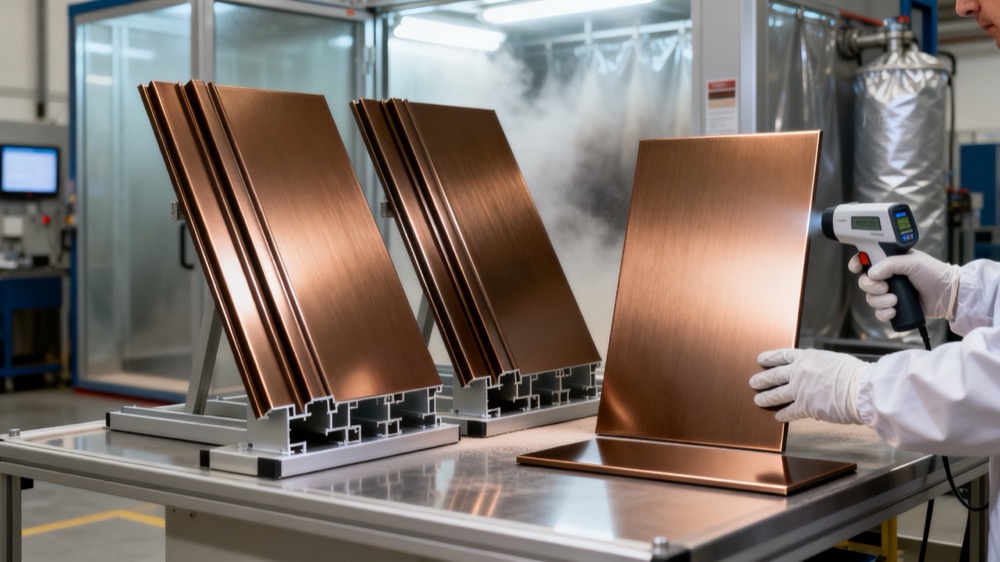
Indonesia provides access to several different powder coating supply models. AkzoNobel, Jotun, and Axalta offer established international product portfolios and Indonesian operations or representation. Protech/Oxyplast adds a documented East Java network presence. Yinda Technology offers an alternative worth evaluating for development-led projects and growing manufacturers seeking tailored support.
The strongest procurement decision rests on repeatability: the same approved finish, from a known manufacturing source, under controlled production conditions, with documented delivery commitments.
To evaluate Yinda Technology for your next project, send your substrate details, application environment, color reference, annual demand, trial quantity, and curing conditions. Request a technical proposal, production-origin declaration, sample plan, and itemized quotation before committing to a long-term supply agreement.
Search the company name or certificate details in CertSearch, then match the site, scope, and current status. The platform supports checks for conditions including suspension, withdrawal, and expiry.
For unresolved results, contact the issuing certification body directly. Do not accept a certificate image as the only verification, and do not conclude that a missing search result alone proves fraud.
Treat a color reference as a starting point, not the complete acceptance specification.
Require an approved physical panel, agreed gloss and texture, defined film thickness, and a documented inspection method. For metallic finishes, also define application and reclaim conditions because pigment behavior can affect appearance.
The contract should establish which reference controls if a color code and physical sample appear inconsistent.
Do not convert a laboratory test result directly into a guaranteed number of service years.
Ask the supplier to identify the full tested system: substrate, pretreatment, coating grade, film thickness, cure, specimen preparation, and acceptance criteria. Require the outdoor durability and project requirements to be addressed separately in the written specification.
A test report is most useful when it represents the same system you intend to manufacture.
Investigate the complete process before assigning responsibility.
Preserve powder, coated parts, batch records, pretreatment data, application settings, and oven profiles. In particular, verify actual component temperature and dwell time against the specified cure schedule; the Powder Coating Institute identifies both as necessary for cure.
Agree in advance how joint testing, independent analysis, replacement material, and related costs will be handled.
Request separate commercial terms for:
- Laboratory development.
- Pilot production.
- Initial commercial approval.
- Repeat orders.
Ask whether a stock formulation can meet the requirement before commissioning a dedicated product. If a custom formulation is necessary, negotiate scheduled releases, remaining-shelf-life requirements, and a defined requalification process.
For Yinda and other customization-oriented candidates, flexibility should be demonstrated through a written trial proposal and order structure—not assumed from general service claims.
- [Yinda Technology — Company Profile and Development History]
- [AkzoNobel — Powder Coatings Business]
- [AkzoNobel — Industrial Ready-to-Ship Range and Indonesian Contact]
- [AkzoNobel — Published Global ISO 9001 Certificate]
- [Jotun — Architecture and Design]
- [Axalta Indonesia — Company History]
- [Axalta — Powder Coating Product Catalogue and Indonesian Office]
- [Protech Group — Company and Product Overview]
- [Protech Group — 2026 Product Brochure and International Network]
- [BPS Statistics Indonesia — Manufacturing Exports, March 2026 Release]
- [Research and Markets — Powder Coatings Market Report 2026]
- [Powder Coating Institute — Technical Frequently Asked Questions]
- [European Commission — RoHS Directive]
- [CertSearch — Accredited Certification Verification]
- [IFS Coatings — Guide to Metallic Powder Coating]
- [Technical Research — Cold Bonding Method for Metallic Powder Coatings]


